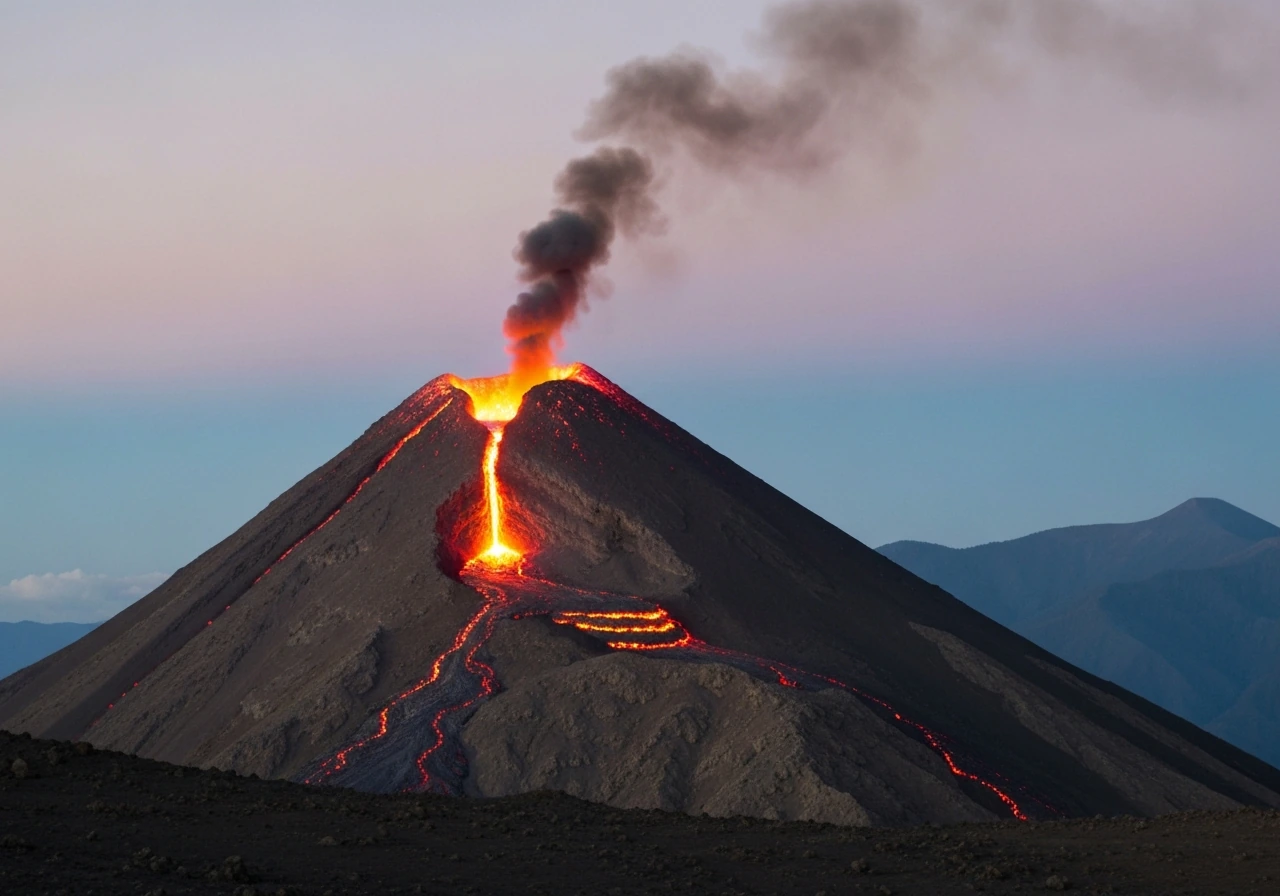
Volcanoes grow. Not metaphorically, not just during a single dramatic eruption, but literally and measurably over decades and millennia, adding mass, height, and volume in a way that closely mirrors how any growing system works: inputs come in, structure builds up, and eventually limits kick in to slow or stop the whole process. If you want to understand how volcanoes grow, the short answer is this: repeated eruptions deliver magma to the surface (or near it), and that material piles up into the structure we recognize as a volcano. But the details are far more interesting than that, and they tell you a lot about why volcanoes look and behave the way they do.
How Do Volcanoes Grow: Magma, Eruptions, and Limits Explained
Marcus Whitmore
5 Apr 2026
What "growth" actually means for a volcano
When volcanologists talk about a volcano growing, they mean the buildup of the edifice: the main physical structure of the volcano, constructed from lava flows, tephra (fragmented volcanic material), pyroclastic flows, lahars, and all the other material eruptions produce. Think of the edifice as the body of the volcano, the accumulated result of every eruption cycle over its entire lifetime. Growth means the edifice is getting bigger in volume and (usually) taller in height.
This is an important distinction. A single eruption is not "growth" in the meaningful sense, any more than one meal makes an organism larger. What matters is the net accumulation over time: more material added than removed. Scientists actually measure this by comparing high-resolution digital elevation models (DEMs) taken at different points in time, which lets them calculate how much volume has been added or lost. At Soufrière Hills Volcano in Montserrat, for example, researchers tracked a net increase of roughly 108 million cubic meters for the lava dome alone between 1995 and 2013, plus around 300 million cubic meters in talus and pyroclastic density current deposits. That is a measurable, quantifiable growth record.
The engine behind growth: magma supply and plumbing
The real driver of volcanic growth is magma supply: how much molten rock is being delivered into the volcano's internal plumbing system and at what rate. Think of it as an input flux. If magma arrives faster than it can erupt or intrude into the surrounding rock, pressure builds, the system inflates, and eventually more material erupts, adding to the edifice. A 2024 study of Mt. Etna measured a net magma supply of about 7.4 million cubic meters per year flowing into the plumbing system, which researchers directly linked to continuous volumetric growth of the edifice. That steady input is why Etna keeps getting bigger.
The plumbing system itself is not static. It evolves as the volcano grows, developing and reorganizing networks of conduits, dikes (vertical sheets of magma that cut through rock), and magma reservoirs at various depths. At Kīlauea in Hawai'i, over 200 years of recorded history show clear transitions in how the plumbing system delivers magma, with changes in magma supply rate governing whether the volcano erupts more, intrudes more, or sits quietly inflating. When supply exceeds eruption rate, the surface inflates, the flanks spread outward, and large flank earthquakes become more likely. This construction-versus-deformation framework is one of the clearest ways to think about volcanic growth as a process rather than an event.
Interestingly, as a volcano grows taller, the plumbing system itself has to work harder. Modeling studies show that effusion rate and eruptive volume tend to decrease as vent elevation increases, because magma has to travel farther and against greater gravitational resistance to reach the surface. This is a size-dependent internal feedback: the very act of growing makes future growth progressively harder. We see exactly this kind of self-limiting dynamic in biological systems too, where does the earth grow in size turns out to be a question about how planetary systems hit their own accumulation limits.
How eruptions actually build the structure
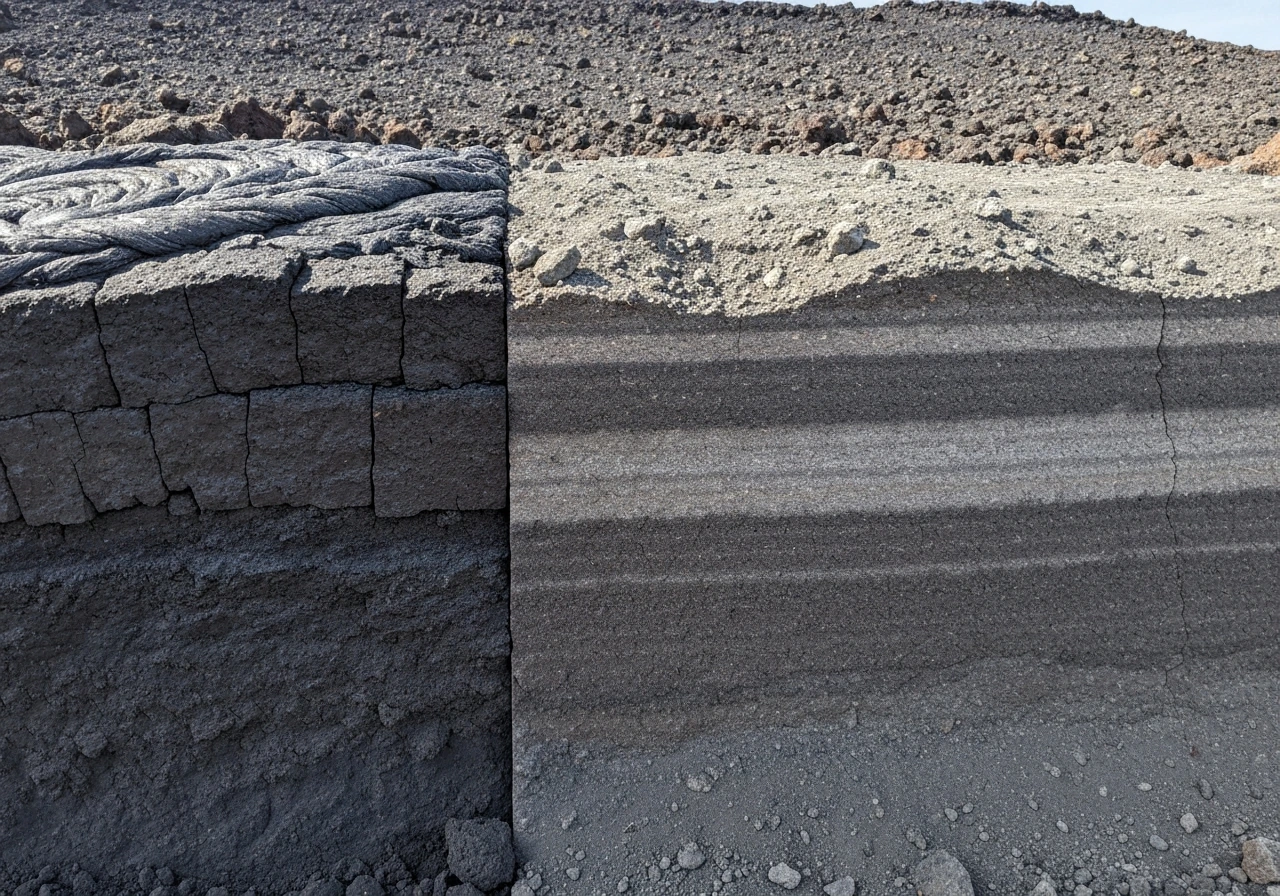
Every eruption deposits material somewhere, but not all of it counts equally toward long-term edifice growth. Here is how the main products stack up:
- Lava flows: Dense, durable, and well-preserved over geological time. They form the backbone of shield volcanoes and the basal layers of stratovolcanoes. Each flow adds a measurable layer of rock.
- Pyroclastic flows and deposits: Fast-moving currents of hot gas and fragmented rock that can deposit thick, tabular layers around the volcano flanks. At stratovolcanoes like Mt. Taranaki in New Zealand, researchers found thick packages of hyperconcentrated-flow and debris-flow deposits interbedded with tephra beds, forming a stratigraphic signature of repeated construction cycles.
- Tephra and ash fall: Lighter and more widespread, ash settles out in thin layers. These layers are valuable as a growth record, but they are poorly preserved over long timescales. Studies suggest that less than 1% of products from eruptions with a Volcanic Explosivity Index of 2 or higher are preserved in post-ice-age stratigraphic records, which means reconstructing growth history from tephra alone can seriously undercount actual output.
- Lahars: Volcanic mudflows that carry debris down river valleys and can deposit thick, widespread sediment blankets around a volcano's base, widening the edifice footprint even without adding much height.
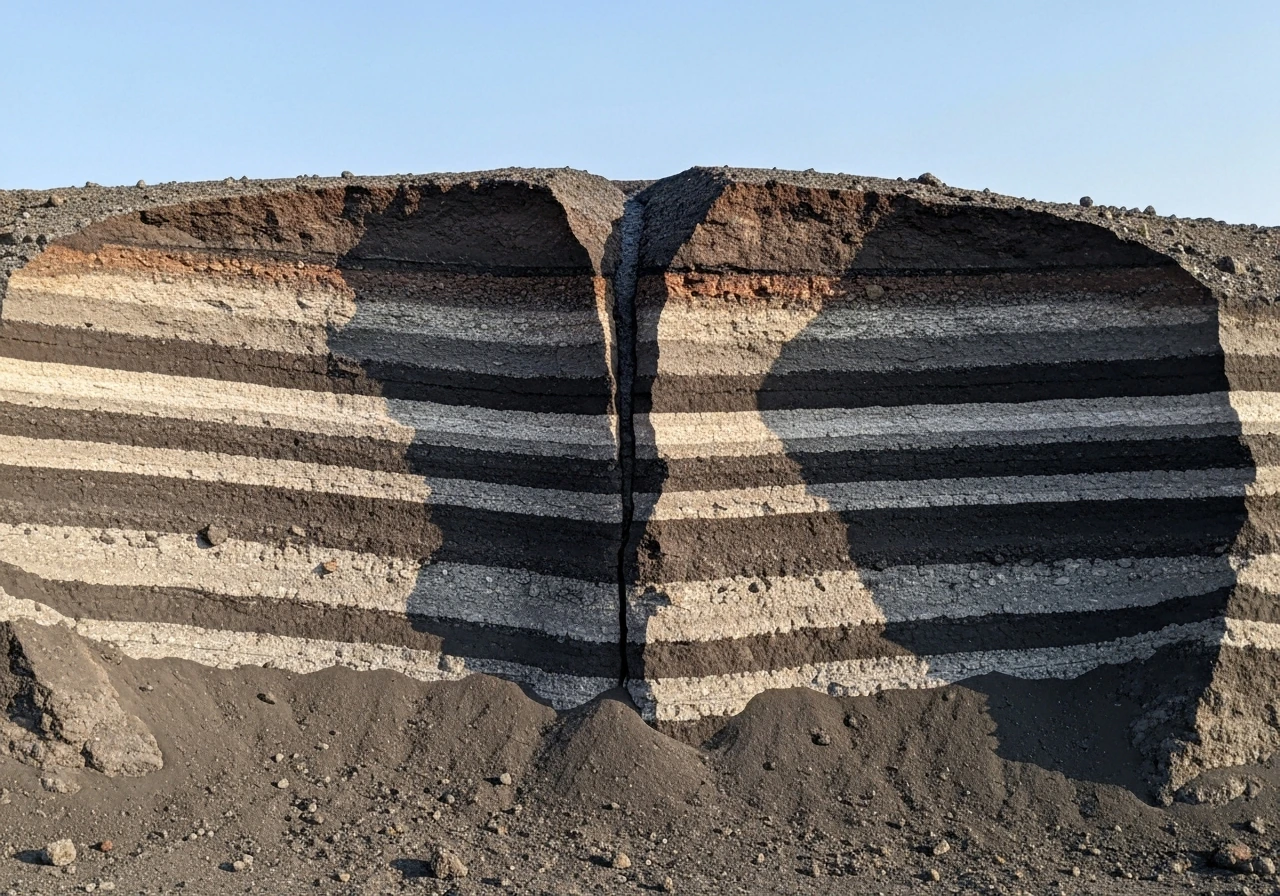
The key insight here is that repeated eruption cycles thicken the edifice layer by layer. A single cycle adds a lava flow here, a pyroclastic deposit there, a tephra layer on top. Over hundreds or thousands of cycles, these accumulate into the kilometers-thick structure you see in a mature volcano. The stratigraphic record of a large stratovolcano is essentially a diary of its growth history, if you know how to read it.
Why volcanoes grow unevenly and sometimes stop
Volcanic growth is rarely smooth or symmetrical. Several forces push back against the steady accumulation of material, and understanding them is just as important as understanding the inputs.
Erosion and weathering
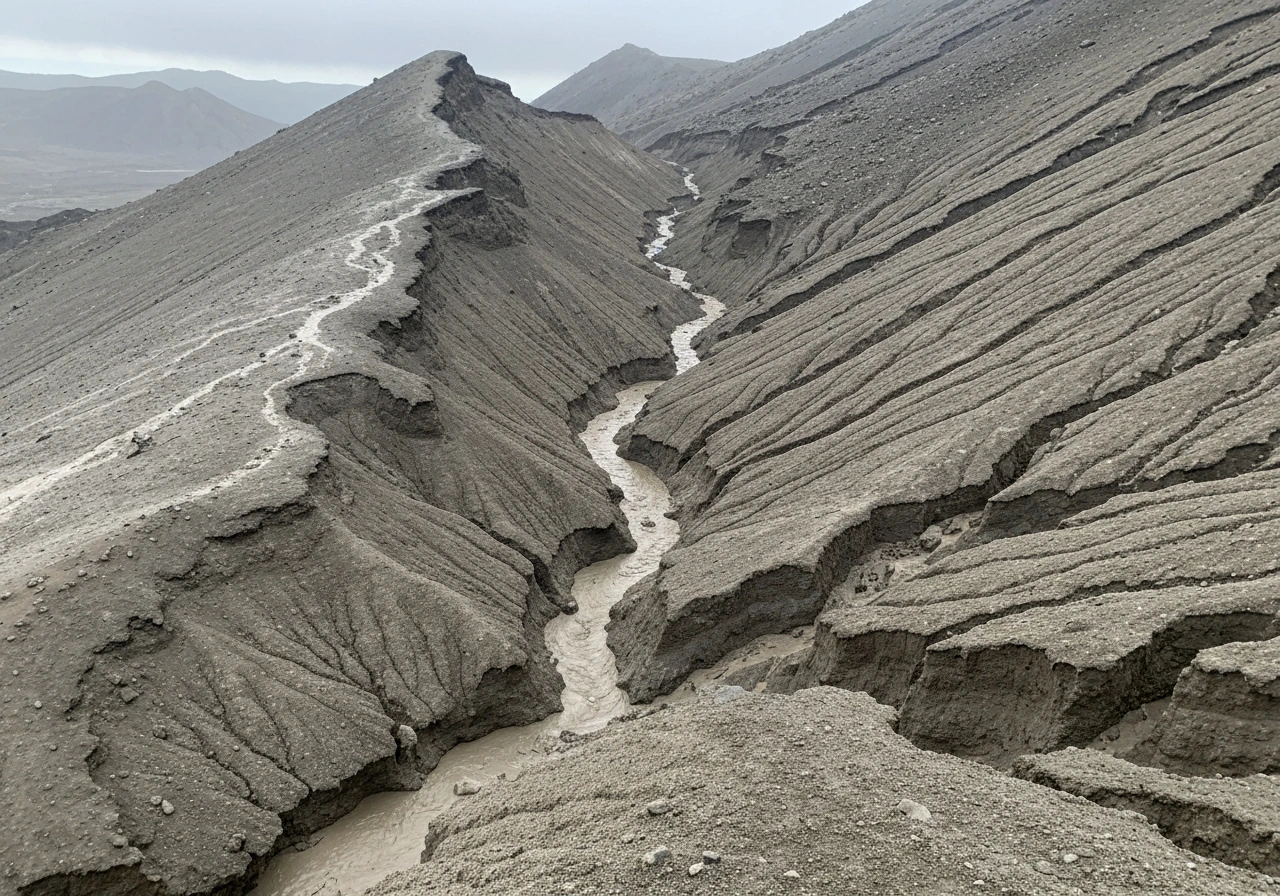
Rain, glaciers, and rivers constantly attack a volcano's flanks. Unconsolidated pyroclastic deposits and ash are especially vulnerable, eroding quickly and washing into surrounding valleys. This means that what you see at the surface of an old volcano is often much smaller than what was originally erupted. Climate plays a significant role here: volcanoes in wet tropical environments erode far faster than those in dry regions, and those that erupt onto glaciers lose a lot of material to rapid meltwater erosion. The growth record preserved in the rock is always incomplete, and that matters when you are trying to estimate total edifice volume.
Sector collapses and structural failure
As a stratovolcano grows taller, its flanks become increasingly unstable. Three-dimensional slope stability analyses show that pore-fluid pressure (water in the rock), earthquake shaking, and simple gravity can combine to trigger massive flank failures once an edifice exceeds a critical height-to-width ratio. When a sector collapse occurs, it can remove a substantial fraction of the edifice in minutes. The Mt. Taranaki case study explicitly identifies eruption-triggered sector collapse as one of the primary mechanisms terminating a growth stage. Mt. Taranaki stratigraphy shows growth stages that can be terminated by eruption-triggered sector collapse and by external forces once the edifice exceeds a critical stable height or profile eruption-triggered sector collapse as one of the primary mechanisms terminating a growth stage.. But here is the interesting twist: sector collapses do not always end volcanism at a site. Research shows that a giant lateral collapse can actually deflect magma pathways and favor formation of a new eruptive center within the collapse embayment, effectively relocating growth rather than stopping it. The volcano does not die; it rebuilds, unevenly, from a new focal point.
Caldera formation and magma withdrawal
Caldera collapse is another dramatic growth-ending event. When a large eruption rapidly drains a magma reservoir, the overlying rock loses its support and collapses inward, creating a broad depression instead of a peak. The trigger is essentially a pressure threshold: when reservoir pressure can no longer support the weight of the surface load above it, brittle failure structures propagate and the collapse becomes catastrophic. Experimental studies show that the volume fraction of magma withdrawn from the chamber determines whether and how collapse occurs, meaning chamber geometry and size directly affect this end-of-cycle outcome.
Vent migration and changes in magma supply
Vents do not stay in one place forever. As the plumbing system evolves, eruptions can shift to new locations, spreading growth across a broader area rather than building one central peak higher. Simultaneously, magma supply can simply decline as the mantle source feeding the system wanes or as the tectonic setting changes. Without a steady input, the volcano starves, erosion gains the upper hand, and the edifice shrinks over geological time. This is the volcanic equivalent of an organism losing its nutrient supply: growth stops, and if conditions stay unfavorable long enough, the structure degrades.
The physical limits on how big a volcano can get
Volcanoes face hard physical constraints on growth, and these operate at multiple scales.
| Constraint | How it limits growth | Scale |
|---|---|---|
| Rock strength and slope stability | Flanks fail when height exceeds stable angle given pore-fluid pressure and rock type | Edifice-wide |
| Magma viscosity and buoyancy | High-viscosity silicic magmas resist dike propagation; volatile exsolution and crystallization can arrest dikes before reaching surface | Plumbing system |
| Vent elevation feedback | Higher vents require magma to travel farther against gravity, reducing effusion rate and erupted volume per cycle | Individual eruption cycle |
| Erosion and climate | Wet climates strip unconsolidated material faster than it accumulates; glaciers and rivers remove flanks over centuries | Long-term record |
| Magma supply rate | Decline in mantle input starves the system; eruption rate drops and net accumulation turns negative | Whole volcanic lifetime |
The viscosity point is worth dwelling on. Magma is not just liquid rock; its physical properties change dramatically as it rises toward the surface. As magma degasses and crystallizes during ascent, its density and viscosity shift, which affects whether a dike can keep propagating upward or gets arrested partway. This is an internal physical brake on edifice construction that operates independently of the larger-scale supply rate. Research on dike propagation at Summer Coon volcano in Colorado illustrates how magma density and edifice stresses interact to steer or stop dikes entirely, controlling where and whether new material reaches the surface.
These layered constraints are conceptually similar to the limits on biological growth. Just as a cell cannot grow indefinitely because surface-area-to-volume ratios limit nutrient exchange, a volcano cannot grow indefinitely because structural stability, magma transport physics, and supply rates all impose ceilings. The system is always balancing inputs against constraints, and that balance determines the trajectory. If you have ever wondered about analogous size limits in other geological systems, the question of how did the giant planets grow to be so large follows surprisingly similar logic about accretion rates versus physical limits.
How to tell what stage a volcano is in
This is the practical part. If you want to assess whether a volcano is actively growing, slowing down, or in decline, there are four main categories of evidence to look at.
Ground deformation
Inflation of the edifice (the ground surface bulging upward or outward) is the clearest real-time signal that magma is accumulating in the plumbing system. Scientists at the Hawaiian Volcano Observatory use GPS receivers, tiltmeters, and InSAR (satellite-based radar that detects millimeter-scale surface changes) to track ground movement continuously. Tiltmeters are sensitive enough to detect subtle deflation-inflation (DI) events, short cycles where the summit deflates as magma moves downrift and then re-inflates as supply resumes. These DI events, superimposed on longer-term inflation trends, directly correlate with lava lake level changes at Kīlauea's summit. If you are trying to gauge growth stage, long-term sustained inflation with no major eruptive release is a strong signal that the edifice is accumulating stress and material.
Seismicity patterns
Seismic monitoring is the most widely used technique for volcano surveillance. Volcano-tectonic (VT) earthquakes, produced by rock fracturing ahead of propagating magma, indicate active intrusion and potential new conduit development, which is a growth-phase signal. Long-period (LP) earthquakes and harmonic tremor (continuous, rhythmic seismic energy) are associated with fluid movement through cracks and conduits, suggesting magma is actively moving through the plumbing system. A cluster of VT earthquakes migrating upward from depth toward the surface is one of the clearest signs a volcano is in an active growth phase.
Gas emissions
The chemistry and volume of volcanic gases, particularly sulfur dioxide (SO₂) and carbon dioxide (CO₂), directly reflect how much fresh magma is present at shallow depths and how actively it is degassing. High SO₂ flux means fresh, gas-rich magma is near the surface. Elevated CO₂ (which exsolves at greater depth than SO₂) can signal magma rising from depth even before it gets close enough to produce SO₂ or surface deformation. Monitoring these ratios gives scientists a window into the magma supply changes that drive growth. USGS notes that gas chemistry can reveal magma presence even when the volcano appears outwardly quiet.
Topographic and stratigraphic records
Over longer timescales, repeated DEM comparisons show net volume change directly. For active volcanoes, annual or post-eruption DEM surveys quantify how much material was added. For older volcanoes, stratigraphic analysis of the deposit record, reading the layered lava flows, pyroclastic packages, and tephra beds exposed in erosional cuts, allows reconstruction of past growth cycles. The interbedded construction and destruction layers visible at Mt. Taranaki are a textbook example of how to read a volcano's growth history from its rock record.
A quick stage-indicator reference
| Indicator | Active growth signal | Decline or stagnation signal |
|---|---|---|
| Ground deformation (GPS/InSAR/tilt) | Sustained inflation, outward flank spreading | Long-term deflation or no net change |
| Seismicity | VT swarms migrating upward, harmonic tremor | Deep infrequent VTs, no shallow activity |
| Gas emissions (SO₂/CO₂) | High SO₂ flux, elevated CO₂ with rising ratios | Low or declining gas output |
| Eruption frequency and volume | Regular eruptions adding measurable volume | Long repose periods, declining erupted volume |
| DEM / topographic surveys | Net positive volume change between surveys | Net negative change (erosion exceeding input) |
Growth limits: volcanoes and everything else
Step back and the pattern is consistent across growing systems: inputs drive construction, physical and structural constraints cap the maximum size, and the balance between the two determines how long active growth continues. For volcanoes, the input is magma supply rate; the constraints are rock mechanics, plumbing physics, gravity, and erosion. This is fundamentally the same framework that governs cell growth, crystal growth, or the growth of any geological body. The question of does the earth grow over time is actually a macro-scale version of the same question, asking whether the planet's own mass inputs still outpace losses.
Volcanic growth is also never truly unlimited. Every volcano has a theoretical maximum size set by the strength of the crust it sits on, the stability of its own flanks, and the long-term supply from its mantle source. Mauna Kea and Mauna Loa in Hawai'i are among the largest volcanoes on Earth by volume, but even they have subsided under their own weight, with the oceanic crust flexing downward beneath the load. The volcanic edifice itself becomes a constraint on further growth. The same principle applies to stellar and planetary bodies: do stars grow follows the same input-versus-pressure-balance logic that determines whether a protostar accretes more mass or stabilizes.
There is also the question of what happens to growth when external conditions change. Glacial cycles, for instance, appear to influence eruption rates at arc volcanoes, likely because ice removal changes the pressure load on the crust, allowing magma to ascend more easily. This is a reminder that volcanic growth does not happen in isolation: climate, sea level, crustal loading, and tectonic context all modulate the rate and style of edifice construction. Just as does the moon grow depends on understanding tidal and orbital inputs that change over time, volcanic growth depends on external conditions that are never fully constant.
And the record we see is always incomplete. Because tephra and unconsolidated deposits erode so readily, the preserved stratigraphic record underestimates total erupted volume, sometimes dramatically. This is the volcanic equivalent of a biological growth record with missing data points: the actual growth trajectory was steeper than what survives. Scientists working with volcanic archives have to account for this incompleteness when comparing growth histories across different volcanoes or time periods, the same challenge that comes up when asking how do galaxies grow, where the observational record captures only a fraction of the actual mass assembly history.
Putting it together: a practical framework
If you want to think clearly about how volcanoes grow, here is the mental model to carry with you. A volcano is a system with an input (magma supply), a construction process (eruption and deposition of diverse materials), an internal plumbing network that evolves and feeds back on both input and output, and a set of hard physical limits (slope stability, rock strength, viscosity, erosion) that cap maximum size. Growth is fastest when supply is high and constraints are not yet binding. Growth slows as the edifice gets taller, the plumbing has to work harder, and the flanks approach instability thresholds. Growth stops or reverses when supply declines, collapse removes material faster than it accumulates, or erosion wins the long-term race.
To track this in real time, watch four signals: ground deformation (inflation means growth is happening), seismicity (VT swarms and tremor mean magma is moving), gas flux (high SO₂ means fresh magma near the surface), and direct topographic measurements (DEM comparisons give the net volume balance). Over longer timescales, read the stratigraphy: alternating construction and erosion layers tell the story of growth cycles, collapses, and rebuilding. You can also look at questions like does the sun grow every year to see how the same mass-balance thinking applies to stars, where hydrogen fusion acts as the internal energy source that counteracts gravitational collapse, much as magma supply counteracts erosion in a volcano.
The broader point, and this is what ties volcanic growth to everything else on this site, is that growth always involves a competition between constructive processes and limiting ones. Understanding that competition is the key to understanding not just volcanoes, but any system that builds itself up over time. Whether you are thinking about does attraction grow in space or how a cell divides and grows, the same question keeps surfacing: what are the inputs, what are the limits, and what tips the balance? For volcanoes, the answers are written in lava, ash, and slowly deforming ground.
FAQ
Does a volcano grow during every eruption?
Not necessarily. Volcano “growth” means net accumulation over time (more added mass than removed by collapse, eruption excavation, or erosion). Some eruptions mainly rearrange existing magma pathways or trigger large removals, so the edifice can shrink or stagnate even while activity is high.
Why can one volcano look bigger even if its magma supply is lower?
Shape and preserved volume depend on how erupted material is distributed and later removed. A volcano with eruptions that build durable lava flows may retain more of its structure than one dominated by easily eroded ash or pyroclastic deposits, especially in wet climates.
How do scientists distinguish magma intruding underground from magma building the surface?
They look for different combinations of deformation and eruption products. Sustained inflation, seismicity consistent with intrusion, and elevated gas flux with little surface output can indicate storage and emplacement without net surface growth, while direct topographic change after eruption indicates material actually added to the edifice.
What is the difference between “edifice growth” and “magma chamber growth”?
Edifice growth refers to the external volcanic structure getting larger. A magma chamber can expand or contract without increasing the edifice, because magma storage changes pressure and deformation before any material reaches the surface.
Can erosion erase signs of growth so thoroughly that the volcano’s history looks flat?
Yes. In unconsolidated volcanic terrains, especially with heavy rainfall or frequent glacial melting, erosion can remove large fractions of the record. DEM comparisons and stratigraphic reconstruction often need to account for missing material because the surviving deposits underrepresent original eruption volumes.
What happens if magma supply declines but the volcano is still unstable?
A drop in supply reduces the “push” that builds the edifice, but flank instability and ongoing collapse or mass wasting can continue. In that case the volcano may not “grow” anymore, and activity can shift toward collapse, erosion-dominated changes, or sporadic eruptions fed by leftover magma.
Do flank collapses always terminate volcanic growth at the same location?
No. A large sector collapse can remove part of the edifice, but it may also reorganize stress and fracture networks, redirecting magma. Growth can relocate to a new eruptive center within the collapse embayment, so volcanism continues even though one growth stage ends.
How does vent shifting affect how we measure volcano growth?
When vents migrate, new material spreads laterally and may not increase peak height as fast as a single central-vent system. DEM and volume change metrics are still useful, but height-based intuition can be misleading because growth can be distributed across a broader area.
Why might a taller volcano erupt less efficiently even if magma supply stays the same?
Greater vent elevation increases gravitational resistance and travel distance for magma. That can reduce effusion and net erupted volume because magma may spend more time stored, cool, or stall as viscosity and ascent conditions become less favorable.
Is gas chemistry always a reliable indicator of growth during quiet periods?
It is informative, but interpretations depend on context. Gas flux and ratios reflect degassing from shallow to deeper sources, yet gas output can also be influenced by conduit permeability changes or temporary sealing. Best practice is to combine gas data with deformation and seismic indicators rather than using gas alone.
What is the main practical way to tell whether a volcano is actively growing right now?
Look for sustained inflation or re-inflation patterns, active intrusion-related seismicity, and net topographic change over time. A single burst of activity might not equal growth, but consistent deformation plus evidence of added volume is strong support for ongoing edifice construction.
Next Article
What Controls When and How Fast Cells Grow and Divide
Learn what controls cell division timing and speed: checkpoints, signals, resources, DNA damage, stress, and failure lea