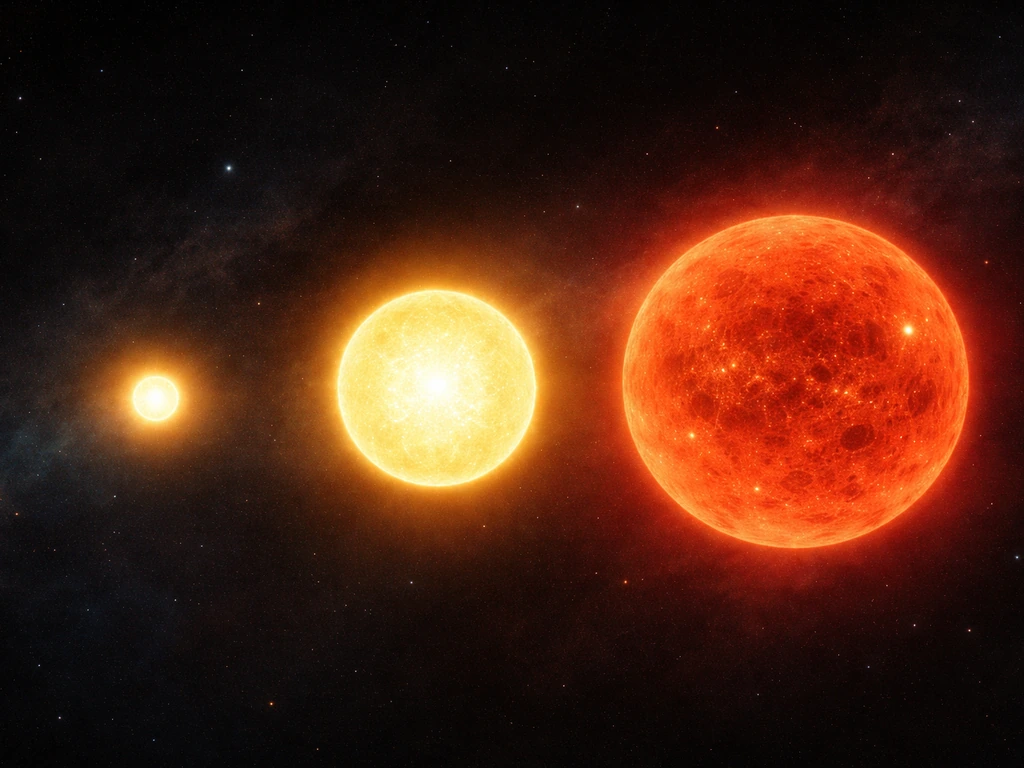
Jupiter, Saturn, Uranus, and Neptune grew large because they were in the right place, at the right time, with enough solid material to build a core fast enough to grab the gas before it disappeared. That is the short answer. The longer answer involves a surprisingly elegant chain of events: solid grains clump into pebbles, pebbles build a rocky-icy core, that core gets massive enough to hold onto a gas envelope, and then gravity takes over in a runaway process that can pile on mass at a staggering rate. Get any step wrong, or run out of time, and you end up with an ice giant instead of a gas giant, or nothing notable at all.
How Did the Giant Planets Grow So Large? Key Processes

Marcus Whitmore
12 Apr 2026
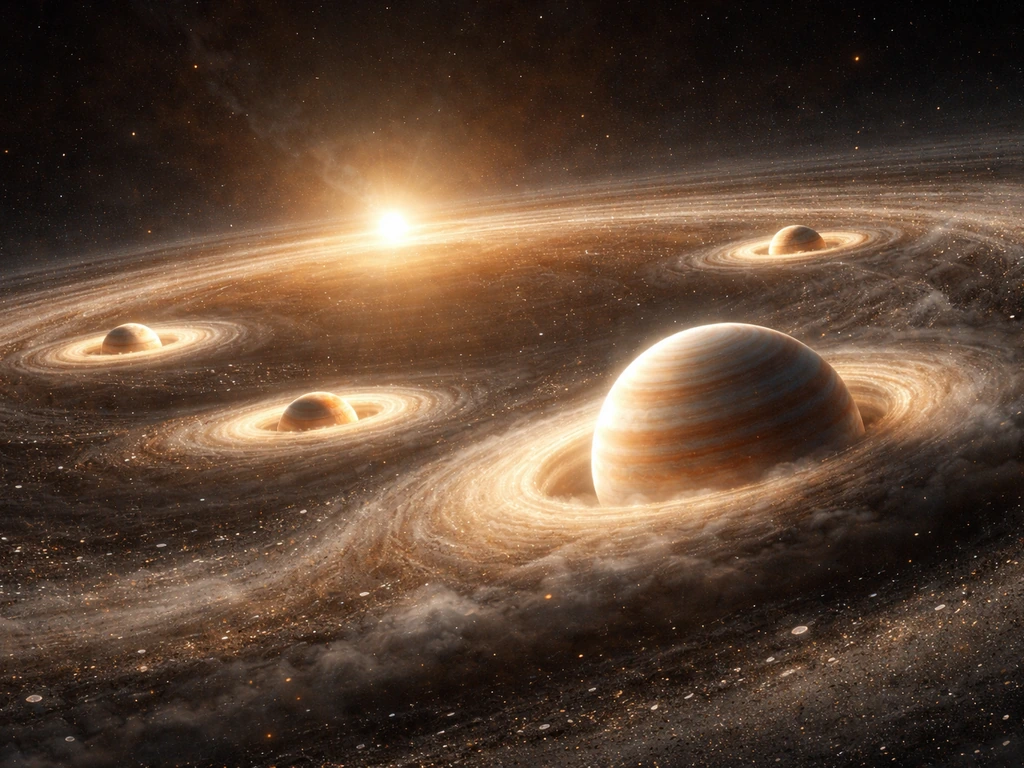
From small cores to big worlds: the main growth stages
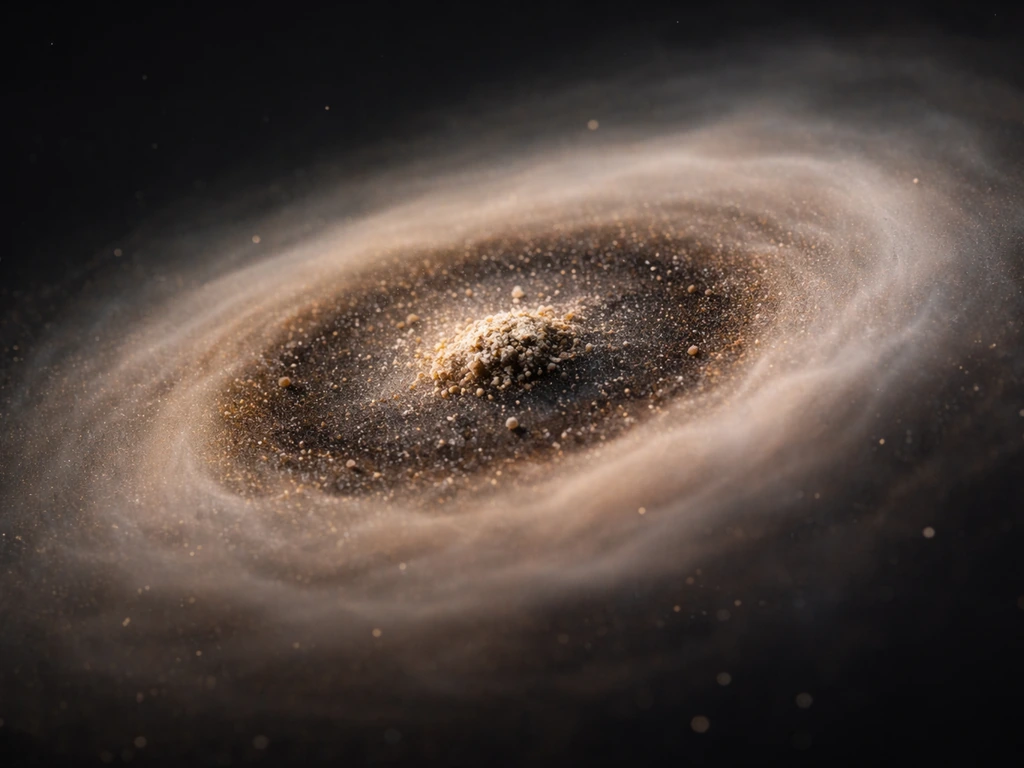
Planet formation starts with dust. In the early solar system, a rotating disk of gas and fine solid particles surrounded the young Sun. Within a few million years, those particles had to go from microscopic grains to something the mass of Jupiter. That sounds impossible, but it happens in recognizable stages that scientists have now modeled in considerable detail.
Stage one is the aggregation of dust and ice into larger solid bodies called planetesimals, typically a few kilometers across. Once you have planetesimals, gravity helps them collide and merge into planetary embryos, sometimes called protoplanets. This phase is messy and competitive, but in the outer solar system, beyond the so-called 'snow line' where water ice can condense (roughly 2.7 AU from the Sun), solid material is far more abundant because ices add to the rocky budget. That extra solid mass is a crucial advantage.
Stage two is where giant-planet formation diverges from terrestrial-planet formation. Once a protoplanet grows to around 10 Earth masses, it becomes massive enough to gravitationally hold onto a significant gas envelope drawn from the surrounding disk. At first the envelope grows slowly, radiating away heat as it contracts (this is governed by what physicists call the Kelvin-Helmholtz timescale). Then something dramatic happens: a threshold called the critical core mass is crossed, where the envelope mass becomes comparable to the solid core mass. At that point, gravity overwhelms the thermal pressure holding gas up, and runaway gas accretion begins. The planet essentially vacuums up enormous quantities of hydrogen and helium in a geologically short time.
Stage three is the shutoff. Growth does not continue forever. As the planet becomes more massive, it carves a gap in the disk around its orbit, physically limiting how much fresh gas can flow in. The disk itself also disperses within a few million years. This timing constraint aligns with core-accretion calculations where gas dissipation in the protoplanetary disk is completed within 1, 10 million years the disk disperses within a few million years. Either mechanism, or both together, brings growth to a halt and sets the final planet mass.
How gas giants accrete mass (planetesimals vs gas inflow)
The dominant model for how Jupiter and Saturn formed is called core accretion, and it runs in two distinct modes: solid accretion first, then gas accretion. Understanding the difference between these modes is key to understanding why giant planets are so much larger than Earth.
Building the solid core
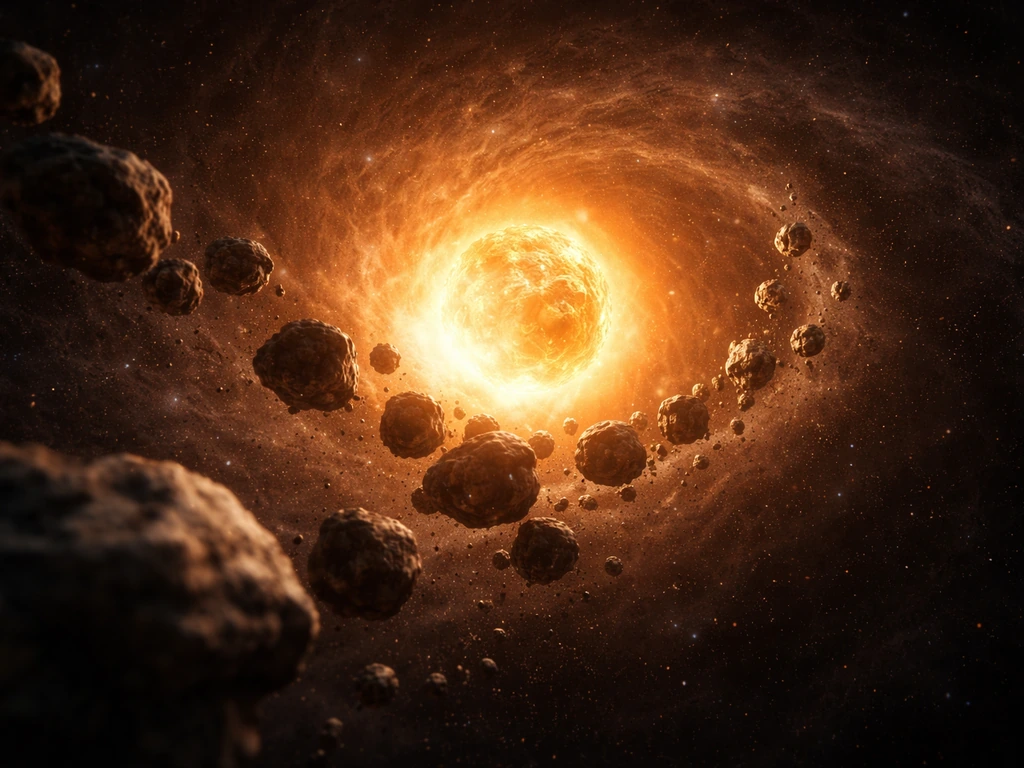
In the classical picture (often called the Pollack-style model after a foundational 1996 paper by Pollack and colleagues), a growing protoplanet sweeps up planetesimals from a feeding zone in the disk. The rate at which this works depends heavily on how much solid material is available, which is why disk composition and metallicity matter so much. A Jupiter-formation calculation at 5.2 AU found that if you crank up the solid surface density, formation takes as little as 1.0 million years. Drop the surface density, and the same process stretches to 4.0 million years, with a much smaller resulting core of roughly 4.7 Earth masses instead of 16.8. That single variable, how many solids are available, can mean the difference between a gas giant forming and the disk running out of time.
The slow envelope phase and crossover
Once a core is substantial, it attracts a gas envelope, but at first this envelope grows slowly. This 'Phase 2' in core-accretion models can be the longest and most precarious part. The envelope is radiating heat and contracting, and the rate at which it can grow is governed by the Kelvin-Helmholtz contraction timescale of the gas. This is where opacity matters: if grains in the atmosphere are large (say, centimeter-sized), the atmosphere is more transparent, cools faster, and contracts faster, speeding up the path to runaway. The crossover point, where envelope mass equals core mass, is the trigger for runaway. Getting to crossover before the disk disperses is the whole game.
Runaway gas accretion
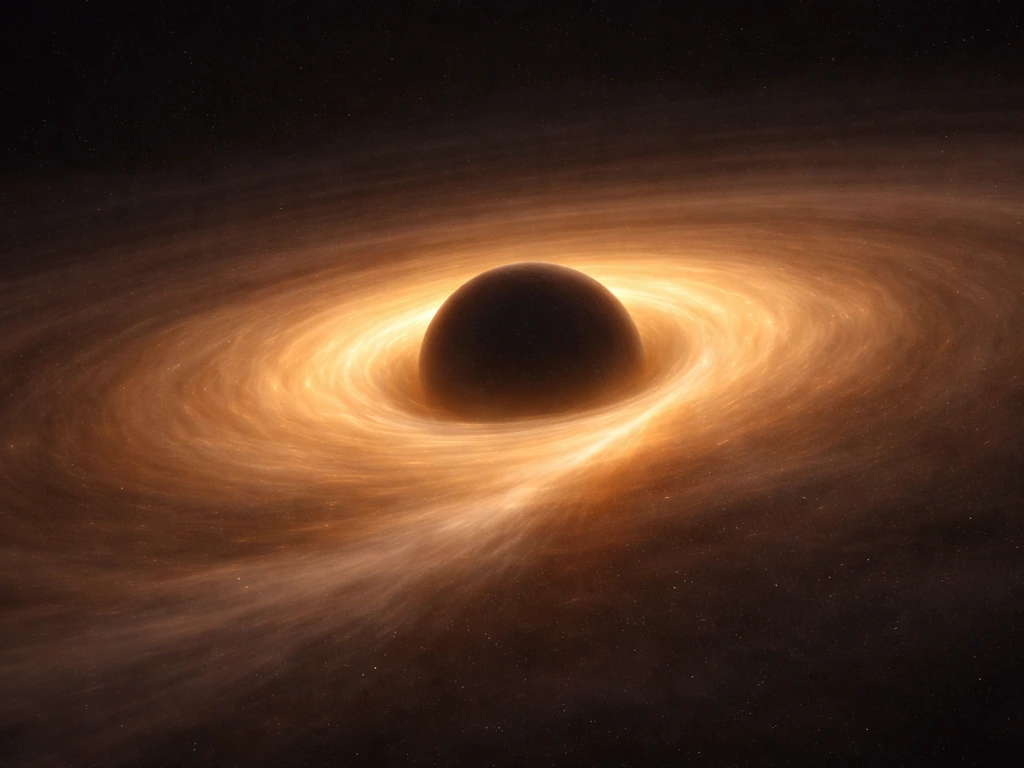
Once runaway begins, it is genuinely fast. Hydrodynamic models find typical runaway gas accretion rates of roughly 10 to 100 Jupiter masses per million years. For context, Jupiter is only one Jupiter mass, so this phase can in principle fill the planet's current mass budget in well under a million years. For smaller planets that never quite reach runaway, accretion rates are far more modest, below about one Jupiter mass per million years. That contrast is why there is such a gap in the solar system between the gas giants and everything else: once you hit runaway, you grow fast.
What sets the upper size limits for gas giants
If runaway gas accretion can pile on mass at up to 100 Jupiter masses per million years, why is Jupiter only one Jupiter mass? Why isn't it a small star? The answer comes from two natural brakes on growth, both of which connect back to the disk.
The first brake is gap opening. As a planet grows massive, its gravitational influence is strong enough to push disk material away from its orbital path, carving a gap. Once a gap opens, fresh gas can no longer flow freely into the planet's feeding zone. The supply shuts off almost like closing a valve. Research specifically modeling this mechanism, titled 'The End of Runaway: How Gap Opening Limits the Final Masses of Gas Giants,' shows that gap opening is not just a side effect of giant-planet formation, it is the primary regulator of final mass.
The second brake is disk dispersal. Protoplanetary disks do not last forever. Observations of young star clusters show that disks become exceedingly rare at ages of 10 million years or more, and the typical window is only 2 to 4 million years. Photoevaporation and other dispersal processes tied to viscous accretion and photoevaporation typically set disk lifetimes of only a few million years disks become exceedingly rare at ages of 10 million years or more. If a planet has not triggered runaway before the gas disk blows away (driven by stellar radiation and winds), it simply cannot become a gas giant, because the raw material is gone. This is a hard deadline, and it is exactly why timing controls so much of the outcome.
A third, subtler limit comes from the planet's own heating during accretion. As gas falls onto the forming planet, it releases gravitational energy as heat, which inflates the envelope and temporarily slows further accretion. This thermal feedback is part of what makes the slow Phase 2 so protracted, and it is a direct parallel to the kind of growth-limiting feedback you see in biological systems: rapid growth produces heat and waste products that slow the process down.
Ice giants: how they end up smaller and different
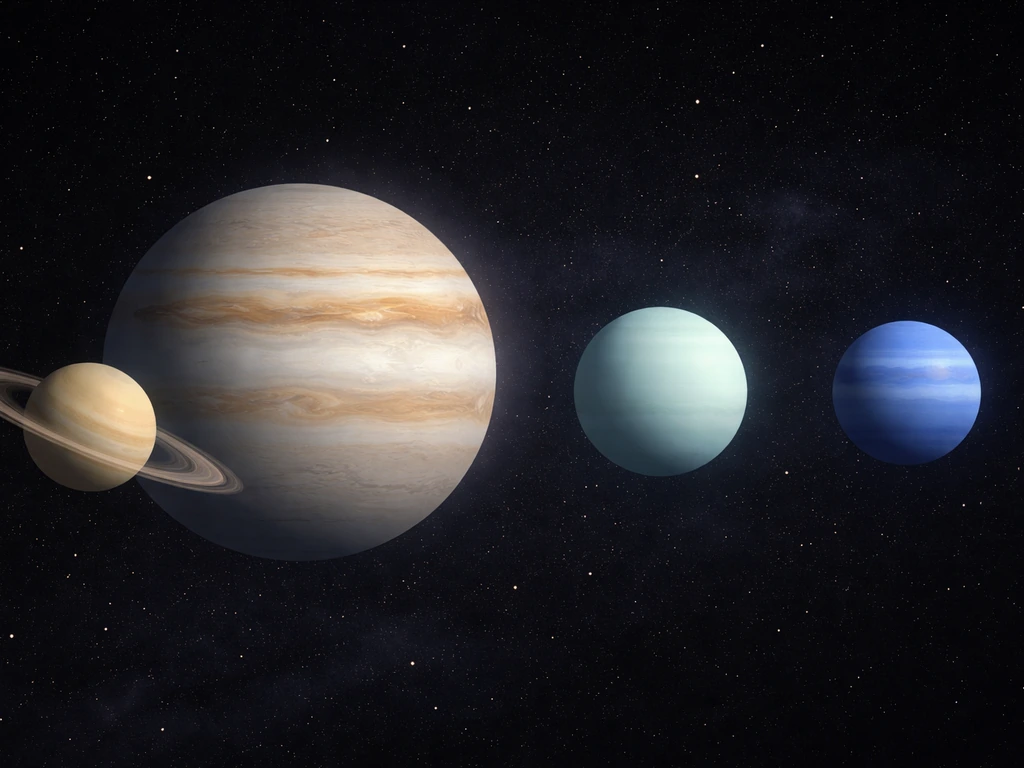
Uranus and Neptune are often described as 'failed' gas giants, but that label undersells what they actually are. They are ice giants, and their composition tells the story of formation that stopped just short of runaway. Roughly 15% of their mass is hydrogen and helium (intermediate between rocky planets and gas giants), and their atmospheres are enriched in heavy elements, including carbon (detectable as methane), nitrogen (as ammonia), and sulfur (as hydrogen sulfide), at levels potentially tens of times the solar ratio. That enrichment is a direct fingerprint of a core-accretion origin.
The leading explanation for why Uranus and Neptune never became gas giants is simple: they were too far out and too slow. At 19 and 30 AU respectively, the solid surface density of the disk was lower, making core growth slower. By the time their cores approached the critical mass threshold, the gas disk had thinned or dispersed, leaving them with modest envelopes rather than the massive hydrogen-helium atmospheres of Jupiter and Saturn. One modeling approach actually reproduces Uranus and Neptune by starting with inward-migrating planetary embryos that get gravitationally blocked by Jupiter and Saturn. This model also has to match a tight observational constraint: Neptune is only about 1.18 times the mass of Uranus, meaning their masses are remarkably similar, and any good formation model has to explain that near-equality.
Formation models for ice giants typically produce heavy-element masses of roughly 10 to 15 Earth masses in their interiors, which is consistent with interior structure models of both planets. The sensitivity of these numbers to disk assumptions, including opacity, solid surface density, and the presence of nearby giant planets, is large. Just as the Moon's growth was shaped by the specific conditions of its formation event, the ice giants' final sizes were shaped by the specific, less favorable conditions they encountered in the outer disk.
How disk conditions and timing control planet growth
If there is one thing you take away from giant-planet science, make it this: the disk is everything. The protoplanetary disk is the medium, the raw material, and the clock all at once, and its properties dictate almost every aspect of giant-planet growth.
Temperature controls what can condense as solids. Beyond the snow line, water ice adds significantly to the solid mass budget, which is why all four giant planets formed there and not closer in. Surface density, essentially how much material per unit area the disk contains, directly sets how fast a core can grow. Opacity determines how fast the envelope can cool and contract toward the crossover point. Disk lifetime caps the entire process. Disk viscosity affects how gas flows inward and how quickly gaps open once a planet is massive enough to carve one.
Stellar metallicity, meaning how many heavy elements the host star (and its disk) contains, is a powerful observational proxy for disk solid content. Higher metallicity means more solid material available for core building, which means faster core growth, which means the critical core mass is reached earlier, which means runaway can happen before disk dispersal. This chain of logic predicts that metal-rich stars should host more giant planets, and observations confirm it emphatically.
Migration also interacts with timing. A planet that migrates inward while growing can move through regions of higher solid density, speeding up core growth and potentially reaching the crossover phase significantly faster than a planet sitting at a fixed orbit. Including migration in formation models can bring the calculated timescale down to within the observed disk lifetime window, which is one reason migration is now a standard ingredient in realistic models.
There is a useful parallel here to how growth works in biological systems: nutrients, timing, and environmental conditions all impose hard limits. Just as a cell cannot divide faster than its molecular machinery allows, a planetary core cannot grow faster than the disk's solid supply permits. And just as the Earth's size over geological time reflects the accumulation of material under specific conditions, each giant planet's final mass reflects the precise disk environment it formed in.
Evidence and constraints from exoplanets and solar system planets
We now have thousands of confirmed exoplanets, and they have transformed our ability to test giant-planet formation models. Several patterns in that data strongly favor core accretion as the primary formation channel.
The metallicity-giant-planet correlation is one of the clearest results in exoplanet science. Stars with roughly twice the solar metal content host giant planets around 25% of the time, compared to only a few percent for metal-poor stars. The fraction of stars hosting giant planets scales approximately as f ∝ 10^(1.2[Fe/H]), meaning each doubling of metal content multiplies the giant-planet occurrence rate by a substantial factor. Giant-planet occurrence also rises with stellar mass, from about 3% around low-mass M dwarfs to roughly 14% around more massive A-type stars, consistent with more massive stars having more massive and longer-lived disks.
Our own solar system provides constraints too. Jupiter's bulk composition, enriched in heavy elements relative to the Sun, tells us its core was built from solids before gas was accreted. Saturn is even more enriched, consistent with its core making up a larger fraction of its total mass. Uranus and Neptune's high heavy-element enrichment factors, potentially tens of times the solar value in their outer atmospheres, are hard to explain without a solid-core-first formation pathway.
The mass-distance trend in exoplanets, where the most massive planets tend to be found at intermediate distances rather than the outermost orbits, also fits the core-accretion picture: too close to the star, and solids are depleted; too far out, and the core grows too slowly to reach runaway before disk dispersal. The sweet spot is roughly the snow-line region, exactly where Jupiter and Saturn sit. It is worth connecting this to the broader question of whether the Earth itself could ever grow significantly larger, which highlights just how special the conditions for giant-planet formation really were.
Big takeaway models: comparing competing formation scenarios
Two main formation scenarios compete in the literature: core accretion and disk instability. They make different predictions, suit different environments, and both have strengths and weaknesses worth understanding.
| Feature | Core Accretion | Disk Instability |
|---|---|---|
| Basic mechanism | Solid core forms first, then captures gas envelope | Disk self-gravity causes direct fragmentation into a gas clump |
| Required condition | Solid surface density high enough for fast core growth; disk lifetime long enough | Disk mass high enough for Toomre Q < ~1.4; cooling fast enough (β close to 1) |
| Timescale | 1–6 million years depending on disk conditions | Very fast, potentially ~1000 years for the clump to form |
| Preferred location | Near the snow line (2–10 AU) | Outer disk (beyond ~50–100 AU) where cooling is faster |
| Heavy-element enrichment | Naturally produces enriched planets (solid core remains) | Less naturally enriched; clump composition close to stellar |
| Metallicity dependence | Strong: more metals = more solids = faster growth | Weak: depends mostly on disk mass and cooling rate |
| Best evidence for | Metallicity correlation, solar system compositions, ice-giant masses | Some directly imaged wide-orbit giants, massive disk observations |
| Main weakness | Timescale can exceed disk lifetime without migration or high solid density | Requires very specific cooling and disk-mass conditions; fragmented clumps often migrate or disperse |
For disk instability to work, a disk needs to be both massive enough (Toomre Q below about 1.4) and cool fast enough (with the dimensionless cooling parameter β roughly comparable to 1, meaning cooling on timescales similar to the orbital period). Early disks around young stars can in principle meet these criteria in their outermost regions, and some directly imaged giant planets on very wide orbits are plausible disk-instability products. But for the solar system giants, the metallicity correlation and heavy-element enrichment data are much easier to explain with core accretion.
There is also a hybrid idea worth knowing: core-assisted gas capture instability, where a modest solid core helps trigger gravitational instability in an otherwise marginally stable disk. This sits between the two classic scenarios and is a reminder that planetary science rarely resolves neatly into two camps.
Comparing planet formation to other large-scale growth processes in nature is genuinely useful for building intuition. How galaxies grow involves similar feedback-limited accretion: gas flows in, triggers star formation, and the resulting energy output regulates further inflow. Stars themselves grow through accretion from a surrounding disk, and their final mass is also set by a feedback shutoff, in their case radiation pressure. Even the way volcanoes grow by accumulating material layer by layer until internal pressure limits further expansion echoes the core-accretion story. Growth in nature almost always involves a resource-limited buildup phase followed by a rapid expansion phase, followed by a shutoff mechanism. Giant planets are just one dramatic example of that universal pattern.
What to master next if you want to go deeper
If this topic grabbed you, here are the concepts worth spending time on, in roughly the order that will build your understanding most efficiently.
- The Toomre Q parameter: the single number that describes whether a disk can fragment under its own gravity. Understanding Q gives you immediate intuition for when disk instability is even physically possible.
- Kelvin-Helmholtz contraction: the process by which a gravitationally bound gas envelope slowly cools and contracts. This timescale governs the slow Phase 2 of core accretion and is the rate-limiting step for giant-planet formation.
- Critical core mass and the crossover point: the ~10 Earth mass threshold where envelope mass catches up to core mass and runaway begins. Know this number and what makes it vary (opacity, composition, orbital distance).
- Gap opening criteria: the conditions under which a planet becomes massive enough to clear a gap in the disk. This is the primary shutoff mechanism for runaway gas accretion.
- Disk lifetime observations: cluster-age statistics showing that gas disks are typically gone within 2 to 10 million years. This is the hard deadline that all formation models must beat.
- Planet-metallicity correlation: the observational result that giant-planet occurrence scales strongly with stellar metal content, the clearest population-level evidence for core accretion over disk instability.
- Pebble accretion: a more modern version of solid accretion where centimeter-to-meter-sized 'pebbles' are accreted far more efficiently than classical planetesimals, potentially shortening Phase 1 dramatically and solving some of the timescale problems in classical models.
For broader context, it also helps to understand how the Sun's own growth and output affected the disk. The Sun's evolution over time directly influenced disk temperature and lifetime, which in turn shaped where and when giant planets could form. And if you want to think about growth limits more broadly, the question of how gravitational attraction scales with mass and distance in space gives you the physical backbone for understanding why runaway accretion is self-reinforcing up to the gap-opening limit.
The giant planets grew large because the early solar system had the right amount of solid material in the right place, and the disk lasted just long enough for cores to reach the critical mass needed to trigger runaway gas accretion. Jupiter made it all the way. Saturn made it most of the way. Uranus and Neptune got close but ran out of time and gas supply. That is not a failure, it is the natural consequence of a growth process governed by timing, resources, and feedback, the same principles that govern growth in every other system we study.
FAQ
What is the single most important factor for how did the giant planets grow to be so large?
Reaching the critical core mass before the gas disk disappears. Even if the disk has plenty of solids, late formation means the envelope cannot grow into the runaway regime, because the hydrogen-helium supply is cut off by disk dispersal.
Why don’t all protoplanets become gas giants if core accretion can run away?
Runaway requires both a large enough core and fast enough cooling of the envelope. If the atmosphere is too opaque (too much grain material), the Kelvin-Helmholtz contraction slows, so the core may never trigger crossover while gas is still available.
How does a planet’s distance from the Sun affect how large it can get?
Distance changes both the solid surface density and the available time window. Farther out, solids are usually more abundant beyond the snow line, but disks can also be more dilute, so core growth may be too slow to hit crossover before the gas disperses.
Why are Jupiter and Saturn much larger than Uranus and Neptune, if all formed from the same disk?
Uranus and Neptune likely formed with slower core growth and then missed the gas-rich runaway window. Their interiors show substantial heavy elements, consistent with cores building up, then getting limited by lower gas supply or earlier shutoff than Jupiter and Saturn.
What role do “migration” and “feeding zones” play in making giant planets grow quickly?
Migration can move a growing embryo into regions with higher solid surface density, expanding the effective reservoir of planetesimals it can capture. Without that mobility, many cores would cross the critical mass too slowly to start runaway inside the typical disk lifetime.
Does metallicity matter only for forming the core, or does it also affect gas accretion?
It affects both, indirectly. Higher metallicity boosts solid buildup, so the core reaches critical mass earlier, and earlier crossover gives more time for rapid gas accretion before gap opening and disk dispersal can stop growth.
Why does gap opening cap the final mass of a gas giant?
Once the planet is massive enough to carve a gap, it throttles the inflow of fresh gas from the disk. In practice, the final mass depends on how quickly the disk can refill the gap, which is controlled by disk viscosity and the planet’s growth rate.
What determines whether a “runaway” really happens, versus a slow envelope buildup?
The envelope must cool and contract fast enough to reach the crossover point where envelope mass is comparable to core mass. Large atmospheric opacity and strong heating from accretion can delay crossover, pushing the planet into the “failed gas giant” category.
Is there a reason Jupiter is not a small star even though runaway can be extremely fast?
Two brakes dominate, gas supply and disk structure. Gap opening reduces the supply, and disk dispersal removes the remaining gas entirely, so the planet’s growth shuts off long before it could approach stellar-like masses.
How can exoplanet observations distinguish formation pathways if both core accretion and disk instability can make giant planets?
Core accretion predicts stronger links to host metallicity and heavy-element enrichment, while disk instability is less dependent on solids. Also, the typical orbital distances and masses that are easiest to make can differ, because disk instability favors large, cool, rapidly evolving disks at specific radii.
What common modeling mistake leads people to misunderstand “how the giant planets grew”?
Treating each planet as evolving in isolation. In realistic systems, nearby forming giant planets can alter disk structure, which changes both solid availability and gas flow rates, shifting which planets reach runaway first.
Could Uranus and Neptune have grown into gas giants if the disk lasted longer?
Potentially, but not automatically. Even with more time, their slower core growth at larger distances could still limit crossover unless solids and disk conditions were favorable enough to offset the slower buildup.
What sets the heavy-element enrichment in giant and ice giants?
It mainly reflects how much solid material the planets accreted during core formation and envelope growth, plus how efficiently solids settle into the interior. If accretion stalls before runaway, the planet tends to end up with a higher fraction of heavy elements relative to total mass.
Next Article
Do Stars Grow? How Size and Mass Change Over Time
Learn how stars change size and mass over time, why they expand in later stages, and what limits growth.