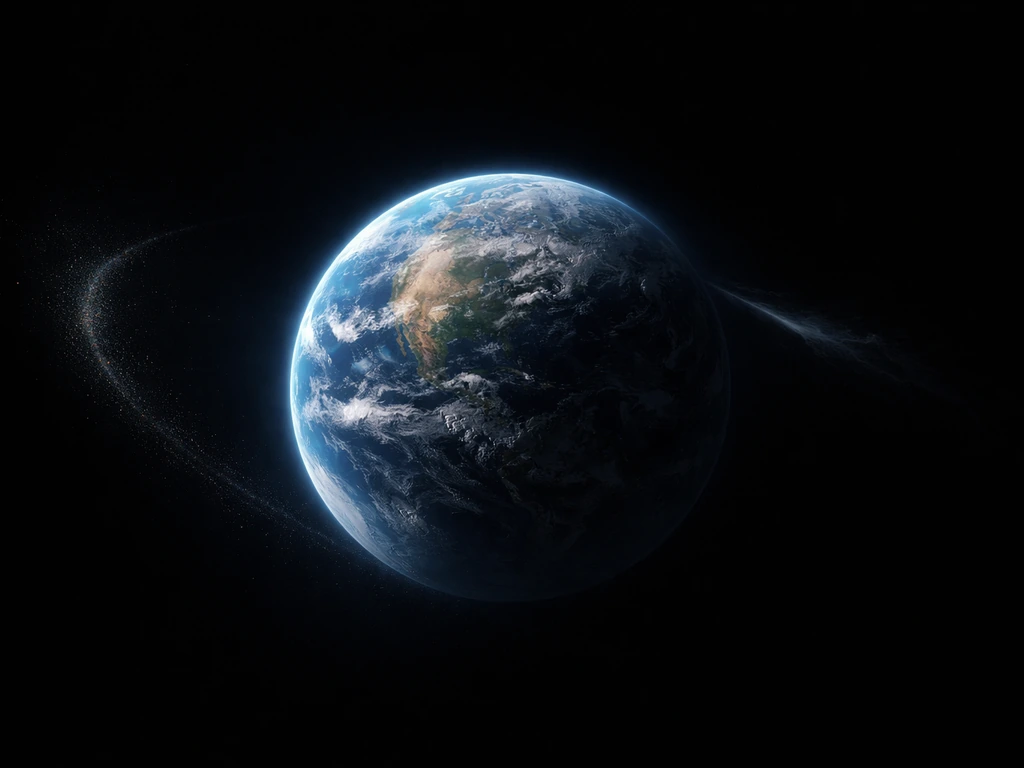
It depends entirely on what you mean by 'attraction.' If you mean physical forces like gravity or electromagnetism, those forces follow the same laws in space as on Earth, but the environment strips away competing effects so they can feel more dominant in some situations and negligible in others. If you mean biological growth, as in whether living cells and organisms grow differently in space, then yes, space changes things in measurable and sometimes surprising ways. Neither interpretation gives a simple yes or no, so let's work through both.
Does Attraction Grow in Space? Forces and Biology Explained

Marcus Whitmore
27 Apr 2026
What 'attraction' actually means here
The word 'attraction' does a lot of heavy lifting depending on context. In physics, attraction usually means a force pulling two objects toward each other, most commonly gravity, but also magnetic attraction, electric attraction between opposite charges, and intermolecular forces like van der Waals attraction. In biology and the study of growth, attraction can refer to how cells adhere to surfaces or to each other, how nutrients are drawn toward growing tissue, or even how organisms orient themselves toward light or chemical gradients. On a site focused on how things grow, the most relevant questions are: do these attractions work the same way in space, and does removing Earth-like conditions change how growth unfolds?
Gravity: still there, just not felt
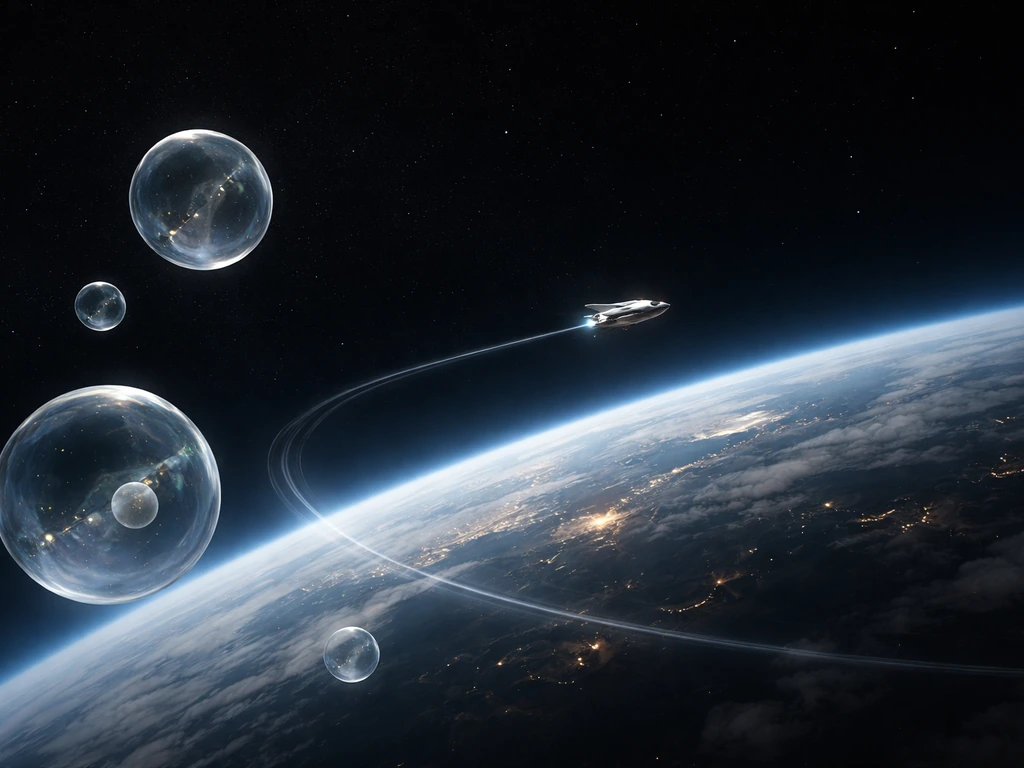
A spacecraft in orbit around Earth is not escaping gravity. It is in continuous free fall, curving around the planet because its forward speed matches the rate at which it falls. The crew and everything inside are all falling together, which is why nothing presses against anything else. NASA describes this condition as microgravity: not zero gravity, but a near-zero net force experienced by objects inside the falling vessel. Gravity's pull on a star or planet weakens with the square of the distance, so gravitational attraction does decrease as you move farther away, but in low Earth orbit you are still experiencing roughly 90 percent of Earth's surface gravity. The sensation of weightlessness is about free fall, not distance.
Electromagnetic and molecular attraction
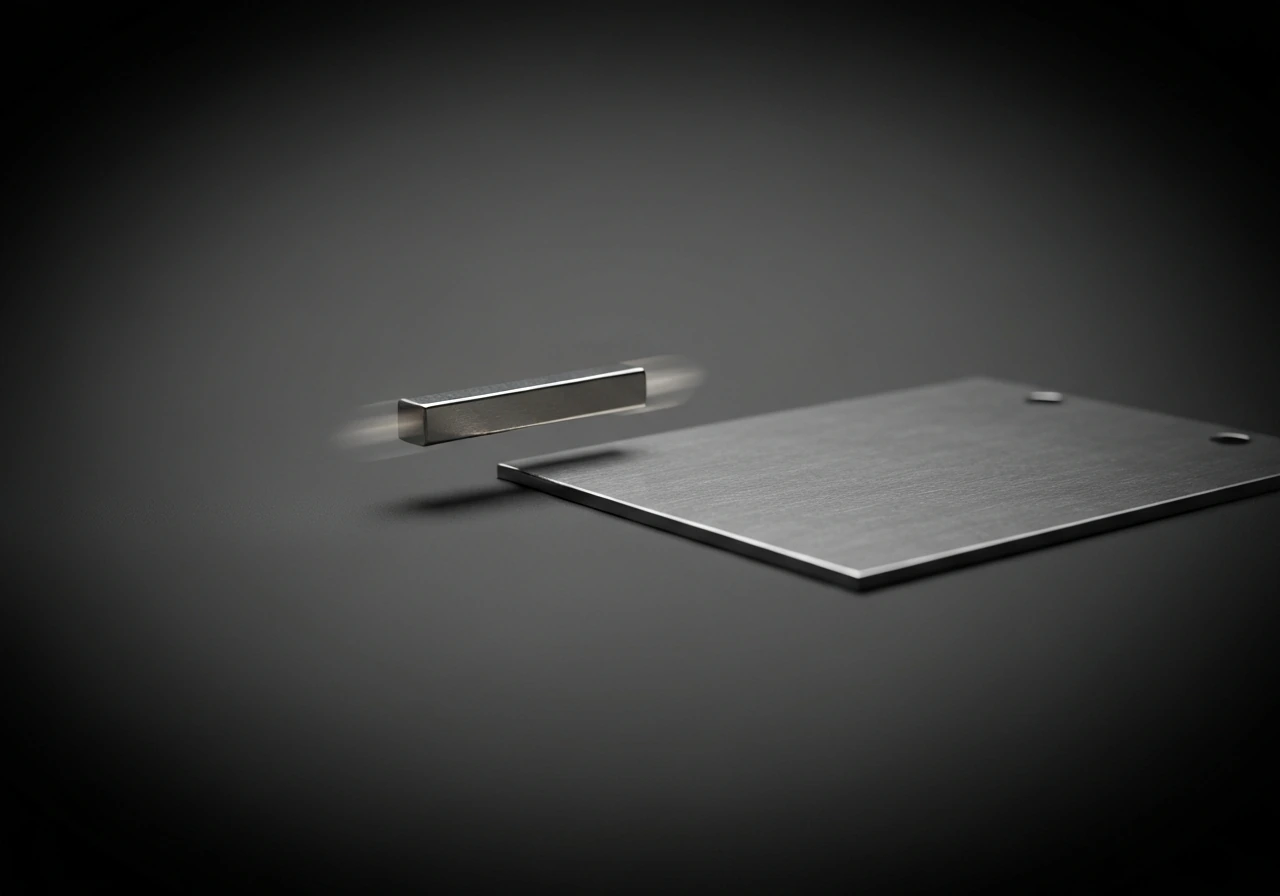
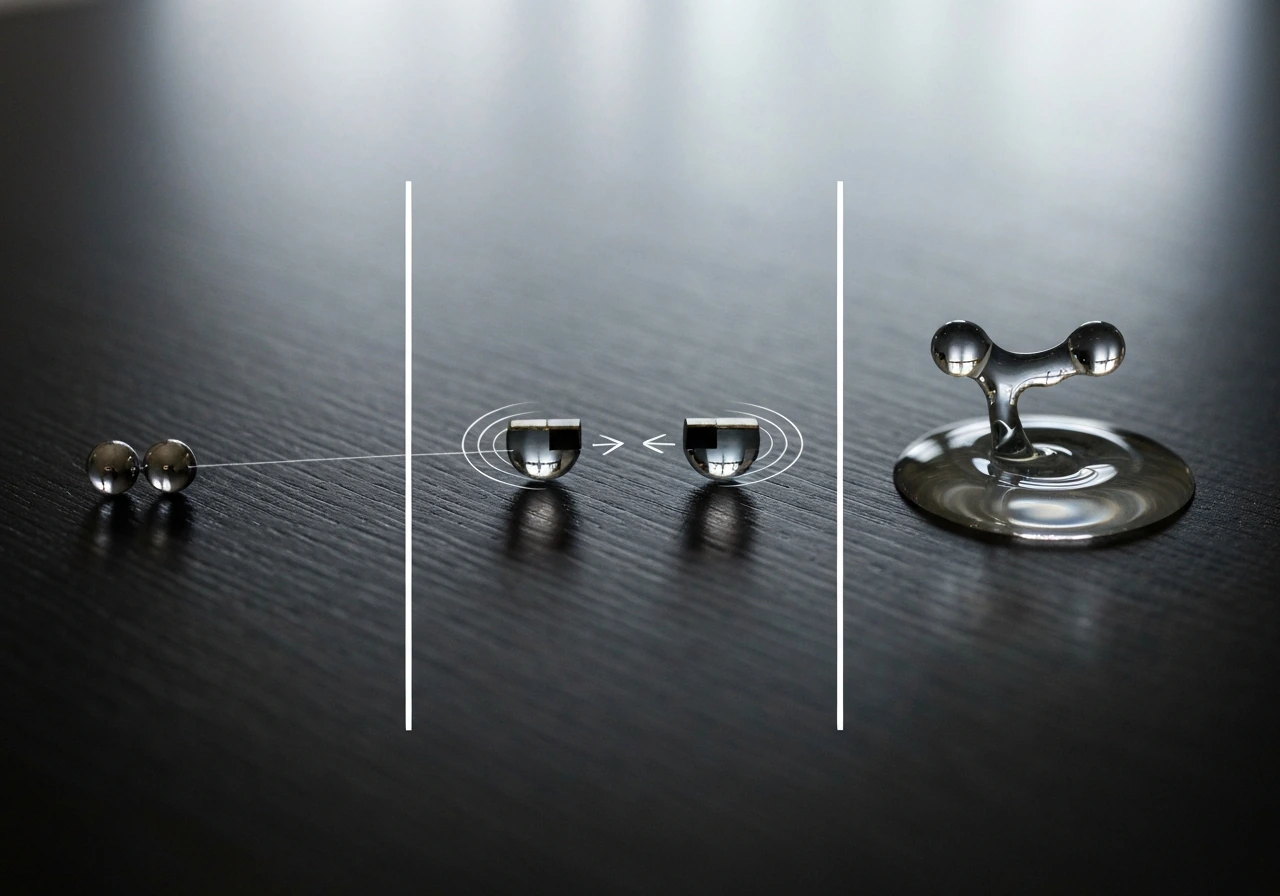
Magnetic and electric forces follow their own inverse-square laws and are completely unaffected by microgravity. A magnet sticks to metal in space just as firmly as on Earth. At the molecular scale, van der Waals forces and ionic attraction between charged particles are also unchanged. What does change is that without gravity pulling liquids downward, surface tension and molecular adhesion become the dominant forces shaping how fluids behave. A water droplet in microgravity pulls itself into a perfect sphere because molecular attraction to itself now wins against the gravitational flattening that occurs on Earth.
How space conditions change the forces that matter for growth
Three conditions change most dramatically in microgravity, and all three have real consequences for how growth works.
- Microgravity: Without a net downward pull, cells, particles, and fluids no longer settle by density. There is no sedimentation, so a heavy protein does not sink to the bottom of a cell culture well.
- Loss of buoyancy: On Earth, buoyancy is a gravitational effect. Hot, less-dense fluid rises; cool, denser fluid sinks. Remove gravity and you remove buoyancy-driven circulation entirely.
- Reduced convection: Because buoyancy is gone, the convection currents that normally mix gases and liquids around a growing organism or cell culture disappear. Heat and waste products build up locally instead of being carried away.
Think of it like baking bread in a perfectly still oven with no air movement. The yeast produces CO2, which normally disperses, but without convection the gas accumulates right around the dough. In space, the same principle applies to any growing system: metabolic waste, oxygen depletion, and heat all concentrate locally rather than dispersing. That changes the chemical environment a growing cell or tissue experiences, even if the molecular forces of attraction within the cell are identical to those on Earth.
Do organisms grow differently in space?
Yes, and the changes show up at multiple levels, from individual cells up to whole organisms. Microgravity does not simply pause or accelerate growth uniformly. It disrupts the signals and transport mechanisms that cells rely on to grow in a controlled, organized way.
Cell division and the cytoskeleton
Cells sense mechanical forces through structures in their cytoskeleton, the internal scaffolding that also guides mitosis. In microgravity, those mechanosensory signals change because the cell is no longer being pulled in any direction. Studies have found altered gene expression patterns in cells grown in orbit, including changes in genes governing cell cycle progression, stress responses, and apoptosis (programmed cell death). The spindle apparatus that separates chromosomes during mitosis is particularly sensitive because it depends on internal tension. Some cell types show slower division rates in microgravity; others show abnormal orientation of cell division planes.
Tissue and organism-level development
In multicellular organisms, growth is not just about cells dividing. It requires those cells to migrate, adhere to each other in the right geometry, and receive positional signals. Gravity helps establish body axes in many developing embryos. Remove it, and some embryos show disorganized tissue patterning. Plant roots, which normally grow downward in response to gravity (gravitropism), lose directional cues in microgravity and grow in random spirals. Bone-forming cells (osteoblasts) reduce activity while bone-resorbing cells (osteoclasts) become more active, which is why astronauts lose bone density at roughly 1 to 2 percent per month in microgravity. Muscle mass similarly decreases without the constant mechanical load that gravity imposes.
Physical limits on growth in space
The same constraints that limit growth on Earth still apply in space, and in some cases they become harder to overcome without gravity helping out.
| Growth Constraint | On Earth | In Microgravity |
|---|---|---|
| Nutrient delivery | Driven by diffusion and convection currents | Only diffusion; concentration gradients build up faster |
| Waste removal | Convection and fluid flow carry waste away | Waste accumulates locally; must be actively managed |
| Gas exchange (O2/CO2) | Buoyancy drives mixing of respiratory gases | Gases stagnate near tissue surfaces without forced flow |
| Structural support | Gravity requires strong skeletal or cell wall support | Less mechanical load; structures can be lighter but also weaken |
| Energy supply | Metabolic rate partly set by gravitational workload | Lower baseline workload but radiation exposure increases energy damage |
Radiation is a constraint that barely registers on Earth's surface but becomes significant in orbit and beyond. High-energy particles from the sun and cosmic rays cause DNA strand breaks, which can halt the cell cycle or trigger mutations. In that same context, the sun’s energy output also matters for growth because high-energy particles from it can damage DNA in space the sun grows every year. This adds an upper limit to how long any biological growth experiment in deep space can run before radiation damage outpaces growth and repair.
What actual experiments have found
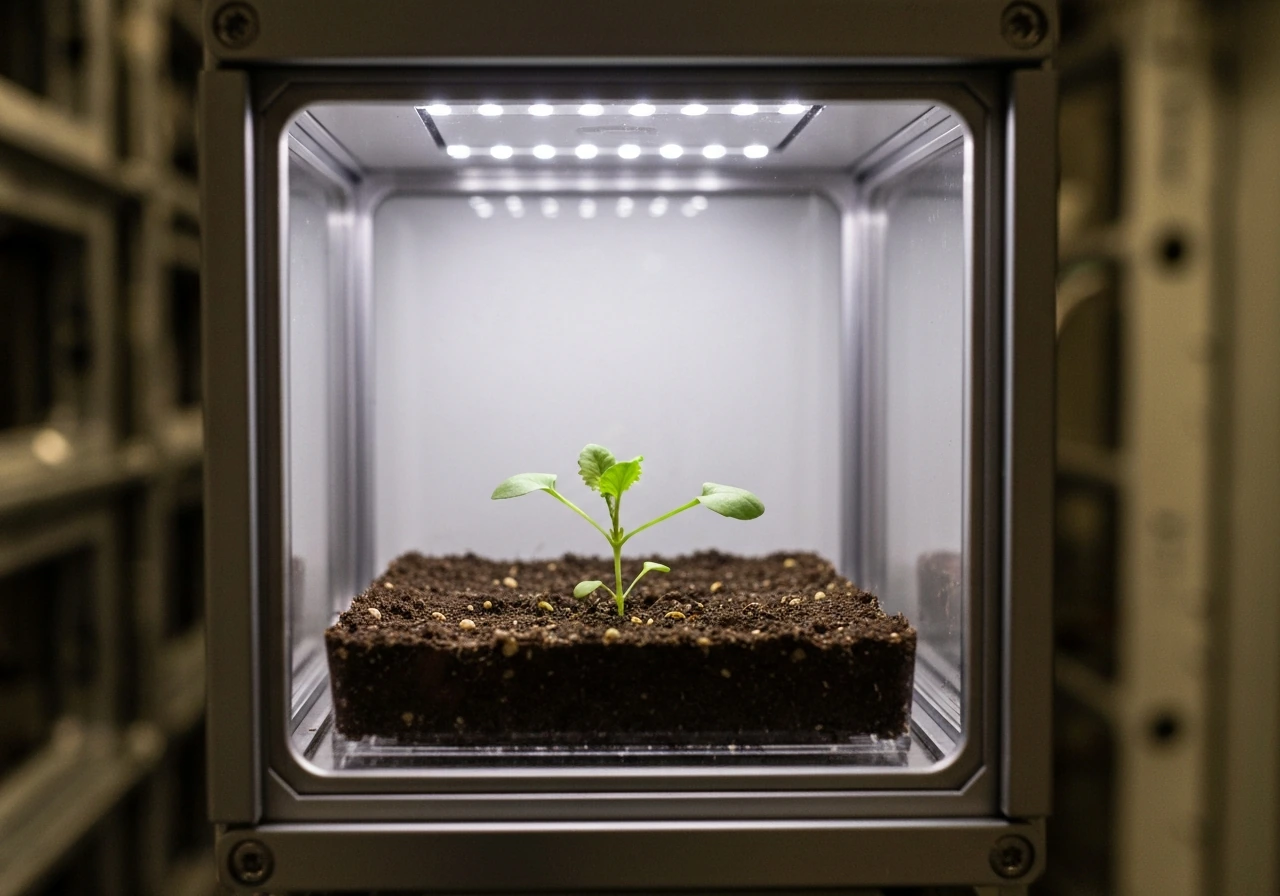
Decades of experiments on the International Space Station and earlier platforms have built a reasonably clear picture, even if the details remain an active area of research.
- Plant growth experiments: Arabidopsis thaliana (a model plant) has been grown through full life cycles in orbit. Roots grew in random orientations without gravitropism, but the plants still completed their life cycles, flowered, and produced seeds. Growth rates were comparable to Earth controls when nutrient delivery was carefully managed.
- Bacterial cultures: Some bacterial strains, including Salmonella, show increased virulence and altered growth rates in microgravity. Others grow into different three-dimensional colony structures because sedimentation no longer flattens them.
- Mammalian cell cultures: Human cell lines grown in rotating bioreactors (simulated microgravity on Earth) and in orbit show altered cytoskeletal organization, changed gene expression, and in some cancer cell lines, reduced tumor-like behavior due to the loss of mechanical cues that drive invasion.
- Bone and muscle tissue: Consistent loss of bone mineral density and muscle mass in astronauts confirms that gravitational loading is a genuine growth and maintenance signal for these tissues. Without it, the body actively dismantles structures it no longer needs to support.
- Crystal growth: Protein crystals grown in microgravity are often larger and more ordered than Earth-grown equivalents, because sedimentation and convection on Earth introduce imperfections. This is a case where removing gravity genuinely improves a growth-related outcome.
It is worth noting that other growth-in-scale questions across this site follow a similar pattern: growth is always about the interaction between internal drive and external constraints. Whether you're asking how galaxies grow by merging, how stars accumulate mass, or how the Earth's interior changes over time, the story is always about what forces drive accumulation and what limits cap it. In that bigger picture, astronomers study how galaxies grow as they merge, accrete gas, and transform over cosmic time. This same growth-over-time idea also applies to the Earth itself, so does the planet grow or change in size as time passes how the Earth's interior changes over time.
How to test growth and attraction effects yourself
You can't easily get to orbit, but you can design experiments on Earth that isolate specific variables. Here are practical setups depending on which meaning of 'attraction' you care most about.
Testing the role of gravity in biological growth
A clinostat is a device that slowly rotates a growing sample so that gravity acts equally from all directions over time, simulating the disorienting effect of microgravity. A simple rotating platform (even a record player running slowly) can mimic this for plant seedlings. Grow two sets of seedlings: one flat on a stationary surface, one on a slowly rotating disc. Track root orientation, shoot angle, and growth rate every 24 hours for one to two weeks. You will see the stationary seedlings show clear gravitropism while the rotating ones show random or circular root paths.
Testing convection's role in growth and transport
Fill two identical glasses with warm water and add a drop of food coloring to each. Leave one still and gently stir the other. Watch how long the dye takes to distribute evenly. The unstirred glass shows you what diffusion-only transport looks like, which is essentially what a growing cell cluster faces in microgravity. Now replace the food coloring with a nutrient solution and a fast-growing yeast culture and measure CO2 production (using a balloon over the top) in both conditions. The stirred vessel should show faster growth because transport is not limiting.
Measuring physical attraction forces directly
To explore how gravitational attraction weakens with distance, set up a simple pendulum at different altitudes if you can (a mountain vs. sea level) and measure its period. The period is slightly longer at altitude because gravitational acceleration is weaker. Even a 1,000-meter altitude difference produces a measurable change with a precise timer. This directly demonstrates the inverse-square weakening of gravitational attraction that governs everything from a falling apple to a spacecraft in orbit.
What to track and how to interpret results
- Growth rate: measure length, mass, or cell count at consistent intervals; compare rotating vs. stationary, or stirred vs. unstirred
- Orientation: photograph root and shoot angles daily; quantify deviation from vertical as your 'gravitropism score'
- Adhesion or clustering: if working with yeast or bacteria, note whether colonies remain as dispersed single cells or aggregate into masses under different conditions
- Gas production: balloon inflation volume is a rough proxy for metabolic activity and growth
- Structural differences: compare the firmness, thickness, or density of plant stems grown under different mechanical load conditions; a potted plant grown sideways will show asymmetric stem thickening as it responds to gravity from a new angle
Practical takeaways depending on what you were actually asking
If you were asking about physical forces: gravitational attraction does not 'grow' in space. It follows the same inverse-square law everywhere, weakening with distance. What changes in orbit is not the force itself but the balance between forces, and the absence of weight means other forces like surface tension, molecular adhesion, and electromagnetic attraction become more visually obvious. Nothing about the universe makes attraction stronger in space; you just remove some of the competition.
If you were asking about biological growth: space absolutely changes how growth works. The question does the moon grow fits this same idea, because whether an object’s growth is physical or biological depends on the environment and forces acting on it. In that sense, do stars grow in the same way, or does gravity and the surrounding environment dominate the growth process biological growth.
Giant planets are another case where the environment and physical constraints shape how much mass can accumulate as the system evolves stars grow. These same growth-and-constraints ideas also help explain how do volcanoes grow, since magma movement is shaped by heat, pressure, and what the surrounding rock allows. Microgravity disrupts mechanical signaling, removes convection-driven transport, alters gene expression, and imposes radiation stress.
Some growth processes improve (crystal growth, certain cell culture geometries), but most organism-level growth is slower, less organized, or structurally degraded without gravitational loading. NASA reports that the RTPCG program has grown protein crystals in microgravity that are larger and of higher resolution Some growth processes improve (crystal growth, certain cell culture geometries).
The fundamental mechanisms of cell division and mitosis still operate, but they work inside an environment that keeps sending the wrong signals.
For educators and students, the best next step is to pick one of the experiment designs above and run it. Watching a seedling root spiral in a clinostat or seeing how sluggish an unstirred nutrient solution is compared to a stirred one makes the abstract concept of gravity-dependent transport immediate and testable. The bigger lesson is one this site returns to again and again: growth is never just about having the right internal machinery. It is always the product of internal drive meeting external constraints, and changing the environment changes the outcome.
FAQ
If gravitational attraction gets weaker farther away, why does it feel like “attraction” is stronger in space?
No, attraction does not “grow” with distance. The underlying force laws stay the same everywhere, for example gravity weakens roughly as 1 divided by distance squared. What changes in space is that many other effects (like weight-driven settling, buoyancy-driven convection, or pressure from a floor) are removed, so attraction between particles can look more dominant in experiments.
Does microgravity stop cell division, or does it just change how cells grow?
In most spaceflight experiments, microgravity mainly changes the environment around cells, especially transport and mechanical loading. Even when cells have the same internal molecular machinery, they can experience different oxygen and nutrient delivery, waste accumulation, and altered cytoskeletal tension, which then shifts gene regulation and growth outcomes.
Are there any cases where growth actually improves in microgravity?
It can. Some in vitro systems show improved or more uniform crystal growth and certain tissue-engineering outcomes under low-shear conditions, while many organism-level growth processes slow down or become structurally weaker. The direction of the effect depends on the specific tissue, scaffold, and whether the study is transport-limited or signal-limited.
Why do two experiments in “microgravity conditions” sometimes disagree, even with the same organism?
Yes. If your experiment relies on fluids, the surface and container geometry can dominate in low gravity. Without gravity-driven flow, capillary forces, wettability, and droplet shape can control where nutrients and cells go, so two “microgravity” setups that look similar can yield different growth patterns.
How accurate are ground-based microgravity simulators like clinostats?
Clinostats and rotating platforms mimic some aspects of microgravity, but they do not reproduce true free-fall. A clinostat averages the direction of gravity over time, yet it can still introduce small residual accelerations and shear stresses, which may affect sensitive cell types.
What makes microgravity transport effects show up in one experiment but not another?
Diffusion-only transport is much slower than mixing, but the relevant rate depends on diffusion length scale and fluid properties. For cell clusters, increasing the thickness of the sample or leaving media unstirred can quickly push growth into a transport-limited regime, exaggerating microgravity-like effects.
How quickly would you expect growth changes after moving to space conditions?
Often, but it depends on the timescale. For plants and many cell cultures, changes in growth direction or division patterns can appear within days. Bone and muscle changes are slower and reflect repeated unloading over weeks to months, so “what you see” depends on whether you measure short-term signaling or long-term remodeling.
Do radiation and temperature differences make microgravity effects look stronger or weaker?
Not all space environments are the same. Radiation dose, temperature cycling, and residual acceleration (from spacecraft operations) vary with orbit type and mission design. Those factors can either compound microgravity effects or, in some cases, partially mask them.
What experimental variables most strongly influence whether microgravity reduces growth or changes cell organization?
Yes, the initial setup matters. Cell density, scaffold stiffness, media composition, and oxygenation strategy can change which constraint is limiting. If oxygen is already abundant and convection is minimized, microgravity may mainly shift mechanical signaling, whereas if oxygen is marginal, transport limits can dominate growth changes.
If there is no gravity pressing on cells, what mechanical forces are they responding to?
You cannot assume “no gravity” means “no mechanical forces.” Even in microgravity, cells experience tension, adhesion forces, and forces generated by their own contractility and fluid shear at the microscale. Many observed effects come from losing consistent external loading, which changes how internal forces reorganize.
Next Article
Does the Earth Grow Over Time? Size, Mass, and Evidence
Explains if Earth grows over time by size or mass, compares accretion vs mass loss, and links tectonics to measurable ch