Yes, stars grow, but not in the simple way you might picture. A star doesn't steadily expand like a balloon being slowly inflated. Instead, what grows depends entirely on which phase of a star's life you're looking at. Sometimes mass is accumulating. Sometimes radius balloons outward. Sometimes both contract. The story of stellar growth is really a story about competing forces, finite fuel, and a series of dramatic phase changes that stretch across billions of years.
Do Stars Grow? How Size and Mass Change Over Time

Marcus Whitmore
8 Apr 2026
What "growth" actually means for a star
When we ask whether stars grow, we need to be precise, because a star has three measurable quantities that can each change independently: mass, radius, and luminosity (brightness). These don't always move in the same direction at the same time, and that's exactly what makes stellar growth interesting.
- Mass growth means the star is gaining material, usually by pulling in surrounding gas and dust through gravity.
- Radius growth means the outer layers are physically expanding outward, even if no new mass is being added.
- Luminosity growth means the star is putting out more energy per second, which often correlates with radius changes but can happen independently through temperature shifts.
Think of it this way: a star can get physically bigger without gaining any mass at all, just by redistributing what it already has. And a star can gain mass without noticeably expanding its radius. Keeping those three quantities separate in your mind is the key to making sense of everything that follows.
How a star starts: the protostar phase
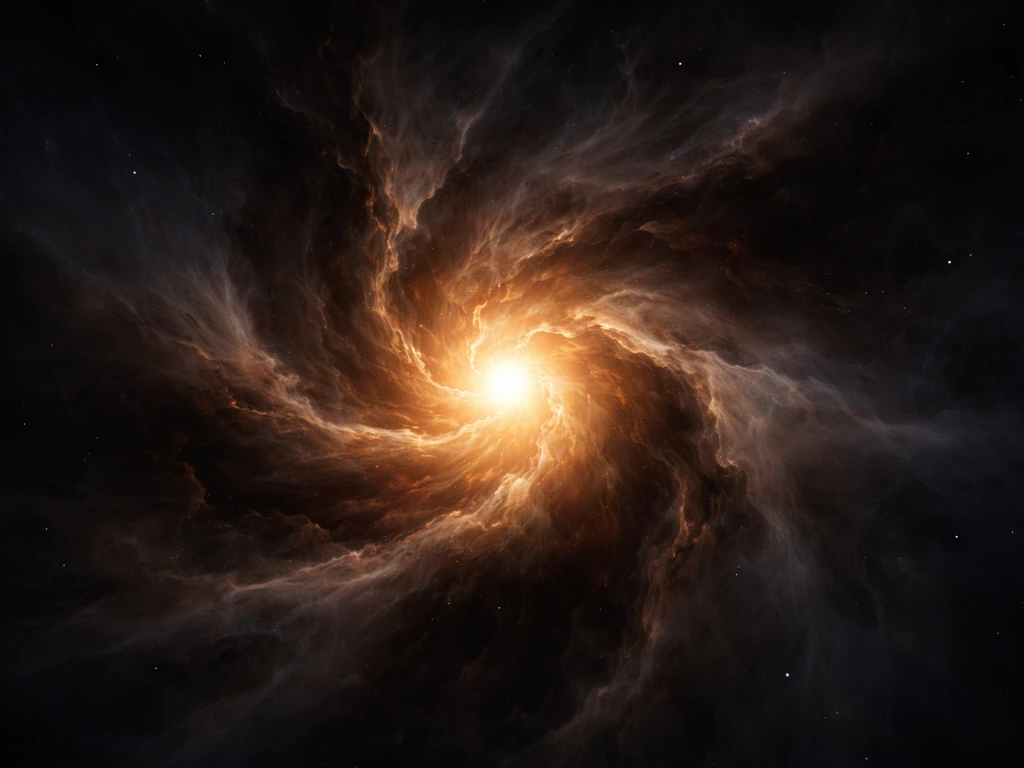
Stars begin in giant clouds of gas and dust called molecular clouds. When a region of one of these clouds gets dense enough, gravity takes over and starts pulling material inward. This collapsing clump is called a protostar, and during this phase, mass growth is the dominant story. The protostar is actively accumulating material from the surrounding cloud, growing heavier month by month, century by century.
Here's something that surprises a lot of people: during this early phase, the energy powering the protostar doesn't come from nuclear fusion at all. It comes from gravitational contraction. As the gas falls inward and compresses, it heats up, and that heat radiates outward as light. This is pre-main-sequence evolution, and it's driven entirely by gravity squeezing the object tighter and tighter. The protostar actually shrinks in radius while growing in mass during this stage. That's a reminder that "growing" can mean opposite things for radius and mass even in a single phase.
Once the core temperature climbs high enough, around 10 million Kelvin, hydrogen fusion ignites. At that moment, the protostar officially becomes a main-sequence star. The mass accumulation phase is essentially over. From here on, growth takes on a completely different character.
On the main sequence: do stars grow while fusing hydrogen?
This is the longest phase of a star's life. The Sun, for example, has been on the main sequence for about 4.6 billion years and has roughly 5 billion years left. During this stretch, is the star growing? The answer is: slowly, yes, in radius and luminosity, but not in mass.
The core is converting hydrogen into helium. Helium is denser than the hydrogen it replaced, so the core gradually contracts and heats up. That extra heat pushes the outer layers slightly outward, nudging the star's radius and luminosity upward over geological timescales. The Sun today is roughly 30% more luminous than it was when it first ignited. That's real growth, just incredibly slow. Whether the sun grows every year is actually a question worth digging into separately, because the answer involves some nuance about solar wind and mass loss that runs counter to what you'd expect.
Meanwhile, mass on the main sequence is actually being lost, not gained. Stars shed material constantly through stellar winds, a steady outflow of particles from the surface. For a star like the Sun this loss is tiny, but for massive, hot stars, the mass loss rate can be enormous. So on the main sequence, radius creeps up, luminosity climbs, and mass slowly decreases. That's the quiet, long-haul version of stellar growth.
Why stars change size as they age: the pressure balance story
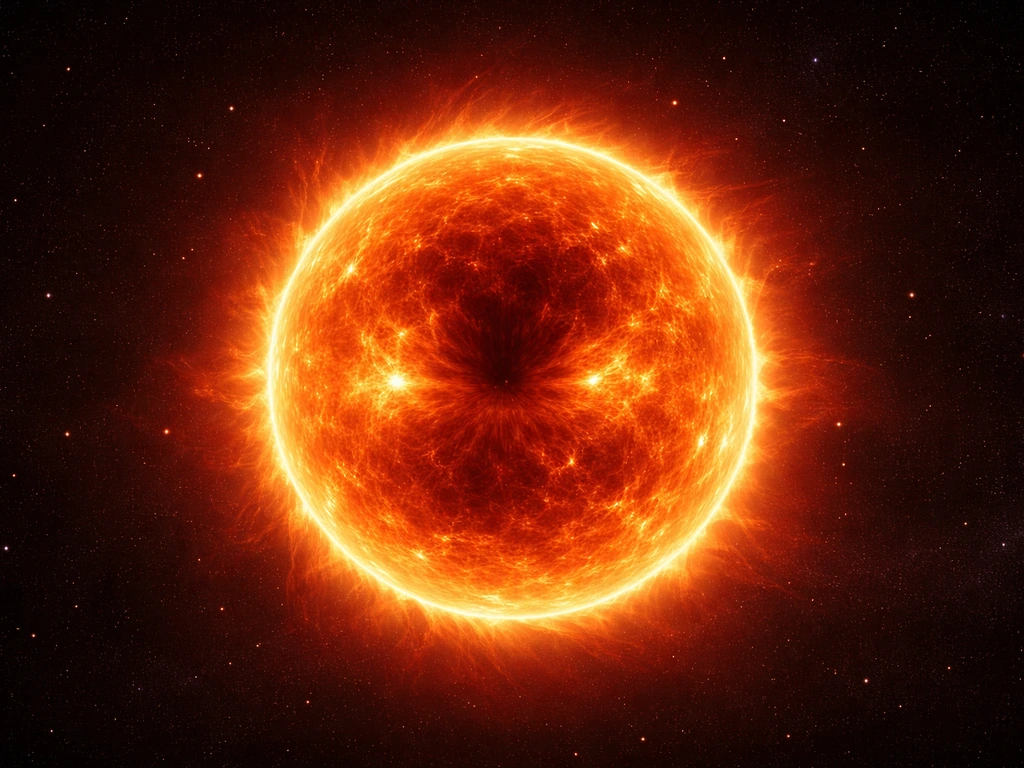
A star's size at any given moment is the result of a tug-of-war between two forces. Gravity is always trying to compress the star inward. Thermal pressure from the energy produced by fusion pushes outward. When these two forces are balanced, astronomers call it hydrostatic equilibrium, and the star holds a stable size.
Every time the fuel situation changes, the balance shifts. As hydrogen in the core depletes, energy output from that region drops, gravity gains the upper hand over the core, and it contracts. That contraction releases gravitational energy, heats the surrounding hydrogen shell, and fusion kicks off in a shell around the now-inert helium core. It also describes how blank" rel="noopener noreferrer">hydrogen fusion continues in a thin shell surrounding the core while the outer layers expand to enormous size, with a strong wind carrying away most of the hydrogen envelope. The extra energy from that shell source overwhelms the outer layers, and they expand dramatically. The star hasn't gained mass. It has just restructured its energy output so dramatically that the outer envelope inflates outward. This is the physical engine behind the red giant phase.
The same principle applies at every transition in a star's life. Changes in fuel source and location trigger changes in the pressure balance, which drive changes in radius. Understanding this one mechanism, the balance between gravity and pressure, explains most of what stars do across their entire lifespan. It's analogous to how growth in living organisms requires a constant supply of energy and building materials: cut either off, and the system restructures or collapses.
The dramatic expansion: red giants and supergiants
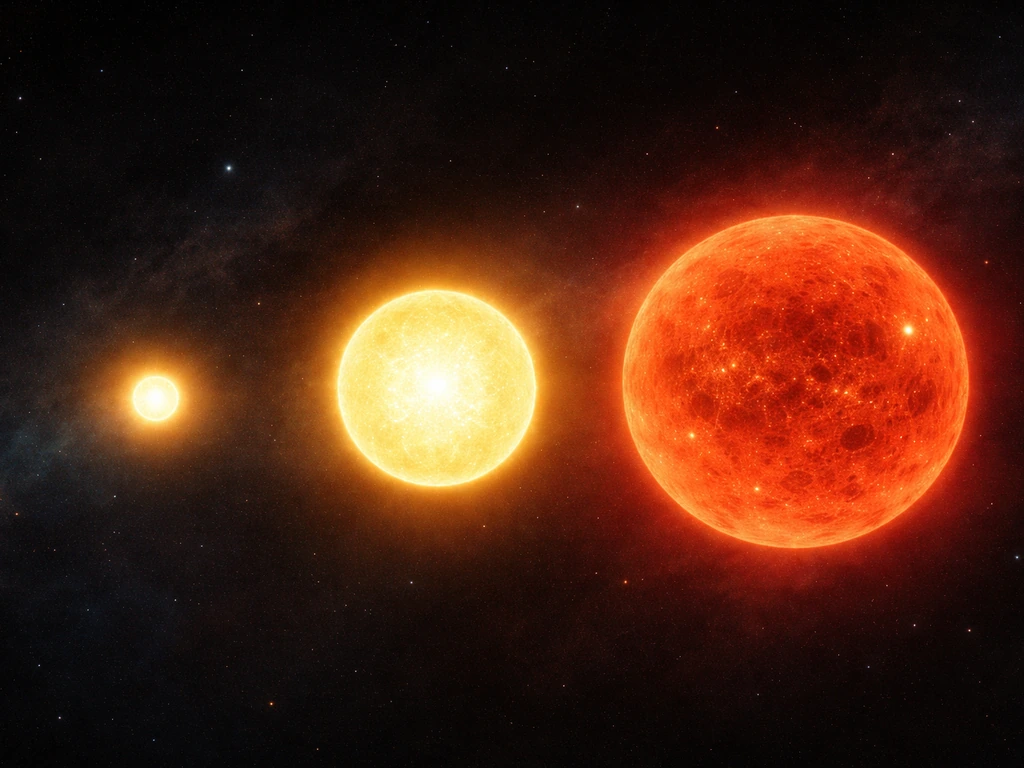
When a solar-mass star exhausts hydrogen in its core, the expansion that follows is staggering. The star transitions into a red giant, swelling to somewhere between 10 and 100 times its original radius. The Sun will eventually expand to roughly 200 times its current size, engulfing Mercury, Venus, and quite possibly Earth in the process. More massive stars that reach supergiant status can balloon to 1,000 times the Sun's current radius or more. These are the largest stars by radius in the observable universe.
Here's the counterintuitive part: even as the radius explodes outward, the surface temperature actually drops. The star's energy is being spread across a vastly larger surface area, so the outer layers cool down and shift toward red wavelengths. That's where the "red" in red giant comes from. The luminosity, however, can increase enormously because the radius term in the luminosity equation is squared. A star that's 100 times larger in radius is radiating 10,000 times as much energy even at a lower temperature.
For truly massive stars (roughly 8 solar masses and above), the expansion doesn't stop at red giant stage. These stars go through multiple rounds of core fuel exhaustion and re-ignition, fusing progressively heavier elements like carbon, oxygen, neon, and silicon. Each cycle sees the core contract and the envelope expand further. The end result is a red supergiant, and these objects represent the upper extreme of stellar radius growth. When you're wondering how the giant planets grew to be so large, the comparison is actually instructive: accretion of material early in a system's formation matters enormously, and the same is true for how massive a star gets before it leaves the main sequence.
What stops unlimited growth: limits, mass loss, and how stars end
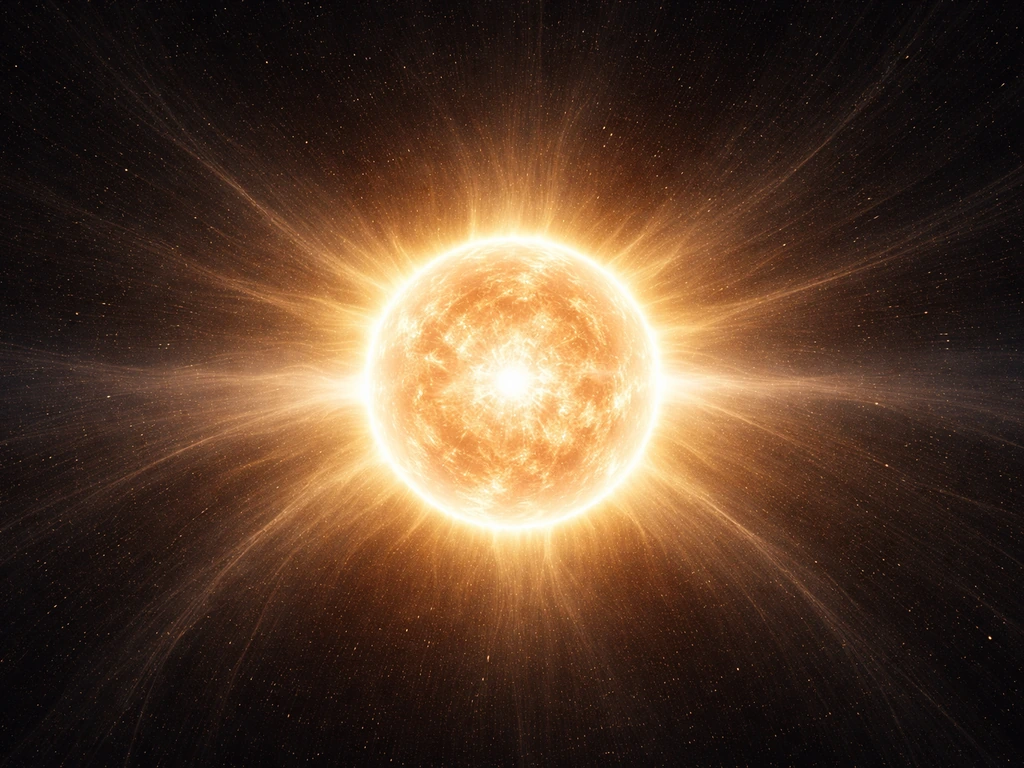
Stars don't grow forever, and the reasons are worth understanding because they mirror the constraints on growth in biological and geological systems. There are hard physical limits at play, not arbitrary caps.
The first limit is the Eddington Luminosity. As a star gets more massive and more luminous, the radiation pressure pushing outward on the surrounding gas eventually exceeds gravity's ability to hold that material in. At this point the star blows material off its surface in powerful winds rather than accumulating more. This is why the most massive stars we observe, around 150 to 200 solar masses, are also shedding enormous amounts of material constantly. Mass gain and mass loss reach a kind of equilibrium that caps how massive a single star can become.
The second limit is fuel. A star's entire existence is driven by nuclear fusion, and fusion requires fuel. Once a star exhausts the nuclear fuel it can access at sufficient temperature and pressure, the energy source that supports its structure disappears. For a solar-mass star, this means the core eventually can't fuse carbon, and the star sheds its outer layers as a planetary nebula, leaving behind a white dwarf. For massive stars, the iron core that forms at the end of the fusion chain can't release energy through further fusion, and the core collapses catastrophically, producing a supernova. What's left is either a neutron star or a black hole.
It's genuinely fascinating to compare these limits with other growth-constrained systems. Whether the Earth grows in size over time is a related question, and the answer similarly comes down to competing processes: material is added by meteorites, but mass is lost to atmospheric escape, and neither dominates dramatically. Stars, planets, and even geological features like volcanoes all grow under constraints rather than freely.
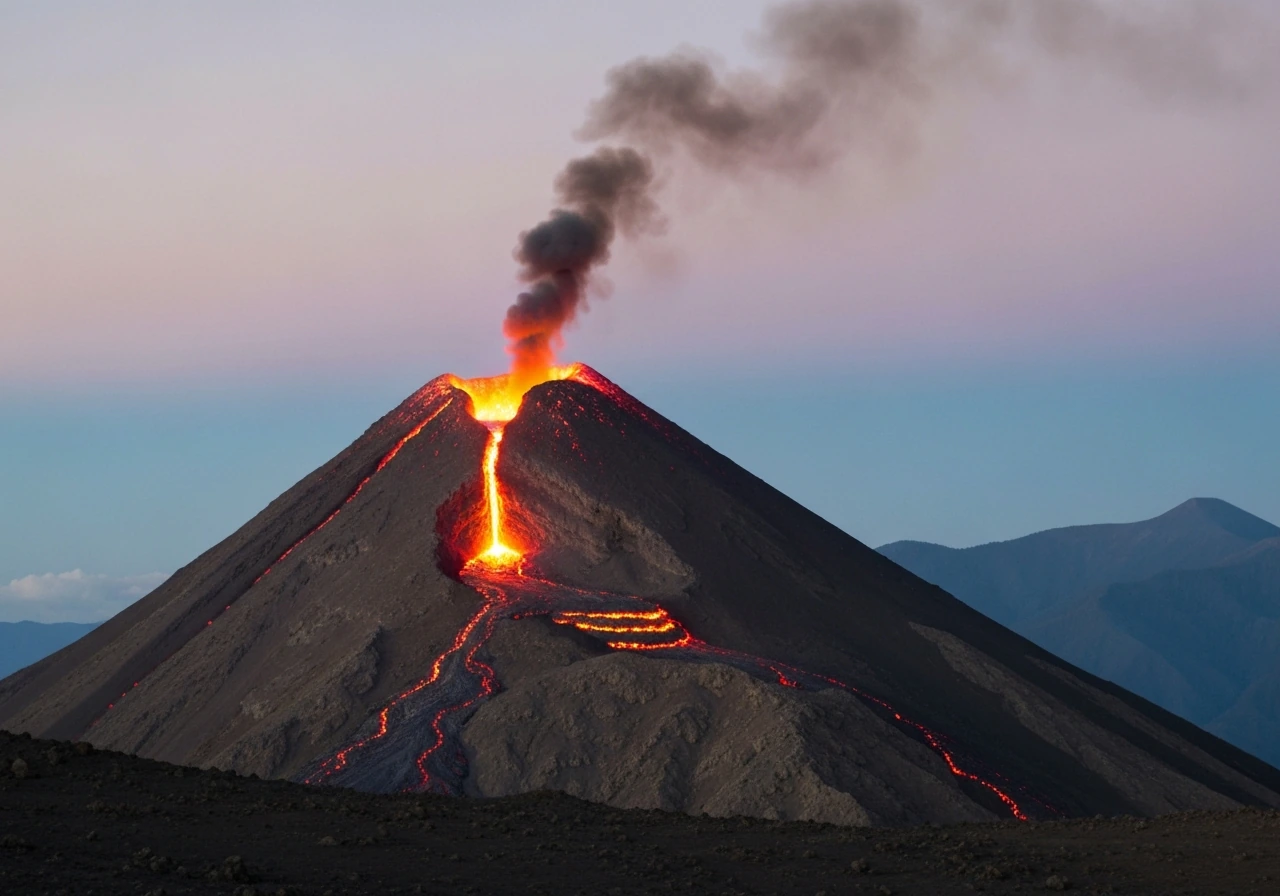
Speaking of which, how volcanoes grow follows a similar logic of material supply versus loss, which is a useful mental model for understanding why unlimited expansion never happens in physical systems. The supply has to outpace the removal, and something always limits supply eventually.
How to read a star's growth trend from its life stage and mass
If you want a practical framework for figuring out whether any given star is currently "growing" and in what sense, you need two pieces of information: its life stage and its mass. Together these tell you almost everything.
| Life Stage | Mass Change | Radius Change | Luminosity Change |
|---|---|---|---|
| Protostar | Increasing (accretion) | Decreasing (contraction) | Increasing (gravitational energy) |
| Main Sequence (early) | Slight loss (stellar wind) | Very slow increase | Slow increase |
| Main Sequence (late) | Ongoing slow loss | Slow increase continues | Moderate increase |
| Red Giant / Subgiant | Moderate loss (wind) | Dramatic increase (10–200× original) | Large increase |
| Red Supergiant (massive stars) | Rapid loss (strong winds) | Extreme increase (up to 1,000×) | Very high |
| White Dwarf / Neutron Star / Black Hole | Stable or slowly decreasing | Very small / compressed | Fading or absent |
The H-R diagram, which plots stars by luminosity against surface temperature, is the classic tool for situating a star in this framework. Stars on the main sequence form a diagonal band. As a star evolves off the main sequence toward red giant territory, it moves to the upper right of the diagram, which means higher luminosity and lower surface temperature, a clear signature of the radius expansion described above. Astronomers can read a star's growth history just by knowing where it sits on that diagram.
For stars we can observe in eclipsing binary systems, it's actually possible to measure radius directly from the shape of the light curve as one star passes in front of the other. Combined with spectroscopic data on radial velocities, astronomers can pin down both the mass and radius of each star with real precision. Asteroseismology, which uses stellar oscillations (essentially sound waves bouncing through the star) detected by instruments like those used on missions observing galactic fields, can independently infer mass and age from the frequency patterns of those vibrations. These two techniques together give us our most direct windows into how stars have grown and where they are in their evolution.
Mass is the single biggest predictor of a star's growth trajectory. Low-mass stars (below about 0.8 solar masses) evolve so slowly that they haven't left the main sequence in the entire age of the universe. Mid-mass stars like the Sun spend billions of years growing very slowly on the main sequence before a relatively fast red giant expansion. High-mass stars (above 8 solar masses) live fast, burn through fuel in millions rather than billions of years, and undergo the most extreme expansions before violent supernova deaths.
Putting it all together: a model for stellar growth
Stars grow in bursts and plateaus, not smoothly. During formation, mass grows rapidly through accretion while radius actually shrinks. On the main sequence, radius and luminosity increase gradually over billions of years while mass slowly decreases. When core hydrogen runs out, radius explodes outward in the red giant or supergiant phase, which is the most dramatic growth event in a star's life. Then the end state, whether white dwarf, neutron star, or black hole, is a compressed remnant that doesn't grow at all.
This pattern connects to a broader theme you see throughout growth science: growth isn't a single process. It's a series of different mechanisms, each operating under its own constraints, each switching on and off as conditions change. How galaxies grow follows this same logic on a larger scale: accretion, mergers, star formation bursts, and periods of relative quiet all contribute to a galaxy's growth in ways that differ by phase and circumstance.
The same questions about growth constraints and balancing forces apply when you consider gravitational dynamics more broadly. How attraction grows in space is closely tied to how mass accumulates and distributes across cosmic structures, which in turn shapes everything from protostar formation to galaxy mergers. And if you're curious whether neighboring bodies in our solar system show their own growth patterns, whether the moon grows or whether the Earth grows over geological time are both worth exploring as comparison cases where the same basic forces (gravity, material supply, energy balance) play out over planetary rather than stellar scales.
Your practical next steps

If you want to go deeper on this topic, here's a concrete path forward. Start with the H-R diagram. Understanding how to read a star's position on that plot gives you a direct handle on whether it's in an expanding or contracting phase. From there, focus on stellar mass: find out the mass of a star you're interested in, and you can immediately predict roughly how long it will spend on the main sequence and what kind of expansion event awaits it.
- Identify a star's spectral class (O, B, A, F, G, K, or M) to estimate its mass and temperature. Spectroscopy gives you temperature from absorption line patterns and luminosity class from line width, placing the star precisely on the H-R diagram.
- Determine its life stage: is it a protostar, main-sequence star, subgiant, red giant, or stellar remnant? This immediately tells you whether radius is currently growing slowly, growing rapidly, or not at all.
- For mass: check whether it's above or below about 8 solar masses. Above that threshold, expect supergiant expansion and a supernova end state. Below it, expect a red giant phase followed by a planetary nebula and white dwarf.
- If you have access to data, look for eclipsing binary measurements or asteroseismology results to get actual radius and mass numbers rather than estimates.
- Use luminosity as a proxy for growth rate: a star moving toward higher luminosity on the H-R diagram is almost always expanding in radius.
The bottom line is that stars absolutely grow, just not all at once, not all in the same direction, and not forever. Each phase of stellar life has its own growth signature, driven by a specific physical mechanism and constrained by a specific limit. Once you can identify the phase, you can predict the growth behavior. That's as close to a practical answer as stellar physics gets.
FAQ
Do stars always get bigger as they age?
Yes, but only within certain limits and on specific timescales. A star’s outer layers can move outward and inward during different evolutionary phases, yet over one full cycle of events (like main sequence to red giant), “growth” may mean a larger radius at lower surface temperature rather than an overall long-term expansion at constant luminosity.
Can a star grow without gaining mass?
It depends on whether you mean physical size (radius), the amount of material bound to the star (mass), or brightness (luminosity). On the main sequence, radius and luminosity generally rise while mass slowly drops due to stellar winds, so they can diverge rather than all increase together.
How quickly do stars grow on the main sequence?
Main sequence growth is slow because the structure adjusts to gradual core hydrogen depletion. Even for the Sun, the noticeable change is gradual, about tens of percent in luminosity over billions of years, while the radius change is smaller and not something you would track year to year with casual observation.
Why can a red giant be much brighter even though it’s cooler?
During the red giant expansion, the luminosity can increase dramatically even though the surface temperature falls. This is because luminosity depends strongly on radius squared, so a large radius increase can overpower the cooling of the surface.
Can a star shrink while it grows in mass?
There is no single “one number” growth rate. A star can shrink while gaining mass (for example, the protostar phase where gravitational contraction powers the energy), so the direction of radius change can oppose the direction of mass change depending on which internal energy source dominates.
What common mistake causes people to misjudge whether a star is “growing” right now?
If you measure only brightness or only color, you can misread the star’s stage. The same luminosity can arise from different combinations of radius and temperature, so the safest approach is to use the H-R diagram position (luminosity versus temperature) and, if possible, constrain mass.
Does a star’s current mass tell you how fast its radius will expand?
Not necessarily. Observed “mass” can refer to the current bound mass, which decreases through winds, and “growth” in radius can come from internal restructuring rather than added material. So a star’s current mass does not always predict how much its radius will expand at a given moment without knowing its evolutionary phase.
How much does stellar wind affect whether stars grow in mass?
Yes, stars can lose mass in an ongoing way, and the effect is bigger for hotter, more massive stars. In contrast, low-mass stars like the Sun lose comparatively tiny amounts, so their radius growth is dominated by internal evolution rather than mass removal.
Do stars in binary systems still follow the same growth pattern?
Binary systems and close companions can change the story. Mass transfer can add or strip material from a star, so “growth” can be driven by interaction rather than internal fuel depletion, making standard single-star evolutionary expectations unreliable.
What happens to star growth after the main fuel is exhausted?
After the core runs out of the fuels it can fuse, the star may undergo violent expansion, but that is not “growth forever.” The late end states are compact remnants (white dwarf, neutron star, or black hole) whose sizes are far smaller than the expanded envelope, meaning the observable star effectively stops growing and then contracts.
Next Article
How Do Volcanoes Grow: Magma, Eruptions, and Limits Explained
Explains how volcanoes grow via magma supply and eruption cycles, plus erosion and structural limits that stop growth.