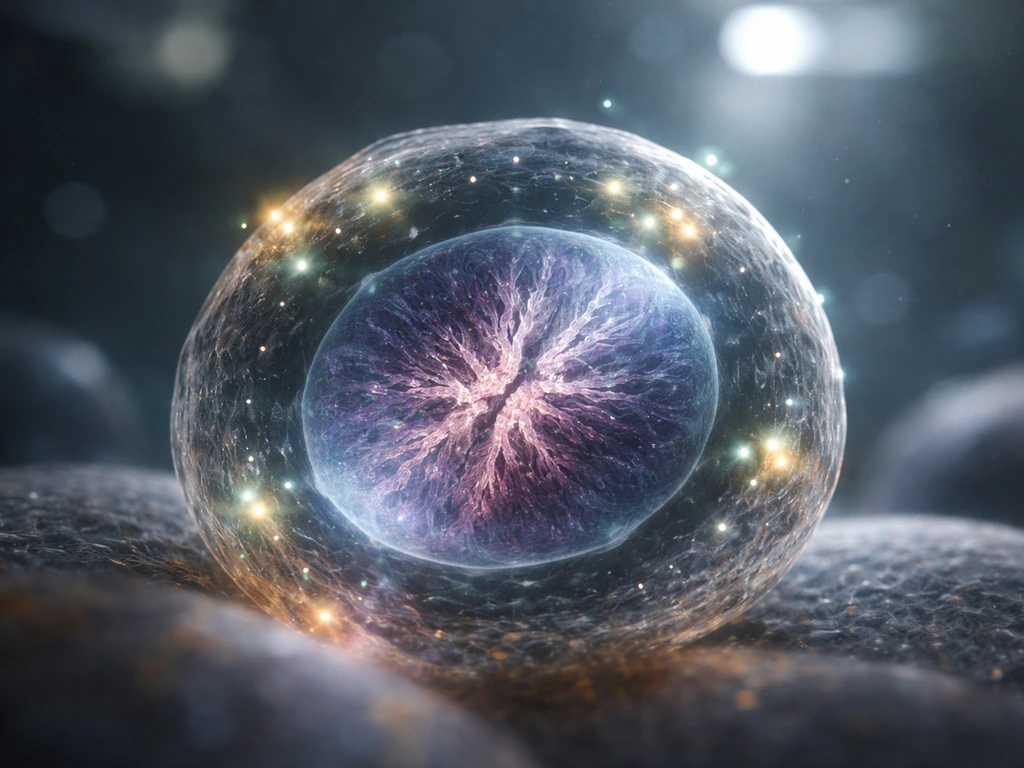
Mitosis is how living things grow and repair themselves. Every time your body adds new cells to a growing tissue or patches up a wound, mitosis is the engine running that process. In simple terms: a parent cell copies its DNA, then splits into two genetically identical daughter cells, each carrying a full set of chromosomes. Do that millions of times in the right places, and you get a growing organ, a healing cut, or a continuously renewing intestinal lining. That is the core answer. The rest of this article unpacks exactly how each step works and why it matters.
Mitosis: How Living Things Grow and Repair Themselves
Marcus Whitmore
2 Apr 2026
Why growth and repair both need new cells
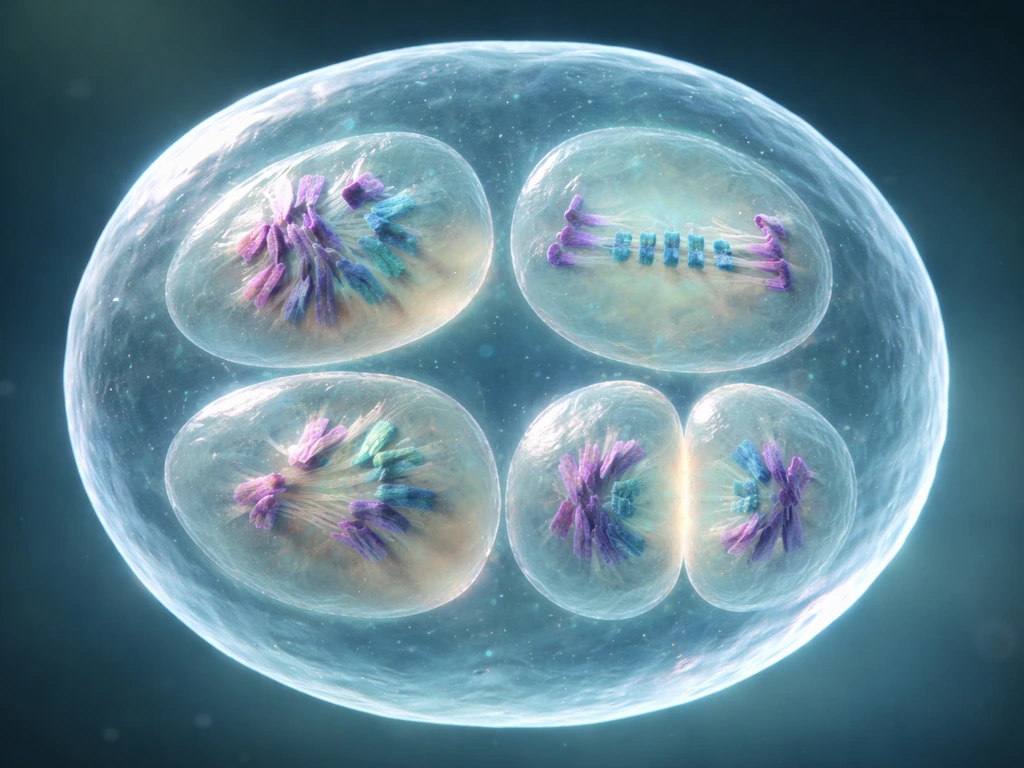
Think about what it actually means for a tissue to grow. It is not just cells getting bigger, though that happens too. Mostly, growth means more cells, a process biologists call hyperplasia. To understand how living things grow, you have to start here: organisms are built from cells, and more organism means more cells. The only way to reliably make more cells that carry the right genetic instructions is to copy the existing DNA and divide.
Repair works the same way. When cells in your skin die after a sunburn, or when the lining of your gut wears down from constant use, replacement cells have to come from somewhere. They come from nearby cells dividing. Without accurate cell division, damage would just accumulate with nothing to take the place of what was lost. So whether the goal is building something new or fixing something broken, the answer is the same: make more cells, and make them with the correct chromosome count.
This is also why the nature of life is to grow. Cell division is not a special event reserved for emergencies. It is a fundamental, ongoing feature of living systems.
Mitosis is a eukaryote thing (bacteria do it differently)
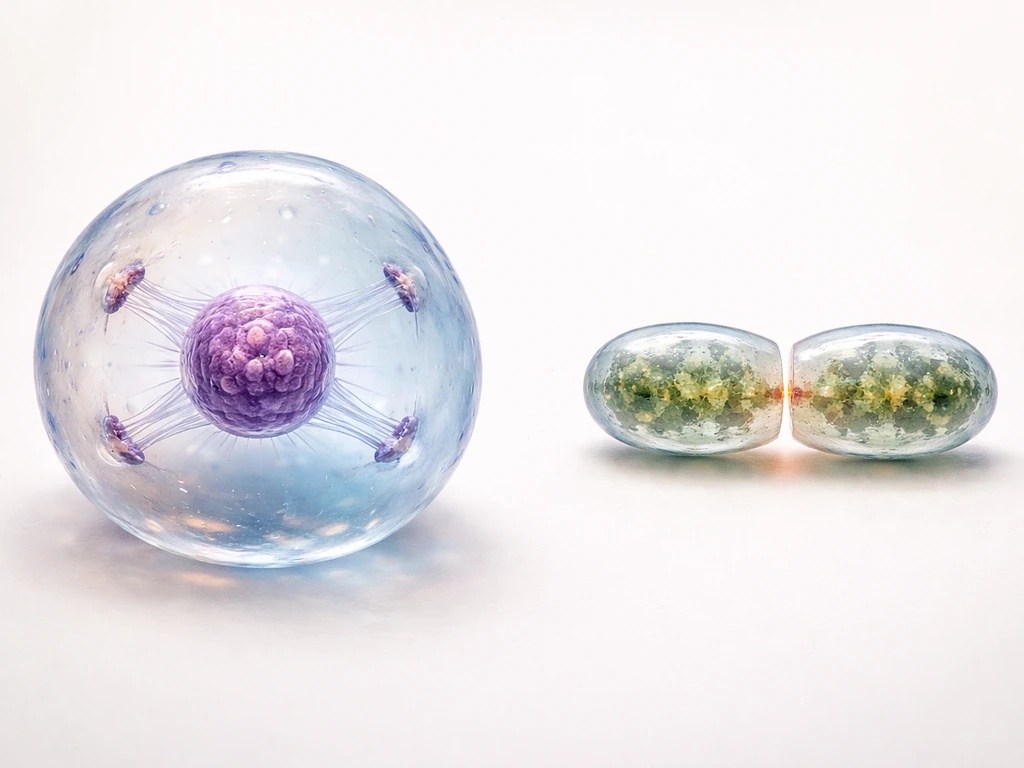
Before diving into the phases, one clarification that trips up a lot of students: mitosis only happens in eukaryotic cells, meaning cells that have a nucleus. Your cells, plant cells, fungal cells. Bacteria are prokaryotes, meaning they have no membrane-bound nucleus. They divide by a simpler process called binary fission, where a single circular chromosome is copied and the cell pinches in two. No spindle fibers, no condensed chromosomes lining up on a plate. The full mitosis machinery exists specifically to handle the challenge of sorting multiple, linear chromosomes enclosed in a nucleus.
In eukaryotes, the cell does not just jump straight into dividing. It goes through a regulated cycle: G1 (cell growth), S phase (DNA replication), G2 (checking everything is ready), and then M phase, which is mitosis itself followed by cytokinesis (the actual splitting of the cytoplasm). By the time mitosis starts, the DNA has already been fully duplicated back in S phase. Mitosis is the process of sorting that duplicated DNA, not copying it.
Walking through the phases of mitosis
There are five main phases. Here is what is actually happening at each one, so you can picture it rather than just memorize labels.
Prophase: packing up and spinning up
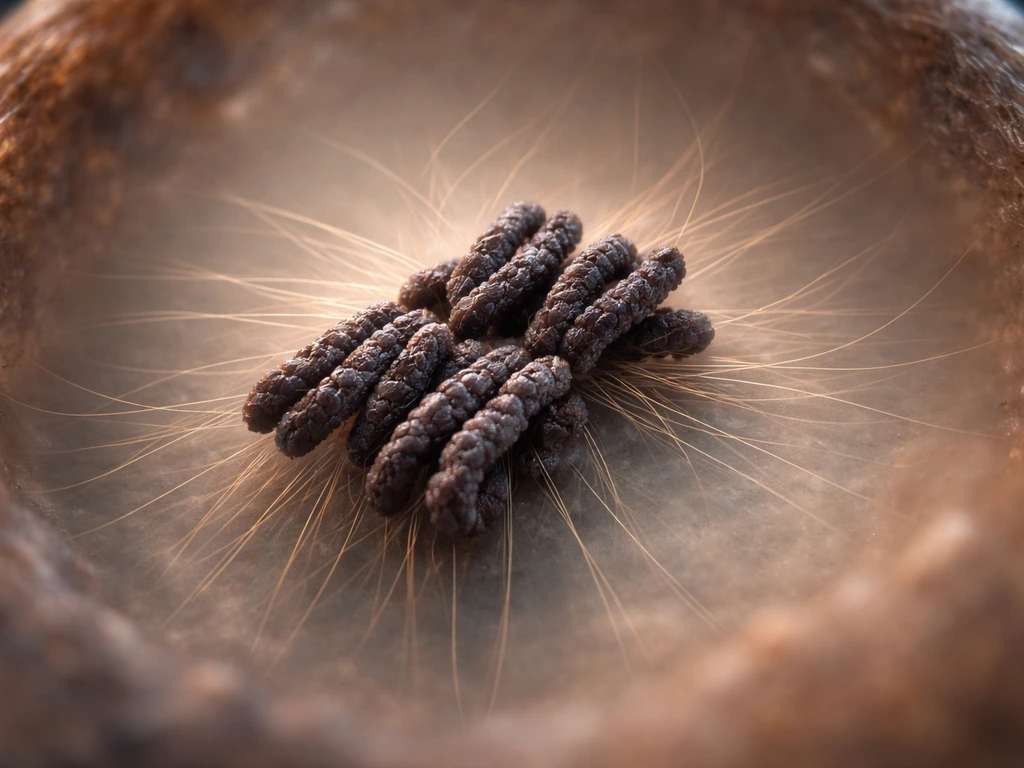
The cell starts condensing its chromosomes, packing long strands of DNA into tighter, visible structures. Remember: each chromosome at this point already consists of two sister chromatids joined together, because the DNA was copied in S phase. The spindle apparatus also begins forming, built from microtubules that will eventually drag chromosomes to opposite ends of the cell.
Prometaphase: the nuclear envelope comes down
The nuclear envelope breaks down, which is the key event of prometaphase. Once that membrane is gone, spindle microtubules can reach in and grab chromosomes at structures called kinetochores. This is the cell opening the filing cabinet so the sorting machinery can get to work.
Metaphase: lining up for inspection
All the chromosomes move to the middle of the cell and line up along what is called the metaphase plate (or spindle equator). They sit there, jostling slightly, while the cell runs its spindle checkpoint: a quality-control step that confirms every chromosome is properly attached to spindle fibers from both poles. Nothing proceeds until this checkpoint clears. This is how the cell avoids sending the wrong number of chromosomes to each daughter.
Anaphase: sister chromatids split and move
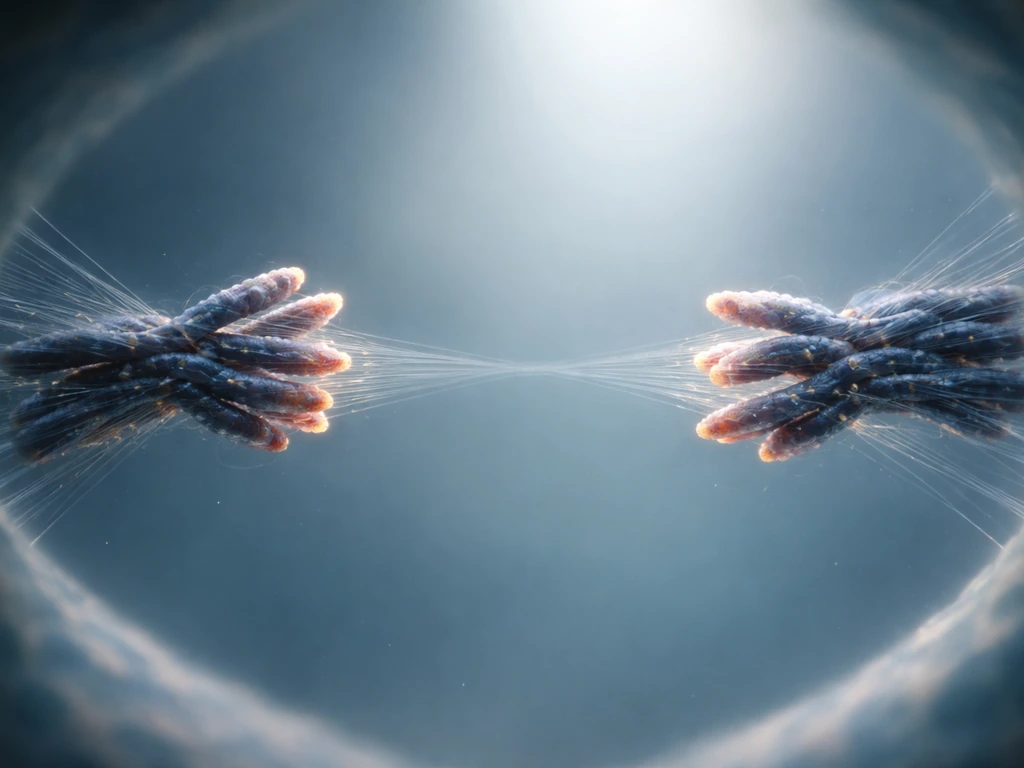
Once the spindle checkpoint is satisfied, the protein cohesin holding sister chromatids together is destroyed, and the two chromatids of each chromosome are pulled to opposite poles of the cell. This is the moment of segregation. Each pole ends up with one complete set of chromosomes. Important note here: the chromosome number is not doubling. The cell had 46 chromosomes (in humans) going in, and each pole ends up with 46 chromosomes coming out.
Telophase: rebuilding the nuclei
Nuclear envelopes reassemble around each set of chromosomes at the two poles, forming two new nuclei. The chromosomes begin to decondense back into their looser interphase form. After telophase, cytokinesis divides the cytoplasm and produces two separate daughter cells. Both are genetically identical to each other and to the original parent cell.
| Phase | Key event | What happens to chromosomes |
|---|---|---|
| Prophase | Chromosomes condense; spindle forms | DNA already duplicated; each chromosome = 2 sister chromatids |
| Prometaphase | Nuclear envelope breaks down | Spindle microtubules capture chromosomes at kinetochores |
| Metaphase | Chromosomes align at cell center | All chromosomes lined up at metaphase plate; spindle checkpoint active |
| Anaphase | Sister chromatids separate | Each chromatid pulled to opposite pole; two identical sets form |
| Telophase | Nuclear envelopes re-form | Chromosomes decondense; two daughter nuclei established |
How mitosis drives growth
Growth in multicellular organisms comes down to one straightforward math problem: start with one cell, divide repeatedly, and cell number compounds fast. One cell becomes two, two become four, four become eight. After just ten rounds of mitosis, a single cell has produced over a thousand descendants. After twenty rounds, over a million. This exponential increase in cell number is how a tiny embryo builds entire organs, and it is how plants and animals grow and change from small, simple structures into large, complex ones.
In plants, growth is especially concentrated. Rather than dividing all over, plants keep specialized zones of actively dividing cells called apical meristems at their shoot tips and root tips. These small regions contain undifferentiated cells that keep proliferating, then their daughter cells go on to specialize into the various tissues of roots, stems, and leaves. It is a neat system: keep the dividing machinery in one place, then send specialized cells outward from there.
In animals, living things grow and develop through a mix of localized and tissue-specific cell division. Bone, muscle, and nervous tissue all follow different rules about when and how often their cells divide, but in every case, the mechanism is the same: mitosis producing daughter cells that then differentiate into the needed cell type.
How mitosis handles repair
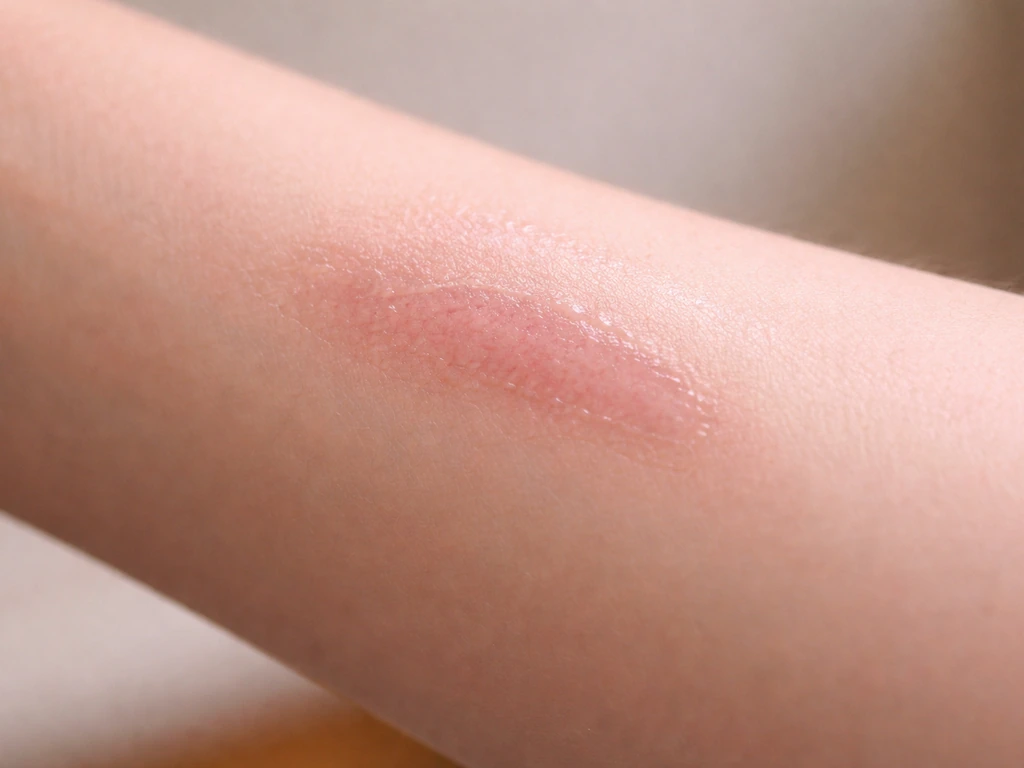
Repair is essentially growth in response to damage. How organisms grow and repair themselves comes back to the same mitosis-based mechanism, just triggered by a different signal. When cells are lost to injury or normal wear, neighboring cells or dedicated stem cell populations divide to replace them.
The intestinal lining is one of the most striking examples. The cells lining your gut take constant mechanical and chemical abuse, and they turn over completely every roughly five days in mice (and on a similar schedule in humans). Molecular Cancer (BMC) describes rapid intestinal epithelium replacement and relates this turnover to intestinal stem cell activity, including example turnover on the order of a few days in mice [turn over completely every roughly five days in mice](https://molecular-cancer. biomedcentral.
com/articles/10. 1186/s12943-019-0962-x). Dedicated stem cells sitting in small pockets called crypts at the base of the intestinal glands keep dividing via mitosis, pushing new cells upward to replace the ones that die off. After significant damage, such as from a toxic injury, the remaining clonogenic cells in those crypts divide rapidly to regenerate the lining.
In mice, the small intestinal epithelium is replenished every 3, 4 days, and after injury clonogenic stem/progenitor cells regenerate intestinal crypts and the lining [repopulate the intestinal lining within days after toxic injury](https://pmc. ncbi. nlm. nih.
gov/articles/PMC2739827/). No mitosis, no gut lining. It really is that direct.
Skin works the same way. Keratinocytes in the basal layer of the epidermis divide constantly, with daughter cells migrating upward, differentiating, and eventually flaking off the surface. When you get a cut, cell division at the wound edges accelerates to close the gap. The nutrients that help us grow and repair are ultimately raw materials for this process: proteins for building new cell structures, glucose for the energy that drives cell division, and vitamins and minerals that support DNA replication and chromosome stability.
Not every living thing grows the same way
It is worth pausing to note that while mitosis is universal among eukaryotes, not all living things grow in the same pattern or at the same rate. Some cells divide rarely or not at all after a certain developmental stage. Neurons in the adult brain, for instance, are largely post-mitotic. Others, like the intestinal stem cells described above, divide almost constantly. The shared mechanism is mitosis; the differences are in when, where, and how often it is switched on.
For younger students just starting to explore these ideas, a simplified introduction to how living things grow can make this concept more concrete before layering on the molecular details of mitosis phases.
Practice questions with model answers (worksheet/POGIL style)
Use these prompts the way you would use a guided worksheet or POGIL activity. Read the question, think through your answer, then check against the model response below.
Q1: What is the purpose of S phase, and why does it have to happen before mitosis?
Model answer: S phase is when DNA replication occurs. The cell copies all of its chromosomes so that each chromosome consists of two identical sister chromatids. Mitosis cannot accurately give each daughter cell a full chromosome set unless there is already a duplicate set available to split. If mitosis happened without prior replication, each daughter cell would end up with only half the genetic information.
Q2: A student says 'chromosome number doubles during mitosis.' Is this correct? Explain.
Model answer: No, this is a common misconception. Chromosome number is preserved through mitosis, not doubled. DNA content doubles during S phase (before mitosis), because each chromosome gets a copy. But during mitosis itself, those duplicated chromosomes are sorted so each daughter cell receives exactly one copy of each chromosome, the same number the parent cell had. A human parent cell going in with 46 chromosomes produces two daughter cells each with 46 chromosomes.
Q3: What is a sister chromatid, and what happens to sister chromatids during anaphase?
Model answer: A sister chromatid is one of the two identical copies of a chromosome that form after DNA replication in S phase. The two sister chromatids are joined at a region called the centromere. In anaphase, the protein cohesin holding them together is destroyed, and the spindle fibers pull each chromatid to an opposite pole of the cell. Once separated, each chromatid is considered its own chromosome again.
Q4: What is the spindle checkpoint, and why does it matter?
Model answer: The spindle checkpoint (also called the mitotic checkpoint) is a quality-control mechanism that pauses mitosis at the metaphase-to-anaphase transition. It checks that every chromosome is properly attached to spindle fibers from both poles before allowing sister chromatid separation to proceed. If a chromosome is unattached or poorly attached, the checkpoint stalls the process. This prevents one daughter cell from getting an extra chromosome while the other gets one too few, a situation that can cause serious problems in the resulting cells.
Q5: Give one example of mitosis supporting growth and one example of mitosis supporting repair.
Model answer: Growth example: Apical meristem cells at a plant's root tip divide repeatedly by mitosis, producing new cells that elongate and differentiate into root tissue, making the root longer over time. Repair example: After the intestinal lining is damaged, stem cells in the intestinal crypts divide rapidly by mitosis to regenerate the epithelium, restoring the lining within days.
Q6: Describe what is happening in each mitosis phase using only the chromosomes as your reference point.
- Prophase: chromosomes condense from loose chromatin into compact, visible structures; each consists of two joined sister chromatids.
- Prometaphase: the nuclear envelope breaks down; spindle microtubules attach to chromosomes at kinetochores.
- Metaphase: chromosomes line up along the midline of the cell (metaphase plate); spindle checkpoint confirms all are properly attached.
- Anaphase: cohesin is cleaved; sister chromatids separate and move to opposite poles; each pole now has a complete set of chromosomes.
- Telophase: chromosomes at each pole are surrounded by a new nuclear envelope; chromosomes begin to decondense; two daughter nuclei are complete.
The straight line from mitosis to a living, growing organism
Mitosis is not just a topic in a biology unit. It is the actual mechanism running underneath everything from a seedling pushing out of soil to a healing blister on your hand. The phases are specific because the problem is specific: you need to copy a complex set of chromosomes and split them perfectly, every single time, without errors. The checkpoints, the spindle, the precise sequence of events, all of it exists to solve that one problem reliably.
When mitosis works, organisms grow and repair. When it goes wrong repeatedly without correction, that is the beginning of diseases like cancer, where cell division continues without proper controls. Understanding the process clearly, not just memorizing phase names, is what makes the rest of cell biology make sense.
FAQ
If mitosis makes two daughter cells, why does that result in bigger organs instead of just more small cells?
Mitosis itself does not make you grow bigger, it makes more cells. The increase in tissue size comes from the combination of cell number (from mitosis) plus cell enlargement and differentiation (cells taking on specialized functions).
Is cytokinesis part of mitosis, or is it a separate process?
Cytokinesis is the physical split of the cell’s cytoplasm, producing two separate cells. In many cases it starts during late mitosis and finishes right after, so you cannot separate it cleanly as one independent stage of “mitosis” in the way people sometimes assume.
What happens to mitosis if DNA replication in S phase goes wrong?
Mitosis is “chromosome-copy and split,” but it still depends on the whole cell cycle. If S phase replication is blocked or DNA damage is not repaired, checkpoints can stop entry into M phase, meaning cells may never actually perform mitosis.
How does the cell prevent daughter cells from getting the wrong number of chromosomes?
In normal mitosis, cell cycle checkpoints prevent aneuploidy by stopping or delaying progression until chromosomes are properly attached to spindle fibers. When that quality control fails, daughter cells can end up with extra or missing chromosomes.
If bacteria also divide, why aren’t their divisions called mitosis?
Binary fission does involve copying genetic material and then splitting, but it lacks the mitosis machinery tied to a nucleus, linear chromosome handling, and spindle checkpoint control. That is why “mitosis” is reserved for eukaryotes in most biology courses.
When should you consider mitosis “finished,” telophase or after cytokinesis?
Telophase reforms nuclei around chromosome sets, but the cell’s final separation is cytokinesis. So, you can’t rely on nuclear envelope reassembly alone as the point where there are two fully independent daughter cells.
Does a mistake in mitosis always cause cancer, or is it more complicated?
Cancer can involve mitosis controls breaking down, but mitosis is not automatically “cancer.” A cell can divide normally even if other parts of the cycle are altered, and tumors usually reflect multiple disruptions that allow uncontrolled proliferation and survival.
Why can some body parts heal and others mostly do not, if mitosis is used for repair?
Some adult cells are largely post-mitotic (like many neurons), so they repair differently, for example by changing function or using limited stem-cell based replacement. Growth or repair depends on whether there are stem or progenitor cells available to divide.
Why doesn’t every injury get fully repaired immediately if cells can divide?
After a dividing signal, mitosis frequency rises, but differentiation limits how many new cells can become specialized replacements. For example, intestinal stem cells can rapidly regenerate lining, while some other tissues have slower stem-cell output or require longer maturation steps.
Can mitosis still happen after severe damage if stem cells are destroyed or exhausted?
Yes, many tissues regenerate only from specific stem-cell populations. If stem-cell pools are depleted or the tissue niche is damaged, division may slow dramatically even though neighboring cells still have the machinery to divide.
Next Article
What Controls When and How Fast Cells Grow and Divide
Learn what controls cell division timing and speed: checkpoints, signals, resources, DNA damage, stress, and failure lea