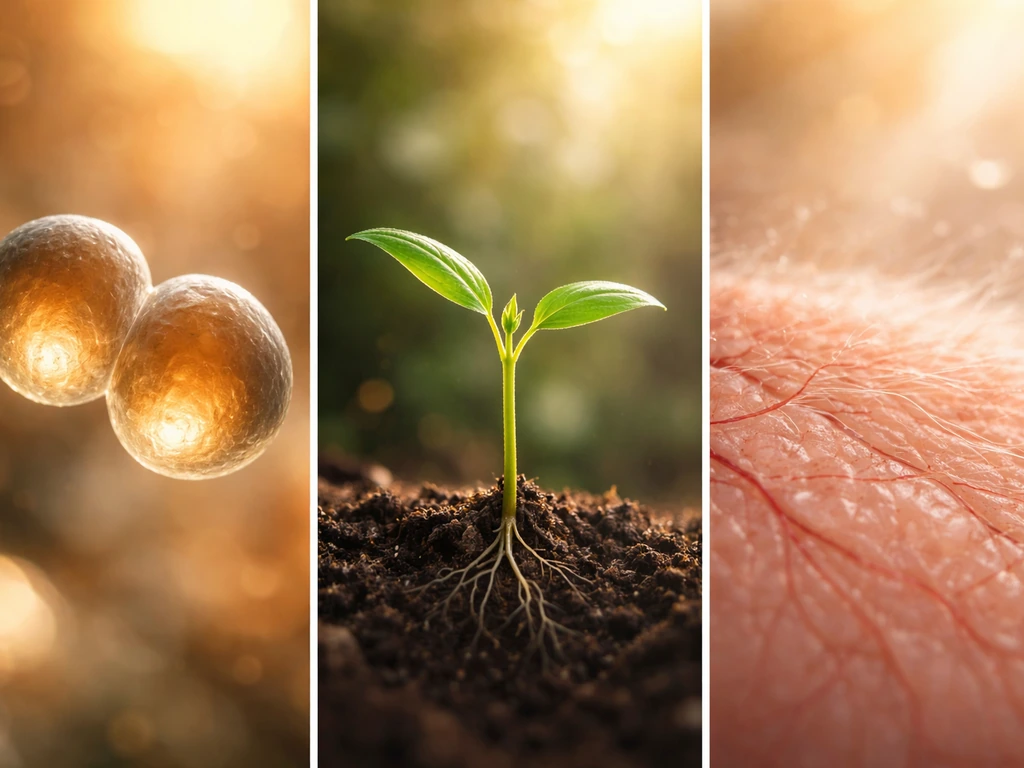
Plants and animals grow by making more cells and then changing what those cells do. Scientists break growth down into cell division, cell differentiation, and organ development to answer how do living things grow. At the most basic level, growth is a two-part process: cell division (producing more cells) and cell differentiation (turning those cells into something specific, like a leaf, a muscle, or a bone). Because growth depends on making new cells, it is one of the defining traits of living things. Both plants and animals use these same two moves, but the timing, the triggers, and the tools they use look quite different from each other.
How Do Plants and Animals Grow and Change Step by Step
Marcus Whitmore
23 May 2026
What growth actually means in plants vs. animals
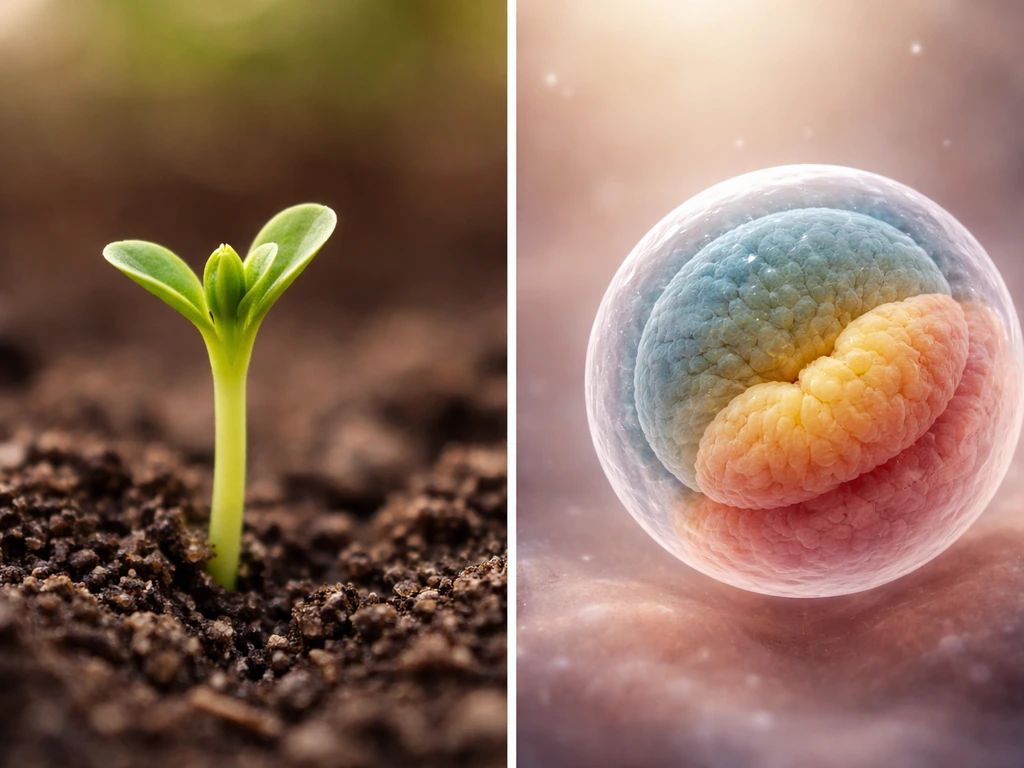
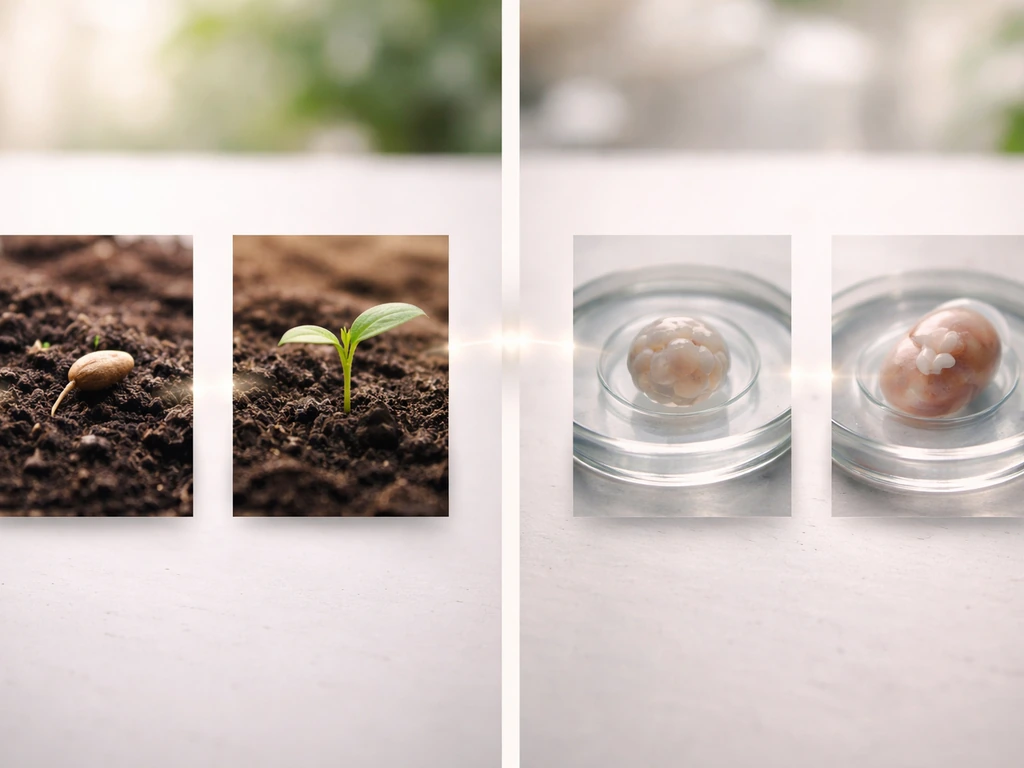
Growth is not just getting bigger. It includes structural change, the organism developing new parts, new abilities, and a new relationship with its environment. A seed sprouting into a seedling is not just a taller seed; it has new organs (roots, shoot, leaves) doing new jobs. A tadpole turning into a frog is not just a larger tadpole; it has restructured nearly every major body system.
In plants, growth is concentrated in specific zones called meristems, regions packed with cells that keep dividing. There are three types depending on location: apical meristems at root and shoot tips (driving height and root depth), lateral meristems or cambia (adding width, which is how a tree trunk thickens), and intercalary meristems tucked between leaf bases and stem internodes (common in grasses, which is why your lawn keeps growing after mowing). This means a plant grows from the tips outward and upward, not by stretching all at once.
Animals grow differently. Most animal cells can divide when needed, not just in fixed zones. Early in development, growth is explosive and patterned. Later, most of the body settles into maintenance mode, with growth reserved for repair and replacement. One key structural difference is that plant cells are surrounded by a rigid cell wall and contain large central vacuoles that fill with water to create pressure. That pressure, called turgor pressure, actually does a lot of the mechanical work of growth in plants. Animal cells have no cell wall, so their growth is softer and more dependent on internal scaffolding.
The cell-level engine: how cell division drives growth
Every new cell in your body or in a plant started as a copy of another cell. The process that makes that copy is mitosis, and it happens inside a larger four-stage loop called the cell cycle. Here is how it runs:
- G1 phase: the cell grows larger, produces proteins, and prepares its machinery for copying DNA.
- S phase: the cell copies all of its DNA so each new cell will get a complete set.
- G2 phase: the cell double-checks the copied DNA and prepares physically to split.
- M phase (mitosis): the duplicated chromosomes condense, line up, and are pulled to opposite ends of the cell, which then divides into two identical daughter cells.
Importantly, M phase (the actual splitting) is only a small fraction of the total cycle time. Most of the cycle is spent in the growth and preparation phases. The cell is not in a hurry to divide; it is in a hurry to do it correctly. Internal checkpoints monitor whether DNA was copied without errors and whether the cell has enough resources to proceed. If something is wrong, the cycle pauses so repairs can happen. This built-in quality control is part of why healthy growth is orderly rather than chaotic.
When a cell divides successfully, you have two cells where there was one. Repeat that enough times in the right places, and a tiny embryo becomes a seedling, a larva, or a growing child. The process is the same whether you are a tomato plant or a teenager.
From single cells to whole bodies: tissues, organs, and development
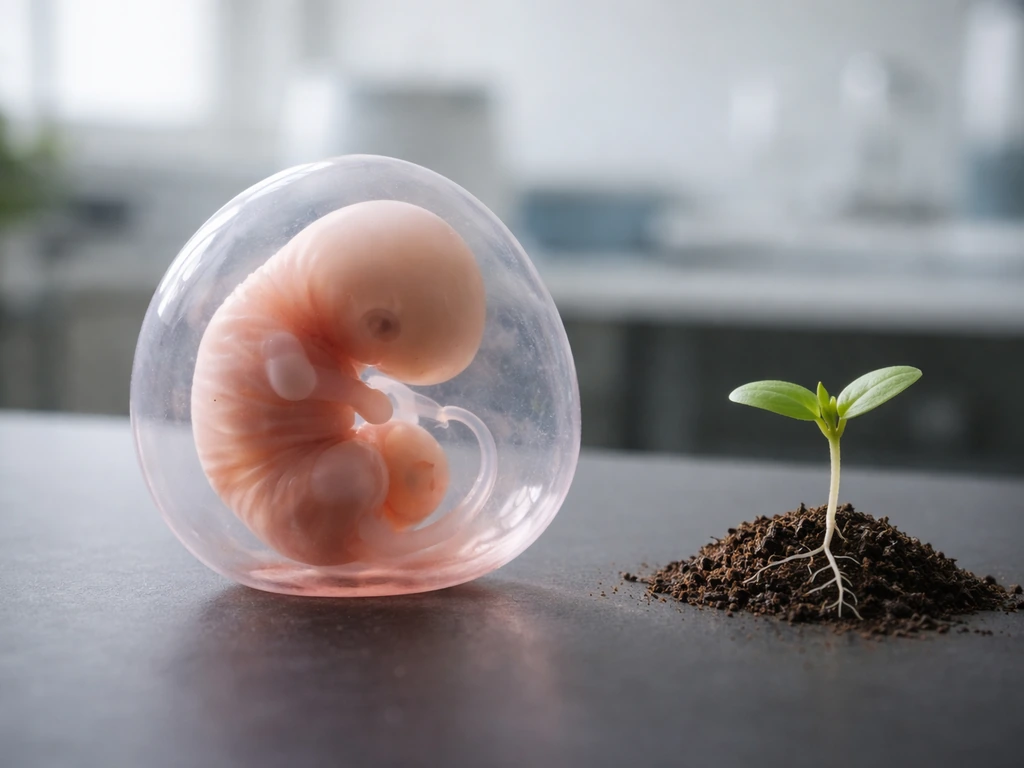
Making more cells is only half the story. Those cells need to become the right kind of cell in the right place. That is differentiation, and it works through gene expression: every cell in your body carries the same DNA, but different genes get switched on or off depending on where the cell is, what chemical signals it receives, and what stage of development the organism is in.
In animals, the earliest stage of development sets up three primary cell layers called germ layers during a process called gastrulation. From those layers, chemical signals trigger cascades of gene expression that build organs. Location matters enormously here: a cell on the outer surface of the embryo receives different signals than a cell buried deep inside, and those signals push each cell toward a specific identity. By the time an animal is fully formed, its cells are organized into tissues (groups of similar cells doing one job), tissues into organs (structures doing a coordinated job), and organs into systems.
Plants follow the same hierarchy: meristematic cells divide and differentiate into tissues, tissues form organs like roots, leaves, and flowers, and those organs work together as the whole plant. One dramatic example of developmental change in plants is the floral transition. When conditions are right, a protein called florigen (encoded by the FT gene) is produced in the leaves and travels to the shoot apical meristem, reprogramming it from making leaves to making flowers. The meristem does not just add a flower on top; it fundamentally changes what it is doing.
In animals, the most visually striking developmental change is metamorphosis in insects. In species like Drosophila or butterflies, two hormones run the show: 20-hydroxyecdysone coordinates the molting process and drives metamorphosis-related gene expression, while juvenile hormone (JH) acts as a developmental brake. When JH is present, the insect stays in larval mode. When JH drops and ecdysone surges, imaginal discs (clusters of cells that have been quietly waiting) differentiate into adult structures like wings and compound eyes. It is one of the clearest examples in nature of growth being controlled by hormonal timing rather than just resource availability.
What plants need to grow
Plants are autotrophs, meaning they build their own food. That makes their growth conditions a bit different from animals. The three non-negotiables are light, water, and nutrients.
Light drives photosynthesis, the process that converts carbon dioxide and water into sugars. Those sugars are the raw material for everything the plant builds, from cell walls to seeds. Plants use specific visible wavelengths, and the duration of light matters too: day length (photoperiod) is the signal that triggers events like flowering in many species. Arabidopsis, a common lab and classroom plant, grows best under a 16-hour light / 8-hour dark cycle at around 71 to 73 degrees Fahrenheit and goes from seed to seed in about 6 to 8 weeks under those conditions.
Water does more than hydrate. It is absorbed through root hairs and carried up through the xylem to leaves, where it participates directly in photosynthesis. In cells, water filling the central vacuole creates turgor pressure, which keeps the plant upright and physically drives cell expansion during growth. A wilting plant is not just thirsty; it has lost the internal pressure that makes growth mechanically possible.
Nutrients, especially the macronutrients nitrogen (N), phosphorus (P), and potassium (K), are the most visible growth limiters in gardening and agriculture. For plants, nutrients which help us to grow are especially important, since nitrogen, phosphorus, and potassium are common growth limiters. Each deficiency shows up in a recognizable way:
| Nutrient | Role in growth | Deficiency symptom |
|---|---|---|
| Nitrogen (N) | Needed for proteins and photosynthesis | Slow, stunted growth; pale yellow-green leaves |
| Phosphorus (P) | Energy transfer, root development | Stunted growth; reddish-purple tint on leaves |
| Potassium (K) | Enzyme activation, water regulation | Brown or scorched leaf edges, often on older leaves |
| Magnesium (Mg) | Central atom in chlorophyll | Bright yellow patches between leaf veins (interveinal chlorosis) |
Recognizing these patterns is genuinely useful. If your bean seedlings are pale and slow, the soil is probably nitrogen-poor. If the leaf edges are browning on your tomatoes, check potassium. The plant is telling you exactly what it needs.
What animals need to grow
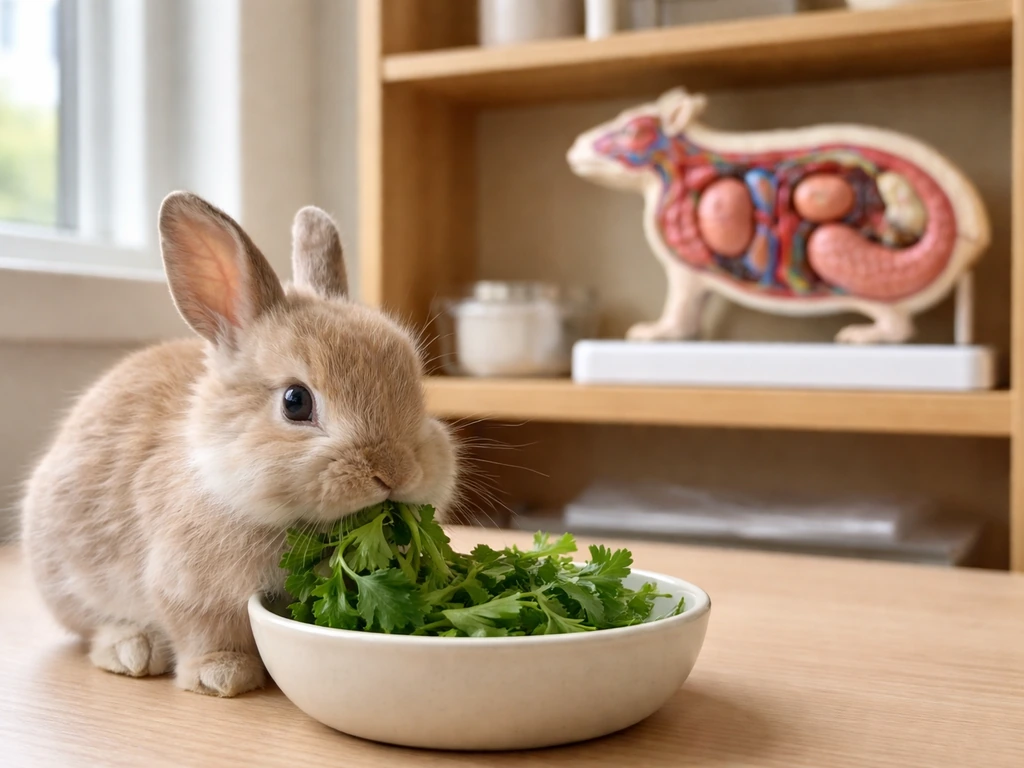
Animals cannot make their own food, so their growth depends on consuming energy and nutrients from the outside. But growth in animals is also tightly managed from the inside through hormones.
The main hormonal driver of growth in vertebrates is the growth hormone (GH) and insulin-like growth factor 1 (IGF-1) axis. Growth hormone deficiency in childhood is linked to reduced height velocity, reflecting the importance of the GH, IGF-I axis for growth growth hormone (GH) and insulin-like growth factor 1 (IGF-1) axis. The brain's hypothalamus signals the pituitary gland to release GH, which then stimulates the liver to produce IGF-1. IGF-1 is the molecule that actually tells cells, especially in muscle and bone, to grow and build new proteins. Thyroid hormone works alongside this system and is essential for normal growth and development in children; disruptions to thyroid function are associated with significant growth problems. Both systems operate through feedback loops: when hormone levels get high enough, the body signals them to drop, preventing runaway growth.
Beyond hormones, animals need a steady supply of nutrients that support cell construction. Protein provides amino acids for building new cells and tissues. Calcium and phosphorus are critical for bone growth. Vitamins like D and A support bone density and tissue development. Energy (from carbohydrates and fats) is the fuel that keeps all of this running.
Sleep is also part of the picture. Growth hormone is released in pulses during deep sleep, which is one real, biological reason why growing children and teenagers need significantly more sleep than adults. This connects directly to how the endocrine and metabolic systems are integrated with daily rhythms.
Why growth slows down and eventually stops
Nothing grows forever, and that is not a failure of biology. This idea captures a basic principle: the nature of life is to grow, even if growth eventually slows and stops. It is a feature. Several overlapping mechanisms put brakes on growth, and understanding them explains a lot about why organisms are the sizes and shapes they are.
Physical limits: surface area vs. volume
As a cell or organism gets bigger, its volume grows faster than its surface area. That matters because exchange (of oxygen, nutrients, and waste) happens at surfaces. A very large cell cannot move materials from its outer membrane to its center fast enough by diffusion alone, which is why cells stay small and why large animals evolved circulatory systems. The same logic applies at the whole-body level: there are physical limits to how large a body can get before its transport systems cannot keep up.
Cell-cycle checkpoints and contact inhibition
Inside every dividing cell, checkpoint proteins are watching for problems. DNA damage, incomplete replication, or lack of resources can all pause the cell cycle. Normal cells also stop dividing when they are crowded by neighbors, a phenomenon called contact inhibition. When a tissue reaches the right density, cells essentially signal each other to stop. Cancer is, in large part, what happens when these brakes fail.
Hormonal wind-down
In humans, the growth plates in long bones (areas of active cartilage and bone formation) gradually fuse in late adolescence as sex hormone levels rise. Once the growth plates close, bone length cannot increase. Growth hormone continues to be produced in adulthood but shifts its role toward maintenance rather than size increase. In plants, the shift from vegetative to reproductive growth (flowering) essentially redirects meristem activity away from adding new leaves and stems.
Resource and environmental limits
When nutrients, water, light, or space run short, growth slows or stops. This is true at the cellular level (a cell that cannot get glucose cannot complete the cell cycle) and at the ecosystem level (a population that outgrows its food supply stops growing). Temperature also plays a direct role: biochemical reactions that drive growth have optimal temperature ranges, and moving outside those ranges slows or halts the process entirely.
How to watch growth happen: experiments worth trying
The best way to internalize how growth works is to observe it directly and measure it. Here are a few approaches that work well at home or in a classroom.
The classic bean plant experiment
Plant bean seeds in clear cups or small pots with consistent soil. Mark your starting date and measure the height of each seedling every day or every two days. Record the numbers and plot them on a simple line graph. You will see that growth is not constant: there are slow periods early on, then a rapid stretch, then a plateau. Try manipulating one variable at a time, watering frequency, light exposure, or temperature, and keep all others constant. The difference in height between your control and your test plant after two to three weeks will be more convincing than any textbook description.
Germination timing as a growth variable
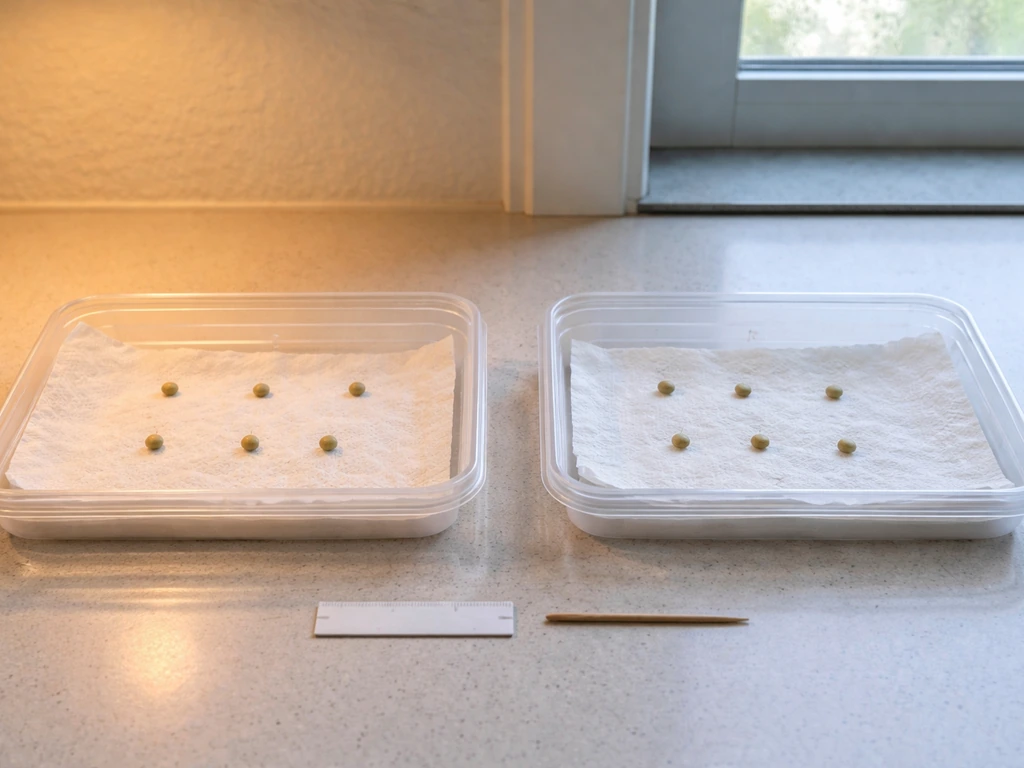
Set up seeds in damp paper towels at two different temperatures (room temperature vs. a cooler spot like near a window in winter or a slightly warmed area). Record which seeds germinate first and measure the tiny root length (the radicle) each day after germination. You are directly testing how temperature affects the rate of early growth, and the numbers will give you a measurable, concrete answer.
Nutrient deficiency in a controlled setup
Grow two identical seedlings hydroponically (in water with dissolved nutrients) but leave out one key nutrient from one container, nitrogen is the easiest to manipulate. Compare leaf color and height weekly. This mirrors exactly how researchers and agronomists identify deficiencies in the field, and the visual symptoms appear within one to two weeks.
What to look for and record
- Height or length (measured in millimeters or centimeters) at consistent intervals
- Number of leaves or nodes as a proxy for developmental stage, not just size
- Color changes in leaves, which signal nutrient status
- Days to germination and days to first true leaf, both are measurable growth milestones
- Any visible response to a change in conditions, like a seedling bending toward a light source
Growth in plants and animals is not a mystery happening invisibly inside cells. OpenStax explains that, in multicellular organisms, cells move through precisely timed and regulated stages of growth, DNA replication, and nuclear and cytoplasmic division to produce two identical cells blank" rel="noopener noreferrer">Growth in plants and animals is not a mystery happening invisibly inside cells.. It is something you can watch, measure, and manipulate with relatively simple setups. A living things grow and develop example you can spot is how a seed becomes a seedling through new structures and new functions. Once you connect the patterns you see (a pale leaf, a slowed seedling, a rapid growth spurt) to the mechanisms underneath (nitrogen shortage, reduced cell division rate, a surge in growth hormone), the biology stops being abstract and starts making obvious, practical sense. That connection between mechanism and observable outcome is really what understanding growth is all about.
FAQ
Is growth the same thing as getting bigger, or does it include other changes?
Growth includes changes in structure and function, not just an increase in size. For example, an animal can “grow” by developing new organs or abilities without any immediate change in height or mass, and plants can switch from leaf production to flowering even if overall size growth slows temporarily.
Why do some organisms grow fast at one time and slow at another?
Growth is regulated by timing signals and checkpoints, not a constant rate. A cell cycle that pauses to repair DNA, or a body that reallocates resources toward maintenance, can create a rapid-growth window followed by a plateau.
How can a plant keep growing after mowing if plants do not just “stretch” evenly?
Many plants have meristematic tissue located at specific points, like near leaf bases, so new growth can restart even after the top is cut. Mowing removes some tissues, but it does not eliminate the local dividing zones that keep generating new cells.
What does it mean when a plant wilts, is it only “dryness”?
Wilting usually reflects loss of turgor pressure, not just low water availability. If water uptake or water transport up the xylem cannot keep the vacuoles filled, cells lose internal pressure, growth and expansion slow down quickly.
Why do deficiencies show up as specific symptoms on leaves?
Nutrients are needed for particular building tasks, so shortages affect tissues in recognizable ways. For instance, when nitrogen is low, plants often can’t build enough proteins for new growth, which can lead to pale leaves and slower development rather than random damage.
Can animals grow continuously like plants, or is animal growth more limited?
Most animals grow in stages. Early development is highly active, later many tissues shift toward maintenance and repair, and growth can depend on hormonal cues. In humans, long-bone length is limited after growth plates fuse, so size changes shift from “lengthening” to more gradual tissue remodeling.
How do hormones “know” when to start and stop growth?
Hormones use feedback loops. When levels rise high enough, the body signals upstream glands to reduce production, which prevents runaway growth. This means growth typically responds to internal status, not just a constant external stimulus.
Do all animals use the same hormones and mechanisms for development?
The broad idea of growth control is shared, but the specific hormone system and timing signals differ by species and life stage. In insects, metamorphosis depends strongly on hormone timing, while vertebrates rely heavily on the GH and IGF-1 axis and thyroid signals for normal growth and development.
What prevents cells from dividing forever, and how does that relate to cancer?
Cells can stop dividing when they encounter DNA damage, insufficient resources, or signals from neighboring cells (contact inhibition). Cancer is strongly associated with failures in these brakes, so growth becomes uncontrolled when normal stopping mechanisms no longer work.
Why are cells and animals limited in size, what does surface area have to do with growth?
Exchange of oxygen, nutrients, and waste scales with surface area, while the need for materials scales with volume. As size increases, diffusion and transport constraints become harder to overcome, which is why larger animals require dedicated transport systems like circulatory networks.
How does temperature affect growth measurements in classroom or at-home experiments?
Temperature changes the speed of biochemical reactions, so growth rates often shift noticeably when conditions move away from an organism’s preferred range. To interpret results, control all variables except temperature, because small differences in water or light can confound the “temperature effect.”
If I want to test growth experimentally, what is the safest and most reliable variable to change?
Change one variable at a time and keep the rest constant, using a control group. Nutrients are often easiest to manipulate in a controlled way, such as comparing seedlings with and without a specific nutrient, because the visual response can appear within days to weeks depending on the system.
Why can two seedlings look the same size but still be growing differently?
Height alone may not reflect underlying development changes. A plant might be taller due to stretching or water status while its leaf color, branching, or root length indicates different growth limitations, so measuring multiple traits gives a clearer picture.
Why does plant flowering sometimes happen suddenly, even if the plant is still getting enough light and water?
Flowering often depends on developmental reprogramming triggered by conditions like day length and specific molecular signals. When those triggers are met, meristems can switch their role from producing leaves to producing flowers, so the change is more about “what the meristem does” than only about general growth speed.
Next Article
The Nature of Life Is to Grow: Science and Mechanisms
Science-backed meaning of life’s growth, mechanisms, limits, and real examples across cells, organisms, and regeneration