Yes, all living things grow at some point in their lives. But here is the important qualifier: not all living things are growing at every moment, and not every living thing grows in the same way. A redwood tree adds girth for centuries. A mayfly completes its entire adult life in a single day without meaningfully increasing in size. A bacterium doubles its biomass and splits in two every 20 minutes under the right conditions. Growth is a universal feature of life, but the timing, the mechanism, and the scale vary enormously depending on the organism and its life stage.
Do All Living Things Grow? Growth vs Development Explained
Marcus Whitmore
4 Apr 2026
If you want a single, science-backed answer to take away: growth is one of the core characteristics that defines living things, but it is not a continuous, non-stop process. It happens in specific windows, under specific conditions, through specific biological mechanisms. Understanding those three things will help you reason about any organism you are curious about.
Growth, development, and reproduction are not the same thing
These three concepts get tangled together constantly, and it is worth pulling them apart before going any further. OpenStax biology frameworks list growth and development as a shared characteristic of all living organisms, but they treat them as related, not identical, processes. Growth refers specifically to an increase in size, mass, or cell number. Development refers to changes in shape, structure, and function, changes that happen according to a genetic program but do not always involve getting bigger. Reproduction is the production of new individuals, a completely separate process.
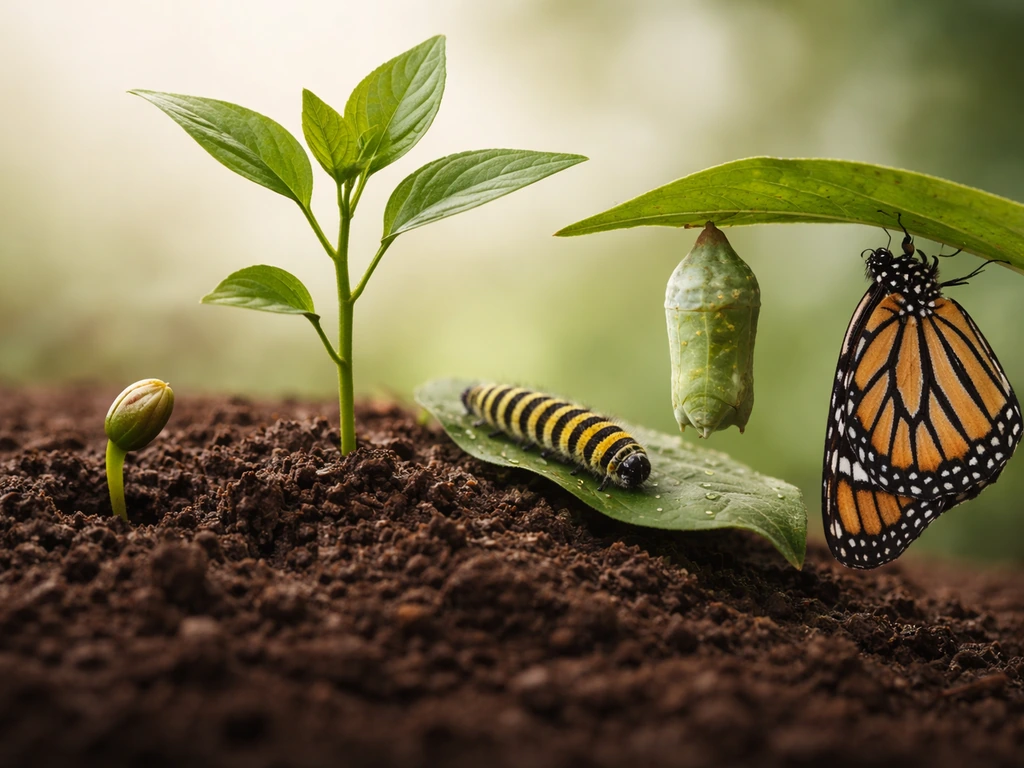
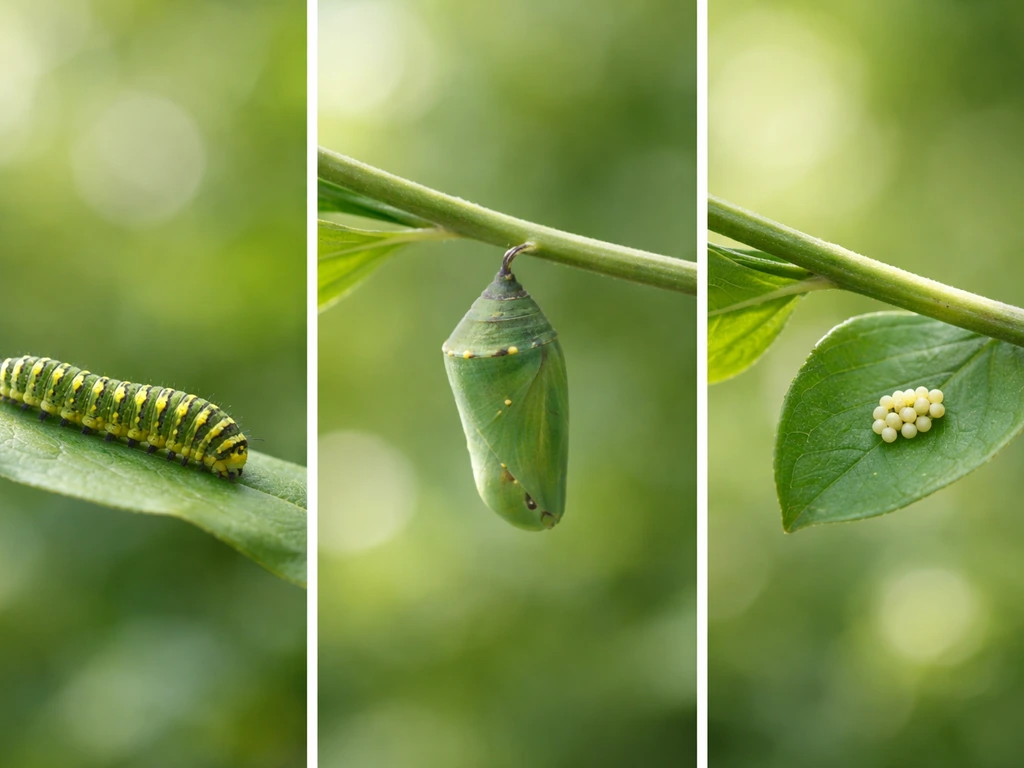
A caterpillar turning into a butterfly is a perfect example of development without meaningful growth. The caterpillar breaks down most of its body tissue and reorganizes it into a new form inside the chrysalis. The butterfly that emerges may actually be lighter than the caterpillar was. That is development: regulated change in form and function. A cell in your bone marrow dividing to produce two daughter cells is growth: an increase in cell number and total biomass. A fern releasing spores is reproduction: creating new individuals, not increasing the size of the original plant.
The NGSS life cycle framework lays this out cleanly. A typical life cycle includes fertilization, development, birth or emergence, growth into an adult, reproduction, and death. Each stage is distinct. Growth and reproduction are both part of a life cycle, but they are not interchangeable. You can have one without the other happening at the same time.
How growth actually works biologically
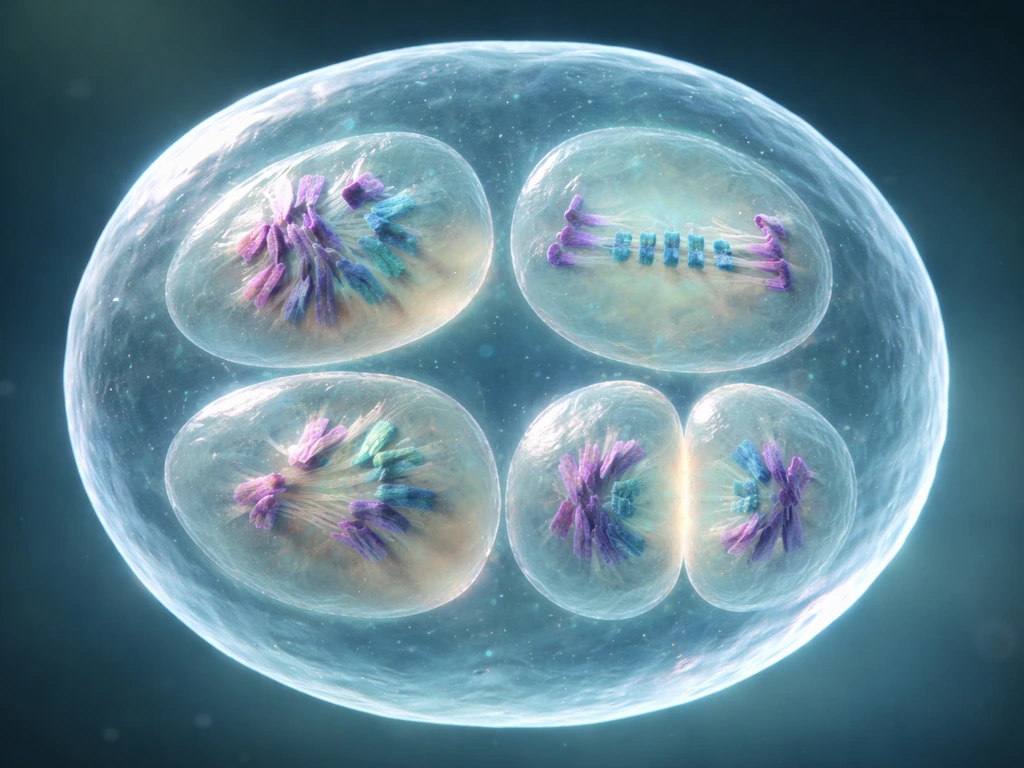
At the cellular level, growth comes down to two things: cell division and an increase in biomass. In most multicellular organisms, growth happens because cells divide (producing more cells) and because individual cells take in nutrients and build new molecules, getting physically larger before dividing again. blank" rel="noopener noreferrer">The process of cell division in most body cells is called mitosis. If you want to understand the full picture of mitosis and how living things grow and repair themselves, it is worth looking at that process in detail, because it also explains how organisms heal wounds, replace worn-out tissue, and maintain themselves over time.
Here is the basic sequence: a cell grows by taking in raw materials from its environment, converting those materials into proteins, lipids, and other molecules, and using that new material to expand. At a certain point, the cell divides. The result is two cells where there was one. Repeat this across billions of cells and you get an organism that is measurably larger. For single-celled organisms like bacteria, this division is the entirety of both growth and reproduction. For a human, it is the engine running quietly in the background throughout childhood and adolescence.
Biomass matters here too. Scientists often measure growth not just by counting cells but by tracking dry mass, the total amount of biological material in an organism after water is removed. This is especially useful for plants, where water content can fluctuate wildly without reflecting real growth. A plant that has absorbed a lot of water after rain has not necessarily grown; one that has added new leaf tissue, stems, or roots has.
Not every organism grows all the time
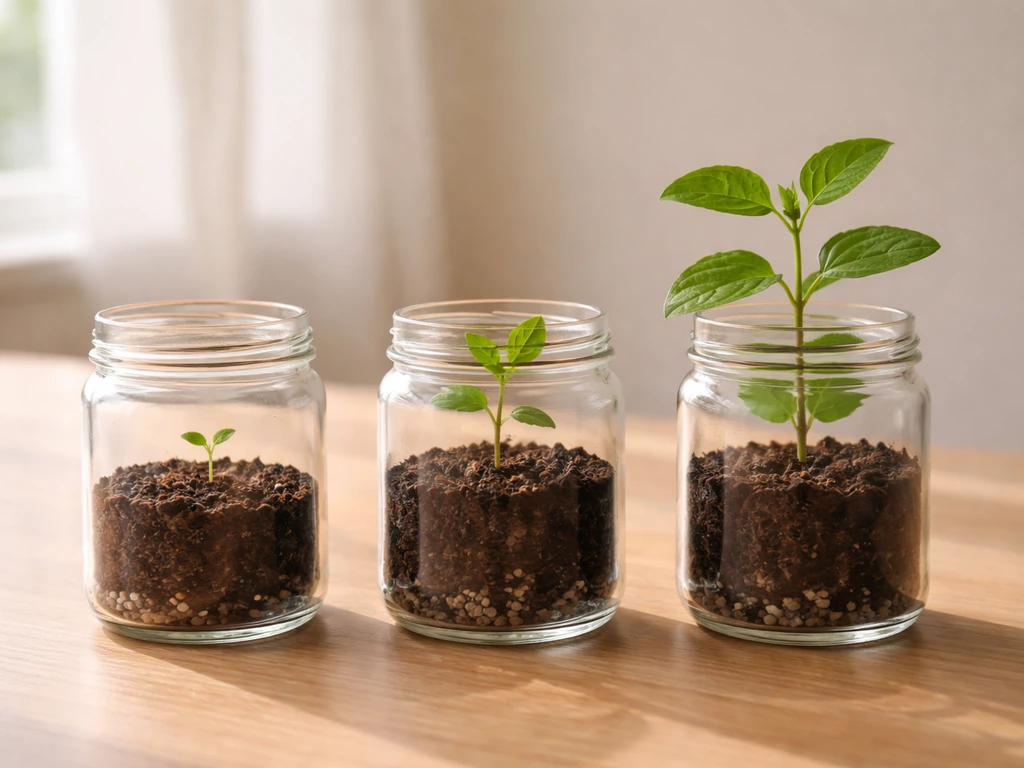
Growth is not a steady dial turned to maximum. Most organisms have life stages where growth is rapid, stages where it slows, and often a point where it stops almost entirely. Understanding how living things grow means understanding that timing is everything.
In humans, rapid growth happens in infancy, childhood, and again during adolescence. By the early twenties, most people have reached their adult height and their long bones have stopped lengthening. That does not mean growth has stopped entirely: skin cells still divide, blood cells are replaced every few months, and the gut lining replaces itself roughly every four to five days. But the organism-level increase in size has essentially plateaued. Many vertebrates share this pattern: fast juvenile growth, then a growth ceiling at adulthood.
Other organisms, particularly many fish, reptiles, and trees, show what biologists call indeterminate growth: they continue adding mass and size throughout their lives, just at a slowing rate as they age. A 500-year-old oak is still growing, just very slowly. The concept of indeterminate versus determinate growth is one of the most practically useful distinctions when you are trying to figure out whether a specific organism is still growing.
| Organism type | Growth pattern | Stops growing at maturity? |
|---|---|---|
| Most mammals (including humans) | Determinate | Yes, size growth largely stops |
| Most birds | Determinate | Yes, after fledging |
| Many fish and reptiles | Indeterminate | No, continue growing throughout life |
| Trees and perennial plants | Indeterminate | No, add rings/mass annually |
| Bacteria and single-celled organisms | Continuous (divide to reproduce) | N/A, divides before a size ceiling is hit |
| Insects | Stage-dependent | Growth occurs between molts; adult form is fixed |
Plants, animals, and single-celled organisms grow very differently
The growth strategies across these three groups are distinct enough to be worth comparing side by side. How plants and animals grow and change is genuinely different at the cellular and structural level, not just in how it looks from the outside.
Plants grow primarily through regions called meristems, clusters of undifferentiated cells located at root tips and shoot tips. These cells divide continuously, pushing roots deeper and shoots higher. Plants also grow outward (secondary growth) via the vascular cambium, which is what produces annual rings in trees. Because plant cells have rigid cell walls, growth often involves both cell division and significant cell expansion: the cell divides, then the daughter cells take in water and enlarge, sometimes dramatically. This is why a plant can seem to shoot up overnight after rain.
Animals grow differently. In most animals, growth zones are not concentrated in specific tip regions but are distributed throughout the body. Growth happens by cell division across many tissue types, regulated by hormones like growth hormone and insulin-like growth factor. In insects, growth is tied to molting: the exoskeleton limits expansion, so the insect must shed its outer shell to grow larger. Between molts, the insect grows rapidly. Once the adult form is reached, molting (and meaningful size growth) stops.
Single-celled organisms like bacteria, yeast, and amoebae have the simplest growth model. They take in nutrients, grow in size, and then divide. For them, growth and reproduction are inseparable. A bacterium does not grow to adulthood and then separately reproduce: it grows until it divides, and division is reproduction. This is why population growth in bacteria can be exponential under ideal conditions, doubling every 20 minutes in some species.
Why growth cannot go on forever
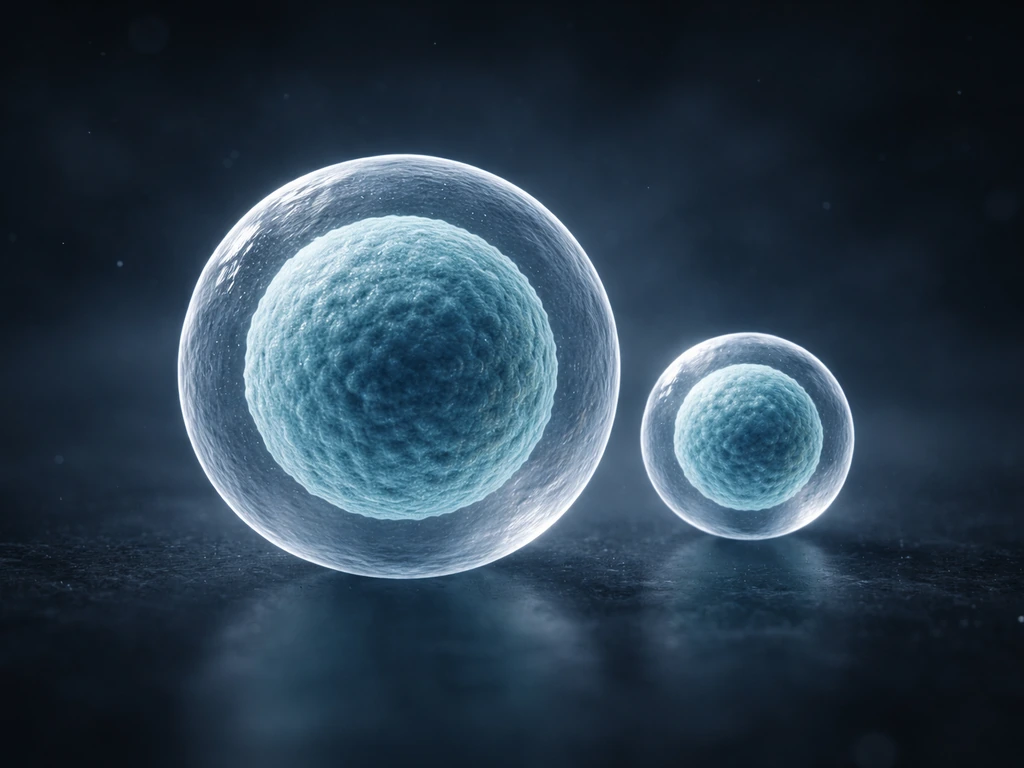
Every living thing runs into constraints that limit how large it can grow. These are not arbitrary: they are rooted in physics and chemistry. The nature of life is to grow, but the nature of physics is to push back.
For individual cells, the key constraint is the surface area to volume ratio. As a cell gets larger, its volume increases faster than its surface area. Since nutrients enter and waste exits through the cell membrane (the surface), a cell that gets too large cannot exchange materials fast enough to survive. This is why cells divide rather than just keep expanding indefinitely. It is also why you will never find a single cell the size of a baseball.
For whole organisms, the constraints multiply. Nutrients and energy are the most obvious ones. The nutrients that help us grow include proteins for building tissue, carbohydrates and fats for energy, and micronutrients like zinc, calcium, and vitamin D that regulate growth signaling. Without adequate supply, growth slows or stops regardless of genetic potential. This is why malnutrition in early childhood has permanent effects on adult height.
Structural limits matter too. A land animal cannot simply scale up indefinitely because its skeleton must support its weight against gravity. The largest land animals, like elephants and some dinosaurs, were already pushing the mechanical limits of bone tissue. Aquatic animals can grow much larger because water buoyancy offsets gravitational load, which is why whales can reach masses that would be impossible on land.
- Surface area to volume ratio: limits individual cell size
- Nutrient and energy availability: sets the raw material ceiling for growth
- Diffusion limits: in large organisms, circulatory and respiratory systems compensate, but diffusion alone cannot supply large tissue masses
- Structural and mechanical limits: skeleton, exoskeleton, or cell wall capacity constrains overall body size
- Hormonal regulation: growth signals are tightly controlled and eventually downregulated at maturity in determinate growers
Edge cases worth thinking about
A few organisms genuinely complicate the simple story, and they are worth addressing directly. Organisms that undergo metamorphosis (frogs, butterflies, certain beetles) go through stages where visible growth pauses or reverses while development accelerates. The tadpole reabsorbs its tail as it becomes a frog: is that growth? Strictly speaking, it is the opposite. But the organism is still alive, still developing, and will grow again as an adult frog. Metamorphosis is a vivid example of how living things grow and develop in ways that are not always linear or additive.
Some organisms can regenerate lost tissue, which is a form of compensatory growth. Planarian flatworms can regrow an entire head from a body fragment. Salamanders regrow limbs. Starfish regenerate lost arms. This is not the same as developmental growth, but it uses the same cellular machinery: cell division, differentiation, and tissue patterning. Understanding how organisms grow and repair themselves reveals that growth and repair share more biological overlap than most people expect.
Dormant organisms are another interesting case. A seed sitting on a shelf is alive, technically, but it is not growing. A tardigrade in a dehydrated cryptobiotic state has essentially paused all metabolic processes, including growth. These organisms demonstrate that life can persist in a suspended state without actively growing, but the moment conditions are right, growth resumes. Dormancy is a pause, not an absence of the capacity to grow.
How to figure out whether any specific organism is growing
If you are trying to reason about a particular organism and whether it is growing, here is a practical checklist you can run through. This works whether you are a student working on a biology assignment or just genuinely curious about something in your backyard.
- Check the life stage: Is the organism juvenile, adult, or in a transitional stage like metamorphosis or dormancy? Juvenile stages almost always involve active growth. Adult stages often do not, especially in determinate growers.
- Ask whether biomass is increasing: Is the organism adding new tissue, not just water? Dry mass is the more reliable measure if you want to get technical.
- Ask whether cell number is increasing: Is cell division actively happening? In rapidly growing tissue, you can often detect this through biological markers of mitosis.
- Separate growth from reproduction: Is the organism producing offspring? That is reproduction, not growth of the individual organism. A bacterium dividing is both at once, but a tree dropping seeds is only the latter.
- Check environmental conditions: Is the organism getting enough nutrients, water, and energy? Without adequate inputs, growth slows or stops even when the organism is otherwise healthy.
- Consider the organism's growth type: Is it a determinate grower (stops at maturity) or an indeterminate grower (continues throughout life)? This tells you whether to expect ongoing size increase.
For younger students just getting started with these ideas, the core concepts around life cycles and what counts as growth are actually introduced quite early in science education. How living things grow at the elementary level focuses on the observable basics: organisms get bigger, they change shape, and they eventually reproduce. Those foundations hold up as you dig deeper. The biological machinery underneath gets more complex, but the observable logic stays the same.
The bottom line
All living things grow at some point in their lives. That is a reliable biological truth. But growth is not constant, not identical across species, and not the same thing as development or reproduction. It happens through cell division and biomass increase, it is constrained by nutrients, energy, physics, and genetics, and it follows patterns that vary dramatically between a bacterium, a maple tree, and a blue whale. If you understand those mechanics, you can reason about any organism you encounter and answer for yourself whether it is growing, developing, reproducing, or all three at once.
FAQ
If growth is universal, why do some organisms seem to “shrink” during metamorphosis?
During metamorphosis, the body can reorganize mass into different structures, so total size may drop even though the organism remains alive and actively changing. Growth does not have to be strictly additive (always increasing) to count as growth over the full life cycle, but you can separately label development versus compensatory changes when visible size decreases.
Can an organism be alive and not growing at all times, and still be considered a living thing?
Yes. Dormancy is a clear example, a seed or dehydrated tardigrade can persist without actively increasing in size because metabolism and growth are paused. The key is that it is still alive and can resume growth when conditions return, rather than permanently stopping.
Is “developing” the same as “growing” in everyday terms or only in biology classes?
In biology they are different labels. Development includes regulated changes in form and function that may happen with little or no size increase, while growth specifically involves increasing size, mass, or cell number. In daily language people mix them, but the distinction matters for questions like caterpillar to butterfly.
Do plants always grow only upward, or is growth limited to “visible” height changes?
Plants can grow without obvious height increases. New growth can occur at root tips or through widening of stems via secondary growth, and much of it is not immediately visible from above. Also, water uptake after rain can increase turgor pressure quickly, which looks like growth even when new tissue is not being formed.
How do scientists decide whether an organism is growing if water content changes?
A common approach is tracking dry mass or measuring new tissue formation rather than relying on wet weight. Dry mass reduces the confounding effect of hydration, so an animal that holds extra water will not be mistaken as having grown if dry mass stays the same.
Why do humans stop getting taller, but still have growth happening?
Height growth generally plateaus when long bones stop lengthening, but cells still divide and tissues renew. Growth at the organism level can slow to near zero while cell turnover (skin, gut lining, blood cell replacement) continues, so you can have ongoing cellular maintenance without further major increases in overall body size.
What does indeterminate growth mean in practice for fish, trees, and some reptiles?
Indeterminate growth means mass and size can keep increasing across the lifespan rather than stopping at a fixed adult ceiling. The rate typically slows with age due to changing energy balance and environmental constraints, so an older tree can still grow, just not at the juvenile pace.
Do all cell divisions count as growth?
Not always. Cell division contributes to growth when it increases total biomass or cell number in a net way, but divisions can also support repair, replacement, or remodeling where overall size stays similar. Context matters, for example wound healing uses cell division without necessarily increasing the organism’s size at the time of repair.
Why can’t cells just keep growing indefinitely instead of dividing?
As a cell enlarges, volume rises faster than surface area, which limits how efficiently nutrients can enter and wastes can leave across the membrane. Dividing prevents the cell from reaching a size where exchange can’t keep up with internal demand, so cell growth is balanced against the surface area to volume constraint.
If nutrition limits growth, does that mean genetics never matters?
Genetics sets a potential growth program, but actual outcomes depend on whether the body can supply the building blocks and energy to carry it out. When early nutrition is inadequate, growth signaling can shift and some impacts can be long lasting, so genetics is not erased, but it may not fully express if constraints are severe.
Is it possible for an organism to grow in some parts but not overall?
Yes. Many organisms prioritize resources, for example, a plant may expand roots and leaves under certain conditions while overall height gain looks minimal. Similarly, animals can undergo remodeling that changes certain tissues, so “growth” can be compartment-specific even if total body size changes slowly.
How can I tell whether a specific organism is growing versus just developing or reproducing?
Use a simple separation: check for net increases in size, mass, or cell number (growth), track changes in structure and function without a clear increase in size (development), and look for formation of new individuals (reproduction). If you observe metamorphosis, also note that visible size changes may reflect development and reorganization rather than a straightforward growth-only process.
Next Article
Mitosis: How Living Things Grow and Repair Themselves
Learn how mitosis makes new cells for growth and repair, step by step through prophase, metaphase, anaphase, telophase.