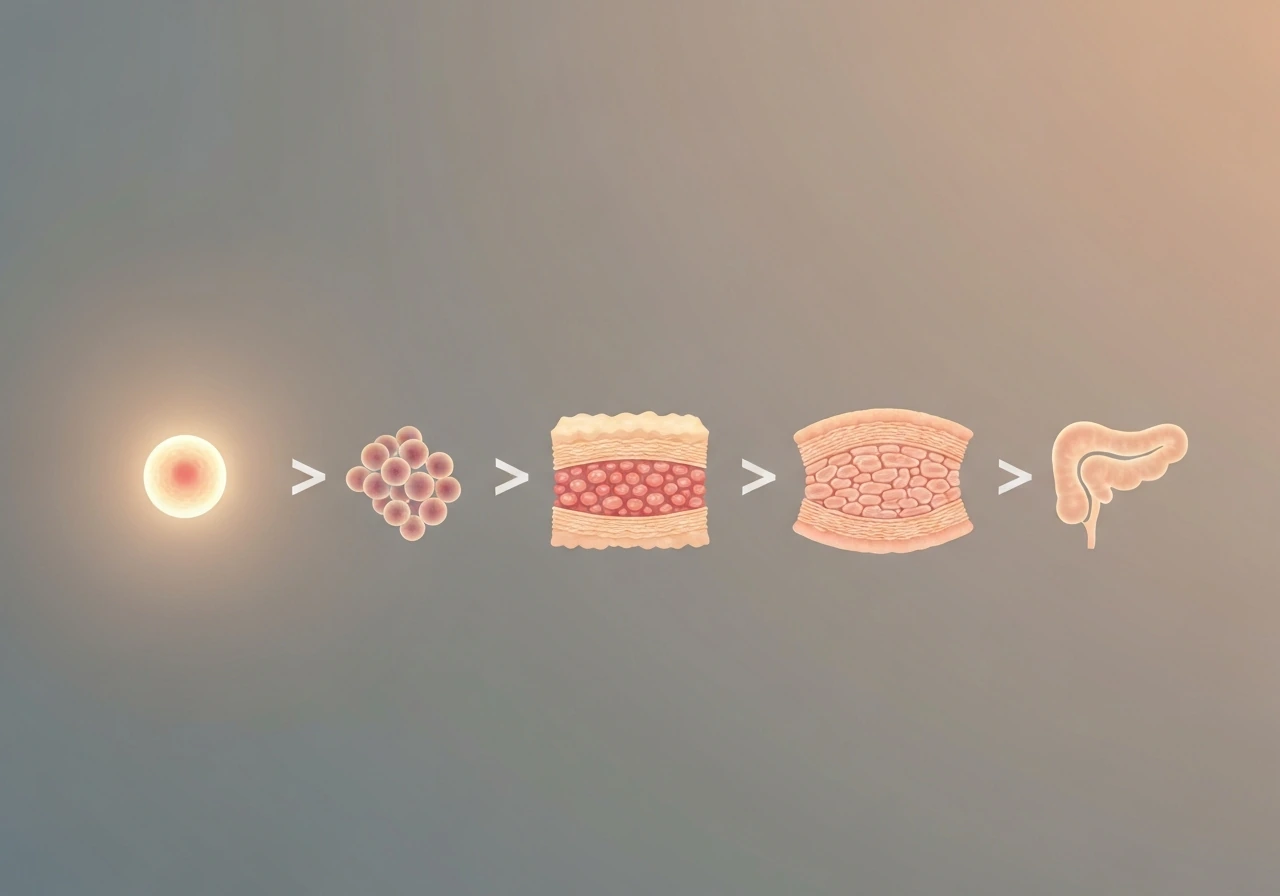
When we say living things grow and develop, we mean two related but distinct things: an organism gets physically bigger over time (growth), and it also changes in form, structure, and function in ways that make it more complex or capable (development). A seed becoming a sunflower, a tadpole turning into a frog, a baby growing into an adult human, a single bacterium splitting into two, all of these are real-world examples of living things growing and developing. The short version: growth is about size and number, while development is about what the organism can do and what it looks like as it moves through its life.
Living Things Grow and Develop: Meaning and Examples
Marcus Whitmore
15 Apr 2026
What "grow and develop" actually means
Growth, in biology, refers to a permanent increase in the size, number, or biomass of an organism. According to Britannica Kids, this happens when cells within a living thing increase in size and number. More cells, bigger cells, more mass, that is growth in a nutshell. Development, on the other hand, is defined by Britannica as "progressive changes in size, shape, and function during the life of an organism." So development is broader. It includes growth, but it also includes all the structural and functional changes an organism goes through from its earliest stage to its final form.
Both processes are driven by genes. As OpenStax explains, organisms grow and develop following specific instructions coded for by their genes. This is why a cat's kitten looks like a cat and not a dog, the genetic instructions dictate the direction, timing, and outcome of both growth and development. The NGSS Disciplinary Core Idea LS1B frames these as core life science concepts: growth and development happen through internal, genetically regulated processes across predictable life stages.
Growth vs. development: how to tell the difference
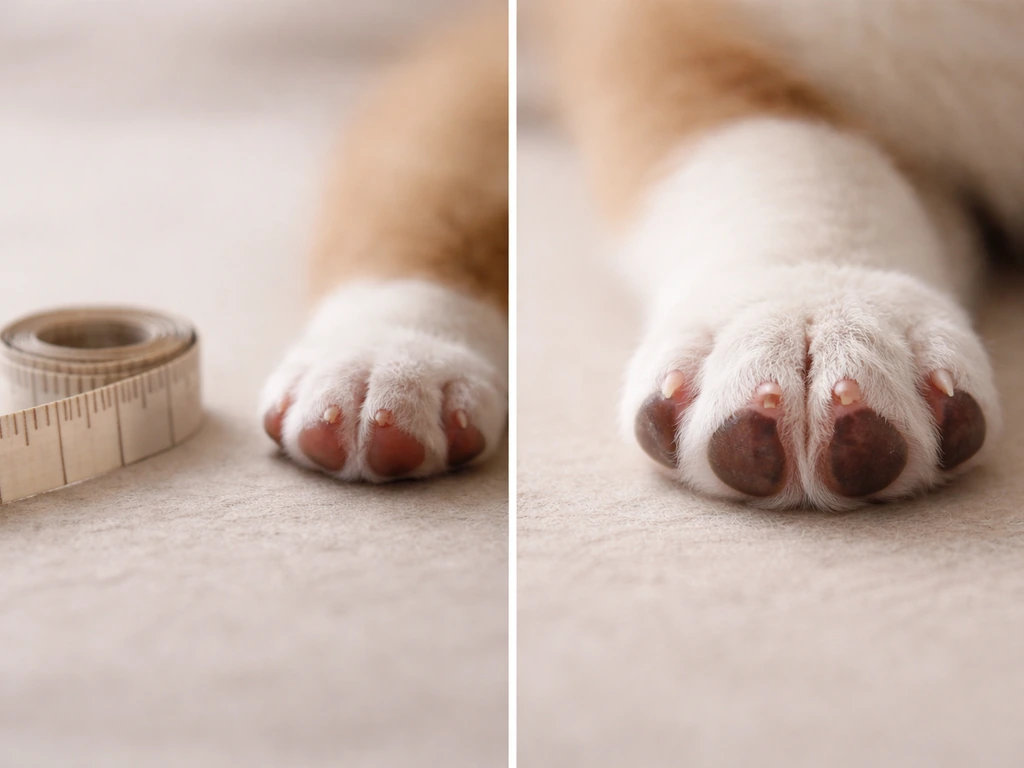
Here is the clearest way to separate the two: growth is measurable with a ruler or a scale, and development is visible in form and function. If a puppy goes from 2 pounds to 40 pounds, that is growth. If that same puppy's eyes open for the first time, its baby teeth fall out and adult teeth come in, and it learns to regulate its body temperature, that is development. Both are happening at the same time, but they are not the same thing.
| Feature | Growth | Development |
|---|---|---|
| What changes | Size, number of cells, mass | Shape, structure, function, complexity |
| How you measure it | Ruler, scale, cell count | Observable milestones, functional changes |
| Driven by | Cell division and cell enlargement | Gene expression, differentiation, hormones |
| Reversible? | Generally no (permanent) | Generally no (progressive and sequential) |
| Example in a frog | Tadpole gets longer and heavier | Tadpole grows legs, loses tail, lungs replace gills |
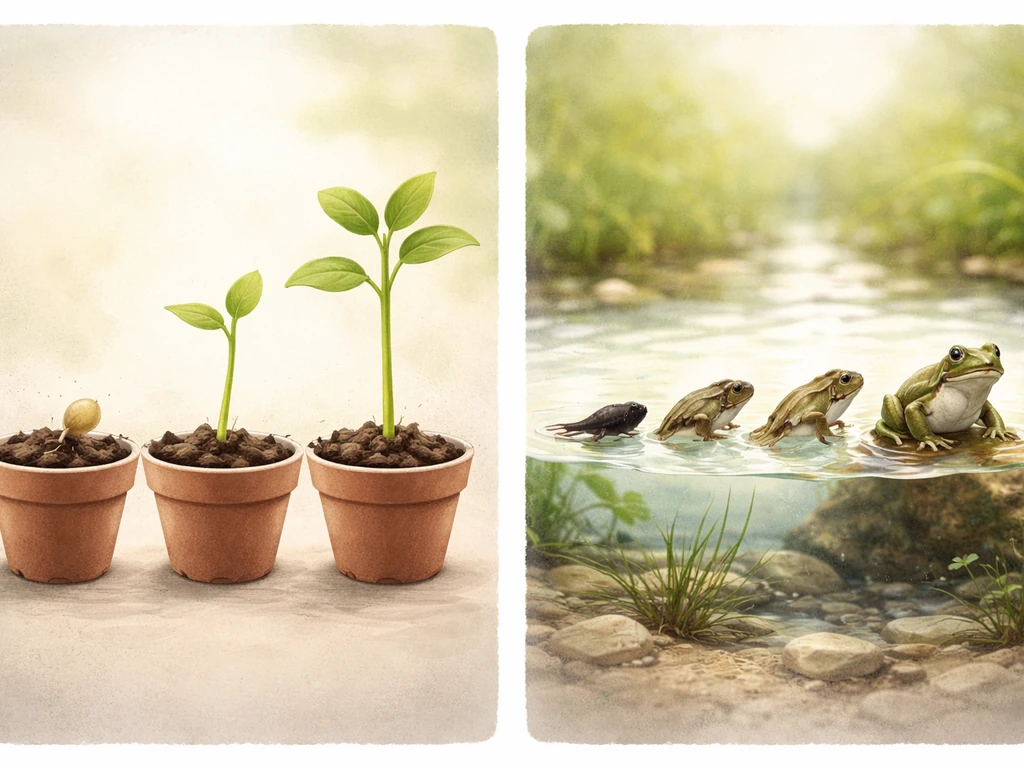
Notice that in the frog example, the tadpole getting heavier is growth, but the legs appearing and gills disappearing is development. Development is often more dramatic to observe because it involves wholesale changes in body plan and capability, not just more of the same.
Growth examples across different types of living things
Growth looks very different depending on what type of organism you are looking at, but the underlying logic is the same: cells divide and/or get larger, and the organism accumulates more biological material over time. Here is how that plays out across major groups of living things.
Plants
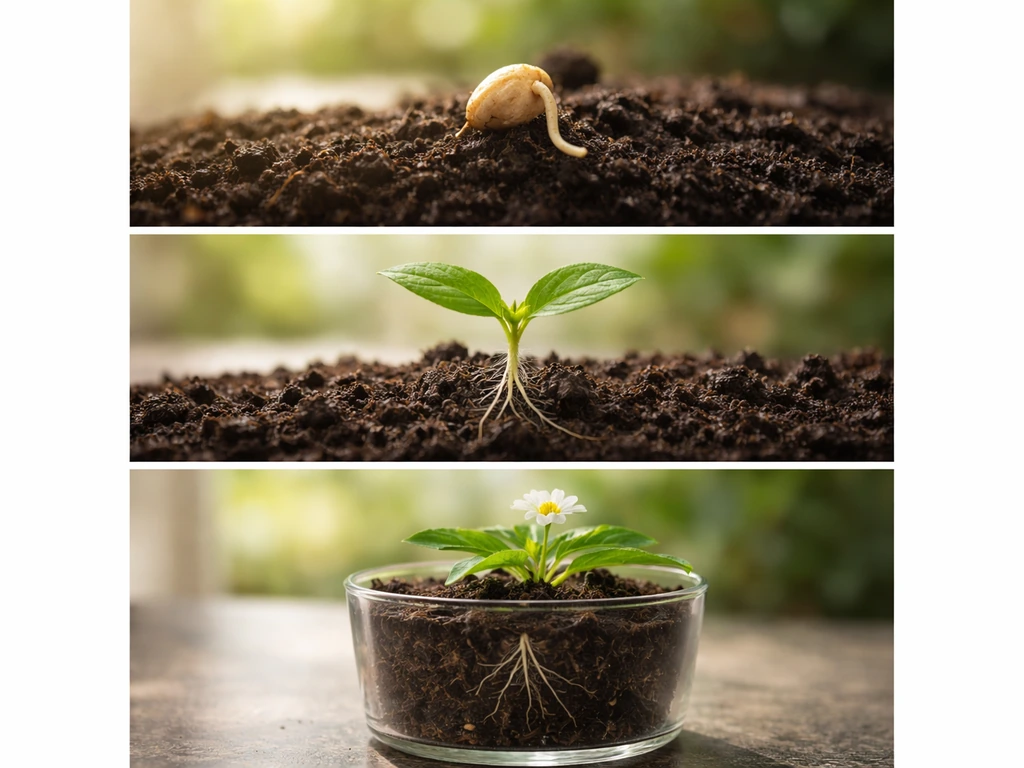
A seed contains all the genetic instructions it needs to become a full plant. When conditions are right, it germinates: the embryo begins dividing rapidly, a root pushes downward, and a shoot pushes upward. Over weeks, the seedling adds leaf after leaf, extends its stem, and eventually produces flowers or fruit. All of that above-ground and below-ground expansion is growth. You can literally mark a bean seedling's height each day and watch the numbers climb. Plants grow continuously through specialized regions called meristems, which contain cells that keep dividing throughout the plant's life.
Animals
Animals grow by adding cells during early life and, in some tissues, throughout adulthood. A human infant at birth is around 50 cm long and weighs roughly 3.5 kg on average. By adulthood, that person may stand 170 cm tall and weigh 70 kg or more. All of that increase in size came from trillions of rounds of cell division. Most animals, including humans, stop growing in height at some point, but they never stop replacing old or damaged cells. To understand how living things grow at a cellular level, it helps to picture every centimeter of height or kilogram of mass as the result of countless individual cells dividing and expanding.
Single-celled organisms
For a bacterium or an amoeba, growth and reproduction are almost the same event. The cell grows larger by taking in nutrients and synthesizing new molecules, then it divides into two daughter cells. Each daughter cell is itself a complete organism. Under ideal conditions, a single E. coli bacterium can divide roughly every 20 minutes. After just a few hours, you go from one cell to millions. This is growth and reproduction happening simultaneously, and it is one of the most striking examples of what life does when given the right conditions.
Development examples: life-cycle changes that go beyond size
Development is about transformation. It is the process of an organism changing into something functionally and structurally different from what it was at an earlier stage. How plants and animals grow and change over their lifetimes illustrates this beautifully, because the end product often looks nothing like the starting point.
Seed to flowering plant
A dry seed is already a living thing, but it is dormant. Germination triggers development: the embryo activates, a root emerges first (this is called the radicle), then a shoot. Britannica describes key seed parts involved in development after germination, including the radicle (root part) and plumule (shoot part), plus cotyledons and hypocotyl [radicle (the root part) and the plumule (the shoot part), along with cotyledons and the hypocotyl](https://www. britannica.
com/science/seed-plant-reproductive-part). As the seedling grows, it also develops, meaning cells that started out looking the same begin to specialize. Some become leaf cells with chloroplasts for photosynthesis. Some become vascular cells that conduct water.
Some become root hair cells that absorb nutrients. By the time the plant flowers, it has cells and organs doing jobs that the original seed cells could not do at all.
Tadpole to frog
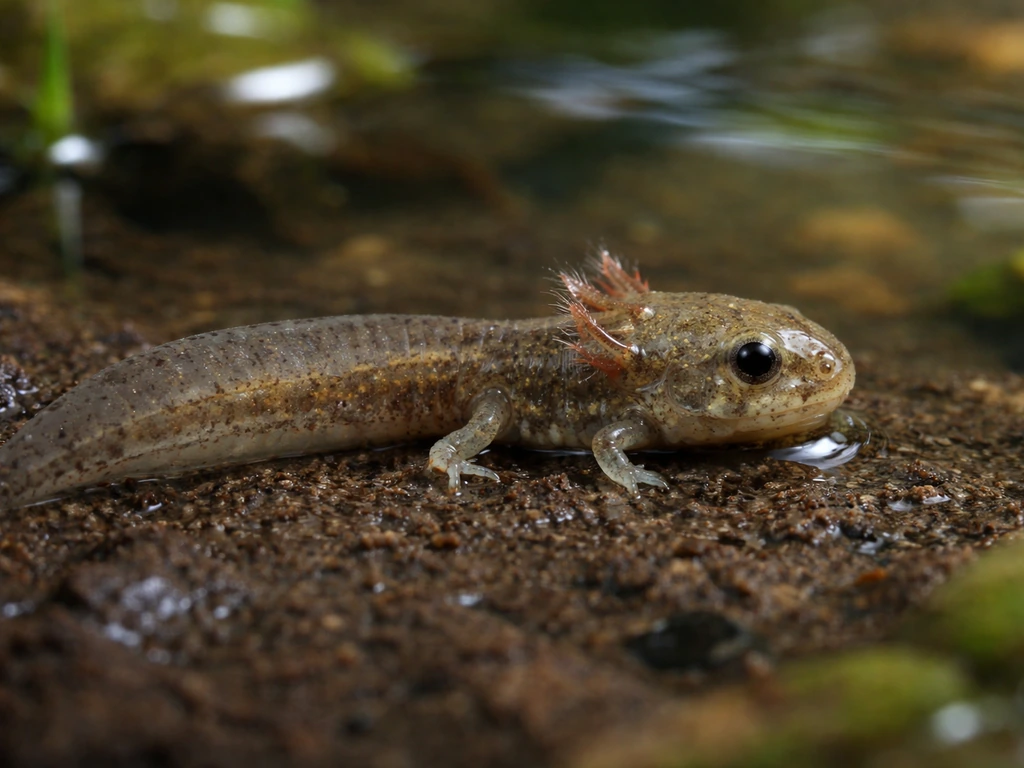
This is one of the most visually striking development examples in the animal kingdom. A frog egg hatches into a tadpole with a tail, no limbs, and gills for breathing underwater. Over several weeks, the tadpole's hind legs bud out, then front legs appear. The tail is reabsorbed. Lungs develop and gills disappear. The digestive system changes to handle an insect-based diet instead of algae. By the end of metamorphosis, the frog is physiologically and structurally a completely different animal from the tadpole it once was, even though it carries the same DNA.
Human fetus to adult
Human development begins with a single fertilized egg that contains all the genetic instructions for building a complete human body. Over nine months, that single cell divides and differentiates into over 200 distinct cell types. After birth, development continues for roughly two decades: the nervous system matures, reproductive organs become functional, and the brain's prefrontal cortex (responsible for decision-making) is not fully developed until around age 25. Growth in height stops earlier, usually in the mid-teens for girls and late teens for boys, but development in the functional sense continues well past that.
How growth actually happens: cell division and mitosis
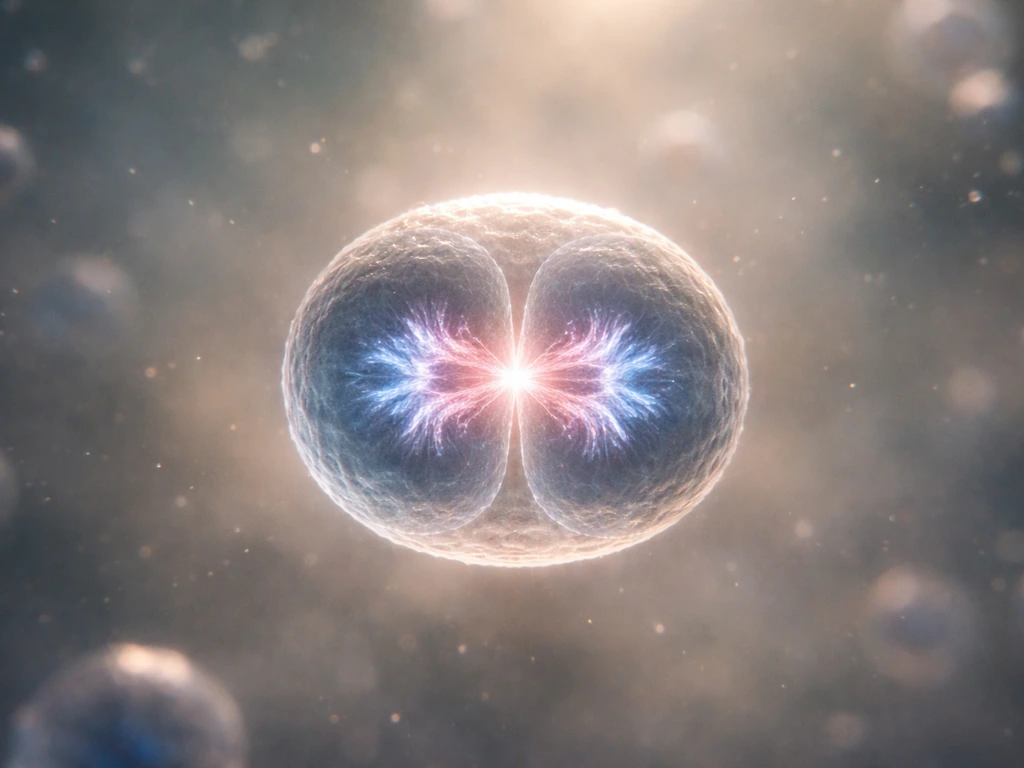
Almost every size increase in a multicellular organism traces back to one process: cell division. Specifically, it traces back to blank" rel="noopener noreferrer">mitosis, where one cell copies its DNA and splits into two genetically identical daughter cells. This is how your body went from a single fertilized egg to roughly 37 trillion cells. Mitosis is how living things grow and repair themselves, and it is one of the most important mechanisms to understand if you want to get a real grip on why organisms get larger over time.
In plants, mitosis happens in meristematic zones at root tips and stem tips. In animals, it happens throughout the body during early development and in specific tissues (like bone marrow and skin) throughout life. In single-celled organisms, the entire point of cell division is reproduction, but the mechanics of copying and splitting DNA follow a similar logic. To go deeper on how this process works in both growth and tissue repair, how organisms grow and repair themselves covers the connection between mitosis and wound healing in a way that makes the everyday relevance very clear.
It is also worth noting that not all growth comes from cell division alone. Cells can also grow larger (called hypertrophy) by accumulating more cytoplasm, proteins, or other materials. Muscle growth in adults is partly hypertrophy: the number of muscle cells stays roughly the same, but each cell gets bigger. Both division and enlargement contribute to the overall growth of an organism.
What living things need to grow, and what stops them
Growth is not automatic. It requires the right inputs and conditions, and it always has limits. Understanding what fuels growth and what puts the brakes on it is just as important as understanding growth itself. The nature of life is to grow, but life also operates within hard physical and biological constraints.
What organisms need to grow
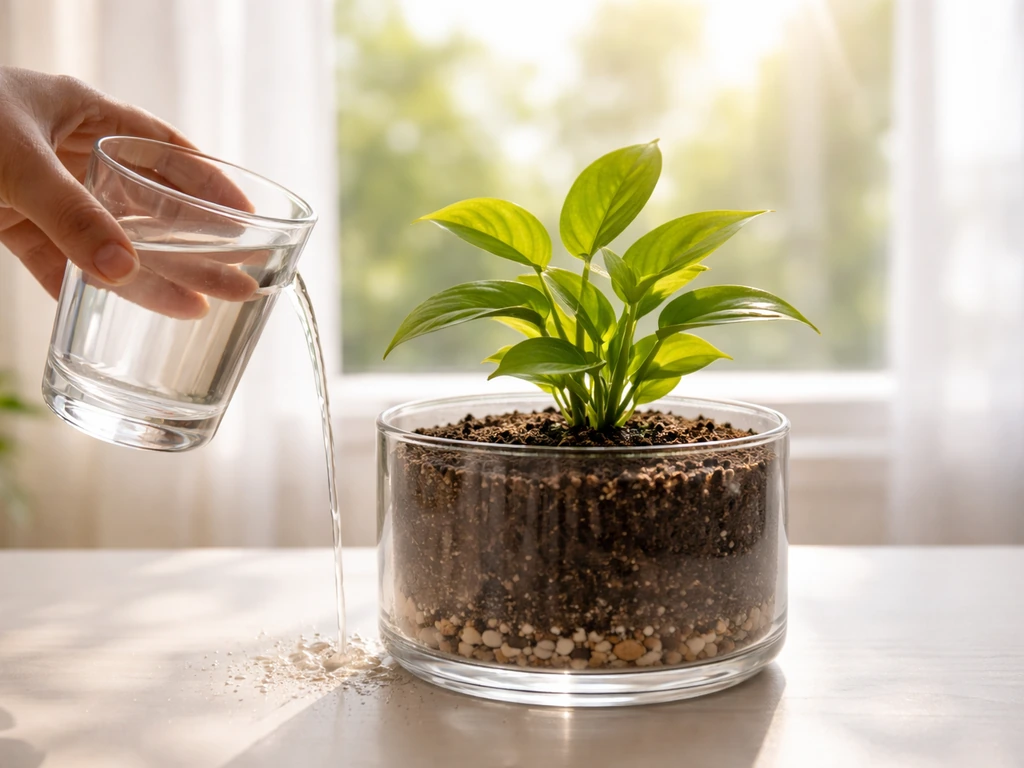
- Nutrients: cells need raw materials to build new proteins, membranes, and DNA. For animals, this means food. For plants, this means water, carbon dioxide, and soil minerals. Nutrients which help us grow include proteins, carbohydrates, fats, vitamins, and minerals, each playing a specific role in building and maintaining tissue.
- Energy: building new cells is energetically expensive. Organisms use ATP (adenosine triphosphate) as the energy currency for cell division and biosynthesis.
- Water: cells are mostly water. Without adequate hydration, cell membranes cannot function, and division cannot proceed.
- Space: physical room to expand matters. Roots growing in compacted soil, bacteria in a crowded petri dish, or plants in a small pot all show stunted growth when space runs out.
- Oxygen (for most organisms): aerobic respiration, which powers most animal and plant cells, requires oxygen. Without it, energy production collapses and growth stops.
- Appropriate temperature and light: enzymes that drive cell division work within narrow temperature ranges. Plants also need light energy to fuel photosynthesis, which in turn fuels growth.
What limits growth
Cells cannot grow indefinitely, and neither can organisms. At the cellular level, one key limit is the surface-area-to-volume ratio. As a cell gets bigger, its volume grows faster than its surface area. Since nutrients and oxygen enter and waste exits through the surface, a very large cell cannot exchange materials fast enough to keep its interior alive. This is why cells stay microscopic and divide rather than just expanding forever.
At the organism level, limits come from nutrient availability, waste removal, and genetic regulation. Growth hormones signal cells to divide; tumor suppressor genes signal them to stop. When these regulatory signals break down, uncontrolled cell growth can occur, which is the basis of cancer. In healthy organisms, growth slows and eventually stops because genetic programs tell it to, not because the organism simply runs out of space or food. This is why most humans stop growing in height in their late teens regardless of how much they eat.
There is also an interesting question worth thinking about: do all living things grow? The answer is yes, but growth looks different across the kingdoms of life, and some organisms grow only during specific life stages or under specific conditions.
How to observe and describe growth and development right now
You do not need a lab to observe living things growing and developing. Here are practical ways to recognize, track, and describe both processes in organisms you can observe today.
Practical observation steps
- Pick an organism and define your baseline. Measure its height, mass, or count its cells (if using a microscope and yeast or bacteria). Write it down with a date. No baseline means no way to measure change.
- Track size changes over time. For a plant, mark the stem height daily with a pen. For an animal, note body length or weight weekly. These quantitative changes are growth.
- Look for structural changes that go beyond size. Did new leaves appear with a different shape than early leaves? Did the plant flower? Did a caterpillar form a chrysalis? These are developmental milestones.
- Note functional changes. Can a seedling that could not photosynthesize last week now hold its leaves toward light? Can a frog juvenile now breathe air? Functional shifts confirm development has occurred.
- Ask why. If growth slowed, check the inputs: Is there enough light, water, or nutrients? Did the pot get too small? Connecting conditions to outcomes makes observation genuinely useful.
Quick examples to try
- Bean in a jar: Soak a bean seed overnight, place it against a glass jar with a damp paper towel, and watch germination happen within 2 to 4 days. You will see the radicle (root) emerge first, then the shoot. Growth is visible; the developmental shift from dormant seed to active seedling is unmissable.
- Yeast under a microscope: Mix a pinch of dry yeast with warm water and a little sugar, wait 10 minutes, and put a drop on a slide. You can watch yeast cells budding, which is their form of growth and reproduction. Count cells in your field of view at the start and again after 30 minutes.
- Tadpole observation: If you can access a pond or a classroom aquarium with tadpoles, photograph the same individual every few days. The leg buds, tail shortening, and body shape changes are textbook development happening in real time.
- Height chart for a child or pet: If you have a child or a puppy at home, mark height or length weekly for a month. You will see growth as a clear upward trend. Compare to developmental milestones (first steps, first solid food, adult teeth) to separate growth from development.
If you are studying this as part of a school curriculum, the concepts covered here align with what students encounter in life science classes. How living things grow for Class 3 breaks down these same ideas in an accessible format suited for younger learners who are just beginning to explore what it means to be alive and to change over time.
The bottom line: growth is the "how much bigger" question, and development is the "how different" question. Every living thing does both, powered by cell division, guided by genes, fueled by nutrients, and regulated by biological signals that keep the process from going too far. Once you know what to look for, you will see it happening everywhere.
FAQ
Are growth and development always happening at the same time, or can one happen without the other?
They can overlap, but they are not identical. An organism can grow in size while staying in the same general body form (mostly growth), and development can occur with little visible size change, such as when specialized organs start functioning or when cells differentiate during early stages.
How can I tell the difference between development and normal aging in humans?
Development refers to stage-based changes guided by genetic programs, for example the maturation of the nervous system and reproductive function through adolescence. Aging is gradual wear and tear over time, plus cumulative changes in tissues, and it does not typically follow the same predictable “life stage” sequence.
Do non-living things ever “grow,” and why is that not the same as growth in living things?
Some non-living systems can increase in size through accumulation, like crystals forming or snowballing. In living things, growth is tied to cell division, regulated metabolism, and the ability to maintain internal order using nutrients, plus it eventually leads to functional changes under development programs.
Is “development” only about dramatic transformations like tadpoles to frogs?
No. Development includes subtle shifts too, such as neurons becoming more specialized, teeth replacing from baby to adult sets, or in plants, the switch from leaf production to flowering, which involves changes in structure and function even if size changes are modest.
Why do some animals have a bigger change in body form during development, while others do not look that different?
It depends on the life cycle strategy. Animals with metamorphosis (like frogs) switch to a new lifestyle stage, so their body plan changes more. Animals that develop more directly after birth tend to differentiate and grow without a major “rebuild,” so appearance shifts are steadier rather than abrupt.
Can growth stop but development continue, or vice versa?
Yes. Growth in height may stop when the growth plates close, but development can still continue, such as further brain maturation and functional refinement of organs. Conversely, early growth spurts can slow while tissues still undergo specialization and functional tuning.
What is the role of genes compared to environment in growth and development?
Genes provide the instructions for timing and potential outcomes, but environment influences how fully that potential is realized. For example, nutrient supply affects how much an organism can grow, and temperature or light conditions can strongly affect plant growth and flowering.
Does a plant “develop” if it mostly just keeps getting bigger leaves and stems?
Yes, because development includes cell specialization. As new leaves form, cells differentiate into types suited for photosynthesis, support, and transport, and later the plant switches developmental programs toward flowering and fruiting, which changes structure and function.
Why do cells not grow indefinitely, even if they have nutrients?
Cells face a surface-area-to-volume constraint, as well as constraints on internal transport and chemistry. When cells get too large, diffusion and exchange become too slow, so dividing is favored to keep cells small and functional.
How is muscle growth in adults different from growth during childhood?
In adults, muscle size often increases partly by hypertrophy (existing muscle cells get bigger), whereas during childhood and adolescence, growth commonly involves both increased cell number and enlargement. That means the “mechanism mix” differs even though the endpoint is larger muscles.
Is it possible for “development” to be abnormal, and what might it look like?
Yes. When genetic regulation or environmental conditions are disrupted, organisms can develop organs incorrectly or on an altered schedule, which can show up as missing structures, delayed or premature maturation, or functional problems. In animals, developmental defects can occur without matching the typical life-stage timeline.
What are practical ways to track living things without lab equipment?
You can track growth by measuring height, mass, leaf number, or time to stage changes (like first roots or first flower). To track development, look for qualitative milestones such as seed germination, leaf specialization, tooth replacement, or when an organism starts performing a new function, like breathing or feeding in a new diet.
Next Article
How Do Living Things Grow and Develop From Cells to Organisms
Learn how living things grow from cells to organisms: cell division, differentiation, and limits from nutrients and tran