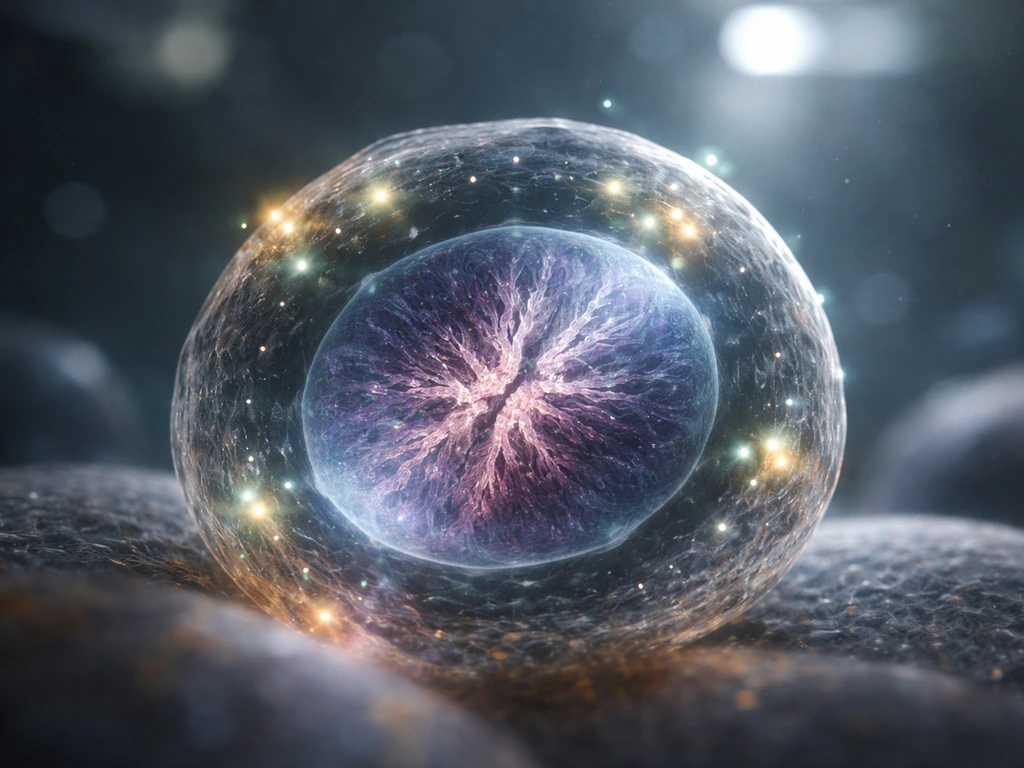
A cell grows by doing two related but distinct things: increasing its physical mass and volume, and duplicating its internal machinery so it can eventually split into two working copies of itself. Those two jobs are tightly coordinated. A cell that just kept swelling without copying its DNA would be useless. A cell that tried to divide before it had enough cytoplasm and organelles would produce two broken daughters. So when we ask "how does a cell grow," the honest answer covers both the buildup phase and the split, and the control system that makes sure both happen in the right order.
How Does a Cell Grow: Steps, Control, and Limits
Marcus Whitmore
2 Apr 2026
What "growing" actually means for a cell
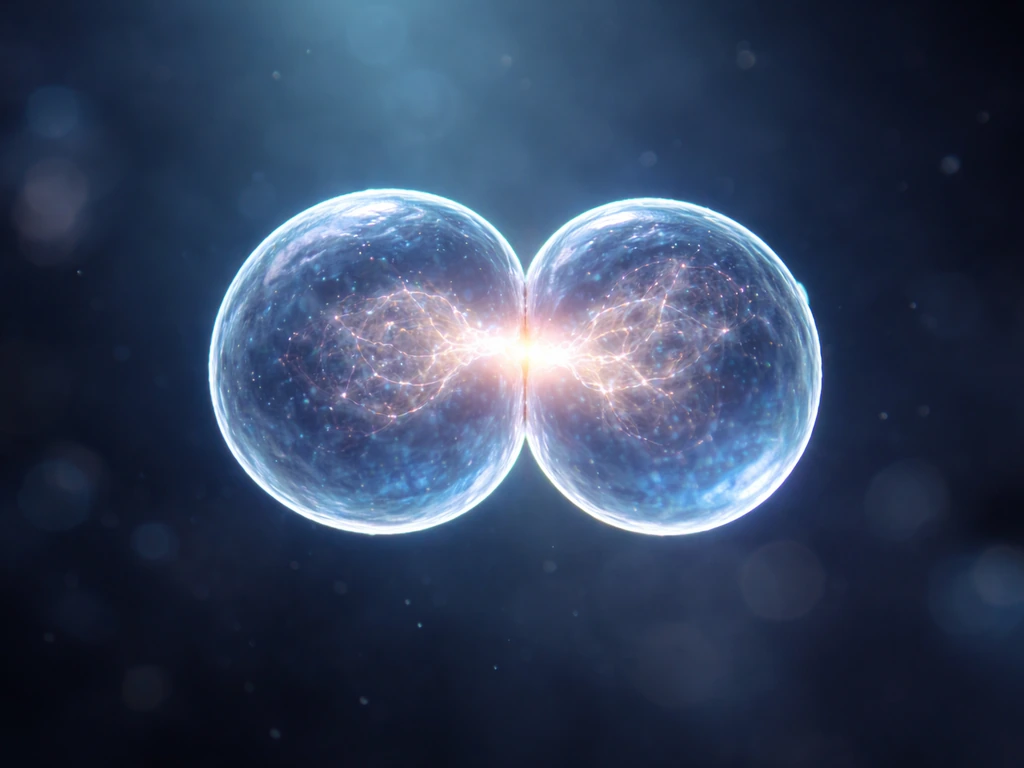
Cell growth has three measurable outputs that happen more or less in parallel. First, the cell increases in mass and volume, it physically gets bigger. Second, it ramps up biosynthesis: more proteins are made, more RNA is transcribed, more lipids are assembled. Third, organelles are duplicated through a process called organelle biogenesis, so the cell ends up with enough mitochondria, ribosomes, and membrane material to equip two daughter cells instead of one.
If you're wondering why cells grow in the first place, the short answer is maintenance and reproduction, cells need to replace worn-out components and eventually pass a full copy of everything on to the next generation. Growth is the preparation for that handoff.
Getting bigger vs. splitting in two: not the same thing
It helps to separate "increasing in size" from "dividing" because they are genuinely different operations, even though they're linked. How cells grow or increase in size comes down to biosynthesis: the cell imports nutrients, runs metabolic pathways, and uses the resulting energy and raw materials to build new proteins, membranes, and organelles. This is a continuous process happening in the background whenever conditions are right.
Division, by contrast, is episodic and tightly gated. The cell has to reach a certain size threshold, replicate its DNA, check everything twice, and then physically split. Think of growth as filling a warehouse with inventory, and division as the moment you open a second warehouse and distribute half the stock there. You can fill the warehouse slowly over days; the split itself is a discrete, managed event. The question of whether cells grow continuously or in bursts is real, and the answer is: size increase is relatively continuous during interphase, while division is not.
The cell cycle: a step-by-step walkthrough
The cell cycle is the ordered sequence of events a dividing cell moves through. There are four canonical phases: G1, S, G2, and M. Here's what actually happens in each one.
- G1 (Gap 1 / first growth phase): The cell grows in size, synthesizes proteins and mRNAs, and builds up the biosynthetic machinery needed for DNA replication. This is the primary growth window. A cell that doesn't get a green light here can exit into a non-dividing resting state called G0.
- S phase (Synthesis): DNA replication happens here. The genome is copied so each future daughter cell will get a complete set. Biosynthesis continues, but the defining event is DNA duplication.
- G2 (Gap 2 / second growth phase): The cell grows further, repairs any replication errors, and assembles the structures (like the mitotic spindle precursors) needed to physically separate chromosomes.
- M phase (Mitosis + cytokinesis): The duplicated chromosomes are separated and the cell physically divides into two daughter cells.
The phases G1, S, and G2 together are called interphase. That's where the actual growth happens. M phase is relatively brief by comparison, and a cell in mitosis isn't doing much new building, it's executing the split.
Who controls the timing: checkpoints, signals, and molecular switches
The cell cycle doesn't just run on autopilot. There's an elaborate control system built around cyclin proteins and cyclin-dependent kinases (CDKs). Cyclins rise and fall at specific points, activating CDKs that push the cell forward. One of the most important transitions is the G1/S checkpoint, often called the restriction point in animal cells. Here, CDK4 and CDK6 pair with cyclin D to phosphorylate a protein called Rb (retinoblastoma protein). That phosphorylation releases a transcription factor called E2F, which turns on the genes needed for S phase. In short: growth-associated signals flip a molecular switch that opens the gate to DNA replication.
Nutrients and energy feed into this system through mTOR, a master regulator that integrates signals about how much food and fuel the cell has available. When nutrients are abundant and growth factors are present, mTOR (specifically the mTORC1 complex) activates downstream effectors like S6K1 and 4E-BP1 that ramp up protein translation. When mTOR is humming, biosynthesis accelerates and the cell is primed to progress through the cycle. When nutrients are scarce, mTOR quiets down, biosynthesis slows, and the cell essentially pauses growth until conditions improve.
The G2/M checkpoint is equally critical. If DNA was damaged during replication, sensor proteins called ATM and ATR activate checkpoint kinases (Chk1 and Chk2) that inhibit Cdc25, a phosphatase required for mitotic entry. Block Cdc25, and the cell can't start mitosis. Meanwhile, if p53 gets activated, it induces a protein called p21 that directly inhibits cyclin-CDK complexes, arresting the cell at both G1/S and G2/M. These aren't obscure edge cases, they're routine quality-control checkpoints that run every single division cycle.
There's also a size-sensing dimension that's particularly clear in model organisms. In budding yeast, entry into S phase is gated by reaching a critical cell size, a mechanism driven by molecules like Cln3 and Far1 whose effective concentrations change as the cell grows. Fission yeast uses a similar logic with Cdc25, whose expression scales with cell size to time mitotic entry. The principle: the cell has molecular machinery that literally measures how big it is before committing to division.
Mitosis: how one cell becomes two
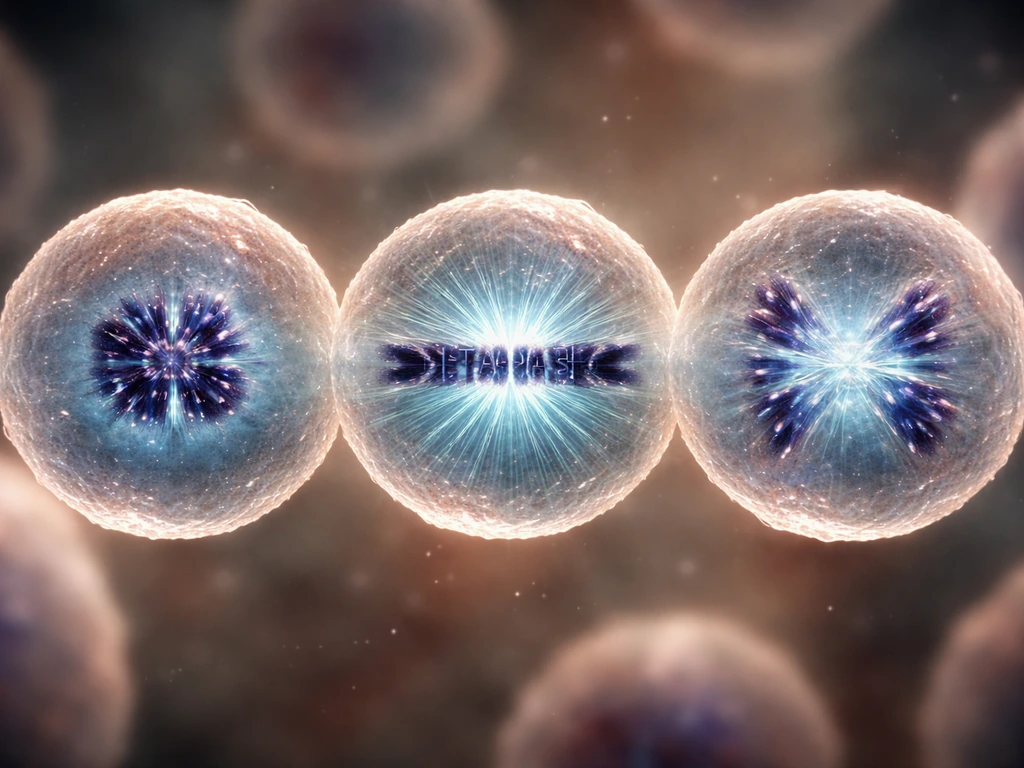
Mitosis is the part of M phase where duplicated chromosomes are distributed equally between two future daughter cells. It runs through four classic stages: prophase, metaphase, anaphase, and telophase, followed by cytokinesis (the physical division of the cytoplasm).
- Prophase: Chromosomes condense and become visible. The mitotic spindle begins forming from microtubules.
- Metaphase: Chromosomes line up at the cell's equator (the metaphase plate). The spindle checkpoint ensures every chromosome is properly attached to spindle fibers from both poles before allowing the next step.
- Anaphase: A protein complex called the APC/C (anaphase-promoting complex) ubiquitinates securin, releasing separase. Separase then cleaves cohesin, the molecular glue holding sister chromatids together, and the two copies of each chromosome are pulled to opposite poles.
- Telophase: Chromosomes arrive at the poles and the nuclear envelope re-forms around each set.
- Cytokinesis: The cytoplasm is divided — in animal cells by a contractile ring, in plant cells by a new cell wall — producing two genetically identical daughter cells.
The spindle checkpoint is worth highlighting because it's a beautiful example of the cell not rushing things. Even a single unattached chromosome keeps securin protected from APC/C-mediated destruction, preventing premature separation. Only when all chromosomes are bi-oriented does the checkpoint release, allowing securin to be destroyed and anaphase to proceed. PubMed reports that once kinetochores are properly attached and tension requirements are met, the spindle assembly checkpoint turns off and APC/C(Cdc20) degrades cyclin B and securin to activate separase allowing securin to be destroyed and anaphase to proceed. It's a fail-safe that prevents chromosome mis-segregation.
What cells actually need to grow: the real-world conditions
Knowing the mechanism is useful, but understanding the conditions that enable growth is equally practical. Cells need several things to work simultaneously.
- Nutrients: Amino acids, glucose, lipids, and nucleotides are the raw materials for protein synthesis, membrane building, and DNA replication. Without them, mTORC1 signaling drops and biosynthesis stalls.
- Energy (ATP): Nearly every step of growth costs energy — running ribosomes, pumping ions, building new membranes, assembling the spindle. When oxygen is limited, oxidative phosphorylation slows, ATP drops, and growth programs tied to AMPK/mTOR signaling throttle back.
- Growth factors and hormones: Extracellular signals (like EGF or insulin) bind receptors and activate signaling cascades that feed into the cyclin-CDK machinery. In multicellular organisms, cells generally need external permission to divide.
- Appropriate temperature and pH: Enzymes that drive biosynthesis have narrow optimal ranges. Stray too far from those ranges and metabolic rates drop sharply.
- Space and physical environment: Cells need room to grow and to divide. In tissues, physical crowding can directly suppress proliferation through contact inhibition.
Oxygen deserves special mention. Many textbooks focus on nutrients but underplay how directly oxygen availability constrains growth. Respiration-based ATP production is the dominant energy source in most eukaryotic cells, and when oxygen drops, the whole biosynthetic program slows. That's partly why tumors that outgrow their blood supply hit a growth wall, not just because of space, but because of oxygen and nutrient delivery.
Why cells can't just keep growing forever
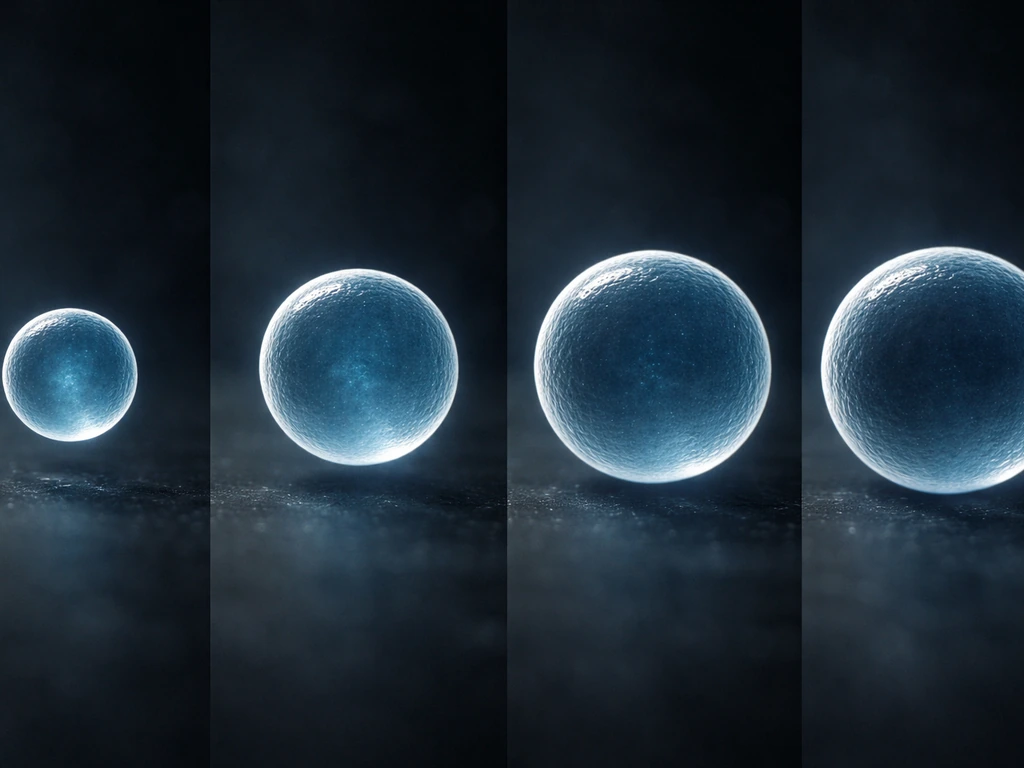
This is one of the most interesting parts of cell biology, and it comes down to geometry as much as biology. As a cell gets bigger, its volume increases as a cube of its radius while its surface area only increases as a square. That means the surface-area-to-volume ratio drops as the cell grows.
Since nutrients and gases move across the cell membrane (the surface), and the whole interior volume needs to be supplied, a large cell has proportionally less membrane surface to serve proportionally more cytoplasm. Diffusion timescales scale with distance squared, so doubling the cell's diameter doesn't double the diffusion problem, it quadruples it. At some point, the interior of a too-large cell simply can't be adequately supplied by diffusion alone.
On the biological side, checkpoints and tumor suppressor pathways act as hard stops. The p53/p21 axis, DNA damage responses, and senescence programs all work to prevent a cell from dividing when something is wrong. Normal mammalian cells also hit a replicative limit tied to telomere shortening, commonly around 60 to 70 doublings (the Hayflick limit), after which the cell enters senescence. PubMed discusses how this in vitro senescence pattern contrasts with lifelong replication in vivo, highlighting the disparity between cultured cells and the organismal context the Hayflick limit. Cancer cells bypass this by disabling p53/Rb pathways and often reactivating telomerase, but even then they face the same geometric and metabolic constraints.
Osmotic balance is another underappreciated constraint. As a cell grows, it must maintain the right balance between intracellular solutes and membrane transport capacity. A cell that swells without the membrane and transport machinery to manage it risks lysis or dysfunction. Growth, in this sense, is always a managed expansion, not an unconstrained one.
Single cells vs. multicellular organisms: the same rules, different context
In a unicellular organism like budding yeast, the cell is the organism. It grows, commits to division when it reaches critical size, divides, and starts again. The decision to divide is made entirely by the cell's internal machinery reading nutrient and size signals. There's no tissue to coordinate with and no neighbor sending inhibitory signals.
Multicellular organisms layer on top of this system an entire layer of social controls. Cells must get signals from their neighbors and from systemic hormones before they divide. One of the clearest examples is contact inhibition: when epithelial cells become densely packed, proliferation is actively suppressed. At high confluence, cell-cell contact directly dampens the cell cycle, keeping tissues from overgrowing. This is a density-linked control that single cells living alone simply don't have.
Understanding what the two processes are by which tissues grow, cell division and cell enlargement, clarifies why multicellular growth is more complex than just adding up individual cell cycles. Tissues don't just grow by accumulating dividing cells; they also grow when individual cells enlarge without dividing, and they shrink when cells die or are removed. The balance between these processes is managed at the tissue level, not just the cell level.
Different tissue types also run variations on these themes. For example, how epithelial tissue grows involves a tightly organized population of cells where stem-like basal cells divide and daughter cells migrate outward, differentiating as they go. In the skin specifically, which cells in the epidermis grow and divide is a straightforward answer: primarily the basal layer, not the superficial layers. That spatial restriction of division is a direct product of tissue-level growth control.
Fat tissue adds yet another twist. How adipose tissue grows is a mix of cell enlargement (adipocytes swelling with lipid droplets) and new cell formation from precursors, with mTORC1 playing a key role in regulating adipocyte size and adipose mass. It's a good reminder that "cell growth" in a whole organism is not one uniform process, it's a family of related processes tuned to the function of each tissue.
A quick comparison: how the main cell cycle phases serve growth
| Phase | Primary job | Growth contribution | Key checkpoint/event |
|---|---|---|---|
| G1 | Prepare for DNA replication | Major growth in mass and volume; protein/mRNA synthesis | G1/S restriction point (Rb phosphorylation, E2F release) |
| S | Replicate DNA | Continued biosynthesis; DNA copying | Replication stress checkpoint (ATR/Chk1) |
| G2 | Prepare for mitosis | Further growth; error repair | G2/M checkpoint (ATM/ATR, Chk1/Chk2, Cdc25) |
| M | Divide into two daughter cells | No net growth; distribution of components | Spindle checkpoint (APC/C gated by bi-orientation) |
Putting it all together: the conceptual model you need
If you want a single mental model: a cell grows by running a tightly regulated biosynthetic program (building proteins, membranes, and organelles) fueled by nutrients and energy, with mTOR as the main throttle. When enough growth has occurred, molecular switches, especially cyclin-CDK complexes, push the cell through a series of checkpointed gates: G1/S, G2/M, and the spindle checkpoint. If any checkpoint reveals a problem, the process pauses or stops. When everything checks out, mitosis runs and produces two daughter cells. That whole loop is constrained on the bottom by nutrient/oxygen availability and on the top by geometric limits (surface area to volume) and biological brakes (checkpoints, senescence, contact inhibition in tissues).
People sometimes ask whether cells get bigger as you grow as an organism, and the answer is: sometimes yes, sometimes no, depending on the tissue. Muscle cells enlarge dramatically. Most neurons don't divide at all after early development. Skin cells divide constantly but stay small. The underlying mechanisms are the same, cyclin-CDK control, mTOR signaling, checkpoint logic, but how those mechanisms are tuned differs across cell types and tissues. That's what makes cell growth endlessly interesting: one core system, an enormous variety of outcomes.
FAQ
Can a cell grow bigger without dividing?
Yes, a cell can increase mass without dividing, especially during interphase. In practice, checkpoint gates like the G1/S restriction point are kept shut unless DNA replication is allowed, so growth from biosynthesis can continue while division is delayed.
Why doesn’t a cell keep replicating its DNA while it grows?
Most DNA replication happens only in S phase, so a cell generally cannot safely “keep growing” by copying DNA over and over. If replication is started without proper control, checkpoints (including those downstream of DNA damage sensors) inhibit progression and can trigger arrest or senescence.
What happens to cell growth when nutrients are low, does it fully stop?
mTORC1 integrates nutrient and growth factor cues, so cells can grow more slowly under low nutrients even if they are still not dividing. There is a common distinction between “paused from cycling” and “still building,” where biosynthesis may drop but does not necessarily stop completely.
How does oxygen limitation affect how fast a cell grows?
Oxygen and ATP production mainly constrain how fast the cell can run energy-hungry biosynthesis. If oxygen is limited, cells often shift metabolism, but growth rate usually remains reduced because membrane and protein synthesis still require sufficient energetic and biosynthetic capacity.
Do some cells ignore size limits and keep growing anyway?
Some unicellular organisms and cancer cells can circumvent size thresholds by tuning checkpoint controls. Even then, geometric diffusion limits and metabolic constraints still make very large states inefficient, so the cell often reaches a new balance rather than growing without bound.
Can a cell be large but stuck in the cycle, and why?
Growth rate and division timing can decouple. For example, interphase growth can continue while DNA damage checkpoints prevent entry into mitosis, leading to a larger-than-normal but arrested cell until repair occurs or the cell is eliminated.
What’s the difference between cell enlargement and making more cells in tissue growth?
Yes, but it changes “what grows.” Hypertrophy-like growth in many cells means increasing cell size or components (often via mTOR-driven translation and biosynthesis) without new cell division, whereas hyperplasia involves more frequent cycling.
If diffusion is the main size limit, why do cells also worry about osmosis?
Cell size can be limited by more than diffusion. Even if nutrients arrive, the cell must also have enough membrane transport capacity and enough volume-compatible osmotic balance, otherwise swelling triggers lysis risk or dysfunction.
What do checkpoints do if DNA damage is detected after growth has already occurred?
In healthy tissues, p53 and Rb-associated pathways often prevent division after DNA damage, and senescence can permanently exit the cell cycle. Practical consequence, after significant damage a cell may stop dividing even if it remains capable of some biosynthesis.
Is cell growth continuous or does it happen in bursts?
The fastest way to reason about this is to separate “material accumulation” from “division execution.” Cells typically grow through continuous biosynthetic activity, but the decision to enter S phase and the actual mitotic separation are discrete, checkpointed events.
Do neurons grow even if they do not divide?
Not always. Many neurons are post-mitotic and do not divide after development, yet they can still change in size or internal structure through regulated biosynthesis. So “grows” can mean different outputs depending on whether the cell remains in the cell cycle.
Why is it risky for a cell to divide before it has enough organelles and cytoplasm?
Yes, and that mismatch can be lethal to cells. If the cell enlarges faster than it can replicate organelles and membranes, daughter cells would inherit an imbalanced set of components, triggering stress responses or impaired function.
Can a cell grow when nutrients are available but still be prevented from dividing in a tissue?
In multicellular contexts, density-linked signaling can override internal nutrient cues. Contact inhibition, growth factor availability, and mechanical context can slow or stop cycling even when the cell has enough nutrients to support biosynthesis.
Next Article
What Controls When and How Fast Cells Grow and Divide
Learn what controls cell division timing and speed: checkpoints, signals, resources, DNA damage, stress, and failure lea