Cells grow in two distinct ways: they get physically bigger by building more proteins, membranes, and organelles, and they increase in number by dividing through a tightly regulated process called the cell cycle. Most of the time both things happen together. A cell spends hours accumulating mass, then splits into two daughter cells, each of which starts the whole process again. Understanding which mechanism is happening, and what drives or stops it, is the core of cell biology.
How Do Cells Grow or Increase in Size? Key Mechanisms
Marcus Whitmore
6 May 2026
What 'cell growth' actually means
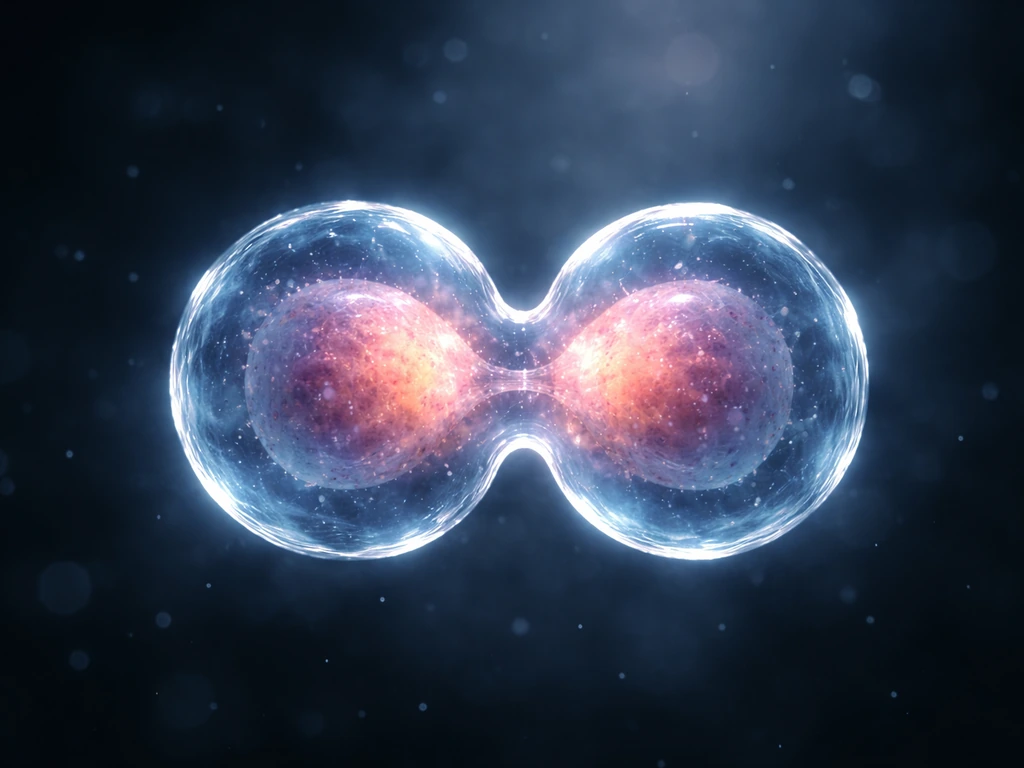
The phrase 'cell growth' sounds simple but it covers two related but separate ideas. The first is an increase in cell mass, meaning the cell is actively synthesizing proteins, lipids, nucleic acids, and other macromolecules and accumulating more cytoplasm and organelles. If you are wondering why do cells grow, it often comes down to increasing cell mass under the right growth conditions. Growth factors stimulate this process by ramping up biosynthesis and slowing the rate at which molecules are broken down. The second meaning is an increase in cell number, where one cell becomes two through division. These two things can happen independently. An animal cell can grow larger without dividing at all, and under some developmental conditions cells can divide rapidly without growing much between divisions, as happens in early embryonic cleavage. Keeping this distinction clear makes the rest of the biology much easier to follow. Keeping this distinction clear makes the rest of the biology much easier to follow, including why cells can increase in size even as they are not increasing in number, which connects to the question do cells get bigger as you grow. In other words, when people ask do cells grow, they usually mean both mass increase and the cellular program that supports it.
Cell size vs. cell number: two paths to 'more'
When a tissue or organism gets bigger, it can do so by making existing cells larger (hypertrophy) or by making more cells (hyperplasia), or both. Muscle fibers, for example, grow mainly by increasing in size when you exercise. Fat tissue (adipose tissue) can expand both ways. Many tissues use a combination depending on developmental stage and hormonal signals.
There is also a third route worth knowing: endoreduplication, which is common in plants and some animal tissues. In endoreduplication, a cell replicates its DNA repeatedly without going through mitosis, producing a polyploid cell with multiple genome copies. This can drive enormous increases in cell size without any division at all. Some plant cells achieve sizes visible to the naked eye this way. The key point is that 'growth' at the tissue level is always the sum of what individual cells are doing, and cells have more than one tool for getting bigger.
The cell cycle: growth and division on a schedule
In a typical eukaryotic cell, the cell cycle is divided into interphase (where growth and DNA replication happen) and the mitotic phase M (where the cell actually divides). Interphase itself has three stages: G1, S, and G2. Think of G1 as the cell's main growth window, S phase as DNA copying time, and G2 as a second growth and preparation window before the cell commits to division.
In a rapidly dividing human cell, the timing looks roughly like this: G1 takes about 9 hours, S phase about 10 hours, G2 about 4.5 hours, and actual mitosis only about 30 minutes. Almost all the time is spent preparing. The brief mitotic phase is just the finale. Most of the real work, the doubling of cell mass, the synthesis of new organelles, the copying of the entire genome, happens during those long interphase hours.
Cells can also step outside the cycle entirely. When conditions are unfavorable (not enough nutrients, no growth signals, DNA damage), cells delay G1 progression and can enter a resting state called G0. They can stay there for days, weeks, or even years before conditions improve and they re-enter the cycle. This is not failure; it is a protective mechanism.
Checkpoints: the cell's quality control system
Two major checkpoints gate the cycle. The G1/S checkpoint (sometimes called the restriction point in mammalian cells) is where the cell asks: 'Am I big enough, do I have enough nutrients, and is my DNA intact?' If yes, cyclin-CDK complexes push the cell forward into S phase. If not, CDK inhibitor proteins like p21 and p27 accumulate and put on the brakes. The G2/M checkpoint asks the same questions again before the cell commits to dividing. DNA damage activates p53, which drives p21 expression and stalls the cycle. This is consistent with reviews on p53 that describe p53-dependent checkpoint arrest at both G1/S and G2/M after DNA damage, with p21 acting as a key mediator of the G1 arrest DNA damage activates p53, which drives p21 expression and stalls the cycle. This is exactly why cells don't just keep dividing through stress.
Mitosis itself
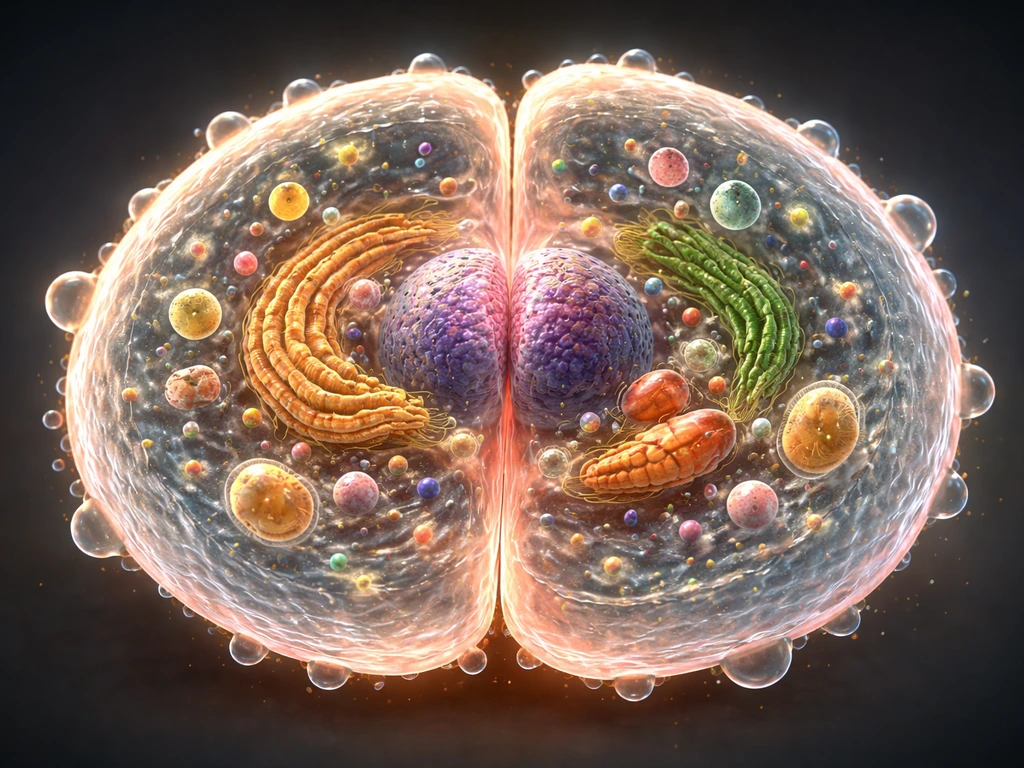
Once through G2, the cell condenses its chromosomes, assembles the mitotic spindle, lines chromosomes up at the cell's equator, pulls them to opposite poles, and then physically splits into two cells through cytokinesis. Each daughter cell gets a complete genome and roughly half the cytoplasm, starting its own G1 with a new opportunity to grow.
How a cell actually builds itself bigger
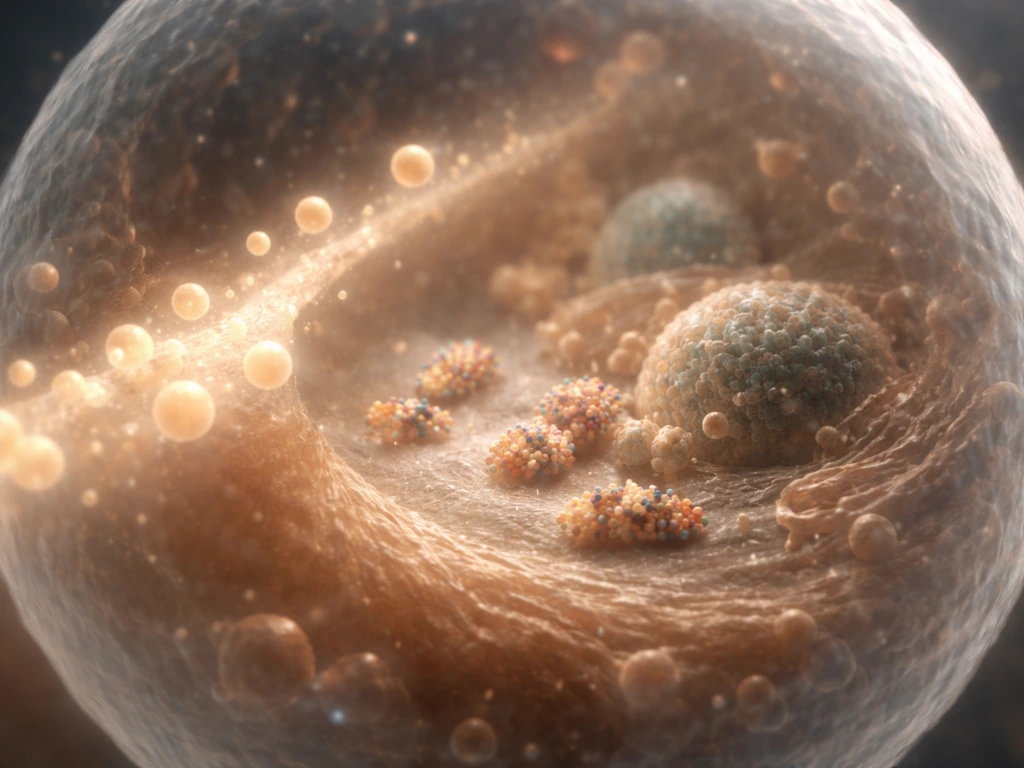
Growing in mass is fundamentally a manufacturing problem. The cell has to import raw materials, convert them into usable building blocks, and assemble those blocks into proteins, membranes, ribosomes, mitochondria, and everything else. The master coordinator of this process in most eukaryotes is mTORC1, a protein complex that sits at the center of the cell's nutrient-sensing network.
When amino acids are abundant, a sensing system on the lysosome (involving Rag GTPases and the Ragulator complex) activates mTORC1. Active mTORC1 then promotes ribosome biogenesis, protein synthesis, lipid synthesis, and nucleotide production, while simultaneously suppressing autophagy (the cell's self-digestion program). More ribosomes mean the cell can make proteins faster, which is literally the engine of growth. Conversely, when energy is low, a sensor called AMPK detects a rising AMP-to-ATP ratio and directly inhibits mTORC1, shutting down anabolism and triggering catabolism instead. The cell is constantly balancing these two signals.
Ribosome production itself is tightly linked to the cell cycle. During G1, CDK4/cyclin D and CDK2/cyclin E complexes phosphorylate transcription factors that activate ribosomal RNA (rRNA) synthesis. More rRNA means more assembled ribosomes, which means faster protein synthesis. Cells can't outrun this bottleneck; rRNA synthesis rate is one of the key rate-limiting steps for how fast a cell can grow.
What the cell is actually importing
Mammalian cells pull in glucose through glucose transporters for energy (ATP production via glycolysis and oxidative phosphorylation) and carbon skeletons. They import amino acids through a variety of transmembrane transporters, and these amino acids go directly into proteins or are used in signaling. Lipids and their precursors fuel membrane expansion. Every time a cell doubles in size, it needs to roughly double every component, including its entire membrane area. That is a significant logistical challenge.
Why cells can't just keep growing forever
If growth were purely a matter of importing more nutrients and making more proteins, cells would just keep expanding. They don't, and there are good physical and biological reasons for that.
The surface area-to-volume problem
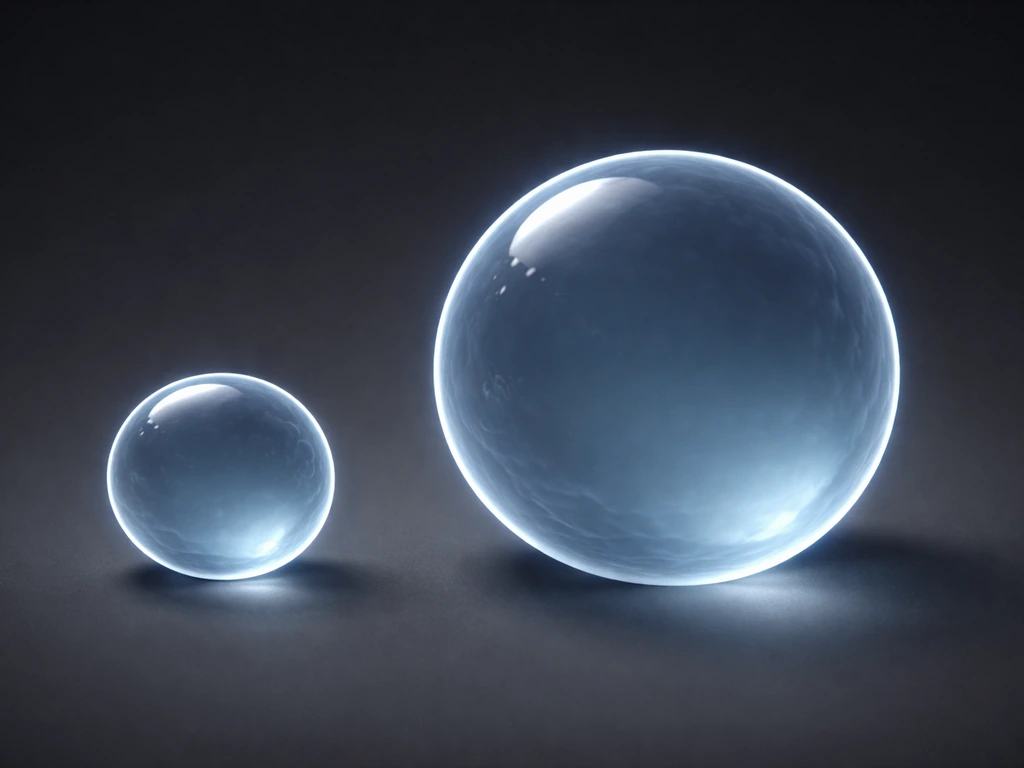
As a cell gets bigger, its volume increases much faster than its surface area. A cell that doubles in diameter gets 8 times the volume but only 4 times the surface area. This matters because the membrane surface is where nutrients come in and wastes go out. A large cell has proportionally less membrane per unit of cytoplasm to serve, meaning nutrient delivery and waste removal become slower relative to the cell's needs. A PMC review of scaling properties explains that surface area-to-volume constraints can make nutrient import and waste removal become size-dependent, creating limits on how large cells can get nutrient delivery and waste removal become slower relative to the cell's needs. Eventually the cell's interior can't be supplied efficiently, and growth stalls. This is the physiological inefficiency argument, and it's one of the main reasons cells divide rather than just growing without limit.
Molecular crowding
The cytoplasm is already a densely packed environment. As cells grow and accumulate more macromolecules, crowding increases, and this actually hinders protein expression and slows metabolite diffusion. Experiments and physical models confirm that increased macromolecular crowding limits cell growth by reducing the efficiency of the very biosynthetic machinery the cell depends on. Bigger does not always mean better when it comes to intracellular chemistry.
Regulatory checkpoints and contact inhibition
Beyond physical constraints, cells have biological brakes. CDK inhibitors like p21, p27, and p57 maintain cells in a quiescent state when conditions aren't right. In tissues, when cells become too densely packed and start touching their neighbors, contact inhibition kicks in, stopping proliferation. This is essential for normal tissue homeostasis. When these regulatory systems break down, you get uncontrolled proliferation, which is one of the defining features of cancer.
Conditions that enable growth
Cell growth doesn't happen in a vacuum. Here are the conditions that have to be in place:
- Nutrients: amino acids, glucose, and lipid precursors must be available. Withdrawal of even a single essential amino acid like methionine or leucine can trigger cell-cycle arrest through different mechanisms, including restriction-point control and inhibition of protein synthesis.
- Energy: adequate ATP production through cellular respiration is required. Low energy status activates AMPK, which suppresses mTOR and shuts down anabolism.
- Water: cells need water for turgor, for biochemical reactions, and for maintaining the cytoplasm's physical properties. This is especially critical in plant cells, where vacuole water accumulation is the main driver of cell expansion.
- Oxygen: most cell growth depends on aerobic respiration for efficient ATP production. Hypoxic conditions reduce CDK2 activity and increase the G1 population, effectively arresting the cycle. Severe anoxia can halt the cycle entirely.
- Growth signals: extracellular growth factors and hormones must bind to receptors and activate downstream pathways (including mTOR) to give the cell permission to grow. Without these signals, most animal cells enter G0.
- Temperature and pH: enzymes have optimal ranges. Significant deviations reduce catalytic efficiency, slow biosynthesis, and can trigger stress responses. Plant cell wall loosening by expansins, for example, works faster at acidic pH, which is part of how auxin promotes growth.
- Structural integrity: DNA must be undamaged, or repair must be completed before S phase or mitosis. DNA damage checkpoints actively halt the cycle until repair is done.
Growth across different life forms: what changes and what stays the same
The core logic of cell growth, import nutrients, build machinery, replicate DNA, divide, is conserved across essentially all life. But the details differ meaningfully between single-celled organisms, animal tissues, and plants.
Single-celled organisms
Bacteria and yeast couple growth and division tightly. In yeast, size-control mechanisms ensure a cell must reach a minimum size threshold before it commits to division. The cell literally checks whether it has accumulated enough mass before pressing go. In organisms like Tetrahymena (a single-celled ciliate), most protein accumulation and size increase happens during G1 and G2, with relatively little during S phase or M phase, mirroring what happens in mammalian cells.
Animal cells and tissues
Animal cells can decouple growth and division more flexibly than single-celled organisms. A cell can grow without dividing (hypertrophy) or, in early embryos, divide without much growth. In tissues, the mix of hypertrophy and hyperplasia varies by cell type and developmental signal. Epithelial cells, for example, grow as sheets and rely on contact inhibition to stop when the sheet is complete. Epithelial tissue growth depends on regulated changes in cell size and cell number, while contact inhibition helps coordinate when proliferation should stop Epithelial cells. In epithelial tissue, the cells in the epidermis that are ready to divide are typically the ones in the active proliferative layers rather than the fully differentiated surface cells which cells in the epidermis grow and divide. Fat cells (adipocytes) can expand enormously by filling their vacuoles with lipid droplets. Whether tissues grow primarily by making cells bigger or more numerous is a question worth exploring further when you look at specific tissue types.
Plant cells
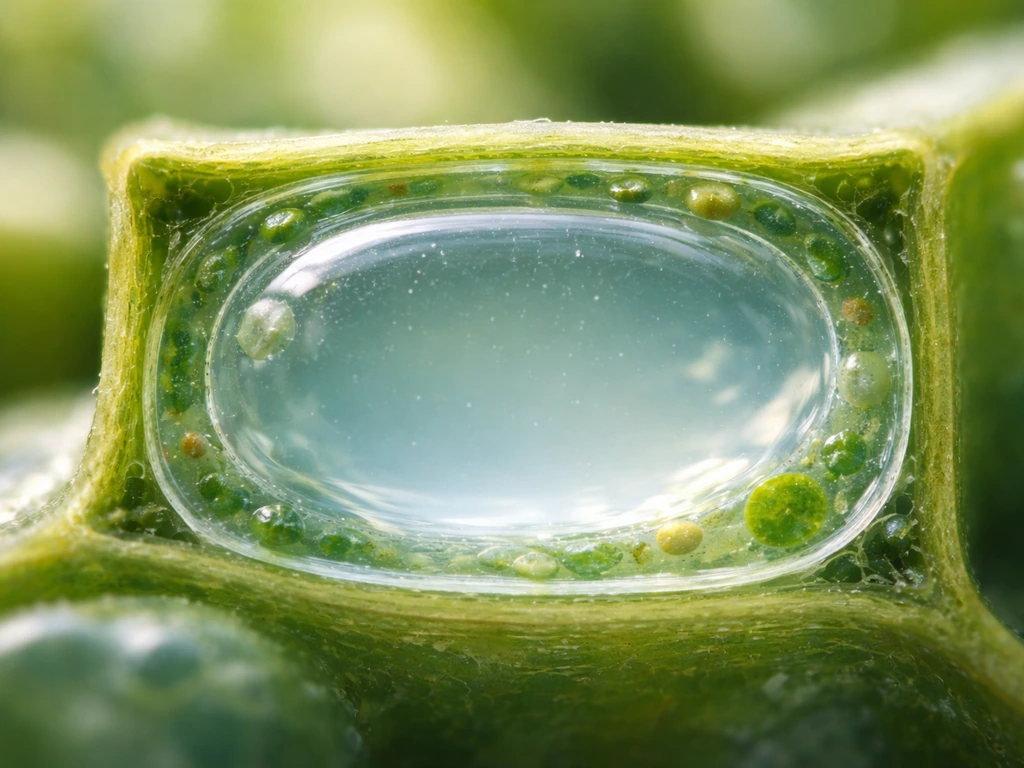
Plant cell growth has a unique physical driver: turgor pressure. As water floods into the central vacuole via osmosis, it pushes outward against the cell wall, creating pressure that forces the cell to expand. The rate of expansion depends on how extensible the wall is. Auxin (a plant hormone) promotes growth by triggering the secretion of protons (H+ ions) into the cell wall, lowering pH and activating expansin proteins that loosen the wall's polysaccharide crosslinks. A looser wall yields more easily to turgor pressure, so the cell expands faster. This acid growth mechanism is a great example of how a hormone translates into a physical, measurable change in cell size.
Plants also rely heavily on endoreduplication to grow large cells. Many plant cell types routinely go through multiple rounds of DNA replication without mitosis, ending up with 8x, 16x, or even higher ploidy levels. This genome amplification supports the metabolic demands of very large cells and is one reason some plant cells can be so much bigger than typical animal cells.
Comparing growth mechanisms at a glance
| Feature | Animal cells | Plant cells | Single-celled organisms (e.g., yeast/bacteria) |
|---|---|---|---|
| Primary growth driver | Protein/organelle biosynthesis; growth factors | Turgor pressure + wall loosening; auxin | Nutrient availability; size-threshold logic |
| Cell wall | None (flexible membrane) | Present; extensibility regulated by expansins | Present (rigid); cell wall remodeling during growth |
| Endoreduplication | Rare; some specialized cell types | Common; major driver of large cell size | Uncommon in standard growth |
| Division-growth coupling | Can be decoupled (hypertrophy vs hyperplasia) | Tightly linked in meristems; decoupled in endocycles | Tightly coupled; size checkpoint before division |
| Key growth regulator | mTORC1, CDK/cyclin complexes, growth factors | Auxin, turgor, CDK/cyclin homologs | TOR, size-sensing mechanisms (e.g., Whi5 in yeast) |
| Growth arrest mechanism | Contact inhibition, CDK inhibitors (p21/p27), G0 | Cell wall rigidity limits; developmental signals | Nutrient sensing; pheromone/stress signals |
What to do with this knowledge: practical next steps
If you are studying cell growth experimentally or just trying to build a solid conceptual model, here is how to think about it in sequence. First, identify whether the growth you care about is a size increase, a number increase, or both. Then trace the signals: are the right nutrients, energy substrates, and extracellular growth factors present? Is mTOR active or suppressed? Are CDK inhibitors elevated? From there, you can predict what phase of the cell cycle cells are likely in.
If you want to measure what is happening, EdU incorporation (a thymidine analog detected by flow cytometry) tells you what fraction of cells are actively in S phase and synthesizing DNA. Ki-67 staining tells you what fraction of cells are cycling at all, since Ki-67 is absent in quiescent G0 cells. These two tools together give you a clear picture of whether cells are growing, cycling, or arrested.
Keep in mind that the same core principles govern growth whether you are looking at a single yeast cell, a plant seedling elongating toward light, or a sheet of human epithelial cells healing a wound. The mechanisms are conserved. The signals and physical drivers differ. Once you understand the mTOR/AMPK axis, the CDK/cyclin checkpoint logic, and the surface area-to-volume constraint, you have the framework to make sense of growth in almost any biological system you encounter. These mechanisms also explain how a cell grows by building mass and controlling when it can move into division.
FAQ
How can cells increase in size without obviously dividing?
Because “cell size” can mean different things, focus on the relevant metric. A growing cell may increase mass without changing diameter much, for example when it expands volume and adds cytoplasm or organelles. Also, size rises can come from endoreduplication in some tissues, so DNA content (ploidy) can increase even if cell-cycle entry and mitosis stay low.
What experiments tell whether a tissue is getting bigger by cell growth versus cell division?
To know whether a larger cell is growing by mass or by number, check for DNA replication and cytokinesis markers. High S-phase activity and low division suggests size increases within the cell, while high DNA synthesis plus mitotic markers suggests coordinated growth and division. Measuring ploidy can distinguish endoreduplication-driven size increases from standard cell-cycle growth.
Why do cells stop getting larger if nutrients and growth factors are available?
A cell can grow slowly and still eventually divide, but it cannot indefinitely expand because delivery and waste removal across the membrane become limiting (surface area to volume) and because intracellular crowding interferes with biosynthesis. In practice, growth rates also reflect nutrient uptake capacity and the rRNA production bottleneck, so even well-fed cells may stall if translation and ribosome biogenesis are constrained.
Is entering G0 the same as growth arrest, and can cells re-enter the cycle later?
Quiescence in G0 is a reversible state, but “staying alive” is not the same as “actively growing.” Cells in G0 typically downshift biosynthesis pathways, so nutrients are not being converted into mass at the same rate. Re-entry often requires appropriate growth factor signaling and relief of DNA damage, so the limiting factor is frequently regulatory status rather than nutrient availability.
How do cells decide between building new material versus conserving energy during stress?
If energy is low or stress signals rise, AMPK tends to suppress mTORC1, reducing anabolic programs like ribosome biogenesis and protein synthesis. That can shrink growth rate even if nutrients are present, because the cell may still need ATP to build new components. Conversely, energy abundance without proper amino acids may not fully activate the lysosome-linked nutrient sensing that turns on maximal mTORC1 activity.
Do larger cells always have higher DNA content or faster cell-cycle progression?
Not always. Some conditions produce cell size changes without matching DNA replication activity, for example when cells are blocked in G2 or when they transition to G0. If you see increased cell diameter, verify whether cells are in S phase, blocked at a checkpoint, or undergoing endoreduplication by checking DNA content and proliferation markers.
Can nutrient uptake problems cause cells to fail to grow even when growth factors are present?
Transport can become rate limiting before biosynthesis does. For example, if glucose uptake is altered, energy production and carbon skeleton supply can limit ATP generation and precursor availability. If amino acid transport is impaired, mTORC1 activation can fall even in a nutrient-rich environment, because sensing depends on amino acid availability in the relevant cellular compartments.
How does contact inhibition change cell growth and size in tissues?
In many contexts, contact inhibition is tied to the ability to proliferate in a filled tissue and to how cells interpret mechanical and biochemical cues from neighbors. If that “sheet” architecture is disrupted, cells may lose growth control and continue cycling. A useful practical distinction is that cell density affects whether cells keep entering the cycle, not whether they can in principle increase size when they are allowed to grow.
What is endoreduplication, and how is it different from normal cell-cycle growth?
Yes, endoreduplication can cause marked enlargement by repeatedly duplicating DNA without mitosis. In these cases, cell size can rise largely because the genome copy number and biosynthetic capacity increase, while division markers remain low. If you suspect endoreduplication, DNA ploidy measurements provide a stronger clue than just cell diameter.
Why can’t cells just keep growing faster if they have plenty of nutrients?
Ribosome biogenesis is a common bottleneck because protein synthesis capacity depends on having enough rRNA transcription and assembled ribosomes. A cell may have growth signals but still grow slowly if rRNA production is limited, including when CDK/cyclin-driven transcription factor activation is insufficient. This is why growth rate often tracks with ribosome output rather than only nutrient supply.
How do DNA damage and checkpoint signaling influence whether cells grow or stop?
Yes, but the outcome depends on the checkpoint context. p53-driven responses can stall the cycle to prevent replication of damaged DNA, reducing growth-oriented biosynthesis even if external nutrients look favorable. CDK inhibitor levels and checkpoint position (G1 versus G2) determine whether cells delay, arrest in G0, or undergo other stress responses.
Next Article
Do Cells Get Bigger as You Grow? Cell Size vs Number
How growth works: most cells increase in number, cell size stays limited, and exceptions like muscle change under condit