The polypeptide chain grows primarily at the P site of the ribosome, but the actual chemistry of chain extension happens between the P site and the A site, at a spot called the peptidyl transferase center (PTC). Each time a new amino acid is added, the growing chain transfers from the P-site tRNA onto the incoming tRNA in the A site, making the A site the location of the growth event itself. So the honest answer is: the chain lives on the P-site tRNA between cycles, but it grows at the junction of the A and P sites.
What Site Does the Polypeptide Grow On in Translation

Marcus Whitmore
27 May 2026
What 'polypeptide growth' actually means during translation
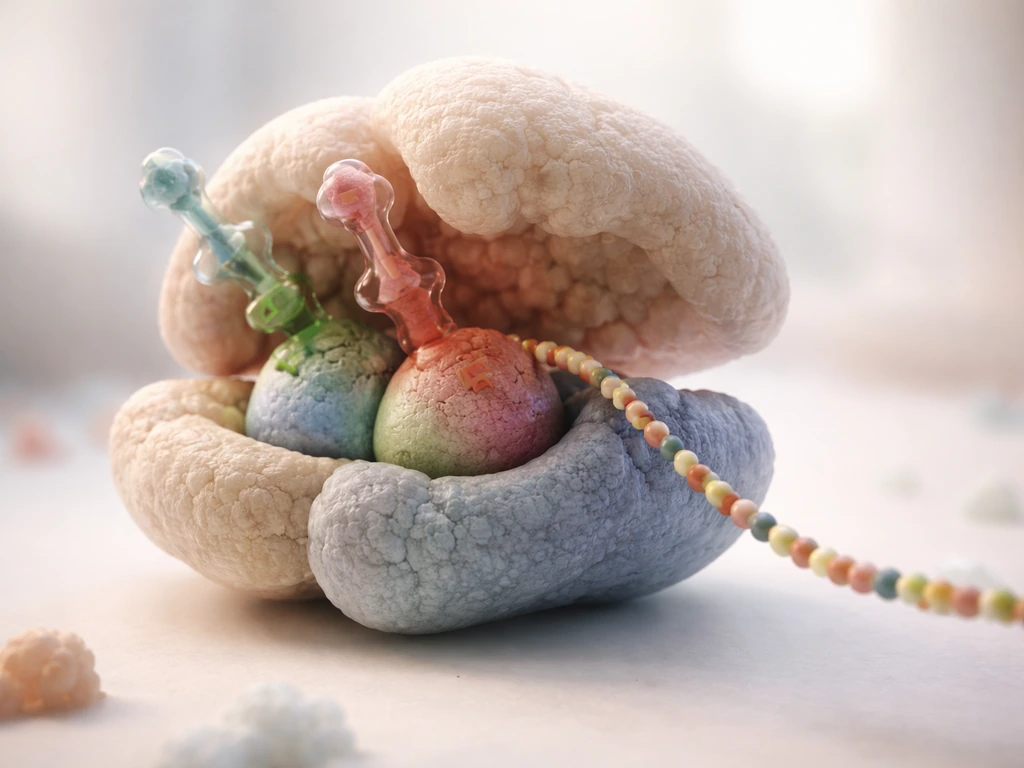
When biologists say a polypeptide 'grows,' they mean the chain gets one amino acid longer. Translation is the process where a ribosome reads messenger RNA (mRNA) and assembles a matching chain of amino acids. Each amino acid is delivered by a transfer RNA (tRNA), and the act of stitching one amino acid onto the end of the existing chain is called peptide bond formation. That single chemical reaction, repeated hundreds or thousands of times, is what 'growing' a polypeptide means at the molecular level.
The key thing to understand is that the growing chain is never floating free. It stays covalently attached to a tRNA molecule the entire time it is being built. That tRNA-polypeptide complex is called peptidyl-tRNA, and it is the physical carrier that moves the chain from one ribosomal site to the next during elongation. Think of it like a conveyor belt ticket: the chain rides on tRNA until the very end, when the finished polypeptide is finally released.
The three ribosomal sites and what each one actually does
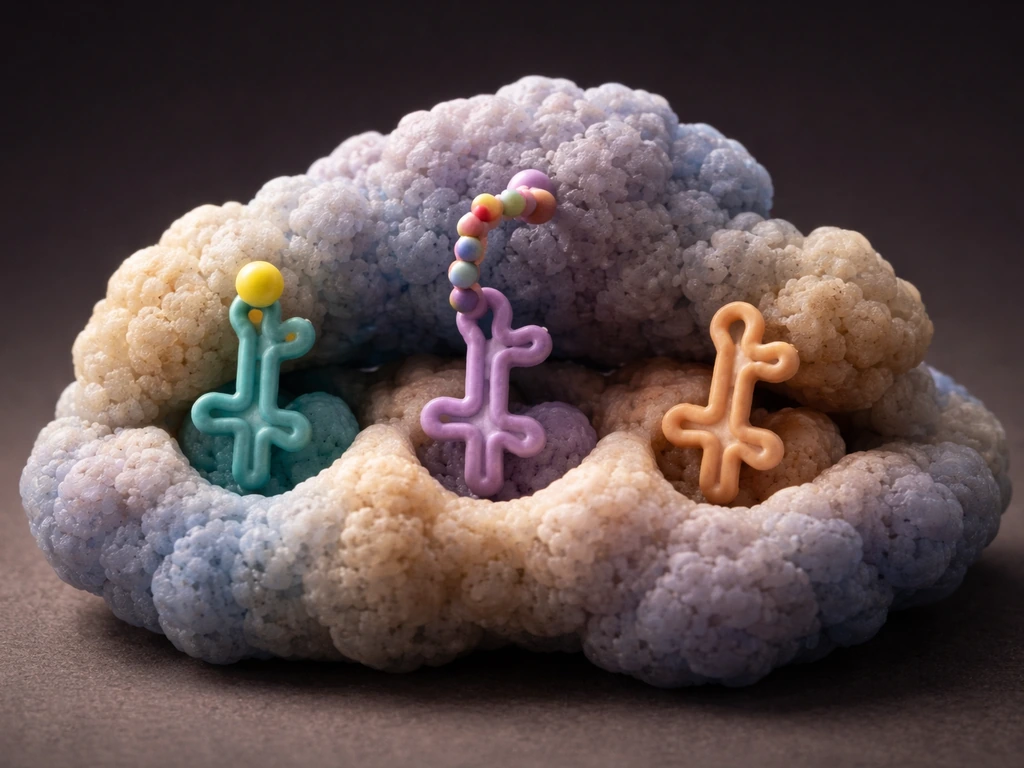
The ribosome has three tRNA docking positions, each named for the role the tRNA plays when it sits there. These are not just parking spots; the position of a tRNA in the ribosome determines exactly what chemical step happens next.
| Site | Full name | What binds here | Role in elongation |
|---|---|---|---|
| A site | Aminoacyl site | Incoming aminoacyl-tRNA (fresh amino acid attached) | Decodes the mRNA codon; accepts the growing chain after peptide bond formation |
| P site | Peptidyl site | Peptidyl-tRNA (growing chain attached) | Holds the chain between cycles; donates the chain during peptide bond formation |
| E site | Exit site | Deacylated tRNA (chain just transferred away) | Temporary holding spot before the empty tRNA leaves the ribosome |
Before elongation even begins, translation initiation leaves the ribosome in a ready state: the initiator methionyl-tRNA is sitting in the P site, paired with the AUG start codon on the mRNA, and the A site is empty. That empty A site is the signal that elongation can begin. Every subsequent elongation cycle starts with the A site open and waiting.
What physically holds the chain: peptidyl-tRNA and the exit tunnel
The growing polypeptide is tethered to the P-site tRNA through a high-energy ester bond. This peptidyl-tRNA is not a passive carrier; its position physically orients the end of the chain right at the entrance of the peptidyl transferase center, making it ready to donate the chain to whatever amino acid arrives in the A site.
As each new amino acid is added, the chain gets longer and threads backward through a channel called the ribosomal exit tunnel (also called the peptide exit tunnel), which runs through the large ribosomal subunit. The chain is literally born at the PTC and immediately starts snaking through this tunnel as synthesis continues. The tunnel can accommodate roughly 30 to 40 amino acids before the chain emerges on the outer surface of the ribosome, where folding begins. This physical arrangement means the chain is always in motion: forming at the PTC, threading the tunnel, and folding outside.
Step-by-step: the elongation cycle at each site
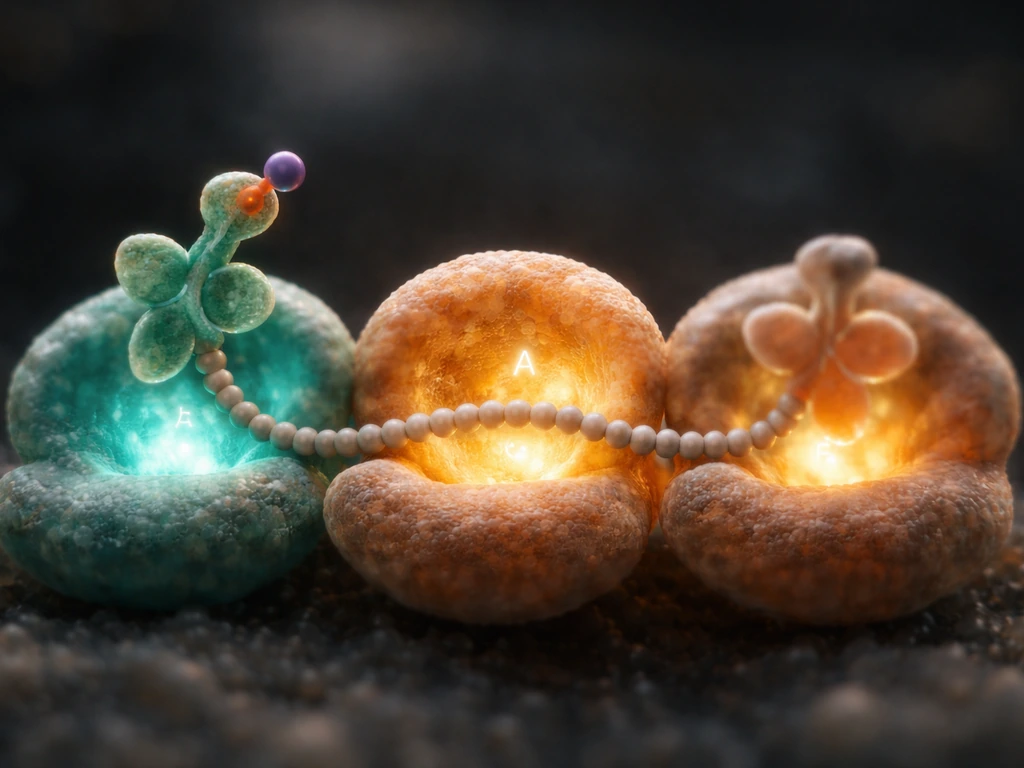
Each round of elongation adds exactly one amino acid to the chain and shifts every tRNA one position to the right through the ribosome. Here is how each cycle plays out:
- Decoding (A site): A new aminoacyl-tRNA, carrying the next amino acid, enters the A site. It base-pairs with the mRNA codon exposed there. Elongation factors (like EF-Tu in bacteria) help ensure only the correct tRNA docks.
- Peptide bond formation (A site + P site, at the PTC): The peptidyl transferase center catalyzes the reaction. The growing chain, which was attached to the P-site tRNA, transfers onto the amino acid on the A-site tRNA. The P-site tRNA is now empty (deacylated). The A-site tRNA now carries a chain that is one amino acid longer.
- Translocation (all three sites shift): The ribosome moves one codon along the mRNA. The newly deacylated tRNA shifts from P to E. The newly extended peptidyl-tRNA shifts from A to P. The A site is now empty and ready to decode the next codon. The tRNA in the E site exits.
- Reset: The ribosome is back to the starting configuration: empty A site, peptidyl-tRNA in the P site, and the cycle repeats.
Notice what happens to the chain in step 2: right after peptide bond formation, the elongated chain is sitting on the A-site tRNA, not the P-site tRNA. It only moves back to the P site during translocation. This is why saying the chain grows 'on the P site' is slightly incomplete; the chemical act of adding a residue lands the new chain momentarily on the A site before translocation restores it to the P site for the next cycle. In particular, the growth event during translation is best understood as happening across the A and P sites as each new residue is added grows 'on the P site'.
What the peptidyl transferase center actually does
The PTC is located in the large ribosomal subunit (50S in bacteria, 60S in eukaryotes) and is made almost entirely of ribosomal RNA, not protein. That makes the ribosome a ribozyme, an RNA molecule with catalytic activity. The PTC positions the P-site peptidyl-tRNA and the A-site aminoacyl-tRNA close enough that the amino group on the incoming amino acid attacks the ester bond holding the chain to the P-site tRNA. The result is a new peptide bond and a one-residue-longer chain now attached to the A-site tRNA.
Common misconceptions worth clearing up
There are a few wrong answers that show up constantly on exams, and it is worth naming them directly so you can avoid them.
Misconception 1: The polypeptide grows on the mRNA
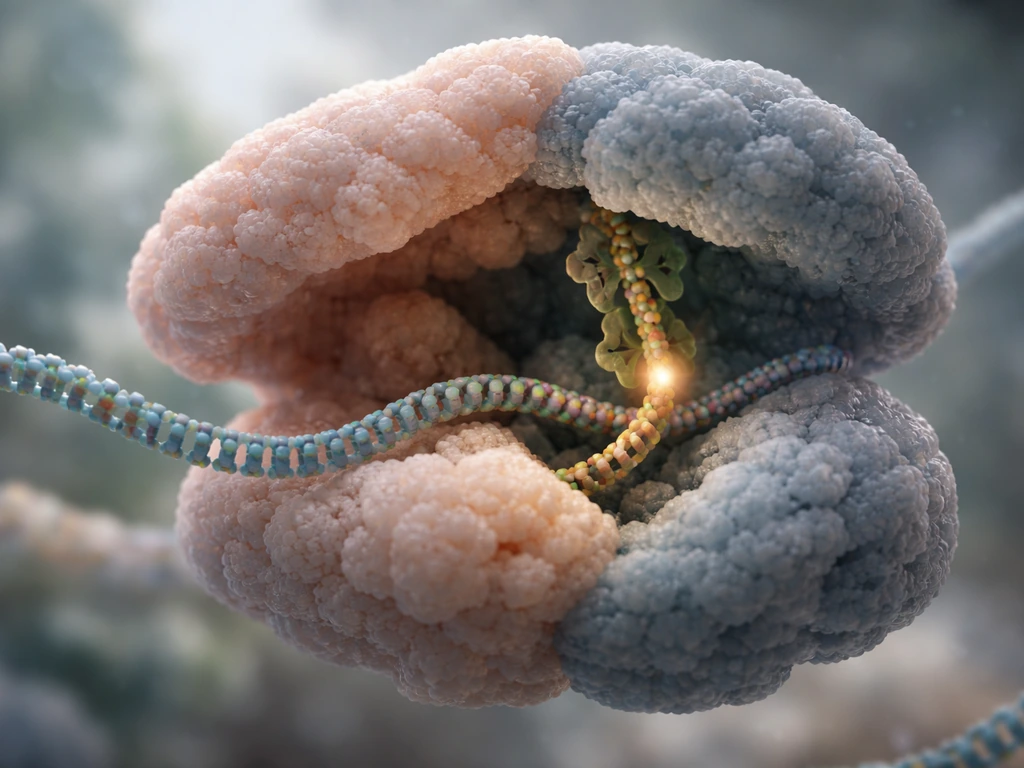
The mRNA is the template, not the scaffold for the chain. The polypeptide never attaches to mRNA. The mRNA threads through the ribosome and provides the sequence instructions by exposing codons in the A site, but the chain itself is always attached to tRNA and physically located within the ribosome's tunnel and active site. Confusing the template with the construction site is one of the most common errors in translation questions.
Misconception 2: The polypeptide only grows on the P site
Many introductory textbooks and diagrams shorthand this by saying 'the growing chain is in the P site,' which is true for most of the elongation cycle but misses the critical moment when it is not. Right after peptide bond formation, the longer chain is on the A-site tRNA. It returns to the P site only after translocation. For exam questions asking specifically where the growth event occurs, the correct answer involves both the A and P sites, with the PTC as the specific catalytic location.
Misconception 3: The E site has something to do with chain extension
The E site is purely an exit lane. The tRNA sitting in the E site has already donated its amino acid to the chain and is empty. It plays no role in chain elongation. Some students assume the E stands for 'elongation,' but it stands for 'exit.' The E-site tRNA is on its way out of the ribosome to be recharged with another amino acid elsewhere in the cell.
Misconception 4: Translation starts with an empty P site
Elongation does not begin from scratch. Initiation already places the first tRNA (methionyl-tRNA carrying methionine) in the P site, paired with the AUG start codon. Elongation then begins because the A site is empty and ready. Knowing this context matters if a question asks you to trace where the first peptide bond forms: it forms between the methionine already in the P site and the first elongation tRNA that enters the A site.
How to verify your answer using diagrams and key terms
If you are working from a textbook diagram or trying to double-check your understanding before an exam, here is a practical checklist for what to look for.
- Find the three labeled sites: any reliable translation diagram will show A, P, and E sites on the ribosome, not on the mRNA strand itself.
- Locate the peptidyl transferase center: it should appear in the large subunit, positioned where the A-site and P-site tRNAs come closest to each other. This is the catalytic heart of chain extension.
- Spot the exit tunnel: look for an arrow or channel leading away from the PTC through the large subunit. The nascent chain threads through this tunnel; if your diagram shows the chain dangling from the A or P site with nothing else, it is oversimplified.
- Check the 'before and after peptide bond formation' states: a good diagram shows two snapshots. Before: chain on P-site tRNA, empty aminoacyl-tRNA in A site. After: deacylated tRNA in P site, chain now on A-site tRNA. If the diagram skips straight to translocation, it is hiding the key moment.
- Key search terms for diagrams: 'peptidyl transferase center,' 'ribosome exit tunnel,' 'hybrid A/P and P/E tRNA states,' 'elongation cycle.' These will surface diagrams that show the full mechanism rather than just the simplified three-site cartoon.
- Classic posttranslocational state (easy exam anchor): empty A site, peptidyl-tRNA in P site, deacylated tRNA in E site. If a question describes this state and asks 'where is the growing chain,' the answer is the P site.
One more practical tip: if your textbook's translation chapter has a figure that shows tRNA in 'hybrid states' labeled A/P or P/E, that is showing the intermediate step during translocation where the tRNA acceptor end has moved to one site while the anticodon end is still in another. A cryo-EM and review integration discusses these intermediate A/P and P/E hybrid states during translocation and how the insertion of the aminoacyl-CCA moiety into the peptidyl-transferase center prepares the system for elongation blank" rel="noopener noreferrer">hybrid states labeled A/P or P/E. This level of detail is important for upper-division courses but less so for introductory biology. At the introductory level, the clean answer is: the polypeptide chain grows through repeated peptide bond formation at the PTC, the chain is carried on peptidyl-tRNA which resides in the P site between cycles, and the growth event itself involves both the A site (incoming amino acid) and the P site (existing chain), with the exit tunnel physically accommodating the lengthening chain as it is built. So if you are asking where endo grow, the growth event during translation is at the peptidyl transferase center where the A and P sites come together.
Growth in biology is rarely a simple, single-location event, and translation is a perfect example of that. Nodules form in tissues when cells proliferate and organize in response to stimuli, but the size increase is gradual rather than from a single moment of growth do nodules grow. Just as the question of what continues to grow after biological processes change is often more nuanced than it first appears, the question of where the polypeptide 'grows' has a layered answer: P site for chain residence, A site for chain reception, PTC for catalysis, and the exit tunnel for physical accommodation. This same multi-site idea explains why SAC does not grow simply based on the P site alone. In a similar way, the question of what continues to grow after death points to a different biological process than protein synthesis. Knowing all four gives you the full picture.
FAQ
Where exactly does the first peptide bond form in translation, not just later elongation cycles?
The first peptide bond forms when the initiator methionyl-tRNA in the P site donates its methionine, and the first incoming elongator aminoacyl-tRNA enters the A site. The catalytic reaction happens at the peptidyl transferase center, which sits in the large subunit (50S/60S).
If the chain is on the P site between cycles, why is the A site still important for “growth”?
A site aminoacyl-tRNA receives the existing chain during peptide bond formation, but the growing chain is only “resident” on the P-site tRNA during much of the cycle. Immediately after the bond forms, the new longer chain is on the A-site tRNA, then translocation moves it back to the P site for the next round.
What is the single best answer if an exam asks for one site for peptide bond formation?
The ribosome’s P site and A site are about where tRNAs sit and what step is happening, but the catalytic chemistry occurs at the peptidyl transferase center. So for exam questions asking for a single best location, answer “PTC,” and if they ask for the growth event, mention “across the A and P sites at the PTC.”
Can the growing polypeptide attach to mRNA at the A site or P site?
The mRNA provides codon instructions in the A site, but the polypeptide never becomes attached to mRNA. The chain stays covalently linked to tRNA (as peptidyl-tRNA) and is physically threaded through the exit tunnel as it lengthens.
Does the polypeptide “grow” when a tRNA is in the E site?
No. tRNAs in the E site are emptied and are positioned for exit. Chain extension happens before that, when the incoming aminoacyl-tRNA at the A site participates in peptide bond formation at the PTC.
What happens to polypeptide growth if the A site is not empty during elongation?
Translation elongation requires the A site to be available. If the A site is filled (for example, waiting for the correct next tRNA or stalled during elongation), peptide bond formation cannot proceed, even though the P-site peptidyl-tRNA is still present.
How should I interpret tRNA “hybrid states” (A/P or P/E) when deciding where the chain grows?
If a diagram shows hybrid states like A/P or P/E, those labels represent intermediate tRNA positions during translocation. In that moment, the chain is not in a single static “P site only” location, so it helps to describe the step as translocation intermediates rather than claiming a single fixed site for growth.
Next Article
Where Can Endo Grow? Locations, Limits, and How to Check
Learn where endometriosis can grow, why it spreads, what limits growth, and how to investigate likely locations.