If you've opened an old Play-Doh container and found white, gritty, or needle-like crystals coating the surface or sitting in the bottom of the tub, you're almost certainly looking at salt. Play-Doh is roughly 10% salt by composition, along with water and flour, plus preservatives like sodium borate (borax) and sodium benzoate. As the water in the dough evaporates, those dissolved solids get left behind in crystalline form. It's the same process that leaves a white ring around a pot after you boil salty water. Nothing has gone wrong chemically; you're just watching basic physics play out on your craft supplies.
Why Does Play-Doh Grow Crystals and How to Stop It

Marcus Whitmore
17 Apr 2026
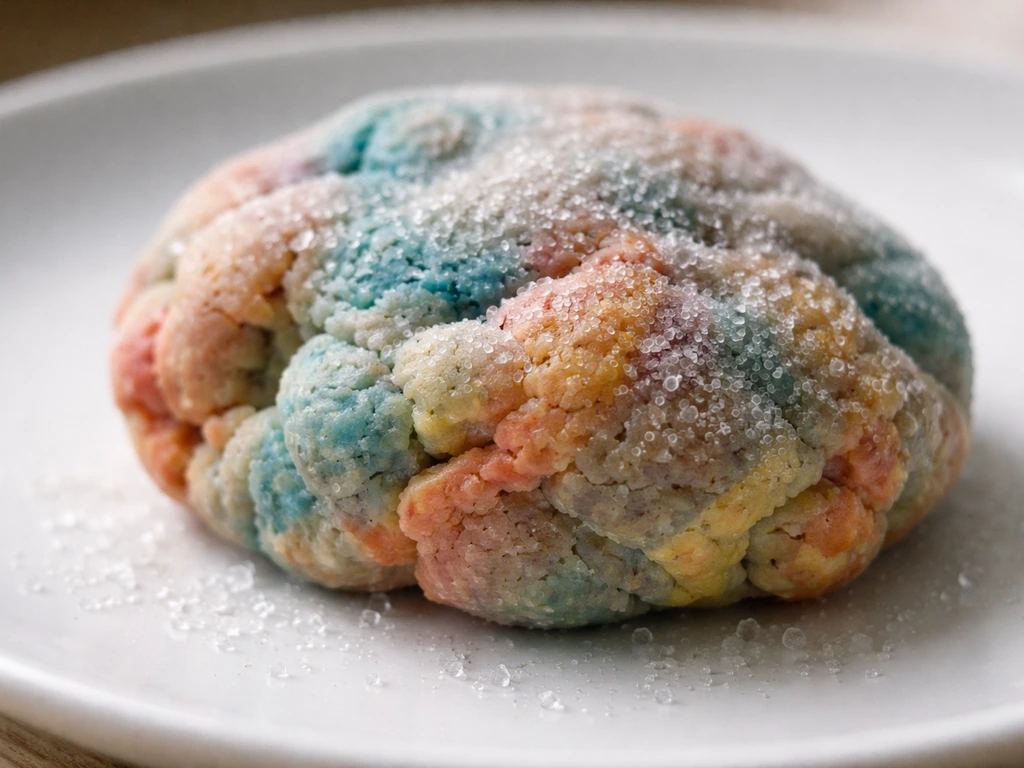
What those 'Play-Doh crystals' actually are
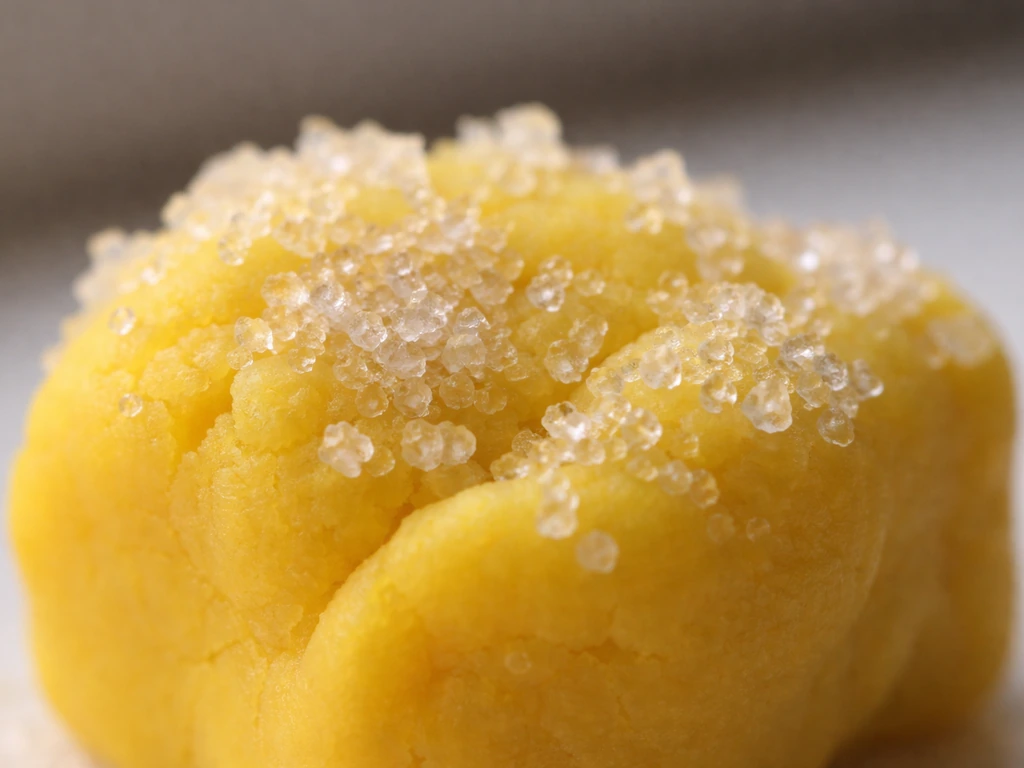
Let's be clear about what you're probably not looking at: you're almost certainly not seeing geological mineral crystals growing out of modeling clay. Play-Doh crystals are not quartz, calcite, or anything you'd find in a rock collection. They belong to a completely different category of crystal growth, one driven by soluble household compounds, not by mineralizing fluids inside the earth.
The most likely candidates, in order of probability, are salt (sodium chloride), borate compounds from the borax preservative, or, if the dough was handled after baking or cooking, residues of sugar or starch. Salt is the overwhelmingly common culprit. Sodium chloride has a solubility of roughly 360 g/L at 25°C, meaning a lot of it can stay hidden in solution while the dough is moist. Once the water leaves, all of that dissolved salt has nowhere to go but out, forming a white crystalline bloom on the surface, a process sometimes called efflorescence.
Borax residues are a secondary possibility. Play-Doh uses sodium borate as an anti-microbial preservative, and borate salts can also crystallize as water evaporates. If you see a slightly different crystal habit, perhaps softer, more powdery, or slightly yellowish residue, borax could be contributing. Worth noting: boric acid compounds can be irritating if ingested, so treat any crystalline residue with basic hygiene caution, wash hands after handling dried Play-Doh and keep it away from young children who might taste it.
The science behind why crystals form at all
To understand why Play-Doh grows crystals, you need to understand supersaturation. When Play-Doh is fresh, its salt, borate, and other soluble ingredients are evenly distributed throughout the water content of the dough. The solution is stable. But as water evaporates, the concentration of dissolved solids rises. At a certain point, the solution holds more dissolved material than it physically can at that temperature. That's supersaturation, and it's the driving force behind all crystal nucleation and growth.
Once a solution crosses into supersaturation, it's unstable. Molecules start bumping into each other and locking into ordered arrangements, a process called nucleation. Think of it like the moment a crowd starts to self-organize into a queue: once a few people align, others follow. That initial cluster is the nucleus. After nucleation, crystal growth happens relatively quickly as more dissolved material deposits onto the existing structure. How crystals grow at the molecular level follows this same logic whether you're looking at salt on Play-Doh or a stalactite forming in a cave.
There's often a delay between when supersaturation first occurs and when you actually see crystals appear. This induction period is real and measurable. It means Play-Doh can sit in a drawer for weeks, looking completely fine, and then suddenly sprout visible crystals seemingly overnight once the conditions tip past a threshold. You didn't do anything different on that particular day; the system just finally crossed the nucleation barrier.
Why your Play-Doh specifically grew crystals
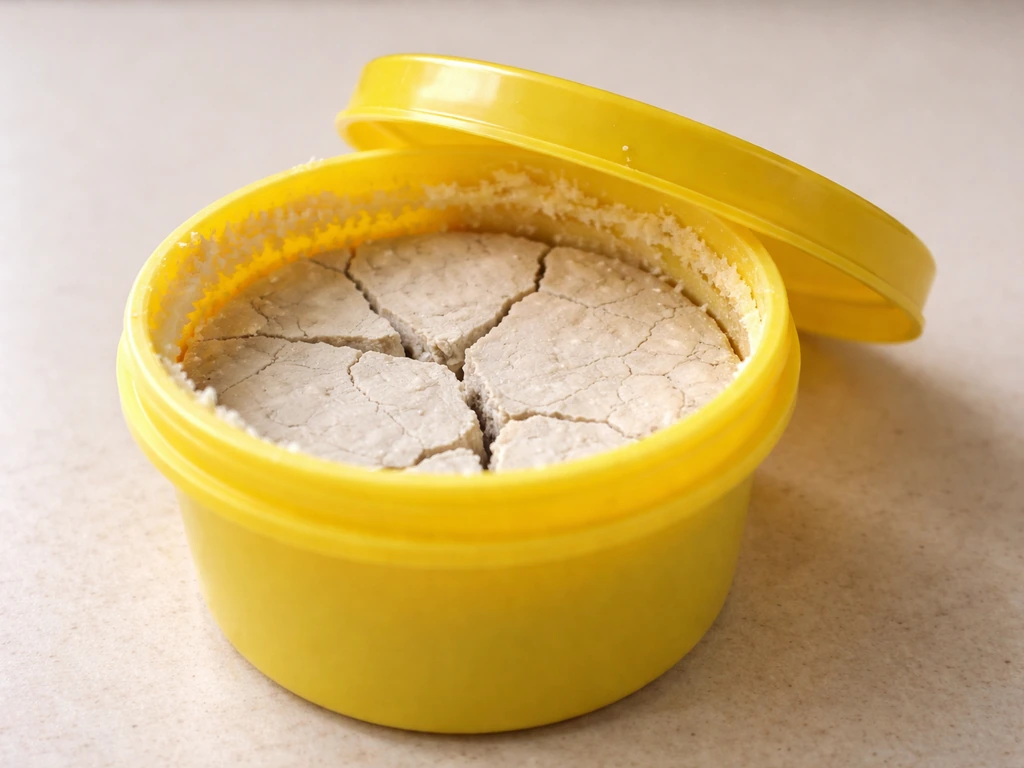
Play-Doh crystals almost always trace back to one or more of these real-world causes: partial drying, repeated wetting and drying cycles, high ambient humidity followed by dry air, or contamination from kitchen surfaces and hands.
- Partial drying: The lid wasn't sealed tightly after use. Even a small gap allows slow evaporation, gradually concentrating the salt until crystals form on the exposed surface.
- Repeated wet-dry cycles: Children re-moisten dry Play-Doh with water or wet hands. Each cycle dissolves the salt back in, then evaporation concentrates it again, often producing larger crystals with each pass.
- High humidity followed by rapid drying: Humid air lets the dough absorb a little moisture, which then evaporates quickly in air conditioning or sunlight, accelerating the concentration cycle.
- Contamination from kitchen tools or surfaces: Sugar, baking soda, or other soluble kitchen compounds can transfer to the dough during play, providing additional crystallizable material or changing the nucleation behavior.
- Old dough: Time alone is often enough. A can of Play-Doh left for months will slowly lose moisture through even a sealed container, and the salt concentration gradually climbs.
What controls crystal size and speed
Not all Play-Doh crystals look the same, and the differences tell you something about the conditions they formed in. Slow evaporation in a stable, humid environment tends to produce larger, more distinct crystals because molecules have time to find their place in the growing lattice. Fast evaporation in dry, warm, or ventilated conditions produces smaller, more powdery or granular crystals because nucleation happens rapidly and many small crystals compete for the available solute.
Temperature matters too. Salt solubility doesn't change dramatically with temperature (unlike many other compounds), but warmer temperatures do accelerate evaporation, which speeds up the entire crystallization process. If you've ever noticed crystals appearing faster in summer or near a heating vent, that's why. The interplay between evaporation rate and salt supply is what controls the final crystal habit, which is the shape the crystal takes. This is the same basic dynamic described in research on weathering that occurs when crystals grow inside porous rock, where salt crystallization driven by evaporation is powerful enough to fracture stone.
Airflow is another underrated factor. A container sitting in still air loses moisture slowly and evenly. A container near a fan or open window loses moisture unevenly, which can create localized zones of high concentration and produce irregular crystal clusters on specific parts of the dough.
How to fix the problem right now
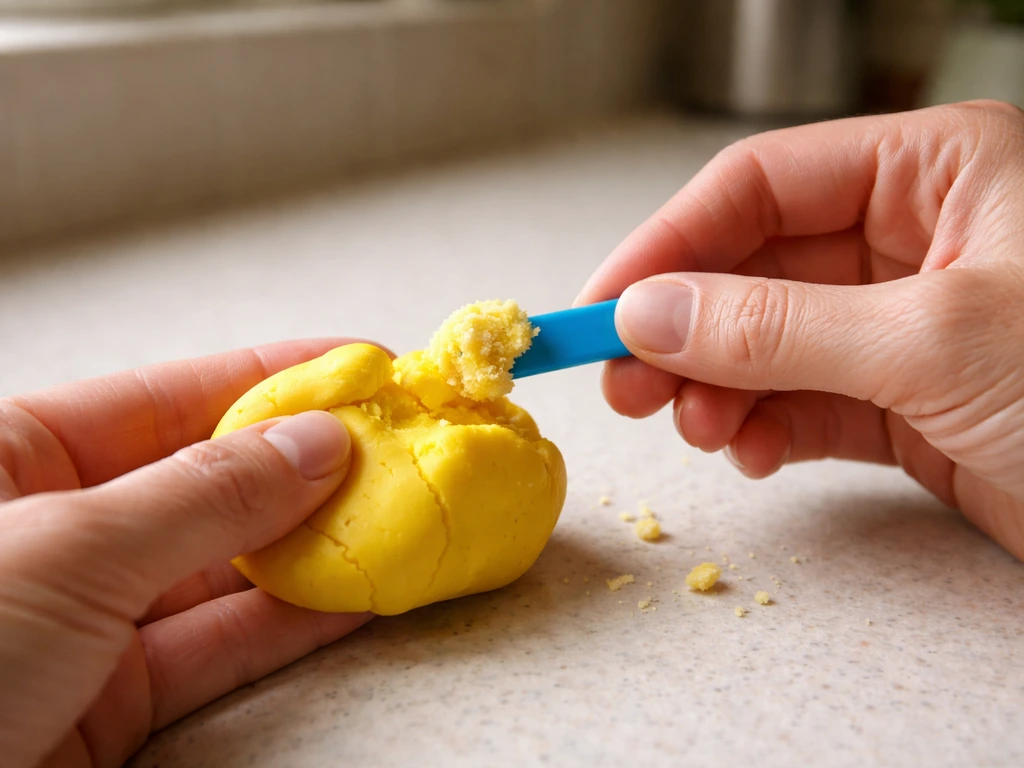
If you've already got crystals, here's what to do today, in order of priority.
- Remove visibly crystallized sections: If only part of the dough has crystals, cut or pinch off the affected area and discard it. Don't try to work the crystals back into the dough; the salt concentration in that region is already too high and will just re-crystallize.
- Dry the container completely: Empty the container, wipe it out with a dry cloth, and let it air dry before storing fresh dough in it. Residual crystalline material on the container walls will seed new crystal growth if left behind.
- Isolate the dough from water sources: Move the dough away from any humid environment, wet surfaces, or containers that might have water condensation on the sides.
- Control the storage environment: Store Play-Doh in a cool, dry location away from direct sunlight, heating vents, and windows. Consistent, moderate temperature and low humidity dramatically slow the evaporation cycle.
- Re-seal carefully: Press the dough into a flat disc before sealing so less surface area is exposed to whatever air remains in the container. A secondary zip-lock bag over the original container adds meaningful protection.
Simple tests to confirm what's actually growing
Before you assume the worst, run a quick confirmation test. The behavior of a crystal when you re-wet it tells you a lot about what it is.
The dissolve test
Scrape a small amount of the crystalline residue onto a white plate or piece of paper. Add one or two drops of water. If it dissolves quickly and cleanly without leaving a residue or color, you're almost certainly looking at salt or a similar inorganic salt (like borate). If it's sticky after dissolving, sugar or an organic compound is more likely involved. Salt crystals from Play-Doh should dissolve rapidly and completely.
Visual inspection
Look at the crystal shape. Salt (sodium chloride) forms cubic or slightly irregular blocky crystals. Under a magnifying glass or basic microscope, you should see small squares or rectangles. Borate crystals tend to look more irregular or powdery. Needle-like or acicular crystals (long, thin spikes) can appear in salt crystallized under specific conditions, particularly rapid evaporation, and have been reported by Play-Doh users in online discussions. If you see flat plates or perfect geometric forms, that's a good sign you're dealing with a clean inorganic salt rather than an organic contaminant.
The taste test (caution)
This one comes with a caveat: Play-Doh is not food, and if borax is present in the residue, you don't want to ingest it. However, if you have reason to suspect the crystals might be from a contaminating food substance (sugar from a baking session, for example), a tiny touch of the dissolved residue to the tip of a finger and a cautious taste test can distinguish salty from sweet. Do not do this with unknown crystalline material, and skip it entirely if you suspect borax involvement.
Comparing with known crystals
Put a pinch of table salt in water, let it evaporate slowly on a plate overnight, and compare those crystals to your Play-Doh residue under a magnifying glass. If they look the same, you have your answer. This is essentially the same method used to identify mineral residues in geology, the same way researchers study how new minerals grow within existing rocks by comparing crystalline forms under controlled conditions.
Stopping crystals from coming back
Once you've cleaned up the current batch, the goal is to break the evaporation cycle before it starts again. Here's a practical prevention checklist.
- Seal immediately after every use: Don't let the Play-Doh sit out for more than a few minutes. Every minute exposed to air is moisture leaving the dough.
- Add a tiny amount of moisture if the dough feels dry: A few drops of water kneaded in can restore moisture balance before storage. Don't over-wet, which creates its own crystallization setup when that water evaporates.
- Store in an airtight container with a damp paper towel nearby: The towel keeps the humidity inside the container stable without directly wetting the dough.
- Keep different colors separated: Cross-contamination between Play-Doh colors can introduce salt from one batch as a nucleation seed into another.
- Use clean, dry tools: Wet or kitchen-contaminated tools are a primary source of extra soluble material entering the dough.
- Don't use Play-Doh near food preparation areas: Kitchen surfaces carry sugar, salt, and flour that transfer easily and give the dough additional crystallizable material.
- Replace old dough: A can that's been opened dozens of times has already gone through multiple wet-dry cycles. At some point, the salt concentration in the remaining moisture is just too high to prevent crystallization. Fresh dough is the practical reset.
Why this is actually interesting chemistry
It's worth stepping back and appreciating what you're watching. The crystal growth happening in an old Play-Doh tub follows the same fundamental rules as crystal formation in nature. How quartz crystals grow inside geological formations, for example, involves the same supersaturation and nucleation logic, just playing out over thousands of years instead of a few weeks in a storage container. The difference is scale, time, and the specific compound involved, not the underlying physics.
Even how diamonds grow under extreme pressure deep in the earth follows nucleation and growth principles, with carbon atoms organizing into an ordered lattice under the right thermodynamic conditions. Salt organizing out of an evaporating Play-Doh solution is obviously not in the same league, but it's the same family of phenomenon. Understanding why your Play-Doh grew crystals is actually a miniature lesson in the same physics that shapes geology.
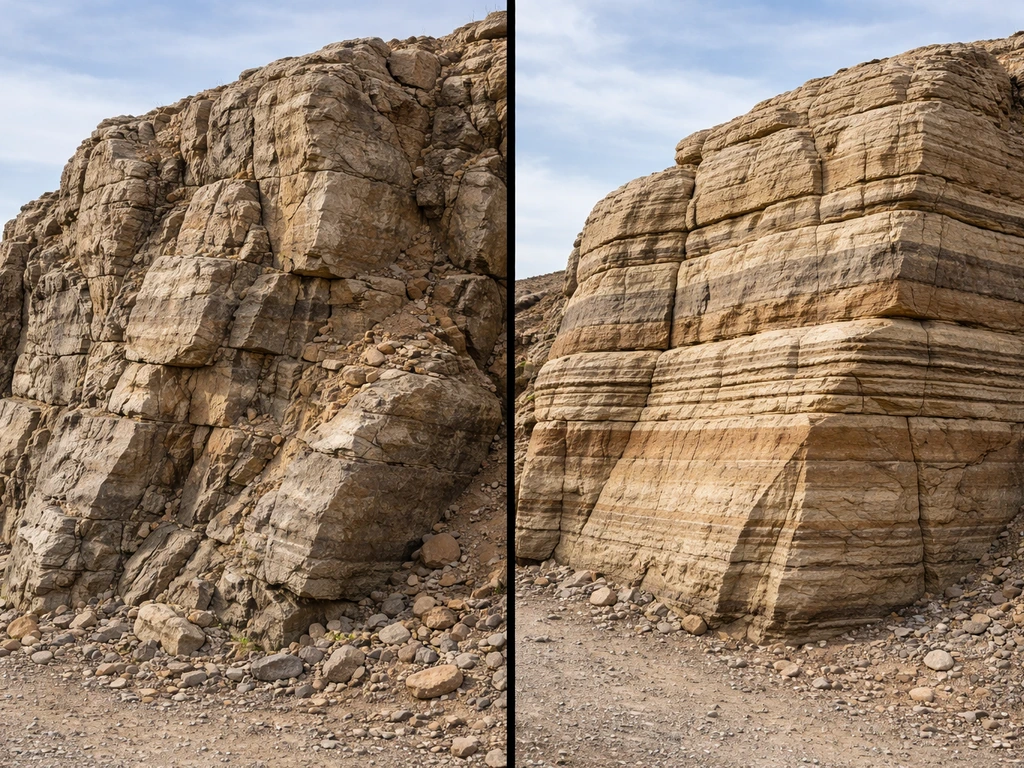
If you're curious about how these same processes shape the physical world at larger scales, consider that rocks can grow in size through mineral precipitation and crystallization over geological time, and that the salt crystallization you're seeing on Play-Doh is, in a small way, a version of the same accumulation process. And just as rock grows through the slow accretion of mineral material from saturated solutions, your Play-Doh grows crystals through the same logic, just faster and on your kitchen counter.
Quick reference: Crystal causes and fixes
| Cause | What you see | Fix |
|---|---|---|
| Slow evaporation from loose lid | Large, blocky or needle-like salt crystals on surface | Re-seal tightly; remove crystallized sections |
| Repeated wetting and drying | Progressive crystal buildup across multiple play sessions | Stop adding water; store properly after each use |
| High humidity followed by dry air | Crystals appear after weather or seasonal change | Move to a stable, low-humidity storage location |
| Kitchen contamination (sugar, baking soda) | Crystals with different texture or sweet taste | Use dedicated tools; keep away from food surfaces |
| Old dough with high salt concentration | Extensive crystals throughout the dough | Replace with fresh dough; clean the container fully |
| Borate preservative crystallizing | Softer, powdery white residue | Discard affected material; wash hands; store in sealed container |
FAQ
If I keep my Play-Doh sealed, why do crystals still appear later?
Crystals can keep forming even if you replace the lid, because moisture can still get in each time the container is opened (or the tub is stored in a high-humidity room). The fastest fix is to reduce water loss and stop concentration buildup by storing in a fully airtight container and keeping the tub away from heat sources, vents, or sun.
Why do the crystals sometimes collect at the bottom instead of only on the surface?
Yes, dried “crust” can look like growth from the bottom, but it often starts as evaporation on the surface and then migrates. As water evaporates, salts and borates move toward the air-exposed areas, so the residue can later appear thicker along the top or edges, then settle toward the bottom.
How can I tell whether the residue is salt versus sugar or starch contamination?
If the residue dissolves quickly and leaves no stickiness, it is most consistent with inorganic salts like sodium chloride. If it dissolves but feels sticky or leaves a film, sugar or starch contamination is more likely, and you should clean thoroughly with soap and water before returning the clay to storage.
Can Play-Doh develop crystals that are hard to see, not just white powdery ones?
If you see crystals but no white grit, you may be dealing with a thin, nearly transparent crystalline film formed by very slow evaporation. This can happen when humidity is moderate and the container stays closed most of the time, giving enough time for ordered deposition without a heavy visible bloom.
What if the residue color or texture looks different from typical salt crystals?
Do not assume “white” means only salt. Sodium borate and related borate salts can crystallize too, and their residue may be softer or slightly different in color. If you ever suspect borate involvement, avoid ingesting or allowing kids to touch the dried crust, then wash hands well after cleanup.
I cleaned the tub, but the next week it has crystals again, what should I do?
Crystals can reappear after cleaning if the original batch is already partially dehydrated. Before storing again, knead in fresh, dampening material only in small amounts (and then reseal tightly). If the clay is very dry or stiff, it may be better to discard and start a fresh tub.
Why does crystal formation seem faster in summer or near a heater?
Temperature mainly speeds up evaporation, which increases the rate at which the solution reaches supersaturation. Even if solubility does not change dramatically, warmer storage (or proximity to a heater) can shorten the induction period so crystals show up sooner.
Why do crystals form in patches rather than evenly across the whole container?
Airflow can create uneven drying, which produces localized high concentration and irregular crystal clusters. A container near a fan or open window can create “hot spots,” so crystals may form only on one side or along a specific airflow path.
Is it ever safe to do a taste test to identify what’s crystallizing?
A slow, gradual dissolution test on a white surface is safer than any tasting. If you cannot confirm identity by dissolving behavior and appearance, treat the residue as non-food material, clean it off, and do not use the clay for anything involving mouth contact.
What’s the safest way to remove existing crystals without making the problem worse?
Don’t scrape aggressively with sharp tools because you can gouge the clay surface and spread fine residue deeper into the dough. Instead, remove the crust gently, then wash your hands and the tub area, and keep the remaining clay covered with the lid immediately to limit further evaporation.
Next Article
Do Rocks Grow in Size? How Rock Bodies Change Over Time
Rocks don’t grow like living things, but their size can change via weathering, deposition, cementation, and metamorphism