Yes, crystals genuinely grow, and the process is more fascinating than most people expect. A crystal grows by adding layer after layer of atoms or molecules onto its surface in a precise, repeating pattern. That pattern is what makes a crystal a crystal: the internal geometry dictates exactly where each new particle lands. The short answer to how crystals grow is this: you need a source of material (dissolved in water, suspended in a melt, or floating as vapor), conditions that push the concentration above the point of equilibrium, and a surface for that material to build onto. Everything else is detail, and the details matter a lot.
How Do Crystals Grow: Conditions, Processes, and Steps
Marcus Whitmore
2 Apr 2026
Do crystals actually grow, and do they keep growing?
Crystals do grow, but they are not alive, and they do not grow continuously on their own. Growth happens only while conditions stay favorable. The key condition is supersaturation: the state where your solution (or melt, or vapor) contains more dissolved material than it can hold at equilibrium. While supersaturation exists, solute deposits onto the crystal surface and the crystal gets bigger. Once supersaturation is used up, growth stops. If you add more material and push the system back above equilibrium, growth resumes. Remove the driving force entirely and the crystal just sits there.
There is a real trade-off worth knowing: high supersaturation tends to produce many small crystals rather than a few large ones. That is because high supersaturation favors nucleation, the formation of brand-new crystal seeds, and every new seed competes for the same dissolved material. If you want large single crystals, you want moderate supersaturation so that growth is concentrated on a small number of surfaces rather than spread across hundreds of new nuclei.
Where crystals grow naturally
Crystals form wherever a mineral-rich fluid reaches the conditions needed to precipitate. The most common natural settings are evaporating seawater and brines, hydrothermal veins, cooling magma, and cave environments. Each setting delivers the same two ingredients: a source of dissolved material and a change in conditions (temperature drop, pressure drop, evaporation, or pH shift) that pushes the solution past equilibrium.
Evaporite deposits are one of the most straightforward examples. When seawater moves into restricted basins and evaporates, dissolved ions concentrate until specific minerals reach saturation and precipitate in sequence. Gypsum and anhydrite tend to drop out first, after moderate evaporation. Halite (table salt) precipitates later, around 90 percent evaporation, because sodium and chloride stay in solution longer than calcium and sulfate. The sequence is controlled entirely by which mineral hits its solubility limit first.
Caves are another striking natural lab. blank" rel="noopener noreferrer">Speleothems such as stalactites, stalagmites, and the delicate needle-like crystals called frostwork form when calcium-rich water seeps through limestone and deposits calcite or aragonite as CO2 escapes into cave air. The chemistry driving weathering that occurs when crystals grow in these environments is the same carbonate equilibrium chemistry that controls cave formations: a small shift in CO2 concentration or evaporation rate is enough to tip the water from undersaturated to supersaturated, and deposition begins.
Nucleation first, then growth: the two-step process
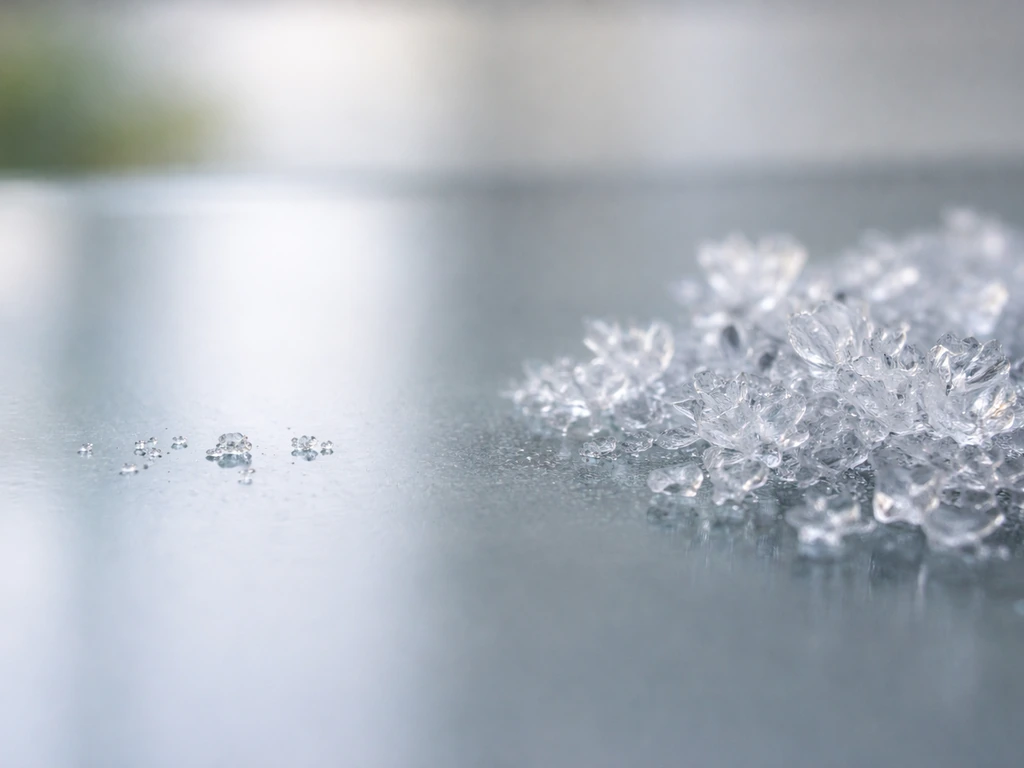
Crystal growth always starts with nucleation. A nucleus is the tiniest stable cluster of atoms or molecules arranged in the crystal pattern. Think of it as the founding committee: once enough members join in the right configuration, the group becomes stable and starts recruiting more. Before that threshold, the cluster is more likely to dissolve back into solution than to grow.
Nucleation can be homogeneous, meaning it happens spontaneously in a clean solution, or heterogeneous, meaning it is triggered by a surface such as a dust particle, the wall of a container, or a seed crystal you deliberately added. Heterogeneous nucleation has a much lower energy barrier because the existing surface does some of the geometric work that the new crystal would otherwise have to accomplish on its own. This is why a dirty jar produces a cluster of tiny crystals while a clean jar with a single seed crystal tends to produce one large one.
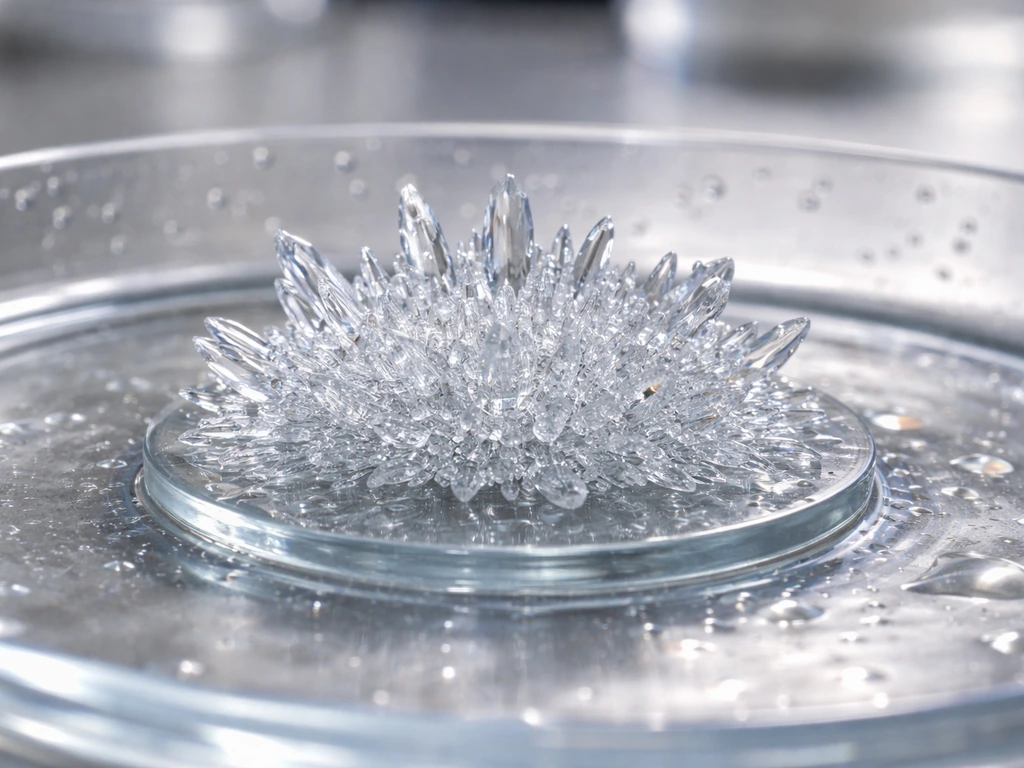
Once a nucleus exists, growth takes over. Solute molecules arrive at the crystal surface and attach at specific sites: steps, ledges, and kinks in the surface structure. At low supersaturation, growth typically proceeds through a spiral mechanism driven by screw dislocations, structural defects that create a permanent step on the crystal face. Because the step never fully closes, growth can continue even at very low supersaturation, sometimes as low as about 1 percent above equilibrium. At higher supersaturation, new islands of material nucleate directly on the flat crystal face, and at very high supersaturation, rough or dendritic (branching) growth takes over, producing snowflake-like shapes rather than smooth facets.
What conditions make crystals grow best
Four variables do most of the work: supersaturation, temperature, chemistry (especially pH), and the presence or absence of impurities.
Supersaturation
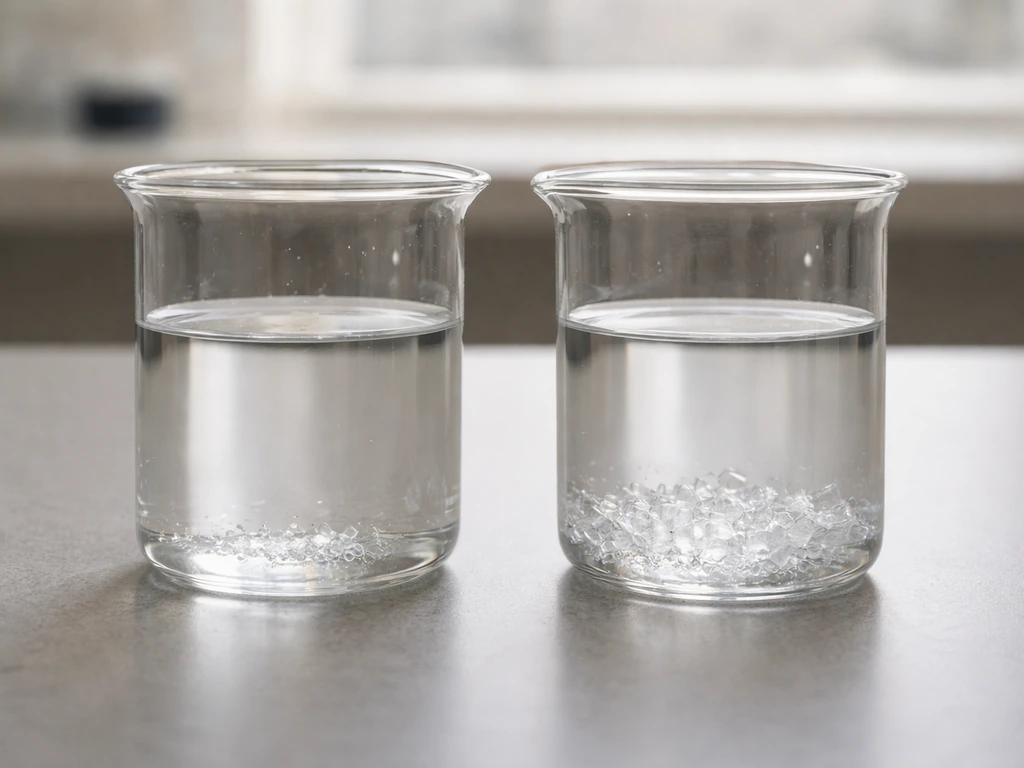
This is the master variable. Supersaturation is what drives material onto the crystal surface. The higher it is, the faster growth can be, but also the more likely you are to nucleate new crystals instead of growing existing ones. For practical crystal growing, you want to create supersaturation and then maintain it at a moderate level by cooling slowly, evaporating gently, or feeding in fresh solution.
Temperature
Temperature affects growth in two connected ways. First, most solids are more soluble in hot water than cold, so cooling a hot saturated solution creates supersaturation. Second, temperature directly controls growth rate: warmer solutions allow faster diffusion of ions to the crystal surface, but too much heat can reduce supersaturation to the point where growth slows. Slow, controlled cooling produces fewer, larger crystals. Rapid cooling creates many small ones.
pH and chemistry
pH shifts the solubility of many minerals dramatically. For quartz, increasing pH by several units can meaningfully change whether the system is supersaturated or undersaturated. For calcite, precipitation becomes favored above roughly pH 10.5 in some experimental systems. In natural settings, dripwater chemistry, CO2 concentration, and residence time in the host rock all control what gets dissolved and what precipitates. This is why how quartz crystals grow in hydrothermal veins looks so different from how halite crystals grow in an evaporating salt flat: the chemistry of the parent fluid is completely different.
Impurities
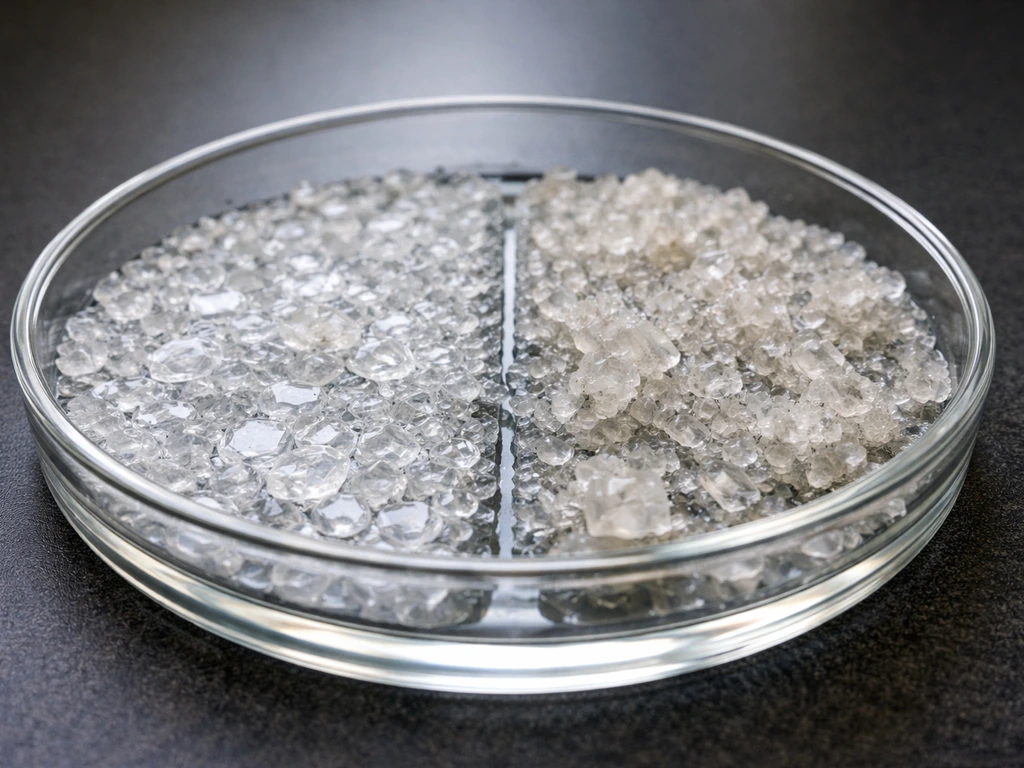
Foreign ions and particles can poison specific crystal faces, block step advancement, or redirect growth entirely. In natural carbonate systems, zinc and other trace metals incorporate into calcite at rates that depend on growth speed, pH, and adsorption affinity. At home, dust falling into your growing jar can seed unwanted nuclei and fragment your crystal into a crust rather than a single gem. Covering the container while still allowing slow evaporation is the practical fix.
How crystals grow in rocks
Geological crystal growth happens through several pathways, and the crystals you find embedded in rock tell a story about which pathway operated. Understanding how new minerals grow within existing rocks requires thinking about fluids moving through cracks, pressure changes, and long timescales.
Hydrothermal veins
Hot, mineral-laden water circulates through fractures in rock. As it moves into cooler zones or loses pressure, solubility drops and minerals precipitate, filling the fracture with crystalline material. Quartz veins form this way, as do calcite, fluorite, and many ore minerals. The slower the fluid cools and the more space it has to fill, the larger the crystals that form.
Pegmatites: nature's extreme crystal factories
Pegmatites are igneous rocks with extraordinarily coarse texture, often containing crystals larger than a meter. They form when water and volatile-rich fluids separate from a cooling granitic magma and fill fractures and pods near the top of the pluton. That fluid is a remarkably efficient delivery system: ions diffuse faster in fluid than in solid rock, and fluid can flow, so material reaches growing crystal surfaces quickly. Research on quartz in miarolitic cavities (pockets within pegmatites) shows that growth can happen in rapid episodes when thin chemical boundary layers at the fluid-crystal interface keep local supersaturation high. This connects to a broader question many people have about whether rocks grow in size: pegmatite crystals demonstrate that rock-hosted mineral growth is real, sustained, and sometimes surprisingly fast.
Evaporite sequences and sedimentary crystal growth
As described above, evaporite minerals crystallize directly from concentrated brines. These crystals grow at or near the surface of the brine, sink, and accumulate in layers. The same basic evaporation-concentration mechanism that explains why play-doh grows crystals after it dries out is at work here: removing water increases concentration until saturation is reached and crystallization begins.
Why crystals grow: the thermodynamic driver
Crystals grow because the crystalline state is thermodynamically more stable than the dissolved or molten state under the right conditions. IUPAC’s Solubility Data Series compiles and critically evaluates experimental solubility measurements from the reviewed chemistry literature, which helps connect these thermodynamic ideas to measured solubility behavior crystalline state is thermodynamically more stable. When a solution is supersaturated, the free energy of the system decreases as material moves from solution into the crystal lattice. The system is, in a sense, trying to reach equilibrium, and crystal growth is how it gets there. Growth stops when supersaturation is exhausted and the system reaches equilibrium. This is also why crystals can dissolve: if you add pure water to a crystal, the system is now undersaturated and equilibrium is reached by dissolving material back into solution.
The connection to geology is direct. Questions like how does rock grow and how do diamonds grow both bottom out in the same thermodynamic principle: a driving force (supersaturation, pressure, temperature gradient) pushes the system toward a lower-energy state, and crystal growth is the mechanism by which that happens. Remove the driving force, and growth stops.
Grow crystals yourself: a practical starting point
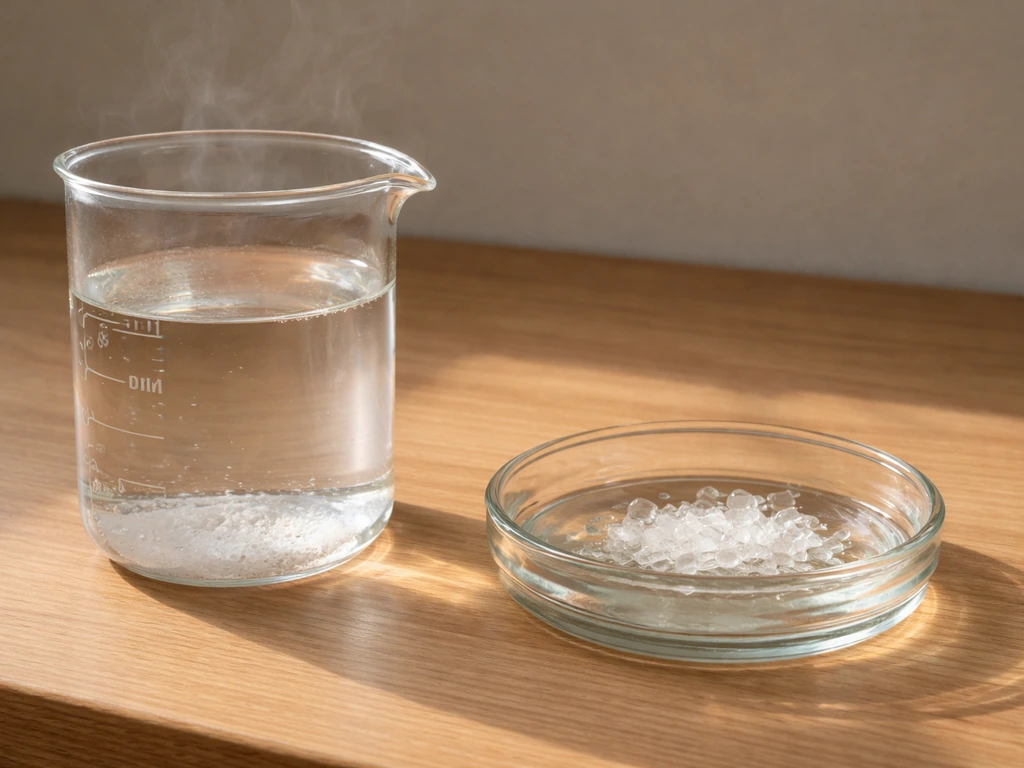
The best beginner crystal is potassium alum (aluminum potassium sulfate). It is inexpensive, non-toxic, widely available, and produces large, well-shaped crystals relatively quickly. Copper sulfate also works but is toxic and not a good choice for beginners or classrooms. Alum is the safe, reliable option.
The basic process
- Dissolve as much alum as possible in hot water (around 60 to 70°C). You are making a saturated solution at high temperature.
- Let it cool to room temperature undisturbed. Some small crystals will form on the bottom of the jar. These are your seed candidates.
- Pick the clearest, most geometrically sharp seed crystal and tie it to a nylon thread. Sharp edges and corners matter: they provide the step sites where growth happens fastest.
- Make a fresh saturated alum solution using hot water, let it cool slightly, and pour it into a clean jar.
- Suspend your seed crystal in the center of the solution so it does not touch the walls or bottom.
- Cover the jar loosely (a piece of foil or a coffee filter works) to keep out dust while allowing slow evaporation.
- Leave it undisturbed in a location with stable temperature. Vibration and temperature swings both disrupt growth.
- Check daily. You should see measurable growth within 48 hours, and a well-formed crystal over two to seven weeks.
What to control and why
| Variable | What to do | Why it matters |
|---|---|---|
| Supersaturation | Use a saturated solution, not an oversaturated slurry with undissolved powder | Dissolved powder adds uncontrolled nuclei and produces crust instead of a single crystal |
| Temperature | Keep the growing environment at constant room temperature; avoid sunny windowsills | Temperature swings create sudden supersaturation spikes that nucleate new crystals on your seed |
| Seed quality | Choose a transparent seed with sharp, well-defined faces | Good geometry creates clean step sites; cloudy seeds contain trapped impurities that disrupt growth |
| Contamination | Cover the jar; use clean containers; do not stir once growth starts | Dust particles trigger heterogeneous nucleation across the solution surface |
| Time | Plan for weeks, not hours, for a large crystal | Growth rate is limited by how fast supersaturation is maintained; slow evaporation keeps conditions steady longer |
If your crystal develops a rough, cloudy surface, the supersaturation was probably too high and rough growth took over. The fix is to briefly dissolve the surface layer by placing the crystal in slightly undersaturated solution for a few minutes, then return it to a fresh saturated solution at a more moderate concentration. If growth stops completely, your solution has reached equilibrium and needs a fresh dose of dissolved alum, or a slight drop in temperature, to restore supersaturation.
The same logic that drives your jar of alum on the kitchen counter drives a quartz crystal growing in a hydrothermal vein a kilometer underground. Supersaturation, nucleation, surface attachment, and depletion: those four steps are the whole story, scaled up from your kitchen to the geological timescale.
FAQ
Why did my solution stay clear and nothing grew for a long time?
If you start with a supersaturated solution, growth should begin once nucleation happens. In practice, a clean jar with no seed may sit for hours or days because the system needs an energy fluctuation big enough to form a stable nucleus. Adding a small seed crystal or scratching the container lightly (carefully, not while hot) can trigger heterogeneous nucleation and start growth faster.
What causes many tiny crystals instead of one or a few larger ones?
Cloudy “frosting” usually means you created too many new nuclei, not just that your original crystal grew poorly. To reduce this, lower supersaturation by using less solute than before, or increase control by cooling more slowly and keeping evaporation gentle. Also avoid disturbing the solution during the induction period after mixing and warming.
Does hotter water always make crystals grow faster?
For alum, don’t confuse higher temperature with higher growth indefinitely. If the solution becomes too hot and then cools unevenly, you can spike supersaturation locally and trigger rough nucleation. The best approach is to dissolve fully at warm temperature, then cool gradually in a draft-free spot, so supersaturation builds smoothly rather than in bursts.
My crystal surface became cloudy. Should I start over?
Over time, a growing crystal can accumulate tiny surface defects and impurities that change which faces advance, leading to roughness or truncated shapes. If the surface turns cloudy, briefly placing the crystal in slightly undersaturated solution can dissolve the damaged layer, then returning to moderately saturated solution helps restore smoother, more ordered growth.
How can I keep dust from ruining my crystals while still letting them grow?
Cover the container, but do not seal it airtight. Many home setups need very slow evaporation to maintain concentration. An airtight lid can trap CO2 and moisture changes, and it also increases the chance of unintended contamination settling on the lid rather than on the solution. A breathable cover (or loosely placed paper) helps keep dust out while allowing gentle water loss.
What should I do if crystal growth stops completely?
If growth stops, you have likely reached equilibrium (no supersaturation left) or you lost dissolved material due to premature nucleation. Reheat the solution just enough to dissolve remaining solids, then recrystallize by cooling again to recreate moderate supersaturation. In some cases, adding a small amount of solute and mixing thoroughly restores supersaturation without overshooting.
Why do my crystals look different even when I use the same chemicals and method?
Impurities can act as poisons for certain crystal faces, causing uneven growth or different habits (shape). If you’re getting inconsistent crystals from the same recipe, check for source-water differences (tap vs distilled), container residues from prior experiments, and unfiltered particles in the solute. Rinsing the container and using consistent water quality often improves reproducibility.
Do crystals keep growing forever if conditions seem favorable?
Yes, crystals can grow in ways that look “alive,” but they are not continuously growing in a stable environment. Growth is tied to being above equilibrium, and it can shift cycle by cycle as temperature changes, evaporation proceeds, or the solution composition drifts. If you want steady growth, minimize temperature swings and keep evaporation slow and consistent.
How do I choose the right concentration so I grow one big crystal instead of many small ones?
A key distinction is nucleation versus growth rate. High supersaturation increases growth rate per crystal, but it also increases the chance of new nucleation, which steals material from your existing crystal surfaces. For larger single crystals, aim for moderate supersaturation so fewer nuclei form, and let growth concentrate on the crystal you seeded.
Next Article
What Controls When and How Fast Cells Grow and Divide
Learn what controls cell division timing and speed: checkpoints, signals, resources, DNA damage, stress, and failure lea