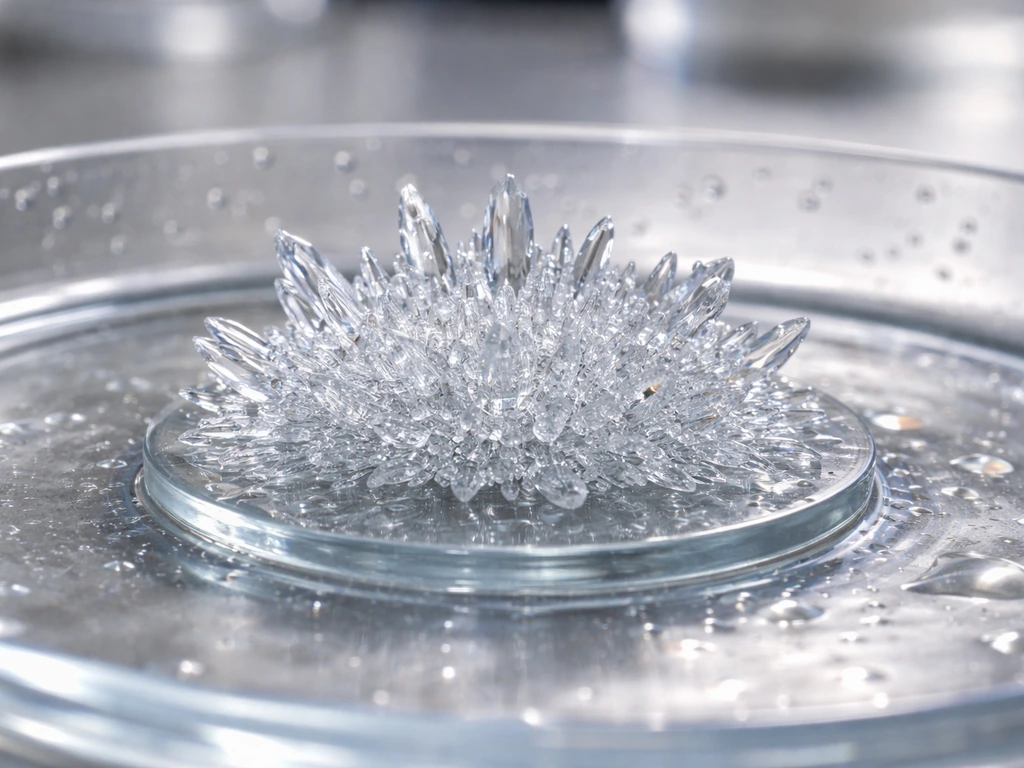
Rocks don't grow the way plants or animals do, but they absolutely do grow in a real, measurable sense. A rock can increase in size and mass through crystallization, sediment accumulation, cementation, and recrystallization under heat and pressure. These are physical processes governed by temperature, fluid chemistry, time, and available raw materials, and understanding them is the key to reading any rock you pick up off the ground.
How Does Rock Grow? Mechanisms, Limits, and Evidence

Marcus Whitmore
3 Apr 2026
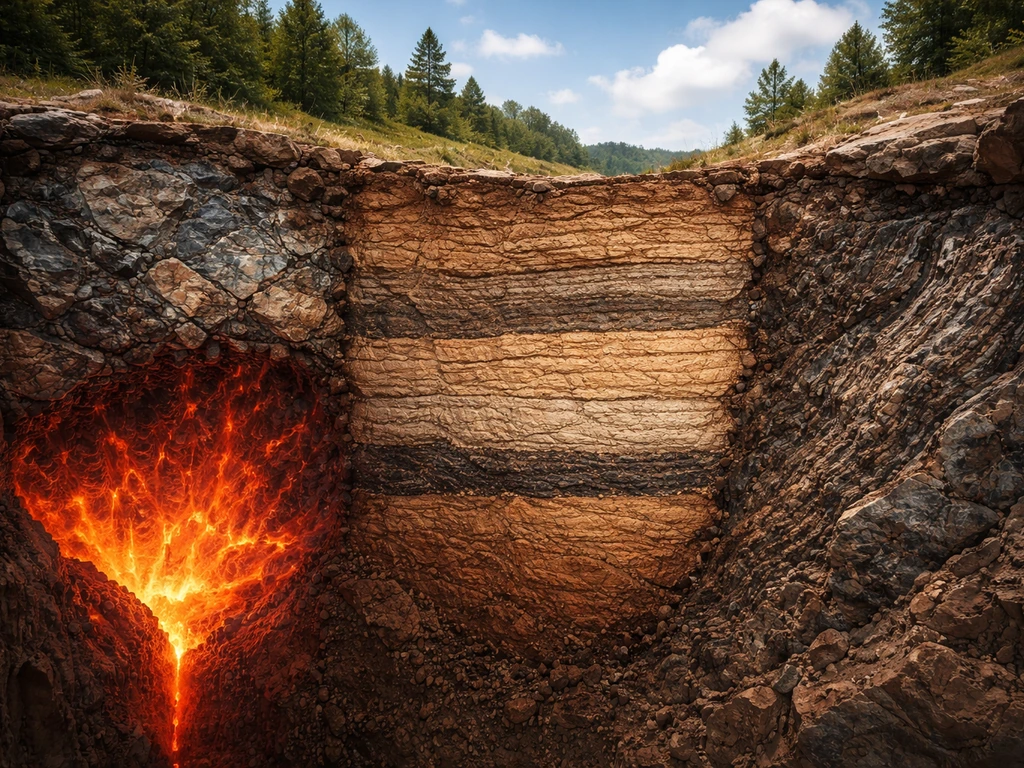
What 'rock growth' really means
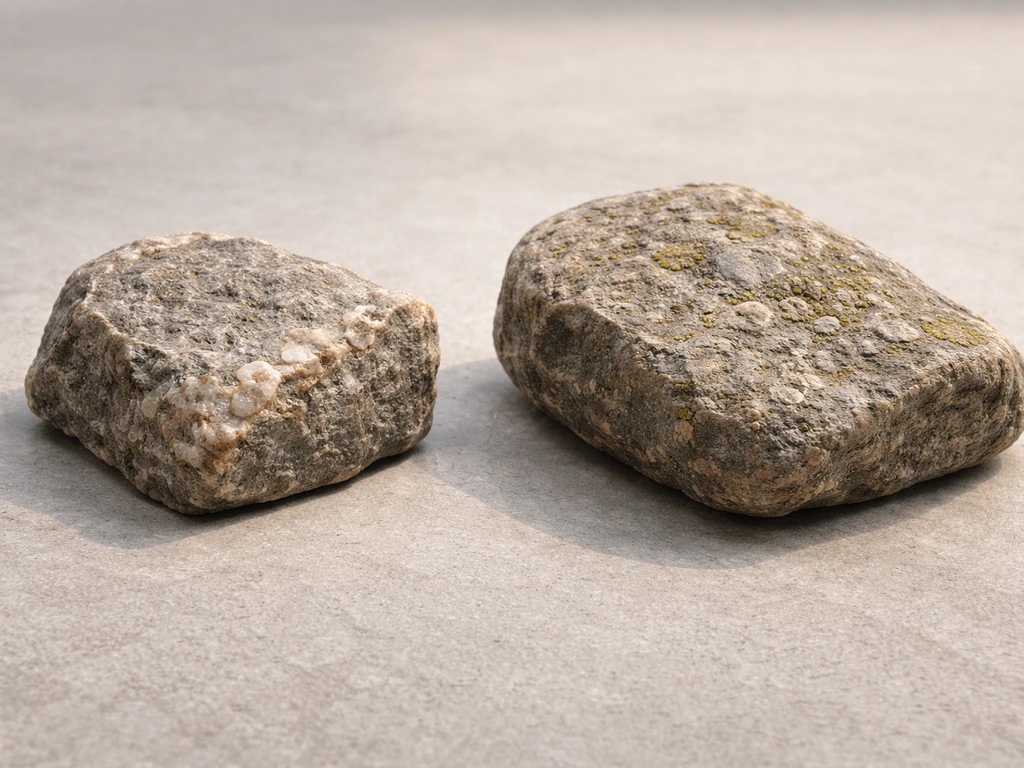
There are two fundamentally different things people mean when they ask whether rocks grow. The first is genuine material addition: new mass is added to a rock or a rock body gets physically larger. Think of a lava flow cooling into basalt, or calcite crystals slowly filling the pore spaces between sand grains. The second is reshaping: existing rock is broken down, transported, and reworked into new forms without any net gain in material. Erosion and weathering fall into this second category.
If you want to understand whether rocks actually grow in size, the honest answer is: yes, through specific geological processes, and no, not spontaneously. Rocks don't absorb nutrients and expand the way a tree does. But the mineral crystals inside them can grow, new layers can accumulate on top, and chemical cements can bind loose material into something solid and large. That's real growth by any physical definition.
Growing from magma: crystallization and why cooling rate matters so much
Igneous rocks grow when molten rock (magma or lava) cools and minerals crystallize out of the melt. The size of the crystals that form, and therefore the texture of the resulting rock, depends almost entirely on how fast that cooling happens. Slow cooling deep underground gives crystals time to grow large, producing coarse-grained rocks like granite. Rapid cooling at the surface produces very fine-grained or even glassy textures, like obsidian, because crystals barely have time to form before the melt freezes solid.
The physics behind this involves a balance between two competing rates: nucleation (how fast new crystal seeds form) and growth (how fast existing crystals expand). At small degrees of undercooling (cooling below the ideal crystallization temperature), nucleation rate is low but growth rate is moderate, so you get a few large crystals. Crank up the undercooling, and nucleation explodes while individual growth stalls, giving you thousands of tiny crystals. Water dissolved in the melt also plays a significant role. Experiments with felsic melts show that added water can delay nucleation and boost growth rates, which is part of why pegmatites, some of the most spectacularly large-crystal rocks on Earth, form from water-rich magmatic fluids.
The practical takeaway: if you find a rock with large, visible crystals, it cooled slowly. Tiny crystals or a glassy texture means rapid cooling. Crystal size is essentially a record of the rock's thermal history. This is also deeply connected to how crystals grow in general, since the nucleation-vs-growth competition operates the same way whether you're talking about magma or a saturated salt solution.
Growing from sediments: deposition, compaction, and cementation
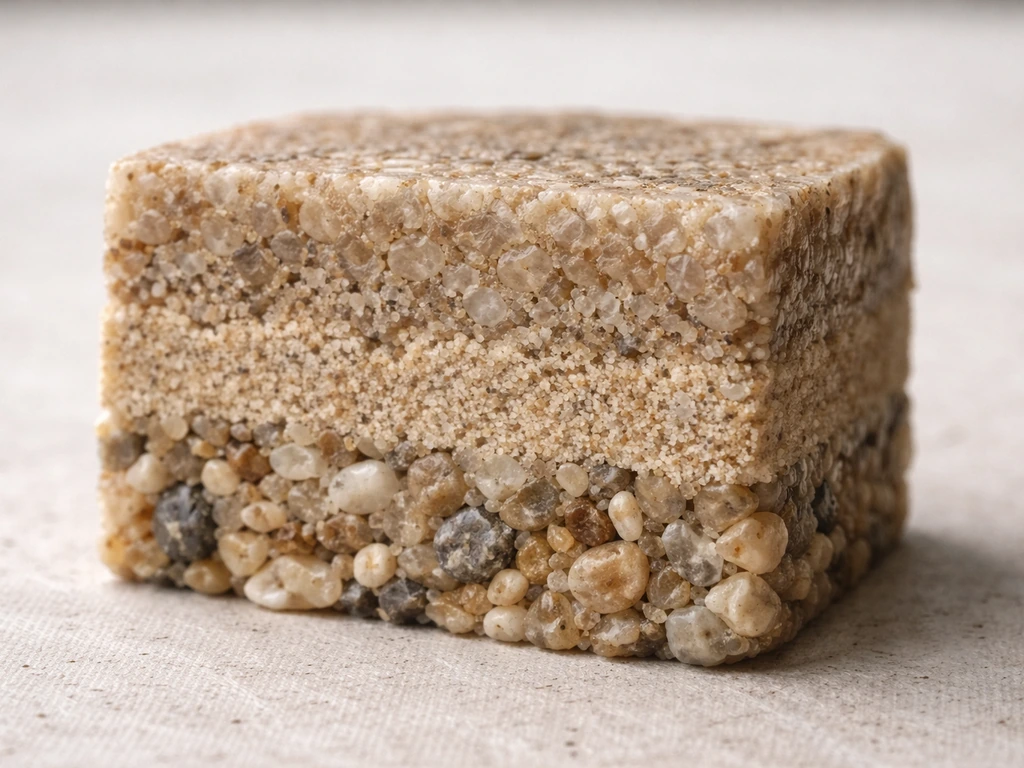
Sedimentary rocks grow through a fundamentally different process. It starts with weathering and erosion breaking existing rock into particles, which get transported by water, wind, or ice and eventually deposited somewhere. Layer by layer, sediment accumulates. Over time, the weight of new layers above compacts the sediment below, squeezing out pore water and pressing grains together. Then comes the step that really locks everything into rock: cementation.
Cementation is the precipitation of mineral material, most commonly calcite, silica, or iron oxides, into the pore spaces between grains. This happens primarily below the water table, where pore fluids carrying dissolved ions flow through the sediment. When those fluids are sufficiently saturated with respect to the cement mineral, precipitation occurs and the grains get welded together. This is the last stage in sedimentary rock formation, and it is genuinely a growth process: new mineral material is being added to the rock. The rate and extent of cementation depends heavily on pore-fluid chemistry, burial depth, and how long fluids continue to flow through the system.
A fascinating chemical version of this same process happens at the surface. Travertine and tufa, the beautiful banded or spongy rocks you see around hot springs and waterfalls, form when groundwater supersaturated with calcium carbonate loses CO2 to the air or through photosynthesis by algae. When CO2 escapes, the chemistry shifts and calcite precipitates directly from the water. You can watch this happening in real time at places like Mammoth Hot Springs in Yellowstone, where travertine terraces visibly grow by fractions of a centimeter per year. Understanding how new minerals grow within existing rocks helps explain why this cementation process is so chemistry-dependent: the same ionic saturation logic applies whether you're filling pore spaces deep underground or depositing a travertine crust at the surface.
Growing and changing via metamorphism: recrystallization under heat and pressure
Metamorphic rocks don't grow from scratch so much as they reorganize and recrystallize under the influence of heat, pressure, and chemically active fluids. When an existing rock is buried deep in the crust or caught near a magma intrusion, its minerals become unstable at the new conditions. They dissolve, react, and recrystallize into new mineral phases that are stable at higher temperatures and pressures. During this process, there's a general thermodynamic tendency for crystals to grow larger over time, because small crystals have a larger surface area relative to their volume, making them more soluble and less stable than larger ones. So metamorphism tends to coarsen grain size.
The rate at which this recrystallization happens is controlled by two competing bottlenecks. The first is the rate at which mineral surfaces can dissolve and grow (interface-controlled kinetics). The second, and often more limiting, is how fast elements can be transported between reacting grains through the medium between crystals (diffusion-controlled kinetics). When fluids are present, they dramatically speed up transport, acting almost like a highway for dissolved material. Water is the dominant crustal metamorphic fluid and is the primary reason metamorphic reactions can proceed at geologically reasonable rates at all.
This is also why the texture of a metamorphic rock tells you so much about its history. The large, well-formed garnet crystals in a schist grew because conditions were right for sustained recrystallization over a long time. The fine-grained, streaky texture of a slate tells you metamorphism was limited in intensity. For anyone curious about how this connects to other crystal-growth systems, the weathering that occurs when crystals grow inside rocks is actually a related phenomenon: crystal growth in confined spaces can generate enough pressure to fracture the surrounding rock, making crystal growth itself a geological force.
The conditions that control how fast (and how big) rocks grow
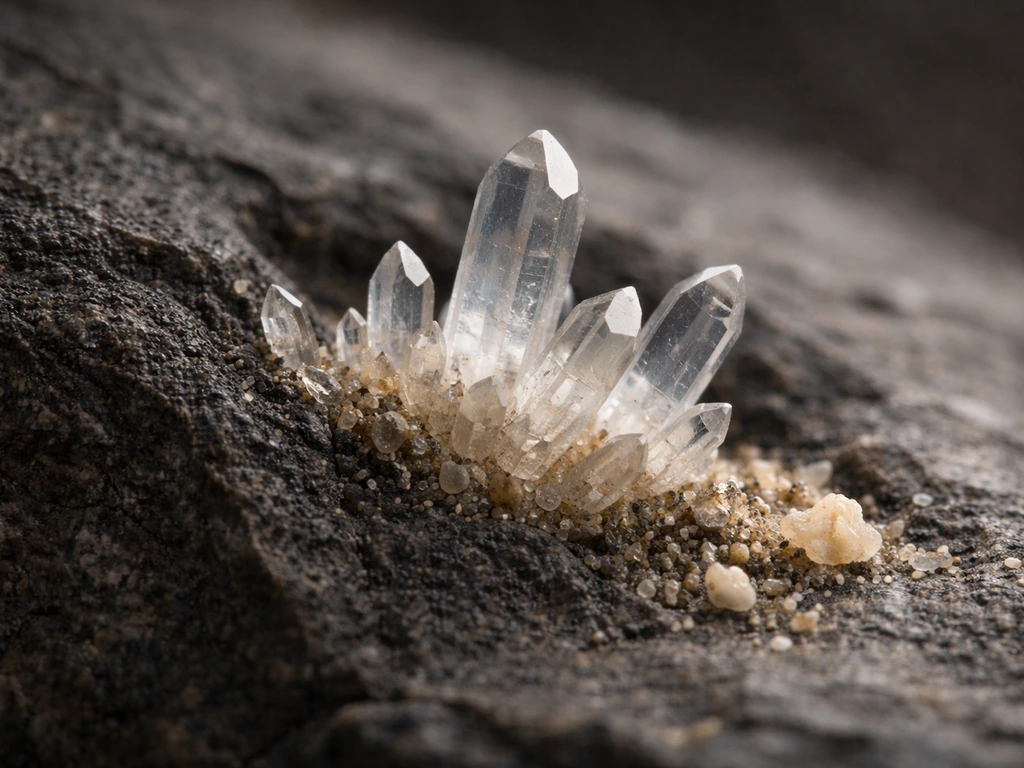
Across all three major rock-forming pathways, a handful of variables do most of the work. Temperature drives crystallization and metamorphic reactions: higher temperatures mean faster reaction rates and faster crystal growth, up to the point where things melt entirely. Pressure, especially in deep-crustal metamorphism, stabilizes certain mineral phases and forces recrystallization into denser structures. Fluid chemistry is arguably the most underappreciated factor: whether a system is supersaturated or undersaturated with respect to a given mineral determines whether growth or dissolution happens, and this flips with changes in temperature, pressure, or CO2 content. Time ties everything together. A crystal growing at a geologically slow rate still ends up large if it has millions of years to do so.
Quartz is a useful example because it's so common and so sensitive to these variables. How quartz crystals grow depends on silica saturation in the surrounding fluid, temperature, and available space. In a hydrothermal vein, quartz can grow centimeters long given the right fluid supply and time. In a rapidly cooling volcanic rock, it might only form microscopic grains. Same mineral, radically different outcomes based on conditions.
| Factor | Effect on growth | What limits it |
|---|---|---|
| Temperature | Higher temp = faster reaction and crystal growth rates | Too high and rock melts; too low and reactions stall |
| Pressure | Drives metamorphic recrystallization and compaction of sediments | Equilibrium reached when mineral assemblage stabilizes |
| Fluid chemistry | Supersaturation drives precipitation and cementation | Fluid depletion, equilibrium, or pH shift stops growth |
| Time | More time allows larger crystals and thicker sediment layers | Erosion, tectonic uplift, or cooling can interrupt the process |
| Available material | Sediment supply determines sedimentary rock thickness | Source rock depletion or transport cutoff ends accumulation |
What stops or reverses rock growth
Rock growth isn't permanent or guaranteed. Weathering and erosion are the primary forces working in the opposite direction. Weathering breaks rock apart in place, either physically (through freeze-thaw cycles, thermal expansion, or the pressure of crystal growth in cracks) or chemically (rainwater reacts with minerals, dissolving or transforming them into new, weaker materials). Erosion then transports those broken pieces away. The British Geological Survey draws a clean distinction here: weathering is the in-place breakdown, and erosion is the removal. Both work against rock growth.
For igneous rocks, cooling itself is the growth limiter. Once a magma body cools below the crystallization temperature of its remaining minerals, growth stops. If cooling is interrupted by renewed heating (say, a new magma pulse), growth can resume, but under most circumstances the system just freezes in place. For metamorphic rocks, the limiting factor is often equilibrium: once minerals have recrystallized into phases stable at the prevailing temperature and pressure, there's no longer a driving force for further reaction. Growth stalls until conditions change again. For sedimentary systems, growth stops when sediment supply is cut off, fluid chemistry shifts to undersaturation, or tectonic uplift brings the rock above the water table and cementation fluids dry up.
Diamonds are an extreme case worth mentioning here. How diamonds grow requires extraordinarily specific pressure and temperature conditions deep in the mantle, and the reason we don't find them growing at the surface is precisely because surface conditions immediately push them toward graphite (the stable form of carbon at low pressure). Growth conditions and stability conditions are not always the same thing, and that gap is what limits many minerals from growing indefinitely.
There's also a peculiar feedback worth noting for chemical sedimentary rocks like travertine and tufa. As calcite precipitates, it removes calcium and carbonate ions from the pore water, gradually bringing the fluid back toward equilibrium. Once the fluid is no longer supersaturated, precipitation stops automatically. The rock essentially regulates its own growth by consuming the chemical gradient that drives it. This is conceptually similar to the way a material like Play-Doh can unexpectedly develop crystals as dissolved salts reach saturation and then self-arrest once the driving chemistry is exhausted.
How to figure out which process made your rock
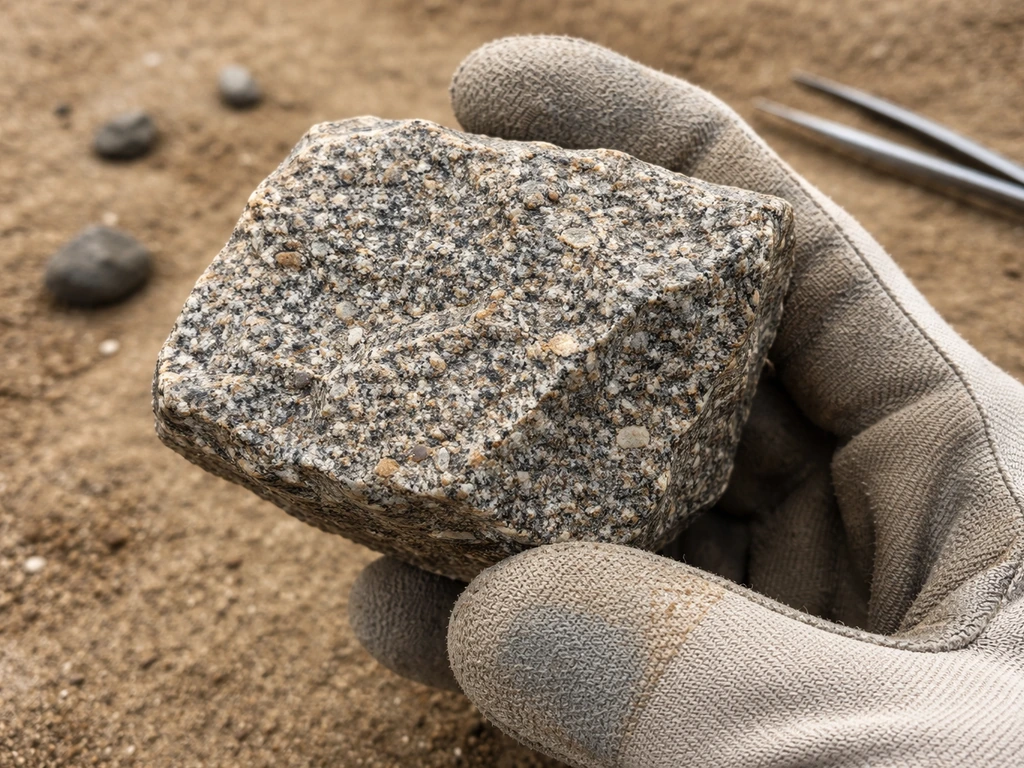
If you've got a rock in your hand right now, here's how to start reading it. Look at grain size first. Large, interlocking crystals that you can see with the naked eye suggest slow cooling from magma (intrusive igneous) or prolonged metamorphic recrystallization. Tiny grains or a glassy texture suggest rapid cooling (extrusive igneous). Visible layers or grains that look like they were rounded by transport point to sedimentary origin.
Next, look for cement. If you can see individual grains (sand, pebbles, shell fragments) held together by a different material filling the spaces between them, that binding material is chemical cement and you're looking at a sedimentary rock that grew through cementation. The cement is often a slightly different color or luster than the grains themselves.
For metamorphic rocks, look for foliation (parallel alignment of flat minerals like mica), banding, or large, well-formed crystals sitting inside a finer-grained matrix (these are called porphyroblasts and they represent sustained crystal growth during metamorphism). If the rock looks like it's been squashed and stretched, metamorphism is the likely culprit.
- Check grain size: coarse grains mean slow growth; fine grains or glass mean rapid cooling or limited recrystallization.
- Look for layering or rounded grains: these are hallmarks of sedimentary accumulation and transport.
- Look for cement between grains: a binding mineral filling pore spaces confirms chemical cementation growth.
- Check for foliation or porphyroblasts: alignment and large crystals in a fine matrix indicate metamorphic recrystallization.
- Note the minerals present: calcite (fizzes with vinegar), quartz (very hard, glassy luster), feldspar (flat cleavage faces) each point to different formation environments.
- Consider your location: are you near old volcanic terrain, a river delta, or a mountain belt? Geography narrows the list of plausible processes quickly.
- If the rock has vugs (small cavities lined with crystals), it grew from hydrothermal fluids that deposited minerals as they cooled or lost pressure.
The most useful next step for most people is to cross-reference the rock's appearance with a regional geologic map. The USGS publishes state and national geologic maps for free online, and even a basic one will tell you what rock units are in your area and what processes formed them. That one piece of context often resolves what you're looking at faster than any amount of hand-specimen examination alone.
If you want to go deeper on the crystal-scale mechanics of growth, the principles that govern igneous and metamorphic crystallization are the same ones at work in any crystal-forming system. The concepts of nucleation, supersaturation, diffusion limits, and interface kinetics apply whether you're studying granite or a lab experiment. Rock growth, at its core, is just crystal growth happening at a geological scale, governed by the same physics, just with a much longer clock.
FAQ
How can I tell whether a rock’s size increased by addition (growth) or mostly changed by reshaping (erosion/transport/compaction)?
It is rarely safe to say “this rock grew” based on appearance alone because reshaping can mimic growth. For example, compaction in sedimentary rocks reduces volume without adding much new material, while cementation increases bonding and mass. The quick test is whether there is a distinct cement phase bridging pores (growth by cementation) versus mostly grain rearrangement and loss of pore space (reshaping by compaction).
If a rock has big crystals, does that always mean it cooled slowly?
Yes, a rock can show large crystals but still have cooled relatively fast if the crystals formed in a separate event, like a late-stage mineral pulse or hydrothermal overgrowth on older grains. In those cases you can see crystal zoning, different mineral assemblages, or “overgrowth rims” with different textures than the host. So grain size is a clue to thermal history, not a one-to-one thermometer.
Why might I see tiny crystals even when I suspect cooling was not extremely fast?
Not necessarily. Some minerals can look “fine-grained” even when cooling was not extremely rapid, because limited space, high nucleation density, or water-rich fluids can change how many crystals form and how they grow. A better approach is to combine texture with mineralogy (what minerals are present) and any regional context, since water and fluid chemistry can strongly shift nucleation versus growth outcomes.
Can weathering ever make a rock appear to grow or harden, even though weathering usually breaks rock down?
Weathering can create minerals inside cracks and pores that look like they are “growing the rock,” but the rock often loses other material at the same time. For instance, chemical alteration can dissolve more soluble minerals and reprecipitate new ones, so the net change in rock mass depends on the balance of dissolution versus precipitation. If you care about net growth, look for evidence of both removed material (leaching, thinning) and newly precipitated cement (filled pores).
Does an obsidian-like glass always mean the magma cooled extremely fast everywhere in the body?
Glassy textures are usually a sign of very rapid quenching, but glass can also form when cooling is interrupted or when the melt experiences strong temperature drops. To avoid overinterpreting, check for whether the glass is pervasive (indicating fast quench of the whole melt) or localized (suggesting surface or late-stage melting). The cooling-rate inference is strongest when the glass is widespread and associated with little to no crystal development.
Why do two sandstones from the same area sometimes lithify differently?
Yes, cementation can be strong enough to preserve individual grains and even create strong, lithified rock, but it depends on whether pore fluids remained connected long enough and whether they were saturated with respect to the cement mineral. A common mistake is assuming all sandstones are cemented to the same degree. Look for variability: poorly cemented zones may have lost cement, while others show clear pore filling and stronger, darker, or different-luster bands.
If metamorphism tends to coarsen grain size, why can some metamorphic rocks still be very fine-grained?
Metamorphic “coarsening” often happens over time, but it is not guaranteed. If metamorphism is short-lived, fluid access is limited, or the rock’s composition strongly constrains reaction pathways, you may get fine textures with only partial recrystallization. Texture tells a story about kinetics and access to fluids, not just peak temperature and pressure.
Does “more fluid” always mean more crystal growth during metamorphism?
Water-rich fluids generally speed metamorphic reactions by enabling transport, but they can also change which minerals form by shifting chemical potentials and reaction pathways. That means more fluid can mean faster growth of particular phases, not just faster growth overall. If you see dramatic mineral changes across a boundary, it can indicate a fluid-focused event rather than purely thermal effects.
If metamorphism reached equilibrium, can any later growth still occur?
In most cases, yes, because equilibrium and driving forces matter. Once minerals reach the stable assemblage for the prevailing temperature and pressure, additional growth has little thermodynamic incentive unless conditions change, like heating, cooling, or changes in fluid composition. A practical way to look for later growth is to check for overgrowth minerals, cross-cutting veins, or new crystal generations that sit on earlier textures.
Why does travertine sometimes grow in bands or stop and restart?
On surfaces like travertine terraces, growth can self-arrest when the fluid stops being supersaturated, but it can restart if fresh water with higher dissolved carbonate arrives, CO2 exchange changes, or biological activity alters chemistry. So “growth stops” can be temporary. Look for banding or interrupted layers that record fluctuating saturation conditions over time.
What is the fastest practical way to decide whether I’m looking at true growth or mainly geological reshaping?
The safest “decision rule” is that cementation, mineral precipitation in pores/veins, and recrystallization during metamorphism represent true material addition or internal rebuilding, while erosion and transport mainly change shape and position. When you can see pores being filled by a different material, that is the clearest evidence for growth. When you mainly see grain rounding, sorting, or flattening without obvious pore filling, that points more to reshaping.
How should I use a geologic map to answer “how does rock grow” for the rock I’m holding?
A regional map does not just identify rock units, it can tell you the likely process environment, like whether you are near an intrusive body (more igneous crystal growth), a metamorphic belt (recrystallization, foliation), or a basin setting with likely cementation (sedimentary lithification). Pairing map context with what you see in hand specimen avoids common misreads, especially when a rock has been reworked multiple times.
Next Article
How Do Crystals Grow: Conditions, Processes, and Steps
Learn how crystals grow in solutions, melts, and vapor, including nucleation, conditions, and how to grow at home.