Quartz crystals grow by adding dissolved silica, atom by atom, onto an existing crystal surface under the right conditions of temperature, pressure, and fluid chemistry. That sounds simple, but the details matter a lot, especially if you want to understand why natural quartz takes thousands to millions of years to form, and why replicating it at home is genuinely difficult. Let's break it all down.
How Do Quartz Crystals Grow: Conditions, Processes, and Locations
Marcus Whitmore
17 Apr 2026
What quartz actually is, and what 'growth' means here
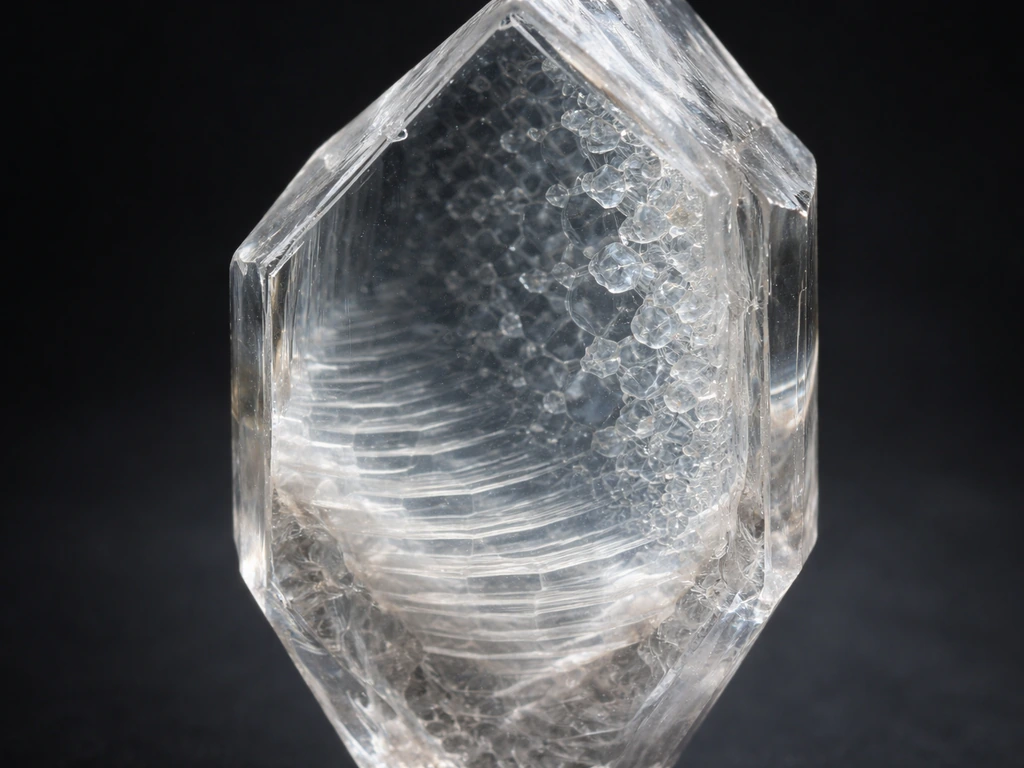
Quartz is silicon dioxide (SiO₂), but that formula undersells how it is put together. The structure is a continuous 3D framework of SiO₄ tetrahedra, where every silicon atom sits at the center of four oxygen atoms, and every oxygen is shared between two neighboring tetrahedra. The result is a rigid, covalently bonded lattice, not just a clump of solidified silica. That framework is what makes quartz so hard and chemically stable.
When we say quartz 'grows,' we mean something specific: dissolved silica species in a surrounding fluid re-attach to particular crystallographic lattice sites on an existing quartz surface, progressively extending that lattice one SiO₂ unit at a time. This is not like a plant growing or a cell dividing. It is a physical process driven entirely by chemistry and thermodynamics. Understanding that distinction helps you see why conditions have to be just right, and why getting those conditions wrong gives you nothing useful. If you want the bigger picture of how crystals grow in general, the same core logic applies across many mineral types.
Where quartz crystals form in nature
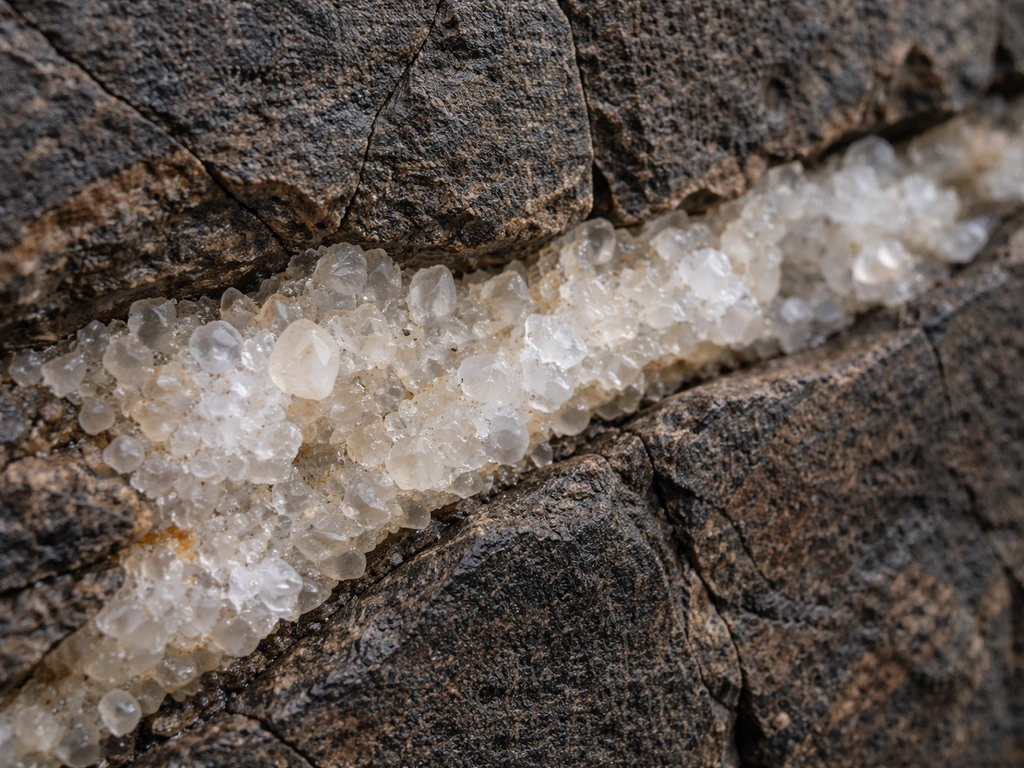
Quartz shows up in a surprisingly wide range of geological environments. The common thread in all of them is silica-rich fluid and enough time for precipitation to happen.
- Hydrothermal veins: Hot, mineral-rich water circulates through fractures in the crust. As it cools, quartz precipitates out and fills those fractures. Fluid inclusion studies show vein-filling temperatures commonly ranging from about 120°C to over 315°C depending on the system.
- Pegmatites: These are coarse-grained igneous rocks that form from the last, water-rich fraction of a cooling magma. The high water and silica content produces giant crystals, sometimes meters long.
- Metamorphic rocks: During regional metamorphism, pressure and heat drive silica out of minerals and into fluids, which then recrystallize as quartz veins or grains within the rock.
- Diagenetic/sedimentary settings: In buried sandstones, silica dissolved from mineral surfaces reprecipitates as quartz overgrowths on existing quartz sand grains, cementing the rock together over millions of years.
Each of these settings involves the same basic recipe: a source of dissolved silica, a fluid to carry it somewhere, and a change in conditions that pushes the fluid past its solubility limit so quartz precipitates. This is also why how rock grows is closely tied to mineral crystallization: rocks are not static objects but dynamic systems where minerals can dissolve, migrate, and recrystallize over geological time.
Yes, quartz crystals really do grow: what happens at the atomic level
Think of a quartz crystal surface like a partially built brick wall. Each 'brick' is an SiO₄ tetrahedron. Growth happens when a dissolved silica molecule, specifically monosilicic acid (H₄SiO₄) in most natural systems, drifts in from the surrounding fluid, finds an energetically favorable site on that surface, and bonds in. The reaction looks like this: SiO₂(quartz) + 2H₂O ⇌ H₄SiO₄. Run the reaction forward, you get dissolution. Run it backward, you get growth. The direction depends on whether the fluid is supersaturated or undersaturated with respect to quartz.
The quartz surface itself is not a passive player. It is covered in silanol groups (Si-OH) and siloxane bridges (Si-O-Si). The protonation state of those silanol groups changes with pH, which directly affects how readily new silica units can attach. Under alkaline conditions, surface sites deprotonate to Si-O⁻, which creates a different reactivity compared to near-neutral pH where Si-OH dominates. Different crystal face terminations even have different silanol pKa values, meaning growth rates can vary face by face, which is part of why quartz crystals develop their characteristic hexagonal prism shape.
Nucleation is a separate challenge. Before you can grow a quartz crystal, you need a seed, either an existing crystal or a tiny nucleus that forms spontaneously. Spontaneous nucleation of quartz is famously slow. One reason natural quartz often takes so long to form is that getting that first stable nucleus going requires overcoming a significant energy barrier. Once a seed exists, layer-by-layer growth can proceed much faster, which is exactly why industrial quartz growers always start with a seed crystal rather than trying to nucleate from scratch.
The conditions quartz needs to grow
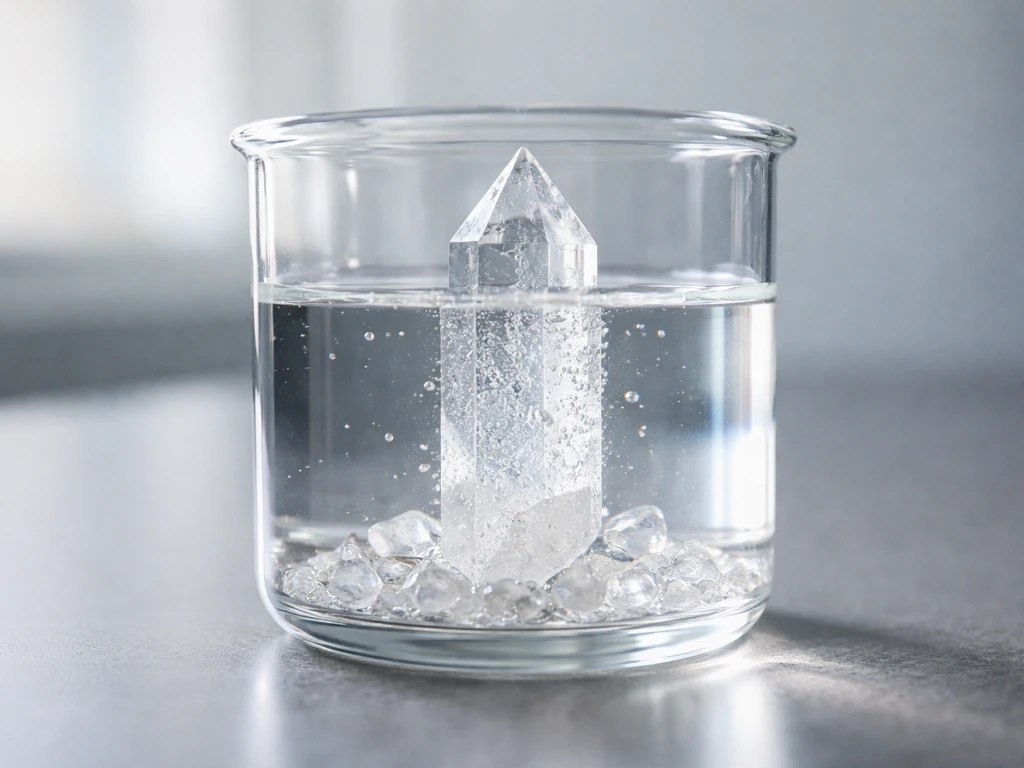
There is no single magic formula, but every quartz growth environment shares a set of key variables. Get them wrong and you get either no growth or a glassy amorphous silica precipitate instead of true crystalline quartz.
| Condition | What it does | Typical natural range | Lab/industrial target |
|---|---|---|---|
| Temperature | Controls silica solubility and reaction kinetics | 120°C to 315°C+ in hydrothermal veins | ~350–400°C hot zone, ~355–369°C growth zone in autoclaves |
| Pressure | Keeps water liquid at high temperature; affects solubility | ~0.3–0.5 kbar in some vein systems | ~21,000 psi (~1.4 kbar) in commercial autoclaves |
| Silica concentration | Must exceed solubility limit (supersaturation) to drive growth | Varies; quartz solubility ~6 mg/L at 25°C, ~26 mg/L at 84°C | Controlled by dissolving nutrient quartz in hot zone |
| Fluid chemistry/pH | Alkaline conditions increase quartz solubility and surface reactivity | Mildly to strongly alkaline in hydrothermal fluids | ~1.0 M NaOH ± small LiOH addition |
| Seed crystal | Provides nucleation site, bypasses slow spontaneous nucleation | Existing grain surfaces in natural systems | Pre-oriented seed crystal mounted in autoclave |
The solubility numbers are worth pausing on. At room temperature, quartz dissolves at only about 6 mg per liter of water. Raise the temperature to 84°C and that climbs to about 26 mg/L. Commercial hydrothermal synthesis pushes temperatures to 355–400°C in a sealed autoclave, which drives solubility high enough to dissolve nutrient quartz quickly in the hot zone, then transport that dissolved silica to a slightly cooler seed zone where supersaturation drives precipitation. That temperature gradient is the whole trick. Hydrothermal synthesis relies on a temperature gradient: nutrient solute dissolves at a hotter end and crystallizes at a cooler end on a seed as supersaturation is reached blank" rel="noopener noreferrer">That temperature gradient is the whole trick..
The mechanisms that actually move silica from fluid to crystal
The big-picture process is dissolution, transport, and precipitation, usually abbreviated as DTP. In a hydrothermal system, source rock or 'nutrient' quartz dissolves in hot, alkaline fluid. That fluid migrates (driven by temperature gradients, pressure gradients, or both) into a cooler zone. As temperature drops, the fluid's ability to hold dissolved silica decreases, it becomes supersaturated, and silica precipitates onto available surfaces. This same DTP cycle explains how new minerals grow within existing rocks: the process is fundamentally about fluid-mediated mass transfer.
Alkaline mineralizers play a key role in both natural and lab settings. Alkaline solutions (NaOH, Na₂CO₃) increase quartz solubility by promoting the reaction: quartz + OH⁻ + H₂O ⇌ H₃SiO₄⁻. USGS describes a method for calculating quartz solubility in aqueous sodium chloride solutions and shows how quartz solubility varies with conditions, including water activity Alkaline solutions (NaOH, Na₂CO₃) increase quartz solubility. This shifts more silica into solution, allowing the fluid to carry a higher payload of dissolved silica to the growth zone. It is the same reason that strongly alkaline industrial cleaners can etch glass over time, glass being an amorphous silica product.
At the crystal surface itself, growth proceeds layer by layer. Dissolved silica attaches preferentially at step edges and kink sites on the crystal face, because those sites offer more bonding opportunities than a flat terrace. This step-flow growth mechanism produces the smooth, well-defined faces characteristic of gem-quality quartz. When growth is too fast or the fluid is too contaminated, defects multiply and you get cloudy, inclusion-rich crystals. This is also related to the weathering that occurs when crystals grow: as new quartz precipitates in a rock, it can push outward against surrounding minerals, creating mechanical stress that promotes fracturing and weathering of the host material.
Nucleation: the step everyone forgets
Nucleation is where many growth attempts, both in labs and in nature, stall out. Research on quartz nucleation confirms that secondary nucleation (spontaneous formation of new quartz nuclei from solution) is exceedingly slow compared to growth on an existing surface. In practice, this means you need a seed. In natural hydrothermal systems, tiny existing quartz grains, broken crystal fragments, or even mineral surfaces with a compatible lattice geometry serve as seeds. In industrial production, carefully oriented seed crystals are mounted in the cooler zone of the autoclave precisely to skip the nucleation bottleneck entirely.
This is the same reason that why Play-Doh grows crystals is an interesting demonstration: salt crystals nucleate readily on the clay surface as water evaporates, providing a visible model of nucleation and growth that does not require extreme conditions. Quartz is far pickier, which is why it does not appear in your Play-Doh experiments.
Growing quartz in a lab or at home: what it really takes
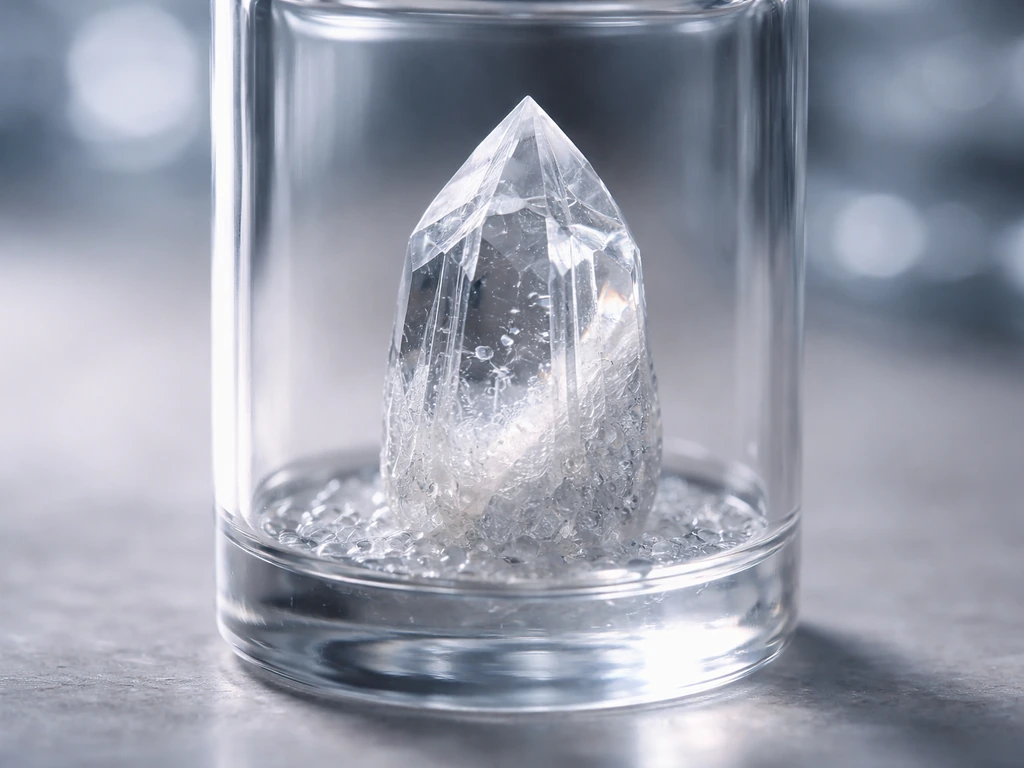
Let me be direct: true hydrothermal quartz crystal growth cannot be done safely at home. The conditions required, temperatures above 350°C and pressures around 21,000 psi in a sealed autoclave with caustic alkali solutions, are genuinely dangerous and require industrial-grade pressure vessels. This is not a project for a kitchen setup or a school lab without specialist equipment.
Professional hydrothermal quartz synthesis uses a steel autoclave with a hot zone (around 400°C) where nutrient quartz dissolves in roughly 1.0 M NaOH solution, and a cooler seed zone (around 355–360°C) where supersaturation drives precipitation onto oriented seed crystals. The fill factor, how much of the autoclave volume is occupied by fluid, is around 80%. The temperature gradient between the two zones is kept small but precise, typically 10–50°C. Larger gradients produce faster but lower-quality growth. This is also why how diamonds grow follows a conceptually parallel process: extreme pressure and temperature, carefully controlled chemistry, and a seed substrate to guide crystal formation.
What you can safely explore at a home or school level is the related chemistry of silica precipitation and dissolution using sodium silicate solution (water glass), which is widely available. By adjusting pH and temperature carefully, you can observe amorphous silica precipitation and explore how solution chemistry affects whether silica stays dissolved or comes out of solution. This will not produce quartz crystals, but it demonstrates the same dissolution-supersaturation-precipitation logic at play in every quartz-forming environment.
How to tell if growth is happening (and what stops it)
Signs that growth is occurring
- New material depositing on seed crystal faces, visible as a thin transparent overgrowth layer distinct from the original seed (often with a slightly different refractive appearance under magnification).
- Crystal habit becoming more defined: edges and faces sharpen as growth fills in rough spots on the seed surface.
- Solution gradually clearing as dissolved silica is removed from the fluid by precipitation.
- In sodium silicate experiments, white amorphous precipitate forming when pH is shifted toward neutral confirms supersaturation has been crossed, even if the product is not crystalline quartz.
What commonly blocks growth
- Insufficient supersaturation: if dissolved silica concentration does not exceed the solubility limit for your temperature and pH, you get dissolution or nothing. The fluid needs to be above its saturation point to deposit material.
- Wrong pH: too acidic and the surface silanol groups stay protonated, reducing reactivity. Too far into strongly alkaline territory without careful control and you dissolve your seed faster than you grow it.
- No seed or nucleation site: without an existing surface, quartz nucleation from solution at low temperatures is so slow it is effectively zero on human timescales.
- Temperature instability: fluctuating temperatures shift the solubility equilibrium back and forth, producing alternating dissolution and precipitation cycles that build up defect-rich, cloudy material.
- Contamination: dissolved impurities, especially organics, can poison crystal faces by blocking attachment sites, producing poor-quality or completely suppressed growth.
Practical next steps for learning more
If your goal is to understand quartz growth deeply, start with the chemistry. Get comfortable with the dissolution reaction (SiO₂ + 2H₂O ⇌ H₄SiO₄) and what shifts it left or right. Then work through how temperature and pH change silica solubility. The solubility numbers, about 6 mg/L at 25°C up to 26 mg/L at 84°C, are not just trivia: they tell you directly why low-temperature attempts barely move any silica at all.
If you are interested in the geological side, looking at thin sections of hydrothermal veins or sandstone cements under a polarizing microscope is genuinely one of the best ways to see quartz growth recorded in rock. Quartz overgrowths on detrital grains in sandstone are textbook examples of diagenetic growth, and they are visible in any good petrography collection. This also connects to the question of whether rocks grow in size: they do not grow the way organisms do, but mineral crystallization and cementation do cause measurable changes in rock volume and texture over time.
For hands-on experimentation, a sodium silicate chemistry kit gives you a safe, controllable way to explore silica precipitation. You can test how changing pH (using dilute acid like vinegar or a dilute base like baking soda solution) affects whether silica comes out of solution. Observe how temperature changes shift the equilibrium. These experiments will not produce quartz, but they will give you genuine intuition for the chemistry that governs quartz formation in every natural environment on Earth.
Finally, if you want to go deeper into how crystal growth fits into the broader story of how minerals and rocks change over time, the topic connects naturally to larger questions about geological growth processes. Understanding the atomic mechanism of quartz growth is one piece of a much larger puzzle about how the materials world builds and rebuilds itself, and that puzzle is worth following wherever it leads you.
FAQ
Why does quartz crystallization fail if I only change temperature but not solution chemistry?
Quartz growth requires supersaturation at the crystal surface, but “more heat” is not automatically better. In practice, you tune concentration and pH so that the fluid is capable of dissolving silica in the hot zone, then becomes supersaturated when it cools slightly, allowing precipitation on existing seeds rather than forming random new particles.
How can I tell whether silica precipitated is actually quartz rather than amorphous silica?
Fast-looking precipitates are often not quartz. If the solution chemistry stays out of the right window (for example, pH too low or impurities that disrupt ordering), you can end up with amorphous silica gel or very small, cloudy aggregates. True quartz requires crystal-favoring conditions plus a surface that can propagate the lattice.
What role does seed orientation play in how quartz crystals grow?
The “seed” matters because quartz growth is strongly surface-site dependent, especially step edges and kinks. Using a seed with the right orientation can promote the characteristic prism development and reduce defect density, which is why industrial methods mount oriented seed crystals instead of relying on spontaneous nucleation.
Can high growth rates still produce worse quartz crystals, and why?
Yes. In layered, step-flow growth, species transport can be slow enough that a boundary layer forms, effectively limiting how fast material reaches the step edges. Large gradients can outpace ordering, increasing defect formation, so higher growth rate can correlate with poorer clarity and more inclusions even when quartz eventually forms.
How does pH change the growth shape of quartz, not just the overall growth speed?
pH changes the protonation state of surface silanol groups, which alters how strongly and quickly dissolved silica attaches to different face terminations. Even if bulk solution conditions look similar, small pH shifts can change which faces grow faster, modifying crystal habit and growth zoning.
Why do natural quartz crystals often show banding or growth zoning?
Because natural systems rarely reach a perfectly steady state, growth often proceeds with interruptions and compositional fluctuations. That leads to growth zoning (bands), micro-inclusions, and sometimes stacked sectors on a single crystal, even if the overall environment stays hydrothermal.
How do impurities affect whether quartz growth stays clean and defect-free?
Many impurities that are harmless at low levels can be disruptive at crystallization-relevant concentrations. Ions that complex silica or adsorb onto active growth sites can slow attachment or alter step-flow, increasing turbidity and defects. This is one reason “clean” lab solutions and controlled reagent purity are critical for quartz synthesis.
What causes secondary nucleation, and how is it prevented in controlled growth?
If supersaturation occurs throughout the solution, you get widespread secondary nucleation and fine particulates instead of epitaxial growth on your seed. Keeping nucleation suppressed while promoting precipitation at the seed requires a careful balance of concentration, pH, and temperature profile.
If I cannot grow quartz safely at home, what sodium silicate observations still teach the right growth principles?
Even without making quartz, sodium silicate experiments can demonstrate the same logic by showing whether the system approaches equilibrium (dissolved silica) or goes past it (precipitation). For a clearer signal, use dilute, buffered conditions and monitor consistency rather than chasing aggressive concentration changes that just gel the solution.
Can heating time and temperature cycling change the final quartz outcome even if the chemistry stays the same?
Quartz can dissolve and re-precipitate during heating and cooling, so “what you started with” can differ from “what ended up crystallizing.” If you hold conditions too long or cycle temperatures, you may dissolve newly formed material and repattern growth, changing crystal size and defect structure.
Next Article
Why Does Play-Doh Grow Crystals and How to Stop It
Play-Doh crystals form from dissolved residues like salt or sugar via supersaturation and evaporation. Stop them by dryi