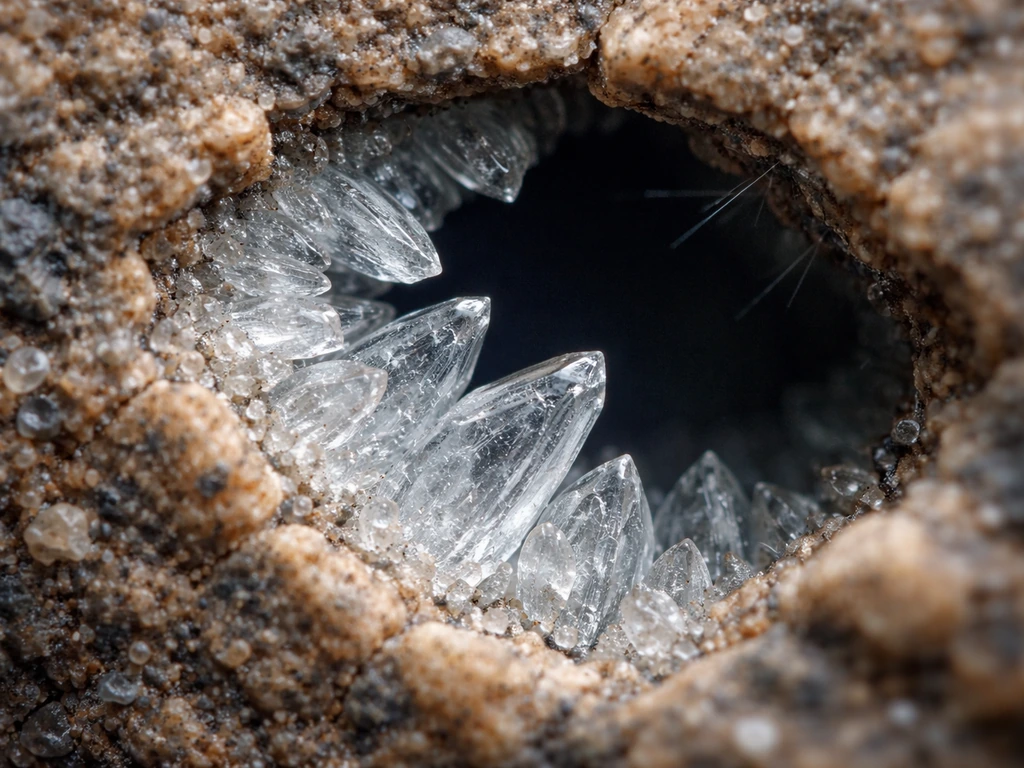
No, rocks do not grow the way living things do. A rock sitting on your windowsill will not get bigger tomorrow, next year, or in a decade. There is no cell division happening inside it, no metabolism pulling in nutrients, no biological engine driving expansion. But here is where it gets genuinely interesting: rock bodies, formations, and the minerals inside rocks absolutely can increase in size and mass over geological time. The question is not really "do rocks grow?" but rather "what processes make them bigger or smaller, and how long does that take?"
Do Rocks Grow in Size? How Rock Bodies Change Over Time

Marcus Whitmore
14 Apr 2026
The direct answer: rocks grow, just not like you do
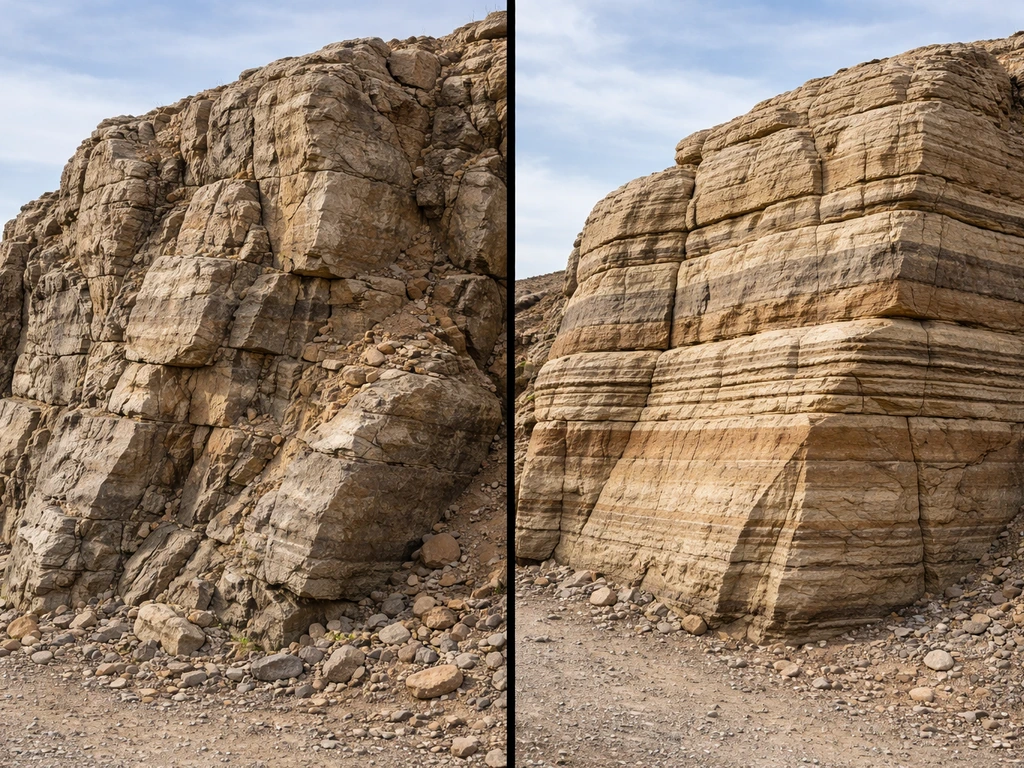
A rock is not alive. It has no cells, no DNA, and no mechanism for biological growth. What it does have is a place inside Earth's rock cycle, where material is constantly being added, removed, compressed, dissolved, melted, and recrystallized. So when people ask whether rocks grow in size, the honest answer is: individual rock specimens don't grow on their own, but rock formations and the minerals within rocks can and do increase in size through very specific geological processes. Think of it less like a plant growing toward sunlight and more like a sandbar building up in a river, grain by grain, over thousands of years.
"Growth" means something different in geology
In biology, growth means an organism takes in energy and materials, builds new cells, and gets physically larger as a result. In geology, "growth" refers to processes that add material, change structure, or increase the size of a mineral, a rock layer, or a geological formation. These are fundamentally different. Biological growth is driven by metabolism and directed by genetic instructions. Geological "growth" is driven by physics and chemistry: heat, pressure, fluid movement, and the slow transfer of Earth's materials from one place to another.
The rock cycle is the right framework here. Rocks continuously form, change, and break down through processes like weathering, erosion, sedimentation, cementation, and metamorphism. None of these involve anything alive, but they do result in rock bodies that can grow thicker, denser, or more massive over time. To understand how rock grows in this geological sense, you need to look at each of these processes individually.
Processes that make rocks bigger or more massive
Crystal growth inside igneous rocks
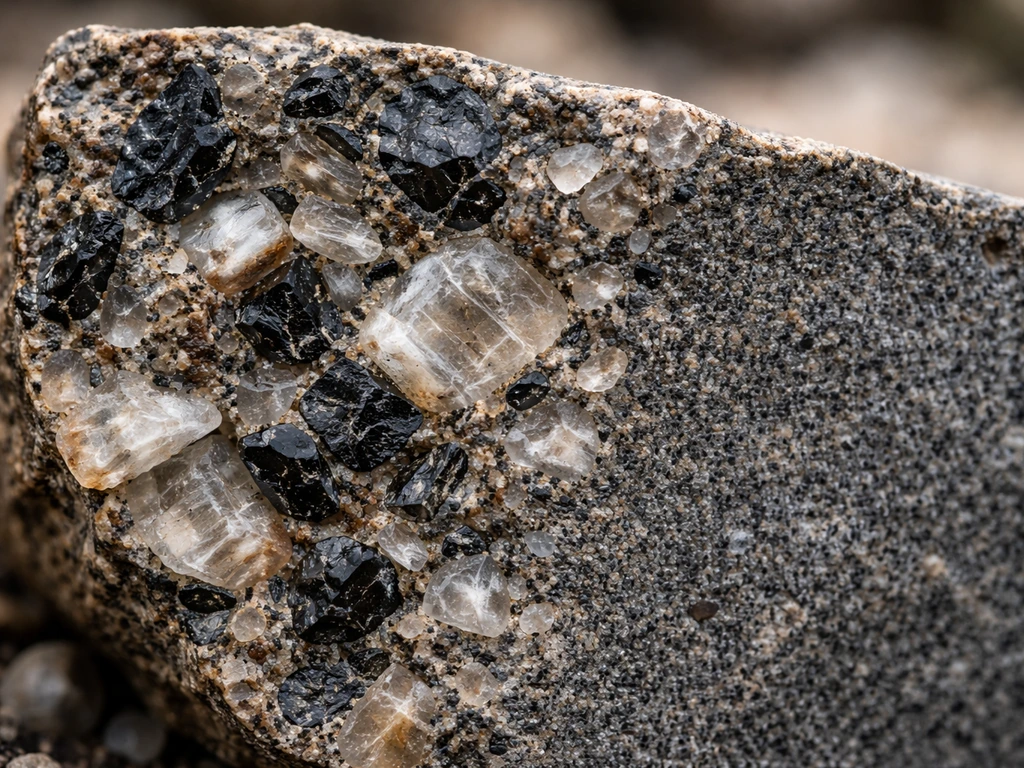
When magma cools slowly deep underground, mineral crystals have time to grow larger. The slower the cooling, the bigger the crystals, and the coarser the grain size of the resulting igneous rock. This is a real, measurable form of growth at the mineral level. Rapid cooling, like when lava erupts at the surface, produces small crystals because there simply is not enough time for them to develop. So the cooling environment directly controls how large the crystals inside a rock can become. If you want to see what how quartz crystals grow looks like in practice, the same principle applies: more time and the right chemical conditions equal bigger crystals.
Mineral growth inside rocks does not stop at solidification, either. When fluids move through existing rock, they can carry dissolved minerals into pore spaces or fractures, where those minerals then precipitate out and grow. This can happen through continuous nucleation, where new crystals keep forming, or through a process called Ostwald ripening in closed systems, where larger crystals grow at the expense of smaller ones. The result is a rock with a different internal structure, and sometimes a larger or denser mineral framework than it had before.
Sediment deposition and lithification
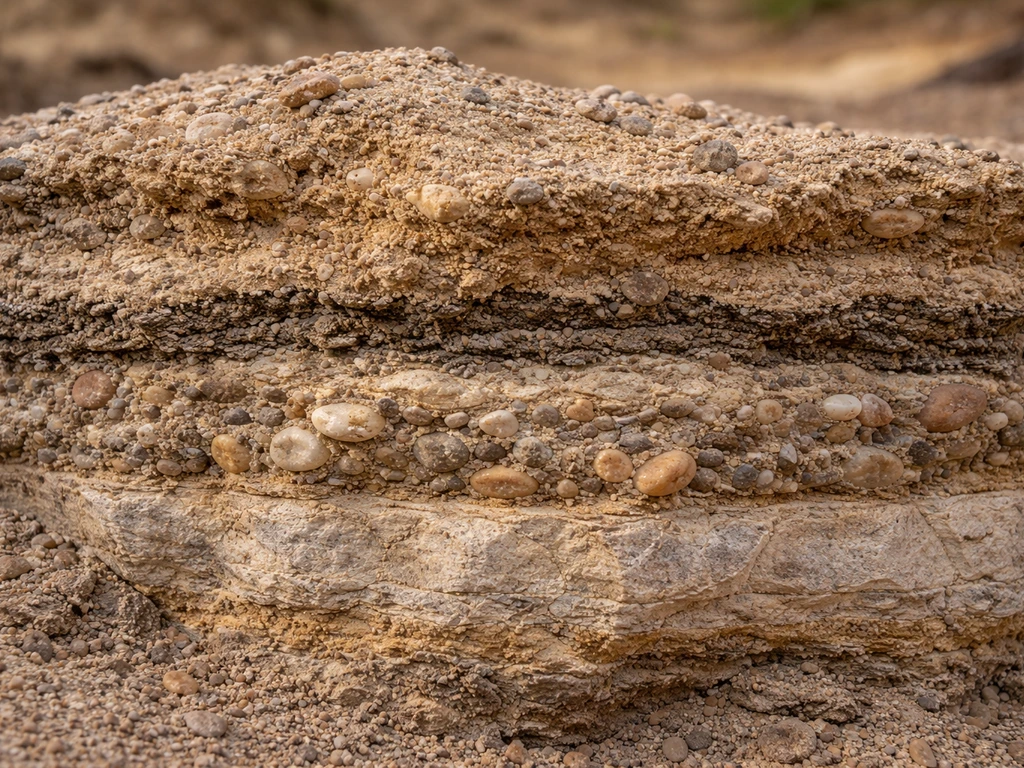
Sedimentary rocks form when loose particles, sand, silt, clay, shell fragments, settle out of water or wind and accumulate in layers. Over time, those layers get buried, compacted, and cemented together into solid rock. This is called lithification, and it is arguably the clearest example of a rock formation genuinely "growing" in thickness and extent. A river delta, for instance, can add meters of new sedimentary material over centuries. Some of that material even comes from once-living things like shells and coral skeletons, which is a reminder that geology and biology are not always completely separate.
During cementation, minerals like calcite or silica precipitate out of groundwater and fill the pore spaces between sediment grains. This reduces porosity and locks the grains together into solid rock. The total bulk volume may actually decrease slightly as pores collapse under compaction, but the solid mineral fraction grows. Cementation and compaction with depth are why new minerals grow within existing rocks, gradually changing the rock's internal architecture without any biological process involved.
Metamorphism and recrystallization
When heat and pressure act on existing rock deep in the crust, they can trigger metamorphism: a transformation of the rock's mineralogy and texture without melting it. During metamorphism, crystals can grow in size through recrystallization, where existing minerals reorganize into new, larger grains. The result is often a denser, more compact rock than the original. This is not growth in a biological sense, but it is a real change in mineral size and rock structure driven by energy from the Earth. Metamorphism transforms rocks rather than simply enlarging them, but crystal size increase is a genuine outcome of the process.
Processes that make rocks smaller or reshape them
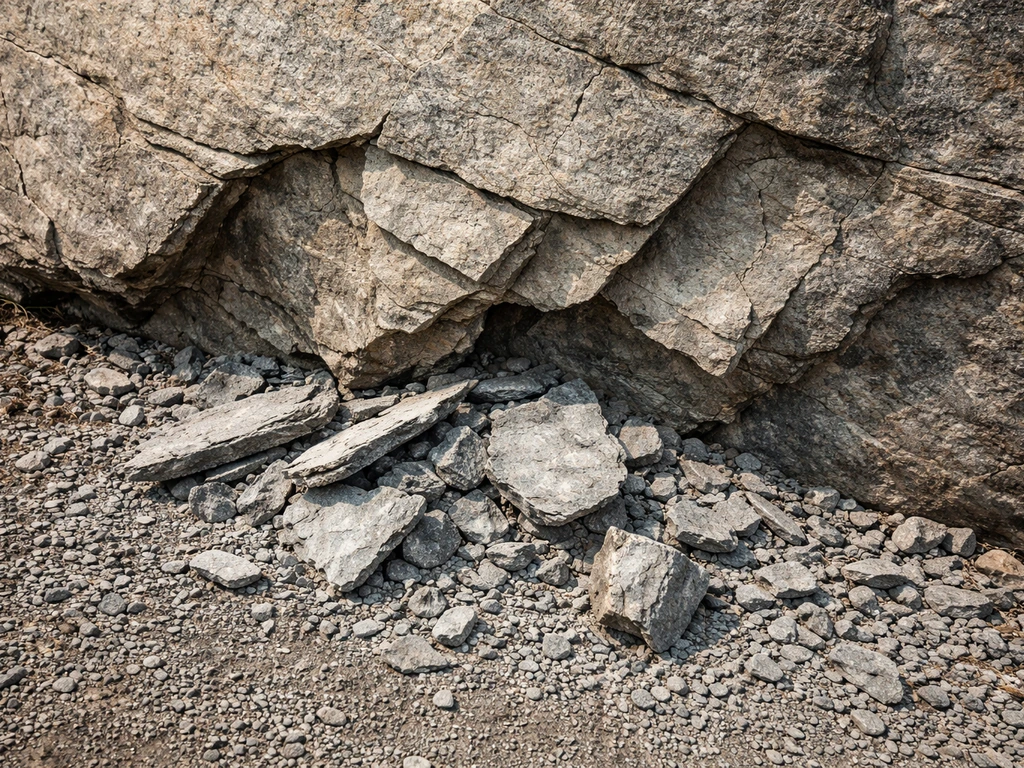
Every process that adds material to a rock body has a counterpart that takes it away. Weathering, erosion, fragmentation, and dissolution are constantly working against accumulation, and they operate on timescales that overlap with the processes that build rock up.
Physical weathering breaks rocks into smaller pieces without changing their chemical composition. Frost wedging, where water expands as it freezes inside cracks, and root wedging, where plant roots pry apart rock surfaces, are classic examples. These processes reduce the size of individual rock specimens, even as they generate the sediment that eventually becomes new rock elsewhere. Weathering that occurs when crystals grow inside rock fractures is another mechanism that physically breaks rock apart from the inside out.
Chemical weathering goes further by actually dissolving or chemically altering the minerals in a rock. Limestone and marble are particularly vulnerable: acid rain and carbonic acid from groundwater dissolve carbonate rock, directly reducing its mass and volume. This is not just a slow background process. USGS experiments on limestone and marble dissolution under acid rain conditions have documented measurable mass loss, making chemical weathering a concrete, quantifiable shrinkage mechanism.
Erosion then carries the weathered material away, whether by water, wind, or gravity. Landslides can move enormous amounts of rock and debris downslope at rates ranging from inches per year to tens of miles per hour, causing sudden, dramatic reductions in the size of a rock body. Over longer timescales, river erosion and wind transport steadily chip away at outcrops and cliffs. Locally, erosion means a rock formation is shrinking. Downstream or downwind, that same material is accumulating and potentially adding to a new formation.
Why rocks can't just keep getting bigger
If sedimentation and cementation can build rock formations thicker and wider, why do not all rock bodies just keep growing indefinitely? Three main constraints prevent that.
- Finite source material: every sediment grain deposited somewhere had to come from somewhere else. Erosion and deposition are a zero-sum game across the landscape. One basin fills while another mountain range wears down.
- Energy limits: metamorphism and igneous crystal growth require heat and pressure that only exist in specific geological settings. At the surface, those conditions are absent, so rock growth through those mechanisms simply cannot happen.
- Ongoing erosion: deposition and erosion happen simultaneously. Even while a sedimentary layer is building up, its surface is being weathered. Net growth only happens when deposition outpaces removal, and that balance shifts constantly.
- Slow timescales: even the fastest geological processes operate on scales of thousands to millions of years. A rock formation that looks massive today took an almost incomprehensible amount of time to accumulate.
These same constraints explain why, unlike a living organism, a rock formation cannot respond to its environment and actively seek out the resources it needs to grow. It is entirely passive, dependent on whatever Earth processes happen to be operating in its location at any given time. This is a key distinction from biological growth, which is directed and self-regulating. Geological accumulation is opportunistic and circumstantial.
Rocks vs. crystals vs. formations: a quick comparison
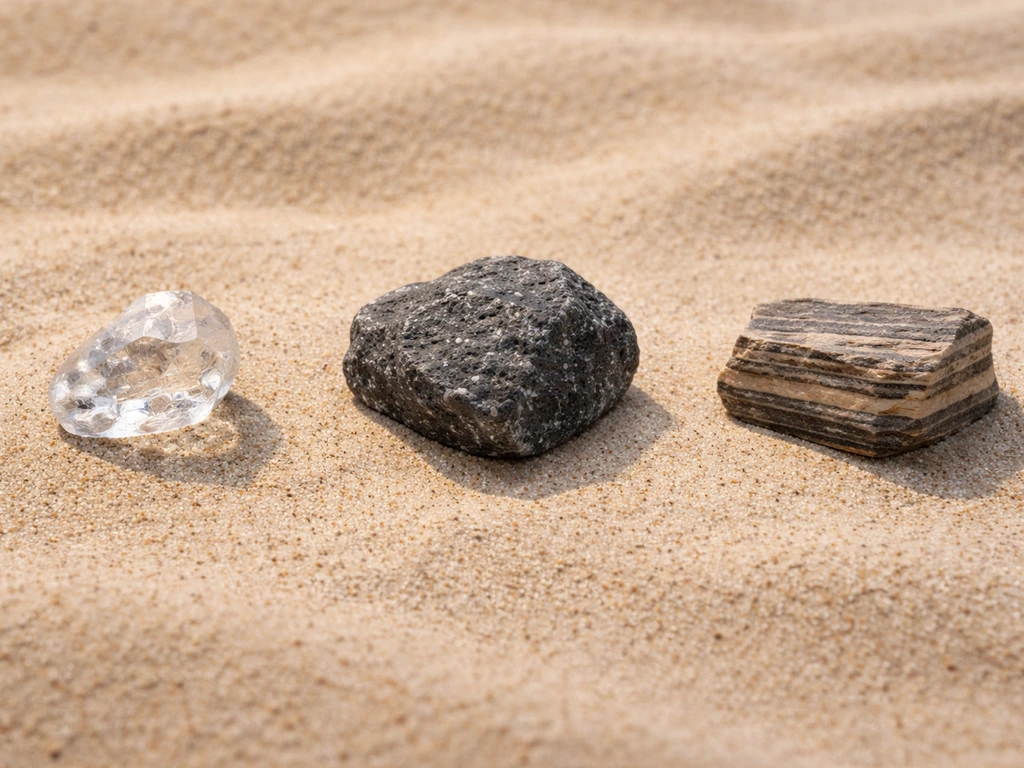
| Subject | Can it increase in size? | Primary mechanism | Timescale | Biological growth? |
|---|---|---|---|---|
| Individual rock specimen | Rarely, and only through mineral addition | Mineral precipitation into pores/cracks | Thousands to millions of years | No |
| Mineral crystal inside rock | Yes | Crystal growth from melt or solution | Years to millions of years | No |
| Sedimentary rock formation | Yes (thickness/extent) | Sediment deposition and lithification | Thousands to millions of years | No |
| Metamorphic rock | Changes structure and density | Recrystallization under heat/pressure | Millions of years | No |
| Igneous rock body | Yes (as magma solidifies) | Slow cooling and crystal growth | Thousands to millions of years | No |
What you can actually observe about "growing" rocks
If you are a student or curious observer trying to make sense of rock growth in the real world, here is a practical way to think about it. On a human timescale, you are not going to watch a rock get bigger. What you can observe are the processes that drive geological change, and use them to reason about what is happening over longer periods.
- Look at grain size in igneous rocks: coarse-grained rocks like granite cooled slowly deep underground, giving crystals time to grow large. Fine-grained rocks like basalt cooled quickly at the surface. The texture is a record of the growth conditions.
- Examine sedimentary layers: each distinct layer represents a period of deposition. Thicker layers mean more material accumulated. You are literally looking at the "growth record" of a rock formation.
- Check for mineral veins: white quartz or calcite veins cutting through older rock are evidence of mineral precipitation from fluids, a form of crystal growth that happened after the original rock formed.
- Watch erosion in action: a crumbling cliff face or a riverbank losing material after a storm is rock "shrinking" on a visible timescale. What you see removed will eventually be deposited and cemented somewhere downstream.
- Consider karst landscapes: sinkholes, caves, and disappearing streams in limestone terrain are chemical weathering at work, dissolving rock mass over centuries.
What you should not expect to see is a random rock on a trail getting measurably bigger between visits. That is not how geological processes work. The changes are either too slow, too small, or too dependent on specific subsurface conditions for casual observation. Understanding how crystals grow is probably the closest you will get to watching a mineral system increase in size in a way that is actually observable on a human timescale.
One more thing worth knowing: some minerals that form inside rocks are not silicates or carbonates at all. How diamonds grow deep in the mantle under extreme pressure is a fascinating example of crystal growth in a geological setting, and it illustrates just how diverse the conditions for mineral "growth" can be across different rock types and depths in the Earth.
And if you have ever wondered whether unusual everyday materials can produce crystal growth, the answer might surprise you. The same basic principles of supersaturation and precipitation that grow minerals in rocks also explain why Play-Doh grows crystals when it dries out, which is a useful reminder that crystal growth chemistry is not exclusive to geological environments.
The bottom line on rock growth
Rocks do not grow the way living things do. No metabolism, no cell division, no directed enlargement. But rock bodies, formations, and the minerals inside rocks can absolutely increase in size and mass through geological processes: crystal growth during slow magma cooling, sediment accumulation and lithification, and recrystallization during metamorphism. At the same time, weathering, erosion, fragmentation, and dissolution are constantly working in the other direction, breaking rocks down and redistributing their material. The net result at any given location depends on which processes dominate, how much source material is available, and how much time has passed. On a human timescale, rocks look static. On a geological timescale, they are anything but.
FAQ
If a rock does not grow, why do stones sometimes seem to get bigger in my yard or along a coastline?
What changes is usually the surrounding landform, not one specific clast. Erosion can remove material from nearby, while deposition (sediment settling or wave-driven sandbar building) can pile more material around rocks, making them appear larger because the surrounding surface changes.
Can crystals inside a rock keep growing after the rock has formed?
Yes, if fluids or chemical conditions later change. Dissolved minerals can enter fractures or pores and precipitate, producing new crystal faces that enlarge grains over time, even when the original rock is already solidified.
Why do some rocks contain very large crystals and others have tiny crystals?
The cooling rate and the availability of space and time for crystals to grow control crystal size. Slow cooling deep underground typically allows larger crystals, while fast cooling at or near the surface limits crystal growth time.
What is the difference between a rock getting bigger and a rock becoming denser?
A rock can increase in mass per unit volume without gaining external size. Cementation and compaction can reduce pore space, making the rock denser, so it may feel “heavier” or more solid even if the overall dimensions do not noticeably expand.
Do rocks ever truly increase in thickness over human timescales?
Thickening from sediment accumulation and cementation is generally too slow to notice in years, except in unusual settings. Examples include rapidly building sandbars during extreme events or man-made exposures where sediment is deposited quickly.
If weathering breaks rocks down, why do some rocks look like they are “growing” with time?
Weathering can also create mineral overgrowths. For instance, minerals dissolved from one component can re-precipitate along crack surfaces as protective or filling material, so the visible crack pattern or coatings may expand even as parts of the original rock are being removed.
Does melting and re-freezing make rocks grow larger?
Not automatically. When melt forms, material can move, mix, and later crystallize, but whether a specific rock body grows depends on whether additional melt or surrounding material is supplied. Cooling alone mainly changes texture and crystal size, not the overall bulk boundaries of the original rock.
Why don’t rock formations keep getting bigger indefinitely?
Because supply and loss both matter. As cliffs erode, downstream basins may accumulate, but the total system is constrained by finite sediment sources, changing climate or sea level, limited transport energy, and the fact that erosion and dissolution remove material as fast as or faster than deposition adds it.
Is there a way to estimate which process dominates at a specific site?
Look at the dominant environment and rock type. Fast mechanical breakdown suggests strong physical weathering, lots of groundwater and reactive chemistry suggests chemical dissolution or cementation, and evidence of burial or tectonic deformation suggests metamorphic recrystallization. The balance of those signals helps predict whether local mass gain (by cementation or deposition) or mass loss (by dissolution and erosion) is more likely.
How can I tell whether mineral growth happened inside a rock or only on its surface?
Internal growth often shows crystals aligned with fractures or pore networks and may change the rock’s internal texture, while surface growth usually forms coatings, crusts, or botryoidal layers restricted to exposed faces. If the rock breaks, the pattern continuity across the interior versus only along the exterior is a strong clue.
Next Article
Weathering That Occurs When Crystals Grow: How It Works
Crystal-growth weathering explained: how salts or ice expand in pores, cracking rock via stress and repeat freeze thaw.