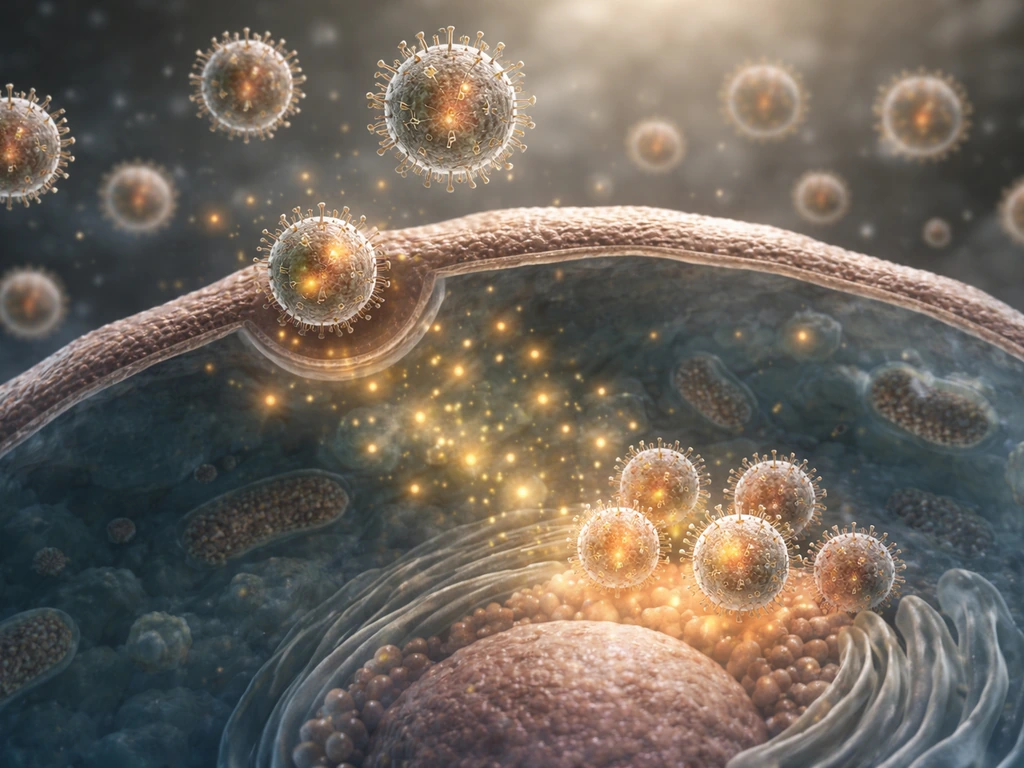
Phytoplankton grow by doing two things in sequence: they capture sunlight to build energy through photosynthesis, then they use that energy along with dissolved nutrients to manufacture new cellular material and divide into two cells. That's the core loop. Everything else, the season, the depth, the water temperature, the nutrient chemistry, is just a modifier on how fast or slow that loop runs, or whether it runs at all.
How Does Phytoplankton Grow? Steps, Limits, and Conditions

Marcus Whitmore
24 Mar 2026
Where phytoplankton live and grow
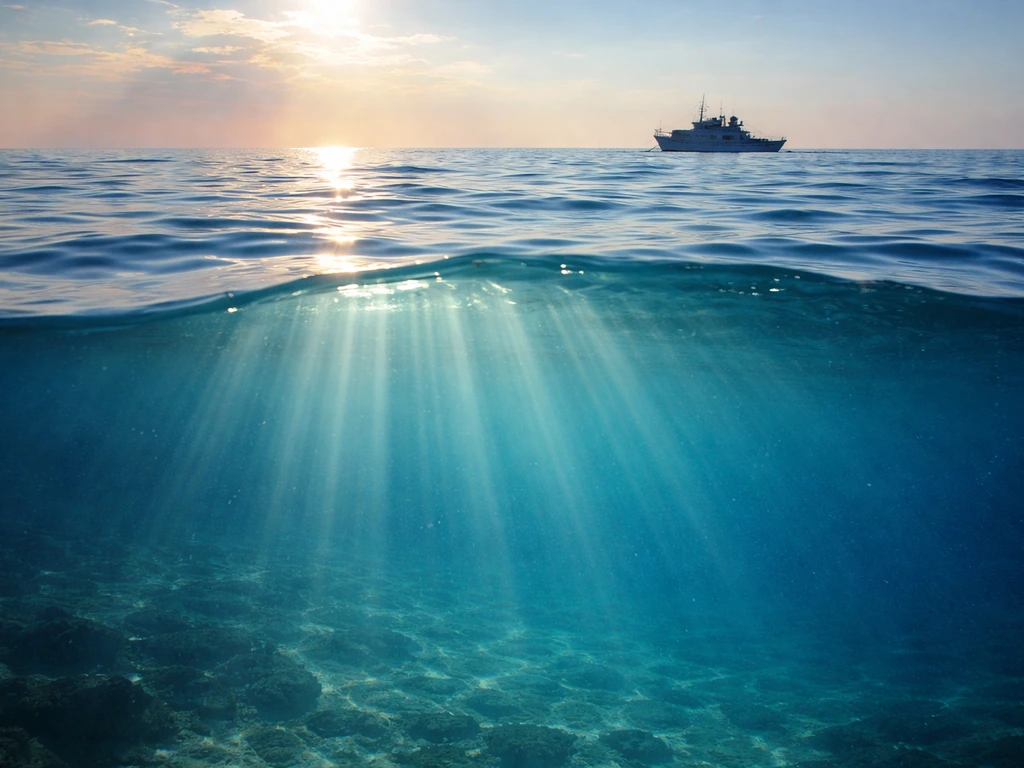
Phytoplankton are found in virtually every sunlit body of water on Earth, from the open Pacific Ocean to small freshwater ponds and alpine lakes. The key word is sunlit. They are photosynthetic, so they are permanently confined to the surface layer of the water column, a zone called the euphotic zone, where enough light penetrates to support net photosynthesis.
In marine environments, the euphotic zone can extend to around 100 to 200 meters in the clearest open-ocean water, though much shallower in coastal or turbid zones. In lakes, the situation is a little different. The euphotic depth can still reach roughly 25 meters or more in clear water, but lakes also develop a warm, well-mixed surface layer called the epilimnion that is often only about 10 meters deep. Because the epilimnion is where physical mixing keeps cells suspended, stratification becomes a major control on whether phytoplankton stay in the light long enough to actually grow.
In the open ocean, you sometimes see something called the deep chlorophyll maximum, or DCM, a layer of elevated phytoplankton biomass sitting at or just below the base of the euphotic zone. This happens because cells near the surface often run out of nutrients while deeper water has nutrients but less light. The DCM marks the sweet spot where cells are trading off just enough light to survive while accessing nutrients from below. It's a useful reminder that phytoplankton don't just live at the surface. They position themselves where the growth conditions are best.
Freshwater and marine phytoplankton communities are dominated by different species, but the underlying growth machinery is largely the same. Diatoms, cyanobacteria, dinoflagellates, and green algae show up in both settings. What changes is which nutrients are limiting, which temperatures they're adapted to, and what the seasonal light cycle looks like at a given latitude.
The growth process: photosynthesis, nutrient uptake, and cell division
Think of phytoplankton growth as a three-stage production line. First, light hits chlorophyll in the cell and drives photosynthesis, converting carbon dioxide and water into glucose and oxygen. That glucose is cellular fuel. Second, the cell uses that fuel to pull in dissolved nutrients from the surrounding water, nitrogen, phosphorus, iron, silica, and others, assembling them into proteins, DNA, lipids, and structural materials. Third, once the cell has accumulated enough biomass, it divides, typically by binary fission, creating two daughter cells where there was one. Population growth is just this cycle repeating, over and over, which is essentially how parasites grow as well.
Photosynthesis happens in chloroplasts, and the efficiency of that process depends directly on light intensity and wavelength. Red and blue wavelengths drive photosynthesis most effectively. Water absorbs red light quickly, which is one reason the deeper you go, the less productive the water becomes. Below the compensation depth, where respiration costs equal photosynthetic gains, cells are burning more energy than they make. Growth stops. Net loss begins.
Nutrient uptake is active, meaning cells pump molecules across their membranes using energy. Different phytoplankton groups need different raw materials. Nutrient uptake is active, meaning cells pump molecules across their membranes using energy. Different phytoplankton groups need different raw materials. Diatoms, for example, require silica to build their intricate glass-like cell walls (frustules). Cyanobacteria can fix dissolved nitrogen gas when inorganic nitrogen runs short. Most other groups depend on the ambient supply of nitrate, ammonium, or phosphate. When any one of these runs out, the production line stalls regardless of how much light is available. Cyanobacteria can fix dissolved nitrogen gas when inorganic nitrogen runs short. Most other groups depend on the ambient supply of nitrate, ammonium, or phosphate. When any one of these runs out, the production line stalls regardless of how much light is available.
Cell division in phytoplankton is mostly asexual. Under ideal conditions, many species can divide once or even twice per day, which means populations can double in 12 to 24 hours. That's exponential growth, and it's why blooms can appear to develop almost overnight. The same math works in reverse: when growth slows and losses stay constant, populations crash just as fast.
Environmental conditions that control growth rates
Four variables do most of the work in setting how fast phytoplankton grow at any given place and time: light, temperature, nutrients, and mixing. They're not independent. They interact constantly.
Light
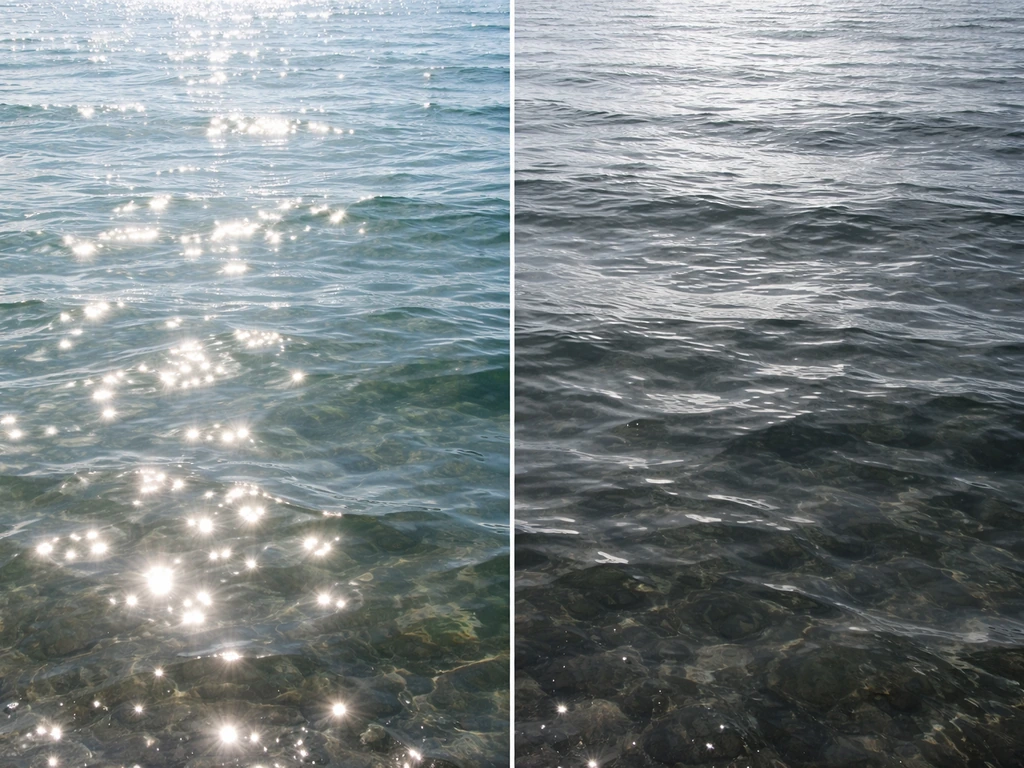
Light is usually the primary rate-setter. More light, faster photosynthesis, up to a point. At very high light intensities, phytoplankton can actually be photoinhibited, meaning their photosynthetic machinery gets damaged faster than it can be repaired. This is why cells near the very surface on a cloudless summer day sometimes grow more slowly than cells a few meters down. The sweet spot is usually somewhere in the upper euphotic zone, not right at the surface.
Seasonality matters enormously here. In temperate and polar regions, winter means short days and low sun angles, cutting light availability to the point where phytoplankton populations collapse or go dormant. Spring brings longer days and more intense light, which often triggers the first major bloom of the year, especially once the water warms enough to stratify.
Temperature
Temperature affects the rate of every enzymatic reaction inside the cell. Warmer water generally means faster metabolism, faster nutrient uptake, and faster division, within the tolerance range of a given species. Most open-ocean phytoplankton grow optimally between about 15 and 25°C, though cold-adapted polar species can thrive near 0°C. The catch is that warmer water also stratifies more strongly, which cuts off the upward supply of nutrients from depth. So a warmer ocean isn't automatically a more productive one.
Nutrients
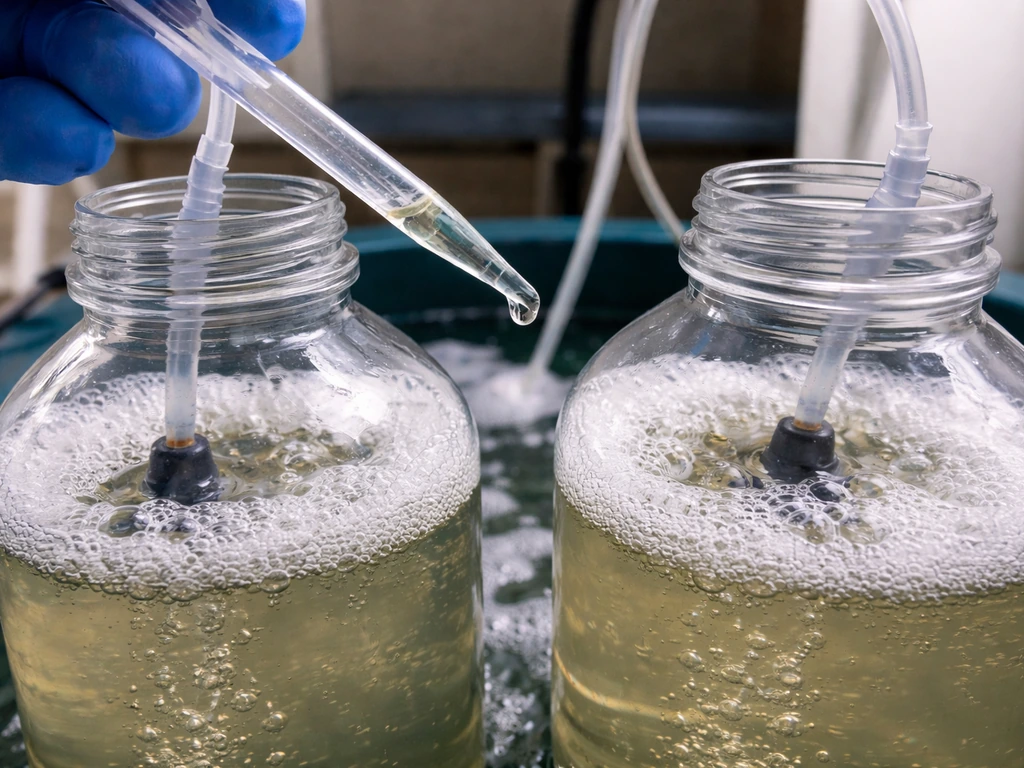
Nutrients are often the factor that actually caps growth once light is adequate. In much of the subtropical ocean, surface waters are warm and well-lit year-round but nutrient-depleted, which keeps productivity chronically low. In contrast, cold upwelling regions deliver nutrient-rich deep water to the surface and support some of the most productive fisheries on the planet.
Mixing and stratification
Mixing is the physical engine that connects light and nutrients. When water is well-mixed, nutrients from depth get delivered to the surface, but cells also get circulated down out of the light. When water stratifies, cells stay in the lit zone, but nutrient supply from below is cut off. The productivity sweet spot is often right at the transition, when stratification is just beginning in spring and nutrients haven't been depleted yet. That's the spring bloom trigger in most temperate and high-latitude systems.
What actually limits growth: nitrogen, phosphorus, iron, and silica
The concept of a limiting nutrient is central here. Liebig's Law of the Minimum says growth is controlled by whichever essential resource is in shortest supply relative to demand. The same logic applies to phytoplankton. You can add as much phosphorus as you like, but if nitrogen is the bottleneck, the cells won't grow faster.
| Nutrient | Who needs it most | Where it limits growth |
|---|---|---|
| Nitrogen (nitrate, ammonium) | All phytoplankton | Most open-ocean subtropical gyres; many lakes |
| Phosphorus (phosphate) | All phytoplankton | Many freshwater lakes; some tropical marine systems |
| Iron | All phytoplankton, especially large diatoms | High-nutrient low-chlorophyll (HNLC) ocean regions: Southern Ocean, equatorial Pacific, subarctic Pacific |
| Silica (silicic acid) | Diatoms only | Late-stage blooms when diatoms have depleted the supply |
Iron deserves extra attention because it controls productivity across enormous stretches of the ocean. The Southern Ocean is loaded with nitrate and phosphate but has very little dissolved iron, which blows in from dust or upwells from sediments. Classic iron-enrichment experiments, where researchers dumped iron sulfate into patches of ocean, caused immediate, dramatic phytoplankton blooms, directly confirming iron limitation. If you're trying to understand why a particular ocean region is unproductive despite seemingly adequate nutrients, iron is often the answer.
In freshwater lakes, phosphorus is classically the limiting nutrient, which is why fertilizer runoff and sewage discharge cause such explosive algal blooms in lakes and rivers. Nitrogen can co-limit or take over as the primary bottleneck in some systems, especially if phosphorus inputs are high. Figuring out which nutrient limits your specific system matters a lot for predicting or managing algal growth.
Why growth doesn't go on forever: grazers, viruses, and competition
Even under perfect nutrient and light conditions, phytoplankton populations don't grow without bound. Three categories of loss keep them in check: biological consumption, viral lysis, and physical export.
Grazing by zooplankton is the most direct check. Copepods, krill, and small protists like ciliates graze on phytoplankton continuously. During a bloom, grazer populations can lag behind phytoplankton by days to weeks because it takes time to reproduce. This lag is actually what allows blooms to build up in the first place. Eventually, as grazers catch up numerically, grazing pressure can eat through phytoplankton production and drive populations down. The classic spring bloom in temperate seas often ends partly because of this grazer response.
Viruses are an underappreciated loss factor, so if you’re wondering do viruses grow and develop in the usual sense, it helps to consider how viral lysis affects phytoplankton populations. Specific phytoplankton viruses can infect and lyse (burst) cells at rates that rival grazing, sometimes removing 10 to 50 percent of the standing stock per day during peak infection periods. Viral lysis releases cellular contents back into the water as dissolved organic matter rather than passing biomass up the food chain, a pathway sometimes called the viral shunt. This is ecologically important because it recycles nutrients locally rather than transferring them to zooplankton and fish.
Competition among phytoplankton species is also a growth regulator. When one species depletes a nutrient, it disadvantages other species that need the same thing. Species that are efficient at low nutrient concentrations tend to win in oligotrophic (nutrient-poor) conditions, while fast-growing opportunists dominate when nutrients pulse in. This competitive sorting is why bloom events are often dominated by a narrow set of species rather than a general bloom of everything.
Physical loss processes round out the picture. Cells can sink out of the euphotic zone, especially when they're nutrient-stressed or when turbulence weakens. Flushing in rivers or strong ocean currents can physically carry populations away from favorable conditions faster than they can reproduce. The net growth rate you observe in any real water body is always growth minus all these losses combined.
Bloom dynamics: what triggers rapid growth and what causes crashes
A bloom is simply what happens when growth rate temporarily exceeds loss rate by a large margin. The conditions needed aren't exotic. They're just the convergence of adequate light, adequate nutrients, and reduced loss pressure, usually all at once.
The classic marine spring bloom in temperate latitudes is a textbook case. Over winter, deep mixing replenishes the surface with nutrients, but light and temperature are too low to support much growth, similar to how do protists grow and develop, the environmental inputs determine how fast cells can build biomass and divide. As days lengthen in spring, light crosses the threshold needed for net positive photosynthesis. At the same time, rising temperatures cause the water column to start stratifying, trapping cells in the light-rich surface layer. Nutrients are still abundant because they haven't been used yet. Grazer populations are still low from winter. The result: explosive growth that can triple or quadruple phytoplankton biomass in a week or two.
The crash follows inevitably. Nutrients get depleted. Grazers catch up. Viruses spread through the dense population. Cells start sinking. The bloom collapses, often just as dramatically as it built. In some cases, especially in lakes with high phosphorus inputs, the aftermath of a bloom includes anoxic bottom water and fish kills as bacterial decomposition of sinking biomass consumes oxygen.
Harmful algal blooms (HABs) follow similar dynamics but are driven by species that produce toxins, form dense surface scums (common in cyanobacterial blooms in nutrient-loaded lakes), or cause problems at lower biomass. Warm temperatures and high phosphorus loading are the two most reliable predictors of cyanobacterial HABs in freshwater. In coastal marine systems, HABs are often linked to upwelling events or land-derived nutrient pulses.
How to figure out what's driving growth in a specific location
If you're trying to understand what controls phytoplankton growth in a particular lake, estuary, or ocean region, here's a practical way to approach it. You don't need a research vessel. You need a logical sequence of questions.
- Check the season and latitude first. Is there enough daylight and sun angle to support photosynthesis? At high latitudes in winter, light is often the primary limit regardless of nutrient status. No amount of nutrients fixes a dark water column.
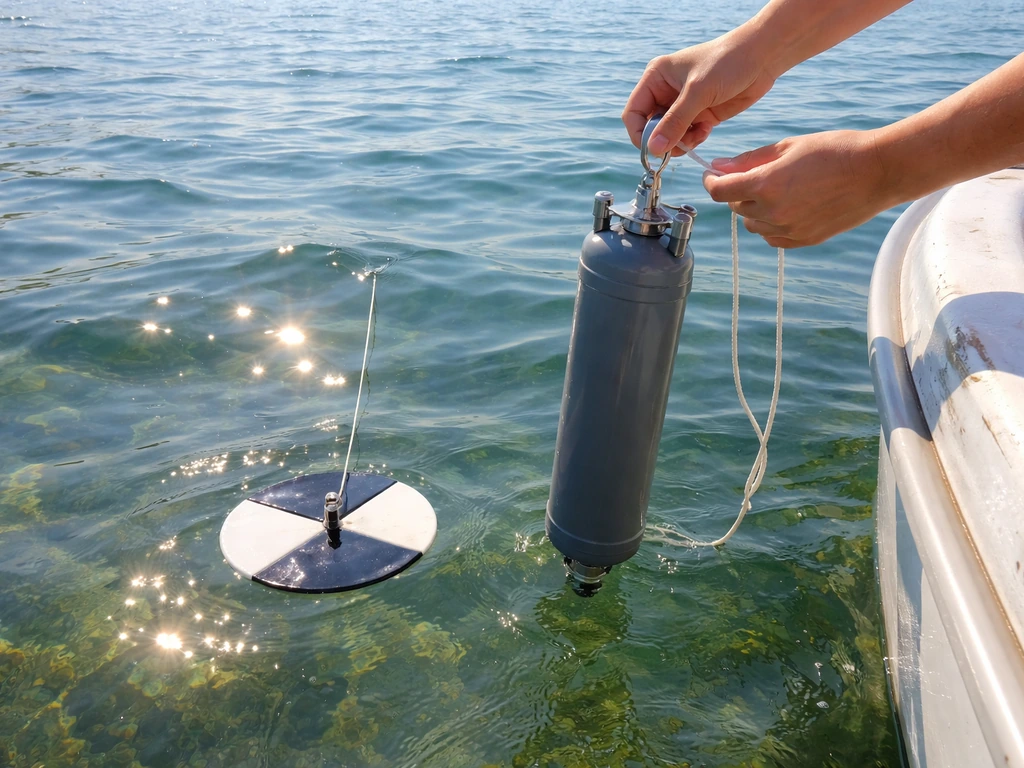
- Assess water clarity. Turbid (cloudy) water, from sediment, dissolved color, or algae itself, compresses the euphotic zone. NASA ocean color satellite products tie euphotic zone depth directly to water clarity, and this data is freely available for coastal and open-ocean locations. For lakes, Secchi disk depth is a simple field measurement: multiply it by roughly 1.7 to estimate euphotic depth.
- Check whether the water is stratified or mixed. A stable, stratified water column in spring/summer keeps cells in the light but starves them of deep nutrients. A mixed water column during storms or in autumn/winter can re-supply nutrients but may push cells below the compensation depth.
- Measure or look up nutrient concentrations. In freshwater systems, total phosphorus above about 10 to 20 micrograms per liter is often enough to support significant algal growth. In marine systems, surface nitrate near zero signals nutrient depletion. Publicly available monitoring databases (watershed monitoring programs, EPA water quality data, NOAA coastal monitoring) often have nutrient time-series for major water bodies.
- Look for the deep chlorophyll maximum in marine or large lake systems. If satellite chlorophyll data shows a mismatch with in-water observations, a DCM below the mixed layer may be supporting growth invisible from the surface. This is especially relevant in stratified subtropical ocean regions.
- Identify the likely limiting nutrient. In most freshwater systems: suspect phosphorus first. In open ocean: suspect nitrogen in subtropical gyres, iron in HNLC regions (Southern Ocean, parts of the Pacific). In coastal systems: nitrogen and phosphorus both matter, and silica can limit diatom-dominated blooms.
- Watch for seasonal patterns in your data. Spring peaks, summer crashes, fall secondary blooms: these patterns reveal the interplay of light, mixing, and nutrient cycling at your specific location.
For a freshwater lake specifically, the simplest diagnosis involves three measurements taken at the start and end of the growing season: Secchi depth (light penetration), total phosphorus, and total nitrogen. If phosphorus is high and nitrogen-to-phosphorus ratios are low (below roughly 16:1 by mass), cyanobacteria are likely favored and a bloom is plausible. If both nutrients are low but clarity is good and light is abundant, you may have a nutrient-limited system where phytoplankton stay sparse despite good light.
For marine contexts, the MODIS and VIIRS satellite sensor data processed through NASA's ocean color program give you chlorophyll-a maps, sea surface temperature, and euphotic zone depth estimates at roughly 1 km resolution, updated daily. These are genuinely useful for identifying blooms, tracking their spatial extent, and correlating them with physical drivers like upwelling or stratification onset. They're free and accessible through NASA's Ocean Color Web portal.
The big picture is this: phytoplankton growth is not mysterious, it's just the product of a simple cellular process (photosynthesis plus division) scaled by several environmental knobs turned up or down by season, geography, and water chemistry. When all the knobs align, you get a bloom. When one of them cuts off the supply, growth stalls. Understanding which knob matters most in your specific location is the practical skill worth developing. If you're curious how this compares to other single-celled organisms, the growth mechanics of protists like amoeba and paramecium follow some of the same division-based logic, even without photosynthesis driving the energy side. how do paramecium grow
FAQ
Why do phytoplankton sometimes grow more slowly right at the surface, even though light is strongest?
Very high light can photoinhibit chlorophyll and damage photosynthetic machinery faster than cells can repair it. That’s why maximum net growth is often a bit below the surface, where light is still strong but not extreme (the upper euphotic zone rather than the very top few centimeters).
If temperature increases, shouldn’t phytoplankton always grow faster?
Not necessarily. Warmer water can speed metabolism and division, but it also increases stratification, which reduces nutrient delivery from deeper water. In nutrient-limited regions, the nutrient cut-off can dominate and productivity can drop even as cells would otherwise grow faster.
How can phytoplankton run out of nutrients if mixing is keeping water stirred?
Mixing delivers nutrients, but it also keeps cells in the light, so they can consume available nutrients quickly. If nutrient inputs are low and uptake exceeds supply, the water can still become depleted over days to weeks even under mixing, leaving growth limited by nutrient scarcity rather than by light or temperature.
What does it mean when a nutrient is “limiting,” in practical terms?
It means that adding more of one specific essential resource would increase net growth, while adding other nutrients would not. A quick field clue is that chlorophyll can remain high without further blooms if the limiting nutrient stays scarce, because growth stalls when that bottleneck remains unfilled.
Why do phytoplankton sometimes form a deep chlorophyll maximum instead of a surface peak?
A common pattern is the trade-off between light and nutrients. Surface cells may deplete nutrients while still getting strong light, so growth can slow, while deeper cells receive less light but have more nutrients. The balance point becomes the deep chlorophyll maximum near the base of the euphotic zone.
Can phytoplankton growth keep going in winter or at night?
Growth requires net photosynthesis, so in low-light periods cells may shift toward survival rather than net accumulation. In the darkest or coldest times, respiration can match or exceed photosynthesis, pushing net growth toward zero or negative, even if cells are still present.
What is the difference between photosynthesis and phytoplankton growth?
Photosynthesis provides energy and some building carbon, but growth also depends on having enough essential nutrients to convert that energy into new biomass. You can have active photosynthesis and still see little population increase if nitrogen, phosphorus, iron, or other required components are limiting.
Do phytoplankton blooms mean there are more nutrients available?
Not always. Blooms can occur when light and mixing align so that net growth temporarily exceeds losses, even if nutrients are only moderately available and then get rapidly depleted. A bloom is best understood as growth outpacing grazing, viral lysis, sinking, and export during a narrow window.
Why can blooms suddenly crash, and what role do grazers play?
A bloom builds when losses lag behind growth, often because grazer populations reproduce more slowly than phytoplankton. Once grazers increase, grazing pressure can rapidly reduce biomass, and simultaneous nutrient depletion, viral infection, and sinking often reinforce the collapse.
How do viral lysis and grazing differ in what they do to the ecosystem?
Grazing transfers phytoplankton biomass into food webs that support zooplankton and higher trophic levels, while viral lysis releases cellular contents into the water as dissolved organic matter. That dissolved pathway can recycle nutrients locally (often described as a viral shunt) instead of efficiently moving biomass upward.
In lakes, why is phosphorus so often linked to algal blooms?
Phosphorus can become the bottleneck when it enters at high levels and accumulates in the system. When phosphorus is elevated, it can remove one constraint, allowing blooms to develop, especially if nitrogen is not the tighter limitation or can be supplied through recycling or nitrogen-fixing organisms.
How can I tell whether cyanobacteria are likely to dominate in a nutrient-loaded lake?
A strong signal is a low nitrogen-to-phosphorus ratio, which reduces nitrogen availability relative to phosphorus. In those conditions, nitrogen-fixing cyanobacteria can gain an advantage, and surface scums become more likely during warm periods.
Why do some ocean areas look nutrient-rich but still have low productivity?
A common explanation is iron limitation. Regions can have abundant nitrate and phosphate but low dissolved iron, so phytoplankton cannot build enough new biomass. Iron scarcity can cap growth even when the “usual” nutrients appear adequate.
If I have chlorophyll-a data, does it directly tell me how fast phytoplankton are growing?
Not by itself. Chlorophyll reflects biomass, which is the result of growth minus losses (grazing, viruses, sinking, and export). You can see high chlorophyll yet low net growth if losses are also high, so growth rate inference usually needs physical and biological context.
What measurements are most useful to diagnose what limits growth in a specific water body?
For lakes, a practical starting set is light penetration (Secchi depth or similar), total phosphorus, and total nitrogen, especially early and late in the growing season. For oceans, combining chlorophyll-a with sea surface temperature and indicators of euphotic depth or stratification helps connect biomass patterns to physical controls like mixing and upwelling.
Next Article
Do Viruses Grow and Develop? Replication Steps Explained
Learn if viruses grow and develop: they do not grow like cells, but replicate, assemble, and release in host cells.