Amoebas grow by taking in food, converting it into cellular material, and physically expanding in size until the cell is large enough to split into two. That's the short answer. But there's a lot going on inside that single cell that makes this process genuinely fascinating, and understanding it helps you make sense of why amoebas can't just keep growing forever, why environmental conditions matter so much, and how 'growth' and 'reproduction' are really two sides of the same coin for a single-celled organism.
How Do Amoeba Grow: Size Limits and Growth to Division
Marcus Whitmore
24 Mar 2026
What 'growth' actually means for a single cell
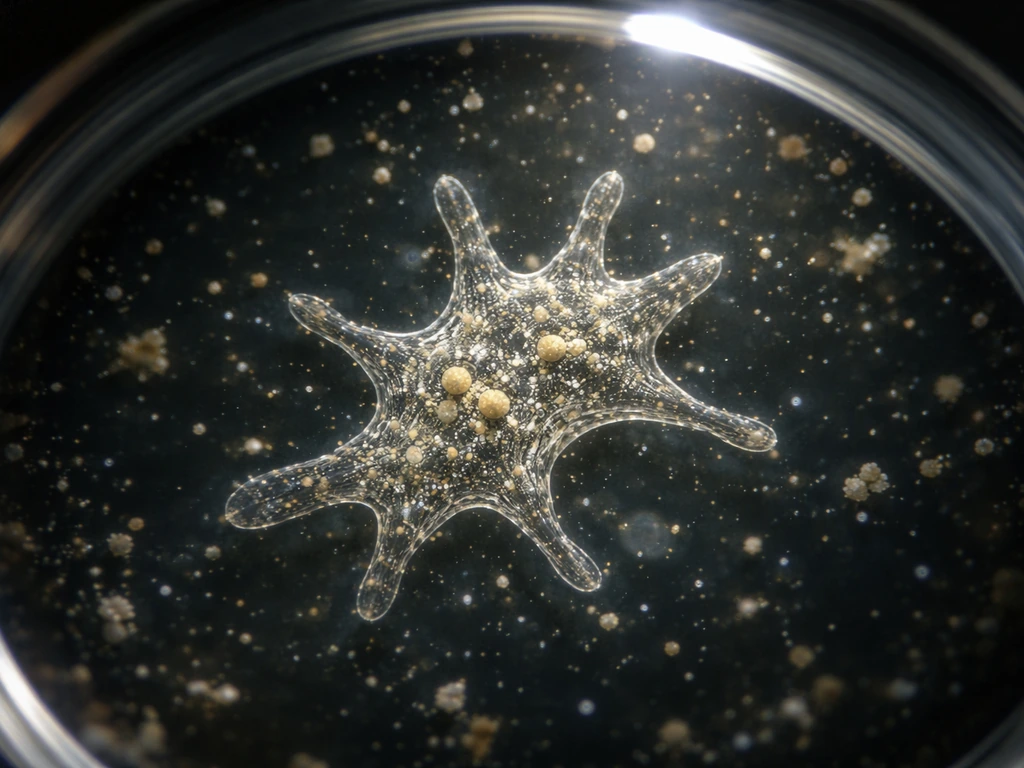
When we talk about growth in multicellular animals, we usually mean adding more cells. A growing child isn't making each cell bigger, they're making more of them. An amoeba doesn't have that option in the same way. It is the cell. So for an amoeba, growth means increasing the total amount of biological material inside that one cell, including proteins, lipids, organelles, and genetic material. This is called biomass accumulation, and it's the foundation of everything else that follows.
Think of the amoeba like a bag that you're filling up. The bag itself stretches a bit as you add more, and once it reaches a certain fullness, it splits into two smaller bags. That split is reproduction, but the filling-up phase is what we call growth. Both phases are part of the amoeba's life cycle, and neither makes much sense without the other.
It's also worth noting that 'growth' can mean something slightly different depending on whether you're watching a single amoeba get bigger or tracking a population expanding over time. In lab settings, both meanings come up. This article focuses primarily on the cellular level, but we'll connect it to population-level thinking too, since that's often what students and educators are actually measuring.
How an amoeba actually gets bigger: feeding, metabolism, and biomass buildup
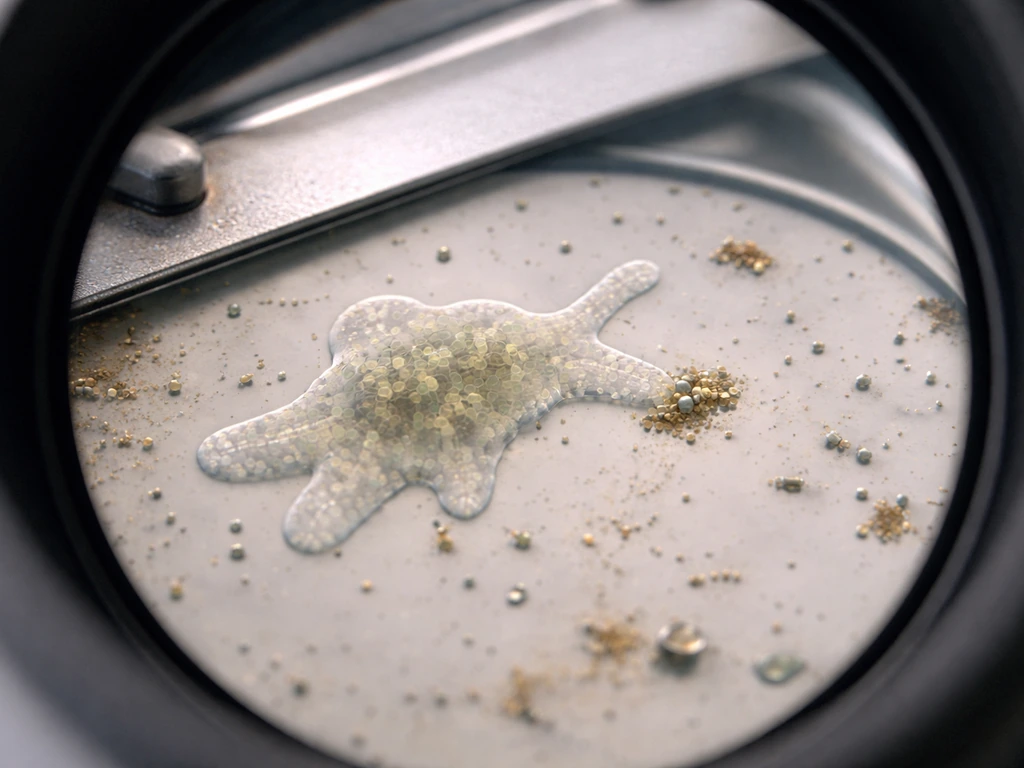
Amoebas grow by eating. More precisely, they engulf food particles, typically bacteria, algae, or organic debris, through a process called phagocytosis, which is one key way cells build biomass, similar to how do parasites grow in aquatic environments. The amoeba extends pseudopods (those flowing, arm-like projections) around the prey and pulls it inside, forming a food vacuole. Enzymes then break the prey down into usable building blocks: amino acids, fatty acids, simple sugars. These raw materials get incorporated into new proteins, membranes, and organelles, physically adding mass to the cell.
Some amoebas, like the model organism Dictyostelium discoideum grown in lab conditions, can also take up dissolved nutrients through pinocytosis, essentially drinking in small droplets of liquid containing organic molecules. When growing in axenic (bacteria-free) liquid medium, this is actually the primary uptake mechanism, and it's slower than phagocytosis, which is why Dictyostelium in axenic culture has a doubling time of roughly 8 to 12 hours depending on temperature and medium composition.
For free-living amoebas like Amoeba proteus or Acanthamoeba, phagocytosis of bacteria and other microorganisms is the dominant feeding strategy. The rate at which they can feed directly controls how quickly biomass accumulates, and that feeding rate is tightly linked to how soon the cell is ready to divide. As the research puts it: the duration between successive reproduction phases depends on the rate of growth. Faster feeding means faster buildup means faster division.
Why amoebas can't keep growing forever
Here's the elegant constraint that all single cells run into: as a cell gets bigger, its volume increases much faster than its surface area. Imagine doubling a cell's diameter. Its surface area quadruples, but its volume increases eightfold. That surface area is essentially how much 'window space' the cell has for letting nutrients in and waste products out. When volume outruns surface area, the cell can't efficiently exchange materials with its environment, and growth becomes self-limiting.
But it's not just surface-to-volume ratio at play. Cells also have to move materials internally. Diffusion works fine across tiny distances, but as a cell swells, molecules have to travel farther to reach the center, and simple diffusion starts to lag. On top of that, the cell needs to replicate its genetic material and coordinate the molecular signals that trigger division. Research on cell-size regulation shows that growth rate itself acts as a regulator of when division gets triggered, not just raw size alone.
For Dictyostelium specifically, studies describe division as occurring probabilistically once a cell exceeds a minimum size threshold. Below that threshold, no division. Above it, the probability of dividing per unit time goes up. This isn't a sharp switch, it's more like the cell becomes increasingly 'ready' to split as it accumulates biomass. When you're watching an amoeba under a microscope and it suddenly rounds up and pinches in two, that's the culmination of a growth process, not a random event.
Binary fission: how one amoeba becomes two
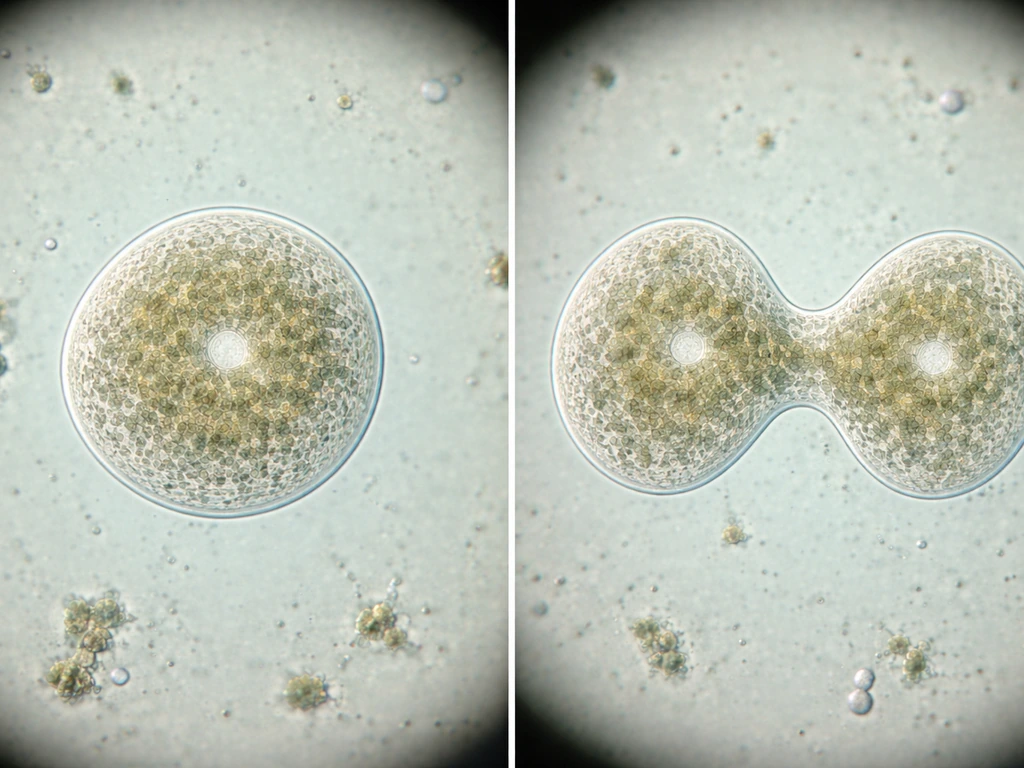
The primary mode of reproduction in amoebas is binary fission, and it's about as straightforward as cell division gets. Once the cell has accumulated enough biomass, the nucleus divides first. The nuclear material is duplicated and pulled to opposite ends of the cell. Then the cytoplasm physically pinches in the middle, a process called cytokinesis, creating two roughly equal daughter cells. Each daughter inherits a nucleus, a share of the organelles, and enough cytoplasm to start feeding and growing again.
There's no sexual reproduction involved in typical amoeba growth cycles, no fertilization, no mating. The genetic strategy is simple replication with occasional mutation providing variation over time. Each daughter cell is essentially a smaller copy of the parent, and the cycle starts over: feed, grow, divide.
It's worth knowing that some amoebas have a second life stage: the cyst. When conditions get bad, an active trophozoite (the feeding, growing form) can form a tough outer wall and become dormant. When conditions improve, the cyst excysts, and the newly released cell begins dividing rapidly. Short exposures to combinations of host-associated compounds can trigger Entamoeba invadens excystation more rapidly and efficiently than water treatment alone Short exposures to combinations of host-associated compounds can trigger excystation. Intestinal amoebas like Entamoeba histolytica follow exactly this pattern: excystment followed by rapid binary fission in the host environment. This is the growth/division sequence in action, it's just been paused by the encysted state and then resumed all at once.
This connection between life-cycle stage and growth also matters for more complex amoebas like Dictyostelium, which is technically a social amoeba. Under starvation, instead of just encysing, Dictyostelium cells aggregate with thousands of others and enter a developmental program that ends in a multicellular fruiting body. During this transition, cells actively halt phagocytosis and lose the ability to resume feeding if starvation has continued beyond the first 4 to 6 hours. Growth and development are mutually exclusive once the commitment window closes. Growth and development are mutually exclusive once the commitment window closes. If you're curious about how other single-celled organisms handle growth and development, the parallels with paramecia and protists more broadly are worth exploring in related guides on this site. how do protists grow and develop
How big do amoebas actually get?
Size varies a lot across species, and even within a species depending on growth stage and conditions. Here's a practical reference for the most commonly studied amoebas:
| Species / Form | Typical Size (diameter) | Notes |
|---|---|---|
| Acanthamoeba trophozoite | 25–40 µm | Active feeding stage; size varies by genotype |
| Acanthamoeba cyst | 10–25 µm | Dormant stage; smaller than trophozoite |
| Dictyostelium discoideum (Ax2 lab strain) | ~12 µm in suspension | Social amoeba; smaller than free-living forms |
| Dictyostelium discoideum (vegetative) | 10–20 µm | Range during active growth phase |
| Amoeba proteus | Up to ~600–700 µm (elongated) | One of the largest common lab amoebas; highly variable when moving |
| Chaos carolinense / Pelomyxa | Up to ~5 mm (visible to naked eye) | Giant amoebas; multinucleate and atypical |
The numbers above make an important point: 'amoeba size' isn't a single answer. The species matters enormously. Amoeba proteus, the classic classroom organism, can stretch to several hundred micrometers when actively feeding and moving, though its shape is so irregular that a diameter measurement is almost meaningless. Dictyostelium cells in the lab are compact and roughly spherical at around 12 µm. And then there are the giant amoebas like Chaos carolinense, which can be large enough to see without a microscope, though these are multinucleate organisms and somewhat unusual cases.
One practical takeaway: if you're measuring amoeba sizes in a microscopy experiment and getting inconsistent results, check whether you're looking at trophozoites or cysts. Cysts are consistently smaller (10 to 25 µm for Acanthamoeba vs. 25 to 40 µm for trophozoites) and morphologically distinct. Mixing the two in a size measurement will produce confusing averages.
What controls how fast an amoeba grows
Growth rate isn't fixed. A healthy amoeba in ideal conditions divides on a reliable schedule. Change any major environmental variable and that schedule shifts, sometimes dramatically. Here are the key factors:
Food availability
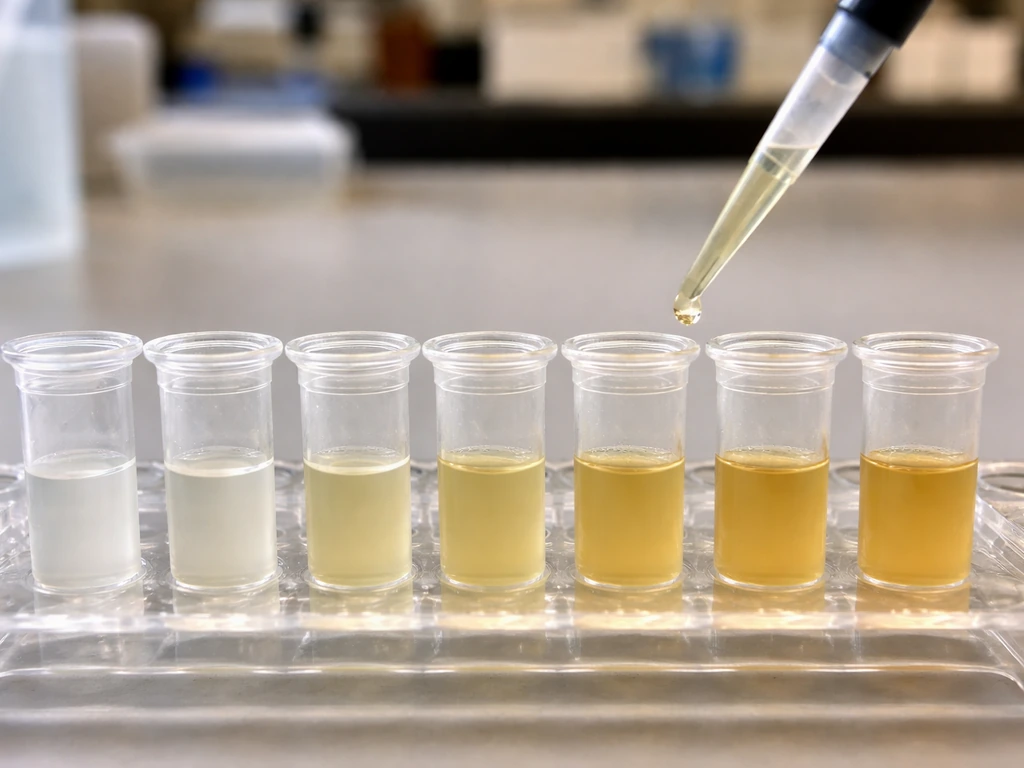
This is the biggest lever. No food means no biomass accumulation means no division. Dictyostelium can halt proliferation entirely and enter its developmental program when bacteria run out. Acanthamoeba encysts when food disappears. Amoeba proteus simply slows or stops dividing. More food (up to a limit) means faster doubling times. In Dictyostelium, cells even secrete a molecule called prestarvation factor (PSF) that helps the population sense how many cells there are relative to the food supply, a form of density sensing that anticipates food depletion before it happens.
Temperature
Like all biochemical processes, amoeba metabolism speeds up within a favorable temperature range and slows or stops outside it. Temperature extremes are one of the listed triggers for Acanthamoeba encystment, the cell's way of surviving conditions it can't grow in. In Dictyostelium, doubling time varies with temperature and medium composition together, so temperature doesn't act in isolation.
Water quality and osmolarity
Amoebas live in aqueous environments and are sensitive to osmotic conditions. Both hyperosmolarity (too much dissolved material) and hypo-osmolarity (too little) can push Acanthamoeba into encystment. The cells need to maintain internal water balance to function, and when the external environment is too different from internal conditions, active metabolism becomes difficult or impossible. For freshwater amoebas, this means they're generally adapted to low-salt environments and will struggle in brackish or high-solute conditions.
pH
pH extremes are another encystment trigger for Acanthamoeba. Enzymes that drive digestion, energy metabolism, and cell division all have optimal pH ranges, and moving outside those ranges slows enzymatic activity and disrupts growth. Neutral to slightly acidic conditions are generally favorable for free-living amoebas, though this varies by species.
Oxygen
Free-living amoebas like Acanthamoeba are aerobic organisms, meaning they require oxygen for active metabolism. Without adequate dissolved oxygen, the trophozoite form cannot sustain the energy production needed for feeding, moving, and dividing. Low-oxygen conditions push toward dormancy or cell death in aerobic species.
Cell density
This one surprises students. Higher cell density in a population correlates with higher encystment rates in Acanthamoeba, suggesting something like quorum sensing, where cells respond to how crowded their environment is. In Dictyostelium, PSF secretion builds up as cell density increases relative to available food, and this signal feeds into the developmental program. Overcrowding is, in effect, a growth-limiting signal in its own right, separate from direct resource depletion.
A summary comparison: trophozoite vs. cyst stage
| Feature | Trophozoite (Active) | Cyst (Dormant) |
|---|---|---|
| Growth/biomass accumulation | Active | None |
| Feeding | Phagocytosis / pinocytosis | None |
| Division | Binary fission when ready | None |
| Typical size (Acanthamoeba) | 25–40 µm | 10–25 µm |
| Triggered by | Favorable food, temp, pH, O₂ | Starvation, temp extremes, pH extremes, osmotic stress, high density |
| Reversibility | Divides back to trophozoites after excystment | Can revert to trophozoite when conditions improve |
How to think about amoeba growth in experiments and learning
If you're studying amoeba growth in a lab or classroom context, here are the most useful things to keep in mind and look for: Dictyostelium discoideum is commonly used as a model system to study size regulation, including how size must be measured relative to a critical value and adjusted accordingly size regulation in Dictyostelium discoideum.
- Distinguish trophozoites from cysts before measuring size. Cysts are smaller and morphologically distinct. Mixing the two stages will distort any size or growth-rate data you collect.
- Use doubling time as your growth metric when tracking populations. For Dictyostelium in axenic culture, expect roughly 8 to 12 hours per doubling under good conditions. Longer doubling times are a signal that nutrients, temperature, or pH are suboptimal.
- Watch for behavioral shifts as a proxy for growth state. Active pseudopod extension, feeding, and movement indicate trophozoite-stage growth. Rounding up, slowing down, and forming a double-walled structure signals encystment and the end of active growth.
- Control food availability as your primary experimental variable. Amoeba growth is fundamentally food-limited. If you want to compare growth rates under different conditions, food concentration is the most powerful variable to manipulate.
- Check osmolarity and pH of your medium. Both extremes push amoebas out of active growth. If your cultures aren't growing as expected, medium chemistry is often the culprit before anything else.
- Remember that what looks like 'no growth' might be dormancy, not death. Cysts can survive for months and resume growth when conditions improve. Encystment is a survival strategy, not a failure of the experiment.
- If you're working with Dictyostelium, keep in mind the developmental commitment window. After a few hours of starvation, cells lose the ability to resume feeding even if food is re-added. Time your nutrient additions carefully if you're trying to rescue a starving culture back into growth phase.
The broader principle here is that amoeba growth is a tightly regulated loop: nutrients in, biomass up, size threshold reached, division triggered, two cells start over. Every variable in that loop, food, temperature, oxygen, osmolarity, pH, and even cell density, can speed it up, slow it down, or redirect the cell entirely into dormancy or (in social amoebas) development. Once you see growth this way, not as a linear march but as a conditional cycle, the behavior of amoebas under different conditions starts to make a lot of intuitive sense. Diatoms also follow a regulated growth cycle, and learning how do diatoms grow helps connect single-cell biomass rules to the productivity of aquatic ecosystems. The same framework applies when you look at how other microorganisms like how do paramecium grow handle growth under constraint, see how do plankton grow for more detail, all roads lead back to the same fundamental tension: build biomass, hit a limit, divide or adapt. Phytoplankton follow the same basic logic, so learning how does phytoplankton grow can help you connect single-cell rules to ocean-scale patterns. The same idea explains how do plankton grow in oceans and other water habitats where food and conditions change over time.
FAQ
Do amoebas grow continuously, or do they only grow right before dividing?
No. Amoebas typically increase in size and then split once they accumulate enough biomass, but the decision to divide depends on internal regulation (for example, coordination of nuclear duplication and division readiness) and external conditions. If feeding slows, the cell may stay small or shift to dormancy rather than dividing immediately.
Why do amoeba size measurements look inconsistent under the microscope?
They can be hard to compare across time because shape changes. Active trophozoites extend pseudopods and can appear larger without a true biomass increase, while rounding up near division can change apparent size. For consistent measurements, track a consistent stage (trophozoite vs cyst) and use standardized imaging criteria.
If I add more food to an amoeba culture, will it always divide faster?
Feeding rate sets the pace, but it is not the only limiter. Even with food present, division can slow if temperature is outside the favorable range, oxygen is low (aerobic species), or if osmotic or pH conditions stress metabolism. In other words, abundant food helps, but growth still needs the right physiological environment.
When people say amoebas grow in a tank, do they mean bigger cells or more cells?
Often not. In culture, “growth” of a population usually increases because cells divide, but “cell growth” (size increase before fission) can be muted if conditions favor faster splitting at smaller sizes or if many cells enter cysts. Distinguish biomass accumulation in individual cells from the overall increase in cell count.
Can an amoeba keep growing if it forms a cyst?
Yes, but it tends to be stage-dependent. When an amoeba becomes a cyst, active feeding and growth stop, so the organism switches from biomass accumulation to survival. When the cyst excysts, growth and division resume, often with rapid binary fission afterward.
What feeding method do amoebas use to grow in bacteria-free (axenic) media?
Yes for many species. Some amoebas mainly use phagocytosis for growth when food particles are available, but under bacteria-free conditions they can use pinocytosis to uptake dissolved nutrients, usually at a slower pace. So the “how they grow” pathway can shift depending on what’s in the medium.
Is there a specific size an amoeba must reach before it can divide?
Not always, and it depends on the amoeba type and the signaling environment. Some systems show a size threshold where the probability of division increases, while others can shift into development or dormancy when resources or signals indicate commitment. That means division timing may reflect both size and a readiness state.
How does low oxygen affect how amoebas grow and reproduce?
Oxygen matters because amoebas are aerobic in many common free-living forms, so energy production for feeding, movement, and division depends on dissolved oxygen. If oxygen drops, trophozoites may slow, become dormant, or die rather than continuing the normal grow-then-divide cycle.
What happens to amoeba growth if the water conditions are slightly off?
Yes, environmental stress can push them into encystment or other non-dividing states even if they are not dead yet. Common triggers include unfavorable osmolarity (too high or too low), extreme pH, and lack of nutrients. The key practical point is that the growth-to-division pathway can be redirected rather than simply slowed.
What exactly happens during binary fission in an amoeba, step by step?
For binary fission, the nucleus duplicates first, then the cell pinches into two daughter cells during cytokinesis. Each daughter inherits a nucleus, a share of organelles, and enough cytoplasm to restart feeding and growth, so division is tightly coupled to the ability to resume the next cycle.
Does how crowded the culture is change how amoebas grow?
Yes, density can influence fate decisions. In Acanthamoeba, higher cell density correlates with higher encystment rates, consistent with population-level signaling. In Dictyostelium, signals associated with starvation and crowding (for example, prestarvation-related signaling) help trigger developmental programs rather than continued growth.
How should I design an experiment to avoid mistakes when tracking amoeba growth over time?
Check whether you are mixing trophozoites and cysts, because cysts are distinct and often smaller and more consistent in size. Also, account for pseudopod extension and rounding events, which can bias apparent “diameter.” If you need comparability, classify cells by morphology first, then measure under consistent conditions.
Next Article
What Controls When and How Fast Cells Grow and Divide
Learn what controls cell division timing and speed: checkpoints, signals, resources, DNA damage, stress, and failure lea