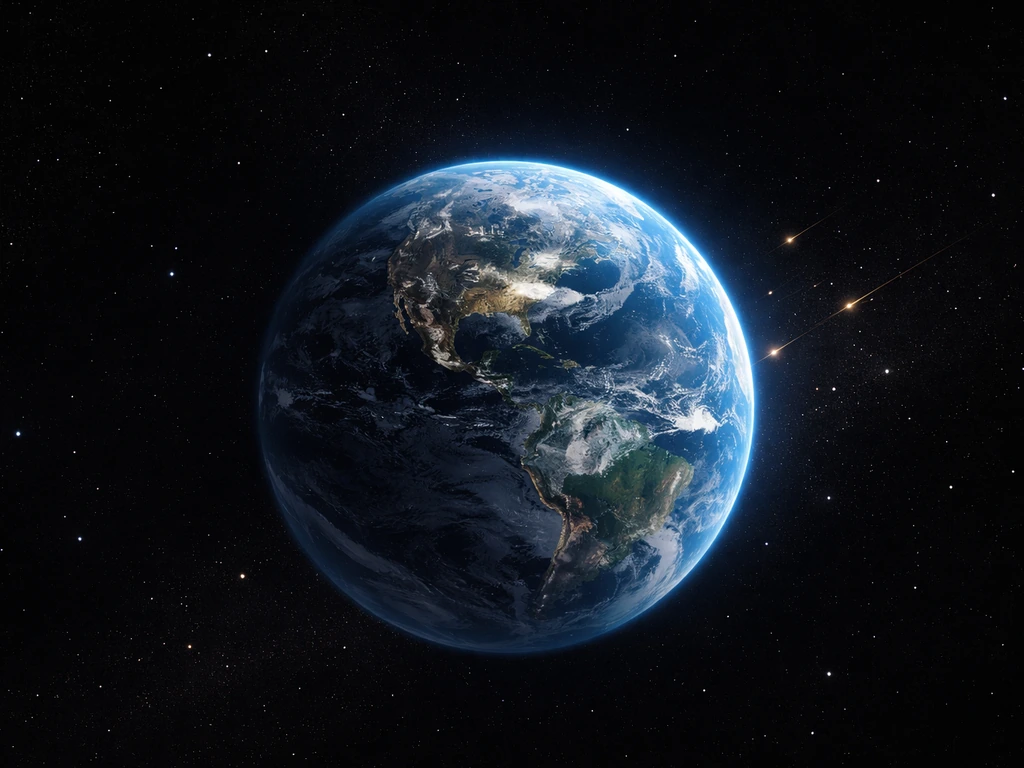
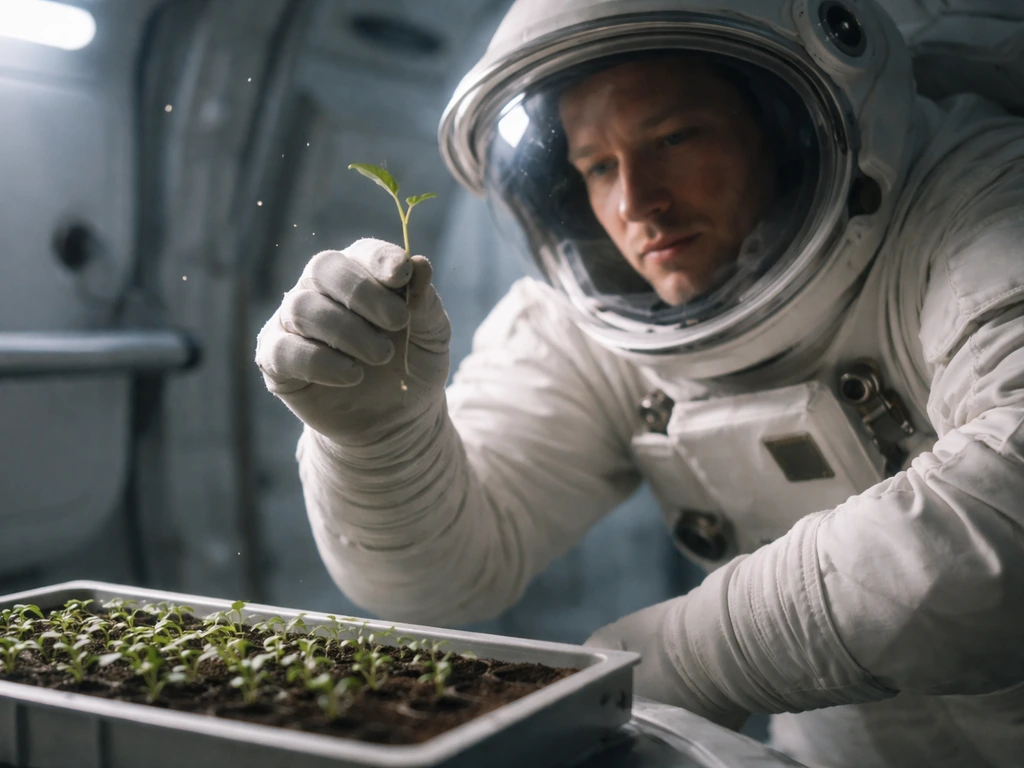
Yes, you do get taller in space, but it is not real growth. Your body is not adding new tissue or going through any kind of biological development spurt. What actually happens is that your spine decompresses and your posture changes when gravity is no longer pushing down on you. blank" rel="noopener noreferrer">NASA data shows stature increases by roughly 3% in microgravity, and some Skylab analyses recorded height gains of 4 to 6 cm in the first days of weightlessness. The moment you land, that extra height disappears. So the short answer: space makes you temporarily taller, but it does not make you grow.
Do You Grow in Space? How Microgravity Affects Height

Marcus Whitmore
9 Apr 2026
What 'growing in space' actually means biologically
When biologists talk about growth, they mean a real, lasting increase in the number or size of cells, producing more tissue or mass. A child growing taller over years is genuine growth: bone cells are dividing, cartilage is being laid down, hormones are directing the whole process. That is completely different from your spine stretching out like an accordion when no one is squeezing it. The distinction matters because a lot of the 'you grow taller in space' headlines are describing a structural change, not a biological one.
True biological growth requires cell division (mitosis), nutrient delivery, hormone signaling, and time. Microgravity disrupts all of these to varying degrees, which is actually one reason space is such a useful environment for studying what controls growth. Think about it: if you remove one major physical force from the equation, you can start to isolate which growth signals are gravity-dependent and which are not. The question is not just 'do you grow?' but 'does the machinery of growth change?' And the answer there is a clear yes.
Gravity's role in how bodies are built
Gravity is a constant mechanical load on every living thing on Earth. Your skeleton, your muscle mass, even the shape of your organs, have all been calibrated by hundreds of millions of years of evolution to function under 1g. Take that load away and the body starts adapting fast, and not always in helpful directions. Bone density drops, muscles shrink, and fluid redistributes upward toward the head, causing puffy faces and what NASA researchers informally call 'chicken leg syndrome,' where the legs thin out as fluid migrates cephalad.
This fluid redistribution is part of why height measurements change. Your intervertebral discs, the gel-filled cushions between your vertebrae, are normally compressed by your body weight. In microgravity they absorb more fluid and expand, elongating the spine. NASA's Human Integration Design Handbook puts the average stature increase at approximately 3%, and seated height measurements from flight experiments have shown increases closer to 6% compared to preflight values. Those are real, measurable changes, but they reverse within days of returning to Earth, which confirms they are mechanical rather than biological.
This same principle applies at a planetary scale. If you have ever wondered whether the Earth itself grows, the answer involves similar tension between internal forces and external constraints, just on a geological timescale rather than a biological one.
How plants grow differently in microgravity
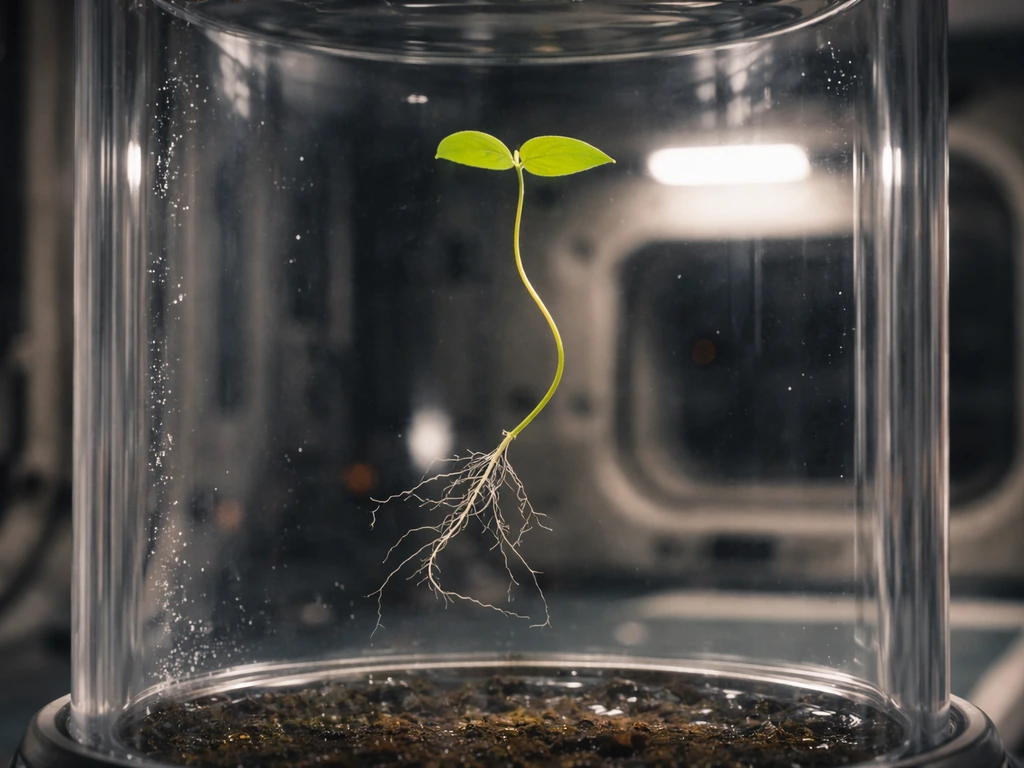
Plants are actually more interesting than humans when it comes to space growth, because plants do continue to grow and develop in microgravity. They germinate, produce stems, roots, and leaves, and can even flower. The question is whether microgravity changes how they grow, and it absolutely does.
Stem growth and overall form
On Earth, plants use a process called gravitropism to orient their growth, stems grow upward away from gravity, roots grow downward toward it. Remove gravity and that directional signal disappears. Stems in microgravity often grow in more random or curling patterns, and the overall plant architecture can look quite different from its Earth counterpart. Some studies report that stems grow slightly longer in microgravity, possibly because the plant is not investing as much energy in building thick, compression-resistant cell walls. Without gravity pulling it down, the plant does not need to build quite as sturdy a structure to hold itself up.
Root behavior without a 'down'
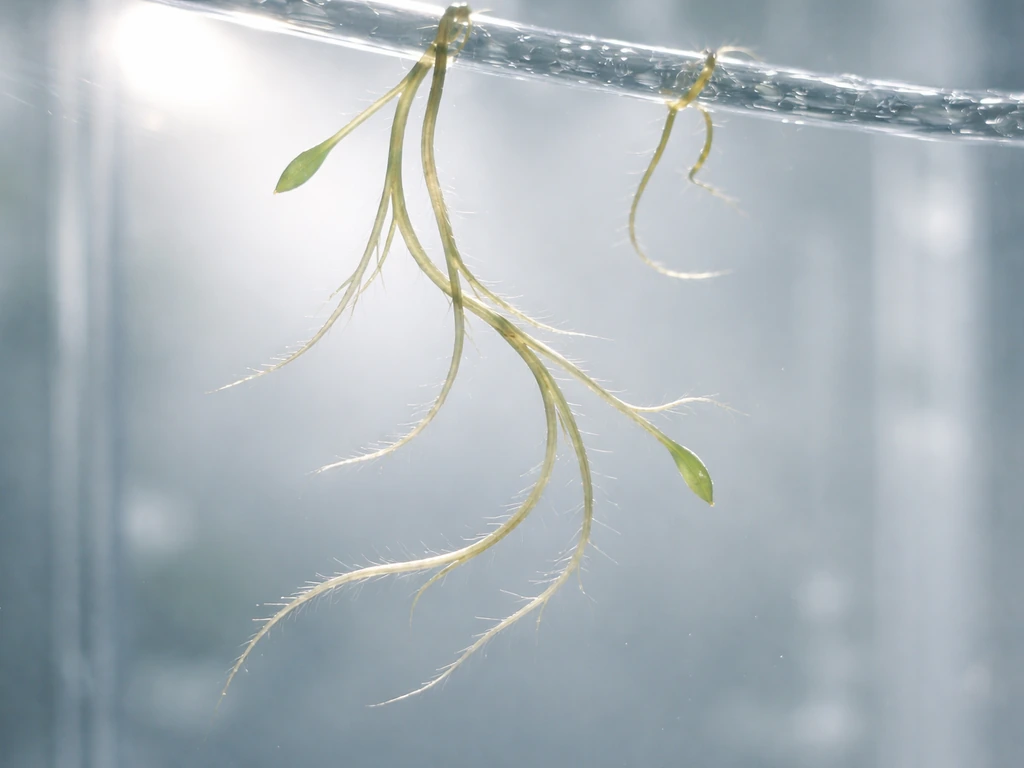
Roots lose their gravitropic guide in microgravity and instead rely more heavily on other cues like light (phototropism) and touch responses (thigmotropism). They also show changes in tip structure and branching patterns. Nutrient and water uptake can be less efficient in microgravity because convection currents that normally help distribute nutrients in soil or water medium are greatly reduced. Roots can essentially sit in a nutrient-depleted zone right around the root tip, which limits growth rate even when everything else is available.
Human height in space: the numbers
Here is what the data actually shows. Skylab 4 astronauts gained 4 to 6 cm of height in the first days of spaceflight, alongside a decrease in waist circumference of up to 10 cm as fluid shifted upward. Those waistline changes are a good reminder that this is fluid redistribution happening across the whole body, not just the spine. The height gain is real and measurable, but it is not growth in any biological sense. No new bone was formed, no growth plates were activated, no long-term increase in stature resulted.
So if a teenager went to space, would they grow taller permanently? No more than any teenager on Earth would. Normal developmental growth driven by growth hormone and IGF-1 would continue on whatever schedule their biology had planned. The spinal elongation effect would add a temporary bonus, but that disappears on return. If anything, the bone loss that accumulates during long-duration spaceflight is a more serious concern than any height gain.
| Effect | Cause | Temporary or Lasting | Approximate Magnitude |
|---|---|---|---|
| Height increase in humans | Spinal elongation, fluid shifts, postural changes | Temporary (reverses within days of landing) | ~3 to 6 cm (3–6% stature) |
| Waist circumference decrease | Cephalad fluid redistribution | Temporary | Up to ~10 cm |
| Puffy face / 'chicken legs' | Fluid shift toward head | Temporary | Visible but not precisely quantified |
| Bone density loss | Reduced mechanical loading on skeleton | Partly lasting without countermeasures | ~1–2% per month without exercise |
| Muscle mass loss | Reduced mechanical demand | Partly lasting without countermeasures | Significant over weeks to months |
What happens to cell division and growth hormones
This is where space biology gets genuinely fascinating. Microgravity does not just change your shape, it changes how cells behave at a molecular level. Research on cells cultured in microgravity and on returned astronaut samples shows that the rate and pattern of cell division, including mitosis, can shift. Some cell types divide more slowly; others show altered gene expression related to growth and stress responses. The cytoskeleton, the internal scaffolding of a cell, is mechanosensitive, meaning it responds to physical forces. Without normal gravitational loading, cytoskeletal organization changes, and that cascades into changes in how signals move around inside the cell.
Hormone signaling is also disrupted. Growth hormone secretion patterns can change in microgravity, and the signaling pathways that normally coordinate bone remodeling, including the RANK/RANKL system and osteoblast versus osteoclast activity, shift toward net bone loss. Insulin-like growth factor 1 (IGF-1), which is a key driver of tissue growth, shows altered expression in spaceflight studies. So while you might think 'less gravity, less compression, things can grow more freely,' the biological signaling environment actually becomes less conducive to building new tissue, not more.
Plants show similar cell-level effects. Auxin, the plant hormone that directs cell elongation and tropism responses, redistributes differently in microgravity. On Earth, auxin migrates to the lower side of a horizontal stem, causing asymmetric cell elongation that bends the stem upward. Without gravity, that asymmetry is lost, which is why stems lose their upward directionality. The cells are still capable of elongating, but the directional instruction is missing.
Why unlimited growth still does not happen in space
It is tempting to think that removing gravity removes a constraint on growth, and in a very narrow mechanical sense, it does reduce compressive load. But growth is not primarily limited by how heavy you are. It is limited by nutrient availability, oxygen and CO2 diffusion rates, hormone signaling feedback loops, and the fundamental geometry of cells themselves. A cell can only grow so large before its surface area cannot supply enough nutrients to its volume, the same constraint that applies on Earth. You can read more about this in the context of whether an atom can grow big, which gets at the same core principle: physical and chemical limits exist at every scale.
For whole organisms, the limits in space actually become more restrictive in some ways. NASA research on bone and muscle loss makes clear that without the mechanical stimulus of gravity and active exercise countermeasures, the body actively breaks down existing tissue. Astronauts on the International Space Station follow rigorous exercise protocols precisely because microgravity causes net tissue loss, not gain. Growth requires anabolic conditions; spaceflight, without intervention, tends to push biology in a catabolic direction.
There is also the question of scale beyond individual organisms. Whether space itself grows is a separate cosmological question, but it illustrates that 'growth' means something very different depending on what system you are looking at and what forces are involved.
Comparing plants and humans: who changes more in space?
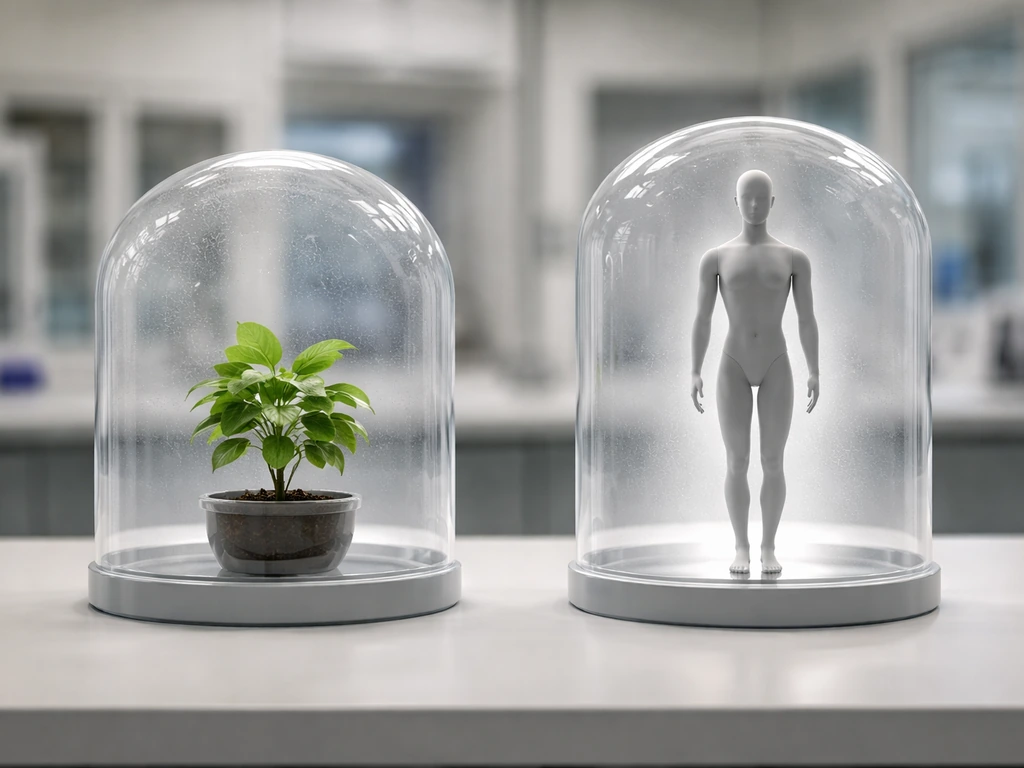
Plants and humans both respond to microgravity, but in meaningfully different ways. Here is a side-by-side comparison.
| Category | Humans in Microgravity | Plants in Microgravity |
|---|---|---|
| Height/size change | Temporary increase of ~3–6 cm due to spinal elongation | Stems may grow slightly longer; overall form changes |
| Nature of change | Mechanical and fluid-based, not true tissue growth | Real growth continues but with altered patterns and direction |
| Root/bone analog | Bone density decreases with time | Root directionality lost; branching patterns change |
| Hormone effects | Growth hormone and IGF-1 signaling disrupted | Auxin redistribution altered; tropism responses weakened |
| Net growth outcome | Net tissue loss over time without countermeasures | Plants can complete life cycles but with morphological differences |
| Reversibility | Height gain reverses on return to Earth | Plants grown in space show lasting structural differences |
The key takeaway from this comparison: plants are actually growing in space, just differently. Humans are temporarily changing shape and then losing tissue mass. If you are asking 'which organism is more resilient as a space traveler in terms of growth,' plants win by a significant margin.
What this means for interpreting space growth claims
When you see a headline saying astronauts grow taller in space, the accurate version is: astronauts temporarily measure taller in space because their spines decompress. That is not the same as growing. Similarly, claims that plants 'thrive' in space need to be read carefully, because while plants can complete their life cycles, they do it with altered architecture and sometimes reduced efficiency.
The deeper lesson here is about what growth actually requires. It is not just the absence of a constraint, it is the presence of the right signals, nutrients, and cellular conditions. Microgravity removes one physical load but disrupts multiple biological pathways. That is why understanding growth in extreme environments, whether microgravity, deep ocean pressure, or even asking what growth means at the atomic level in a DC context, consistently brings us back to the same principles: growth is regulated, directed, and bounded by both physics and biology.
For context, even energy sources as massive as the sun operate under similar constraints. Whether the sun grows depends on the balance between fusion-driven expansion pressure and gravitational compression, a reminder that growth and stability are always negotiated between forces, not just enabled by the absence of one. And on the grandest scale, whether the universe itself is growing raises the same fundamental question: what counts as real growth, and what is just expansion or redistribution?
The practical bottom line
If you are asking whether you will come back from a trip to space permanently taller, the answer is no. You will measure taller while you are up there, and for a short window after return, but your real stature will return to baseline within days. If you are asking whether your body is experiencing genuine biological growth in space, the honest answer is the opposite: without serious exercise countermeasures, your body loses bone and muscle.
Plants do keep growing in microgravity, but they grow differently, with lost directional sense and altered hormone distributions. NASA Science’s VEGGIE overview describes the Veggie system as designed to grow fresh vegetables in space for astronauts on the ISS and to support experiments on how plants respond to microgravity.
The most useful way to think about it: microgravity does not supercharge growth, it scrambles the signals that growth depends on. And that scrambling is exactly why space biology is one of the most productive fields for understanding how gravity-dependent all life on Earth really is.
FAQ
How long does the “taller in space” effect last after an astronaut comes back to Earth?
Height changes you notice in microgravity usually track posture and disc hydration, so you will typically return close to your preflight baseline within days after reentry. The exact timeline varies with how long you were in space and how closely you followed exercise and fluid management protocols.
If you measure your height in space once, is it accurate to compare it to your Earth height?
Single measurements can be misleading because fluid shifts, muscle fatigue, and day-to-day posture changes all affect stature. Teams usually control for time of day, pre-measurement activity, and seating posture, then compare to a preflight baseline to separate mechanical elongation from other factors.
Does being temporarily taller in space mean your bones are getting healthier?
The body may gain spine length temporarily, but it can still lose overall bone mineral density during longer missions. So “taller” does not mean “stronger,” and fracture risk can rise without countermeasures.
Can exercise prevent the temporary height increase from microgravity?
Countermeasures like resistance exercise can reduce the rate of bone and muscle loss, but they do not fully prevent disc fluid changes and posture effects that cause early height gain. Expect posture-related elongation to still be present, even when conditioning is excellent.
What other body changes help explain why astronauts can look taller in space?
Microgravity affects different parts of the body, so weightless “height” can include more than just spine elongation. Measurements that also look at waist, face puffiness, or calf size give clues that fluid redistribution is driving much of the apparent change.
If a teenager went to space, would they get permanent extra height because they are still growing?
Yes, age matters mainly because you are already undergoing normal developmental growth. A teenager’s baseline growth hormone and IGF-1 schedule can continue, but microgravity adds a temporary mechanical component rather than turning it into permanent extra growth.
Would someone with back pain or disc problems notice a different height effect in microgravity?
People with spinal conditions, previous disc issues, scoliosis, or low bone density may experience different patterns of height change and discomfort because discs and posture respond to loading changes. Astronaut medical screening and individualized countermeasures become especially important for these scenarios.
Why do plants seem to keep growing well in space if gravitropism is disrupted?
Plants can continue their life cycle in microgravity, but they often show altered architecture and sometimes reduced efficiency because key orientation cues are disrupted. Expect weaker gravitropic guidance, different branching, and changes in nutrient uptake behavior rather than “normal-looking” growth.
Can you compensate for lost gravitropism when growing plants in space?
If you grow plants in microgravity, you can often improve directionality by adding artificial cues like light direction or mechanical stimulation. Adjusting the light setup and using gentle tactile or airflow cues can partially replace the missing gravity-based orientation.
Does microgravity ever make cells grow faster overall?
Even in space, cell growth is limited by basic constraints like nutrient delivery and diffusion, so microgravity does not remove those bottlenecks. It changes how forces and signals inside cells are organized, which can shift growth rates and stress responses in either direction depending on cell type.
Next Article
Does Earth Grow? Mass, Size, and Life Growth Explained
Does Earth grow? See how mass changes, why size stays nearly fixed, and what surface and life growth really mean.