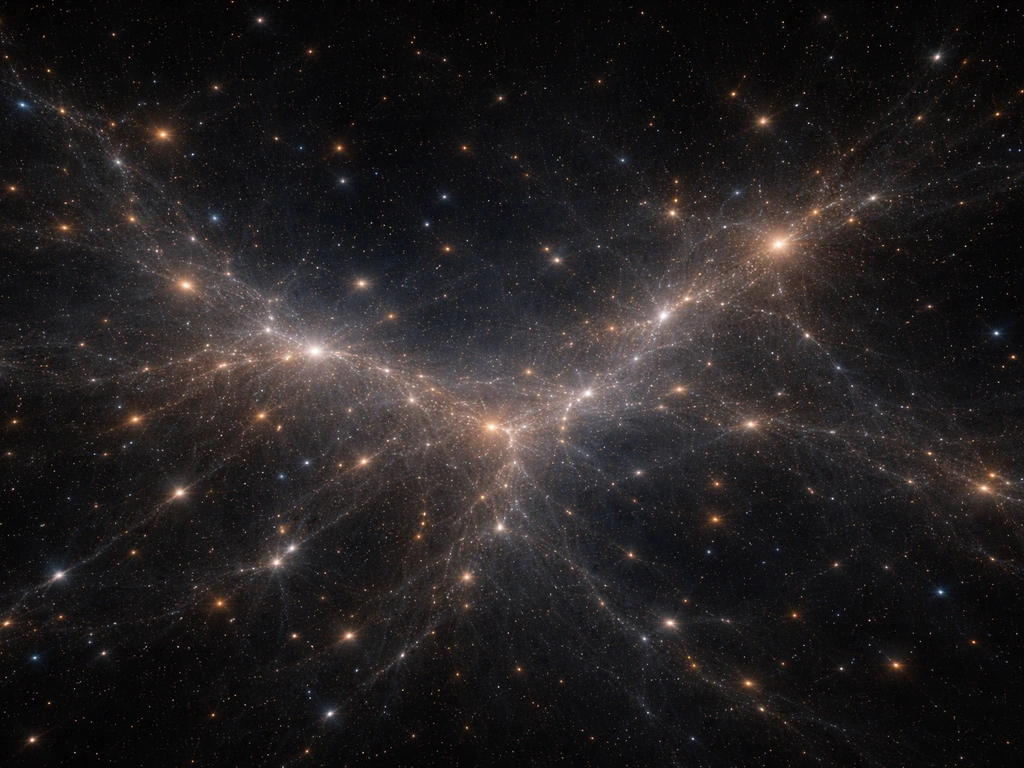
Yes, space grows, but not the way a balloon or a rubber band grows. In cosmology, space expands in a very specific sense: the distances between far-apart galaxies increase over time, not because those galaxies are racing through space like billiard balls, but because the fabric of space itself is stretching. That distinction matters enormously, and getting it wrong leads to a pile of confusing follow-up questions. Let's work through what's actually happening, how scientists know it's real, and what it means for the future of everything.
Does Space Grow? Cosmic Expansion, Evidence, and What’s Next

Marcus Whitmore
19 Apr 2026
What people mean when they say 'space grows'
The phrase 'space grows' can mean a few different things depending on who's asking. It helps to sort them out before diving in.
- Cosmological expansion: The idea that the universe itself is getting bigger over time, so that galaxies far from us appear to be receding. This is what cosmologists actually mean, and it's the main focus here.
- Galaxies moving through space: The intuitive but incorrect picture where galaxies are like rocks thrown outward from an explosion, sailing through a static backdrop. This is a common misreading.
- Space expanding 'into' something: The idea that the universe is a bubble growing into some larger container. Cosmology doesn't support this. The universe isn't expanding into pre-existing outside space.
- Local space around objects: Some readers wonder whether space grows near planets, stars, or inside atoms. It doesn't, at least not in any meaningful sense tied to cosmic expansion. Local gravitational structures are self-contained and not governed by the same expanding metric.
On this site, we spend a lot of time thinking about how growth works in biological and physical systems. Cosmic expansion is a different beast: it's not growth driven by energy input, cell division, or chemical reactions. It's a geometric change in the structure of spacetime itself. But the question 'does space grow?' is a good one, and the answer has a surprisingly clean logic to it.
The Big Bang and the expanding scale factor
Modern cosmology describes the universe using a mathematical framework called the Friedmann-Lemaître-Robertson-Walker (FLRW) model. You don't need to memorize the name. What matters is one idea at the center of it: a quantity called the scale factor, written as a(t). Think of it as a universal zoom level. When a(t) is small, all cosmological distances are compressed. When a(t) is large, those distances are stretched out. The universe started with an extremely small scale factor and has been increasing ever since the Big Bang.
Proper distance, the actual physical separation between two galaxies at a given moment, scales directly with a(t). If d₀ is the distance between two galaxies today and a(t) is the scale factor at some earlier time, the distance then was d₀ times a(t). As a(t) grows, so does d. This is what 'space expanding' means in a precise sense: comoving coordinates stay fixed, but the physical distances between those coordinates grow.
The rate of that expansion is captured by the Hubble parameter, H(t), defined as the rate of change of the scale factor divided by the scale factor itself: H(t) = ȧ(t)/a(t). Multiply H by a distance and you get a recession velocity, which gives you the familiar Hubble's law: the farther away a galaxy is, the faster it appears to recede. The current best measurement from Planck 2018 puts the Hubble constant at roughly 67.4 km/s per megaparsec, meaning a galaxy one megaparsec away recedes at about 67.4 km/s, a galaxy twice as far recedes at about 135 km/s, and so on.
How scientists actually measure space expansion
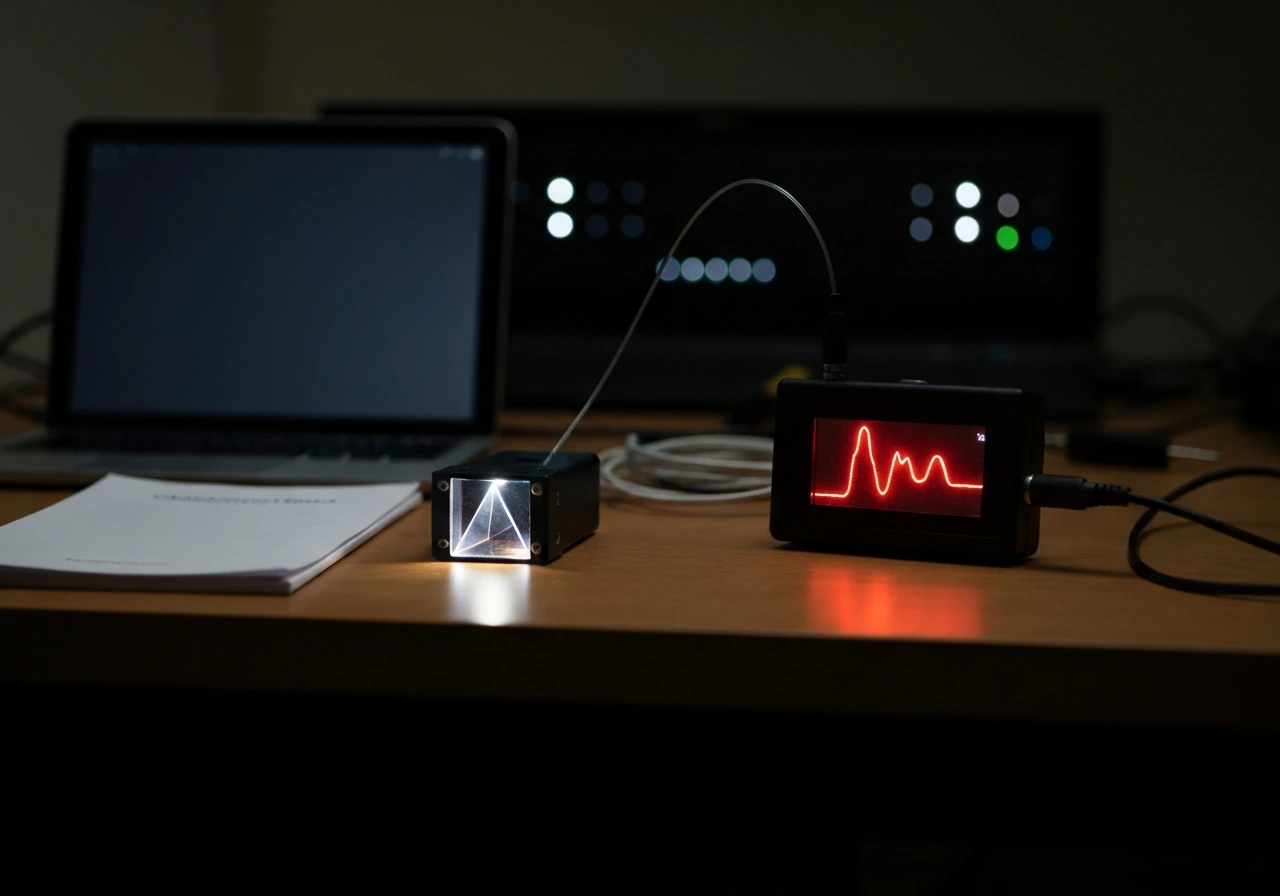
This is where the evidence becomes concrete and convincing. Cosmologists use three main observational tools to measure the expansion of space.
Redshift
When light travels from a distant galaxy toward us, space is expanding the whole time the light is in transit. That expansion stretches the light's wavelength, shifting it toward the red end of the spectrum. This is called cosmological redshift, and it's directly tied to the scale factor: if a galaxy's light has redshift z, then the scale factor when that light was emitted was a = 1/(1+z). A galaxy at redshift z = 1 emitted its light when the universe was half its current size. The more redshifted the galaxy, the farther back in time and the more compressed the universe was. This is not the same as a Doppler shift from motion through space, though it can look similar for nearby objects.
Type Ia supernovae as distance markers
Type Ia supernovae are stellar explosions with a known intrinsic brightness, making them reliable 'standard candles.' By comparing how bright they appear with how bright they should be, astronomers calculate their actual distance. In 1998, two independent teams measured dozens of these supernovae at high redshift and found something surprising: distant supernovae were dimmer than expected, meaning they were farther away than a decelerating universe would predict. Riess et al. and Perlmutter et al. both concluded the universe isn't just expanding, it's accelerating. That was the discovery of what we now call dark energy.
Baryon acoustic oscillations (BAO)
In the early universe, sound waves rippled through the hot plasma of matter and radiation. When the universe cooled enough for atoms to form (around redshift z ≈ 1090), those waves froze in place, leaving a characteristic scale imprinted in the distribution of galaxies. That scale, roughly 150 megaparsecs (the sound horizon), acts as a standard ruler. By measuring how large that pattern appears at different redshifts, cosmologists can trace how distances have changed over cosmic time, essentially reading the expansion history of the universe directly from the large-scale structure of galaxies.
The cosmic microwave background (CMB)
The CMB is the afterglow of the early hot universe, relic radiation from about 380,000 years after the Big Bang. It fills the sky uniformly at a temperature of about 2.7 Kelvin and carries detailed information about the early universe's composition and geometry. Planck satellite measurements of the CMB give us precise values for key cosmological parameters, including the matter density (Ωm ≈ 0.315) and the dark energy equation of state (w₀ ≈ −1.03, consistent with a cosmological constant). These numbers pin down how the scale factor has evolved and is likely to evolve.
Expanding space vs. galaxies moving through space: not the same thing
This is the single most important conceptual distinction in the whole topic, and it trips up a lot of people. Imagine you see a distant galaxy receding at 200,000 km/s. The naive reading is: that galaxy is moving away from us through space at two-thirds the speed of light. But that's not what's happening.
In the FLRW framework, the galaxy has a fixed comoving coordinate. It isn't going anywhere through space in the local sense. What's changing is the metric, the mathematical ruler used to measure distances. The space between us and that galaxy is itself expanding, which is why the light we receive from it is redshifted and why its proper distance increases. Some galaxies recede faster than light from us, not because they're moving through space faster than light (which would violate special relativity), but because enough expanding space separates us that the cumulative recession velocity, which is a coordinate effect in GR, exceeds c. That's allowed under general relativity.
A practical way to feel this distinction: peculiar velocities are the actual motions of galaxies through space relative to the local Hubble flow. For nearby galaxies, these can be comparable to the recession velocity. For galaxies far out in the Hubble flow, the recession swamps any peculiar motion. Recession from expansion and peculiar motion through space are two separate things layered on top of each other.
Can space keep growing forever? Possible end states
Whether space grows forever depends on what's driving the expansion. The Friedmann equations govern how the scale factor evolves, and the answer changes dramatically depending on the energy content of the universe.
| Scenario | What drives it | What happens to a(t) | Likely outcome |
|---|---|---|---|
| Cosmological constant (Λ) | Dark energy with w = −1 | Grows exponentially forever | Heat death: endless expansion, maximum entropy |
| Phantom dark energy | Dark energy with w < −1 | Grows faster than exponential, diverges at finite time | Big Rip: all structures torn apart (~200 billion years from now at earliest) |
| Dark energy decays or reverses | Energy density eventually drops | Expansion slows, stops, reverses | Big Crunch: scale factor returns to zero |
| Matter-dominated, no dark energy | Gravity alone | Expansion slows and asymptotes or reverses depending on density | Either eternal slow expansion or collapse |
Current observations strongly favor the first scenario. Planck 2018 data gives w₀ = −1.03 ± 0.03, which is consistent with a cosmological constant. If that holds, the universe expands forever, galaxies beyond our local group drift out of reach, and the cosmos trends toward a cold, dark equilibrium. A Big Rip is possible only if dark energy turns out to be phantom-like (w < −1), but there's no strong observational case for that right now. A Big Crunch requires negative dark energy or a closed, overdense universe, which current measurements also don't support.
So the most honest answer to 'can space keep growing forever?' is: probably yes, based on current data, though the exact character of dark energy remains one of the biggest open questions in physics.
Why the stretching analogy can mislead you
Teachers love the balloon analogy: draw dots on a balloon, inflate it, and watch all the dots move apart. It captures the key point that no dot is the center of expansion and all dots recede from each other. The raisin bread model works similarly: as dough rises, raisins embedded in it move apart even though no raisin is doing the moving. These are genuinely useful starting points.
But both analogies carry a dangerous implication: that space is a physical material under tension, like rubber or rising dough. It isn't. Space doesn't stretch the way a material stretches. There's no elastic force, no fabric being pulled taut, no medium resisting expansion. The FLRW expansion is a change in the geometry of spacetime, described by the metric, not a physical deformation of a substance. If you take the balloon too literally, you start asking questions like 'what's the universe expanding into?' (answer: nothing, there's no outside) or 'could we reverse the expansion by pushing back?' (not how it works at all).
There's another subtlety worth noting: the FLRW metric describes the large-scale, homogeneous universe. Locally, near massive objects like stars and planets, spacetime is described by different solutions to Einstein's equations, like the Schwarzschild metric. The balloon analogy doesn't apply locally. Your coffee mug isn't slowly expanding, and the atoms in your body aren't being stretched apart. But even as the universe expands, bound atoms and molecules stay the same size rather than growing with the scale factor can the atom grow big. In general, atoms do not grow in size just because the universe expands; they only change if local forces allow it can the atom grow big. If you are wondering whether the atom can grow in today’s universe, see the related question can the atom grow dc as a follow-up to the idea that only bound objects resist cosmological expansion. Local gravitational and electromagnetic binding forces completely dominate over any cosmological expansion at small scales. The expansion is only relevant across intergalactic distances where nothing is locally bound.
Where actual growth happens: matter and structure in an expanding universe
Here's something interesting from the perspective of this site's focus: cosmic expansion itself doesn't produce growth in the biological or even geological sense. It doesn't create new matter, build structures, or make anything more complex. In fact, expansion tends to dilute and spread things out. The real story of 'growth' during the universe's history is a gravitational one.
After the Big Bang, tiny density fluctuations in the early universe, regions slightly denser than their surroundings, began to collapse under gravity. During the radiation-dominated epoch (before about z ≈ 3400, when the universe was roughly 65,000 years old), the growth of these fluctuations was suppressed because radiation pressure fought back against gravitational collapse. Once matter began to dominate and then after recombination around z ≈ 1090, baryons were freed from the tight coupling to radiation and could fall into the gravitational wells already seeded by dark matter. Structures could then grow: clouds collapsed into stars, stars clustered into galaxies, galaxies organized into filaments and clusters.
Galaxy formation and star formation peaked at what cosmologists call 'cosmic noon,' roughly between redshifts z = 2 and z = 3, when the universe was a few billion years old. About half of all the stellar mass we observe today was already in place before redshift z = 1.3. This is the kind of growth that mirrors what the rest of this site explores: structures building complexity through accumulation, driven by forces (here, gravity) acting over time. All of that happened against the backdrop of an expanding universe, but the expansion was background geometry, not the engine of growth.
If you're curious about how individual objects grow or change in space, it's worth thinking about how the human body changes in microgravity, or how the Earth itself has evolved over geological time, or how the Sun changes across its lifecycle. Do you grow in space? In cosmology, the answer depends on whether you mean physical expansion on intergalactic scales or the growth of bound objects like you. Does the sun grow is a different question than whether space grows in cosmology, but it fits nicely with thinking about what kinds of “growth” happen in different systems the Sun changes across its lifecycle. Does Earth grow is a related question about growth in specific physical systems, but it is not the same as whether space grows in cosmology Does the sun grow. These are all forms of growth governed by very different mechanisms than cosmic expansion, but they're happening inside a universe whose large-scale geometry is indeed getting bigger.
What to take away and where to look next
Space does grow, in the specific cosmological sense that the scale factor a(t) increases with time, physical distances between unbound galaxies increase, and light from distant sources is redshifted by the expansion. We know this from three independent lines of evidence: cosmological redshift, Type Ia supernova brightness, and baryon acoustic oscillations, all consistent with the same picture. The expansion is not galaxies flying through static space; it's a change in the geometry of spacetime itself. It's probably going to continue forever, driven by dark energy, though the exact fate depends on the nature of dark energy, which is still being measured. NASA has discussed evidence and observational work that probe whether the universe’s expansion could differ depending on direction, tying that question to uncertainties related to dark energy.
If you want to go deeper, look into the Friedmann equations and how different energy densities change the shape of a(t) over time. Search for 'cosmological redshift vs Doppler redshift' to sharpen the motion-versus-expansion distinction. And if you want to understand the universe in context of growth more broadly, consider how the universe's expansion relates to questions like whether the universe itself grows without limit, or what physical constraints determine how large any structure can become. For more on that big-picture question, see our article on whether the universe grow universe itself grows without limit.
FAQ
If space expands, why don’t bound systems like galaxies or the solar system expand along with it?
Because cosmological expansion matters on scales where gravity is not tightly confining motion. Locally bound systems are held together by forces whose effects (gravity, electromagnetism, nuclear forces) dominate over the very small “stretching” from the FLRW expansion at those sizes, so their internal separations stay roughly constant even while the universe’s overall geometry changes.
Do galaxies actually “move away faster than light” because of expansion?
They can show recession speeds greater than c if you translate the expansion rate into a recession velocity for distant objects, but this does not mean objects locally outrun light. The superluminal recession is a coordinate-based description of expanding spacetime distance in general relativity, not a signal or body moving through space faster than light.
How can we be sure the redshift is from expansion and not from galaxies moving through space?
For nearby galaxies, part of the redshift comes from peculiar motion, so you need distance-independent measures or a model of the local flow. For large redshifts, the redshift pattern aligns tightly with the expansion history implied by the scale factor and is also cross-checked by supernova distances and the large-scale clustering scale, which would not match a pure Doppler explanation.
Does space expanding mean the universe has a center?
No. In the FLRW model, every sufficiently large observer can describe the universe as expanding without being at a special location. The “no center” idea is built into comoving coordinates, where all large-scale galaxies are statistically equivalent aside from local peculiar velocities.
What does it mean that the scale factor changes, since space is not a material substance?
The scale factor is part of the spacetime metric, meaning it changes the relationship between coordinates and physical separations as time evolves. Operationally, it shows up in observables like how wavelengths stretch (redshift) and how distances between comoving markers scale, rather than as a literal elastic deformation of a medium.
Can expansion slow down or speed up, and how do we tell which it is?
Yes. Whether it speeds up or slows down depends on what dominates the cosmic energy budget (matter, radiation, and dark energy). You can infer the behavior by comparing the expansion rate inferred from redshift with distance measurements from supernovae and the way the CMB and large-scale structure set the geometry and growth history.
Does the expansion mean the universe is getting bigger, or just that distances between far objects are increasing?
In the cosmological sense, both descriptions are consistent. Physical separations between comoving regions grow, which makes the “observable” part of the universe larger in terms of the physical distances corresponding to a fixed comoving scale. It is more precise to talk about how the scale factor and proper distances evolve rather than picturing a single global boundary expanding outward into space.
If dark energy drives the expansion, why can’t we just measure it directly as a force?
Because dark energy is modeled through its effect on the expansion history, usually summarized by parameters like the equation-of-state value. Its nature might be a constant (cosmological constant) or something dynamical, but current data constrain how it changes the scale factor rather than revealing a microscopic “force” in the way you would measure electromagnetism.
What happens to the Hubble constant over time if the expansion is not always the same?
The Hubble constant is specifically the current value of the Hubble parameter, H0. The Hubble parameter typically changes with time because different components (radiation in the early universe, matter at intermediate times, dark energy later) contribute differently to the expansion rate.
Will light from distant galaxies keep getting more redshifted forever, or can it turn around?
If the universe keeps expanding, the wavelength stretching continues while light travels through the expanding spacetime. Whether you see it “forever” depends on observational limits and cosmic horizons, but for a continued expansion the redshifting of new light emitted at later times will generally persist, reflecting the evolving scale factor.
Is cosmic expansion the same thing as gravitational growth and structure formation?
No. Expansion sets the overall geometric backdrop and can dilute densities, but the growth of stars, galaxies, and clusters is driven by gravity acting on density perturbations. Expansion can compete with collapse (especially early on when radiation dominates), yet bound structures still form when overdensities grow enough under gravity.
Next Article
Does the Universe Grow? Expansion, Structure, and Cosmic Futures
Clarifies whether the universe grows via expansion, new matter, or structure, and explains what evidence and fate scenar