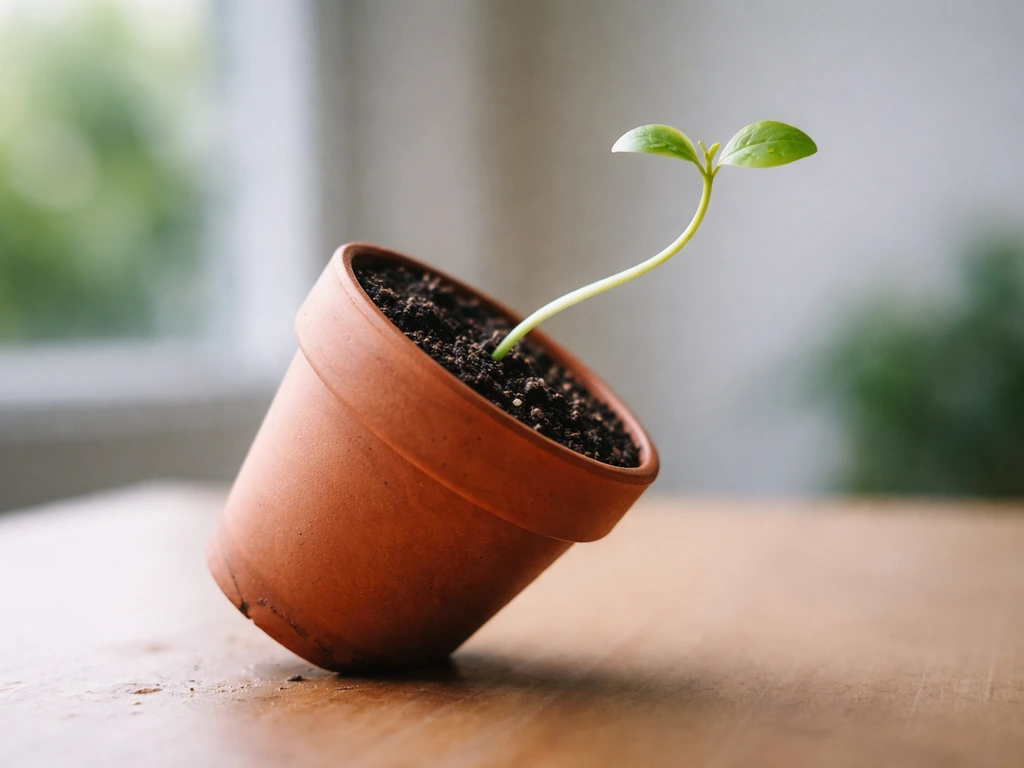
Branches grow from buds, and those buds sit at specific spots called nodes, the points along a stem where leaves attach. More precisely, the bud that becomes a branch is the axillary bud, tucked into the axil (the little "crotch" between the base of a leaf and the stem). Every time a new leaf forms, there is a potential branch point right beside it. Whether that bud actually grows out into a branch depends on a mix of signals inside the plant, what's happening at the shoot tip, and what the environment is doing.
Where Do Branches Grow From Nodes, Buds, and Apical Dominance

Marcus Whitmore
28 May 2026
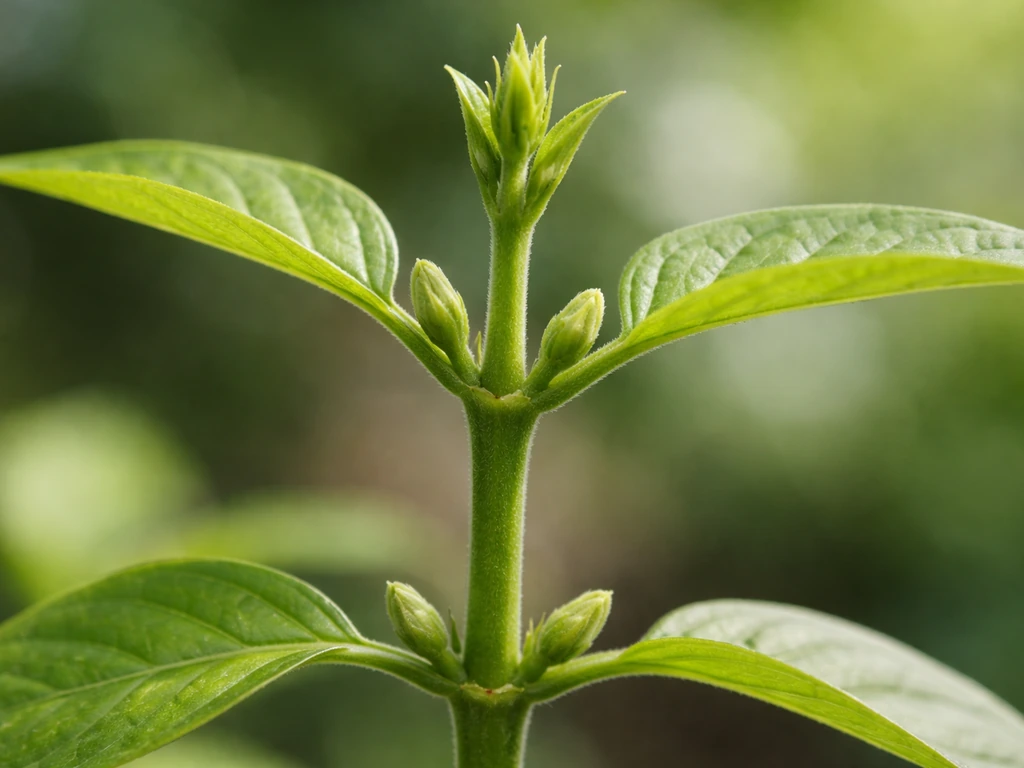
Where branches attach: a quick anatomy tour
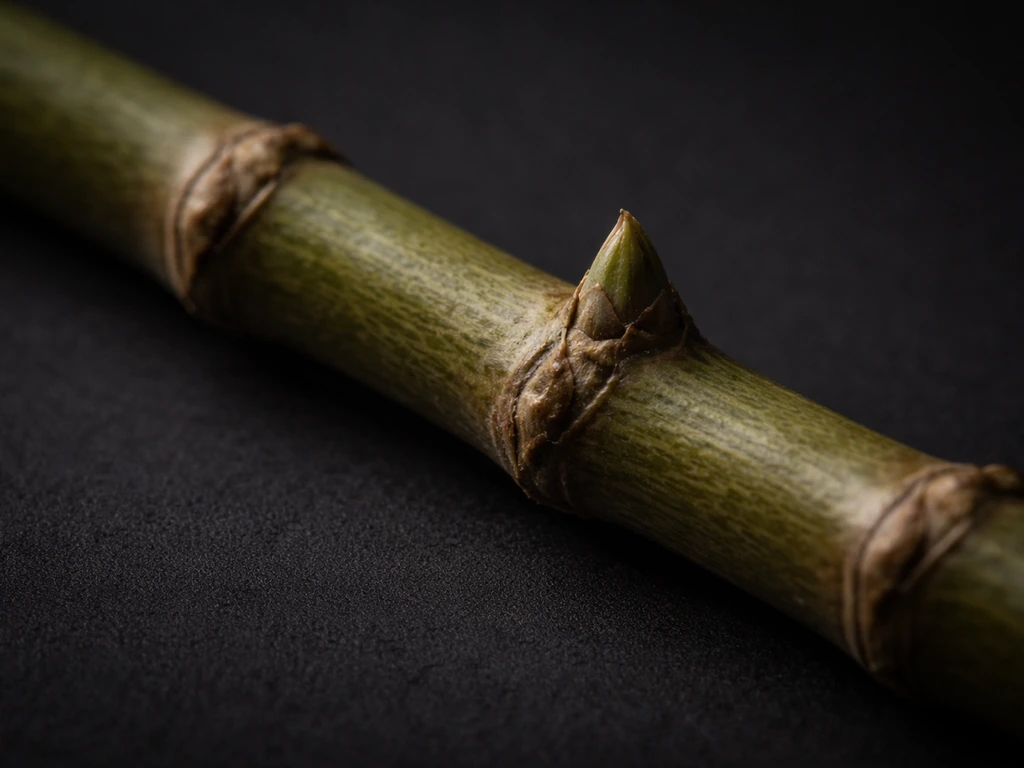
If you look closely at any stem, you'll notice that it isn't a smooth, featureless rod. It has repeating segments. The swollen or marked spots where leaves emerge are nodes. The lengths of stem between them are called internodes. Nodes are the structural anchors of the whole plant above ground, and they're also the address where branch formation is possible.
When a branch does form and grows outward, it doesn't just dangle off the surface. It integrates with the stem's vascular system through what botanists call a branch trace, a bundle of vascular tissue that connects the branch back into the main stem. Think of it like a utility corridor that feeds water, nutrients, and signals between the branch and the rest of the plant. That structural connection starts forming as soon as the axillary bud begins developing, which is part of why branches at nodes are so mechanically stable compared to, say, adventitious growths that pop up in unusual spots.
Primary vs secondary growth: how buds become branches
There are two kinds of growth at work in a branching stem, and it helps to keep them straight. Primary growth is the lengthening growth produced by the apical meristem, the actively dividing tissue at the very tip of a shoot. As the shoot tip pushes upward and outward, it lays down new nodes, and at each node it sets aside a small cluster of dividing cells in the leaf axil. That cluster is the axillary bud (sometimes called a lateral bud). At this stage, the bud is essentially a miniature shoot in waiting.
Secondary growth is the thickening that happens later, driven by the vascular cambium, a cylinder of dividing cells that wraps around the inside of the stem in woody plants and many dicots. As the cambium keeps dividing outward, it produces secondary xylem (wood) on the inside and secondary phloem on the outside, making the stem wider year after year. This is how a small twig becomes a thick branch over time. The cambium doesn't decide where branches go, axillary buds at nodes do that, but it does support the branch's long-term development by continuously adding vascular tissue that sustains growth.
So when you're looking at a mature tree, the branch architecture you see is the result of many years of both processes layered together: primary growth kept adding new nodes and potential branch sites, while secondary growth thickened and reinforced the branches that were already developing.
Apical dominance: the shoot tip calls the shots
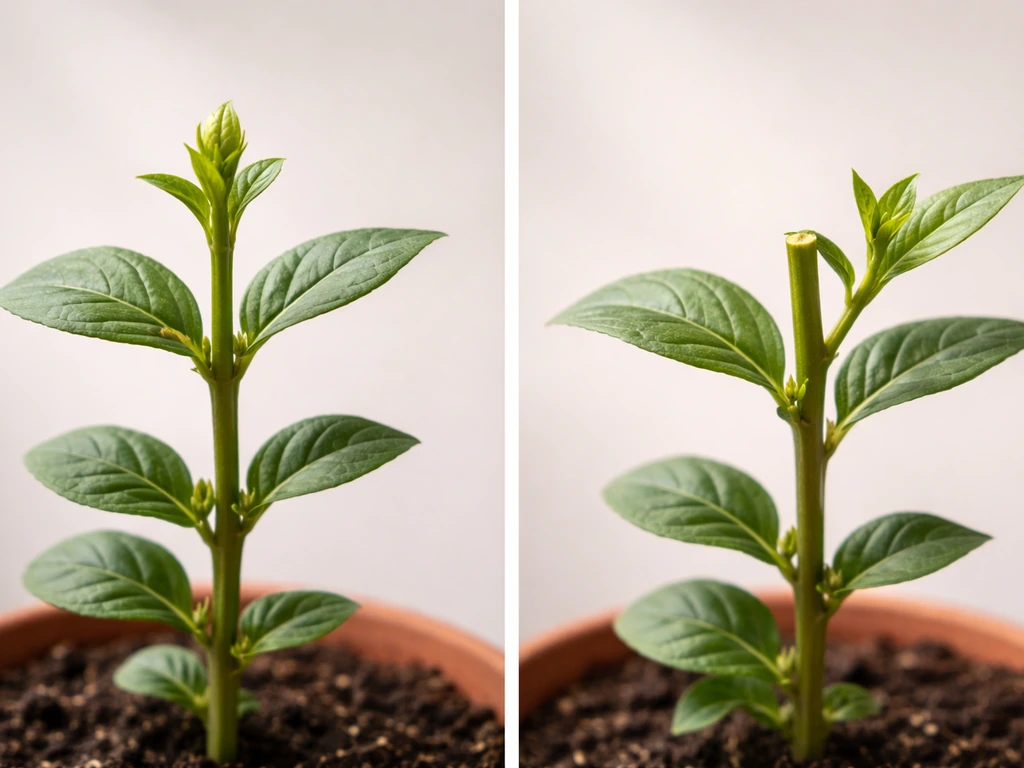
Here's the part that trips a lot of people up. If every node has an axillary bud, why don't plants explode into a forest of side branches all at once? The answer is apical dominance. The shoot apex (the growing tip) actively suppresses the axillary buds below it, keeping them dormant while the tip keeps elongating upward.
The main chemical doing this suppression is auxin, a hormone produced in abundance by the apical meristem. blank" rel="noopener noreferrer">Auxin travels down the stem in a process called basipolar transport, and it inhibits the axillary buds it passes. Add in strigolactones, another class of plant hormone that also suppresses bud outgrowth, and the lateral buds are caught in a chemical holding pattern. Meanwhile, cytokinin, a hormone that promotes cell division and bud activation, tends to have the opposite effect, encouraging buds to grow when auxin levels drop. A review update summarizes that blank" rel="noopener noreferrer">strigolactones act as branching inhibitors in multiple models by linking auxin-driven changes with cytokinin repression.
Remove the shoot tip (by pruning, pinching, or physical damage), and the auxin supply drops rapidly. The lateral buds are released from suppression, cytokinin influence rises, and one or more of those axillary buds at the nodes below the cut will start to grow out as new branches. Gardeners exploit this constantly: pinch the tip of a basil plant and suddenly you get a bushier plant because the side shoots take over. The same principle governs why topped trees send out masses of vigorous shoots below the cut.
How the cambium builds branching patterns over time
Once an axillary bud is activated and starts growing out, it quickly establishes its own apical meristem and begins its own primary growth, forming new nodes and new axillary buds as it elongates. Then, if the plant has secondary growth capacity, its own cambium starts to develop, thickening that branch just as the main stem thickens. This is why branching is fractal-like in woody plants: each branch is essentially a smaller version of the main stem, with the same rules playing out at every level.
The cambium in a new branch develops gradually. In young shoots, the vascular tissue begins as discrete bundles, and over time (in dicots and gymnosperms) these bundles connect into a full ring or cylinder of cambium. That's when sustained secondary growth can really kick in. This is why young branch stubs are thin and flexible while older branches are thick and woody, the cambium has been adding layers for years.
What changes where branches actually form
Light
Plants respond to light direction and intensity through photoreceptors, a process called photomorphogenesis. In low light or shade, plants tend to prioritize upward elongation over lateral branching, keeping side buds dormant and focusing energy on reaching a better light source. In strong, even light, branching tends to be more robust. This is why the interior of a densely leafed shrub often has bare, branchless stems, while the outer edges are covered in side shoots.
Nutrients and overall plant health
Branching is metabolically expensive. Nitrogen availability in particular influences how freely axillary buds break dormancy. A well-fed plant with good nitrogen levels tends to branch more freely. A stressed or nutrient-starved plant often channels what resources it has into maintaining existing growth rather than initiating new branches. That is why climbers need support to grow: a trellis or pole helps them reach the light and maintain the right growth direction.
Pruning and pinching
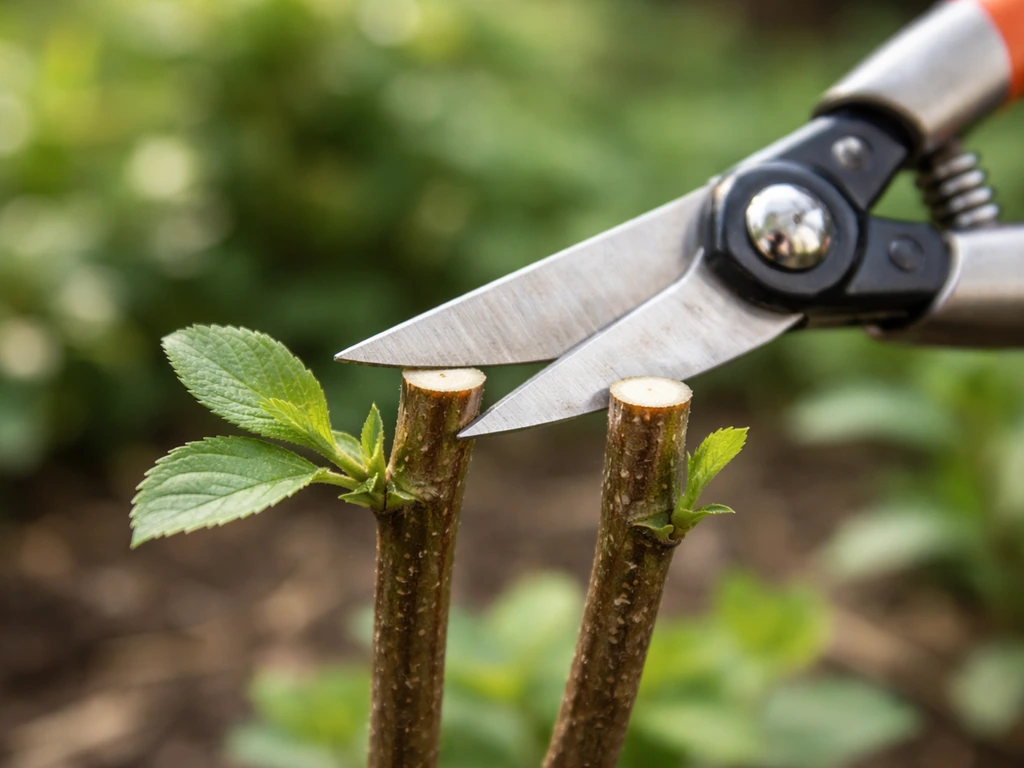
This is the most direct human lever on branching. Cutting back to just above a node removes the terminal bud, drops auxin levels in the stem below, and releases the axillary buds nearest the cut. If you want a branch to grow in a specific direction, prune just above a bud that faces that direction, the new shoot will grow outward in line with that bud's orientation.
In other words, shoots can grow in the opposite direction to the force acting on them, a reminder that plant growth follows biological control rather than simple physics shoots grow in the opposite direction to which force. Extension horticultural guidance frames this as standard practice for shaping trees and shrubs: heading cuts redirect growth to lower lateral buds, while thinning cuts (removing whole branches at the base) open up space without triggering a flush of new lateral shoots.
Temperature and seasonal cues
In temperate woody plants, axillary buds often go fully dormant in autumn, protected by bud scales, and only resume growth when temperatures and day length cues signal spring. The branching you see in spring is largely a release of that accumulated dormancy across dozens or hundreds of axillary buds simultaneously.
How to find branch points on a real stem
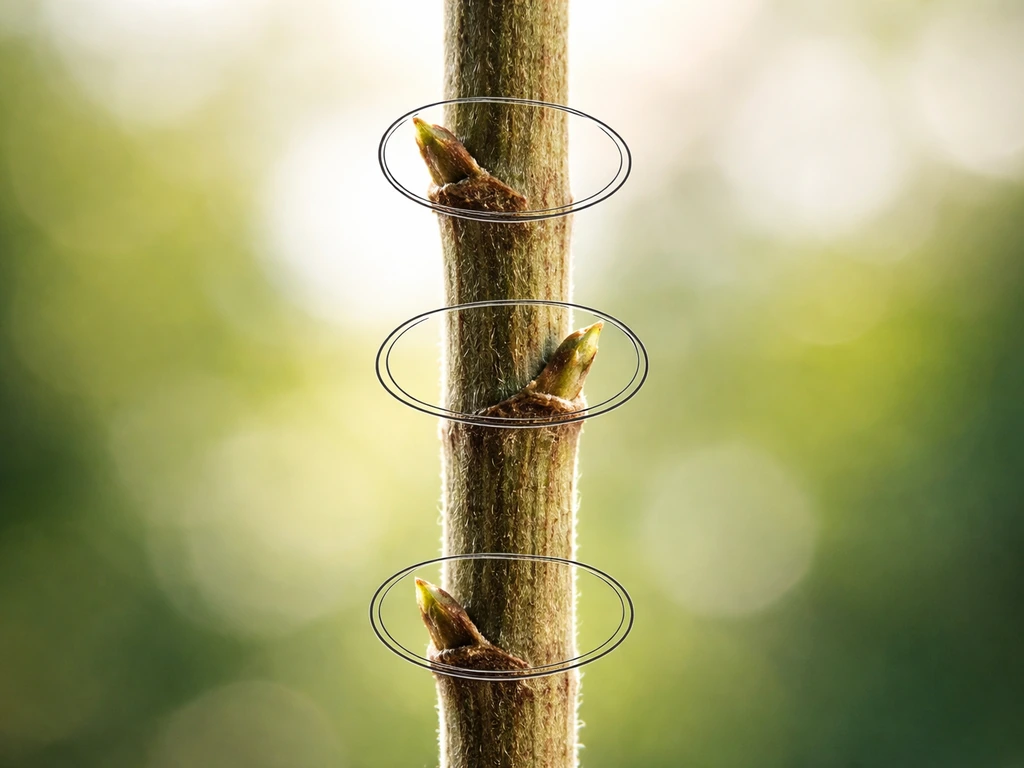
You don't need a microscope or a lab to see where branches can and will form. Here's how to read a stem like a botanist.
- Pick up a woody twig or a healthy herbaceous stem and hold it up to a light source so you can see the surface clearly.
- Look for nodes: these are the slightly swollen or ringed spots along the stem where leaves (or leaf scars, on bare winter twigs) are attached. On a leafy stem, the node is simply where the leaf meets the stem. On a dormant twig, look for circular leaf scars — the marks left when leaves fell off.
- Find the axil: the angle between the base of the leaf (or the leaf scar) and the stem. That little pocket is the axil, and somewhere inside it is an axillary bud.
- Locate the bud itself: on a dormant woody twig, look for small, pointed or rounded structures covered in overlapping bud scales right above each leaf scar. On a herbaceous plant in active growth, the bud may be tiny and greenish, barely visible at the leaf base.
- Check the internodes: the smooth sections between nodes. There should be no buds here on a normally developing stem. If you see growth from an internode, that would be an adventitious bud — unusual, and a sign of either damage, stress, or a specific propagation response.
- Notice the leaf arrangement: if leaves alternate up the stem (one per node, alternating sides), the axillary buds will alternate too. If leaves are opposite (two per node, facing each other), there will be two axillary buds at each node, one on each side. This tells you where two branches could emerge at the same point.
- Look for bud scale scars near the tip: these ring-shaped scars mark where last year's terminal bud was. The distance between consecutive sets of bud scale scars tells you how much the shoot grew in one season, and the nodes in between are where lateral branches could form.
Once you've done this on one stem, you'll start seeing it everywhere. It becomes almost automatic to glance at a plant and immediately spot where the next branch is likely to emerge.
Clearing up common mix-ups
Branches vs roots: completely different branching systems
Roots branch too, but the mechanism is entirely different. Root branches (lateral roots) form from tissue deep inside the root called the pericycle, not from surface buds in a leaf axil. There's no equivalent of an axillary bud on a root. So when someone asks whether the "branches" on their plant's root system follow the same rules as stem branches, the answer is no, they're built on a different developmental blueprint. This connects to a broader question about how root cells differ from shoot cells in their developmental programming, which is a genuinely interesting rabbit hole if you want to follow it further.
Branches only grow from the top? Not quite
A surprisingly common misconception is that branching only happens near the shoot apex. The apex is actually where branching is most suppressed, not most active, thanks to apical dominance. Axillary buds exist at every node along the stem, and any of them can activate if the conditions are right. In fact, the buds closest to the apex tend to be the most heavily inhibited by auxin. It's often the buds further down the stem that break dormancy first after a pruning cut.
"Adventitious" branching is the exception, not the rule
Sometimes plants produce buds and shoots from places that aren't nodes or leaf axils, from wounds, from root tissue, or from callus tissue in cuttings. These are called adventitious buds. They follow different developmental rules and are generally rarer than normal axillary bud growth. When you see a plant sprouting vigorously from a cut stump or from the base of its stem after damage, that's often adventitious growth. It's fascinating, but it's not the baseline "this is where branches come from" answer for a normal, healthy plant.
Herbaceous vs woody plants: same rules, different timescales
In herbaceous plants (think tomatoes, basil, or sunflowers), everything happens faster and the stems stay soft. The axillary bud structure is the same, but without secondary growth, the branching pattern is more flexible and less permanent. In woody plants, branches become fixed in the architecture of the tree and persist for years, reinforced by secondary growth from the cambium. Shrubs tend to be somewhere in the middle, often producing multiple stems from near the base with vigorous lateral branching throughout. But in all of these cases, the core answer stays the same: branches originate from axillary buds at nodes.
A quick comparison: what drives branching or suppresses it
| Factor | Effect on branching | Practical takeaway |
|---|---|---|
| Intact shoot apex (high auxin) | Suppresses axillary bud outgrowth | Side branches stay dormant while the tip grows freely |
| Pruning / pinching the tip | Removes auxin source, releases lateral buds | Triggers new branch growth below the cut |
| Cytokinin | Promotes bud activation and branching | High cytokinin levels counteract apical dominance |
| Strigolactones | Inhibit bud outgrowth | Work alongside auxin to keep lateral buds dormant |
| Strong, even light | Encourages lateral branching | Well-lit plants branch more freely |
| Shade / low light | Suppresses branching, promotes upward elongation | Interior stems go bare; growth focuses on reaching light |
| Good nitrogen availability | Supports more branching | Nutrient-stressed plants branch less freely |
| Leaf arrangement (opposite vs alternate) | Changes the spatial pattern of branch points | Opposite leaves mean two branch opportunities per node |
Understanding how shoots grow upward while roots grow downward, and how those directions are locked in from the very start of a plant's development, ties into some of the same hormonal signaling that governs branching. If you're wondering why the stem grows upward in the first place, that behavior ties into the same gravity, light, and auxin guidance described in the next section shoots grow upward.
If you want the deeper explanation, the same gravity and hormone signaling also answers why roots grow downward and shoots grow upwards why do roots grow downward and shoots grow upwards. Gravity, light, and auxin are all part of the same toolkit the plant uses to organize its architecture. Once you see that connection, the whole picture of how a plant builds itself starts to feel a lot more coherent.
FAQ
If branches come from buds, why doesn’t the very top of the plant keep producing side branches all the time?
Branching from the shoot apex is usually suppressed rather than promoted. The main branch points come from axillary buds in the leaf axils at nodes, and those buds are most likely to break dormancy after the tip is removed or inhibited (for example by pruning or natural damage).
How do I identify the exact spot to prune if I want branching from nodes?
When you see a new shoot at a node, the correct “address” is the axil of a leaf, not the internode. If you prune, cut too low inside an internode and you may leave few or no viable axillary buds to activate, resulting in weak or delayed regrowth.
What if my plant sprouts from a spot that is not at a node or leaf axil?
Yes, but those are different from the typical axillary buds. Buds that arise from wounds, callus, or other internal tissues are adventitious and may be less predictable, sometimes triggered after severe injury or when cuttings or grafts stimulate new growth.
After I top or prune a plant, why do the strongest new branches often appear slightly below the cut?
Because axillary buds closest to the apex are typically under stronger auxin inhibition. After a heading cut, the most vigorous lateral shoots often come from buds a bit below the cut rather than the very nearest bud.
What’s the difference between a heading cut and a thinning cut for controlling where branches grow?
It depends on the type of cut. A heading cut usually redirects growth and increases lateral shoot emergence near remaining nodes, while a thinning cut removes an entire branch at its base (often opening light and space without forcing a dense flush of new shoots from one point).
Can light conditions change where branches form on the same plant?
Not always. In shade or low light, plants tend to prioritize upward elongation and keep many lateral buds dormant, so side branching may be sparse inside a canopy even if nodes are present.
Why does my plant have nodes but still won’t branch after pruning?
Even when dormancy is released, buds are more likely to grow if the plant has enough resources, especially nitrogen. Nutrient stress often reduces the number of buds that activate and slows the development of new branches.
Are adventitious shoots after pruning the same as normal node-based branching?
Adventitious shoots may form on stems after repeated cutting or on old tissue that has been damaged, but they do not follow the “one leaf axil equals a potential branch bud” pattern. If your goal is consistent branching, axillary buds at nodes are the reliable starting points.
Why do early branches on woody plants seem easy to train at first but become rigid later?
In woody plants, secondary growth from the cambium helps lock branching architecture in place over time. Young branch stubs can be flexible, but as cambium develops and thickens the branch, the structure becomes harder to change without further pruning.
Do roots branch from the same kind of nodes and buds as stems?
No. Root “branches” are lateral roots that arise from internal root tissue, especially the pericycle, rather than from leaf-axil buds. So the rules for where stem branches grow do not directly apply to root branching patterns.
Next Article
Shoots Grow Opposite the Applied Force: Why and How to Test
See why shoots curve opposite the applied force, how signals drive differential growth, and how to test gravity vs touch