Climbing plants need physical support because they have no rigid internal skeleton to hold themselves upright. Without something to grip, lean on, or wind around, gravity pulls their soft, elongating stems downward, cutting off light, tangling growth, and disrupting the internal transport of water and nutrients that every new cell depends on. Support is not a luxury for a climber. Without that support, the stem cannot maintain the upright geometry needed for steady, upward growth a line segment can grow from which of the following. It is a structural requirement baked into the biology of how these plants grow, divide cells, and respond to mechanical signals from their environment.
Why Do Climbers Need Support to Grow and How to Help
Marcus Whitmore
23 Apr 2026
What 'support' actually means for a growing organism
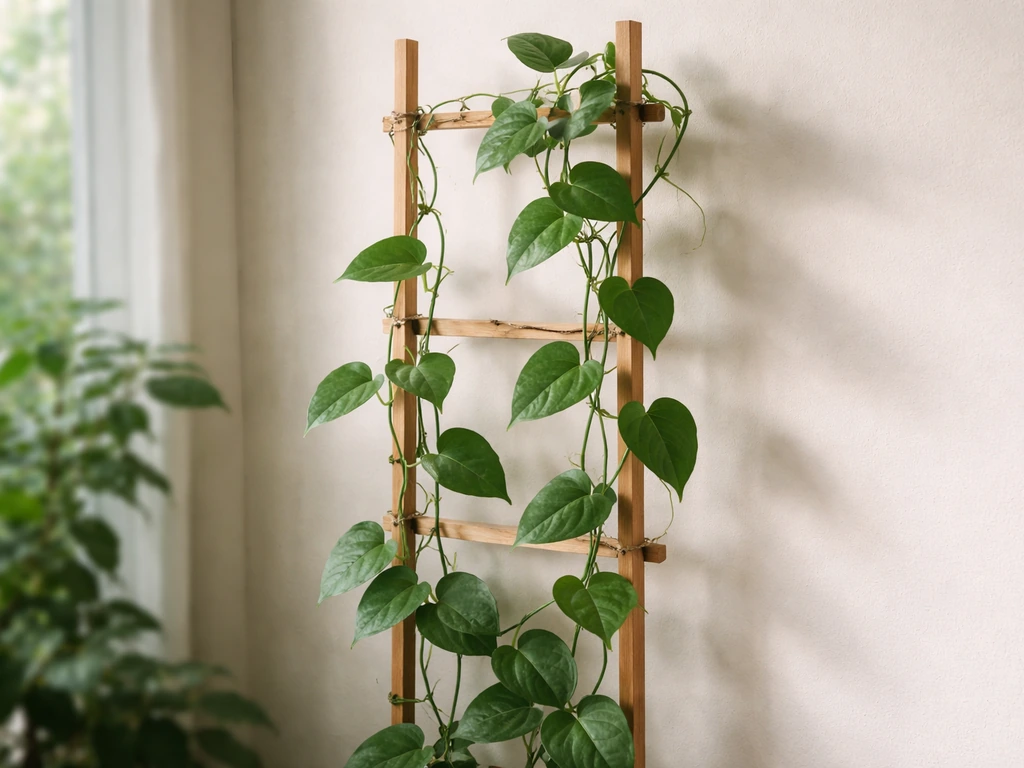
When biologists talk about support in the context of growth, they mean more than a stick in the ground. Support is any external structure that resists gravity, distributes mechanical load, and gives a growing tissue a stable surface to orient itself against. For a climbing plant, that could be a trellis, a fence post, a tree trunk, or even a neighboring stem. For example, BBC Gardeners World Magazine offers [practical guidance and examples of plant supports](https://www.
gardenersworld. com/plants/plant-supports/) such as trellis-type structures for climbing plants. For a sheet of bioengineered tissue grown in a lab, it is a scaffold made of collagen or polymer mesh. The principle is the same across all these cases: growing cells need a physical framework that holds them in the right geometry while they divide, elongate, and differentiate.
Think of support as a kind of external skeleton. Trees build their own internal support through wood (lignified cell walls packed into thick trunk tissue). Climbers outsource that job entirely. Because they do not invest energy in building a heavy supporting structure themselves, they can put more growth into reaching upward quickly, which is a brilliant evolutionary trade-off in dense vegetation where light competition is fierce. But that strategy only works when the external support is actually there.
Forces, structure, and biomechanics: why unsupported growth collapses
A climbing stem is essentially a long, thin, flexible column. Engineers have a concept called the critical buckling load, the maximum compressive force a column can take before it bends and fails. The thinner and longer the column, the lower that threshold. A climbing stem growing even 30 to 40 centimeters without support crosses into territory where its own weight exceeds its buckling limit. It flops. Once a stem is lying horizontally or tangled on the ground, its vascular bundles, the channels that carry water up from the roots and sugars down from the leaves, become kinked and compressed, slowing transport just when the actively dividing tip needs resources most.
Plants actually sense these mechanical forces at the cellular level through a process called thigmomorphogenesis, the set of growth and developmental changes triggered by mechanical stimulation like touch, wind, or contact with a surface. Research in this area shows that these responses are dose-dependent and systemic, meaning a mechanical signal at one point on the plant can travel and influence growth in regions that were never directly touched. Mechanosensitive ion channels in the cell membrane convert physical tension into ionic signals, triggering calcium influx and a cascade of hormone changes. So when a stem contacts a support surface, it is not just getting physical help. It is receiving a biological signal that reshapes how and where it grows.
The directional nature of these signals matters too. Mechanical stress and strain act as directional cues, telling cells which way to orient their division planes and which way to elongate. A stem pressed against a support surface experiences a very different pattern of forces than one dangling freely in air. That difference in force pattern feeds directly into gene expression changes that guide the stem to wrap, grip, or flatten itself against the support rather than continuing to grow in an uncontrolled direction.
Resource distribution limits: transport, diffusion, and vascular supply
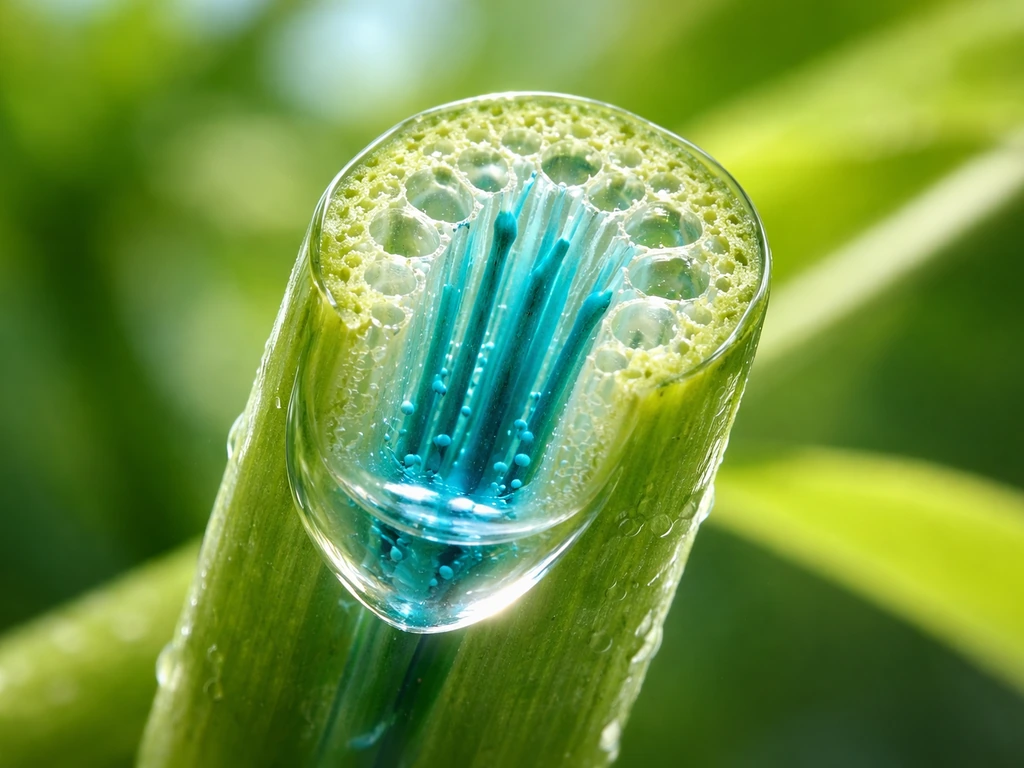
Every dividing cell at the growing tip of a climber needs a continuous supply of water, minerals, and sugars. These travel through two vascular systems: the xylem (water and minerals upward from roots) and the phloem (sugars downward from photosynthesizing leaves). Both systems depend on the stem staying roughly upright and unkinked. When an unsupported stem bends under gravity, it is a bit like crimping a garden hose. Flow slows, pressure drops, and the cells at the tip start running short of exactly the resources they need to keep dividing.
Diffusion limits compound this problem. At the cellular scale, nutrients and signals move by diffusion over short distances, typically effective only across cells a few hundred micrometers wide. When a stem collapses and growth becomes disorganized, cells end up farther from supply lines than diffusion can reliably bridge. Cell growth stalls not because the whole plant lacks resources, but because local delivery fails. Support keeps the geometry of the vascular system intact so that every actively growing cell stays within reach of the supply network.
Ethylene is another piece of this puzzle. Under mechanical stimulation, ethylene production increases, and ethylene in turn promotes auxin transport toward the stimulated region. Auxin drives cell elongation. So a climbing stem that makes contact with a support gets a localized surge in auxin-driven growth on the contact side, which is part of what causes the coiling or wrapping movement that locks the plant onto its support. Remove the support, and that entire hormone-driven elongation response loses its anchor point.
Cell division vs. space: how physical constraints control growth rates
Cell division at a growing tip is not just a matter of having enough sugar and water. It also requires physical space and a stable mechanical environment. When a stem is unsupported and flopping, the cells at the apical meristem (the actively dividing zone at the very tip) experience chaotic and variable mechanical loads. That unpredictability matters because cell division planes are partly determined by the direction of maximum mechanical stress in the tissue. Disorganized forces mean disorganized division planes, and disorganized division means the new cells do not elongate in a consistent direction. Growth becomes slow, crooked, and inefficient.
There is also a feedback loop between growth and force. As cells divide and the tissue expands, it generates its own forces on the surrounding cells. In a supported stem, those forces are channeled predictably along the axis of the support, reinforcing organized upward growth. In an unsupported stem, those internal forces become compressive rather than tensile, which can actually slow down the rate of cell elongation. The result is that a climber without support does not just grow crooked, it often grows slower, because the biomechanical environment that its cells evolved to work within has been removed.
Regulation and morphology: how contact with a surface shapes development
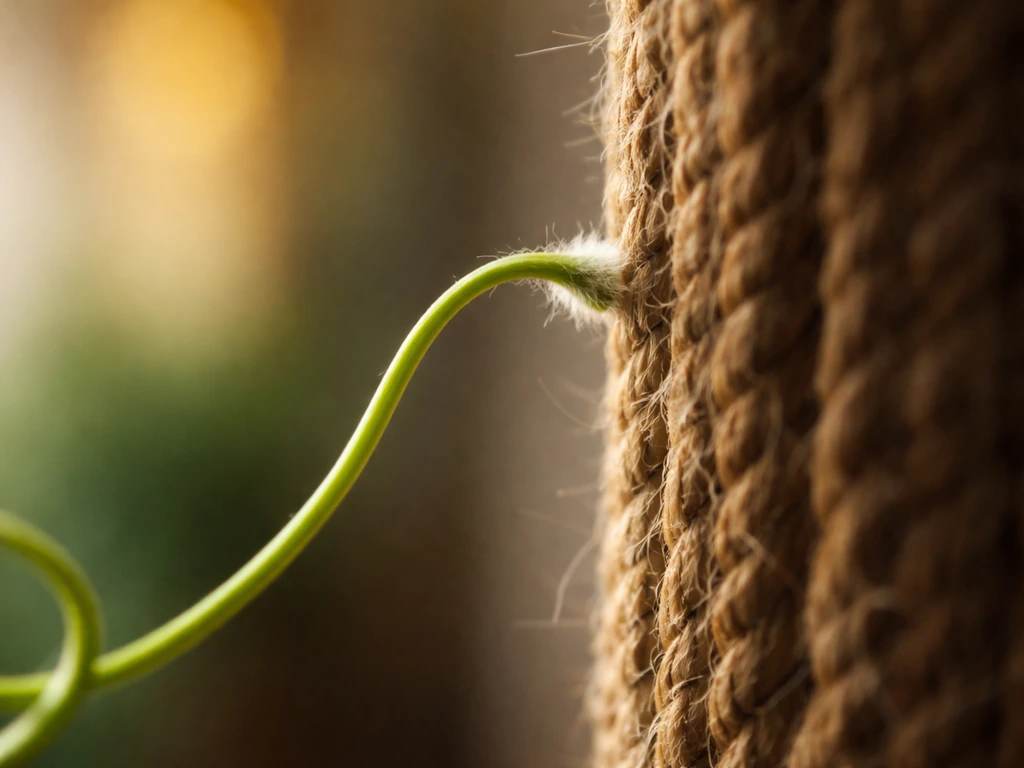
Touch is information. When a tendril or stem tip contacts a surface, mechanosensitive receptors including ion channels and receptor-like kinases in the cell membrane detect the deformation. This triggers a cascade: calcium ions flood into the cell, reactive oxygen species (ROS) signal downstream, and hormone levels shift (ethylene, auxin, and others). The result is a reprogramming of which genes are active in those cells, changing their growth behavior within minutes to hours. This is thigmomorphogenesis at its most precise, a contact-specific developmental switch.
These contact-triggered changes are what produce the distinctive growth forms of different climber types. Twining climbers like morning glory wrap their entire stem because the whole stem is sensitive to touch stimulation. Tendril climbers like peas have blank" rel="noopener noreferrer">specialized organs that coil tightly around supports after contact. Adhesive climbers like ivy produce adhesive pads that chemically and physically bond to surfaces. In every case, the support is not just a passive prop. It is an active developmental signal that tells the plant how to build itself. Branches typically grow from nodes along a stem, where new buds can develop under the right conditions where do branches grow from. Without the signal, those morphological programs do not fully activate, and the plant cannot produce the structures it needs to climb.
This also connects to a broader principle relevant across life forms. Stems grow upward in response to gravitropism and phototropism, roots grow downward for different reasons, and the direction branches emerge from a main stem is controlled by internal hormone gradients. This kind of support-based reorientation is why shoots grow in the opposite direction to which force is applied.
That same branching plan is governed by how hormones are distributed from the main stem, which determines where do branches grow from. For roots, this means growing downward to reach water and minerals in the soil roots grow downward. Root cells can grow outward from shoot cells through a reprogramming step that switches cell identity and then promotes organized root meristem formation roots grow downward.
Support adds a third layer of directional information on top of those existing signals, refining and reinforcing the growth geometry.
Conditions that enable support-based growth
Getting a climber to grow well is not just about sticking a pole in the ground. The support needs to match the climber type, and the surrounding environment needs to provide what the plant's cells actually require to keep dividing and elongating.
- Light: Climbing plants are typically light-hungry and are growing upward specifically to escape shade. Position supports so the top of the structure is in full sun, not blocked by a fence or overhang.
- Water and nutrients: Actively dividing meristem cells have high metabolic demands. Consistent moisture (not waterlogged) and adequate nitrogen and potassium support rapid cell division and elongation.
- Surface texture: Rough or fibrous surfaces give adhesive and twining climbers more contact points to trigger thigmomorphogenetic responses. A smooth painted metal post is much harder for ivy or a twining stem to grip than rough wood or a wire mesh.
- Support diameter: Tendril climbers like cucumbers and sweet peas coil best around supports 0.5 to 1.5 centimeters in diameter. Thick posts are often too large for tendrils to wrap fully, reducing grip and mechanical security.
- Flexibility vs. rigidity: Some climbers, especially those in windy locations, benefit from a degree of give in the support. Rigid supports that force the stem to absorb all wind movement can cause mechanical damage at attachment points.
Practical ways to provide support right now
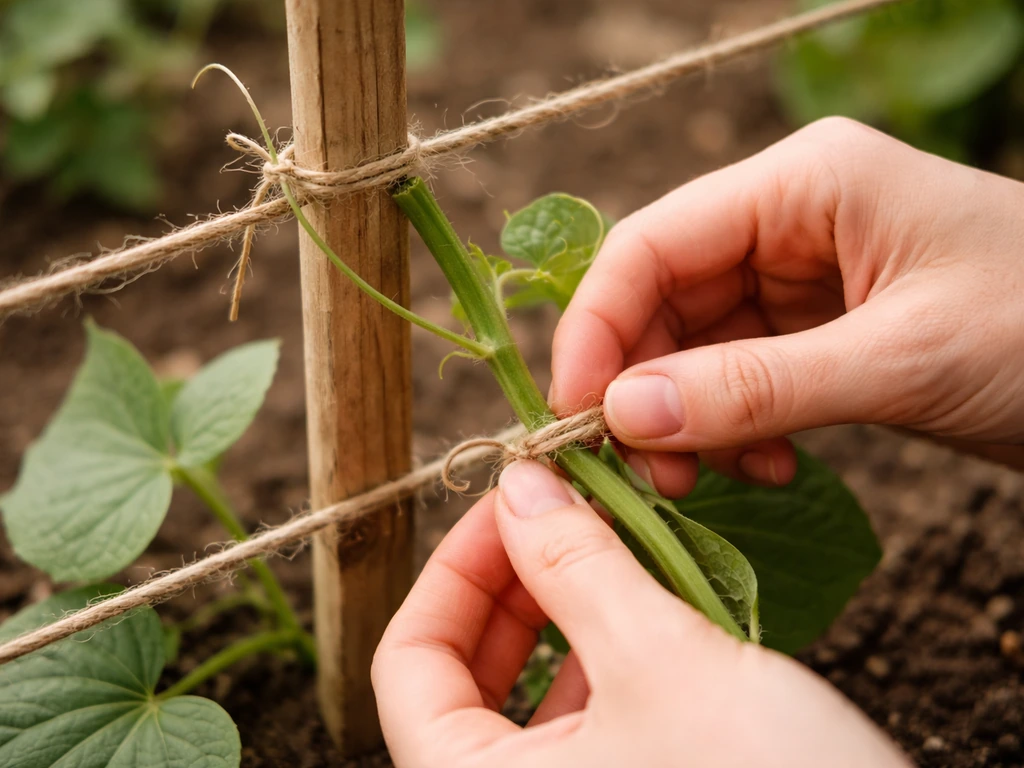
If you are dealing with a climbing plant that is flopping or struggling, the fastest fix is to get appropriate support in place before the stem grows any longer. The type of support matters, and matching it to the climber's attachment strategy makes a real difference.
| Climber type | How it attaches | Best support | Quick tip |
|---|---|---|---|
| Twining (e.g., morning glory, wisteria, beans) | Whole stem wraps around support | Vertical pole, rope, wire, or mesh 1–5 cm diameter | Guide the first few inches by hand; the stem will follow once contact is made |
| Tendril (e.g., sweet pea, cucumber, passion flower) | Specialized tendril organs coil around narrow supports | Trellis, wire mesh, or twigs 0.5–1.5 cm diameter | Add horizontal wires every 20–30 cm so tendrils always have something within reach |
| Adhesive/clinging (e.g., ivy, Virginia creeper, climbing hydrangea) | Adhesive pads or rootlets grip flat or rough surfaces | Wall, fence, or rough-textured netting placed close to the stem | Ensure surface is not painted or smooth; roughen if needed for initial grip |
| Scrambling (e.g., climbing roses, brambles) | Thorns hook onto surrounding vegetation or structure | Fan trellis or horizontal wires; needs to be tied in | Tie new stems in loosely with soft twine; thorns will do the rest as stems mature |
For lab and bioengineering contexts
The same principles apply when growing biological tissues outside a living organism. Bioengineered tissues (cartilage, skin, muscle) require a scaffold that provides mechanical support while cells divide and organize themselves. The scaffold must mimic the stiffness and texture of the target tissue closely enough that mechanosensing signals tell the cells to adopt the right identity and arrangement. A scaffold that is too rigid or too soft produces disorganized, poorly differentiated tissue, exactly analogous to a climbing plant on the wrong type of support.
For classroom and lab demonstrations
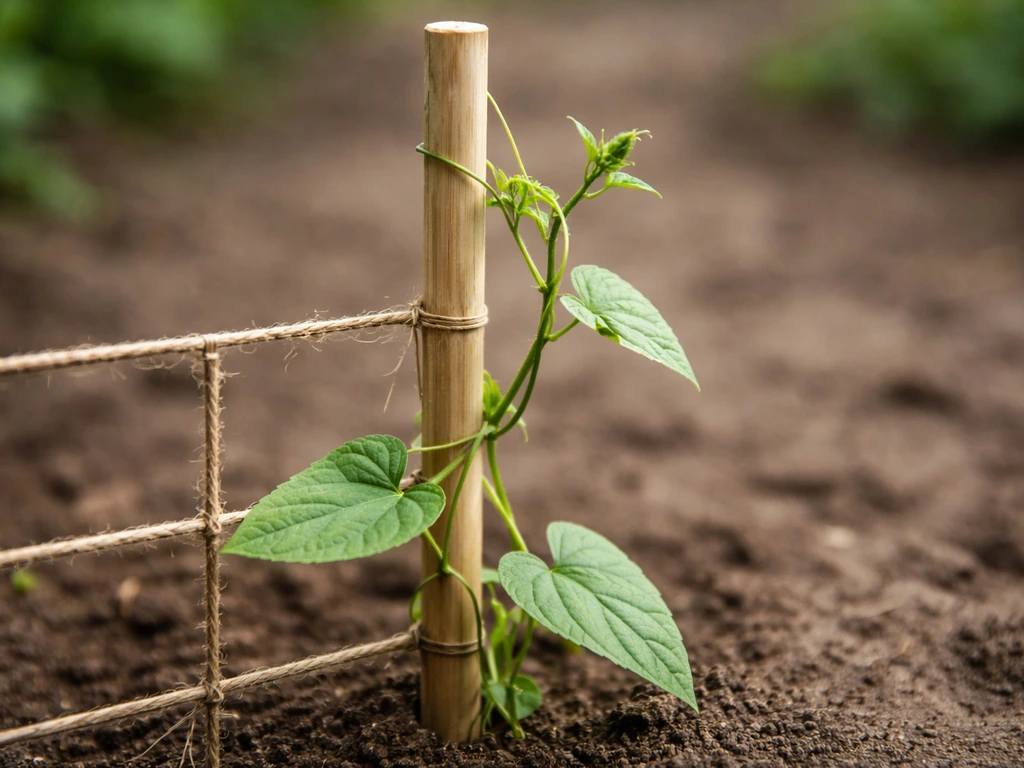
Fast-growing climbers like beans (Phaseolus vulgaris) or sweet peas are excellent for demonstrating thigmomorphogenesis and support-dependent growth in a classroom setting. Plant two identical seedlings simultaneously, give one a vertical bamboo cane and leave the other unsupported. Within two to three weeks, the differences in stem length, leaf canopy area, and overall vigor are visible and measurable. Adding a second phase where you rotate or remove the support midway through the experiment shows how quickly the mechanical signaling pathway responds to changed conditions.
The bottom line on support and growth
Climbers need support because their entire growth strategy is built around outsourcing structural stability to their environment. Roots, by contrast, grow downward because their tissues are tuned to gravity-linked signals and local mechanical cues that guide growth away from the surface why do roots grow downward and shoots grow upwards. Without it, gravity wins, vascular transport fails, and the mechanical signals that tell cells how and where to divide are disrupted or absent. Providing the right support, at the right diameter and texture, in the right light and nutrient conditions, is not just gardening common sense. It is applied plant biology, working directly with the thigmomorphogenetic, hormonal, and transport systems that make reliable, directed growth possible.
FAQ
What should I do if my climbing plant has already flopped onto the ground?
If a climber is already flopped, you usually need both repositioning and support. Gently lift the stem back toward vertical or the intended wrap direction before installing the trellis, then secure it with soft ties so the tip can keep making new contact. Existing kinks can keep slowing xylem flow even after support is added.
Can I use any kind of stake or trellis, or does the support’s stiffness and texture matter?
Yes, but only if it provides consistent contact and enough stiffness. Supports that are too flexible or too thick gaps that the stem cannot press against reduce the mechanical cues the plant uses to orient division and auxin-driven growth, so you may see slower wrapping and more tangling.
How do I choose support for twining, tendril, and adhesive climbers?
Match the support to the climber’s attachment strategy. Twining species need space to spiral around a smooth or moderately rough structure, tendril climbers need something they can contact repeatedly along the axis, and adhesive climbers require a surface they can bond to, such as rougher walls or appropriate materials. A mismatch can leave the plant growing upright but not climbing.
How fast will a climber respond after I add or change the support?
Stems can sense touch quickly, but the visible growth response depends on the stage of the plant and whether the growing tip is the one making contact. If you add support after the tip has stopped actively growing, the effect may be delayed. For best results, install support while the plant is still producing new leader growth.
Is it safe to tie the stem to the support, and how tight should I tie it?
Avoid hard, tight tying that constricts the stem. Excessive pressure can create abnormal mechanical stress patterns, potentially diverting resources to wound or stress responses rather than the normal thigmomorphogenesis program. Use loose, soft ties that hold position without crushing tissue.
What happens if I remove the support after the climber has started wrapping?
If you remove support entirely, the plant typically loses the anchored contact signals and starts experiencing chaotic loads, which can reduce transport efficiency and hormone-driven directional growth. In some species, it may still continue to grow for a short period using prior built geometry, but sustained climbing performance usually drops.
How tall should the support be, and what if the climber outgrows it?
For plants that coil or twine, you want enough vertical height and a repeatable contact path, not just a single pole. If the plant runs out of reach or the support surface stops mid-way, the tip often resumes flopping or redirecting, and growth becomes less efficient until new support is provided.
Are there signs that my climber has too little support, even if it is still growing?
Under-support often looks like flopping, reduced canopy size, and slower upward extension, but over-support problems can look different. If the structure is oversized or the stem cannot maintain consistent contact, you can end up with uneven wrapping and a tangled base. A good test is whether the tip repeatedly touches and can keep pressing against the support as it grows.
Does adding support fix growth problems if the plant lacks nutrients or light?
Yes, nutrient and light conditions still matter because support mainly preserves geometry and transport. If the plant is light-limited or severely under-fertilized, it may climb but remain weak, produce smaller leaves, or fail to generate enough sugars to sustain vigorous meristem activity.
How do these support principles translate to growing biological tissue on scaffolds?
For scaffolds, a common mistake is choosing stiffness that does not match the tissue’s expected mechanics. Too rigid or too soft scaffolds can produce disorganized organization because the cells interpret the mechanical environment differently. The practical takeaway is to aim for a scaffold that supports shape while allowing the level of deformation cells need for proper mechanosensing.
Next Article
How Can Root Cells Grow From Shoot Cells: Signals and Steps
Step-by-step guide to reprogram shoot cells into root fate using dedifferentiation signals, auxin rules, and meristem fo