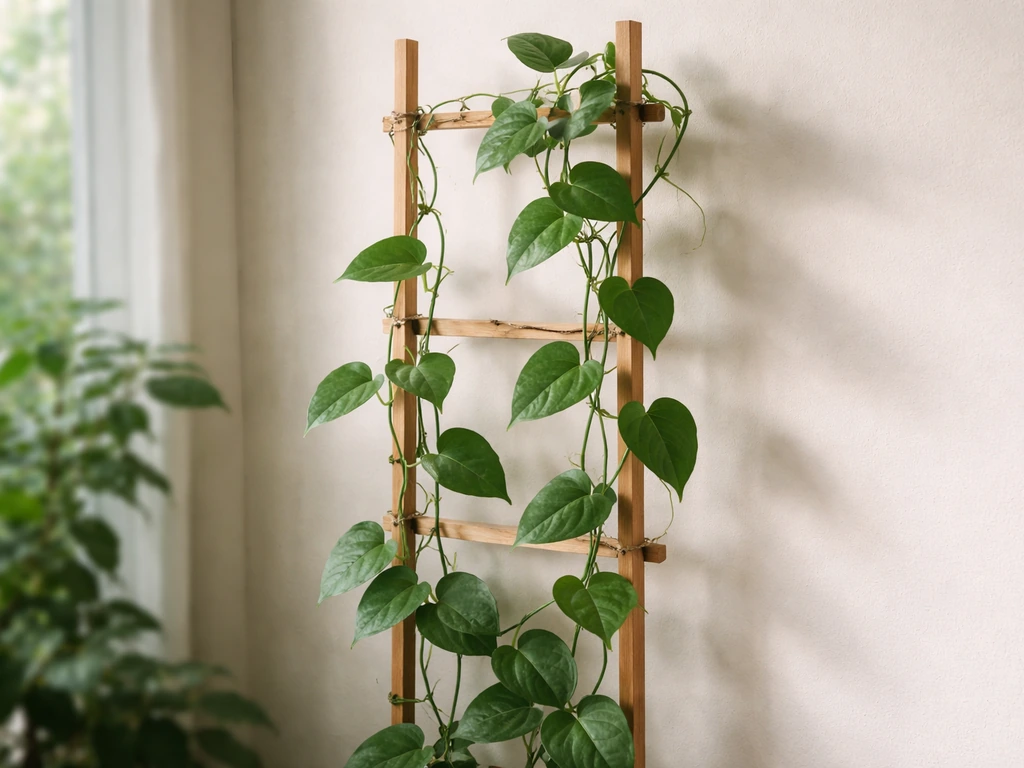
Stems grow upward because they are programmed to do two things at once: escape gravity and chase light. The plant detects which way is down using tiny starch-filled particles that sink like ball bearings, then uses a hormone called auxin to make cells on the lower side of the stem grow faster than cells on the upper side, pushing the tip skyward. At the same time, light hitting the stem from one direction shifts auxin toward the shaded side, bending the stem toward the source. Both responses rely on the same core trick: unequal cell expansion on opposite sides of the stem.
Why Does the Stem Grow Upwards? Causes and Experiments

Marcus Whitmore
25 Apr 2026
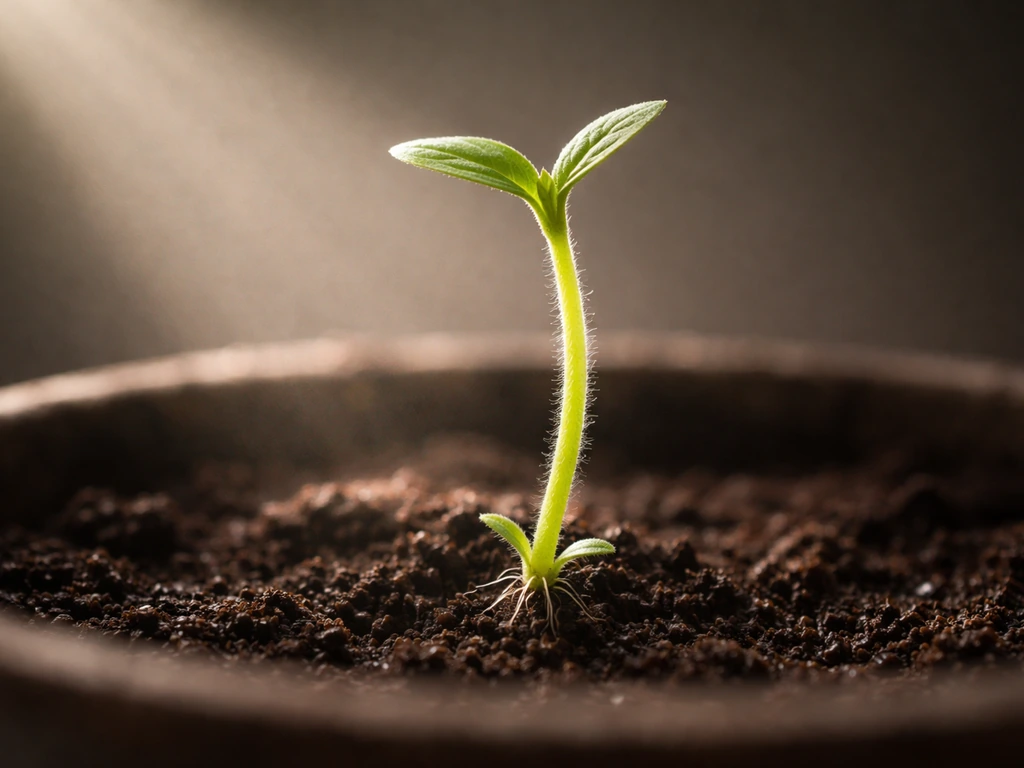
What "upward growth" actually means in a stem
When we say a stem grows upward, we are describing something more specific than just getting taller. The stem is actively orienting itself against gravity, which biologists call blank" rel="noopener noreferrer">negative gravitropism. A stem’s upward growth direction is driven by gravitropism, where it orients against gravity based on how gravity changes internal signals. It is not simply pushed up by pressure from below. The shoot tip is steering, constantly correcting its angle relative to the gravity vector. A stem that gets knocked sideways will bend back toward vertical within hours, even in the dark, which tells you this is not just passive physics. It is a directed biological behavior.
This upward orientation is adaptive for an obvious reason: height means better access to sunlight for photosynthesis. But it also means the plant has to invest heavily in support structures, vascular plumbing, and mechanical strength just to stay upright. The upward growth program is a calculated tradeoff, not a free bonus. That tradeoff is worth keeping in mind as we go deeper, because it also explains why upward growth has real limits.
Roots do the mirror-image job. They show positive gravitropism, growing downward toward the gravity vector to anchor the plant and mine water and minerals from the soil. The same hormone, auxin, drives both responses, but it has opposite effects in root cells versus shoot cells. The same hormone does not act the same way in roots, so shoot-derived growth can switch programs as tissues change identity auxin drives both responses. That contrast is one of the more elegant tricks in plant biology, and it comes up again when we look at the mechanics.
How stems actually get longer: cell division meets cell expansion
A stem grows in length through two distinct processes happening in sequence, not at the same time. First, a cluster of perpetually dividing cells at the very tip of the shoot, called the shoot apical meristem, churns out new cells. Branches grow out from nodes along the stem, where buds can develop into side shoots. These are small, tightly packed, and not yet specialized. Think of the meristem as a factory producing raw material.
The second process is where the height actually comes from. Just below the meristem, newly made cells enter an elongation zone where they absorb water, swell dramatically, and can increase their length by ten times or more. This cell expansion is powered by turgor pressure: the cell wall loosens under hormonal signals, water rushes in by osmosis, and the cell stretches along the axis of the stem. Most of the visible lengthening you see in a fast-growing seedling is coming from this expansion phase, not from cell division itself.
Auxin and gibberellin are the two hormones most responsible for triggering and amplifying cell expansion. Gibberellin works partly by breaking down a family of growth-suppressing proteins called DELLAs, releasing a brake on elongation. Auxin promotes cell wall loosening directly. In experiments on dwarf pea mutants that lack gibberellin, applying either gibberellin or auxin from outside the plant restores stem elongation, which confirms both hormones genuinely drive the process.
How the plant knows which way is up: gravity sensing in the shoot
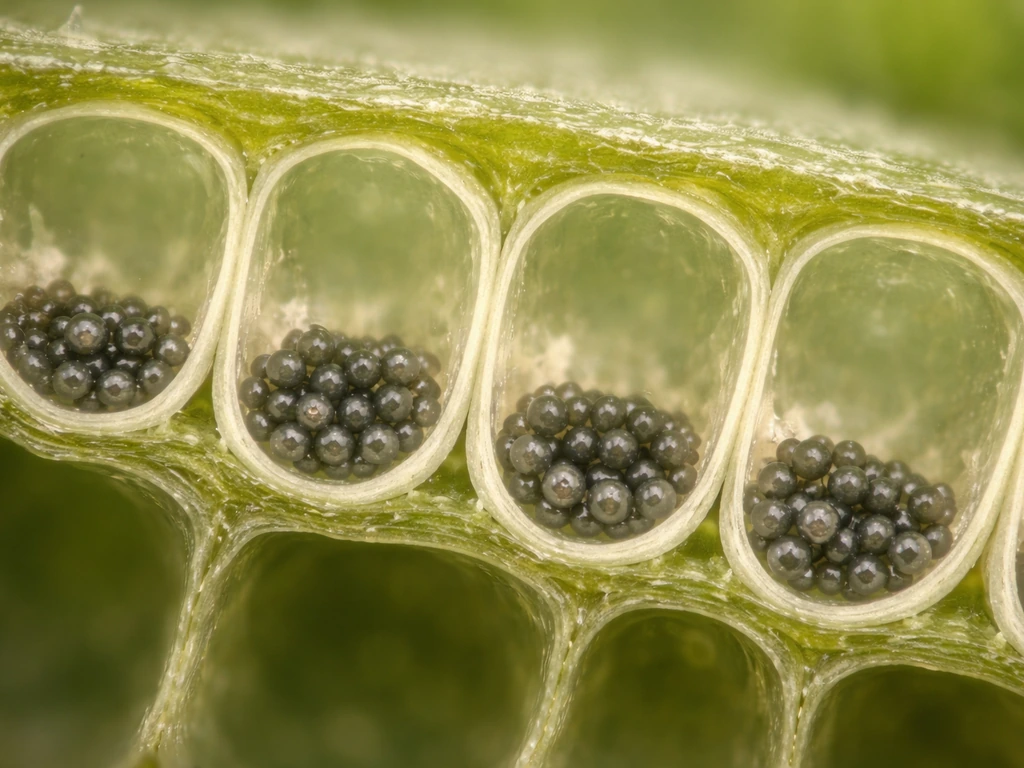
Plants cannot feel gravity the way we do, but they have a clever mechanical proxy. In the endodermal cells of the shoot (called statocytes), there are dense, starch-packed organelles called amyloplasts, or statoliths. Because they are denser than the surrounding cytoplasm, they sink in whichever direction gravity pulls. When the shoot is vertical, they rest at the bottom of the cell. When the shoot gets tilted sideways, they roll toward the new low side within minutes.
That physical displacement is the starting gun for a chain of biochemical signals. The sedimented amyloplasts trigger asymmetric redistribution of auxin: a transporter protein called PIN3 becomes concentrated on the lower sides of the endodermal cells, shuttling auxin toward the lower flank of the stem. Because shoots use negative gravitropism, their growth responds by bending opposite the direction of the force of gravity shoots grow in the opposite direction to which force. In shoot cells, auxin promotes elongation, so the lower side grows faster than the upper side. The stem bends upward. Once the shoot is vertical again, auxin redistributes symmetrically and the correction stops. It is a feedback-regulated steering system.
For the amyloplasts to sediment freely, they need to detach from the actin filament network inside the cell. A protein called SHOOT GRAVITROPISM9 (SGR9) plays a role here by helping amyloplasts release from actin so they can move in response to gravity. Plants with mutations in SGR9 show impaired shoot gravitropism, which is direct evidence that amyloplast sedimentation is genuinely required for the response, not just correlated with it.
Reaching for light: phototropism and why it matters
Gravity sensing keeps the stem oriented vertically, but light sensing optimizes the angle toward the actual light source. Phototropism is the directional bending of a stem toward (or in some cases away from) light, and in shoots it almost always bends toward the light. The key is blue wavelengths, detected by a family of proteins called phototropins on the cell surface.
When light hits one side of the stem more than the other, auxin migrates away from the illuminated side toward the shaded side. This is the Cholodny-Went model, and it has held up well across decades of experiments. The shaded side accumulates more auxin, its cells elongate more, and the stem curves toward the light. The same PIN3 transporter that handles gravity responses also participates here, polarizing toward the shaded side when blue light strikes from one direction.
There is also a speed-up mechanism tied to light quality, not just direction. In crowded or shaded conditions, plants detect a drop in the ratio of red to far-red light (because neighboring leaves absorb red but transmit far-red). This low ratio triggers a shade-avoidance response: gibberellin levels rise, DELLA proteins get degraded, and the stem elongates faster to outcompete neighbors. This is why plants grown close together get tall and spindly, even when there is technically enough total light to survive.
Environmental and physiological factors that shape upward growth
Knowing the mechanisms is useful, but it becomes practically powerful when you can predict how changing conditions will alter growth. Several variables have reliable, documented effects.
Light: the biggest lever
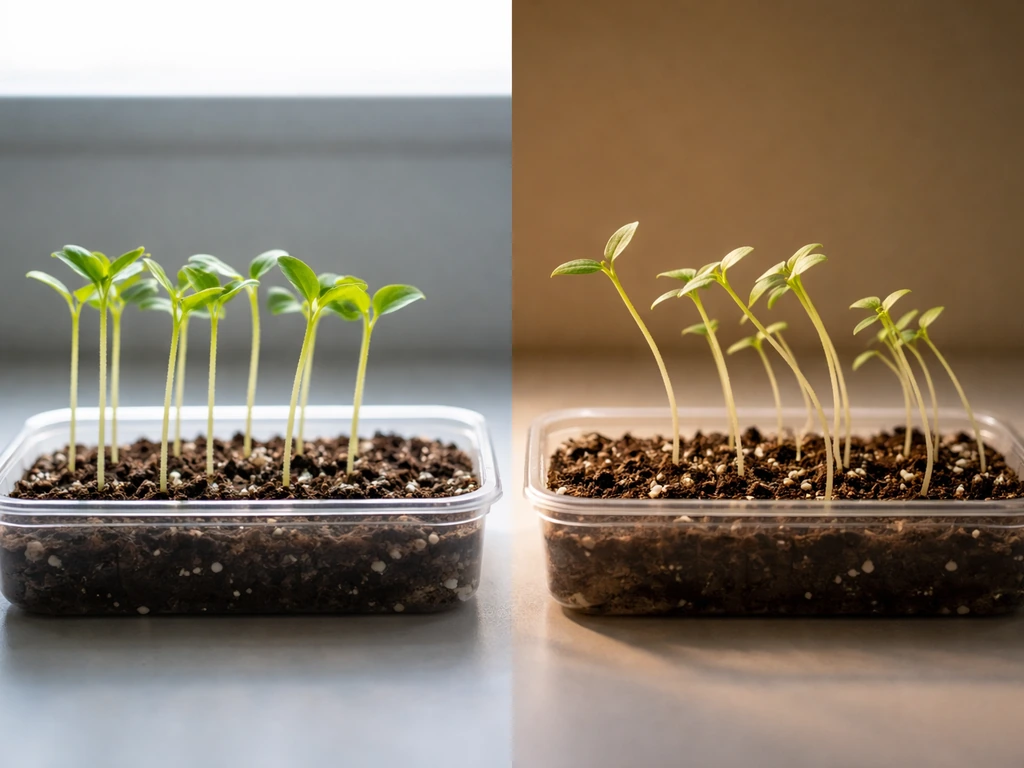
Total darkness triggers etiolation, an extreme elongation program in seedlings. Dark-grown seedlings develop dramatically elongated hypocotyls (the stem between root and first leaves) as the plant burns stored energy to reach what it assumes must be a light source above. The moment light hits, a de-etiolation switch fires: hypocotyl elongation slows sharply, and the plant shifts into photomorphogenesis, building leaves and chloroplasts instead of stem. The direction, intensity, and quality of light all feed into this control system.
Temperature and day-night cycles
Temperature interacts with light signals in ways that directly affect elongation. In a condition called negative DIF (where nights are warmer than days, the opposite of natural outdoor conditions), hypocotyl growth in Arabidopsis is inhibited. The mechanism involves auxin-induced ethylene signaling and downstream activity of transcription factors called PHYTOCHROME INTERACTING FACTORs (PIFs). Practically speaking, this is why greenhouse growers sometimes cool nights to keep ornamental plants compact.
Water, nutrients, and CO2
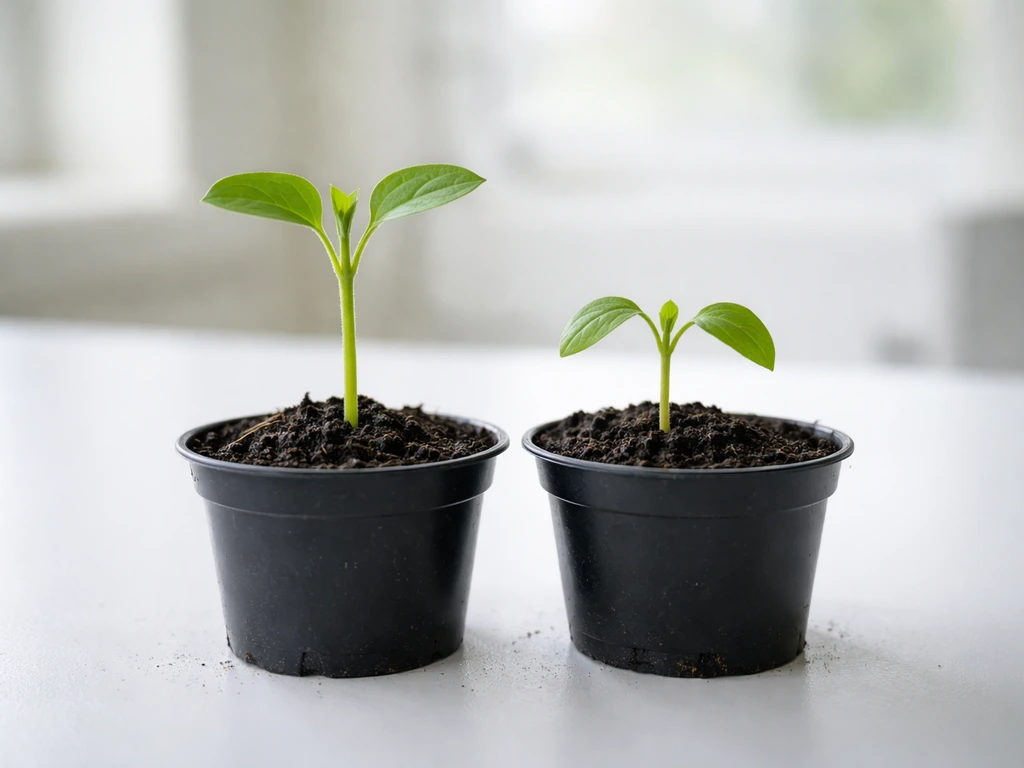
Cell expansion is driven by water uptake, so water stress directly limits elongation even when hormonal signals are fully active. Nitrogen deficiency has a parallel effect: under nitrogen limitation, plants redirect resources away from shoot elongation, and elevated CO2 can actually worsen nitrogen limitation in seedlings by increasing carbon supply without matching nitrogen uptake. The upward growth program requires the right resource environment to execute fully.
Touch and mechanical stimulation
Repeated mechanical contact, called thigmotropism when it produces directional growth, tends to shorten and thicken stems rather than promote upward elongation. Plants that are brushed or shaken regularly grow stockier. This is a structural adaptation: the plant trades height for mechanical resilience when it detects physical stress. It also explains some of the coiling behavior in climbing plants, where touch cues from a support structure direct auxin and trigger tendrils to wrap around the contact point. Climbing plants illustrate this well, because their upright growth only succeeds when tendrils and support tissues provide the physical help to stay oriented and keep elongating coiling behavior in climbing plants.
Why the stem can't just keep growing upward forever
Every mechanism that drives upward growth runs into real physical and biological limits. Understanding those limits completes the picture of why stems grow the way they do.
The most fundamental constraint is structural. As a stem gets taller, it has to support increasing weight against wind and its own mass. Lignin-reinforced secondary cell walls provide the mechanical stiffness needed to stay upright, but building them costs energy and carbon. Tall plants also risk lodging (toppling over), which is why agricultural breeders have spent decades selecting semi-dwarf varieties with reduced gibberellin sensitivity. Shorter plants with thicker stems resist lodging better, a direct tradeoff between height and stability.
Water transport is a second hard ceiling. Xylem vessels carry water from roots to leaves, but hydraulic resistance increases with height. Taller stems need either wider xylem vessels or more of them, and there is no fast short-term way for xylem architecture to adapt to increased demand. At the cellular level, individual cells also cannot expand indefinitely: beyond a certain size, the surface-area-to-volume ratio drops too low to support adequate nutrient and gas exchange across the cell membrane, and turgor pressure constraints limit how much the wall can stretch.
There is also a resource allocation tradeoff. Investing in shoot elongation competes with root growth, reproductive output, and defense. The shade-avoidance response illustrates this perfectly: when a plant stretches toward light, it reduces resources going to roots and reproduction. That bet pays off only if the elongation actually secures more light. If the competition is too intense or the plant is already nutrient-limited, the tradeoff goes negative.
Simple experiments to watch these mechanisms live

The best way to lock in your understanding of these mechanisms is to test them with a few fast, low-cost setups. Here are four that give clear, predictable results and connect directly to what we covered above.
- Dark vs. light germination: Germinate two sets of bean or radish seeds, one in a dark box and one in normal daylight. Within 5-7 days, the dark-grown seedlings will have dramatically longer, pale, spindly stems (etiolated phenotype). When you bring the dark seedlings into light, elongation slows visibly within 24-48 hours. You are watching de-etiolation happen in real time.
- Unilateral light source: Place a seedling in a box with a single small hole on one side. The stem will bend toward the hole within 1-2 days as auxin migrates to the shaded side and drives asymmetric elongation. Rotate the box 180 degrees, and the bend reverses. This is phototropism operating exactly as the Cholodny-Went model predicts.
- Clinostat rotation (or DIY rotation): Tape a potted seedling to a slowly rotating turntable (even a lazy Susan at one rotation per minute works). The constant rotation cancels out the gravity vector, so no single side accumulates excess auxin. The shoot loses directional orientation and grows in a relatively straight but wandering line. This directly demonstrates that continuous gravitropic sensing is what maintains vertical orientation.
- Sideways pot: Tip a pot of young seedlings onto its side and leave it undisturbed. Within 24-48 hours the shoots will begin bending upward (away from the new gravity direction) while roots curve downward. This is negative gravitropism in shoots and positive gravitropism in roots responding simultaneously to the same reorientation. Sketching the angle of bend every 12 hours gives you a visible record of the response rate.
Each of these experiments isolates one variable: light direction, gravity direction, or both. If you run the unilateral light experiment and the sideways pot experiment at the same time with the same species, you can compare how quickly phototropism versus gravitropism moves the stem, since the two responses operate on overlapping but not identical timescales. Plants integrate both signals continuously, and when they conflict, the outcome depends on signal strength. That integration is what makes plant growth feel almost intelligent when you watch it closely enough.
FAQ
If I rotate a plant, will the stem keep bending upward to stay aligned with gravity?
Because “upward” in a stem is a steering response, not a one-time setting. If you rotate the plant slowly or intermittently, the auxin distribution can track the changing gravity vector, so the stem will keep reorienting rather than remaining fixed. The response can be delayed if the tissue is older or already lignified.
What happens if gravity and light cues pull the stem in different directions?
Even though auxin redistribution drives both gravitropism and phototropism, the net result depends on signal strength and timing. If light cues are strong (for example bright unilateral blue light) they can dominate and bend the stem toward light even if gravity tries to correct it. In practice, the plant often shows a compound curvature rather than a single clean direction.
Why do some plants look like they are not growing upward even though auxin is involved?
Cell elongation depends on turgor pressure, so a plant under water stress may not show the same upward “stretch” even if auxin and gibberellin signaling are active. You can see this as weaker bending or slower recovery after tilting because cell walls cannot extend without sufficient water uptake.
Does auxin make every part of the stem elongate, or only certain regions?
Auxin can act differently depending on tissue identity and developmental stage. Young shoot tissues in elongation zones respond strongly to auxin-driven wall loosening, while older, more lignified regions elongate much less. That is why bending tends to occur near the tip or young internodes rather than uniformly along the whole stem.
Why do seedlings grow extremely tall in darkness, and what changes when light returns?
Dark-grown seedlings do more than grow upward, they enter de-etiolation, producing long internodes and less developed leaves and chloroplasts. When light returns, the de-etiolation program switches off, elongation slows, and photomorphogenesis begins, so the same plant can change growth pattern quickly.
Can mechanical touching or shaking make a stem grow less upward, and why?
Yes, repeated contact often biases growth toward thickening and sometimes coiling, because mechanical cues can redirect auxin and alter elongation versus strengthening programs. If you want upward elongation, avoid frequent brushing and instead use gentle, stable support that does not stimulate constant mechanical stress.
What is a good way to verify gravitropism versus delayed growth due to age or stiffness?
You can test the role of gravity quickly by comparing a normal vertical pot to one kept tilted on a fixed side, then checking curvature at regular intervals. Faster correction is typically seen when the shoot is actively elongating near the tip and when the tissue is not already mechanically stiff from secondary wall thickening.
Why do stems eventually stop getting taller even if they still seem to detect gravity and light?
Hydraulic and structural limits create a ceiling. Once a plant is tall enough that water transport becomes inefficient and bending forces increase, further elongation slows or becomes unstable (risk of lodging). This is why some plants stop getting taller sooner under wind, drought, or nutrient limitations.
Next Article
Why Do Climbers Need Support to Grow and How to Help
Learn why climbers need support to grow, and how to scaffold them for better posture, space-filling, and signaling.