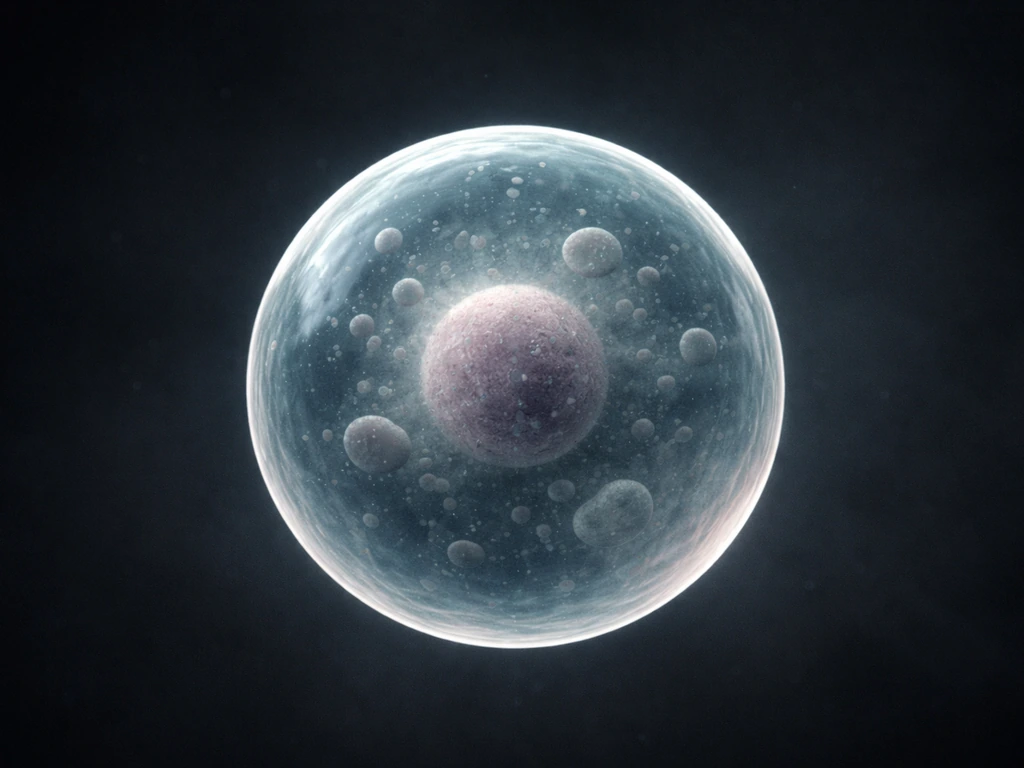
Cells don't keep growing larger because the physics and biology of being a cell simply stop working at a certain size. It's not a choice or a programmed preference in the poetic sense. It's a hard wall built from geometry, chemistry, and logistics. The bigger a cell gets, the worse it is at feeding itself, copying its DNA, managing its proteins, and keeping its internal machinery running. At some point, dividing into two smaller cells is the only viable option. Let's walk through exactly why, one constraint at a time.
Explain Why Cells Can’t Keep Growing Larger
Marcus Whitmore
10 Apr 2026
Cells hit a size wall, and here's why that matters
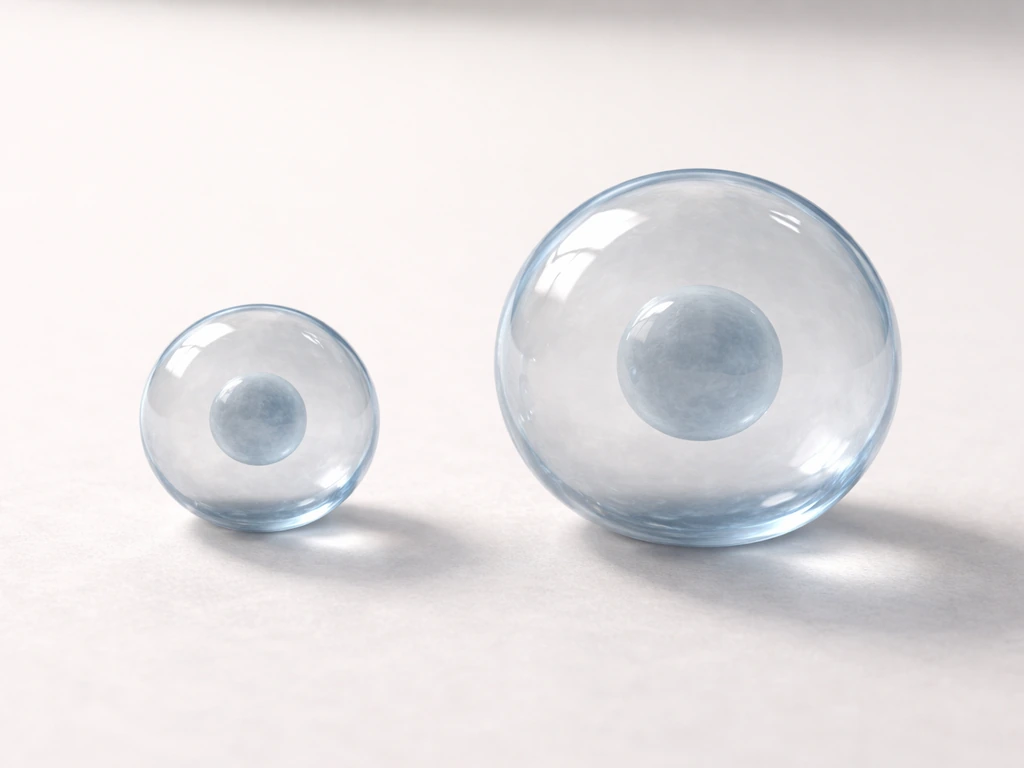
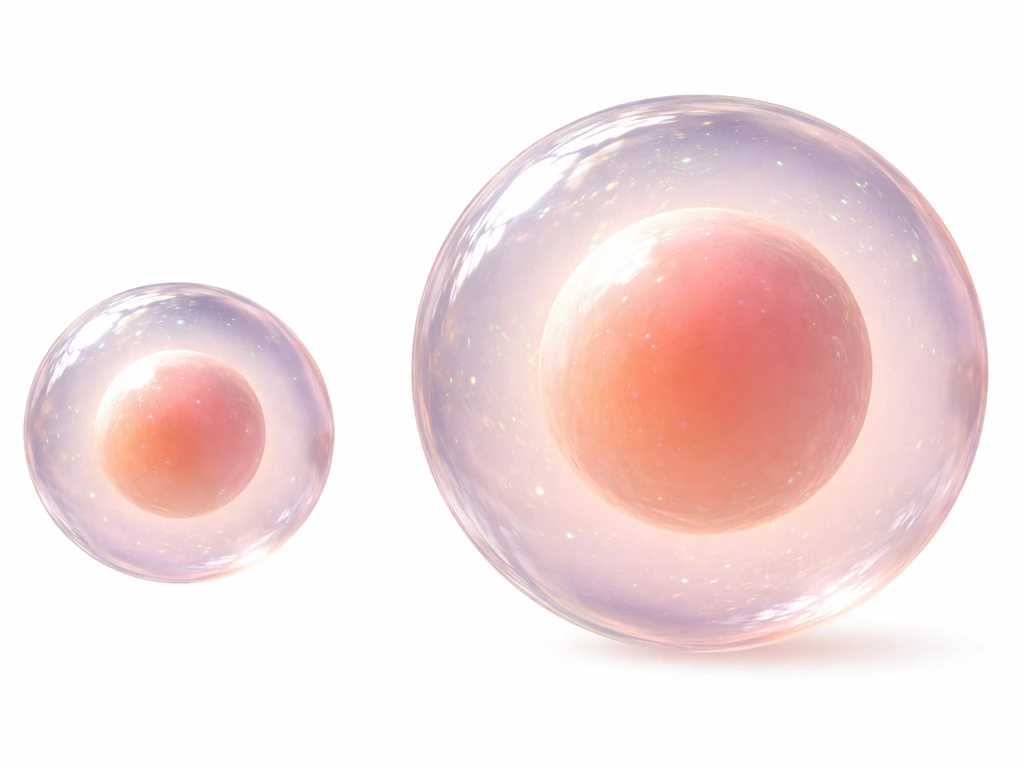
Every cell in your body, every bacterium on your skin, and every yeast cell in a batch of bread dough faces the same fundamental trade-off: volume grows faster than surface area. This isn't a biological quirk. It's pure geometry. For a spherical cell of radius r, surface area scales with r squared while volume scales with r cubed. That means as a cell doubles in radius, its surface area quadruples but its volume increases eightfold. The ratio of surface area to volume, which is the cell's lifeline to the outside world, shrinks by half. This one geometric fact is the engine behind almost every size constraint cells face.
Think of it like a sourdough starter. When the culture is small and spread thin, it gets oxygen and feeds actively. Pack it into a dense blob, and the cells on the inside suffocate while the ones on the surface thrive. The same principle governs every cell trying to scale up. What limits how large a cell can grow comes down, in large part, to this surface-to-volume relationship that quietly becomes more brutal with every incremental size increase.
Surface area vs. volume: the geometry that drives everything
The surface area to volume ratio is the lens through which every other size constraint should be understood. As a cell grows larger, the SA:V ratio decreases as 1/r. A cell with a radius of 1 μm has an SA:V ratio ten times larger than a cell with a radius of 10 μm. That membrane surface is where all the action happens: nutrient importers, waste exporters, signaling receptors, ion channels. Less membrane per unit of cytoplasm means less capacity to supply what's needed and remove what's toxic.
Here's how that plays out quantitatively. Nutrient uptake capacity scales with surface area. Biosynthetic demand, the sheer metabolic appetite of the cell, scales with volume. As cells get larger, the gap between those two curves widens. Mass-specific growth rates decline with increasing cell size because the cell can no longer intake materials fast enough to sustain growth at its prior rate. It's like a city that keeps adding residents but keeps the same number of delivery trucks. Eventually the shelves run empty.
Why diffusion and internal transport break down at large sizes
Even if a cell somehow had enough membrane to absorb nutrients at scale, there's a second crisis waiting: diffusion is painfully slow over large distances. The characteristic time for a molecule to diffuse across a distance L scales as L squared divided by the diffusion coefficient (roughly τ ≈ L²/D). At the scale of E. coli, around 10 μm, oxygen diffuses across the cell in a fraction of a millisecond. But scale that same cell up to 100 μm, and diffusion time increases by a factor of 100. At millimeter scales, diffusion times become seconds to minutes, far too slow to meet metabolic demand.
Experimental work on 3D cell spheroids makes this vivid. Spheroids larger than about 200 μm start developing hypoxic zones in their interior. By 500 μm diameter, necrotic cores appear because oxygen simply cannot diffuse to the center fast enough. The oxygen concentration gradient across the spheroid becomes steep enough to kill cells. In living tissue, cells are typically kept within 20 to 100 μm of a blood capillary specifically to avoid this problem. A single giant cell would face the same fate internally: its center would starve and suffocate.
For organelles and molecular cargo, the situation is even worse. Cells use molecular motors like kinesins to actively haul materials along cytoskeletal tracks rather than relying on diffusion alone. The numbers are striking: kinesin motors can move vesicles across meter-long distances in roughly a day, but purely diffusive transport over the same distance would take years. Active transport is the workaround that neurons use to supply their axons, for example. But that workaround comes with its own energy cost and mechanical complexity, both of which scale poorly as cell size increases.
DNA, gene expression, and why copying doesn't scale up easily
There's a deep problem lurking inside the nucleus of any cell that tries to get too large. DNA replication is not infinitely scalable. Eukaryotic cells license and fire replication origins in a tightly coordinated program during S phase. This licensing is restricted to G1, and origin firing is actively shut down during S and G2 to prevent re-replication. The entire genome must be duplicated once, completely, before division. This program is tuned to complete in a window of roughly 45 to 60 minutes in typical cells.
As a cell grows larger, it doesn't automatically get more replication origins or more replication machinery. Insufficient origin licensing means fewer initiation events and longer time required for full genome duplication. Chromatin structure further constrains which origins fire and when. The replication program, in other words, has a fixed capacity. A massively enlarged cell would face serious risks of incomplete replication, DNA damage, and genomic instability. Why cells can't grow indefinitely is partly a story about how DNA copying machinery hits a ceiling that cell size increase cannot simply overcome by brute force.
Gene expression faces analogous limits. A single nucleus must supply mRNA to a growing cytoplasmic volume. As volume scales with the cube of radius, the ratio of nuclear output to cytoplasmic demand drops. mRNA concentrations dilute. Protein concentrations for key regulators drop below functional thresholds. The cell's gene regulatory network, tuned to work within a specific concentration regime, begins to malfunction. This is part of why organelle distribution also becomes a problem: mRNA trafficking for mitochondrial biogenesis, for example, depends on active transport mechanisms that are calibrated for normal cell sizes.
Cell cycle checkpoints: growth has to earn the right to divide
The cell cycle itself is built around the idea that a cell must prove it has grown enough before it divides, not that it can grow indefinitely and skip division. Size-control checkpoints, particularly at the G1/S transition, actively block cell-cycle progression until a critical size is reached. These aren't passive gates. They are actively enforced by molecular inhibitors.
In budding yeast, a protein called Whi5 acts as a cell-cycle inhibitor that is diluted as the cell grows. Once Whi5 concentration drops below a threshold due to growth-driven dilution, the cell is permitted to pass through Start and commit to DNA replication. In mammalian cells, the analogous restriction point involves D-type cyclins working through cyclin-dependent kinases and being opposed by inhibitors like p21, p27, and p57. The logic in both cases is the same: growth must be verified before division proceeds. Why cells can't grow too large is intimately connected to the fact that these checkpoints are designed to pair size with division, not to allow unbounded enlargement.
What this means in practice is that the cell cycle doesn't offer an "indefinite growth" option. If a cell delays division, checkpoint machinery becomes increasingly stressed. Checkpoints that could theoretically postpone division indefinitely are instead constrained by upstream signals that eventually force either division or a pathological outcome like senescence. Which organisms or systems cannot grow indeterminately turns out to include virtually every normal cell type, because the cell cycle architecture is specifically built to prevent it.
Mechanical and metabolic burdens on oversized cells
Beyond geometry and genomics, there are physical and metabolic costs to being large that compound quickly. The cytoskeleton, which provides structural support and organizes internal space, must cover more territory in a larger cell. Spindle architecture, the machinery that segregates chromosomes during division, scales with cell volume, and the mechanical demands of pulling chromosomes apart reliably increase as cells enlarge. At some point, the spindle can no longer function accurately.
Metabolic maintenance also becomes a burden. Oversized cells that slow their growth activate what researchers describe as superlinear protein degradation via the proteasome. In other words, the larger the cell gets, the more protein degradation machinery it has to run just to keep its proteome healthy. This is not a sustainable scaling strategy. Large cell size is consistently associated with proteome remodeling and senescence phenotypes, meaning cells that get too big are essentially aging prematurely because they can't maintain internal homeostasis. The proteostasis burden alone, keeping proteins correctly folded, in the right concentrations, and free of aggregation, scales with volume in a way that the cell's quality-control machinery cannot match indefinitely.
How multicellularity solves the "too-large cell" problem
Evolution's answer to all of these constraints is elegant: instead of one huge cell, use many small ones. Multicellularity keeps every individual cell small enough to maintain a favorable SA:V ratio, close enough to its neighbors that diffusion works, and genetically simple enough that a single nucleus can manage the surrounding cytoplasm. This is why your liver, skin, and neurons are made of millions of small cells rather than a few giant ones.
But multicellularity alone doesn't fully solve the diffusion problem across an entire organism. Tissues require vasculature for exactly the same reasons that individual cells can't grow too large. In living tissue, no cell is typically more than about 100 μm from a capillary. Engineers building 3D tissue constructs in the lab encounter this limit constantly: brain organoids without vasculature, for example, develop hypoxic and metabolically stressed cores at diffusion depths of roughly 200 to 400 μm. This mirrors the problem cells themselves face when trying to scale up. Why populations of organisms don't grow indefinitely echoes the same logic operating at a higher level: resources and physical constraints cap growth at every scale of biological organization.
The tissue solution also introduces specialization. Small cells organized into tissues can differentiate, with some cells becoming nutrient-delivery specialists (blood vessels), others becoming structural specialists (bone), and others handling chemical signaling. A single giant cell could not divide labor that way. This cooperative organization is only possible because each cell stays small enough to be individually functional and controllable.
What happens when cells ignore these limits
It's worth asking: what if a cell tries to bypass these limits? Sometimes cells do lose size-control checkpoints, and the consequences are instructive. Why we don't want our cells to grow uncontrolled has a very direct answer: uncontrolled growth leads to cancer. Tumor cells that break free of size checkpoints and division regulation don't become one enormous functional cell. They proliferate without proper control, accumulate genomic errors from faulty replication, and eventually compromise tissue architecture. The limits on cell size aren't arbitrary biology. They are the guardrails that keep growth orderly and organisms healthy.
There is one important exception worth knowing. Cell cultures that can grow indefinitely are called immortalized cell lines, and they typically carry mutations in exactly the checkpoint and size-control machinery described above. They're scientifically useful, but they're not a counterexample to the size-limit story. They still divide rather than growing into one enormous cell. The constraints on individual cell size hold even in immortalized lines. What's lost is the controlled relationship between growth and division, not the underlying physics of SA:V ratios and diffusion.
How to reason through any cell size question
When you encounter a question about why cells don't simply grow larger, or why a cell divides when it does, run through this mental checklist. It covers the major constraints and helps you give a complete answer regardless of how the question is phrased.
- Start with geometry: ask how the SA:V ratio changes as size increases and what that means for nutrient exchange and waste removal.
- Move to diffusion: estimate whether diffusion can realistically deliver oxygen and remove waste across the full diameter of the cell in time.
- Consider DNA replication: ask whether the existing origin firing program can complete genome duplication within a normal S phase at the proposed cell size.
- Think about gene expression: check whether a single nucleus can supply enough mRNA to maintain correct protein concentrations throughout the enlarged cytoplasm.
- Review the cell cycle checkpoints: identify where size is monitored (G1/S in particular) and what inhibitors enforce those checkpoints.
- Factor in mechanical and metabolic costs: consider how cytoskeletal organization, spindle function, and proteostasis burden change with size.
- Connect to multicellularity: explain how organisms solve the size problem by keeping cells small and using vasculature to extend the range of nutrient delivery.
A quick comparison: why small cells win over large ones
| Factor | Small Cell | Large Cell |
|---|---|---|
| SA:V ratio | High — efficient exchange across membrane | Low — membrane area per unit cytoplasm is inadequate |
| Diffusion of oxygen/nutrients | Fast — short distances, millisecond timescales | Slow — scales as L², can take seconds to minutes |
| DNA replication | Origins sufficient to duplicate genome in ~45–60 min | Same origin number spread over greater volume; risk of incomplete replication |
| mRNA and protein gradients | Nucleus output meets cytoplasmic demand | Dilution of regulators below functional thresholds |
| Checkpoint control | Size checkpoints enforce division at the right moment | Checkpoints cannot indefinitely delay division; senescence or errors result |
| Proteostasis burden | Manageable protein quality control | Superlinear proteasome activation; proteome stress and senescence |
| Mechanical integrity | Cytoskeleton and spindle work within tested range | Spindle scaling and cytoskeletal coverage become unreliable |
The takeaway from this comparison is consistent: every major cellular system is optimized for a small size range, and all of those systems degrade in different ways as size increases. There's no single silver bullet that would let a cell simply grow larger without hitting the next constraint on the list.
Cells don't keep growing because they genuinely can't, not in any efficient or stable way. The geometry of spheres, the physics of diffusion, the logistics of genome management, and the architecture of the cell cycle all point in the same direction: divide, stay small, cooperate. That's the strategy that built every organism on Earth, and it works because it respects the limits that physics imposes on any small biological machine trying to sustain itself.
FAQ
If volume scales faster than surface area, why don’t cells just become flatter (like disks) to keep surface area high?
Cells can change shape, but flattening introduces other constraints, such as limits on membrane tension, cytoskeletal organization, and internal transport distances. A disk can improve surface-to-volume ratio compared with a sphere, yet once internal distances increase too much, diffusion and concentration gradients still become problematic. Also, some shapes are energetically costly and can’t be maintained during growth and division.
Could a cell solve slow diffusion by simply increasing oxygen levels inside the cell?
Higher internal oxygen helps only up to the point where the bottleneck is transport distance and consumption. As the cell grows, oxygen demand rises with volume while delivery capacity depends on how fast oxygen can move through the cytoplasm. In practice, even if oxygen is abundant at the boundary, the interior still becomes oxygen-limited because diffusion time grows with the square of distance.
Why is active transport enough for some cells, but not enough for a single giant cell?
Active transport can move specific cargos efficiently, but it doesn’t eliminate the need for global turnover of metabolites, ions, and waste products across the whole volume. Energy costs also scale unfavorably, and organizing tracks and motors throughout a much larger cell becomes mechanically and spatially complex. Meanwhile, nutrients still must reach the sites where metabolism occurs, so transport must cover the entire interior, not just select long-range pathways.
What happens to DNA replication control in very large cells, exactly?
Replication origin licensing and timing depend on having a sufficient but finite replication setup for the genome. When cells get too large without increasing replication capacity, initiation becomes limiting, replication forks may be less effectively coordinated, and completion can occur outside the normal window. That increases the risk of incomplete replication, DNA damage, and genomic instability, which then triggers stress responses or blocks division.
Do size-control checkpoints fail immediately once a cell is large, or is it gradual?
It’s typically gradual at first, where growth dilution reduces inhibitor levels and promotes progression, then the system becomes stressed as other constraints accumulate, like replication timing, proteostasis load, and signaling geometry. Eventually the stress pushes the cell into prolonged arrest, senescence, or aberrant division. So the failure mode depends on which checkpoint and which upstream processes are the first bottlenecks.
Can cancer cells become very large and “just keep” growing without dividing?
Most tumor cells still divide; what changes is the regulation of the checkpoints and the tolerance for genomic damage. If a cell loses proper size coupling, it can proliferate more than normal, but it still faces the same physical limits on nutrient delivery and waste removal. Very large, non-dividing cells are generally not viable long-term because internal conditions degrade.
Why can immortalized cell lines divide indefinitely in culture but still not grow into one giant cell?
Immortalization usually alters the growth and division regulatory circuits, such as checkpoint and replication-control pathways, so cells can keep cycling. However, immortalization does not remove geometry, diffusion limits, and transport constraints. Even if cell-cycle timing is altered, a cell still tends to divide instead of accumulating into a huge single cell because the internal environment cannot be maintained.
How close do cells have to be to blood vessels, and why that number matters?
A common rule of thumb is that many cells remain within roughly 20 to 100 micrometers of capillaries, because beyond that distance oxygen and nutrients delivered by diffusion become insufficient for normal metabolism. The exact effective distance varies with oxygen consumption rates, tissue architecture, and permeability, but the underlying reason stays the same: transport must keep up with volume-scaled demand.
In tissue engineering, can we avoid hypoxic cores without using vasculature?
Perfusable microfluidic channels or engineered oxygen carriers can partially compensate, but they still must supply nutrients at a rate that scales with tissue volume. Another strategy is building thinner constructs or using modular “layered” designs so diffusion distances remain short. Without some combination of flow, diffusion support, or reduced thickness, spheroids and organoids commonly develop oxygen gradients and stressed cores.
If cell size is so constrained, why don’t all organisms have identical cell sizes?
Cell size is limited by constraints, but those constraints vary by cell type, metabolic rate, shape, and local environment. Some specialized cells cope better through specialized transport, lower consumption, or structural organization, and tissues can further mitigate diffusion issues via spacing and vasculature. Evolution also tunes how quickly a cell divides versus how much it invests in maintenance machinery.
Next Article
Why Can’t Cells Grow Indefinitely? Key Limits Explained
Cells can’t grow indefinitely due to surface area limits, diffusion slowdown, and cell-cycle checkpoints that force divi