A system can grow and reproduce when it takes in energy and materials, uses them to build more of itself, and then copies that self into new individuals. In biological terms, that means meeting a checklist: working metabolism, access to nutrients, a stable enough environment, intact genetic instructions, and internal machinery that knows when to divide and when to stop. Miss any one of those, and growth stalls or reproduction fails.
Can Grow and Reproduce: Conditions, Limits, and Proof
Marcus Whitmore
17 May 2026
What 'grow and reproduce' actually means across life
NASA's working definition of life treats growth and reproduction as core traits, bundled with metabolism and response to the environment. But those words mean different things at different scales. For a bacterium, 'growth' means getting bigger until it splits into two. For a redwood, it means adding rings of wood for centuries. For a yeast cell budding in your sourdough starter, it means pinching off a daughter cell that's genetically identical to the parent.
Reproduction is the part where a system makes more copies of itself, either without a partner (asexual) or by combining genetic material with another individual (sexual). Both strategies appear everywhere in life, and both depend on growth happening first. You can't split a cell that never got big enough to divide, and you can't form a viable embryo without the cellular machinery to replicate DNA accurately.
It's worth noting that some nonliving structures, like crystals or stalactites, can also 'grow' by adding material to their surfaces. But they can't reproduce themselves or pass on information. That distinction is exactly what separates living systems from everything else on the site's spectrum of growth.
Growth at every scale: cells, organisms, and populations
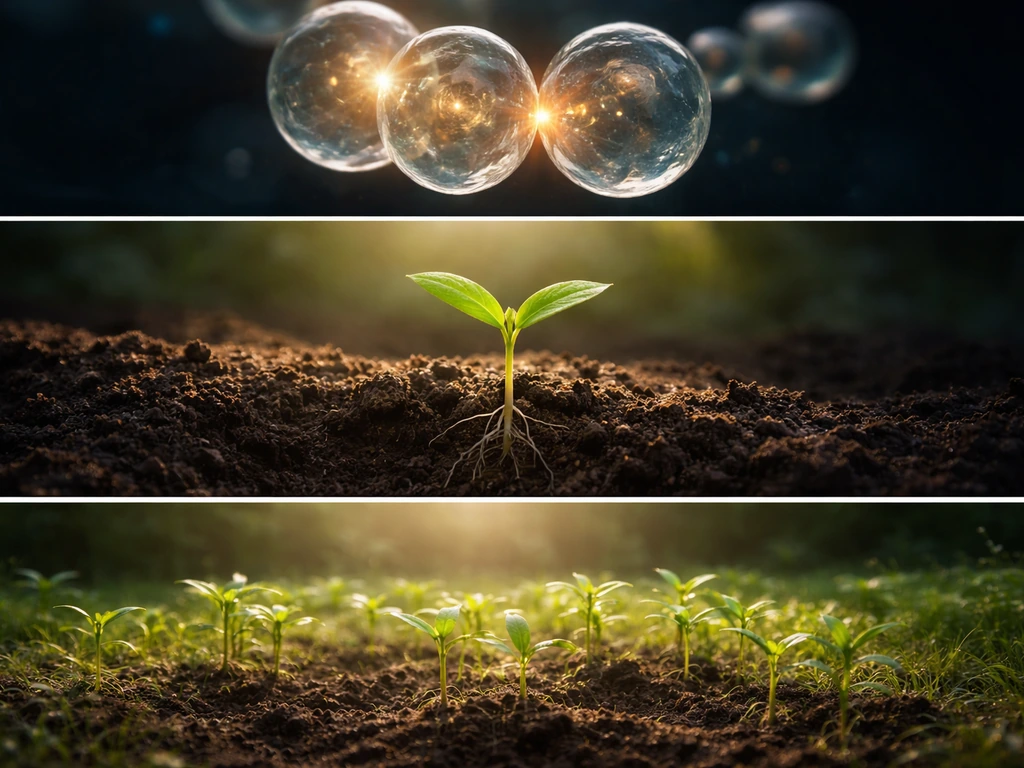
Think of growth as happening in three nested layers, each one depending on the layer beneath it.
The cell level
Individual cells grow by synthesizing proteins, lipids, and other molecules from raw nutrients, expanding their volume until they reach a size that triggers division. This is the foundation. Every tissue, every organ, every organism you can see with the naked eye is built from cells that grew and divided. If you want to understand what human cells need to grow and reproduce, this is where that story starts.
The organism level
At the organism level, growth is coordinated cell division happening in the right places at the right times. A seedling doesn't just inflate, it adds specialized cells to roots, shoots, and leaves in a tightly regulated sequence. Hormones, nutrient gradients, and mechanical signals all play a role. Growth at this level is not simply 'more cells,' it's organized expansion with a blueprint.
The population level
Zoom out further and growth means population growth: how many individuals exist and how fast new ones are being produced. Microbiologists describe this with models like the Monod equation, which shows that a population's growth rate is tied directly to the concentration of its limiting nutrient. Once that nutrient is depleted, growth rate drops toward zero no matter how healthy the individual cells are. This is the same logic behind carrying capacity in ecology.
How reproduction actually works: the mechanisms
Binary fission in prokaryotes
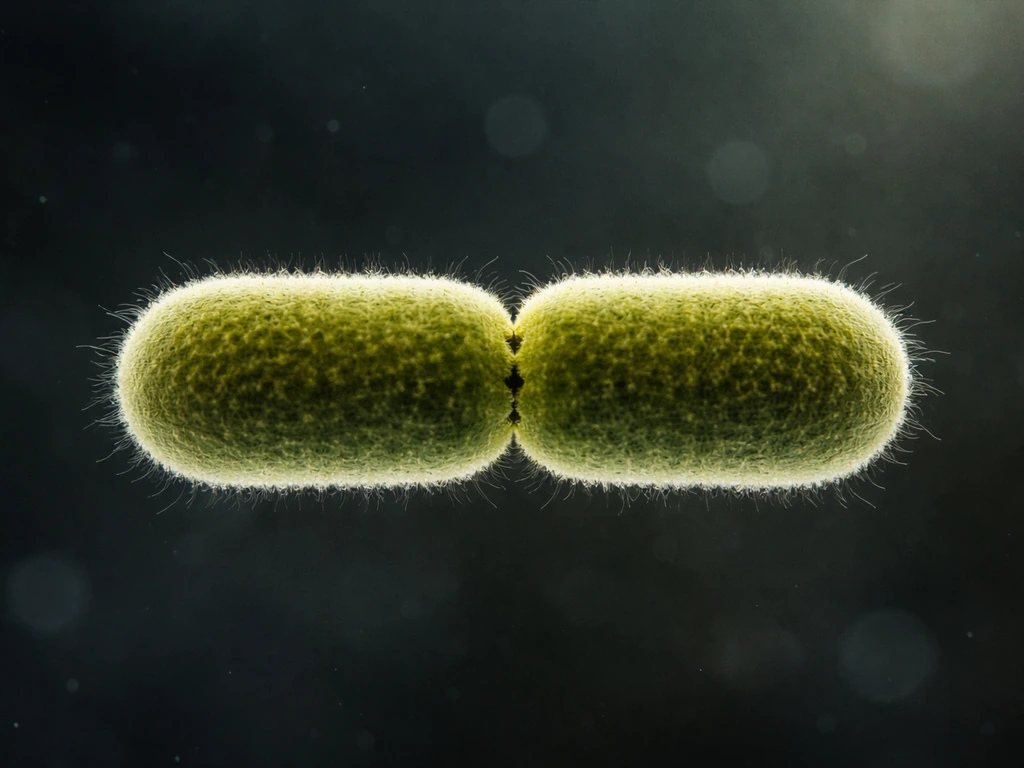
Bacteria keep it simple. A prokaryote duplicates its DNA, grows in length, and then pinches down the middle so each daughter cell receives one copy of the genome. No nucleus, no spindle apparatus, no meiosis. Under ideal conditions, some bacteria double every 20 minutes. That's why a single E. coli can become a billion cells overnight.
Mitosis: copying without mixing
Eukaryotic cells use mitosis for growth and asexual reproduction. The cell duplicates its chromosomes and then divides them equally between two daughter cells, each ending up with the same chromosome number as the parent. Yeast, for example, reproduces asexually by budding: a small outgrowth forms on the parent cell, receives a nucleus via mitosis, and then pinches off as a genetically identical daughter. Mitosis is also how your body replaces skin cells, heals wounds, and grows from a single fertilized egg into trillions of cells. If you're curious about how yeast cells specifically grow and reproduce, that budding process is a great case study.
Meiosis: mixing for sexual reproduction
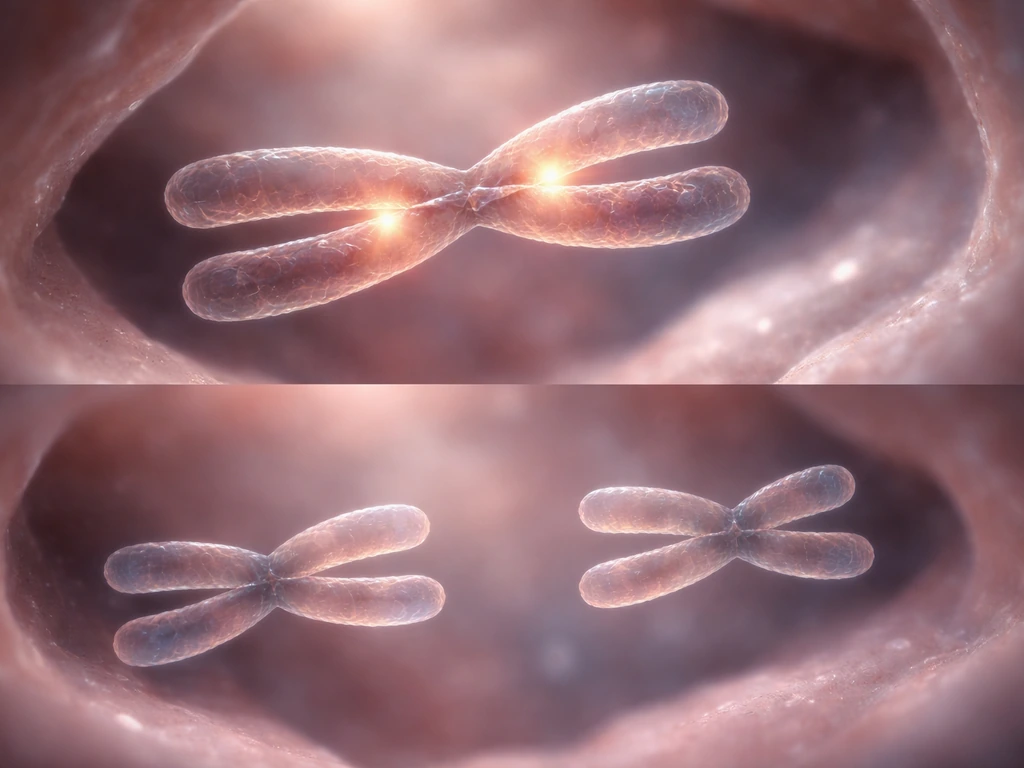
Sexual reproduction requires meiosis, a two-stage division that starts with one diploid cell and ends with four haploid gametes. In meiosis I, homologous chromosome pairs swap segments (recombination) and then separate. In meiosis II, sister chromatids split, producing four genetically unique cells. When two gametes fuse at fertilization, the diploid chromosome number is restored. This shuffling of genetic material is why offspring aren't identical copies of their parents, and it's the engine of evolutionary variation.
Asexual vs. sexual: a quick comparison
| Feature | Asexual (e.g., binary fission, budding) | Sexual (meiosis + fertilization) |
|---|---|---|
| Genetic outcome | Offspring identical to parent | Offspring genetically unique |
| Speed | Fast; can be minutes to hours | Slower; requires two parents and gamete formation |
| Energy cost | Lower | Higher |
| Adaptability | Lower (less variation) | Higher (more variation) |
| Examples | Bacteria, yeast budding, vegetative plant propagation | Most animals, flowering plants, fungi with sexual stages |
What a system needs to actually pull this off
Growth and reproduction don't just happen because a cell feels like it. They require a specific set of inputs and internal conditions all working at once.
Energy and raw materials
Metabolism is the prerequisite. A cell has to generate ATP to power DNA replication, protein synthesis, and membrane expansion. Without a carbon source, nitrogen for amino acids, phosphorus for DNA and ATP, and trace minerals for enzymes, the cell simply can't build the molecules it needs. This is why a nutrient-deprived culture stops growing long before any toxin kills it.
Environmental conditions
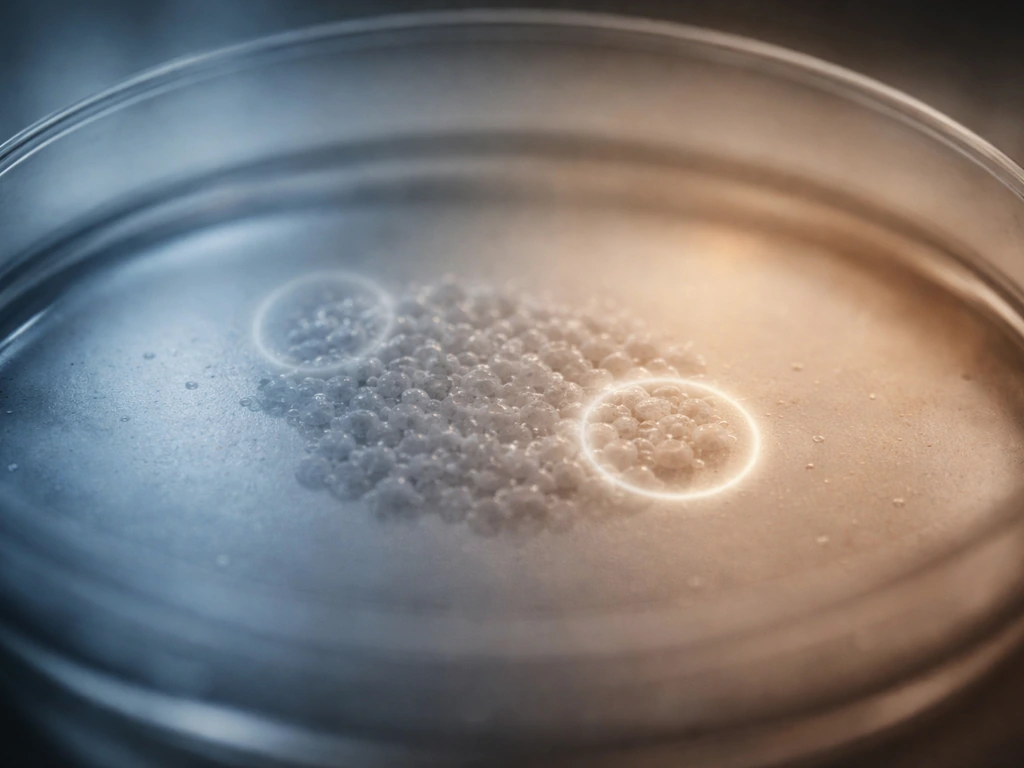
Every organism has a comfort zone. Most mammalian cell lines, for example, need about 37°C and a CO2 atmosphere of 4 to 10 percent to maintain the correct medium pH through bicarbonate buffering. Stray too far from those conditions and enzymes denature, membranes lose fluidity, and division halts. Temperature and pH are not just conveniences, they are rate-limiting variables for every biochemical reaction the cell runs.
Growth factors and the restriction point
Normal eukaryotic cells don't divide just because nutrients are available. They need external growth factor signals to push past the restriction point, a gate late in G1 phase after which the cell is committed to entering S phase and replicating its DNA. Withdraw those signals before the restriction point and the cell steps back into a resting state called G0. This is a fundamental reason why cells in a living body don't all divide constantly, and it's directly relevant to what human cells need before they can grow and reproduce.
Cell cycle checkpoints
Even after getting the green light to divide, the cell runs internal quality checks. The G1/S checkpoint confirms DNA is undamaged before replication begins. The G2/M checkpoint confirms replication is complete and DNA is intact before chromosomes are pulled apart. If damage is detected, proteins like p53 activate repair pathways or halt the cycle via ATM/ATR and Chk1/Chk2 kinase signaling. These aren't optional, they're the reason a cell with broken DNA doesn't just plow ahead and make two broken daughters. Organelles like mitochondria and chloroplasts also have their own capacity to grow and divide, which you can explore as a related topic.
Why unlimited growth is physically impossible
Here's a question worth sitting with: why don't cells just keep getting bigger instead of dividing? The answer is geometry.
For a spherical cell, the surface-area-to-volume ratio equals 3 divided by the radius. As radius doubles, volume increases by a factor of eight but surface area only increases by a factor of four. That matters because nutrients enter and waste exits through the surface. A cell that gets too large can't supply its interior by diffusion alone, the membrane simply doesn't have enough surface to keep up with the volume's demands. Dividing into two smaller cells resets that ratio and solves the problem.
At the population level, the same logic applies with resources instead of surface area. The Monod model shows that growth rate is a saturating function of limiting nutrient concentration. As cells consume the nutrient, its concentration falls, growth rate drops, and eventually the population reaches a ceiling. This is carrying capacity in mathematical form, not a philosophical concept but a measurable outcome of resource depletion.
Why growth stops and reproduction fails: the common bottlenecks
Diagnosing a failure to grow or reproduce comes down to running through the checklist. Here are the most common culprits:
- Missing or depleted nutrients: Carbon, nitrogen, or a key micronutrient runs out; growth rate drops according to Monod kinetics and cells become quiescent or die.
- Wrong temperature or pH: Enzymes lose activity outside their optimal range; even a few degrees off can cut division rates dramatically or stop them entirely.
- DNA damage checkpoint arrest: Unrepaired double-strand breaks or replication errors trigger p53-mediated G1 arrest or G2/M arrest; cells park themselves and won't divide until damage is resolved (or they undergo apoptosis).
- Insufficient oxygen: Aerobic organisms can't generate enough ATP via oxidative phosphorylation; anaerobes may be inhibited by oxygen instead. Either way, energy deficit shuts down division.
- Growth factor withdrawal: Normal cells (unlike cancer cells) require external mitogenic signals to pass the restriction point; remove those signals and cells exit the cycle.
- Space and mechanical constraint: Cells in a packed monolayer stop dividing due to contact inhibition; lack of physical space prevents colony expansion.
- Inability to form viable gametes or offspring: In sexual reproducers, meiotic errors, incompatibility, or failure to find a mate all block reproduction even when the individual organism is healthy.
- Viral infection or cytopathic effects: Some pathogens hijack or destroy host cell machinery, producing cytopathic effects (CPE) that prevent normal division.
How to confirm a system can actually grow and reproduce
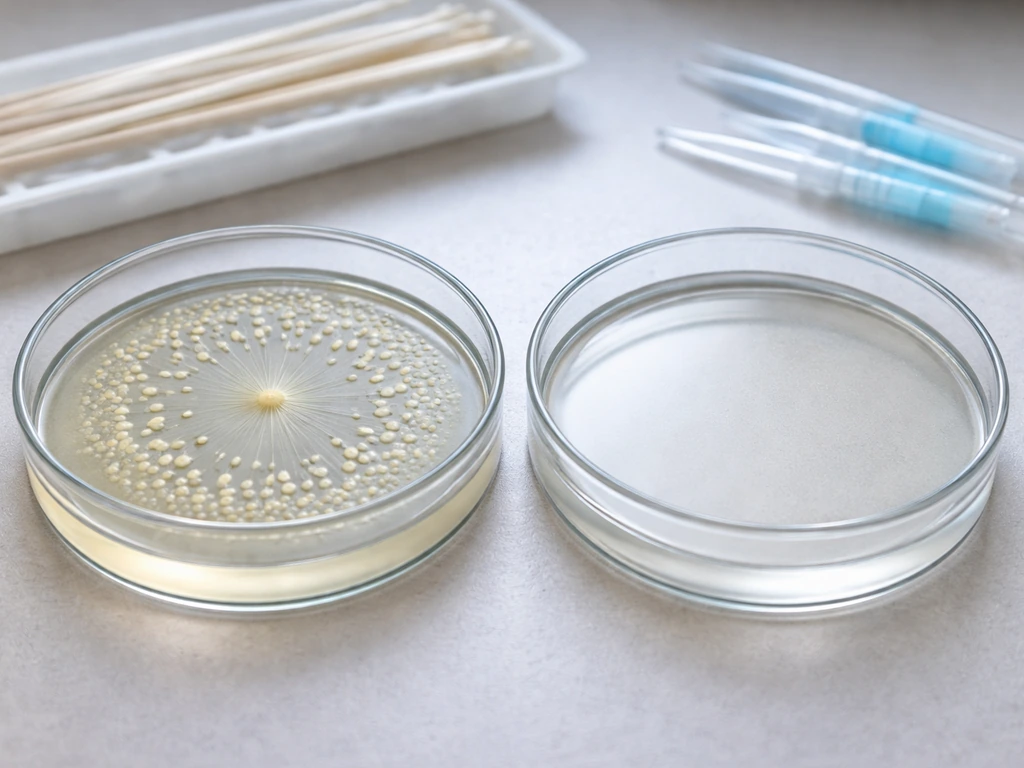
Saying something 'can grow and reproduce' is a testable claim. Here's how to verify it, from simple observations to lab assays.
Observable signs you can check without a lab
- Increase in mass, volume, or cell count over time under defined conditions
- Colony formation: a single cell giving rise to a visible cluster (this is the logic behind the clonogenic or colony formation assay, which directly measures long-term proliferative capacity)
- Life-cycle completion: offspring that themselves go on to produce offspring, confirming reproductive viability across generations
- Turbidity increase in liquid culture: cloudiness developing in a clear broth indicates microbial population growth
- Budding structures or division figures visible under a basic microscope
Lab-level measurements
- BrdU incorporation assay: BrdU is a thymidine analog that gets incorporated into newly synthesized DNA during S phase; antibody staining reveals which cells are actively replicating their DNA.
- Ki-67 proliferation index: Ki-67 is a protein present in cycling cells but absent in resting (G0) cells; the fraction of Ki-67-positive cells in a sample is a direct readout of how many cells are proliferating.
- Flow cytometry DNA content analysis: Staining cells with a DNA dye and running them through a flow cytometer produces a histogram showing the proportion of cells in G1, S, G2/M, and G0, giving a full picture of cell-cycle distribution.
- Growth curve and doubling time: Serial cell counts over time, plotted on a log scale, reveal lag phase, exponential growth, and plateau; the slope of the exponential phase gives the doubling time.
A practical diagnostic checklist
If you're trying to figure out why a system isn't growing or reproducing as expected, work through these questions in order:
- Are all required nutrients present at adequate concentrations? (Check carbon, nitrogen, phosphorus, and any organism-specific requirements.)
- Is temperature within the organism's viable range? (For mammalian cells, within ~1°C of 37°C; for mesophilic bacteria, roughly 25–40°C.)
- Is pH buffered correctly? (Use CO2/bicarbonate systems for mammalian cells; check medium color if phenol red is present.)
- Is oxygen available at the right level? (Aerobic organisms need it; some anaerobes are killed by it.)
- Are growth factors or hormones present? (For eukaryotic cell culture, is serum or defined growth factor supplement included?)
- Is there evidence of DNA damage? (Exposure to UV, ionizing radiation, or genotoxic chemicals can trigger checkpoint arrest.)
- Is population density too high? (Contact inhibition, nutrient exhaustion, and waste accumulation all increase with density.)
- Does the system produce viable offspring that themselves reproduce? (One generation of reproduction isn't enough to confirm sustainable growth and reproduction.)
The question of how cells grow and reproduce to maintain homeostasis ties directly into that last point: sustained reproduction isn't just about generating offspring once, it's about maintaining a stable, self-renewing system over time. For a deeper look at the key drivers, see how cells grow and reproduce during the cell cycle. And if you're working with stem cells specifically, the question of what stem cells need to grow and divide adds another layer, since those cells have unique requirements around niche signals and self-renewal factors. In practice, stem cells need the right niche signals and self-renewal factors to keep dividing while maintaining their stemness stem cells need to grow and divide.
The bottom line is that 'can grow and reproduce' is not a yes/no property baked into something forever. It's a condition that a living system either meets or doesn't, depending on what resources and signals it has access to right now, and whether its internal quality-control machinery is letting it proceed. Nail down those variables and you can diagnose, predict, and in many cases fix, whatever is blocking growth.
FAQ
Can something “grow and reproduce” temporarily, but then stop, and still be considered alive?
Yes. Many living systems experience phases of growth, stasis, dormancy, or reduced division, depending on conditions. What matters is whether the system can resume growth and reproduction when the limiting resources or signals return, and whether it has intact mechanisms for metabolism, information storage, and division once conditions permit.
How do you tell “growth” from “accumulation” or “swelling” in a nonliving system?
Look for energy- and material-driven construction of internal components plus information-based replication. Nonliving swelling can increase size without building a functional “copying” process, while living growth involves biosynthesis, regulated cell-cycle progression, and offspring that inherit the system’s instructions.
Why does a nutrient-rich environment not always produce faster growth?
Because other requirements can become rate-limiting even when nutrients are abundant. Common blockers include wrong temperature or pH, lack of specific growth factor signals (for dividing eukaryotic cells), insufficient oxygen, inadequate trace elements, or DNA damage that triggers cell-cycle checkpoints and halts division.
What’s the difference between a culture that “grows” and one that truly “reproduces”?
Growth can mean increasing biomass or cell size, while reproduction requires creating new individuals with heritable information. In microbes and many lab systems, you can distinguish them by tracking viable counts over time, not just total protein or turbidity.
Why do some cells keep dividing in culture but not in the body?
Body conditions impose additional constraints such as complex signaling cues, mechanical forces, immune surveillance, and structured extracellular matrix. Even if nutrients and temperature match, missing or abnormal niche signals and stress responses can prevent cells from passing restriction-point control or can drive senescence/apoptosis instead of sustained reproduction.
Can viruses reproduce without “growing” on their own?
Viruses reproduce by hijacking a host’s metabolism and replication machinery rather than running independent metabolism, so they do not meet the same autonomy checklist as cellular life. They can increase in number, but their propagation depends on an external living cell’s internal machinery.
Do organisms with very slow division still qualify as systems that can grow and reproduce?
Yes, division can be slow and reproduction infrequent. The key is that the system’s internal instructions and machinery remain functional and can complete the cell-cycle or reproductive process when conditions allow, even if that timeline is months, years, or longer.
What are the most common reasons a cell culture fails to divide even when it looks healthy?
Survival can persist even when division is blocked. Typical causes include checkpoint activation from DNA damage, missing growth-factor or hormone signals, overconfluence leading to altered contact signaling, insufficient attachment or extracellular matrix, or media conditions where pH buffering and osmolarity slowly drift out of range.
How can you tell whether growth failure is due to nutrient limitation versus signaling failure?
Nutrient limitation often shows improved growth after adding the specific limiting component, but signaling failure will not fully recover without the correct external factors that push cells past the restriction point. Practically, use controlled media variations and include assays that measure division readiness markers rather than relying only on biomass increase.
Why is dividing beneficial instead of just making larger cells?
Because transport and reaction capacity do not scale favorably with size. As cells get bigger, nutrients and wastes must cross proportionally less surface area per unit volume, and internal biochemical processes may not keep up. Splitting resets the geometry and restores workable diffusion and resource distribution.
How do checkpoints affect reproduction if DNA damage is present?
They can halt the cell cycle before replication or before chromosome separation. This prevents producing viable offspring with damaged genomes. Repair pathways may restore the ability to divide, or persistent damage can trigger permanent arrest, senescence, or cell death, breaking reproduction even if nutrients are available.
What does “carrying capacity” practically mean for microbes in an experiment?
It’s the point where population growth saturates because an essential resource becomes depleted or inhibitors accumulate. The practical next step is to measure growth rate and viable counts over time while tracking the limiting nutrient or byproducts, since “more cells” does not always mean “still increasing at the same rate.”
Next Article
What Do Stem Cells Need to Grow and Divide
Learn what stem cells need to grow and divide, including niche signals, nutrients, cell-cycle control, and limits on pro