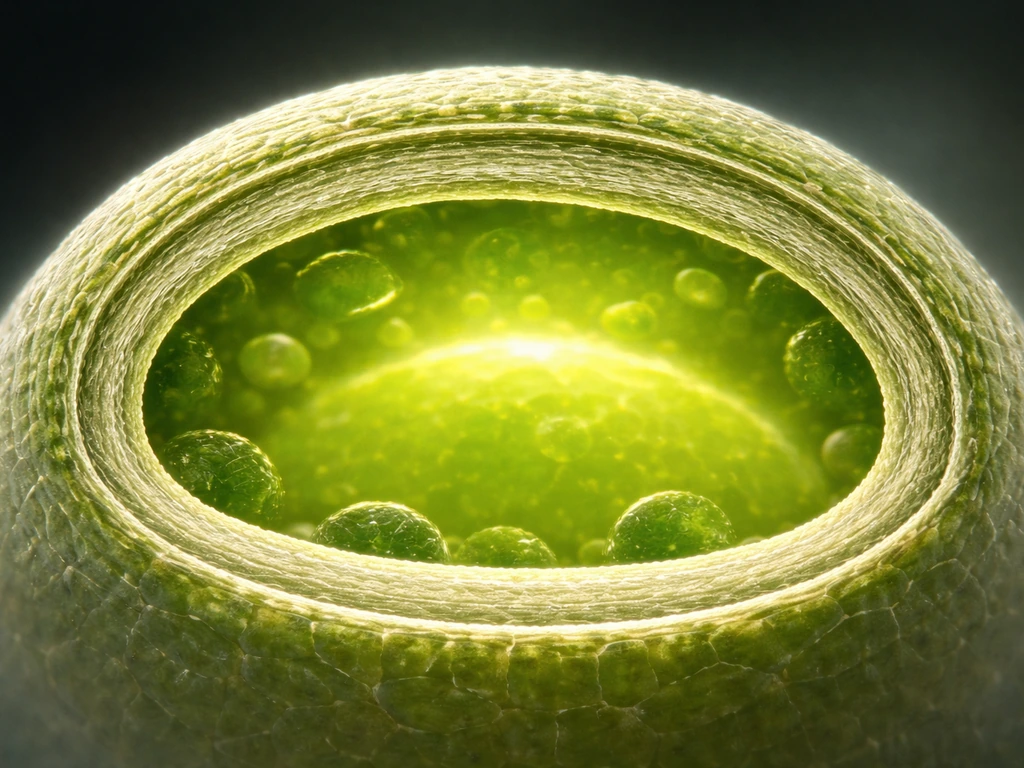
The cell wall helps a cell grow by acting as a pressure vessel that can be deliberately weakened, stretched, and rebuilt. Without it, the cell would either burst from internal pressure or have nothing to push against during expansion. The wall holds the cell's shape while enzymes loosen its structure just enough to let new material slip in, after which the wall re-stiffens around a larger frame. It is a controlled, stepwise process of build, loosen, expand, and reinforce, repeated over and over until the cell reaches division size.
How Does the Cell Wall Help the Cell Grow Without Bursting
Marcus Whitmore
31 May 2026
First, what exactly is a "cell wall"? (Plants, bacteria, and animals are very different)
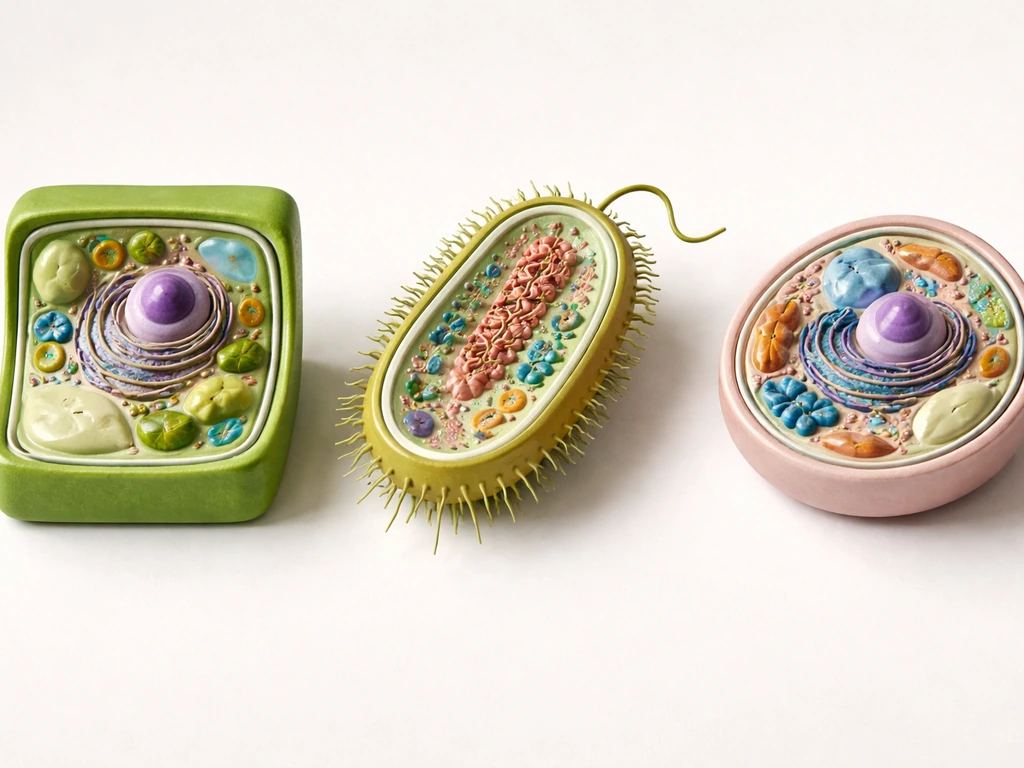
The term "cell wall" means different things depending on which organism you are talking about, and that distinction matters for understanding growth.
- Plant cells have a primary cell wall made of cellulose, hemicellulose, and pectin. It is flexible enough to allow growth but rigid enough to maintain shape and resist bursting under water pressure.
- Bacterial cells have a wall made of peptidoglycan (also called murein), a mesh-like polymer that encases the cell like a molecular chain-mail suit. It resists the intense internal osmotic pressure that bacteria build up.
- Animal cells have no cell wall at all. They rely on a flexible plasma membrane supported by an internal protein scaffold called the cytoskeleton to maintain shape. Animal cells grow differently—by gradually adding membrane and cytoplasm without the pressure-vessel dynamic that plant and bacterial cells use.
This article focuses on plant and bacterial cells because those are the systems where the cell wall is a direct, active participant in growth. If you have been exploring how the nucleus coordinates growth or what happens during interphase, the cell wall story is the mechanical partner to those genetic and metabolic instructions. If you also wonder about how far this kind of cellular control could be pushed, you might enjoy a related read on whether we can grow dinosaurs from dna by using advanced genetic programming rather than natural cell-wall remodeling. The nucleus coordinates growth by regulating gene expression so the cell can build the proteins and cell-wall machinery needed for expansion. During interphase, the cell also grows and carries out most of its normal metabolic activity so it is ready for division interphase growth.
What the cell wall is made of, and why the materials matter
Plant cell walls: cellulose, hemicellulose, and pectin
Think of the plant cell wall as a reinforced concrete structure, but made of biology. Cellulose microfibrils are the steel rebar: long, crystalline chains of glucose that are extremely stiff and provide tensile strength. Hemicellulose molecules (often xyloglucans) wrap around those microfibrils and link them together, while pectin fills the gaps and cross-links adjacent microfibrils to one another. Together, these three components create a wall that is simultaneously rigid and somewhat extensible, which is exactly what a growing cell needs.
The orientation of cellulose microfibrils is not random. It is guided by cortical microtubules just inside the cell membrane, which act like tracks directing the cellulose-synthesizing machinery. This is why plant cells can grow in a specific direction: if the microfibrils run horizontally like hoops around a barrel, the cell is constrained from expanding sideways and instead elongates up and down. Cellulose microfibril orientation in the plant primary cell wall is linked to the direction of cell growth and correlates with the orientation of cortical microtubules at the time the wall is deposited cortical microtubule orientation. Change the microtubule orientation, and you change which way the cell grows.
Bacterial cell walls: peptidoglycan
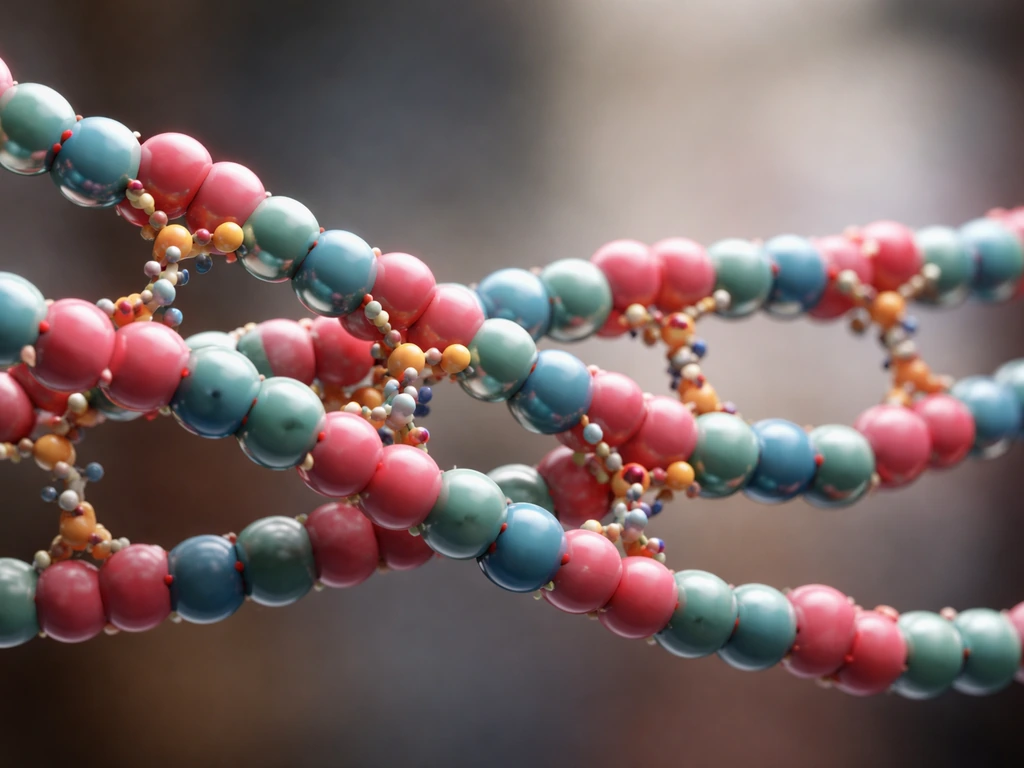
Bacterial peptidoglycan is built from alternating sugar units, N-acetylglucosamine (GlcNAc) and N-acetylmuramic acid (MurNAc), linked together in long glycan strands. Short peptide chains hang off the MurNAc units, and these peptides are cross-linked to peptides on neighboring strands by enzymes called transpeptidases (also known as penicillin-binding proteins, or PBPs). Those cross-links are the key to everything: they turn a loose collection of strands into a single interconnected sacculus that encases the entire bacterium. The tighter the cross-linking, the more pressure the wall can withstand.
How the wall keeps the cell from bursting
Cells, especially plant and bacterial cells, are under enormous internal pressure. A plant cell can build up turgor pressure of several atmospheres, roughly comparable to the pressure inside a car tire. A bacterial cell can be even higher. Without a wall, the plasma membrane would rupture almost instantly. The wall acts as a pressure vessel: it absorbs the tensile stress generated by that internal pressure and distributes it across the entire structure.
In bacteria, the cross-linked peptidoglycan sacculus absorbs osmotic pressure so efficiently that Gram-positive bacteria can survive in very dilute environments that would explode an unprotected cell. In plants, the cellulose-hemicellulose-pectin network does the same job, and it does it while staying permeable enough to let water and nutrients in. Shape is also controlled here: the wall does not just prevent bursting, it defines the geometry of the cell, constraining it to be rod-shaped, spherical, or elongated depending on how the wall is built.
The actual growth mechanism: loosen, insert, re-stiffen
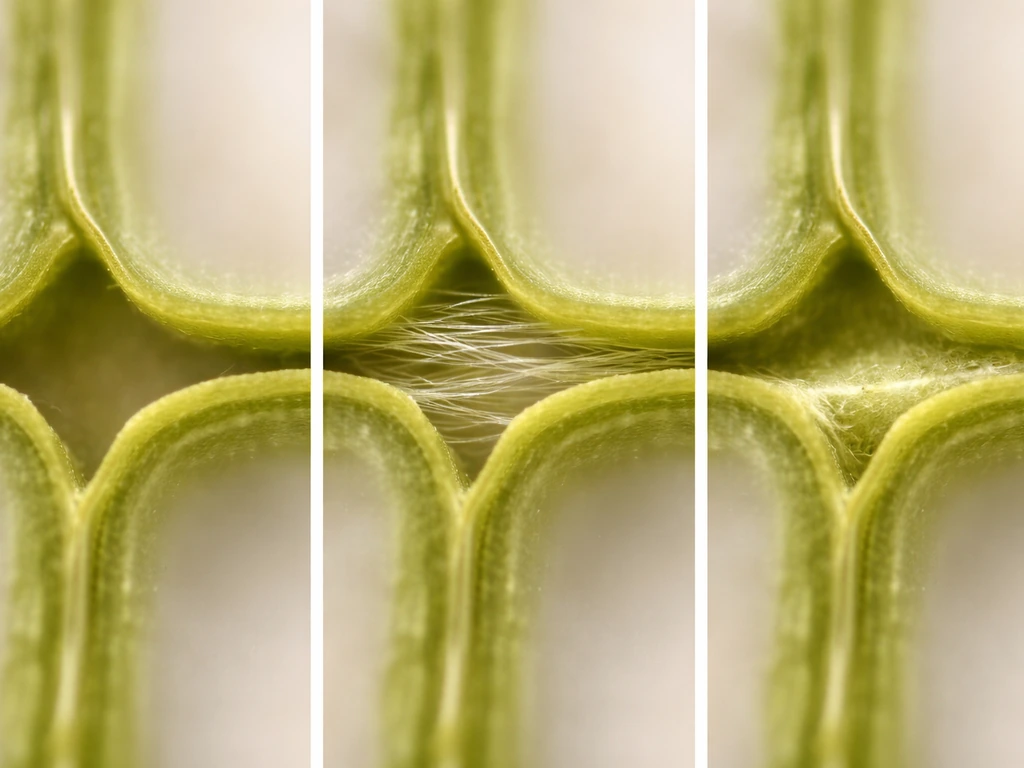
This is the core of the answer. A cell cannot simply push outward against its own wall, the wall is too stiff. Instead, it uses a tightly coordinated four-step cycle. In general, DNA does not directly “grow” like a cell wall or a tissue does; growth comes from cell processes that use DNA as instructions. DNA is replicated and cells grow during interphase, before the cell divides.
- Build: The cell synthesizes new wall components (cellulose microfibrils in plants; lipid II-carried peptidoglycan precursors in bacteria) and deposits them at or near the existing wall.
- Loosen: Enzymes and proteins specifically weaken load-bearing connections in the wall. In plant cells, proteins called expansins bind at the interface between cellulose microfibrils and hemicellulose and disrupt the noncovalent bonds holding them together—without actually cutting or degrading the polymers. In bacteria, autolysins (wall hydrolases) cleave bonds in the existing peptidoglycan mesh to create gaps where new material can be inserted.
- Expand: With the wall locally loosened, internal pressure pushes outward. The cell takes up water (in plants, driven by osmosis), turgor pressure rises, and the softened wall yields irreversibly in the direction permitted by its structure. The cell physically gets bigger.
- Re-stiffen: New wall material is cross-linked into the gaps left by loosening. In bacteria, transpeptidases form new peptide cross-links. In plant cells, new cellulose microfibrils are laid down and hemicellulose/pectin re-integrate the structure. The wall is now larger, stiffer again, and ready for the next cycle.
Expansins in plants are fascinating because they do not break any covalent bonds, they are not enzymes in the classical sense. They essentially pick open the zipper between cellulose and hemicellulose, let the wall relax under tension, then the zipper re-closes around a slightly larger configuration. Research showed this by adding expansin extracts to heat-killed plant cell walls clamped under tension in a device called an extensometer: the dead walls started creeping and extending again, proving that expansins alone can restore wall loosening.
Turgor pressure and wall remodeling: why both are required
Turgor pressure and wall loosening are not alternatives, they are partners. Neither one alone produces growth.
If you block water uptake in a growing plant cell, turgor pressure drops, and even though the wall is being loosened by expansins, expansion slows or stops. The loosened wall has nowhere to go without pressure behind it. Conversely, if you block wall loosening but maintain turgor pressure, the wall just sits there under tension and the cell does not expand, it might even burst if pressure keeps climbing without yielding. Growth requires the wall to yield (loosening) AND a driving force (pressure) to push through that yield point.
Plant biologists model this mathematically: irreversible wall deformation only happens when turgor pressure (P) exceeds a critical yield threshold (Pc). Below that threshold, the wall behaves elastically and just springs back. Above it, the wall deforms permanently and the cell grows. Wall extensibility (a parameter called phi, φ) determines how much growth happens per unit of pressure above that threshold. The hormone auxin accelerates expansion by acidifying the cell wall space (the apoplast), which activates expansins (they work best at pH around 4) and raises φ, letting the same turgor pressure produce more growth.
What happens when cell wall construction goes wrong
When the build-loosen-insert-re-stiffen cycle breaks down, cells face two failure modes: they either stop growing entirely, or they burst.
Bursting (lysis) happens when the wall is weakened faster than new material is inserted. In bacteria, this is exactly what certain antibiotics do. Beta-lactam antibiotics (like penicillin) structurally mimic the D-Ala-D-Ala terminus of peptidoglycan precursors, the exact molecular handle that transpeptidase enzymes grab to form cross-links. By binding and blocking those transpeptidases (PBPs), beta-lactams stop new cross-links from forming. Meanwhile, autolysins keep chewing away at the old wall. The result is a wall with growing gaps and no repair: the bacterium bulges, the membrane herniates through the weakened spots, and eventually the cell bursts. Vancomycin does something similar by directly binding the D-Ala-D-Ala terminus and physically blocking the transpeptidation reaction, preventing cross-link formation and ultimately causing wall failure.
Growth arrest happens at the other extreme: if wall loosening is blocked, the cell cannot expand even though it keeps synthesizing wall material and accumulating turgor pressure. In plants, mutations that disrupt expansin activity or cellulose synthesis produce stunted, swollen cells that cannot elongate properly. The cell stays pressurized and alive but cannot grow in the intended direction.
Why cells can't just keep growing forever
The cell wall imposes a hard mechanical limit on growth, and that limit is actually a feature, not a bug. As a cell gets larger, its surface area grows as a square while its volume grows as a cube. A very large cell has relatively less wall surface area to manage the interior pressure and to exchange nutrients and waste with the environment. At some point, the wall simply cannot keep up with the demands of the volume it encloses.
There are also active checkpoints. In bacteria, the cytoskeletal protein MreB coordinates elongation of the peptidoglycan wall, while FtsZ coordinates division. Growth and division machinery are linked so that when a bacterium reaches a critical size, the division machinery fires and splits the cell. If those signals are uncoupled, growth without division, for instance, bacteria become abnormally elongated and fragile. The wall integrity surveillance systems in both plants and bacteria monitor mechanical stress in the wall and can signal back to the cell to slow synthesis or trigger division. Growth is not a passive process that just continues until something stops it; it is actively timed and limited.
This connects to a broader theme you will find across growth biology: whether you are looking at what phase of the cell cycle a cell grows during, or how DNA replication is timed relative to physical expansion, the cell coordinates molecular-scale chemistry with physical-scale mechanics. The wall is one of the main interfaces where that coordination happens.
Real-world places to see this in action
Why plants stand upright (and why they wilt)
A fresh celery stick is rigid because its plant cells are fully turgid, turgor pressure presses outward against stiff walls, making the whole tissue firm. When you leave celery out and it loses water, turgor pressure drops, the walls have nothing pressing against them, and the stalk goes limp. The wall itself is still intact; it just lacks the internal pressure partner. This is the turgor-wall relationship made visible.
How plants grow toward light or upward
Auxin-driven directional growth is a real-world demonstration of the acid-growth mechanism. When auxin redistributes to one side of a shoot, it acidifies that side's wall space, activates expansins there, raises wall extensibility on that side, and the cells on the auxin-rich side expand more than the other side, bending the shoot toward light. The wall is not just passively involved; it is the active output of the hormonal signal.
How antibiotics kill bacteria by targeting the wall
Beta-lactams and vancomycin are effective antibiotics precisely because peptidoglycan cross-linking is unique to bacteria, human cells have no equivalent target. By interrupting transpeptidation, both drug classes cause growing bacteria to build increasingly defective walls. The more actively a bacterium is growing and inserting new wall material, the faster the antibiotic disrupts it. That is why beta-lactams work best against actively dividing bacteria: a resting bacterium with a stable wall is much less vulnerable because it is not running the loosen-insert-re-stiffen cycle very quickly.
How bacteria grow in different directions
Rod-shaped bacteria like E. coli use MreB (an actin-like protein) to direct new peptidoglycan insertion along the sides of the cell, allowing elongation. Spherical bacteria (cocci) insert new wall material more uniformly. This is a direct bacterial parallel to the way cortical microtubules direct cellulose microfibril orientation in plant cells, both are cytoskeletal systems that translate growth instructions into a specific physical shape.
A quick comparison: plant walls vs bacterial walls
| Feature | Plant Cell Wall | Bacterial Cell Wall |
|---|---|---|
| Main material | Cellulose, hemicellulose, pectin | Peptidoglycan (murein) |
| Loosening agents | Expansins (noncovalent disruption), xyloglucan endotransglycosylases | Autolysins (hydrolases that cleave bonds) |
| Pressure source | Turgor pressure from water uptake (osmosis) | Osmotic pressure (very high in Gram-positives) |
| Directionality control | Cortical microtubule-guided cellulose microfibril orientation | MreB (elongation) and FtsZ (division site) |
| What failure looks like | Stunted/swollen cells, loss of elongation, wilting | Bulging, lysis (bursting), loss of viability |
| Exploited by drugs/toxins | Herbicides targeting cellulose synthase (e.g., isoxaben) | Antibiotics: beta-lactams, vancomycin |
The things worth noticing after reading this
- The wall is not just a passive cage—it actively participates in growth by being strategically weakened and rebuilt in a cycle.
- Turgor pressure (in plants) and osmotic pressure (in bacteria) are the driving forces, but they cannot produce growth without a wall that can yield. Both sides of the equation are required.
- Expansins work without cutting anything—they loosen by disrupting noncovalent bonds, which is why they are so precise and reversible.
- Antibiotics like penicillin and vancomycin kill bacteria by jamming the re-stiffen step of the wall growth cycle, not by piercing the membrane directly.
- Cellulose microfibril orientation is the plant cell's way of deciding which direction it grows—change the orientation, change the growth axis.
- Cells do not grow indefinitely because the surface-to-volume ratio eventually makes it impossible to maintain wall integrity and nutrient exchange, and because active checkpoints trigger division before the cell becomes mechanically fragile.
FAQ
If the cell wall is loosened, why doesn’t the cell always grow?
In plants, growth can slow to a stop if the cell wall is loosened but the turgor pressure drops, because the “yield” is not backed by a sufficient pressure driving force. Conversely, if turgor stays high but loosening is blocked, the wall tension may rise without permanent deformation, so the cell does not expand.
How do low water conditions affect how the cell wall helps growth?
Yes. Because irreversible wall deformation requires pressure to exceed a threshold, cells in low-turgor conditions behave more elastically, springing back after relaxation. This is why watering and osmotic environment can strongly affect growth rate even when wall-building proteins are present.
What goes wrong if wall loosening and wall building fall out of sync?
Cells do not expand just because the wall exists, they expand because the wall is repeatedly remodeled in coordination with pressure. If insertion of new wall material lags behind loosening, the wall can weaken faster than it is repaired, increasing the risk of lysis (especially in bacteria).
Does the same mechanism explain wall-aided growth in plants and bacteria?
Plant and bacterial walls are mechanically different. In bacteria, cross-link density in peptidoglycan largely determines how well the wall resists osmotic stress. In plants, extensibility depends on the cellulose-hemicellulose-pectin network plus regulators like expansins and wall pH, so the key “knobs” differ by organism.
How does the wall control the direction of cell growth?
Direction matters because wall components are not inserted randomly. In plants, microtubules orient cellulose microfibril deposition, creating anisotropic strength, so expansion is favored along certain axes. In rod-shaped bacteria, MreB biases where peptidoglycan insertion occurs, promoting elongation rather than uniform swelling.
Why do some antibiotics work better on actively dividing bacteria?
In bacteria, many growth inhibitors work best when cells are actively building and cross-linking new peptidoglycan. When division and wall synthesis are slowed, the wall may be more stable, so the same antibiotic exposure can be less effective than against rapidly growing cells.
How does auxin make the cell wall help more with growth?
For plants, auxin-driven acidification raises wall extensibility by activating expansins in the acidic apoplast and effectively increasing the fraction of the wall that can undergo permanent deformation. Without that pH shift, even normal turgor may not produce as much irreversible stretching.
How do wall-targeting drugs lead to bursting instead of just slowing growth?
Antibiotics that interfere with cross-linking can cause walls with defects that cannot withstand the internal pressure. The cell then bulges as weak spots open, membrane components protrude through the compromised wall, and lysis can occur once the damage outpaces repair.
What happens to a growing plant cell if expansin activity is inhibited?
If wall loosening is blocked while pressure is still high, the wall can remain under tension without yielding. In plants, this commonly produces stunted growth and abnormal swelling patterns, because the cell stays pressurized but cannot elongate.
Why can’t a cell grow indefinitely, even if it keeps building a wall?
A cell can grow only up to a mechanical limit because volume increases faster than the available wall area to manage pressure and exchange. As size increases, maintaining appropriate stress distribution and sufficient remodeling capacity becomes harder, so growth slows unless the wall system can keep up.
Next Article
Does DNA Grow? Replication, Cell Cycle, and Lab Amplification
DNA does not grow like an organism; cells replicate it during the cell cycle, and labs amplify it using PCR.