DNA is replicated during S phase (the Synthesis phase) of interphase, and cells grow primarily during G1, with continued growth through S and G2. M phase is when the cell actually divides, and growth essentially stops while the cell is busy splitting. If you need one clean line to remember: G1 = grow, S = copy DNA, G2 = grow and prep for division, M = divide.
During Which Period Is DNA Replicated and Cells Grow
Marcus Whitmore
23 May 2026
The cell cycle at a glance
The cell cycle is the full sequence of events a cell goes through from one division to the next. It has two big chunks: interphase and M phase. Interphase takes up roughly 95% of the total cycle time, which surprises a lot of students who assume mitosis is the main event. It isn't. Most of the real work, including growing, building proteins, copying DNA, and checking for errors, happens during interphase.
Interphase itself is divided into three subphases: G1 (first gap), S (synthesis), and G2 (second gap). Then comes M phase, which includes mitosis (nuclear division) and cytokinesis (cytoplasmic division). The order never changes in a healthy eukaryotic cell: G1 → S → G2 → M. Understanding where DNA replication and cell growth sit within that sequence is the core of this question.
DNA replication happens in S phase, not mitosis
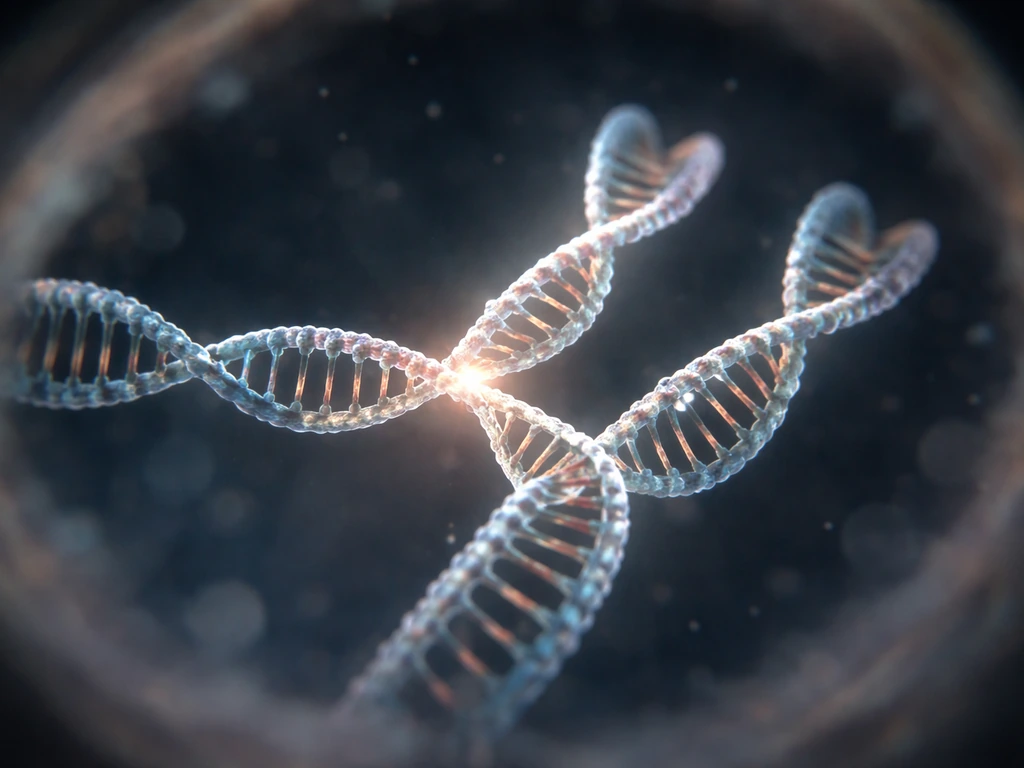
S phase is the only window in the cell cycle when DNA is actively being copied. The cell duplicates its entire genome here, producing two complete, identical copies of every chromosome. blank" rel="noopener noreferrer">The mechanism is semiconservative, meaning each new DNA double helix keeps one original strand and adds one newly synthesized strand alongside it. By the time S phase ends, the cell's DNA content has roughly doubled compared to where it started in G1.
Interestingly, the preparation for DNA replication actually starts back in G1. During G1, a protein complex called the MCM double hexamer is loaded onto replication origins across the genome. Think of this as laying down ignition switches. When S phase begins, those switches are flipped, converting the inactive helicase into its active form (the CMG complex) and unwinding DNA so copying can begin. The cell doesn't fire every origin at once either. Some fire early in S phase, some fire late, in a carefully timed program.
One thing worth visualizing: if you were to measure the DNA content of a population of cells, you'd see two distinct peaks on a graph. G1 cells cluster at one level of DNA content, G2 cells cluster at roughly double that level, and S-phase cells form a smear in between because they're actively copying. That picture makes it very clear that replication is an S-phase event, not something spread across the whole cycle.
When cells actually grow: G1 vs G2
Here's where a lot of students go wrong: they assume the cell only grows during S phase because that's when DNA is being replicated. Not quite. Cell growth in the sense of increasing mass, producing proteins, building organelles, and expanding volume happens continuously throughout all of interphase, including G1, S, and G2.
Cell growth in the sense of increasing mass, producing proteins, building organelles, and expanding volume happens continuously throughout all of interphase, including G1, S, and G2 does the cell grow during interphase. In other words, DNA increases in amount because it is copied, not because it continuously grows like cell mass during interphase. The cell wall helps by providing structure, which allows the cell to expand safely during growth. Growth stops during M phase.
G1: the main growth phase
G1 is where the heavy lifting of cell growth happens. After a cell finishes dividing, the daughter cell is roughly half the size of the original. G1 is the recovery and expansion period. The cell ramps up protein synthesis, grows in size, and checks whether conditions are right to commit to another round of division. This is also the phase most sensitive to external signals like growth factors and nutrient availability. If those signals are absent, the cell may exit into a resting state called G0 rather than proceeding toward S phase.
G2: prep work before division
After S phase, the cell enters G2 still growing and now focused on preparing for mitosis. G2 cells continue to synthesize proteins, including the molecular machinery needed to condense chromosomes and form the mitotic spindle. Growth doesn't stop in G2, but the emphasis shifts toward quality control: has all the DNA been accurately replicated? Are there any double-strand breaks that need repair? The cell won't move into M phase until those questions are answered satisfactorily.
How DNA replication connects to mitosis
Replication must always come before division. People often wonder, can we grow dinosaurs from dna, but biology like the cell cycle and checkpoints shows how much controlled DNA copying and correct division are required. That's not a coincidence, it's a logical requirement. If a cell tried to split without first copying its DNA, each daughter cell would end up with half a genome, which is catastrophic. So the cell cycle is designed with S phase upstream of M phase to guarantee that two full genome copies exist before any segregation begins.
Once replication finishes, the two copies of each chromosome (now called sister chromatids) are held together until M phase. During mitosis, the spindle apparatus physically pulls sister chromatids to opposite ends of the cell. Then cytokinesis pinches the cell in two, delivering one full genome copy to each daughter cell. So S phase makes the copies, and M phase distributes them. They're two completely separate events, separated by the G2 buffer in between.
This is directly relevant if you're also thinking about whether DNA itself grows or changes over time, or how the nucleus helps orchestrate these events. The nucleus is deeply involved in coordinating when replication fires and how chromosomes are organized before segregation. If you’re wondering how the nucleus helps the cell grow, it mainly does so by coordinating replication timing and organizing chromosomes before division how does the nucleus help the cell grow.
Checkpoints keep everything in order
The cell cycle has built-in quality control gates called checkpoints. Two are especially important for understanding DNA replication and growth timing.
The G1/S checkpoint: committing to replication
This checkpoint, sometimes called the restriction point, is the cell's go/no-go decision for entering S phase. The key players are CDK4/6 paired with Cyclin D, followed by CDK2 paired with Cyclin E. When conditions are favorable (cell is big enough, nutrients are available, growth factors are present), these complexes phosphorylate the retinoblastoma protein (Rb), which releases the transcription factor E2F. E2F then switches on genes needed for DNA replication. If conditions aren't right, or if DNA is damaged, p53 activates p21, which blocks cyclin-CDK complexes and keeps the cell in G1. Cross this checkpoint, and the cell is committed to copying its DNA.
The G2/M checkpoint: verifying replication before division
Before the cell enters mitosis, the G2/M checkpoint confirms that DNA replication is complete and that no damage remains unrepaired. The main switch here is CDK1 paired with Cyclin B (often called M-Cdk). CDK1 activity drives the cell into mitosis, triggering chromosome condensation, nuclear envelope breakdown, and spindle assembly. But CDK1 is kept inactive by default through phosphorylation and sequestration of its activator CDC25C. If damage is detected, this block stays in place, buying the cell time to fix the problem. Only when the genome looks clean and fully replicated does CDK1 get activated and mitosis begin.
When checkpoints fail, the consequences are serious. Loss of p53 function, for example, impairs both the G1/S and G2 checkpoints, allowing cells with damaged or incompletely replicated DNA to divide anyway. The result is chromosomal instability, which is a hallmark of cancer.
The timeline to memorize and the exam traps to avoid
Here's the clean sequence to lock in before any exam or homework problem on this topic:
- G1 (first gap): Cell grows, produces proteins and organelles, receives growth signals. DNA content: 1 copy per chromosome set. G1/S checkpoint gates entry into S phase.
- S phase (synthesis): DNA is replicated. Cell continues growing. DNA content rises from 1x to 2x across this phase.
- G2 (second gap): Cell continues to grow, synthesizes proteins for mitosis, checks for replication errors. DNA content: 2 copies per chromosome set. G2/M checkpoint gates entry into M phase.
- M phase (mitosis + cytokinesis): Cell stops growing. Chromosomes condense, segregate, and the cell physically divides into two daughter cells. Each daughter gets one genome copy.
Common exam mistakes and how to catch them

| Misconception | What's actually true |
|---|---|
| DNA replicates during mitosis | DNA replication is complete before mitosis starts. M phase only segregates already-replicated chromosomes. |
| Cells only grow during S phase | Growth is continuous through all of interphase (G1, S, and G2). S phase is for replication, not exclusive growth. |
| Interphase is just one big replication event | Interphase has three subphases. Only S phase involves DNA replication. G1 and G2 are gap phases focused on growth and preparation. |
| G2 cells have the same DNA content as G1 cells | G2 cells have roughly twice the DNA content of G1 cells because replication already happened in S phase. |
| The cell grows during M phase | Growth stops during M phase. The cell is dividing, not expanding. |
How to tackle a cell-cycle diagram question
- Find the phase label or look for clues: Is DNA content increasing? That's S phase. Is DNA content at its highest and the cell dividing? That's M phase.
- Ask: Is the cell growing? If yes and DNA isn't actively doubling, you're in G1 or G2. If the cell is splitting and growth has stopped, you're in M.
- Ask: What's the checkpoint controlling this transition? G1 to S is controlled by Rb/E2F and Cyclin D/E. G2 to M is controlled by CDK1/Cyclin B and CDC25C.
- If the question mentions 'interphase,' remember that interphase includes G1, S, and G2. Don't equate interphase with replication alone.
- If asked specifically when replication occurs, the answer is always S phase, never mitosis, never G1, never G2.
One last thing worth noting: the question of whether cells grow during interphase is closely tied to understanding why cells can't just keep growing forever. The cell wall helps maintain cell shape and provides structural support, so the cell can expand safely as it grows. Growth and division are tightly coordinated, and checkpoints exist precisely because unchecked growth without replication verification leads to serious problems. Once you understand the logic of why the sequence is G1 → S → G2 → M, the answer to any variation of this question becomes straightforward.
FAQ
If DNA is replicated only in S phase, does that mean the cell only grows during S phase?
In a typical eukaryotic cell cycle, DNA replication happens in S phase, while cell mass and organelle building occur throughout interphase, especially in G1. If your question is specifically about “copying DNA,” the correct window is S phase only.
What is the difference between “cell growth” and “DNA increases” during interphase?
S phase is the only time DNA is actively copied, but growth and protein production continue during G1 and G2. The key distinction is growth of cellular mass versus duplication of the genome.
What happens to DNA replication and growth if a cell exits the cycle into G0?
Cells that have left the cycle can enter G0, where they stop progressing through G1 toward S phase. Whether they are considered “growing” depends on the organism and context, but they are not actively replicating DNA because they are not in S phase.
If DNA replication is not finished by the time S phase should end, will the cell enter mitosis anyway?
DNA synthesis requires complete replication before mitosis, so the G2/M checkpoint prevents entry into M if replication is incomplete or DNA damage is present. Practically, a cell will extend in G2 (or arrest) until the checkpoint issues are resolved.
Does the “G1 is when the cell grows” rule always hold, even in very fast-dividing cells?
Early embryos and some rapidly dividing tissues may have altered timing and shorter G1, so “growth primarily during G1” is a general tendency rather than an absolute rule. Even in fast cycles, DNA replication is still confined to S phase, followed by preparation in G2 and division in M.
How do checkpoints change the timing of DNA replication and cell growth?
Checkpoint activity can slow progression through G1, S, or G2, effectively changing when replication and growth occur for that specific cell. For example, damaged DNA can halt the cycle at G2/M, delaying mitosis even if S phase already happened.
Why does DNA content graph show peaks, even though the cell is doing other work in G1 and G2?
Yes, the cell cycle progression can be described as a sequence of stages, but replication does not mean “DNA content increases continuously in every phase.” DNA content rises mainly because replication happens in S, while G1 and G2 involve increasing mass and preparing molecular machinery.
If sister chromatids form during S phase, when do they separate into daughter cells?
Because sister chromatids are created during S phase and then held until mitosis, sister chromatid separation and genome distribution to daughter cells are M phase events. This means the copies are made before division, then segregated during division.
Next Article
Can We Grow Dinosaurs From DNA? Science-Based Reality Check
Can we grow dinosaurs from DNA? A science-based reality check on lost DNA, gene regulation, and why cloning isn’t enough