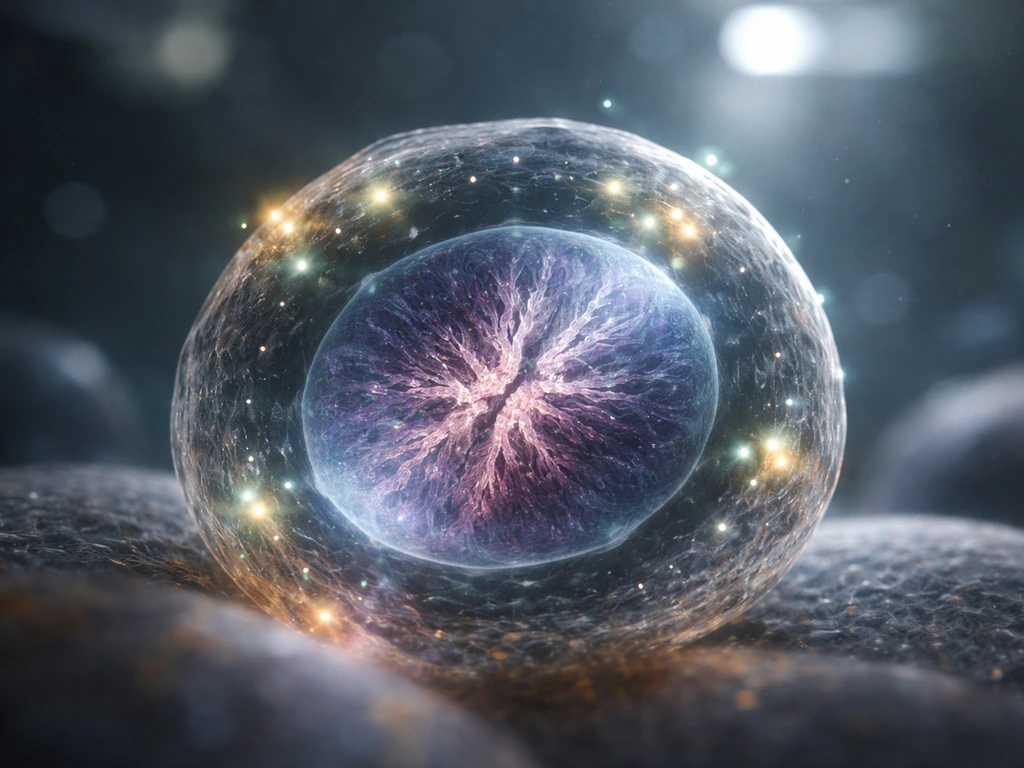
The short answer: a cell grows during interphase, and specifically during G1. That's the phase where a cell increases in size, builds new organelles, and stockpiles the proteins and energy it needs before it even thinks about dividing. If a test question asks you to name one phase where cell growth happens, G1 is your answer. If the question asks about interphase as a whole, that's also correct since G1, S, and G2 all contribute something to the process of growth and preparation. The breakdown below will make clear exactly what each sub-phase adds, and which answer to give depending on how the question is worded.
What Phase of the Cell Cycle Does the Cell Grow?
Marcus Whitmore
6 Apr 2026
The main growth phase: G1 inside interphase
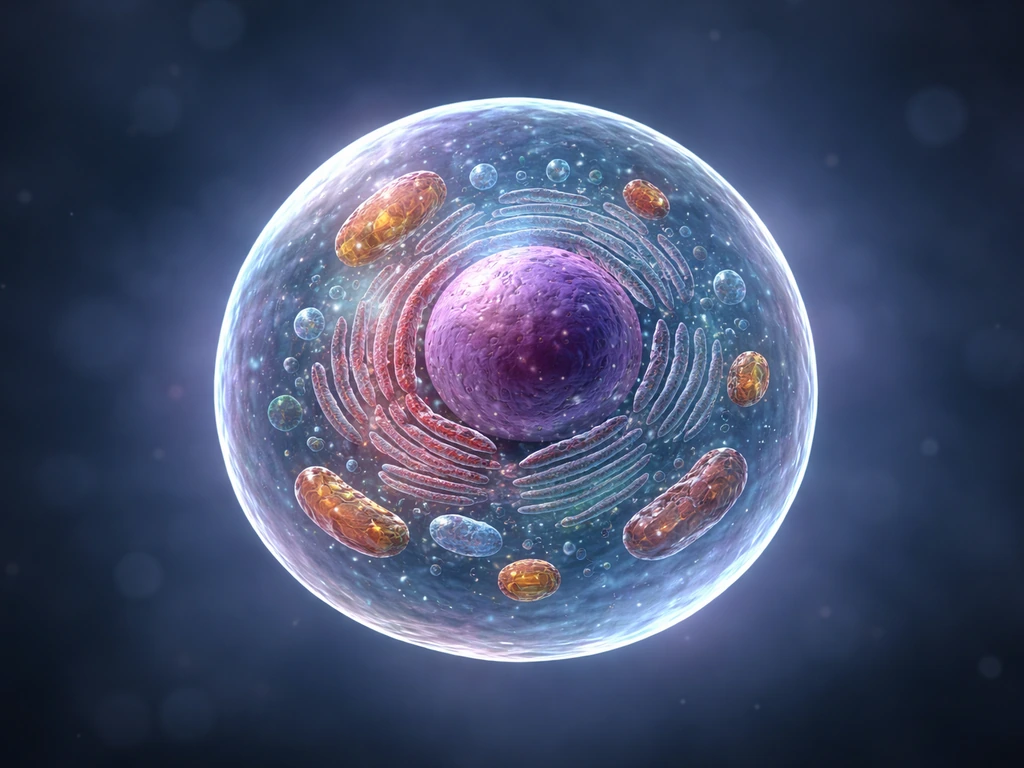
Interphase is the long stretch of a cell's life that happens before and between divisions. It takes up the overwhelming majority of the cell cycle: in a typical human cell dividing on a 24-hour schedule, interphase occupies roughly 23 of those hours, leaving about 1 hour for the actual mitotic phase. Think about that ratio for a second. The cell spends 23 hours preparing and only 1 hour actually splitting.
Within interphase, blank" rel="noopener noreferrer">G1 (Gap 1) is where genuine growth happens. The cell carries out all of its normal metabolic functions, increases in mass, and produces new organelles. It's essentially the cell eating well and getting bigger before a big event. G1 is why biologists label it the growth phase, full stop. whether the cell grows during interphase is a question that comes up a lot, and the answer is yes, but G1 is where the bulk of that size increase happens.
Interphase breakdown: what G1, S, and G2 actually do
It helps to think of interphase's three phases as three distinct jobs: grow, copy, and prep. They happen in that order for a reason, and mixing them up on an exam is one of the most common mistakes students make.
G1: grow and accumulate
G1 is where the cell does the most recognizable growth. It increases in size, synthesizes proteins, builds organelles, and accumulates the building blocks it will later need to duplicate its DNA. The cell also builds up energy reserves here. This is not passive waiting; it's active, energetically expensive construction. If the cell can't grow enough or doesn't have the right nutrients, a special checkpoint (more on that below) will hold it in G1 rather than letting it move forward.
S phase: DNA replication (not size growth)
S stands for synthesis, specifically DNA synthesis. During S phase, the cell's entire DNA content is precisely doubled. The amount of DNA in the nucleus goes from one copy to two. The centrosome is also duplicated during this phase. This is NOT where the cell grows in the size-and-mass sense that G1 is. Think of S phase as the photocopying step: the cell isn't getting bigger, it's making a complete second set of instructions. the period when DNA is replicated and cells grow is a topic that often gets conflated, but the replication happens in S while the growth happens in G1.
G2: final prep before division
G2 (Gap 2) is shorter than G1 (roughly 2 to 4 hours in human cells, or about 15% of the cycle) and focuses on replenishing energy stores and synthesizing the proteins needed to physically manipulate chromosomes during mitosis. There is some additional cell growth in G2, but the main story is preparation. The cell is checking that DNA replication finished correctly and getting its machinery ready to divide. It's like doing a final equipment check before a competition rather than actually training.
| Phase | Primary job | Growth? | Approximate time (human cell) |
|---|---|---|---|
| G1 | Cell growth, organelle production, protein synthesis | Yes — main growth phase | ~11 hours |
| S | DNA replication, centrosome duplication | Minimal — copying, not growing | ~8 hours |
| G2 | Energy replenishment, mitosis protein synthesis | Some additional growth | ~4 hours |
| M (Mitosis + Cytokinesis) | Chromosome segregation, cell division | Not the focus — dividing | ~1 hour |
What happens in M phase, and does the cell grow there?
M phase (the mitotic phase) includes mitosis itself (the division of the nucleus and sorting of chromosomes into two sets) followed by cytokinesis (the physical splitting of the cytoplasm into two daughter cells). The primary job here is partitioning, not growing. The cell is dividing what it already built, not adding to it.
Cells do still increase slightly in volume early in M phase as part of the physical mechanics of rounding up and preparing to split, but that's not directed growth in the same sense as G1. By the end of cytokinesis, you have two smaller daughter cells, each with roughly half the mass of the parent. Net growth across the whole cycle? Yes. But M phase itself is not where that growth is stored up. That's all interphase's work.
Understanding how the nucleus helps the cell grow matters here too, because the nucleus is doing very different things in G1 (directing protein synthesis and metabolic functions) versus M phase (condensing its chromosomes and ultimately dissolving its own membrane so chromosomes can be pulled apart).
Why cells can't just keep growing: checkpoints and the logic of the cycle
Here's a question worth sitting with: if growth is so good for a cell, why doesn't it just grow forever and skip the whole division business? The answer is that there are hard physical limits on how large a single cell can get before it becomes inefficient. As a cell grows, its volume increases much faster than its surface area, and eventually it can't import nutrients or export waste fast enough to survive. Division resets the surface-area-to-volume ratio. Growth and division are partners, not competitors.
The cell cycle has built-in quality-control gates called checkpoints to make sure each phase finishes properly before the next one starts. The G1 checkpoint is particularly important for growth: proteins like p53 and Rb act as gatekeepers that hold the cell in G1 if something is wrong (DNA damage, insufficient nutrients, inadequate size). Without a functional p53, the cell can skip straight from G1 to S without having properly prepared, which is a central driver of cancer. Additional checkpoints exist at the G2/M transition and during M phase itself.
whether DNA itself grows is a fun adjacent question here: the answer is that DNA is replicated (copied), not grown in the sense of increasing polymer length the way a crystal grows. The checkpoints exist precisely to ensure that replication is accurate before division proceeds.
The cell wall plays its own structural role in constraining and enabling growth, particularly in plant cells, where turgor pressure and wall extensibility directly determine how large a cell can get before it divides. how the cell wall helps the cell grow is a separate mechanism but deeply connected to why plant cells have different growth dynamics than animal cells across the same interphase stages.
Memory aids and exam-ready wording
Different questions are asking for different levels of precision. Here's how to match your answer to what's actually being asked:
| Question type | Best answer | Key phrase to use |
|---|---|---|
| General: when does a cell grow? | During interphase | "The cell grows and carries out normal metabolic functions during interphase" |
| Specific: which phase is the main growth phase? | G1 (Gap 1) | "Cell growth occurs during G1" |
| Full breakdown question | G1 = growth, S = DNA synthesis, G2 = more growth and prep | "Cell growth occurs during G1, DNA synthesis during S, and more growth during G2" |
| Does the cell grow during M phase? | Not primarily; M is for division | "M phase is focused on chromosome segregation and cytokinesis, not net growth" |
For a quick mental model, just run through the cycle like a checklist: G1 (grow) → S (copy DNA) → G2 (prep) → M (divide). Each step has one dominant job, and none of them is optional. If you mix up S and G1 on a test, remember that S stands for Synthesis, meaning DNA synthesis specifically, not protein synthesis or general cell growth.
One last thing worth remembering: different cell types and different species spend wildly different amounts of time in each phase. Most of the variation in cell-cycle length between species comes from differences in how long cells spend in G1 and G2, not in S or M. A cell that needs more time to grow before it's ready to divide will simply have a longer G1. The order G1 → S → G2 → M never changes, but the pacing does.
If this has you thinking about growth at scales beyond the single cell, it's worth noting that the same logic (build, check readiness, divide, repeat) plays out across all living systems. Growth in a multicellular organism is just billions of cells running this same cycle in a coordinated way. Even the most exotic biology questions, like whether we could grow dinosaurs from DNA, ultimately come back to whether cells can receive the right instructions and execute this cycle correctly. Get the cell cycle right, and you've got the foundation for understanding almost everything else about how living things grow.
FAQ
If I’m asked when the cell grows, can I answer interphase or do I have to say G1?
It depends on what the question means by “growth.” If it means increasing cell size and building new organelles, the main phase is G1. If it only asks about “preparation,” then interphase as a whole includes growth in G1 plus replication in S and readiness checks in G2.
Does the cell grow during S phase (DNA synthesis)?
S phase is primarily DNA replication, not an increase in cell mass. A cell’s DNA content doubles and the centrosome duplicates, so you may see “bigger” changes in overall readiness, but the directed size increase is largely attributed to G1.
Is M phase ever considered a growth phase?
There is some volume increase early in M, but it is not the classic “growth phase.” The cell is mainly partitioning what it already built, so net growth across the whole cycle comes from interphase, especially G1.
What happens if the cell hasn’t grown enough yet, does it still enter S phase?
Checkpoint control is what prevents a cell from dividing without adequate growth. If the cell is too small, has insufficient nutrients, or has DNA damage, the G1 checkpoint can arrest the cell in G1 rather than allowing it to enter S.
Where does G0 fit in if the question is about when cells grow?
A cell can enter a resting state (often called G0) instead of continuing through the cycle. In G0, it is not actively progressing through G1, S, G2, and M, so “growth during the cell cycle” typically refers to cells that are actively cycling rather than those in a permanent off-cycle state.
If the cell is making lots of proteins during G1, is growth just “making proteins”?
On many exams, “cell growth” refers to biomass accumulation, not DNA or protein increase per se. DNA replication increases genetic material in S, but the size and organelle-building work that supports division is concentrated in G1.
Why can’t a cell just keep growing and skip cell division?
If you see an answer choice that mentions surface area-to-volume limits, that is pointing to why cells must divide and cannot keep growing indefinitely. Division reduces the distance nutrients must travel and resets the ratio, enabling continued survival.
Next Article
What Controls When and How Fast Cells Grow and Divide
Learn what controls cell division timing and speed: checkpoints, signals, resources, DNA damage, stress, and failure lea