Yes, the cell genuinely grows during interphase, and most of that growth happens before DNA replication even starts. Interphase is not a quiet waiting room between divisions. It is where the cell does the bulk of its biological work: building proteins, copying organelles, accumulating mass, and checking whether conditions are right to divide. If you pictured interphase as passive and mitosis as the "active" part, flip that mental model around. The cell spends far more time in interphase, and that time is packed with measurable, regulated growth.
Does the Cell Grow During Interphase? A Clear Guide
Marcus Whitmore
18 Apr 2026
What actually happens to cell size during interphase
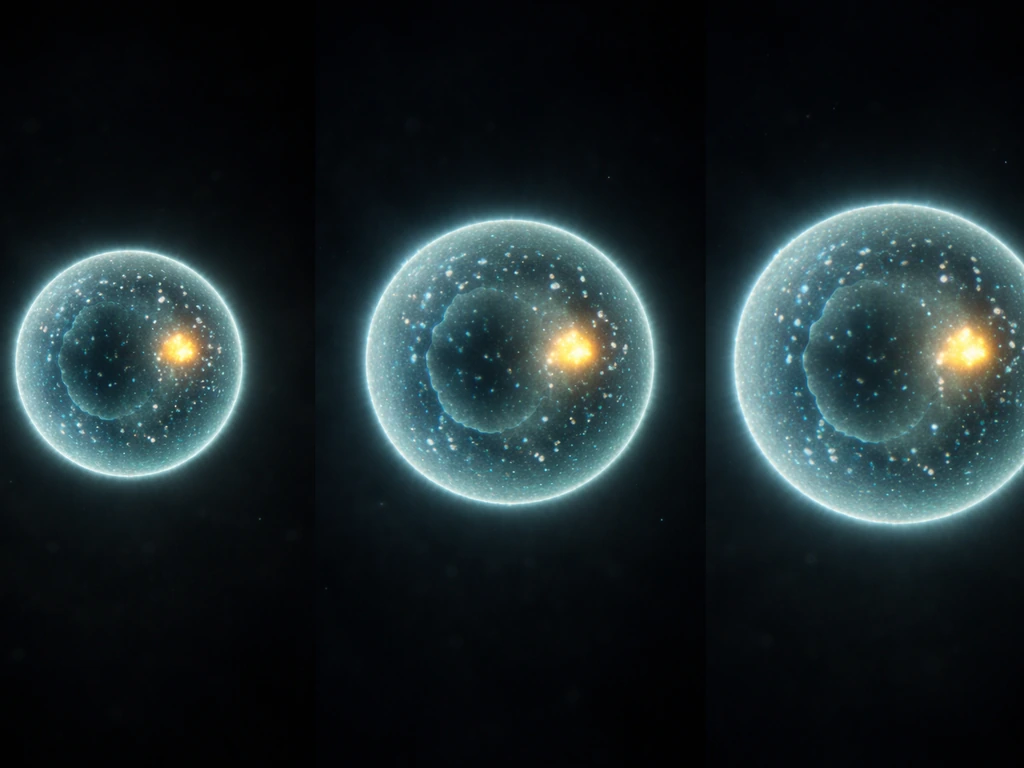
Cell size increases steadily across all three phases of interphase. Imaging flow cytometry studies measuring thousands of mammalian cells at a time show a clear size progression from G1 to S to G2/M. The increase is not sudden or limited to one phase. It is continuous, coordinated growth that tracks alongside biosynthesis programs running in the background.
Organelles grow too, not just total cell volume. Golgi protein content, for example, rises from G1 through S and peaks in G2 at roughly 40% higher levels than early G1. That kind of organelle-level expansion reflects a broader pattern: the cell is building more of everything it will need to hand off to two daughter cells after division.
One important nuance: growth is not perfectly uniform across all of interphase. There is relatively little growth in very early G1. A late-G1 checkpoint acts as a gate, and once the cell passes it, protein synthesis programs accelerate noticeably. Think of it less like a smooth ramp and more like a ramp with a tollbooth partway up.
G1, S, and G2: what each phase actually contributes
G1: the main growth phase
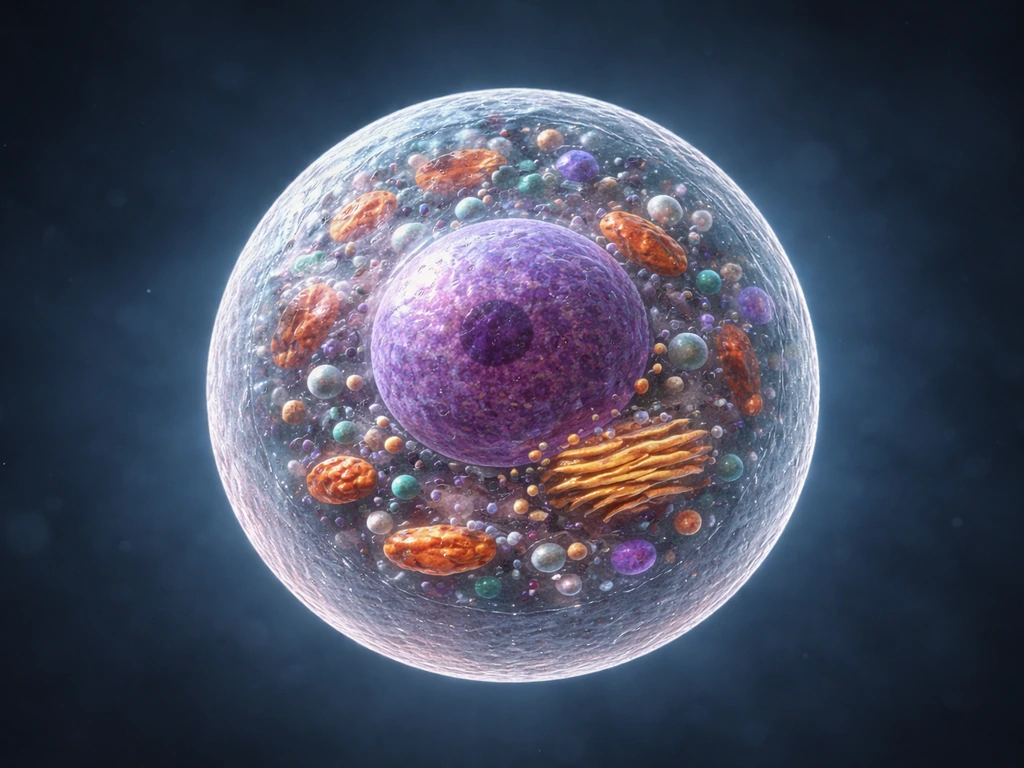
G1 (Gap 1) is where the most noticeable physical growth happens. The cell increases in size, copies organelles, and synthesizes the molecular building blocks it will need later. Ribosomes are assembled, proteins are produced, and the mTOR signaling pathway (via targets like S6K1 and 4EBP1) is actively regulating how fast all of that translation happens. A nutrient-rich environment with growth factors present pushes the cell through G1 faster. Strip those signals away and the cell stalls here.
Toward the end of G1 sits the restriction point, sometimes called Start in yeast. Once the cell passes this checkpoint, it commits to dividing. Before that point, growth factors are required. After it, the cell can finish the cycle even if external signals are reduced. The restriction point is gated by cyclin D, which responds to Ras/Raf/ERK signaling downstream of growth factors. No growth factors, no cyclin D, no commitment.
S phase: DNA replication, but growth keeps going
S phase is best known for DNA replication, and that is correct. The genome is copied here. But the cell does not pause its physical growth while that is happening. Protein synthesis continues, cell mass increases, and biosynthetic programs keep running in parallel. It is easy to conflate DNA replication with cell growth because they happen around the same time, but they are separate processes running on different tracks. DNA replication is about information copying; cell growth is about mass accumulation. Both happen in S phase, but neither causes the other.
G2: finishing touches and final size check
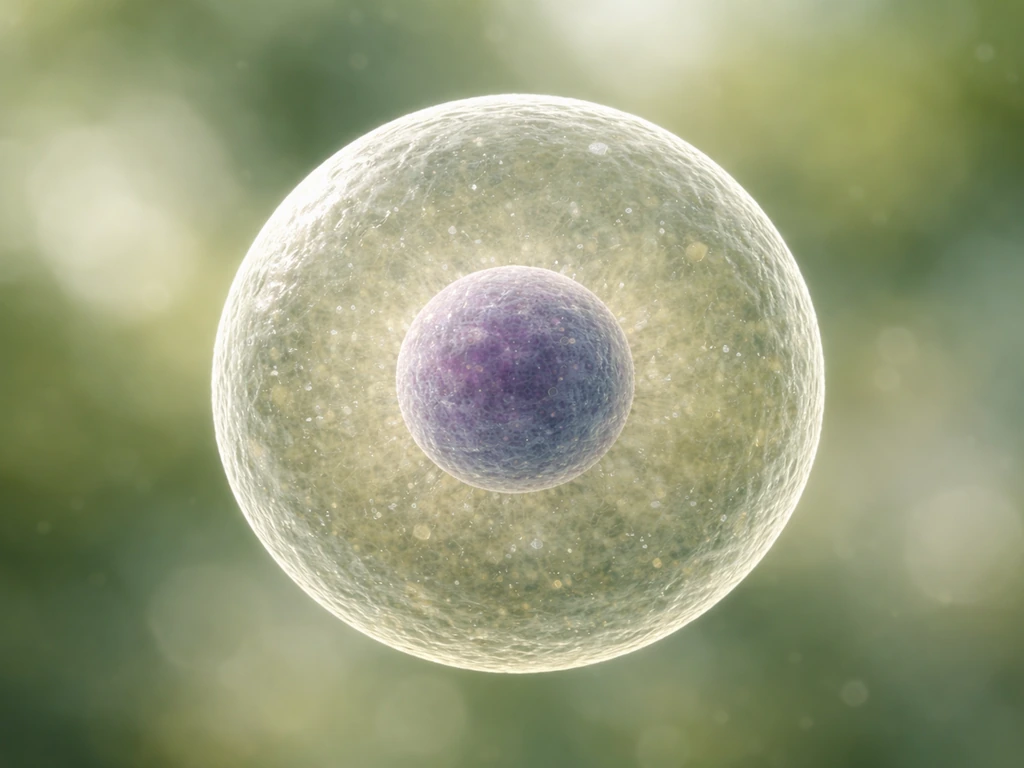
G2 (Gap 2) is often described as preparation for mitosis, which is accurate but undersells it. The cell continues to grow during G2, sometimes significantly. Fission yeast held in G2 arrest by experimental manipulation keep growing in length even when division is blocked, which tells you directly that growth does not require an upcoming mitosis to proceed. Fission yeast experiments show that a G2/M arrest caused by actin disruption still results in continued growth, consistent with a cell size checkpoint operating beyond G1. Transcription levels increase from G1 to G2 by around 30 to 35% in fission yeast, further illustrating that biosynthetic activity ramps across interphase rather than being confined to any one window.
DNA replication vs cell growth: how to tell them apart
This is the most common point of confusion, so it is worth being direct about it. DNA replication is the process of copying the genome, producing two identical sets of chromosomes from one. Cell growth is the increase in total cell mass, volume, and organelle content. They overlap in timing but they are not the same event.
| Feature | DNA Replication | Cell Growth |
|---|---|---|
| What happens | Genome is copied (2x DNA content) | Mass, proteins, organelles increase |
| Primary phase | S phase | G1 and G2 (and S, continuously) |
| Key machinery | DNA polymerase, helicases, ligases | Ribosomes, mTOR/S6K1/4EBP1 pathway |
| Can it happen without the other? | Technically yes (in some experimental systems) | Yes, growth continues even if division is blocked |
| Visible in diagrams as | DNA content doubling | Cell size/volume increase |
A practical rule: if a question asks when DNA is replicated, the answer is S phase. If it asks when the cell physically grows, the answer is across all of interphase, with the most visible growth in G1. These are the two most commonly tested distinctions in cell biology courses, and mixing them up is an easy mistake when you are looking at a standard cell cycle diagram.
Checkpoints: the internal controls that decide if growth continues
The cell does not grow blindly. Two major checkpoints act as quality-control stops that can pause the cycle and, by extension, limit further growth until problems are resolved.
- Late G1 checkpoint (restriction point): checks for DNA damage, adequate cell size, sufficient nutrients, and growth factor signals. If DNA is damaged, p53 activates p21, which inhibits cyclin E/CDK2 activity and arrests the cell in G1. This prevents damaged DNA from being replicated.
- Late G2 checkpoint: prevents entry into mitosis if DNA is damaged or replication is incomplete. Checkpoint kinases (Chk1 and related pathways) block activation of Cyclin B-CDK1, keeping the cell in G2 until repair is done.
- Spindle assembly checkpoint (in mitosis): checks that chromosomes are properly attached before the cell proceeds to divide. Not an interphase checkpoint, but worth knowing as the third major brake in the cycle.
What this means practically: if a cell is arrested at a checkpoint, it does not stop all activity. Arrested cells can still synthesize proteins and continue accumulating mass. Fission yeast cells in G2 arrest actually grow beyond their normal size because growth continues while division waits. Checkpoints control the timing of division, not the act of growing itself.
What the cell actually needs in order to grow
Growth during interphase depends on several conditions being met at the same time. Remove any one of them and growth slows or stops.
- Nutrients and energy: the mTOR pathway is a central nutrient sensor. Amino acid availability, in particular, signals through mTOR to activate S6K1 and release 4EBP1 from eIF4E, which allows cap-dependent translation to proceed. Block mTOR (or deplete nutrients) and protein synthesis drops sharply, which directly limits cell growth.
- Growth factors and mitogens: these act through receptor tyrosine kinases and downstream Ras/ERK and PI3K/AKT/mTOR signaling. Without growth factors, cells stall before the G1 restriction point. Cyclin D does not accumulate and the cell does not commit to replicating.
- Physical space and substrate attachment: anchorage-dependent cells (most mammalian cell types) require attachment to extracellular matrix to survive and grow. Detached cells undergo growth arrest and eventually anoikis (programmed death triggered by loss of attachment). No substrate, no sustained growth.
- Absence of DNA damage signals: damaged DNA activates p53 and checkpoint kinases that arrest the cell. While arrested, biosynthesis may continue, but the regulated growth program tied to cell-cycle progression is paused.
In yeast, the G1/S checkpoint (called Start) is explicitly inhibited by insufficient nutrients, mating pheromone, and DNA damage. That makes the conditions for growth very concrete: the cell is constantly sampling its environment before committing to the next division cycle. It is genuinely responsive, not automatic.
Why the cell can't just keep growing forever
There is a real physical ceiling on how large a cell can get, and it comes down to geometry. As a cell grows, its volume increases as the cube of its radius, but its surface area only increases as the square. That means the surface-area-to-volume ratio shrinks as the cell gets bigger. Since nutrients enter and waste exits through the surface, a very large cell cannot exchange molecules fast enough to sustain its interior. The cell wall helps maintain the right surface-area-to-volume relationship by defining the cell's boundary, which supports efficient nutrient uptake needed for growth surface-area-to-volume ratio. Growth eventually becomes self-limiting for purely mathematical reasons.
On top of that, the nucleus has a finite capacity to produce the mRNA needed to support protein synthesis across a growing cytoplasm. At some point the nucleus cannot keep up with demand, and growth slows naturally. Cell division is partly a solution to this problem: by splitting into two smaller cells, both daughter cells restore a favorable surface-area-to-volume ratio and a nucleus-to-cytoplasm ratio that supports continued growth.
There are also active regulatory brakes. The p38 MAPK pathway, for instance, influences G1 length and helps maintain size uniformity across a population of dividing cells. Disrupt this pathway and cells divide at irregular sizes. The cell cycle is not just a replication machine; it is also a size-correction system.
How division affects daughter cell size (and what that means for growth rate)
When a cell divides, it splits its mass between two daughter cells. In symmetric division, both daughters are roughly half the size of the mother. In asymmetric division, like budding yeast, the daughter bud is noticeably smaller than the mother. In budding yeast, the newly born daughter spends a longer time in G1 than the mother does, growing until it reaches a sufficient size to pass Start and commit to the next division cycle. Daughters born smaller have longer G1 phases, which is a built-in size-correction mechanism.
The practical takeaway for interpreting diagrams: after mitosis and cytokinesis, each daughter cell starts out smaller than the parent. The growth you observe during interphase is the process of restoring that mass before the next division. That is why G1 is the longest and most variable phase in most cell types. The amount of time a cell spends in G1 is partly determined by how much it still needs to grow.
Mammalian cells also show a measurable volume increase during mitosis itself, up to about 30% in some cell types as cells round up. But that is distinct from the steady mass accumulation of interphase. Volume and mass are not exactly the same thing, and interphase growth is primarily about gaining dry mass and organellar content, not just swelling with water.
A simple mental model for exam questions and real reasoning
Here is the clearest way to hold all of this in your head. Interphase equals growth. Mitosis equals division. Those are the two broad categories, and they are not interchangeable. Within interphase, G1 is the primary growth phase, S phase copies DNA while growth continues, and G2 finishes preparation and keeps growing until mitosis starts. If a question asks where cell growth happens in the cell cycle, the answer is interphase, with G1 as the most prominent window.
When you look at a standard cell cycle diagram, check whether the diagram shows the cell increasing in size across G1 and G2. A good diagram will. If you see size increase shown only at one point, or only during S phase, the diagram is oversimplifying. Cell growth is continuous across interphase, just gated by checkpoints and conditional on nutrients, growth factors, and physical context.
If the cell cycle is disrupted, for example by a checkpoint arrest, the cell does not simply stop all activity. It may continue growing while waiting for the block to clear. That is important for understanding what happens in cancer (where checkpoints fail), in development (where cell size is tightly coordinated), and in experiments where researchers chemically arrest cells to study them. The growth program and the division program are coupled but separable, and understanding that distinction is the core insight behind this whole topic.
If you want to go deeper, the question of exactly which period covers DNA replication versus growth is closely tied to understanding what controls the G1-to-S transition, and the role the nucleus plays in coordinating all of that biosynthetic activity is worth exploring on its own. Both of those threads connect back to the same central point: interphase is where cells grow, and it is far more than a pause between the visible drama of cell division.
FAQ
Does the cell grow in interphase even though DNA is only replicated in S phase?
Yes. DNA replication occurs during S phase, but the cell still increases in size and dry mass throughout interphase, with the most noticeable rise in G1 and continued growth in S and G2. A cell can replicate its genome without “turning off” biosynthesis, so measuring only DNA content would miss most of the growth.
What happens to cell growth in interphase if nutrients or growth factors are absent?
Generally, no. If growth factors, nutrients, or mitogenic signaling are missing, the cell can stall at the G1/S restriction point (or earlier), which limits further progress and typically limits additional growth until conditions improve.
Is cell growth uniform across all of G1, S, and G2?
Not perfectly. Early G1 has relatively limited size increase, then growth accelerates after the cell passes the late-G1 control step (often described as the restriction point or Start). So you may see a “tollbooth” delay in the growth trajectory rather than a smooth, immediate ramp from the start of interphase.
If a cell is arrested before mitosis, does it still grow during interphase?
In many experimental systems, yes. If cells are artificially arrested in G2 by blocking entry into mitosis, they often continue growing while division is delayed, showing that growth can proceed without an imminent mitotic event.
How is interphase growth different from the volume changes sometimes seen in mitosis?
It can change. Many cells grow in interphase by accumulating protein and organelles, which raises “dry mass” more directly than just water content. During mitosis, volume can increase due to rounding and other physical changes, so the safest distinction is growth in mass and organelle content versus simple swelling during division.
Why do some diagrams or lab readouts make it seem like growth happens only in S phase?
A common mistake is equating “bigger DNA signal” with “bigger cell.” DNA amount tracks replication timing, while cell growth tracks biosynthesis, organelle biogenesis, and mass accumulation, so a cell’s size progression and its DNA content do not always peak in the same way.
If checkpoints stop the cell cycle, do they also stop growth completely?
Checkpoint arrest can pause the division schedule without fully halting biosynthesis. As a practical implication, an arrested cell may still increase in size, but it should not progress to the next phase until the checkpoint constraints are resolved.
What ultimately sets an upper limit on how large a cell can become during interphase?
Size increase is limited by physical and biological constraints. One practical way to reason about it is transport efficiency, driven by the surface-area-to-volume relationship, plus a nucleus-to-cytoplasm limitation on producing enough mRNA to support additional protein synthesis.
Why do newly formed daughter cells often have longer G1 phases?
Yes. As cells get born smaller (as in budding yeast), they typically spend extra time in G1 to reach the threshold size needed to commit to DNA replication. This creates a built-in size-correction mechanism across generations.
How can I tell whether a question is asking about DNA replication timing or actual cell growth timing?
You can use a quick decision rule: if the question is about “when is the genome copied,” the answer is S phase. If it is about “when does the cell physically increase in size and mass,” the answer is across interphase, with the strongest growth window usually in G1.
Next Article
What Phase of the Cell Cycle Does the Cell Grow?
Cell growth mainly happens in interphase, especially G1, when mass and organelles increase; S and G2 prep for division.