Yes, stem cells can grow on plastic, but not bare plastic straight out of the box. They need tissue-culture-treated polystyrene, and most types also need a protein coating on top of that surface. Get those two things right, match the medium to your cell type, and you can maintain stem cells through dozens of passages on plastic with no feeder cells required. If you want a practical starting point, focus on using tissue-culture-treated plastic, the right ECM coating, and a medium matched to your specific stem cell type can you grow stem cells? (stem cell growth on plastic).
Can Stem Cells Grow on Plastic? Conditions and Troubleshooting

Marcus Whitmore
20 May 2026
What it actually means for stem cells to "grow on plastic"
When researchers talk about stem cells growing on plastic, they mean three distinct things happening together: the cells attach to the surface (adhesion), they survive without dying off (viability), and they divide and expand (proliferation). All three need to happen, and in the right sequence. A cell that sticks but doesn't divide is just surviving. A cell that divides but loses its stem-cell identity in the process isn't really "growing" in the way you want.
The biology here is worth understanding quickly. Stem cells don't actually touch plastic directly, even when you plate them on it. The moment serum-containing medium hits a plastic surface, proteins from the serum (fibronectin, vitronectin, albumin, IgG) adsorb onto it within seconds to minutes. What the cells actually land on is that protein layer, not the polystyrene itself. This is why adding serum to your medium can rescue attachment on standard tissue-culture plastic, and why switching to chemically defined, serum-free conditions immediately changes how the cells behave on the same surface.
The plastic also has to signal to the cell through its stiffness. Standard tissue-culture polystyrene is extremely stiff, around 1 GPa, orders of magnitude stiffer than most tissues in the body. That stiffness activates mechanosensitive proteins like YAP and TAZ through integrin-mediated focal adhesions, which in turn influence whether a stem cell stays undifferentiated or starts down a differentiation path. Ligand density on the surface matters too: higher ECM ligand density drives more integrin clustering, more cytoskeletal tension, and more YAP nuclear translocation. In other words, the physical and chemical nature of your surface is constantly talking to your cells' gene expression programs.
Stem cell types and why substrate requirements differ
Not all stem cells want the same thing from a surface, and lumping them together is one of the fastest ways to waste a week of work. Here's how the main types differ:
| Stem Cell Type | Feeder Requirement | Preferred Coating | Medium Example | ROCK Inhibitor Needed? |
|---|---|---|---|---|
| Human ESC (hESC) | Feeder-free viable with ECM coating | Matrigel, Vitronectin, Laminin-521 | mTeSR1, TeSR-E8 | Yes, after single-cell dissociation |
| iPSC (induced pluripotent) | Feeder-free viable with ECM coating | Matrigel, Vitronectin XF, iMatrix-511 | mTeSR1, StemFit | Yes (may be skippable on Laminin-521) |
| Mesenchymal Stem Cell (MSC) | No feeders needed | Serum-adsorbed ECM or fibronectin/collagen | Standard MSC medium with serum, or defined + coating | No |
| Neural Stem Cell (NSC) | No feeders needed | Poly-L-lysine + Laminin common | NeuroCult, N2/B27-based | No |
Human embryonic stem cells (hESCs) and iPSCs are the most demanding. They were historically grown on mouse embryonic fibroblast (MEF) feeder layers, but feeder-free culture is now standard using ECM protein coatings on tissue-culture plastic. Research published in Nature Biotechnology demonstrated that hESCs maintain consistent integrin expression over extended culture on Matrigel and laminin compared to MEF feeders, confirming that the cells genuinely do not miss the feeders when the surface chemistry is right.
MSCs are far more forgiving. In serum-containing medium, they attach readily to standard tissue-culture-treated polystyrene because the serum proteins do the coating job for you. But move to a chemically defined, xeno-free medium and you strip away that protein cushion. Studies have shown that in the absence of serum-derived attachment proteins, MSC growth on standard plastic drops significantly unless you either engineer the surface or add specific ECM coatings like fibronectin or laminin.
Studies summarized in Fujifilm’s PRIME-XV and Cellnest attachment substrates application documentation report improved human stem and primary cell adhesion and spreading under primary expansion conditions when appropriate ECM coating options are used specific ECM coatings like fibronectin.
If you're doing xeno-free MSC work, plan to add a coating step.
It's also worth noting that when people ask whether stem cells can grow bone, cartilage, or other tissues, the substrate question becomes even more important, because you're deliberately trying to drive differentiation rather than maintain stemness. The same plastic that's great for expansion can push cells the wrong direction if the coating or stiffness signals aren't controlled.
Plastic surface types and how treatment and coatings change everything
Tissue-culture-treated vs untreated polystyrene
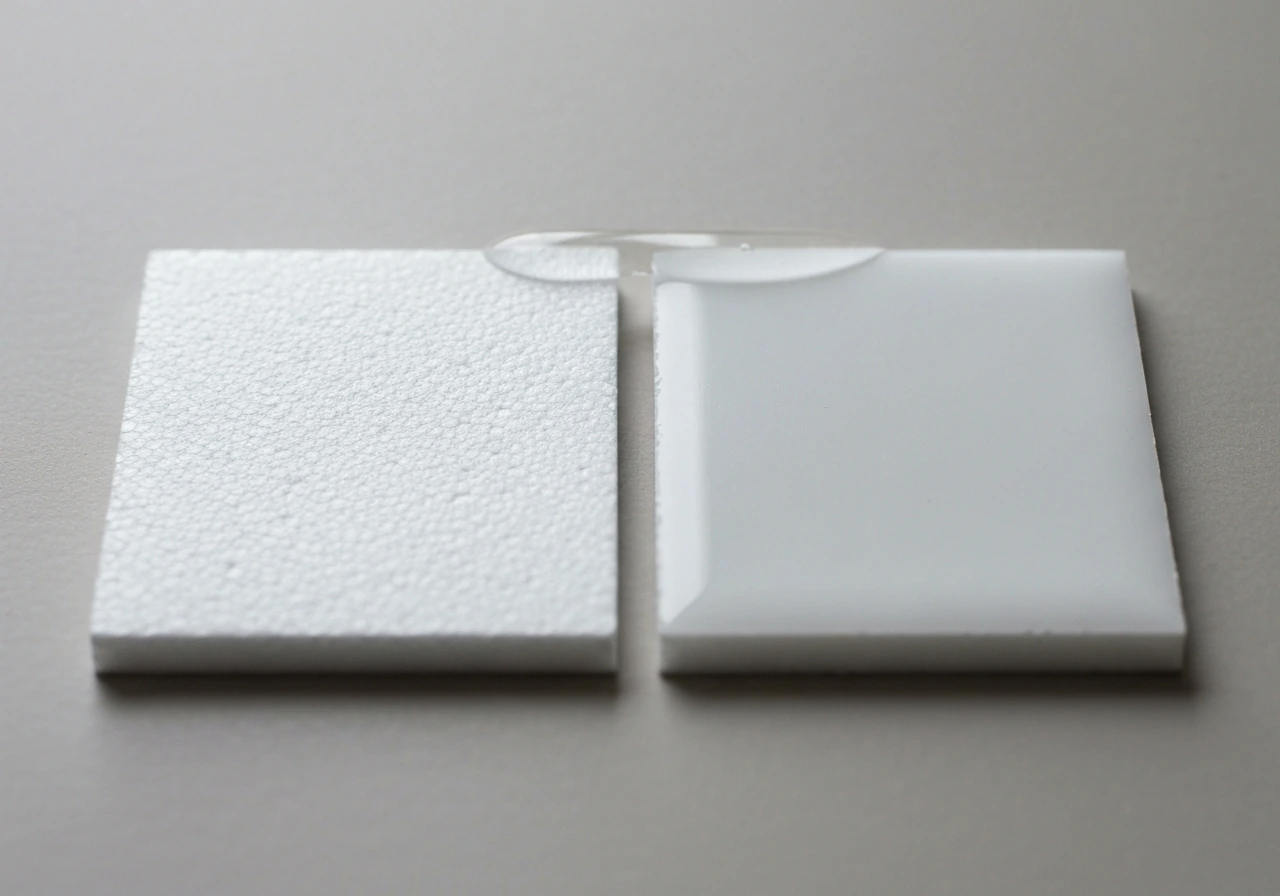
Tissue-culture-treated (TCT) polystyrene is standard polystyrene that has been exposed to plasma treatment, typically argon or oxygen plasma, which introduces polar functional groups (hydroxyl, carbonyl, carboxyl) to the surface. This makes the surface hydrophilic and dramatically increases protein adsorption capacity. Untreated polystyrene is hydrophobic and repels aqueous solutions, meaning proteins don't adsorb well and cells don't attach. If you've ever tried to grow cells in a bacteria-grade flask and watched them float, that's why. Always use TCT plasticware for stem cell work unless a specific protocol tells you otherwise.
One exception: some coating protocols, including the Vitronectin XF protocol from STEMCELL Technologies, specify that the coating should be applied to non-tissue-culture-treated ware for certain applications. Always check whether your coating is designed for TCT or non-TCT surfaces, because getting this backwards is a surprisingly common source of failed attachment.
Coating options compared
| Coating | Best For | Xeno-Free? | Key Protocol Parameters | Notes |
|---|---|---|---|---|
| Matrigel (hESC-qualified) | hESC, iPSC | No (mouse-derived) | 1:100 dilution in cold medium; coat 1 hr at RT or overnight at 4°C | Most widely used; lot-to-lot variability is real |
| Vitronectin XF | hESC, iPSC | Yes | 10 µg/mL in CellAdhere buffer; 1 hr at 15–25°C | Condensed colony morphology in TeSR-E8 |
| Recombinant Laminin-521 | hESC, iPSC | Yes | 5 µg/mL in PBS; warm from 4°C to 37°C for 1 hr before seeding | Supports ROCK inhibitor-independent single-cell expansion |
| iMatrix-511 (Laminin-511 E8) | iPSC, hPSC | Yes | 2.4 µg/mL in PBS; 1 hr at 37°C, 3 hr at RT, or overnight at 4°C | Uncoated application possible in some protocols |
| Fibronectin | MSC, NSC | Varies by source | ~1–5 µg/cm²; 1–2 hr at 37°C | Good for MSC xeno-free workflows |
| Collagen I or IV | MSC, NSC, some ESC | Varies | ~5 µg/cm²; 1 hr at 37°C | Commonly combined with other ECM components |
| Serum (adsorbed) | MSC | No | Added via serum-containing medium; no separate coating step | Easiest option for basic MSC culture |
For hESCs and iPSCs, vitronectin at 5 µg/mL or higher has been shown to support stable expansion for more than 20 passages on tissue-culture-treated polystyrene. Corning's recombinant Laminin-521 goes a step further by enabling ROCK inhibitor-independent single-cell expansion, which matters a lot if you're doing FACS sorting or clonal work. If you need a defined, xeno-free system without that extra complexity, Laminin-521 is worth the higher price.
Media, passaging, and staying in growth mode vs tipping into differentiation
The medium you use is as important as the surface. mTeSR1 and TeSR-E8 are the standard maintenance media for hESCs and iPSCs in feeder-free conditions. They're designed to keep cells in an undifferentiated, proliferating state on ECM-coated plastic. Switching to a differentiation medium, changing the growth factor profile, or even letting cells become over-confluent will push them out of the stem-cell state, often irreversibly.
Passaging is where most beginners make mistakes. For hPSCs, non-enzymatic or gentle enzymatic dissociation is strongly preferred. Harsh enzymatic methods like trypsin can strip surface proteins and induce enough cell stress to trigger differentiation or death. Non-enzymatic reagents like Gentle Cell Dissociation Reagent are recommended for single-cell workflows. If you do use Accutase, plating cells at 30–40×10⁴ cells/cm² on Matrigel with mTeSR1 supplemented with 10 µM Y-27632 ROCK inhibitor for up to 96 hours post-passage improves survival significantly.
Y-27632 is a ROCK inhibitor that blocks a stress-induced apoptosis pathway that fires up when hPSCs are dissociated into single cells. Using 10 µM Y-27632 for the first 24 hours after thawing or passaging dramatically improves recovery. You can usually remove it after day one without harming maintenance. Some protocols using Laminin-521 claim to reduce or eliminate the need for ROCK inhibitor, which simplifies the workflow considerably.
MSC passaging is more forgiving. Standard trypsin/EDTA works fine, cells are replated in serum-containing medium (or defined medium with a coated surface), and ROCK inhibitor is generally not required. The main passaging risk for MSCs is going too many passages and accumulating senescent cells that alter the culture's growth dynamics.
Step-by-step checklist to set up stem cell growth on plastic
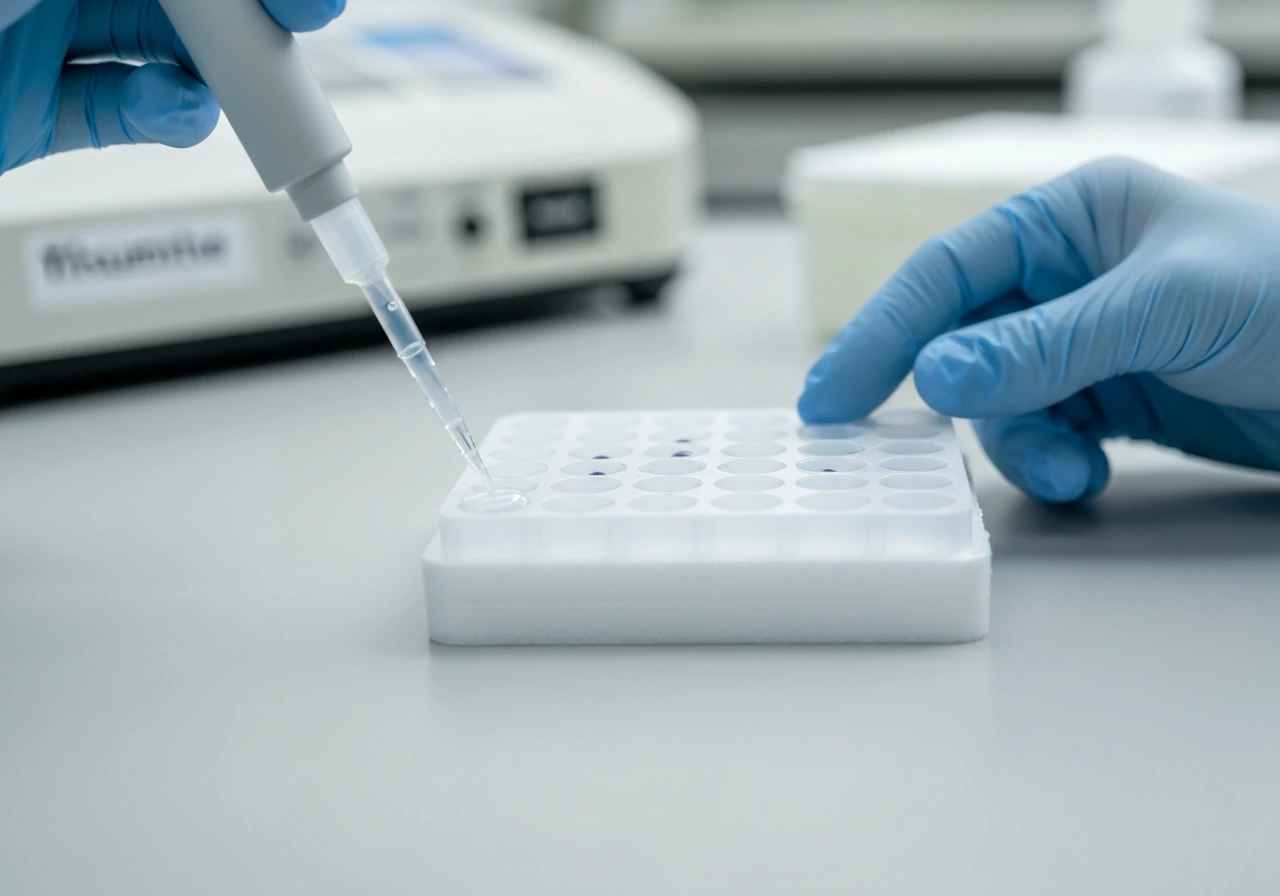
- Choose tissue-culture-treated polystyrene vessels (flask, plate, or well plate). Confirm the plasticware is TCT-grade unless your coating protocol specifies otherwise.
- Select the right coating for your cell type: Matrigel (1:100 in cold medium) or Vitronectin XF (10 µg/mL in CellAdhere buffer) for hESC/iPSC; fibronectin or serum-adsorbed surface for MSC.
- Prepare the coating solution under sterile conditions in a laminar flow hood. Keep Matrigel and laminin solutions cold until applied to avoid premature gelation.
- Apply coating to vessels and incubate: Vitronectin XF at room temperature for at least 1 hour; Laminin-521 at 4°C overnight then warm to 37°C for 1 hour before seeding; iMatrix-511 at 37°C for 1 hour or room temperature for 3 hours.
- Aspirate excess coating solution immediately before seeding. Do not let the coated surface dry out.
- Prepare your cells: dissociate gently (non-enzymatic reagent or Accutase for hPSCs, trypsin/EDTA for MSCs). Count and assess viability with trypan blue exclusion.
- Seed at the correct density. For hPSCs on Matrigel/Vitronectin, aim for 30–40×10⁴ cells/cm² if using single-cell suspension. For MSCs, 3,000–5,000 cells/cm² is typical for expansion.
- Add medium appropriate for your goal: mTeSR1 or TeSR-E8 for hPSC maintenance; serum-containing or defined MSC medium for MSC expansion.
- For hPSCs, add Y-27632 at 10 µM for the first 24 hours post-seeding (or post-thaw). Remove on day 2.
- Place in a 37°C, 5% CO₂ humidified incubator. Do not disturb for the first 24 hours to let attachment establish.
- Check morphology daily. hPSC colonies should be round, compact, and refractile with clear borders. MSCs should be spindle-shaped and adherent.
- Change medium every 1–2 days. Passage hPSCs before colonies merge (around 70–80% confluence). Passage MSCs at 80–90% confluence.
Troubleshooting when things go wrong
Poor or no attachment
- Check that you used TCT plasticware (not bacteria-grade or non-treated ware, unless your protocol explicitly requires non-TCT).
- Confirm coating incubation time and temperature matched your protocol. Short incubation or incorrect temperature means thin, inconsistent protein coverage.
- Check that coated surfaces didn't dry out before seeding. Dried coating patches repel cells and create dead zones.
- If using serum-free/defined medium with MSCs, confirm you have an ECM coating or compatible surface, because serum-adsorbed protein attachment is no longer happening.
- Cold shock during coating of laminin or Matrigel causes gelling in solution before the surface is coated; work cold, apply quickly.
Low viability after plating or thawing
- For hPSCs: add 10 µM Y-27632 for the first 24 hours. This is the single most impactful fix for post-thaw or post-sort death.
- Check that cells were not left in dissociation reagent too long. Over-digestion damages surface proteins and increases stress.
- Verify that the medium was pre-warmed to 37°C before adding to cells.
- Seeding density matters: too sparse and hPSCs undergo anoikis (isolation-induced death); aim for at least 30×10⁴ cells/cm² when using single-cell suspension on Matrigel.
Loss of stemness or spontaneous differentiation
- Cells that over-reach confluence begin differentiating due to mechanical crowding and altered signaling. Passage at 70–80% confluence for hPSCs.
- Check medium freshness. Growth factors in mTeSR1 and TeSR-E8 degrade. Use within the manufacturer's recommended window.
- Check coating lot. Matrigel has notorious lot-to-lot variability; a new lot may need re-optimization. Consider switching to a defined coating like Vitronectin or Laminin-521 for more consistent results.
- High substrate stiffness with dense ECM coating drives YAP/TAZ nuclear translocation, which can push cells toward differentiation. If you see unexpected differentiation on a new coating batch, consider reducing the coating concentration.
- Culture in a confirmed hPSC maintenance medium. Accidentally using differentiation-formulated medium or contaminated medium is a simple but real cause of stemness loss.
Uneven or patchy growth
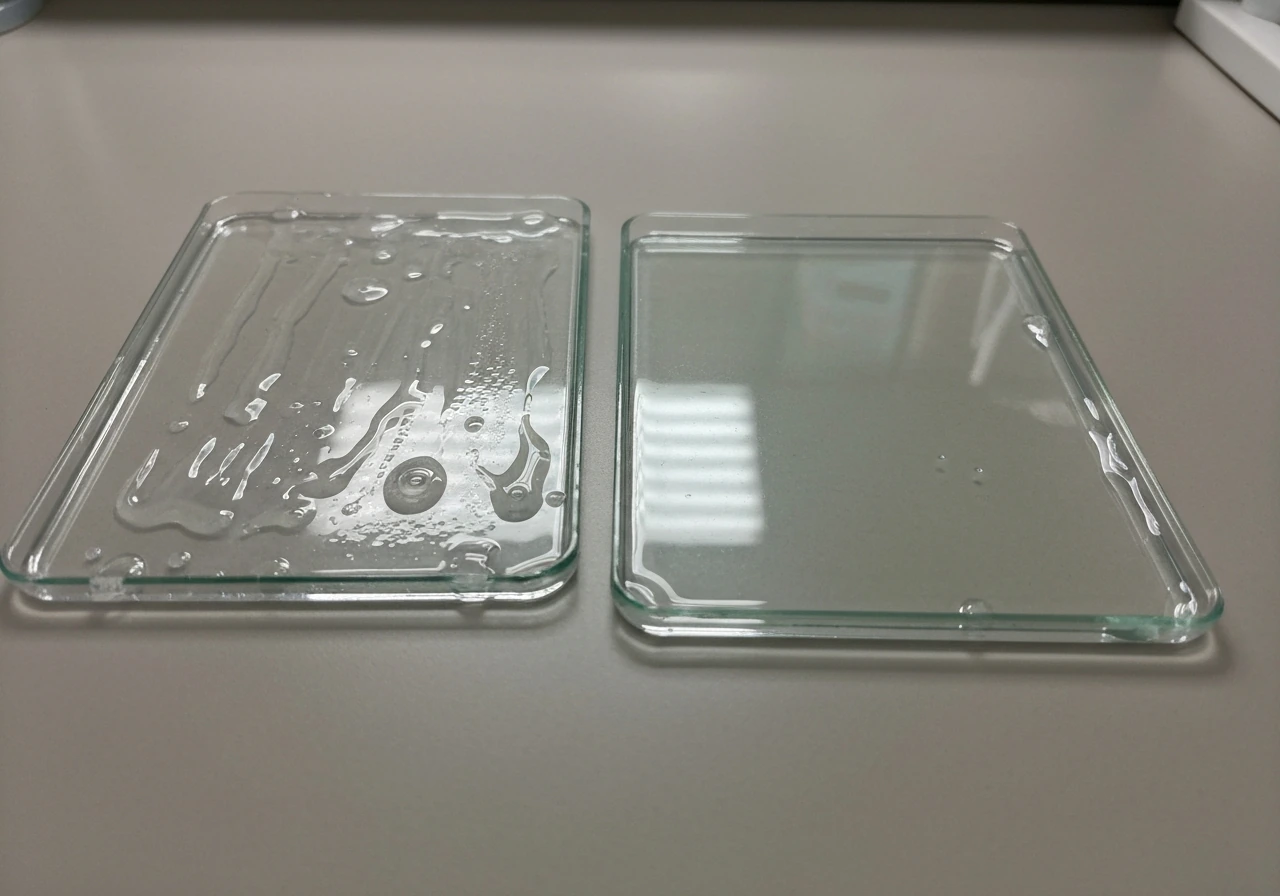
- Uneven coating application is the most common cause. Apply coating solution so it covers the entire surface, then rock the plate gently to distribute evenly.
- Residual bubbles under the coating solution block protein adsorption. Tap the plate gently after applying coating to remove bubbles.
- Check that the incubator surface is level. An uneven shelf causes medium to pool to one side, concentrating cells away from where you want them.
- Cross-contamination between wells in multi-well plates can cause growth in some wells and not others; verify sterile technique.
Physical limits on how far growth on plastic can go
Even with perfect surface treatment and medium, plastic imposes real biological constraints that you can't fully engineer around. The most fundamental one is stiffness. Living tissues range from about 0. 1 kPa (brain) to around 30–40 kPa (pre-mineralized bone), while tissue-culture polystyrene sits at roughly 1 GPa, which is thousands of times stiffer than most tissues.
Cells feel that stiffness through their integrins, cytoskeleton, and focal adhesions. In stem cells, this extremely stiff environment activates YAP and TAZ in ways that don't happen in soft in vivo niches, which can bias differentiation toward stiffer tissue lineages (like bone or muscle precursor states) even when you're trying to maintain undifferentiated cells.
Culturing cells on stiffer 2D substrates while restricting the adhesive area can trigger mechanotransduction and focal adhesion maturation and stability effects that resemble the response to softer substrata, including changes in proliferation and differentiation stiffer environment activates YAP and TAZ. While plastic stiffness can bias cells toward stiffer lineages like bone or muscle, the idea that stem cells can grow bone depends on getting the right cues, not just the surface.
Surface density of ECM ligands is a dial you can turn, but only within a range. Too little coating and cells don't attach. Too much and you can overdrive integrin signaling and push cells into stress or differentiation. The sweet spots documented in protocols (0.5–0.9 µg/cm² for vitronectin, ~5 µg/mL for laminin solutions) exist for mechanistic reasons, not just empirical convention.
2D growth on plastic also lacks the third dimension. In the body, stem cells live in 3D niches with gradients of oxygen, nutrients, signaling molecules, and mechanical cues from all directions. On a flat plastic surface, cells can only receive signals from below (substrate) and above (medium). This flattened geometry constrains how many paracrine signals cells can send to each other and changes the geometry of cell-cell contacts.
It's why organoids and 3D hydrogel cultures are increasingly used when researchers need biology that more closely mirrors in vivo stem cell behavior, but for basic expansion and study of growth, 2D plastic remains practical, scalable, and well-characterized. If you are wondering where stem cells grow in the first place, most stem-cell workflows start with controlled plastic surfaces, then move to 3D systems like hydrogels or organoids when you need more in vivo-like behavior 3D hydrogel cultures.
Finally, cells on plastic have a finite proliferative lifespan on any given surface. As culture progresses, ECM coatings degrade, byproducts accumulate, and the cells themselves remodel the surface. Long-term culture on plastic without recoating or passaging will eventually result in growth arrest, differentiation, or senescence. For hPSCs, replating onto freshly coated surfaces every passage is the fix. For MSCs, extended passage number (generally beyond passages 8–10) is associated with reduced multipotency and altered growth kinetics, a limit that comes from the biology of the cells rather than the plastic itself.
FAQ
Can stem cells attach to plastic without any serum or ECM coating?
Often not, at least not reliably. On untreated polystyrene, proteins adsorb poorly, so you may see floating clusters or rapid cell death. Even on tissue-culture-treated plastic, many protocols still rely on a defined ECM coating to provide sufficient integrin ligand density for stable adhesion and proliferation.
What’s the difference between tissue-culture-treated plastic and “non-tissue-culture-treated” when using coatings?
Tissue-culture-treated (TCT) plastic is made more hydrophilic via plasma treatment, which increases protein adsorption of coatings. Some coating systems are validated specifically for TCT surfaces, while others, like certain vitronectin workflows, may instruct coating on non-TCT ware. Mixing the two can reduce attachment even if the coating concentration is correct.
How do I tell if the problem is adhesion, survival, or proliferation?
Use a simple time-course check. Poor adhesion shows up as uneven attachment or lots of cells in the supernatant within the first few hours. Poor survival appears as increased cell death after 24 to 72 hours. Poor proliferation shows cells present but slow growth, reduced colony expansion, or eventual loss of undifferentiated morphology despite initial attachment.
Do I need ROCK inhibitor every time I passage hESCs or iPSCs?
Many feeder-free hPSC systems use it for the first 24 hours after thawing or dissociation, typically around 10 µM, then remove it. Some protocols that use specific coatings, such as laminin-521 approaches, claim reduced ROCK dependence, but you should follow the exact validated recipe because the need can change with dissociation method and plating density.
Is single-cell passaging always better than clumps for growing on plastic?
Not necessarily. Single-cell passaging can be efficient and supports clonal workflows, but it increases dissociation stress, which you usually must manage with gentle reagents, ROCK inhibitor (for many hPSC setups), and optimized seeding density. For routine maintenance, using small clumps may improve survival if your dissociation produces variable stress.
Does changing from one plastic brand to another affect success?
Yes. Even if both are tissue-culture-treated polystyrene, differences in surface chemistry, batch, and lot-to-lot consistency can affect protein adsorption and effective ligand availability. If you see a sudden attachment drop after switching suppliers or product codes, verify that the ware is TCT and re-check your coating and seeding density rather than only adjusting medium.
What seeding density should I use on plastic for hPSCs after dissociation?
A commonly validated range for single-cell or gentle dissociation workflows is around 30 to 40 x 10^4 cells per cm^2 when plated onto an appropriate ECM-coated surface. Densities that are too low often fail to establish stable colonies, while overly high densities can accelerate unwanted differentiation cues from contact and geometry.
Why does my culture look attached initially but still lose stemness later?
Stem-cell identity depends on maintaining a balance of ECM signaling, medium composition, and appropriate confluency. Even with correct coatings, problems like using differentiation medium components, letting cultures become over-confluent, skipping daily medium changes, or repeated stress from harsh passaging can shift cells toward differentiation over time.
Can MSCs grow on plastic in xeno-free, chemically defined conditions?
Yes, but you should assume plain plastic plus defined medium may not replicate serum-derived attachment. In xeno-free workflows, many labs add specific ECM coatings such as fibronectin or laminin to restore adhesion and support growth kinetics. If you remove serum without adding a coating, you may see a significant drop in attachment and proliferation.
How often should I recoat plastic for long-term growth?
For hPSCs, replating onto freshly coated surfaces each passage is typically the safest approach because coating proteins can degrade or lose effective ligand presentation over time. For MSCs, the need can vary by coating stability and medium system, but if growth slows or attachment becomes inconsistent, re-coating or refreshing coated surfaces is a practical troubleshooting step.
What’s a common mistake when using ECM coatings on plastic?
Incorrect surface assumption. A frequent error is applying a coating protocol validated for TCT ware onto non-TCT plastic (or vice versa), or using the right product at the right concentration but with the wrong expected adsorption behavior. Another common issue is using outdated coating solutions, since ligand activity can drop with repeated freeze-thaw or poor storage.
Does plastic stiffness always push stem cells toward differentiation?
It can bias fate, but it does not override everything. The stiff baseline of polystyrene can activate mechanosensitive pathways and nudge lineage decisions, especially when other conditions also allow differentiation. If your goal is maintenance, the combination of correct ECM, medium, and passaging schedule matters as much as stiffness.
Next Article
Can Stem Cells Grow Bone? How It Works and What’s Real
Yes in principle: stem cells can form bone via differentiation, but success depends on signals, scaffolds, and safety li