Yes, hot or warm water makes gel balls expand faster, but it does not make them grow bigger. The final size a gel ball reaches is set by the polymer's chemistry, not the water temperature. What temperature changes is how quickly water diffuses into the bead. Use water around 30–40°C (slightly warm, not scalding) and most gel balls will reach full size in 1–2 hours instead of the usual 4–8. Go too hot, above roughly 60°C, and you risk damaging the polymer network, leaving you with brittle, misshapen beads.
Does Hot Water Make Gel Balls Grow Faster? What to Expect

Marcus Whitmore
13 May 2026
What gel balls actually are (and what "growing" means for them)
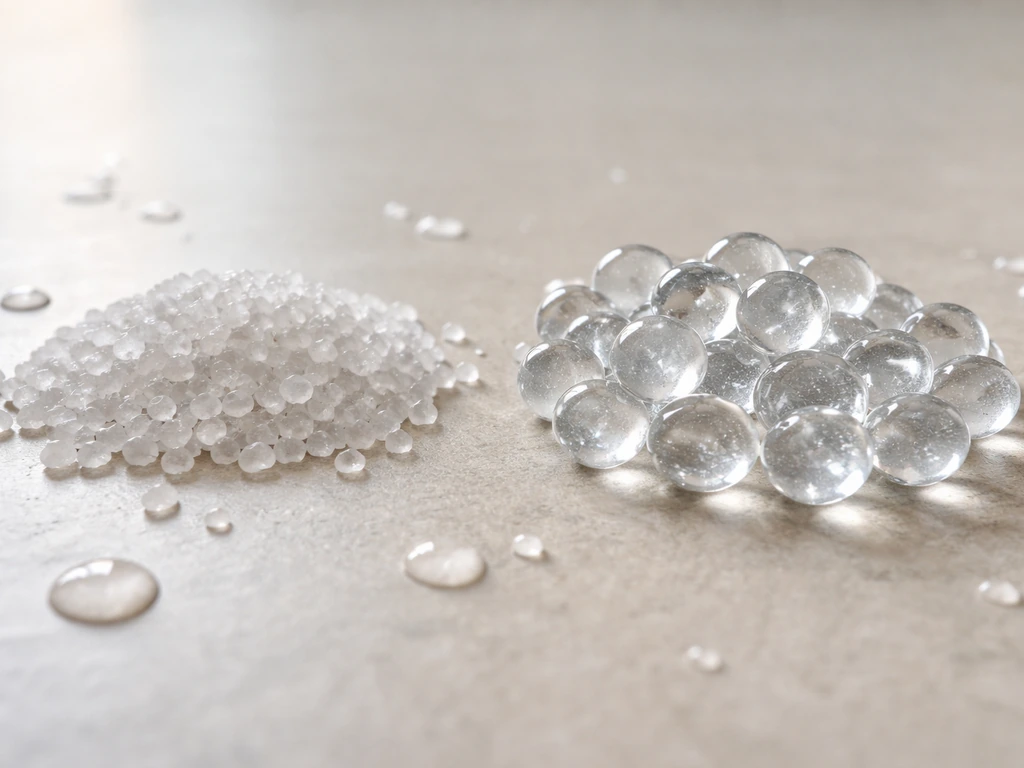
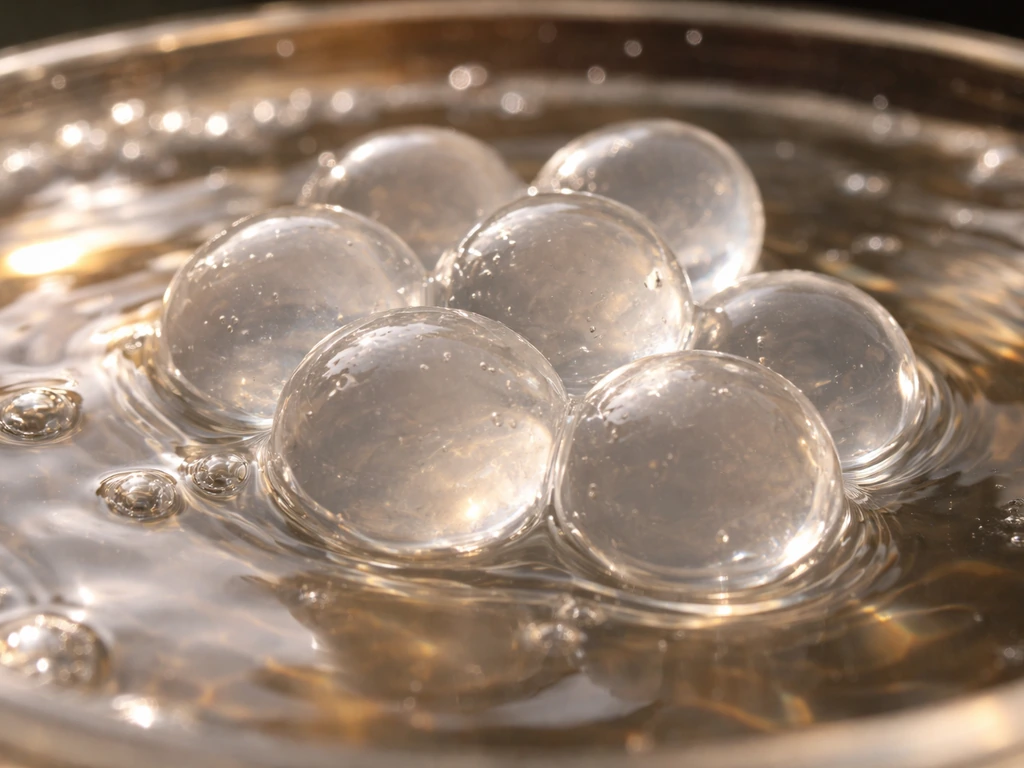
Gel balls, often sold as water beads or Orbeez-type toys, are tiny dry pellets made from a superabsorbent polymer, typically sodium polyacrylate or a similar cross-linked hydrogel. When you drop one into water, the polymer network acts like a molecular sponge: water molecules are pulled into the spaces between the cross-linked polymer chains, causing the whole structure to swell outward. This is not biological growth in the way a cell divides or a plant adds new tissue. There is no reproduction, no metabolism, no new material being synthesized. Instead, the bead is simply absorbing and holding water until an equilibrium is reached, which is the point where the elastic resistance of the stretched polymer network balances the osmotic pull drawing water in.
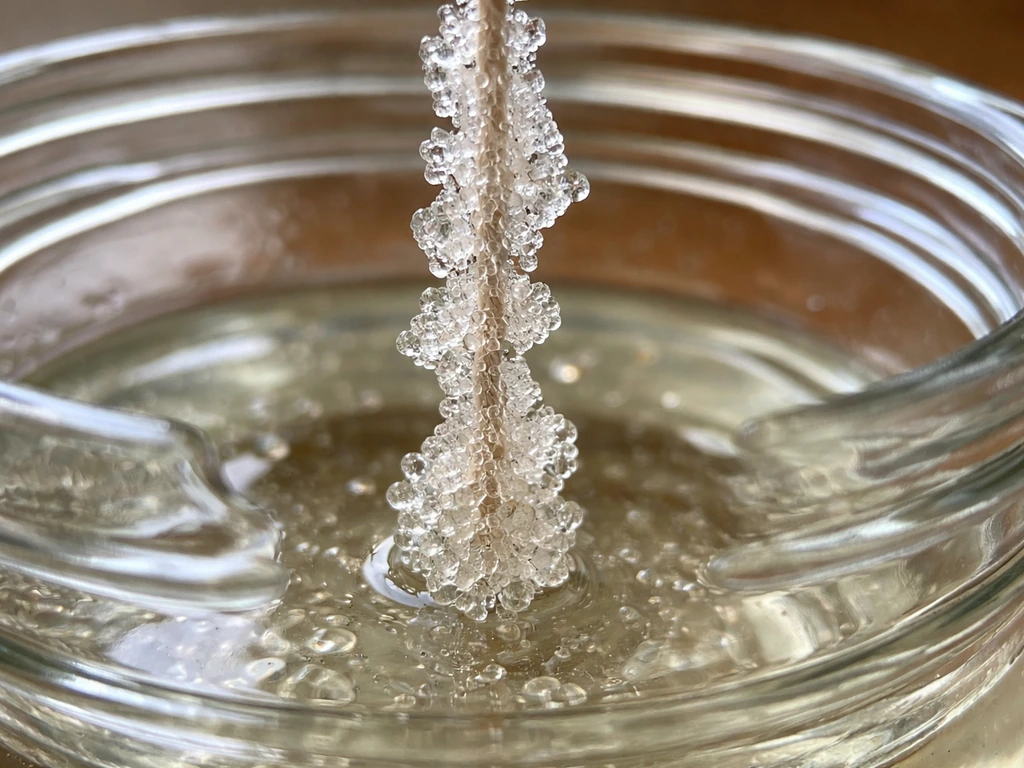
That distinction matters a lot for understanding why temperature affects speed but not final size. Compare it to dissolving sugar crystals in water: warmer water dissolves sugar faster, but a saturated solution at a given temperature still has a fixed maximum. This same idea helps explain why salt crystals can grow faster than sugar crystals as temperature and diffusion conditions change why salt crystals grow faster than sugar crystals. Do sugar crystals grow faster in warm water for the same reason: temperature increases diffusion and how quickly molecules can reach the crystal surface sugar crystals dissolve faster. The material's properties set the ceiling; temperature only controls how fast you reach it. You see a similar pattern in how sugar crystals grow and how salt and sugar crystals behave differently under varying conditions.
Why temperature speeds up swelling: the science in plain language
The core mechanism is diffusion. Water molecules have to physically migrate from the surrounding liquid into the interior of the polymer network. How fast they do that depends on two things: the concentration gradient pulling them in, and how easily they can move. Temperature directly increases molecular kinetic energy, which means water molecules at 40°C are literally moving faster and bumping into the bead's surface more frequently than water molecules at 20°C. This raises the diffusion coefficient (D), which is just the number scientists use to describe how quickly molecules spread through a medium.
There is a second factor: viscosity. Cold water is slightly more viscous (thicker) than warm water, so water molecules have a harder time penetrating the tight polymer mesh at low temperatures. Warm water is less viscous and flows more readily into those spaces. Together, higher molecular speed and lower viscosity explain why a bead in warm water can reach full hydration in a fraction of the time it would take in cold water. At room temperature (18–25°C), full expansion typically takes 4–8 hours. Cold water can push that beyond 6 hours. Warm water around 35–40°C can cut it to 1–2 hours in many cases.
Polymer scientists describe this swelling behavior using transport models, including Fickian diffusion, where the rate of water uptake depends on how quickly water can penetrate compared to how fast the polymer chains can relax and expand to accommodate it. At higher temperatures, both processes speed up. The same kinetic principles that explain how yeast consumes sugar faster in warm conditions, or how crystal formation accelerates with temperature changes, apply here, even though gel balls are not alive.
Faster vs. bigger: why final size stays the same
This is the most important thing to understand. The equilibrium size of a hydrogel bead is determined by its cross-link density: how tightly the polymer chains are connected to each other. A denser cross-linked network resists stretching more strongly, so it reaches equilibrium at a smaller size. A looser network swells more. Temperature does not change that structure. Once a bead is fully saturated, adding more heat will not push it to absorb extra water beyond its equilibrium point. In fact, very high temperatures can partially break down the polymer network, which may cause the bead to release water and shrink, or become structurally compromised.
Think of it like inflating a balloon. Blowing faster fills the balloon more quickly, but the rubber's elasticity still sets the maximum volume before it bursts. Temperature is like blowing speed: it controls the rate, not the limit. The limit is built into the material.
How to test it yourself today
You do not need a lab to run a useful comparison. Here is a simple method that gives you clear, measurable results. The RAFT Water Beads lesson materials describe a hot vs cold water comparison experiment to observe how hydrogel bead swelling behavior changes with temperature.
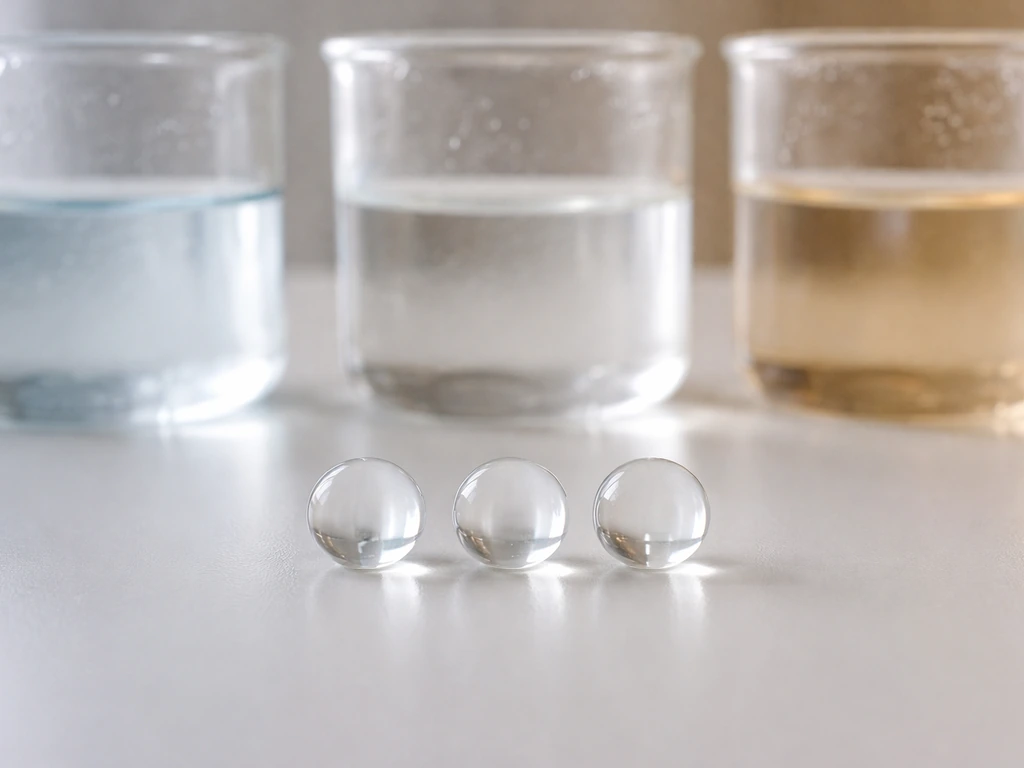
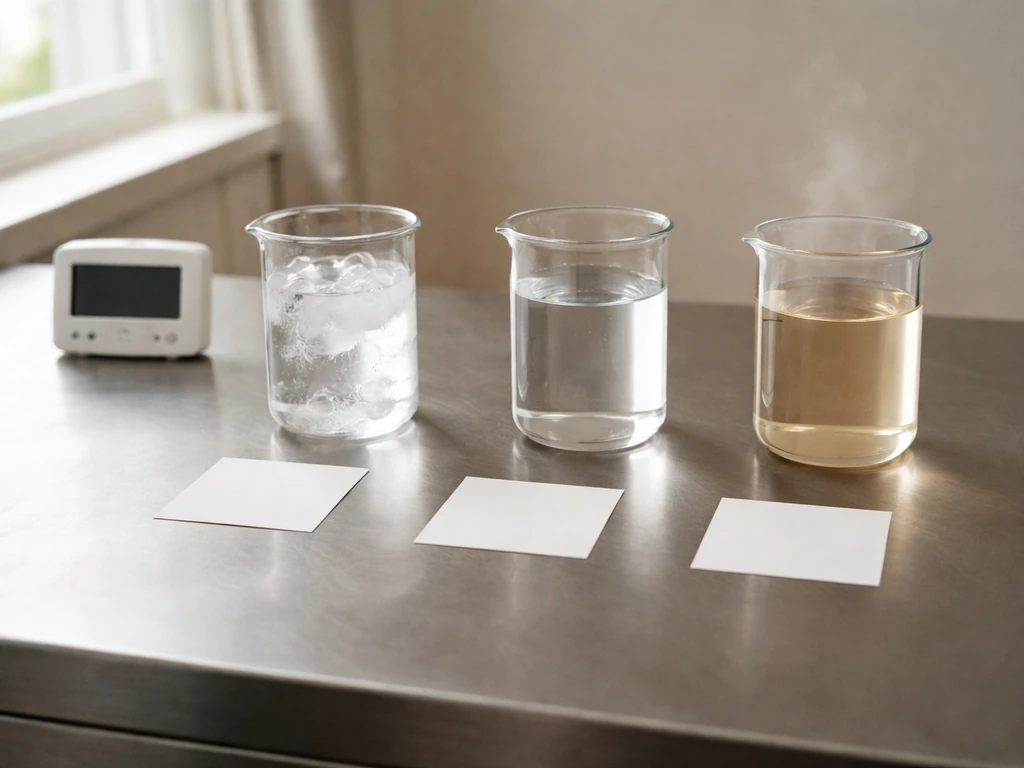
- Set up three containers: one with cold tap water (around 10–15°C), one with room-temperature water (18–25°C), and one with warm water (35–45°C). Do not use boiling or near-boiling water.
- Add the same number of dry gel balls to each container, using beads from the same batch so the polymer chemistry is identical.
- Every 30 minutes, remove one bead from each container, pat it gently dry with a paper towel, and measure its diameter. A ruler works fine; a digital caliper is more accurate if you have one.
- Record measurements in a simple table. You should see the warm-water bead pulling ahead in size early on.
- At the 4–6 hour mark, check whether all three containers have converged on roughly the same final diameter. They should, assuming you used the same water quality.
- Signs a bead is fully saturated: it feels uniformly firm and springy all the way through, it stops increasing in diameter between checks, and it looks translucent rather than cloudy or white in the center.
Stirring or gently agitating the water does help, especially in the first hour. Agitation refreshes the water immediately surrounding the bead, maintaining a steeper concentration gradient and speeding up diffusion. It is not essential, but if you are in a hurry, a gentle stir every 15–20 minutes makes a noticeable difference.
Safe temperature ranges at a glance
| Water Temperature | Expected Time to Full Size | Risk Level |
|---|---|---|
| Cold (10–15°C) | 6–12 hours | Low risk, very slow |
| Room temperature (18–25°C) | 4–8 hours | Ideal, manufacturer-recommended |
| Warm (30–45°C) | 1–3 hours | Low risk if monitored, faster results |
| Hot (50–60°C) | Under 1 hour | Moderate risk of uneven swelling or brittleness |
| Very hot / boiling (70°C+) | Rapid but unpredictable | High risk of polymer damage, not recommended |
What can go wrong
Temperature is not the only variable. Several other factors can throw off your results or damage the beads, so it is worth knowing what to watch for.
- Overheating the polymer: Water above roughly 60°C can begin to break down the cross-linked network in many standard gel ball products. The beads may swell unevenly, develop a lumpy or wrinkled surface, or become brittle and crumble when handled. Manufacturers of gel blaster-style water beads explicitly recommend avoiding hot water for this reason.
- Uneven swelling: If beads are crowded together during hydration, parts of each bead may be blocked from contact with water, causing one side to swell faster than the other. Give them room to move freely.
- Water quality: Hard water (high mineral content) can interfere with swelling. The dissolved minerals compete with the polymer's ability to absorb water, potentially reducing final size. Distilled or filtered water consistently produces better results than hard tap water.
- Product differences: Not all gel balls are made from the same polymer or cross-link density. Budget beads and premium products can behave very differently. Always check the manufacturer's guidance first.
- Starting too dry: Very old or improperly stored dry beads may have degraded polymer chains that never hydrate fully, regardless of temperature.
Safety, cleanup, and what to do if your gel balls won't hydrate
Handling warm water at 35–45°C is safe for most people, but use common sense: use a heat-resistant container, keep children supervised around any heated water, and avoid using microwave-heated water directly from the microwave without letting it settle first (microwaves can superheat water unevenly). Once expanded, gel balls are slippery on hard floors, so clean up any that roll away before they become a slip hazard.
Disposal is straightforward. Fully hydrated gel balls can be squeezed to release water and then discarded in the trash. Do not pour large quantities down a drain; the polymer can expand further inside pipes and cause blockages. Small amounts that escape down a sink are generally fine, but be cautious with bulk quantities.
Troubleshooting: when gel balls refuse to grow
If your gel balls are expanding very little or not at all, work through these checks before assuming the product is defective.
- Check your water: Try switching to distilled or bottled water. Hard tap water is the single most common reason gel balls underperform.
- Give them more time: Some polymer formulations, especially cheaper ones, absorb water slowly. Leave them for a full 8 hours in room-temperature water before drawing conclusions.
- Spread them out: Overcrowding means beads compete for water. Use a wider container with more water volume relative to bead quantity.
- Try warm water (35–40°C) if you have been using cold: This alone can kick-start swelling in beads that seem stuck.
- Check the batch age: Gel balls stored for a long time in dry conditions can degrade. If the dry beads look discolored or already show surface cracking, they may not hydrate properly regardless of conditions.
- Confirm you are not using salt water or soapy water accidentally: Dissolved salts and soaps disrupt the osmotic gradient that drives water absorption.
The swelling process in gel balls is a clean, visible example of the same diffusion-limited growth principles that govern how substances move into cells, how crystals accumulate new layers, or how gummy bears expand when soaked in liquid. In every case, the rate and the final limit are governed by different factors: kinetics (speed) versus equilibrium (ceiling). Understanding that distinction not only helps you get the best results from a bag of gel balls today, it is also a genuinely useful mental model for thinking about growth in any system, living or not.
FAQ
If I heat the water, do gel balls still reach the same final size, or do they end up larger?
Yes. If you keep gel balls submerged and the water is within the recommended warm range, they will still reach their equilibrium size, just faster. However, if they are left partly exposed to air or the water level drops, the bead can dry at the surface and slow or prevent full swelling.
Is it okay to use microwave-heated water to speed up gel ball growth?
Avoid microwaving and pouring immediately. Let microwaved water sit briefly so it cools and any uneven hot spots dissipate, then use the target temperature. Uneven heating can cause some beads to partially damage or expand faster than others, leading to inconsistent results.
How often should I stir, and does stirring still help after the first hour?
Stirring mainly helps early on by refreshing the water right around each bead. After the beads approach full hydration, agitation usually makes little difference because the concentration gradient inside and outside the bead is already much smaller.
Will mixing warm and cold water change how fast the gel balls expand?
Yes, but be cautious. Using hot water with a large temperature drop (for example, adding room-temperature water to hot water after the beads are in) can slow diffusion again. For best timing, start with water close to your chosen temperature and keep the container insulated enough that it does not cool rapidly.
When should I start the clock for how long gel balls take to reach full size?
Count down from when the beads are fully submerged. If you start timing as soon as you add them, the first beads to fully enter the water will begin swelling sooner, so your “time to full size” can look faster than the actual hydration rate for the last ones added.
What signs mean my gel balls were damaged by water that was too hot?
Sometimes. Overheating above the rough danger zone can damage the polymer network, which can make beads appear smaller, misshapen, or brittle. If you suspect heat damage, compare them to a fresh batch hydrated in properly warm (not hot) water, using the same soaking time.
Does the type of water I use (tap, distilled, hard water) affect swelling speed?
Yes. Gel balls usually expand fully even in tap water, but very hard water or water with unusual chemistry can slightly change how quickly they hydrate or how uniformly they swell. If your results are inconsistent, try using filtered or distilled water for a controlled comparison.
After they’re fully expanded, will gel balls shrink if I leave them sitting in the same water?
Over time, gel balls can continue exchanging water with their environment. If you keep them in a container with fresh water, they usually stay hydrated, but if the water becomes stagnant or partially evaporates, they can shrink back slightly. For consistent size, store them covered and refresh water periodically.
My gel balls barely grew. What should I check first before assuming they’re defective?
If you want the fastest results, use slightly warm water (around 30–40°C) and gently agitate early. Also make sure you are using the correct amount of water so beads remain fully submerged. Finally, give them full time, since “almost there” can look like they are stalled when they are just not fully equilibrated yet.
Can I recover gel balls that were placed in water that was too hot?
You should not. Very large temperature swings or extremely hot water can partially break down the polymer, and some beads may release water and shrink after initial expansion. If you want to salvage them, move to correctly warm water and wait longer rather than reheating aggressively.
Next Article
Do Sugar Crystals Grow Faster? Test Stirring and Seeds
Discover whether sugar crystals grow faster with stirring or seeds, plus a step-by-step test to measure growth rate.