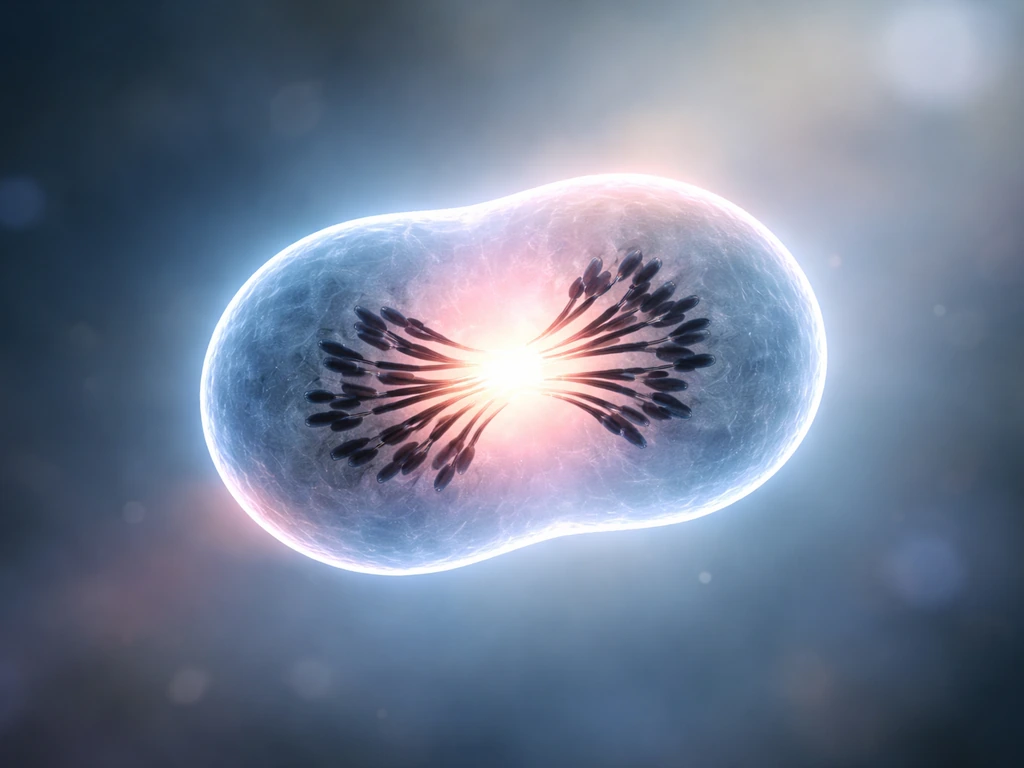
Cells don't divide instead of growing. They grow first, then divide once getting bigger stops being useful. The real question is why continued growth eventually becomes a problem, and the answer comes down to geometry, physics, and the hard limits of moving stuff around inside a cell.
Why Do Cells Divide Rather Than Grow Indefinitely
Marcus Whitmore
3 May 2026
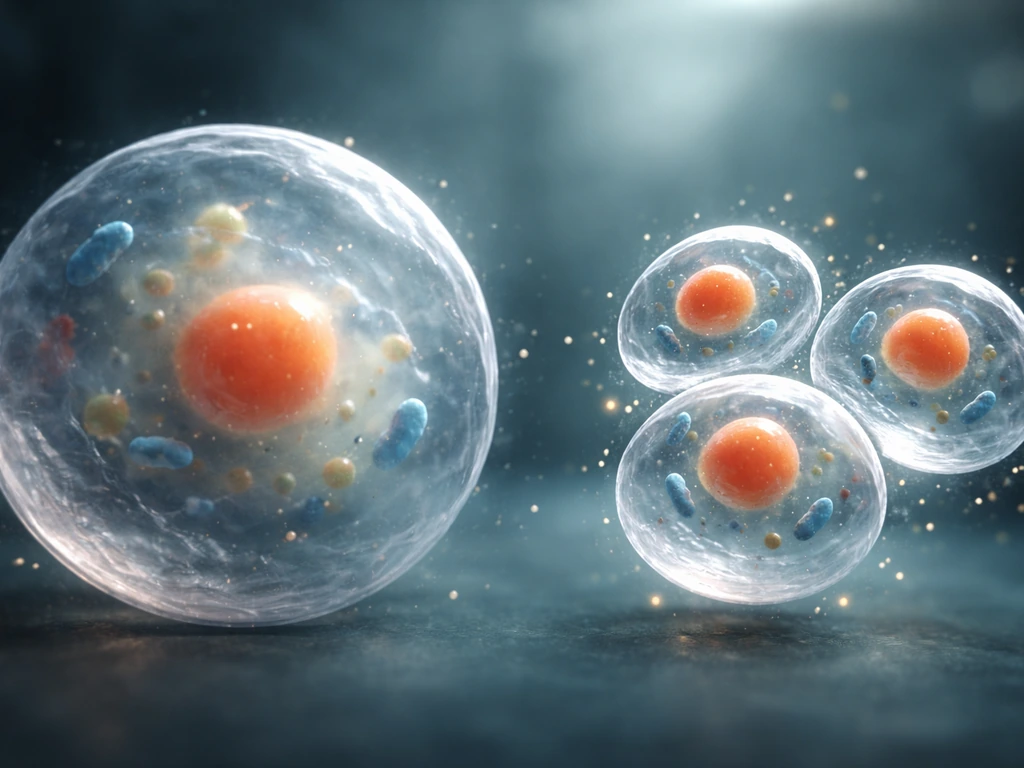
What limits cell size and why growth can't be unlimited
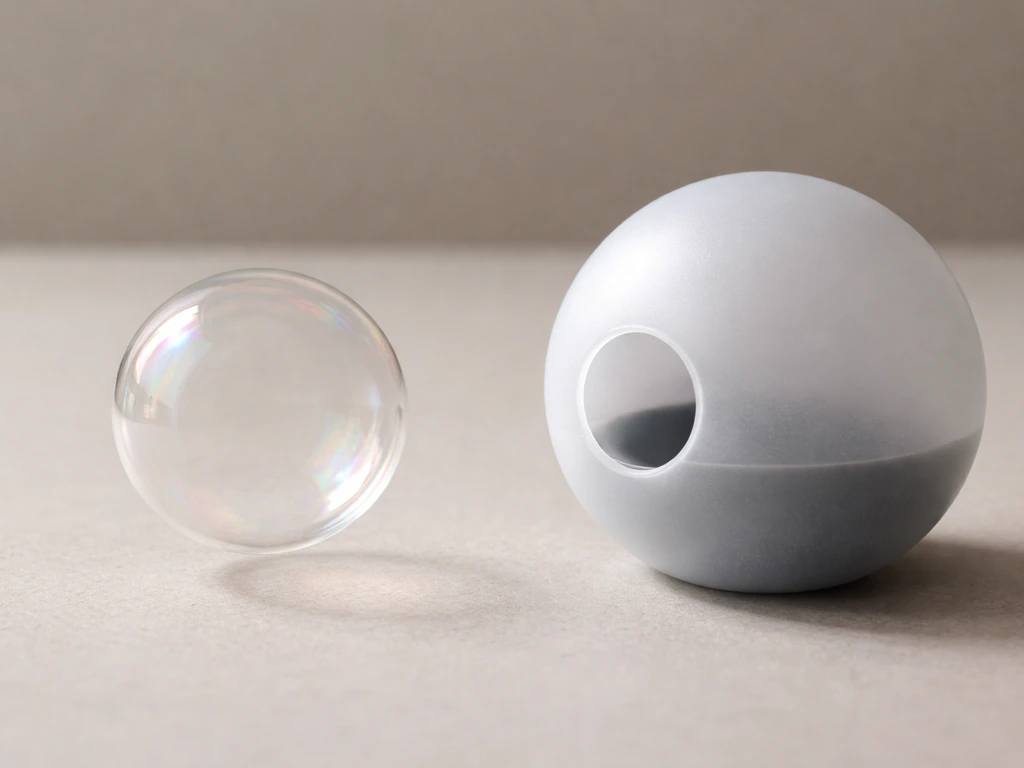
Think of a cell like a warehouse. A small warehouse is easy to manage: supplies come in through the loading dock, get distributed quickly, and waste goes out without much delay. Now imagine that warehouse doubling, tripling, quadrupling in size without adding more doors. The surface area (your loading docks) grows much slower than the interior volume (the space needing supplies). That's the surface-area-to-volume problem, and it's the single biggest physical constraint on cell size.
For a sphere, surface area relative to volume scales as 3/r, where r is the radius. Every time a cell doubles in diameter, its volume increases eightfold but its surface area only quadruples. That means each unit of membrane has to handle twice the interior workload. Nutrients, oxygen, and signaling molecules all have to cross that membrane, and there is only so much surface to go around.
Diffusion compounds the problem. The time it takes a molecule to passively diffuse across a cell scales with the square of the distance: t ≈ L²/D. Double the cell's diameter and diffusion times increase roughly fourfold. A molecule that takes a millisecond to reach its target in a small cell might need four milliseconds in a larger one.
That sounds trivial until you scale it up across thousands of chemical reactions happening simultaneously. Larger cells also become more crowded internally, which changes the effective viscosity of the cytoplasm and slows transport even further. Research in fission yeast has shown directly that intracellular diffusion rates are linked to cell size, and the cytoplasm of living cells behaves more like a poroelastic material than a simple liquid, meaning crowding effects are real and measurable.
Oxygen is another concrete example. Even in standard lab cell cultures, oxygen can only diffuse a few millimeters through culture medium before it's depleted. Attached cells in a thick medium overlay can run out of oxygen in as little as 35 minutes under certain conditions. Scale that challenge up to a larger cell and you see the problem immediately: the interior becomes starved of oxygen before it can be replenished by diffusion alone.
Why cells switch from growing to dividing (resource and transport limits)
A cell doesn't flip a switch from 'growth mode' to 'division mode' arbitrarily. The transition is driven by the accumulating inefficiencies of being too large. As a cell grows, nutrient delivery slows, waste removal becomes less efficient, and the signaling molecules that carry instructions from the membrane to the nucleus take longer to arrive. The cell is essentially outgrowing its own infrastructure.
The mTOR pathway is one of the key molecular bridges connecting this resource state to the decision to divide. mTOR integrates cues about nutrient availability, growth factor signaling, and energy status, then directs downstream targets like S6K1 and 4EBP1 to regulate protein synthesis and cell growth programs. When nutrients are abundant and the cell is large enough, mTOR signaling tips the balance toward committing to division. When resources are scarce, mTOR backs off, cell growth slows, and the cell-cycle clock slows with it proportionally to preserve cell size at the transition point.
Research tracking mammalian cells directly shows that when nutrient conditions are reduced, cells don't just divide at a smaller size. Instead, they slow their cell-cycle progression so that by the time they do divide, they're still close to the normal target size. The cell-cycle timing adapts to growth rate, not the other way around. This is a beautiful example of a biological system preserving function under constraint.
Cell cycle basics: how cells decide to divide
The cell cycle has a specific checkpoint in G1 (the gap phase before DNA replication) where the go/no-go decision gets made. In mammalian cells, this is called the restriction point. The blank" rel="noopener noreferrer">restriction point is a G1 checkpoint where the cell becomes committed to entering the cell cycle, supported by cyclin-CDK activation. In yeast, it's called Start. Both serve the same function: once passed, the cell is committed to completing division regardless of external growth signals.
Before reaching the restriction point, the cell is continuously sampling its environment. Growth factors, nutrient levels, and internal size signals all feed into the decision. In yeast, a protein called Whi5 acts as a molecular brake on division. When the cell grows large enough, the cyclin Cln3 activates CDK, which phosphorylates Whi5 and ejects it from the nucleus, triggering a burst of transcription across more than 100 genes needed for S-phase entry and DNA synthesis. It's a committed, all-or-nothing switch.
In mammalian cells, the equivalent involves cyclin-CDK complexes overcoming inhibitory proteins to drive cells past the restriction point. Importantly, most of the variability in how long a mammalian cell takes between divisions comes from G1 length, not from S or G2. The cell spends variable time in G1 checking its growth and resource state, then moves through the rest of the cycle on a relatively fixed schedule. This tells us that the 'should I divide?' decision is almost entirely a G1 phenomenon.
The cell cycle doesn't just have one checkpoint, though. DNA damage checkpoints (involving ATM, ATR, Chk1, and Chk2) can halt progression at G1/S or G2/M if the genome is damaged or replication is stalled. The spindle assembly checkpoint (SAC) delays anaphase if chromosomes aren't properly attached to spindle fibers, preventing unequal DNA distribution. These aren't bureaucratic hurdles: they're error-correction systems that protect the accuracy of division. Skipping them is how cancer starts.
Mitosis vs cell growth: how division helps maintain function
Mitosis is the process by which a cell duplicates its DNA and partitions everything into two daughter cells. It's not in competition with growth; it's the solution to the limits of growth. By dividing, a cell resets the surface-area-to-volume ratio back to a favorable starting point. Each daughter cell is smaller, has more membrane per unit of volume, and can exchange nutrients and waste efficiently again.
It also solves the diffusion problem. Those slow transport times in a large cell? A smaller daughter cell cuts them back toward baseline. The cytoplasm is less crowded. Signaling molecules reach the nucleus faster. Gene expression can be regulated more precisely because the gradients inside the cell are steeper and more reliable.
There's also a DNA management angle. A single nucleus has to serve the entire cell. As a cell grows, the ratio of DNA (which controls gene expression) to cytoplasm shrinks. The genome becomes relatively less able to meet the cell's regulatory demands. Division restores that ratio, giving each daughter cell its own full complement of DNA relative to a smaller cytoplasmic volume. This is part of why cells don't just grow indefinitely even if you somehow solved the diffusion problem: the genome itself becomes a bottleneck.
Why division matters for growth of organisms (development and repair)
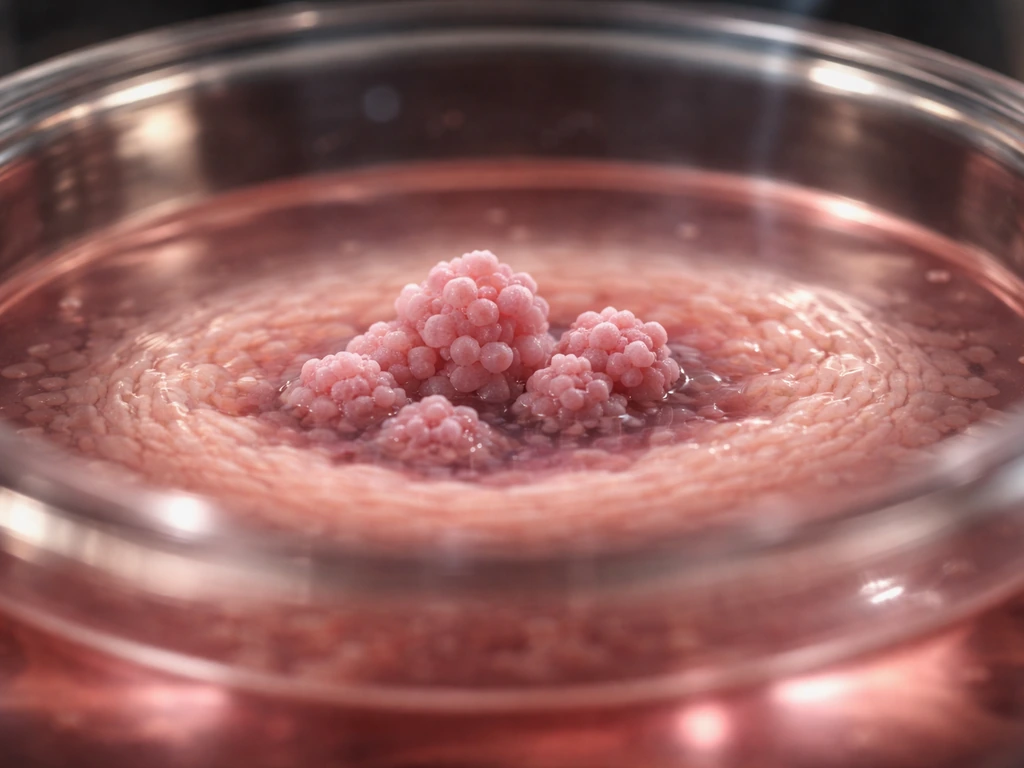
Here's where things get interesting at the organism level. You, as a multicellular organism, grew from a single fertilized egg. That growth wasn't accomplished by one cell becoming enormous. It happened through billions of carefully timed divisions producing specialized daughter cells, each positioned and programmed to build a specific tissue or organ. Cell division is how multicellular growth actually works.
Early in development, divisions can happen extraordinarily fast. In Drosophila (fruit fly) embryos, early nuclear division cycles run in about 10 minutes, with nuclei dividing in a shared cytoplasm before cell membranes even form around them. At that stage, the organism is partitioning genetic material rapidly across space, not waiting for each new cell to grow. Later, once cells individualize and differentiate, growth and division timing become tightly coupled and specific to each tissue type.
In adult organisms, cell division shifts primarily to maintenance and repair. Skin cells, gut lining cells, and blood cells divide constantly to replace worn-out predecessors. Muscle cells and neurons, by contrast, rarely divide at all. The controlled production of new cells through division is what keeps tissues functional. If cells only grew and never divided, you'd end up with a small number of enormous, dysfunctional cells instead of the trillions of well-sized, specialized ones that actually build a working body. It's also worth noting that what controls when and how fast cells divide is a deeply layered question involving gene expression, signaling pathways, and mechanical cues from surrounding tissue.
Common misconception: cells don't skip growth, they grow then divide
The phrasing 'why do cells divide instead of grow' implies a choice between two alternatives. That's not quite right. Cells do both, in sequence. Growth comes first. A cell synthesizes proteins, lipids, and organelles, increasing its mass and volume throughout G1 and into S phase. Division comes second, once the cell has accumulated enough material and reached a size where continued growth would be counterproductive.
The misconception probably comes from looking at cell size over time and noticing that cells stay roughly the same size across generations. That's true, but the reason is that division resets the size back down after growth, not that growth never happened. Think of it like a balloon you inflate halfway and then split into two smaller balloons. The split doesn't mean you never inflated it.
Another layer of nuance: cells don't always grow before dividing in exactly the same way. Some cell types, particularly in early embryogenesis, divide rapidly with little to no growth between divisions, shrinking with each round. Others maintain strict size thresholds. Different cell types can therefore grow and divide in ways that are not all the same do all cells grow and divide in the same way. Whether a particular cell type has a strict size checkpoint before division varies by organism and developmental stage, and it's one of the genuinely interesting open questions in cell biology.
How to think about this going forward
If you're trying to build a solid understanding of why cells divide, the clearest mental model is this: division is a solution to physics, not just a biological habit. Surface-area-to-volume limits, diffusion time scaling, cytoplasmic crowding, and genome-to-cytoplasm ratios all create a ceiling on how useful growth can be. Division busts through that ceiling by producing two fresh, well-proportioned cells.
From there, the natural next questions are about what genes and proteins control the growth-to-division transition, how the cell cycle is regulated at the molecular level, and why some cells divide constantly while others essentially never do. Understanding which genes push cells to grow and divide, and what happens when those controls break down, is where the study of cancer and development both begin. These gene programs help decide which growth signals are strong enough to allow the next division Understanding which genes push cells to grow and divide, and what happens when those controls break down, is where the study of cancer and development both begin..
| Constraint | What goes wrong as cells get bigger | How division fixes it |
|---|---|---|
| Surface-area-to-volume ratio | Less membrane per unit of cytoplasm; nutrient/waste exchange becomes inefficient | Division produces smaller cells with higher SA:V ratio |
| Diffusion time | Scales with L², so larger cells have much slower internal transport | Smaller daughter cells restore short diffusion distances |
| Cytoplasmic crowding | Higher density slows protein mobility and signaling | Division reduces crowding per cell |
| DNA-to-cytoplasm ratio | Genome can't keep up with gene-expression demands of growing volume | Each daughter gets a full genome in a smaller cytoplasm |
| Nutrient/oxygen delivery | Deep cell interior becomes starved before diffusion replenishes it | Smaller cells keep all regions close to the membrane |
The cell cycle checkpoints, the restriction point, Start in yeast, the spindle assembly checkpoint, and the DNA damage response aren't just regulatory footnotes. They're the system that makes sure division happens accurately and at the right time. Understanding them is understanding why life at the cellular level is so reliably self-correcting, and why things go wrong when that correction breaks down.
FAQ
If growth happens first, why do cells not just keep getting bigger before dividing?
Cells can grow, but they usually stop expanding their size when they are near a regulatory “target size” for that cell type and cell-cycle stage. Experimentally, if you change nutrient availability or growth-factor signaling, the cell’s growth rate and its timing through G1 both adjust so that division still happens around a similar final size, rather than letting cells become arbitrarily large.
Is the surface-area-to-volume problem the only reason cells divide?
The surface-area-to-volume limit is a major reason, but it is not the only one. Even if you could engineer better transport across the membrane, you would still hit constraints like slower intracellular transport in crowded cytoplasm, buildup of waste, and problems matching genome output to cytoplasm volume. In other words, there are multiple ceilings that together force division to restore conditions.
Are there cases where cells divide without much growth, like in embryos?
Not always. Some organisms and conditions favor rapid nuclear division rounds where cells partition genetic material before individual membranes form, such as early embryogenesis. Later, once cell boundaries are established and tissues differentiate, the requirement for efficient transport, size control, and reliable chromosome segregation makes growth and division coupling much stricter.
Does oxygen always limit cell size, or does it depend on conditions?
In cell culture, oxygen limitation depends strongly on geometry and environment. A small cell embedded in a well-mixed medium may behave very differently from cells in thick tissue, spheroids, or poorly oxygenated regions. Oxygen can become limiting at distances much smaller than the thickness of large tissues, so diffusion constraints often show up first in dense or layered structures.
What happens if a cell is big enough to divide, but something is wrong with DNA or chromosomes?
Because the cell-cycle “decision” is not solely a question of size. If DNA is damaged or replication is stalled, DNA damage checkpoints can delay entry into S phase or prevent mitotic progression even if size thresholds are met. Similarly, improper chromosome attachment triggers the spindle assembly checkpoint, so cells may halt division to prevent unequal or faulty chromosome segregation.
Why does the variability in division timing often come from G1, not from later stages?
G1 is commonly the most variable portion of the cycle because the cell assesses nutrients, growth-factor cues, and internal readiness for DNA replication. That variability does not mean S or G2 are unimportant, it means the “should I commit” decision often happens earlier, so changing resources mainly stretches or compresses the G1 interval.
Can mechanical stress or extracellular matrix signals change when cells divide?
Thermal, mechanical, and signaling cues can shift the cycle, but they often do so through G1 regulatory networks that control commitment to DNA replication. For example, altered cell attachment to the extracellular matrix or changes in tension can modify growth signaling pathways, which changes how quickly the cell reaches the restriction point rather than bypassing the need for size-related constraints.
If checkpoints fail in cancer, does that let cells grow indefinitely?
Cancer can involve breaking size and checkpoint controls, leading to inappropriate commitment to division even when conditions are unfavorable or DNA is compromised. However, cancer cells are not free to grow without limits, they still face diffusion and metabolic constraints. Many tumors become heterogeneous in oxygen and nutrient status, and that environment feeds back on growth and survival.
Do all cell types divide at the same size after growing for the same amount of time?
“Growth” and “division” are tightly linked, but they are not identical across cell types. Some lineages maintain stricter size thresholds, while others show broader variability in size at division depending on species, developmental stage, and the strength of the growth-factor environment. So the size checkpoint for division can be more or less stringent depending on context.
What goes wrong if a cell divides too early, before it has built enough cellular components?
Sometimes forcing division can be more damaging than waiting. If you artificially drive cells to enter S phase before they have accumulated enough resources, you can trigger replication stress, slow replication, or activate DNA damage responses. That means the practical reason cells “wait” is not just efficiency, it is to avoid creating downstream failures during DNA replication and chromosome segregation.
Next Article
Do Cells Always Grow Before They Divide? The Cell Cycle Answer
Explains when cells grow before division, what growth really means, and why size, nutrients and checkpoints limit timing