Clouds are not living things. They move because of wind, convection, and turbulence, and they 'grow' because of condensation, changing humidity, and droplet coalescence. None of that meets biology's definition of life. A cloud has no cells, no metabolism, no DNA, and no way to reproduce with inheritance. It's a dynamic, self-organizing physical system, which is impressive on its own, but not the same thing as being alive.
Clouds Can Move and Grow: Are They Living?
Marcus Whitmore
2 Jun 2026
What 'living' actually means in biology
Before you can ask whether clouds are alive, you need a clear checklist to test against. Biologists and astrobiologists have debated this for decades, and the most widely used working definition comes from NASA: life is 'a self-sustaining chemical system capable of Darwinian evolution.' That single sentence packs in a lot. Let's unpack the practical criteria you can actually check.
- Cellular organization: living things are made of one or more cells, the basic structural and functional unit of life.
- Metabolism: living things take in energy from their environment and use chemical reactions to power their own processes.
- Growth through inheritance: living things grow by cell division (mitosis), guided by genetic information that is copied and passed on.
- Reproduction: living things can produce new individuals, passing on heritable information via DNA or RNA.
- Homeostasis: living things actively regulate their internal conditions (temperature, pH, water balance) to stay within a functional range.
- Response to stimuli: living things detect and respond to changes in their environment in a coordinated, internally driven way.
- Evolution by natural selection: populations of living things change over generations because heritable variation leads to differential survival and reproduction.
Notice that 'moves' and 'changes size' are not on that list. Rivers move. Avalanches grow. Flames flicker and spread. None of those are alive. Movement and size change are necessary but nowhere near sufficient criteria for life. Keep that in mind as we walk through what clouds are actually doing.
Why clouds move: wind, convection, and turbulence
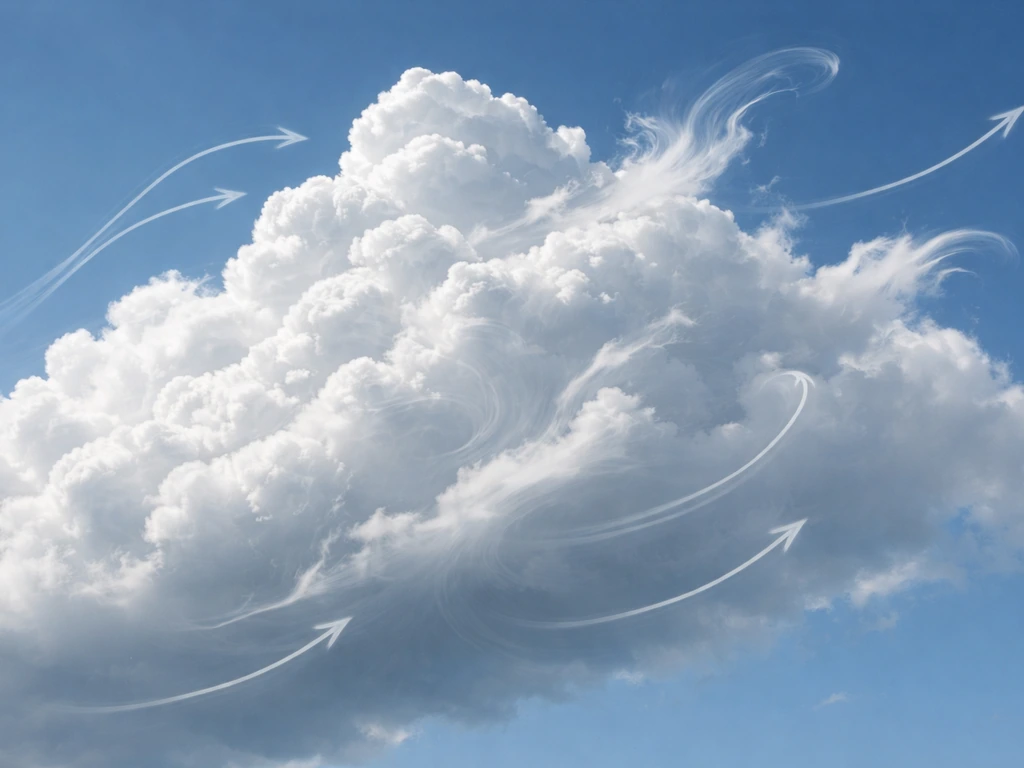
A cloud moves because the air it's suspended in moves. That's it. Clouds are made of tiny water droplets or ice crystals (typically 1 to 100 micrometers in diameter) that are light enough to stay aloft within moving air masses. When the atmosphere flows horizontally, it carries those droplets with it. When warm surface air rises in a convection current, it carries water vapor upward, where it cools and condenses into new cloud material, making the cloud appear to climb.
Turbulence adds another layer. Irregular swirling airflows can scatter cloud edges, cause rapid billowing, and create the churning look of a cumulonimbus building toward a storm. None of this motion is generated by the cloud itself. The cloud is a passenger, not a driver. Contrast that with how a motile bacterium swims: it uses flagella powered by its own cellular energy (ATP from metabolism) to move in response to chemical gradients it detects internally. A cloud has no such internal engine.
Why clouds seem to 'grow': condensation, coalescence, and humidity
When a cloud appears to grow, what you're actually watching is a physical phase transition, not biological growth. Here's the sequence: warm, moist air rises and cools. As temperature drops, the air reaches its dew point, the temperature at which it can no longer hold all its water vapor. That vapor condenses onto tiny airborne particles called condensation nuclei (dust, sea salt, pollen) and forms liquid droplets. Add more rising moist air, and more droplets form, making the cloud visibly larger.
Inside a cloud, droplets also grow through coalescence, where smaller droplets collide and merge into larger ones. In mixed-phase clouds (containing both liquid droplets and ice crystals), a process called the Bergeron process drives rapid growth: ice crystals grow at the expense of surrounding liquid droplets because ice has a lower saturation vapor pressure. This is a pure thermodynamic process with no genetics or cellular machinery involved.
A cloud can also appear to shrink or evaporate when temperature rises or humidity drops, destroying the conditions that maintain it. It doesn't 'decide' to retreat or respond strategically. The droplets simply re-evaporate because the physics changed. Living organisms actively resist unfavorable conditions through homeostasis. A cloud cannot do that.
Cloud formation vs. biological growth: a direct comparison
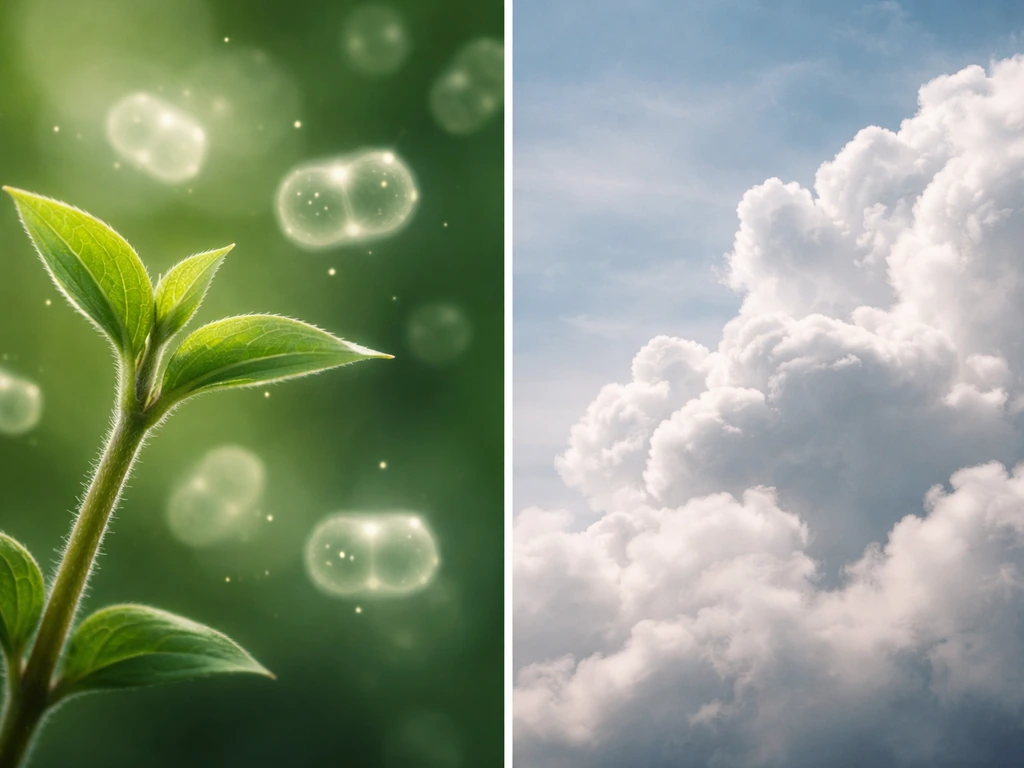
Biological growth means something very specific: an increase in the number or size of cells, driven by genetic instructions and powered by metabolism. When a plant seedling grows, its cells divide through mitosis, copy their DNA precisely, and differentiate into specialized tissue types. That whole process is orchestrated by genes, requires energy from respiration, and produces an organism that resembles its parents because heritable information was transmitted. Cloud 'growth' shares none of those features.
| Feature | Biological Growth (e.g., cell division) | Cloud 'Growth' (condensation/coalescence) |
|---|---|---|
| Driven by | Genetic instructions (DNA/RNA) | Temperature and humidity gradients |
| Energy source | Metabolism (cellular respiration, photosynthesis) | Latent heat release, atmospheric pressure |
| Structural unit | Cells with membranes and organelles | Water droplets or ice crystals (no membrane) |
| Information copied | Yes, DNA replication during mitosis | No information is stored or transmitted |
| Result | New cells/tissue that inherit traits | Larger droplets or expanded cloud mass |
| Reversible? | Not easily; cell division is directional | Fully reversible by evaporation |
| Self-directed? | Yes, regulated by internal signals | No, entirely driven by external physics |
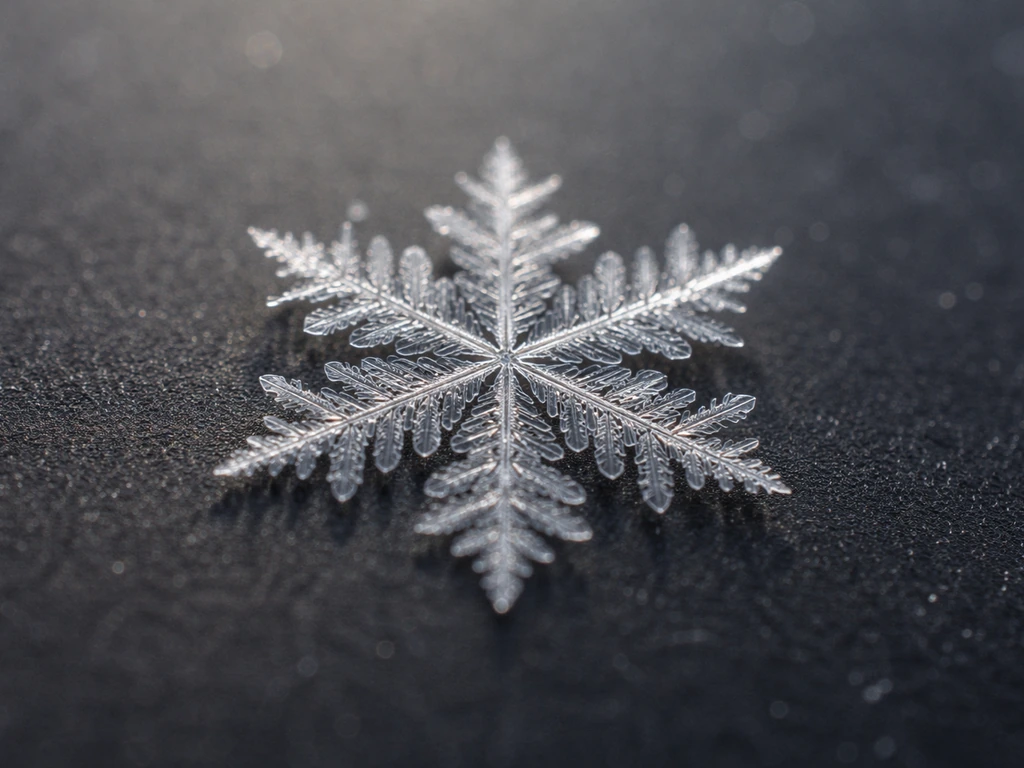
The contrast is stark. What biologists call growth involves inheritance. What clouds do involves physics. Interestingly, ice crystal growth follows a similarly physics-driven path, where water molecules attach to a crystal lattice based on temperature and vapor pressure, with no genetic direction whatsoever. The growth looks orderly and even beautiful, but it's not biological.
Do clouds have homeostasis or evolution? The self-organization question
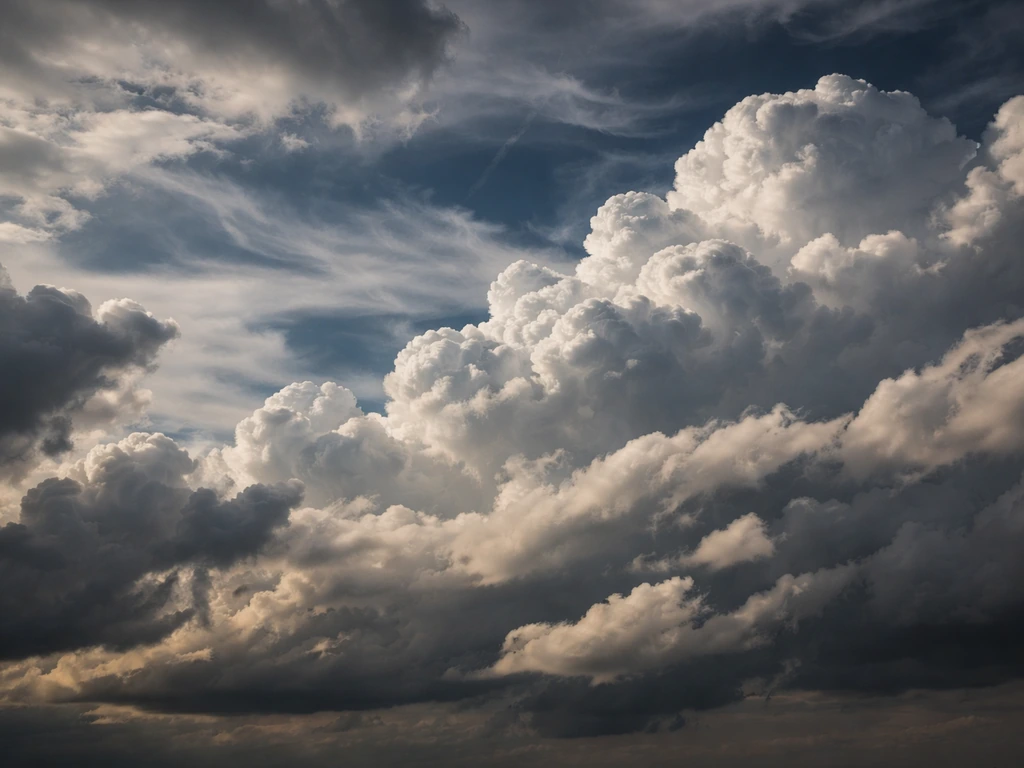
This is where it gets philosophically interesting, so let's be precise. Clouds do show self-organization, meaning local interactions between air molecules, water vapor, and heat produce large-scale patterns without any central controller. Convective cells in a cumulonimbus can look almost structured, with updrafts, downdrafts, and anvil-shaped tops that emerge from physical rules. That's genuinely cool. But self-organization is not the same as homeostasis or evolution.
Homeostasis requires an internal reference point and active feedback loops that work to maintain it. Your body sweats to cool down and shivers to warm up. A cloud has no target state it's trying to maintain. If the atmosphere dries out, the cloud evaporates. There's no internal mechanism pushing back. Flames, whirlpools, and snowstorms also self-organize without being alive. They're all examples of what physicists call dissipative structures, systems that maintain form by continuously processing energy from their environment, but without storing heritable information.
What about Darwinian evolution? NASA's working definition requires that a system be capable of Darwinian evolution, meaning heritable variation must exist, and differential 'survival' of variants must shape future generations. Clouds don't reproduce at all in a meaningful sense. One cloud doesn't give rise to a new cloud that inherits its properties. A dissipating cloud doesn't pass anything on. There's no population of clouds competing for resources, and no heritable variation being selected. Weather patterns do evolve in a colloquial sense, but not in the Darwinian biological sense.
Borderline cases worth knowing about
Clouds sit in good company among non-living systems that people sometimes find confusing. Flames consume fuel, grow, and even seem to 'breathe. ' Glaciers accumulate mass, flow, and recede in response to temperature, which raises similar questions about growth and change. Snowstorms organize into complex, self-sustaining systems.
None of these are alive, but all of them demonstrate that physical and chemical systems can be dynamic and complex without meeting biology's bar. If you're curious about how ice and water-based systems grow in different contexts, the physics of how glaciers grow or how ice crystals grow involves the same fundamental thermodynamic principles you see in cloud formation. The physics of how glaciers grow is driven by temperature, snowfall accumulation, and melting at the glacier’s surface.
The verdict, and how to see it yourself today
Clouds are not alive. They fail every major biological criterion: no cells, no metabolism, no DNA, no reproduction with inheritance, no homeostasis, and no Darwinian evolution. They are dynamic, self-organizing physical systems driven entirely by thermodynamics and atmospheric physics. That doesn't make them boring. Watching a cumulonimbus tower build to 15 kilometers in a few hours is genuinely astonishing. But 'astonishing' and 'alive' aren't the same thing.
Simple ways to observe this for yourself
You don't need a lab to test these ideas. Here are a few real-world observations you can do today that reinforce why clouds behave the way they do without being alive.
- Watch a time-lapse of clouds: Search for 'cloud time-lapse' on any video platform. You'll see clouds form, billow, and evaporate over minutes. Notice they build where warm air is rising and disappear where air sinks and dries. There's no directed behavior, just physics.
- Check a weather satellite loop: NOAA and other services offer free satellite imagery loops. Watch how cloud systems move as a single air mass, not as individual creatures navigating space. The motion follows wind patterns, not internal decisions.
- Measure humidity and temperature together: On a humid day, check a weather app for dew point. When the air temperature drops to the dew point, you get condensation, fog, or clouds. This is the same process that makes a cold glass 'sweat.' No life required.
- Compare to something actually alive: Look at time-lapse footage of a plant germinating or a bacterial colony growing on a plate. Notice that the growth is directional, structured, and cumulative in a way cloud growth is not. The contrast makes the biological criteria feel concrete.
- Ask the key question about any 'growing' thing: Does it have cells? Does it use metabolism to grow? Does it reproduce with inheritance? If the answer to all three is no, you're looking at physical growth, not biological growth. Apply that test to clouds, crystals, flames, and glaciers.
The cleanest way to explain this to anyone (including in a science class) is this: clouds move and grow because of physics, the same way a puddle grows during rain or a flame grows when you add fuel. Biology requires something more, a self-sustaining chemical system that can copy itself with heritable variation and evolve over time. NASA Astrobiology's commonly used astrobiology working definition of life is: “Life is a self-sustaining chemical system capable of Darwinian evolution.
” a self-sustaining chemical system that can copy itself with heritable variation and evolve over time. Clouds simply don't have that machinery.
They're a spectacular example of what physics can do without biology, and knowing the difference is one of the most useful thinking tools you can have.
FAQ
If a cloud keeps changing for hours, does that count as a living organism over time?
No. Clouds can brighten, darken, and thicken as droplet sizes and concentrations change, but the particles that make up a cloud are continually replaced. You can think of a “cloud” as the region where conditions allow droplets and ice to exist, not as a persistent organism with a body that lasts through time.
What makes a thunderstorm cloud grow so fast if it is not alive?
Not in the biological sense. A cumulonimbus can look like it is “building” itself, but the energy source is the surrounding atmosphere, mainly heat from the ground and moisture supply, plus dynamics like updrafts. A cloud does not run its own internal metabolism, it just responds to incoming energy and moisture.
Do clouds have a lifecycle that’s like an organism’s aging?
You would not expect biology-style “aging” with inherited traits, because there is no genome to copy and no population continuity. However, you can observe lifecycle stages, like formation and dissipation, which correspond to the atmosphere crossing and then leaving thresholds such as dew point, temperature lapse rate, and stability.
Can clouds move “intentionally,” like steering themselves?
They can produce “movement that looks purposeful,” but the motions come from wind shear, turbulence, and buoyancy, not from sensing and deciding. A useful test is to track an identifiable air mass: the cloud pattern changes as the air mass is lifted, mixed, or capped, even if the underlying water and ice are exchanged.
Could different types of clouds be a kind of inheritance or heredity?
No. Condensation nuclei like dust, sea salt, or pollen can vary from place to place, which affects droplet formation, but those variations are not hereditary. There is no mechanism for a cloud to pass those “setup choices” to offspring clouds.
How do aerosols and pollution change clouds if clouds are not alive?
Clouds are not genetically information-bearing, but they do interact with physical tracers. If you release smoke or salt into the air, you may see cloud formation patterns change because more or fewer nuclei are available. That is still chemistry and physics, not reproduction with inheritance.
If clouds self-organize, why doesn’t that automatically mean they are alive?
Self-organization can occur while the system still lacks homeostasis and evolution. For instance, convection creates repeating cellular structures under certain stability and moisture conditions, but once boundary conditions shift, the pattern dissolves without any built-in goal state to maintain it.
What is the key difference between homeostasis and a cloud just persisting in the right weather?
In biology, life persists and maintains internal conditions by active feedback, even when the outside changes. In the atmosphere, a cloud persists only while external conditions keep allowing condensation and suppress evaporation. When humidity drops or temperature rises, the cloud constituents evaporate rather than being actively defended.
What is a good quick checklist to avoid confusing complex cloud patterns with life?
Yes, but it depends on the goal. Clouds can be “dynamic” and “organized” without being alive, so it helps to separate appearance from mechanism. If your explanation uses only thermodynamics (dew point, latent heat, saturation vapor pressure) and airflow (advection, turbulence, buoyancy), you are likely describing a non-living process even if it looks complex.
Can weather “evolve” Darwinian-style over seasons?
Yes. If two regions repeatedly produce similar cloud formations under similar atmospheric conditions, it can feel like “evolving weather.” But Darwinian evolution requires heritable variation and differential reproduction of lineages. Cloud formation is better described as the atmosphere exploring different physical states, not competing biological variants.
Next Article
How Do Ice Crystals Grow Into Snow Crystals Step by Step
Learn how ice crystals grow into snow step by step: nucleation, deposition growth, and key temperature humidity factors