The blank" rel="noopener noreferrer">Bergeron process causes cloud droplets to grow because the saturation vapor pressure over ice is lower than over liquid water. That single physical fact sets off a chain reaction: in a mixed-phase cloud where both supercooled liquid droplets and ice crystals coexist, water vapor finds it easier to deposit onto ice than to condense onto liquid.
The Bergeron Process Causes Cloud Droplets to Grow Because Ice Lowers Vapor Pressure
Marcus Whitmore
18 Apr 2026
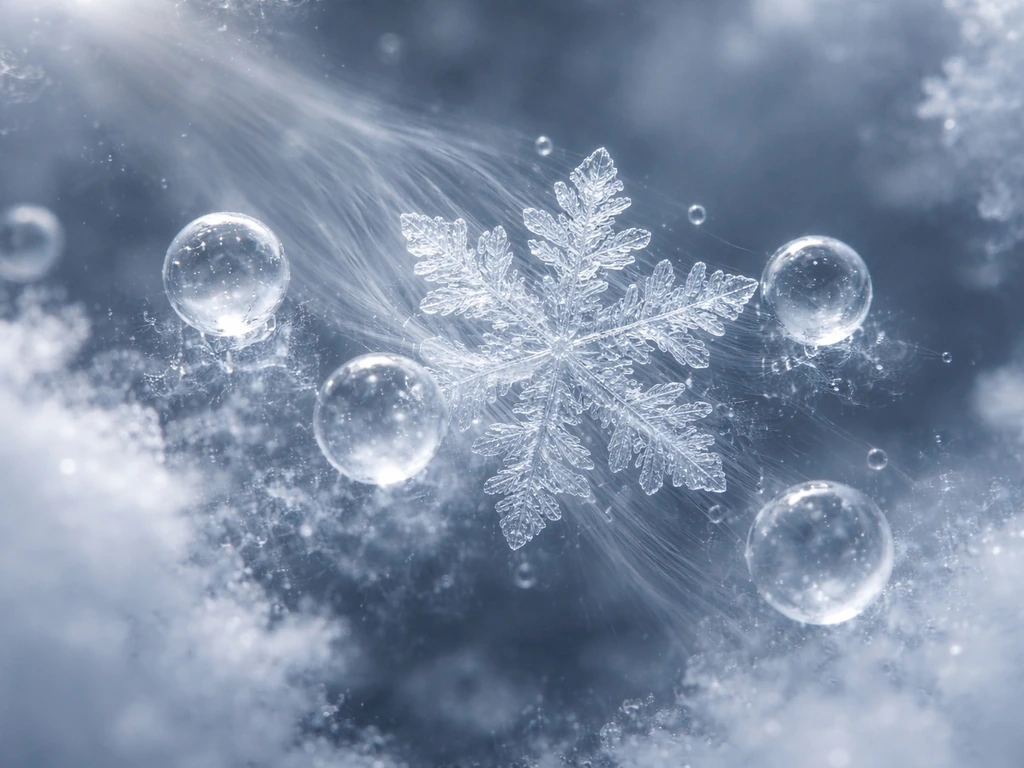
So ice crystals grow, liquid droplets evaporate, and eventually the ice particles get large enough to collide with and collect the remaining droplets, a step called riming, producing precipitation-sized particles. That is the core answer. Cloud microphysics is also shaped by whether ice crystals can outcompete droplets, a theme that connects directly to how the Bergeron process and related precipitation pathways work cloud microphysics and precipitation pathways.
Everything below unpacks the mechanism, the physics, and what to do with that knowledge today.
The core idea: what the Bergeron process actually does
The Bergeron process (formally the Wegener–Bergeron–Findeisen process, or WBF) is a growth mechanism that operates inside mixed-phase clouds, clouds cold enough to contain both supercooled liquid water droplets and ice crystals at the same time. The key word is "mixed-phase." A purely liquid cloud or a purely ice cloud cannot run this process. You need both phases present, competing for the same water vapor.
At its heart, the process is thermodynamic arbitrage. Vapor moves toward whatever surface it finds easiest to join, and at temperatures below 0°C that surface is ice, not liquid. Ice crystals grow rapidly by vapor deposition while the liquid droplets around them slowly evaporate, shrinking. The vapor literally migrates from the droplets to the ice. Over time, large ice crystals dominate the cloud, eventually falling and collecting whatever droplets remain. That is how rain and snow start in most mid-latitude clouds, not by droplets bumping into each other, but by this ice-driven theft of vapor.
Why vapor pressure is the whole story
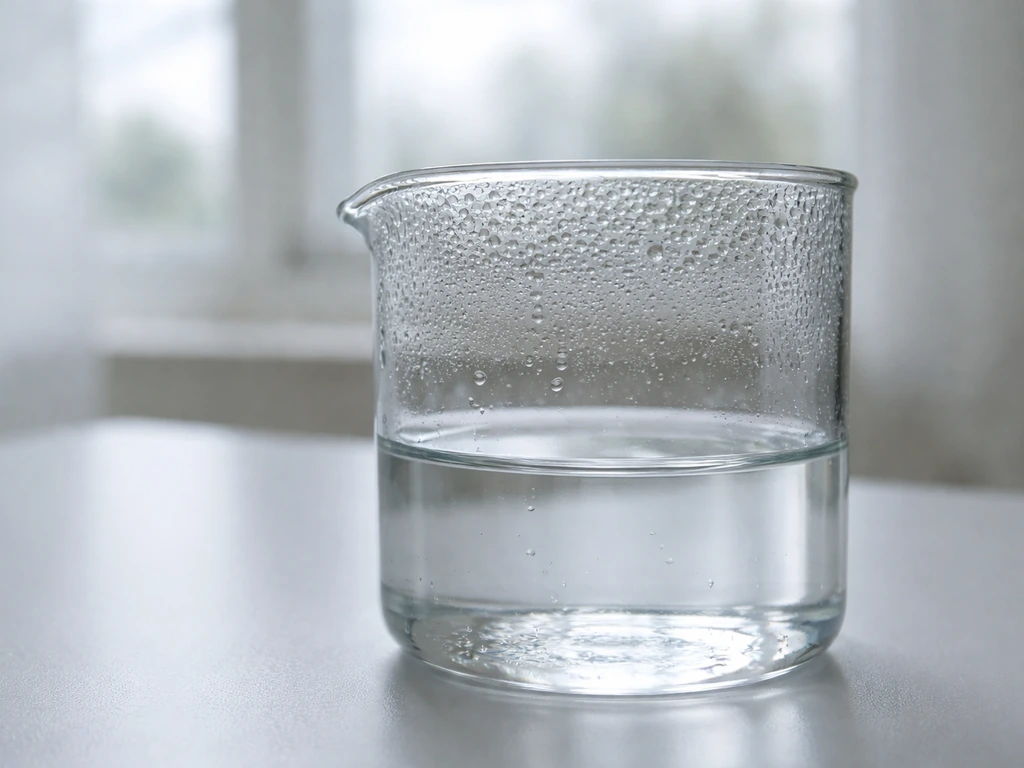
Saturation vapor pressure is the maximum amount of water vapor the air can hold above a particular surface before condensation or deposition kicks in. Here is the critical point: at any given sub-zero temperature, the saturation vapor pressure over a flat ice surface is always lower than the saturation vapor pressure over a flat liquid water surface. At −10°C, for example, the saturation vapor pressure over liquid is about 287 Pa, while over ice it is roughly 260 Pa, a difference of about 10 percent.
Now imagine the air in the cloud sits at an actual vapor pressure somewhere between those two values, above what ice needs to stay in equilibrium, but below what liquid needs. The technical term is that the air is supersaturated with respect to ice but subsaturated with respect to liquid water. Ice crystals in that air experience a driving force to grow because there is more vapor available than they need. Liquid droplets experience the opposite: the air is too dry for them, so they evaporate. The droplets are not growing, they are shrinking, while the ice crystals gorge on the vapor the droplets release.
The supersaturation with respect to ice is often written as Si = (e − esi) / esi, where e is the actual vapor pressure and esi is the saturation vapor pressure over ice. When Si is positive, ice grows. The mass-growth rate of an ice crystal scales roughly with Si and with the crystal's capacitance (a measure of its shape and size), so bigger or more branched crystals grow faster. Liquid droplets, meanwhile, lose mass because the same ambient vapor pressure is below their equilibrium value.
The temperature window where this actually happens
Supercooled liquid water can persist well below 0°C if there are no ice nuclei to trigger freezing. Pure water droplets can stay liquid down to around −38°C before homogeneous freezing forces them to crystallize. But the WBF process needs ice crystals to already be present, and that requires ice nuclei, mineral dust, soot, biological particles, which typically become active in the range of about −5°C to −20°C. So in practice, the Bergeron process is most relevant between roughly 0°C and −30°C, with the most efficient operation often cited between −10°C and −20°C where the vapor-pressure difference between liquid and ice is largest.
There is also a narrower window worth knowing about: between −3°C and −8°C (peaking near −5°C), a separate process called Hallett–Mossop ice splintering can explosively multiply ice crystal numbers by riming. That is distinct from WBF, but the two interact, more ice crystals mean more competition for the available vapor, which changes how WBF plays out. Think of it as the Bergeron process operating within a broader, more complex cast of characters in the coldest parts of a cloud.
Step by step: the microscopic mechanism
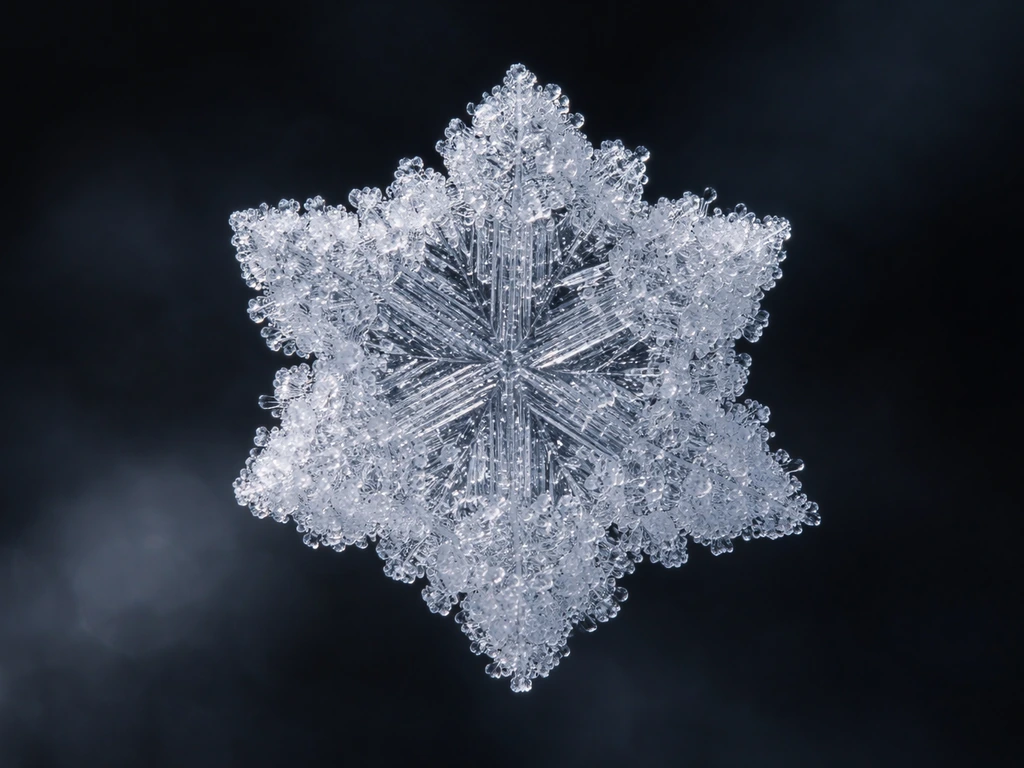
Here is how it plays out at the scale of individual particles, which is the scale that matters for understanding why droplets ultimately grow (or why some shrink):
- A mixed-phase cloud forms with both supercooled liquid droplets (typically 5–20 micrometers in radius) and a smaller number of ice crystals (initially perhaps 1–10 per liter, versus millions of droplets per liter).
- The ambient vapor pressure settles between esi (ice saturation) and esw (liquid saturation) — the classic WBF window.
- Each ice crystal sees a positive supersaturation S_i and begins growing by vapor deposition, adding water molecules from the surrounding air directly onto its surface.
- Each liquid droplet sees a negative supersaturation with respect to liquid — the air is drier than equilibrium — so the droplet evaporates, releasing vapor into the air.
- That released vapor raises the local vapor pressure slightly, feeding adjacent ice crystals further.
- Ice crystals grow from micrometers to hundreds of micrometers, or even millimeters, over minutes to tens of minutes.
- Once ice particles are large enough (typically >100 micrometers), they begin to fall relative to smaller droplets and collide with them.
A useful analogy: imagine a room with both wet sponges (liquid droplets) and dry sponges (ice crystals). The dry sponges pull moisture from the air more aggressively, so the wet sponges gradually dry out while the dry sponges become saturated. The air is the mediator. In the cloud, vapor is the air, and ice crystals are the thirstier sponges.
Collisions and riming: how the ice actually collects droplets
Vapor deposition alone grows ice crystals, but the dramatic size increase that produces precipitation comes from a second step: riming and aggregation. Once an ice crystal has grown large enough to develop a significant fall speed relative to smaller cloud droplets, it sweeps through the cloud like a sticky net. Supercooled liquid droplets it hits freeze instantly on contact, this is riming. Each collision adds mass to the ice particle, and as it grows heavier it falls faster, colliding with even more droplets. This is accretion, and it can convert a small ice crystal into a graupel pellet or snowflake in minutes.
Aggregation is a parallel step where ice crystals stick to each other, especially effective near 0°C where ice surfaces become slightly sticky. Aggregation produces the classic large snowflake structure. The practical result of all three steps, WBF deposition, riming, and aggregation, is a precipitation-sized particle that eventually falls out of the cloud as rain (if it melts below the freezing level) or snow.
A Penn State METEO 300 course module describes the Bergeron, Findeisen process as ice growth in mixed-phase clouds driven by vapor uptake from evaporating supercooled droplets, which then leads to precipitation-sized particles.
So when the question asks why the Bergeron process causes cloud droplets to grow, the full answer has two parts: first, it causes ice to grow at the expense of liquid droplets via vapor transfer; second, those ice particles then physically collect and incorporate remaining droplets through riming.
What stops the Bergeron process from running, or slows it down
The WBF process is elegant in theory but fragile in practice. Several conditions can suppress it or shut it down entirely:
- Too few ice nuclei: If there are not enough ice-nucleating particles in the cloud, ice crystals never form in the first place, and WBF cannot start. Some clouds stay liquid all the way down to −20°C for this reason.
- Too many ice crystals: This sounds counterintuitive, but if ice crystal number concentration is very high, the available vapor is shared among too many crystals. Each one grows slowly, and none may reach the size needed for effective riming. The outcome depends on the ratio of ice crystals to liquid droplets.
- Vapor pressure outside the WBF window: If the air is supersaturated with respect to liquid water (not just ice), liquid droplets grow too, and the asymmetric growth advantage disappears. Strong updrafts can push vapor pressure above liquid saturation, suppressing WBF.
- Strong mixing and dilution: Entrainment of dry air from outside the cloud can drop the overall vapor pressure below even the ice saturation threshold, stopping growth altogether and potentially sublimating ice crystals.
- Insufficient time: The process needs minutes to tens of minutes to grow ice crystals to precipitation size. Short-lived or rapidly evolving clouds may not sustain the WBF window long enough.
- Temperature too warm or too cold: Near 0°C the vapor-pressure difference between ice and liquid is tiny, making WBF inefficient. Below about −38°C, all liquid freezes homogeneously and the mixed-phase window closes.
- Vertical air motions: Updrafts increase supersaturation and can push vapor above liquid saturation; downdrafts reduce it below ice saturation. Both extremes suppress WBF. The process works best in relatively gentle, sustained updrafts.
Understanding these limits is practically important. Some climate models apply a "WBF factor" that reduces the theoretical ice growth rate to better match observations of clouds that persist in a mixed-phase state longer than pure WBF theory predicts. Real clouds are messy, turbulent, and full of competing processes. WBF is the dominant mechanism in many stratiform and frontal clouds, but it is never the only process running.
How to observe or test the Bergeron process today
If you are a student, educator, or researcher trying to work through whether WBF is the dominant growth mechanism in a given situation, here are the practical approaches used today:
Check the thermodynamic window first
Before anything else, ask: is the cloud temperature between roughly −3°C and −30°C? Is the measured (or modeled) vapor pressure between the ice and liquid saturation curves? You can compute those curves using the blank" rel="noopener noreferrer">Murphy and Koop (2005) parameterizations, which are the standard reference used in most cloud microphysics modeling. If the ambient vapor pressure sits between esi and e_sw at your cloud temperature, WBF is thermodynamically active. If it does not, look for another growth mechanism.
Use lidar-radar synergy for remote sensing
In real clouds, the combination of cloud radar (sensitive to ice particles) and lidar (sensitive to liquid droplets) is the standard remote-sensing tool for identifying mixed-phase conditions and inferring WBF activity. Radar reflectivity increases as ice crystals grow; lidar backscatter from liquid droplets simultaneously decreases. That pattern, ice growing while liquid signal drops, is the observational fingerprint of WBF. Research groups have published retrieval algorithms specifically designed to separate WBF, riming, and aggregation contributions from combined lidar-radar measurements.
Run a 1D ice growth model
For classroom or research use, a single-column or 1D bin microphysics model is the workhorse tool. You initialize it with a temperature profile, an ice nucleus concentration, and a liquid water content, then let the model evolve. Watch the supersaturation over ice (Si) and over liquid as the run progresses. If WBF dominates, you will see Si stay slightly positive while supersaturation over liquid goes negative, liquid water content drops and ice water content rises. NASA and ECMWF both publish physical process documentation that lays out the deposition growth equations (including the capacitance-model formulation and S_i terms) you need to implement this.
In situ probes for aircraft studies
Aircraft-mounted probes such as PHIPS (Particle Habit Imaging and Polar Scattering) can directly image individual ice crystals and identify riming by the presence of frozen droplets on crystal surfaces. Combining these images with co-located humidity and temperature measurements lets researchers confirm that riming is occurring at the expected temperatures and supersaturation levels. Hallett–Mossop secondary ice production near −5°C shows up as a sudden spike in ice crystal concentration during riming, which you would not expect from WBF alone.
A quick comparison of WBF vs other ice growth paths
| Growth mechanism | Physical driver | Temperature range | Key observational signature | Main limitation |
|---|---|---|---|---|
| WBF (Bergeron-Findeisen) | Vapor pressure difference between ice and liquid | ~0°C to −38°C (best at −10 to −20°C) | Liquid droplets evaporating while ice reflectivity grows | Needs mixed-phase window; suppressed by strong updrafts |
| Riming / accretion | Mechanical collection of droplets by falling ice | 0°C to ~−25°C | Graupel or rimed crystals in probe images | Needs ice already large enough to have significant fall speed |
| Aggregation | Ice crystals sticking together | Most effective near 0°C | Large snowflake aggregates; broad radar spectrum | Requires sufficient ice crystal number and sticky surfaces |
| Homogeneous freezing | Spontaneous freezing of liquid droplets | Below ~−38°C | All liquid converted to ice rapidly | Only operates at very low temperatures; no mixed-phase |
| Hallett–Mossop splintering | Secondary ice from riming on graupel | −3°C to −8°C | Sudden increase in ice concentration during riming | Very narrow temperature window; needs droplets >25 μm |
Putting it all together: growth mechanisms across systems
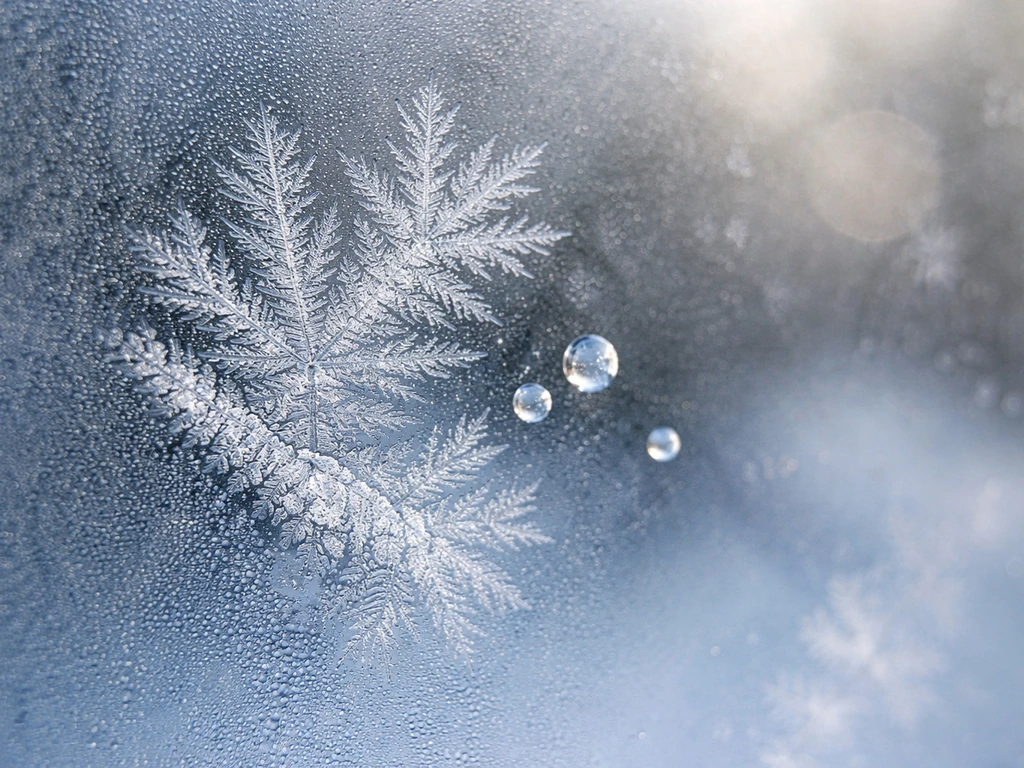
The Bergeron process is, at its core, a story about competition for a shared resource, water vapor, and how thermodynamic asymmetry between two phases of the same substance (liquid and ice) produces directed growth. That theme shows up across many systems on this site. Ice crystals growing inside clouds follow the same deposition physics as ice crystals growing in a freezer or on a windowpane.
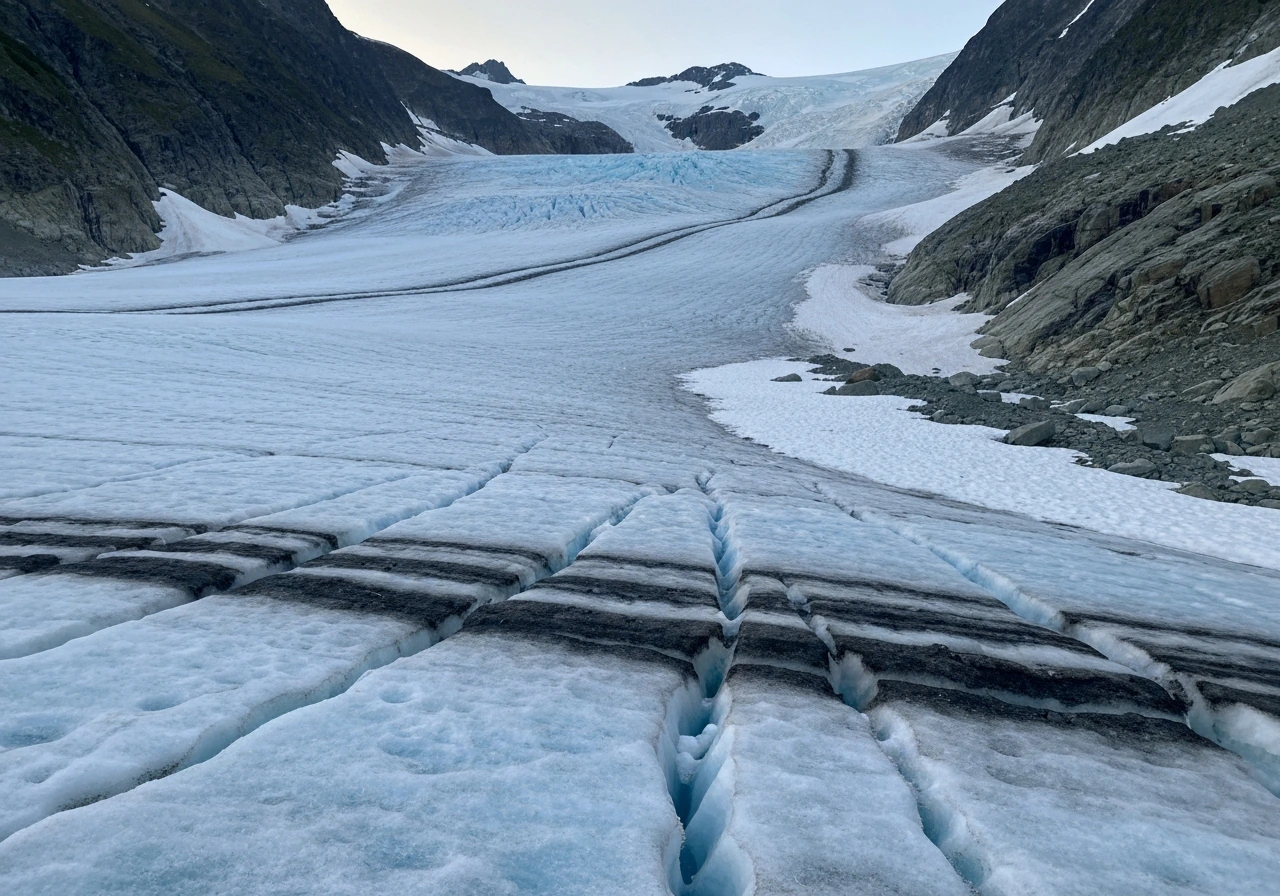
The mixed-phase dynamics inside clouds are also closely tied to how glaciers grow: the same balance between vapor supply, temperature, and phase stability governs both. On Earth, glaciers grow or recede because the balance between snowfall and melting, plus changes in temperature and precipitation, determines whether the ice gains or loses mass how glaciers grow.
On Earth, glaciers grow or recede for related reasons, with temperature and the balance of snowfall against melting determining the net change in ice mass how glaciers grow. If you want to connect this cloud microphysics idea to the larger cryosphere, see also how glaciers grow. If you are curious about how ice crystals develop their intricate shapes during this kind of growth, that branching and faceting is governed by the same vapor-diffusion physics operating at the crystal surface.
The practical takeaway is simple: to determine whether the Bergeron process is driving ice or precipitation growth in any scenario you are studying, check three things. First, confirm the temperature is in the mixed-phase window (roughly 0°C to −38°C). Second, verify the vapor pressure sits between the ice and liquid saturation values, that is the necessary and sufficient thermodynamic condition. Third, look for the signature outcome: ice water content increasing while liquid water content decreases. If all three are present, WBF is running. If one is missing, look to riming, aggregation, or a completely different mechanism to explain what you see.
FAQ
Why do liquid droplets shrink instead of grow during the Bergeron process? (What makes the direction of mass transfer clear?)
Because the air’s vapor pressure is between the saturation values for liquid and ice (it is supersaturated with respect to ice and subsaturated with respect to liquid). In that situation, liquid droplets lose mass to re-equilibrate, while ice grows by deposition rather than by melting or freezing.
What happens if the vapor pressure is not between saturation over ice and saturation over liquid? Does the Bergeron process still occur?
If the ambient vapor pressure is either below the ice saturation curve, or above the liquid saturation curve, the thermodynamic “between the two curves” condition is not met. Then the competition is removed: either both phases evaporate, or both tend to condense/grow, so WBF will be weak or absent even if supercooled liquid droplets exist.
Can the Bergeron process itself directly enlarge cloud droplets, or is droplet growth only via collisions later?
Yes, but only indirectly. In WBF, the immediate “growth” is on ice crystals via vapor deposition, and liquid droplets often evaporate. The droplets look like they are growing only after riming, when growing ice particles collide with and freeze droplets, transferring droplet water into the ice particle mass.
Why can a cloud be colder than 0°C but still not show the Bergeron process?
Mixed-phase clouds require both supercooled liquid and ice particles at the same time. If ice crystals are not present, the process cannot start, and supercooled droplets may persist until another mechanism produces ice (for example, freezing on ice nuclei, homogeneous freezing near very cold temperatures, or secondary ice production).
What limits WBF turning into precipitation in real clouds?
Riming needs ice particles large enough and long enough to encounter many droplets. If number concentrations are very high (lots of small ice crystals) or the residence time is short, the ice may grow only modestly, and the cloud may remain mixed-phase longer without efficient precipitation.
Is WBF equally strong at all sub-zero temperatures, or is there a temperature preference?
Near the warmer end, the vapor-pressure difference between liquid and ice decreases, so the thermodynamic driving force is smaller. Also, at temperatures closer to 0°C, aggregation and Hallett–Mossop secondary ice can become more influential, changing the net pathway and observables compared with “WBF alone.”
Does WBF mean ice is formed from supercooled droplets, or does it only amplify growth after ice is already present?
A common misunderstanding is to treat WBF as “ice formation from nothing.” It really is vapor redistribution that accelerates growth once ice exists. Therefore, the time it takes to get any ice (nucleation and secondary ice production) often controls whether WBF has the opportunity to act.
In a model or parcel calculation, what exact indicators should I monitor to confirm WBF is active?
You can anticipate the signature by checking whether humidity and temperature evolve so that supersaturation stays positive over ice while it trends negative over liquid. Practically, that often shows up as decreasing liquid water content alongside increasing ice water content in parcel or 1D bin model outputs.
How does Hallett–Mossop ice splintering alter what you would otherwise attribute to the Bergeron process?
Yes. If secondary ice production (like Hallett–Mossop) rapidly increases ice crystal numbers, vapor competition intensifies because many crystals share the same available vapor. That can reduce the growth per crystal while still increasing total ice mass, so you may see different sizes and precipitation efficiency than predicted by WBF-only scenarios.
What observational pattern best distinguishes Bergeron-driven growth from other cloud microphysical processes?
For a mixed-phase cloud, the observational fingerprint is a simultaneous shift in phase-specific signals, typically increasing radar reflectivity from growing ice while lidar indicates reduced liquid droplet backscatter. If you see only one side (ice increase without liquid decrease, or vice versa), another process or measurement ambiguity may be involved.
Next Article
How Do Glaciers Grow: Mass Balance, Climate Drivers, and Checks
Learn how glaciers grow via positive mass balance, reduced melt, and dynamics, plus how to tell if yours is advancing.