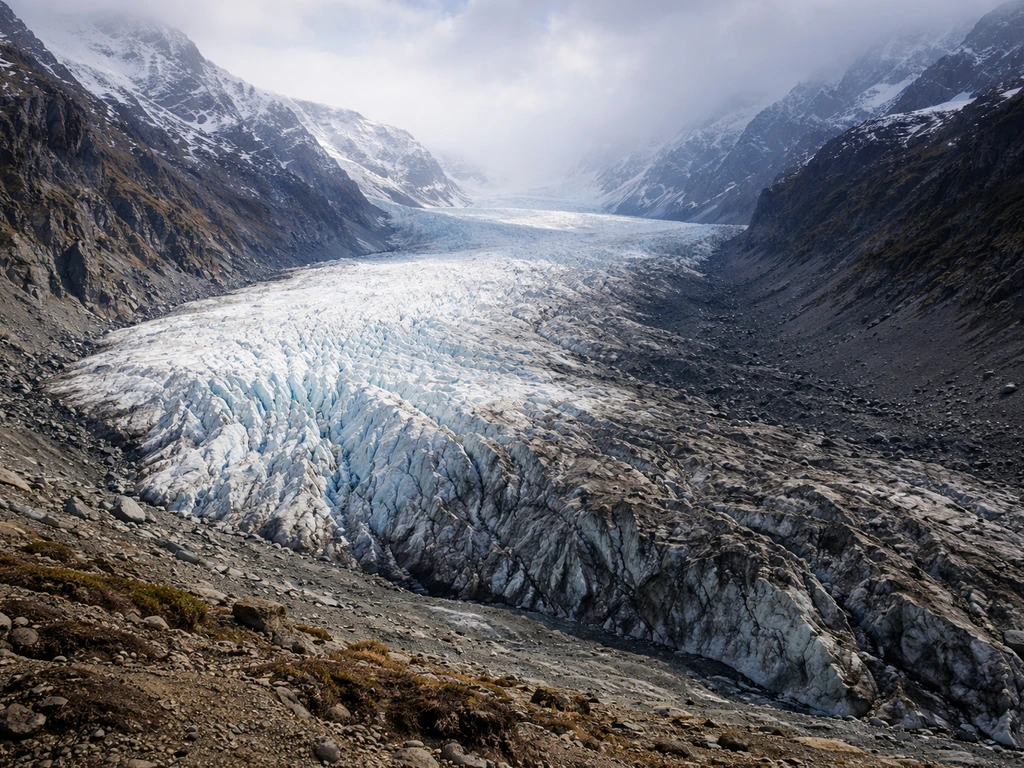
A glacier grows when it gains more mass than it loses over the course of a year. That's the short answer. The longer answer involves understanding a balance sheet: snow falling and compacting on one side, melt, evaporation, and calving on the other. When the inputs beat the outputs, the glacier gets bigger. When they don't, it shrinks. Scientists call this the mass balance, and it is the single most important concept for understanding glacier growth.
How Do Glaciers Grow: Mass Balance, Climate Drivers, and Checks
Marcus Whitmore
13 Apr 2026
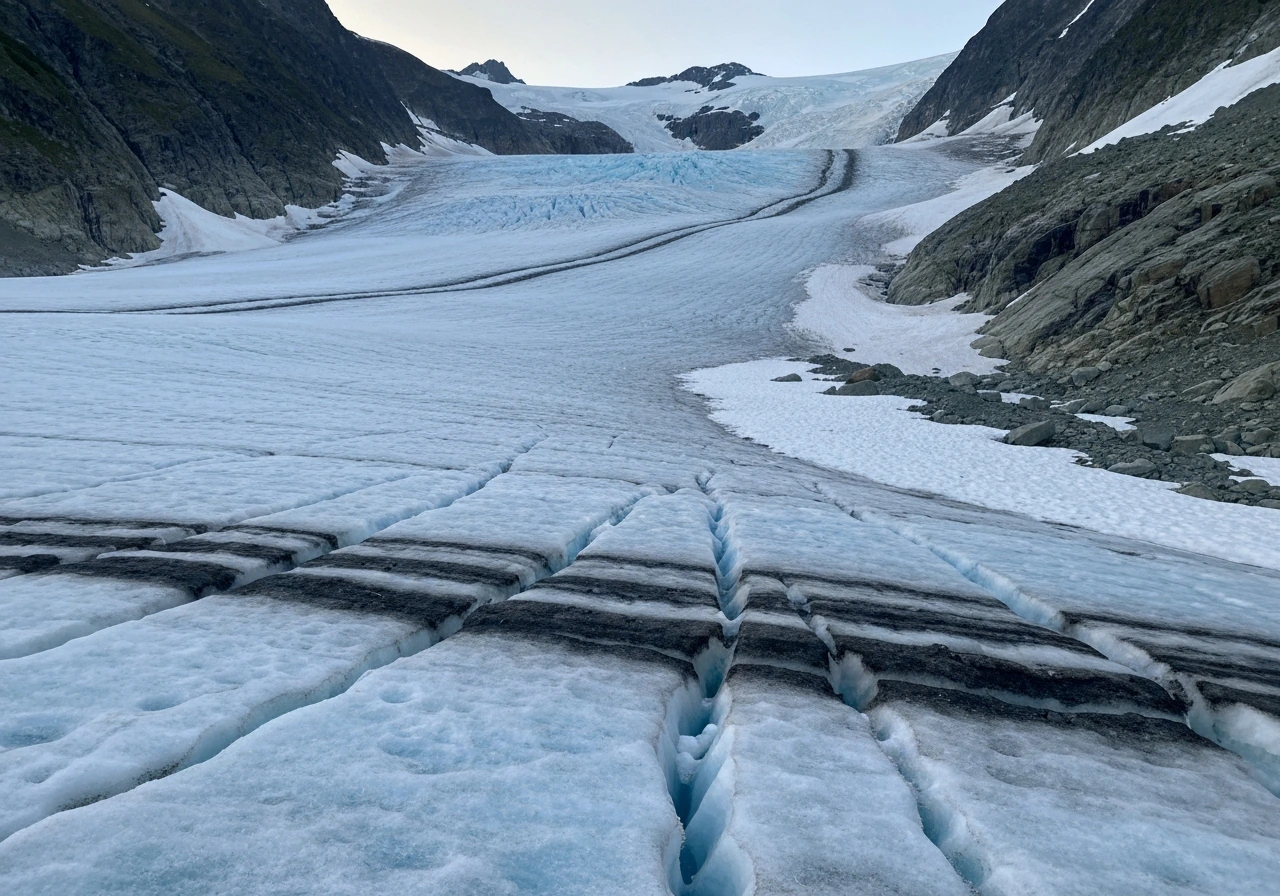
What 'glacier growth' actually means: mass balance
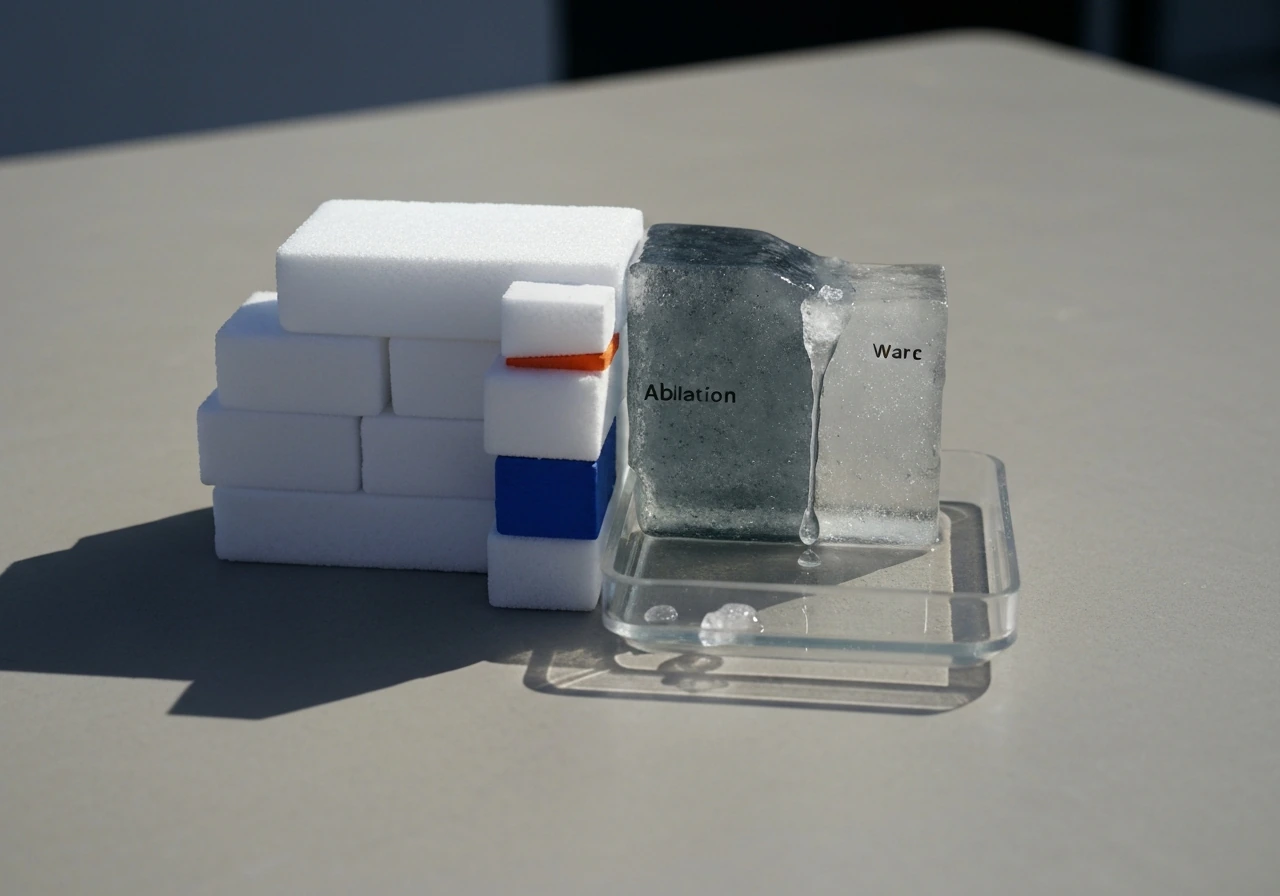
When people say a glacier is 'growing,' they usually mean its front is advancing downhill or it looks bigger in photos. That's a reasonable intuition, but it's not the whole story. Scientists define glacier growth through mass balance: the difference between how much mass a glacier gains and how much it loses over a defined period, usually a full mass-balance year.
The standard unit for mass balance is millimetre water equivalent (mm w.e.), or in rate form, mm w.e. per year. This unit lets researchers express all the inputs and outputs as equivalent volumes of liquid water per unit area, making it easy to compare very different glaciers on a common scale. A positive mass balance (say, +300 mm w.e. per year) means the glacier gained the equivalent of 300 millimetres of water spread across its surface. A negative number means it lost that much. The net balance at the end of the year is the combined result of winter accumulation and summer ablation.
It is also worth knowing that a glacier can have a positive mass balance for a year or two while its terminus (the snout at the downhill end) is still retreating. That happens because glaciers have response lags: the geometry takes time to catch up to the mass signal. So 'growing' in the mass-balance sense and 'advancing at the front' are related but not the same thing, and keeping that distinction clear will save you a lot of confusion.
The main drivers: cold temperatures, snowfall, and melt
Three things matter most to whether a glacier grows: how much snow falls on it, how warm it gets during the melt season, and how long that melt season lasts. Think of it as a competition between supply and loss. More snow and colder summers tip the scales toward growth. Warmer summers and reduced snowfall tip them toward shrinkage.
Temperature is especially powerful because it controls melt almost directly. Glaciologists use a concept called the positive degree-day sum (PDD) to quantify this: melt volume is proportional to the number of days above 0°C and how far above freezing the temperature gets. The proportionality constant, called the degree-day factor, is typically measured from ablation stakes and expressed in mm w.e. per degree per day. Research on Urumqi River Glacier No. 1 found that a 1 K increase in near-surface air temperature boosted melt by roughly 0.236 m w.e. over the study period. That is not a small number. It shows why even modest warming has an outsized effect on the mass balance.
Precipitation matters too, but it has to arrive as snow at the right elevation and time of year to count as accumulation. Rain falling on a glacier does not add mass; it actually contributes a small amount of sensible heat that accelerates melting. Elevation plays a big role here because temperature drops with altitude, so higher-elevation glaciers tend to receive more solid precipitation and lose less to melt. That is why the accumulation zone (the upper portion of the glacier) and the ablation zone (the lower portion) are physically separated on most glaciers.
How mass actually changes: accumulation vs ablation
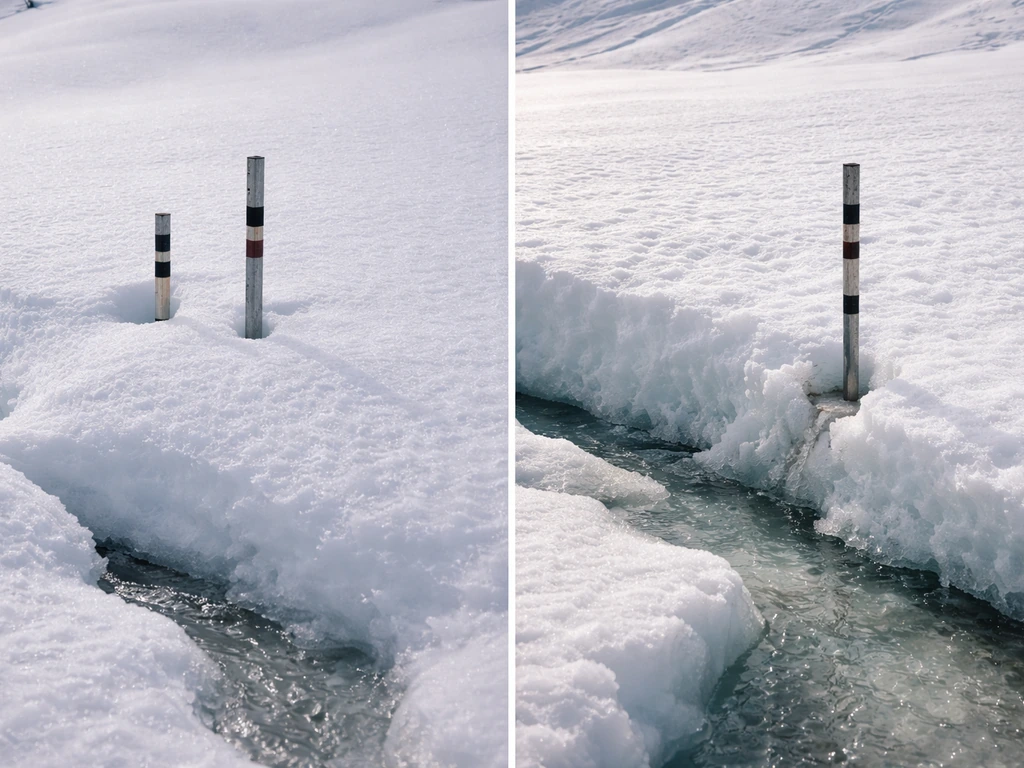
Accumulation is everything that adds mass to the glacier. Snowfall is the biggest contributor, but wind-blown snow, avalanches depositing snow from surrounding slopes, and refreezing of meltwater within the snowpack all count. Over time, fresh snow compacts under its own weight into firn, a granular intermediate form denser than snow but not yet ice. how ice crystals grow and reorganize during this process is a fascinating story in itself: sintering fuses grains together, and densification continues until air passages close off at roughly 0.82 to 0.84 Mg/m³, sealing individual bubbles and completing the transformation to glacier ice. Meltwater can also percolate into firn, refreeze, and be retained as mass, making firn hydrology an important part of the accumulation accounting.
Ablation is everything that removes mass. This is broader than just melting. It includes runoff of meltwater off the glacier surface, sublimation (ice turning directly to vapor), wind erosion of snow, and calving, where chunks of ice break off from a glacier that terminates in water or a steep cliff. Melt and runoff are usually the dominant ablation mechanisms, but calving can dwarf surface melt for tidewater and lake-terminating glaciers.
The melt rate itself is set by the surface energy balance: the sum of incoming and outgoing shortwave radiation, longwave radiation, and turbulent heat fluxes (sensible and latent heat), plus a small contribution from rain. When more energy arrives at the surface than leaves, the excess goes into melting ice. This is why cloudy, humid weather can still drive significant melt even without intense sunshine, and why wind speed matters: stronger winds enhance sensible heat transfer to the surface.
How glaciers actually advance or slow down
Mass balance tells you whether a glacier is gaining or losing mass. Glacier dynamics tell you how that mass moves and whether the front advances. Ice flows downhill under gravity through internal deformation and basal sliding. When a glacier has a sustained positive mass balance, the thickening upper reaches push more ice downslope, eventually causing the terminus to advance. When mass balance turns negative, flow continues but no longer keeps up with ablation at the front, so the terminus retreats.
Basal sliding is a key part of how fast a glacier moves. When subglacial meltwater builds up beneath the ice, it reduces friction at the bed, allowing the glacier to slide faster. Seasonal pulses of surface meltwater that drain to the bed can temporarily spike sliding speeds. This is an important feedback: a warmer summer that produces more surface melt can also accelerate the glacier's flow, which in turn affects how quickly ice is transported to the terminus where it melts or calves.
Here is the catch about response time. Even if mass balance becomes positive today, a large valley glacier might not show a visibly advancing front for decades. What causes a glacier to grow or recede in terms of terminus position depends on both the mass signal and the glacier's thickness, slope, and ablation rate at the terminus. Theoretical work shows that response time scales roughly with ice thickness divided by the ablation rate near the front. A small, steep maritime glacier might adjust in just a few years. A large continental valley glacier can take a century or more to reach a new geometric equilibrium after a shift in climate.
Feedbacks that amplify or dampen growth
The albedo feedback
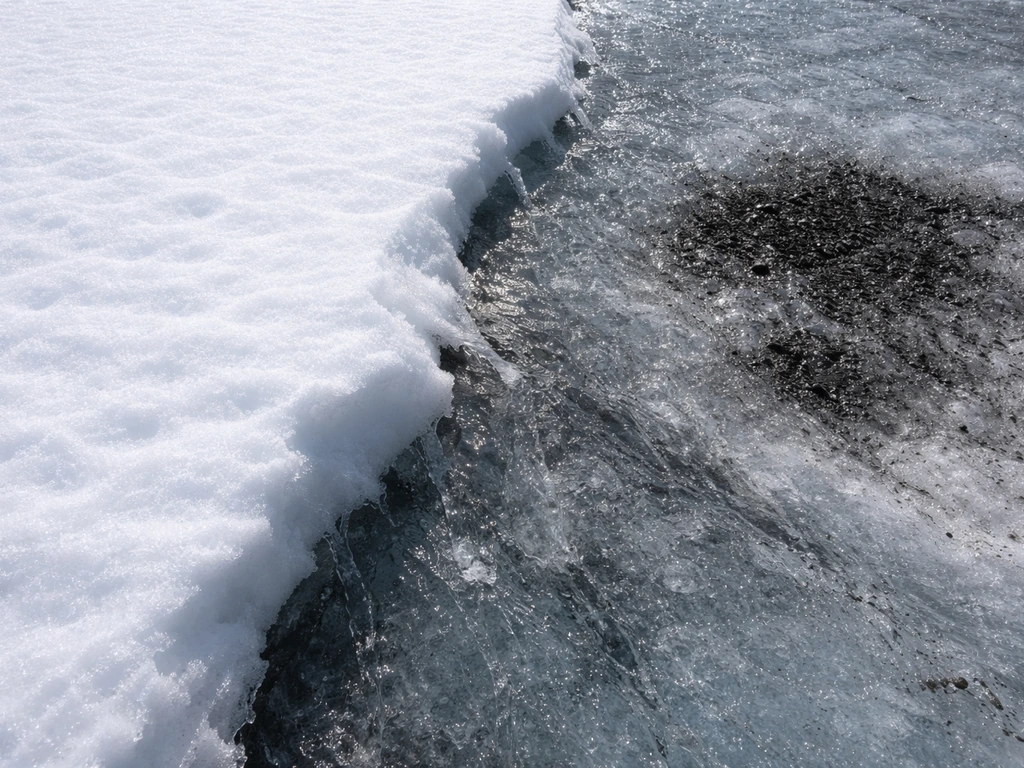
Albedo is the fraction of incoming solar radiation that a surface reflects. Fresh snow reflects more than 90% of visible light, giving it an albedo above 0.9. Bare glacier ice can fall below 0.1 under the right conditions. That contrast matters enormously. When a glacier is well-fed with fresh snow, its high albedo bounces most solar energy back into space, keeping the surface cold and limiting melt. When snow melts away and exposes bare ice, the darker surface absorbs far more energy, which accelerates melting. This is a self-reinforcing feedback: more melt exposes more bare ice, which drives even more melt.
Anything that darkens the snow surface amplifies this effect. Soot and black carbon from industrial pollution or wildfire smoke can reduce snow reflectance by 1 to 5% even at concentrations of just 10 to 100 parts per billion by mass. Studies have shown melt rate enhancements on the order of 0.8 mm per day from light-absorbing particles alone. Biological growth, including algae and cryoconite (a mixture of organic matter and mineral dust), can darken ice surfaces and has been recognized as a meaningful contributor to albedo reduction and accelerated mass loss.
Debris cover: the insulating blanket
Debris cover is a more complicated feedback. A thin layer of rock or sediment on a glacier surface actually absorbs more heat than clean ice and increases melt. But a thick debris layer, more than a few centimetres, insulates the ice beneath it, dramatically reducing melt rates compared to a clean ice surface. Debris-covered glaciers in mountain ranges like the Himalayas can persist much longer than their mass balance would otherwise predict, because the insulating layer slows down ablation at lower elevations. This can make them look 'less bad' in terminus position data while they are still losing mass at depth.
Seasonal timing
When snowfall and melt occur during the year matters as much as how much of each happens. A glacier that receives heavy snowfall in autumn and spring but experiences a short, mild summer can run a positive mass balance even in a relatively warm region. Conversely, an early onset of warm temperatures that strips the protective snow cover before peak summer radiation can push a glacier into a strongly negative balance even if total annual snowfall is adequate. The Bergeron process causes cloud droplets to grow because of thermodynamic differences between supercooled water and ice, which also underlies how precipitation form (snow versus rain) is determined at a given temperature. That distinction between solid and liquid precipitation arriving at the glacier surface has a direct effect on accumulation and, indirectly, on surface albedo.
How to tell if a specific glacier is growing or shrinking
If you want to check whether a particular glacier is currently gaining or losing mass, there are several practical approaches, ranging from reading published data to interpreting satellite imagery yourself.
Check published mass-balance databases
The World Glacier Monitoring Service (WGMS) maintains a large compiled database of glacier-wide annual mass balance records for monitored glaciers around the world. If your glacier of interest is in their network, you can look up its recent annual balance values directly. A string of positive values means it is growing. A string of negative values means it is shrinking. The USGS also publishes detailed benchmark glacier data including mass balance, meteorology, terminus position, and glacier-surface altitude for several reference glaciers in Alaska and the Pacific Northwest.
Use satellite imagery and DEM differencing
For glaciers that are not in a monitoring network, you can get a surprisingly clear picture from freely available satellite data. Sentinel-2 imagery can track snow distribution, how quickly snow is melting back in spring and summer, and changes in terminus position where a glacier meets water or a valley floor. The geodetic method involves comparing digital elevation models (DEMs) from two different years: if the glacier surface has lowered, it has lost mass; if it has thickened, it has gained mass. A commonly used density assumption for converting volume change to mass change is 850 ± 60 kg/m³, though this introduces some uncertainty depending on how much of the change is in firn versus dense ice. The USGS provides orthophotos, DEMs, glacier boundaries, and surveyed positions for its benchmark glaciers as documented data releases, which are good models for understanding what this kind of analysis looks like.
The direct (glaciological) method for field researchers
Field researchers use a network of ablation stakes drilled into the ice and snow pits dug to measure snow water equivalent. Stakes measure surface lowering or raising between visits; pits reveal snow depth and density, which together let you convert height changes to mass changes. Measuring the same stakes and pits over multiple years, then area-averaging the results across the glacier, gives you a glaciological mass balance. This is how South Cascade Glacier in Washington has been measured since 1958. The method's accuracy depends on having enough stakes to capture spatial variability and on good density measurements.
A practical observational checklist

- Look up the glacier in the WGMS database for published annual mass balance (positive = growing, negative = shrinking).
- Compare satellite images from different years to check terminus position: a stable or advancing snout suggests at least neutral mass balance; a retreating snout suggests negative balance.
- Use DEM differencing from two-year satellite or LiDAR datasets to check surface elevation change, then apply a density conversion to estimate mass change.
- In the field, install or read ablation stakes and measure snow pit density to calculate direct glaciological mass balance.
- Cross-check with local meteorology: several years of below-average summer temperatures and above-average winter snowfall are a strong proxy for positive mass balance.
- Check terminus position relative to historical moraines or survey markers: moraines left during past advances can tell you whether the glacier is at a historic high or low.
One important caution: comparing a single year's terminus position to the previous year can mislead you because of response-time lags. Use mass balance data when you can, and compare terminus position over at least a decade to see a meaningful trend. USGS recommends comparing measurements across multiple years to distinguish real trends from interannual variability.
What controls the long-term trend
Over years to decades, glacier mass balance is driven primarily by climate: mean temperatures during the melt season, total winter precipitation, and large-scale circulation patterns that modulate both. USGS benchmark glacier records show that mass balance correlates with Pacific climate patterns like the Pacific Decadal Oscillation (PDO) for some coastal glaciers, meaning that natural multi-decadal variability can cause a run of positive or negative years even within a longer-term trend.
This is why a glacier can temporarily grow even while the broader multi-decade trend is strongly negative. A few unusually cold, snowy winters can push mass balance positive for two or three years. But if summer temperatures are trending upward over 30 or 50 years, the overall trajectory is negative, and the glacier is in disequilibrium with its climate. Deep-learning-based modeling of glacier mass balance sensitivity has shown that the relationship between warming and mass loss is nonlinear: glaciers can appear relatively stable for a period as they retreat to higher elevations where ablation is lower, then accelerate their loss as compensating effects run out.
The concept of 'committed retreat' is worth understanding here. Even if emissions stopped today and temperatures stabilized, many glaciers have already received enough cumulative warming that they are committed to continued retreat for decades, because their geometry is still adjusting to a climate that shifted years ago. Clouds can move and grow, but are they living is a question that touches on what it means for a dynamic physical system to respond to its environment, and glaciers raise a similar philosophical point: they respond to climate inputs with real physical rules, just on timescales that can span a human lifetime.
Comparing the key factors side by side
| Factor | Effect on Growth | Effect on Shrinkage | Timescale of Influence |
|---|---|---|---|
| Low summer temperatures | Reduces melt, supports positive balance | Absence of this drives negative balance | Seasonal to annual |
| High winter snowfall | Increases accumulation, raises equilibrium line | Low snowfall limits accumulation | Seasonal to annual |
| High surface albedo (fresh snow) | Reflects solar energy, reduces melt | Low albedo accelerates melt | Days to weeks |
| Debris cover (thick) | Insulates ice, slows ablation at terminus | Thin debris increases melt | Years to decades |
| Subglacial meltwater | Can accelerate flow, moving ice from accumulation zone | Excess lubrication speeds calving/terminus loss | Seasonal |
| Large-scale climate patterns (e.g., PDO) | Cool/wet phases support temporary positive balance | Warm/dry phases drive sustained negative balance | Decadal |
| Persistent atmospheric warming | N/A: consistently negative driver | Raises equilibrium line, shrinks accumulation zone | Decadal to century |
The practical upshot: if you want to know whether a glacier is growing, start with the mass balance data, not the photos. A glacier can look imposing and still be losing hundreds of millimetres of water equivalent per year. Conversely, a glacier that looks small and battered might have quietly run a positive balance for the last three winters. The numbers tell the real story.
FAQ
If a glacier has a positive mass balance, does that guarantee its snout will advance right away?
No. A glacier can gain mass at the top while still retreating at the front because the ice geometry, ice thickness, and flow speed take time to adjust (response lags). A useful rule of thumb is to look for multi-year terminus trends, not one season, and prioritize mass-balance time series over photos.
What does “millimetre water equivalent” mean for everyday interpretation of glacier growth?
It means a thickness of liquid water spread across the glacier’s area. So +300 mm w.e. per year is not 30 cm of new snow in the same place, because snowfall compacts into firn and ice. To translate into approximate ice thickness, you need assumptions about how much change occurred in firn versus dense ice, since densities differ.
Can rain on a glacier ever increase mass balance?
Usually it does not. Rain adds liquid water to the surface, but it also brings extra heat and can accelerate melt. In some cases rainwater may refreeze in winter or within cold snow/firn, but during warm conditions the net effect is typically negative for mass balance.
Why can two glaciers with the same annual snowfall show different growth rates?
Because melt timing and weather details matter. The same annual snowfall can produce different outcomes depending on summer temperature, how long above-freezing conditions last, and whether snowfall arrives early enough to protect the surface before peak melt. Wind effects can also redistribute snow, changing where accumulation actually occurs.
How do scientists separate melt from other ablation processes like sublimation or wind erosion?
They use a combination of field measurements (e.g., energy-balance observations, stake lowering patterns, snow density, and surface conditions) and modeling. Sublimation and wind-driven effects can be smaller than melt on many glaciers, but they can matter in cold, dry, high-elevation environments where direct measurement is needed.
Is glacier “growth” always a good sign for water resources and sea level?
Not necessarily. Short-term positive mass balance can mean temporary storage in ice and firn, but the long-term effect depends on how sustained it is and whether the glacier is later losing that stored mass. For sea level, what matters is net ice mass loss over long periods, not a brief run of positive years.
What’s the safest way to judge whether a glacier is improving or worsening using satellites?
Use thickness or elevation change approaches over multiple years, not just snow cover snapshots. Snow extent alone can be misleading because snow can persist temporarily even when the glacier is losing mass overall. A robust workflow compares DEMs consistently, applies a density conversion carefully, and checks the uncertainty that comes from firn versus ice changes.
Why does debris cover sometimes make a glacier look healthier than it is?
Because a thick debris layer can insulate underlying ice and reduce melt rates at the surface, slowing visible thinning and terminus retreat. Meanwhile, ablation may remain high at the ice-debris interface or deeper in the glacier, so mass loss can continue even when the surface seems relatively stable.
If clouds reduce sunlight, why can melt still be strong during cloudy weather?
Melt is driven by more than shortwave sunlight. Cloudy conditions often coincide with higher incoming longwave radiation and can enhance turbulent heat transfer, plus warm or moist air increases sensible and latent heat fluxes. So “less sun” does not automatically mean “less melt.”
What is a good minimum time window to compare for glacier terminus changes?
At least a decade is often recommended for meaningful trends, because interannual variability can dominate over a year or two and because terminus response lags can be long for thick, slow, valley glaciers. If the glacier is small and steep, you may see faster response, but uncertainty remains.
What is “committed retreat,” and how should it affect expectations if temperatures stabilize?
Committed retreat means many glaciers have already accumulated enough climate-driven change in their geometry and thickness that they will keep retreating even if temperatures stop rising. The glacier can remain in disequilibrium, so stabilization today may only slow the rate, not immediately restore past positions.
Why can a glacier seem stable for a while during warming?
Nonlinear sensitivity and evolving melt geometry can temporarily mask loss. For example, a glacier may retreat enough to expose higher, colder zones that reduce ablation, making it appear stable at the front until those compensating effects run out. That is one reason mass balance trends are more reliable than terminus position alone.
Next Article
What Causes a Glacier to Grow or Recede
Learn why glaciers grow or recede: mass balance, temperature, snowfall, albedo, and ice discharge, plus how to assess lo