Spiders are the answer. Of all the creatures on Earth, spiders are the ones that genuinely weave webs as they grow, building progressively larger, more complex structures at each stage of life. From the moment a spiderling hatches, it starts spinning, and every molt, every meal, and every environmental shift shapes how big and how effective that web becomes. Other creatures make web-like structures, but none tie web-building so tightly to their own biological development the way spiders do.
What Weaves Webs as They Grow? Spiders, Silk, and Limits

Marcus Whitmore
7 May 2026
Which creatures actually weave webs as they grow?
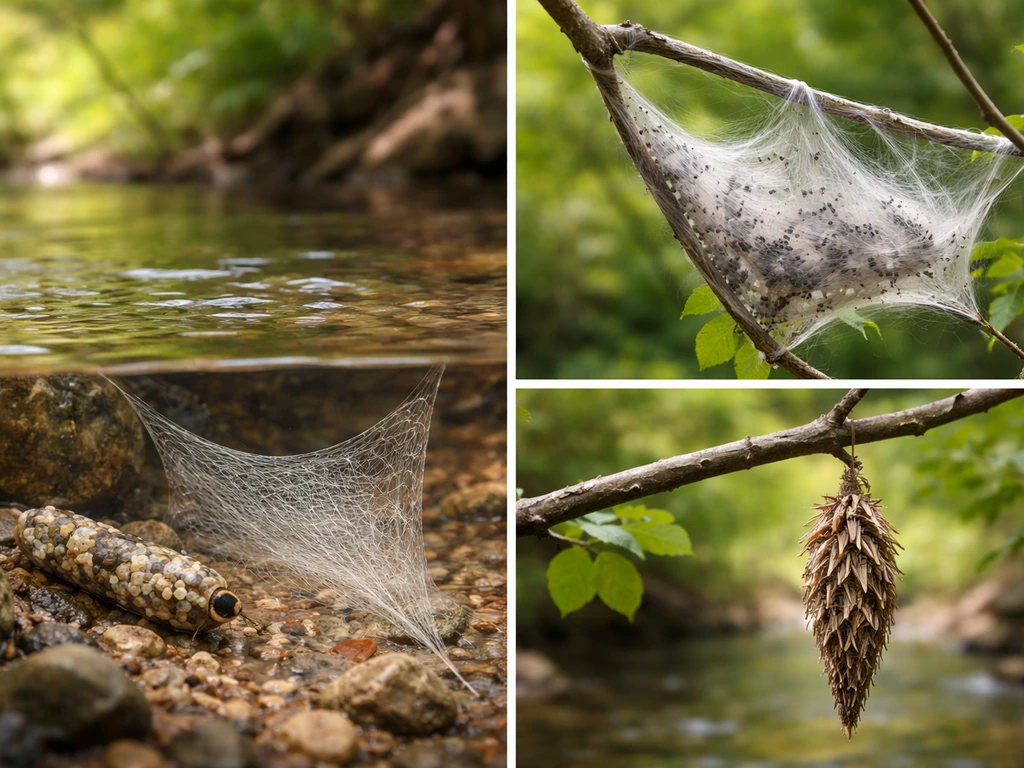
The word 'web' gets stretched a lot. Caddisfly larvae spin underwater silk nets. Tent caterpillars produce silken shelters in tree branches. Bagworms construct cocoon-like cases.
Silkworms spin cocoons. But none of these animals weave webs that scale with their growth the way spiders do. In that same spirit of directional change during development, it is also important to ask whether microtubules can grow from both ends weaves webs that scale with their growth. The caterpillar's tent is a communal structure built once, not rebuilt as the animal grows.
The silkworm's cocoon is a one-time event tied to pupation, not to feeding or hunting. Spiders, by contrast, build [webs repeatedly throughout their lives](/cell-cycle-and-growth/how-do-microtubules-grow-and-shrink), and those webs get measurably larger and structurally more sophisticated as the spider matures.
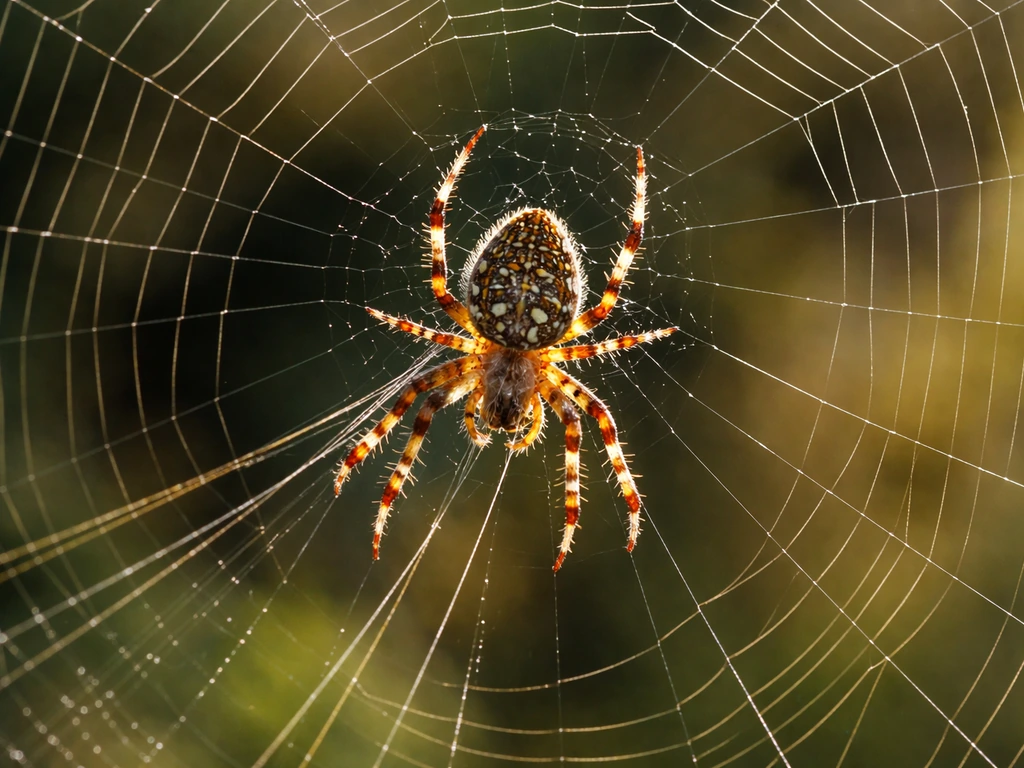
Within spiders, the clearest examples of web-weavers whose output tracks their growth are orb-weavers like Araneus diadematus (the cross orbweaver), funnel weavers, cobweb spiders (family Theridiidae), and sheet-web spiders. Orb-weavers are the gold standard for studying this relationship because their webs are geometric, measurable, and rebuilt regularly, often nightly. If you want to watch web-building scale with growth in real time, orb-weavers are where to look.
How 'weaving' and growth actually work in web-building animals
Spiders don't weave in the loom sense. They extrude silk from specialized glands through structures called spinnerets, which are modified appendages on the abdomen. What makes this remarkable from a growth perspective is that the silk-producing system itself grows alongside the spider. Silk glands are organs, and like all organs, their output capacity scales with body size. A larger spider has larger silk glands, which means more silk per session and, consequently, the physical raw material for a bigger web.
Different silk glands produce different silk types, and spiders have several of them: ampullate glands for structural dragline silk, flagelliform glands for the stretchy capture spiral, tubuliform glands for egg-case silk, and piriform glands for attachment points. These glands don't all mature at the same rate. Juveniles have a simpler gland profile, which is one reason early webs are structurally less complex than adult webs. As the spider grows through successive molts, the gland system becomes more differentiated, and the web architecture it can produce reflects that.
The process of building an orb web follows a repeatable sequence: the spider first lays down radial threads from a central hub outward, then fills in a temporary spiral (used as scaffolding), then lays down the permanent sticky capture spiral while removing the scaffolding as it goes. An Australian Museum resource on spider webs reports that an orb-weaver typically takes about 30, 45 minutes to make its orb web about 30–45 minutes to make its orb web.
This whole process takes roughly 30 to 60 minutes in a mature spider. The geometry isn't random. It's driven by motor programs encoded in the spider's nervous system, and those programs become more refined with age and experience. These neural and behavioral programs help stimulate the steps a spider uses to build webs as it grows, which is essential for the process of pollen tube growth too motor programs encoded in the spider's nervous system.
From spiderling to adult: what changes at each stage
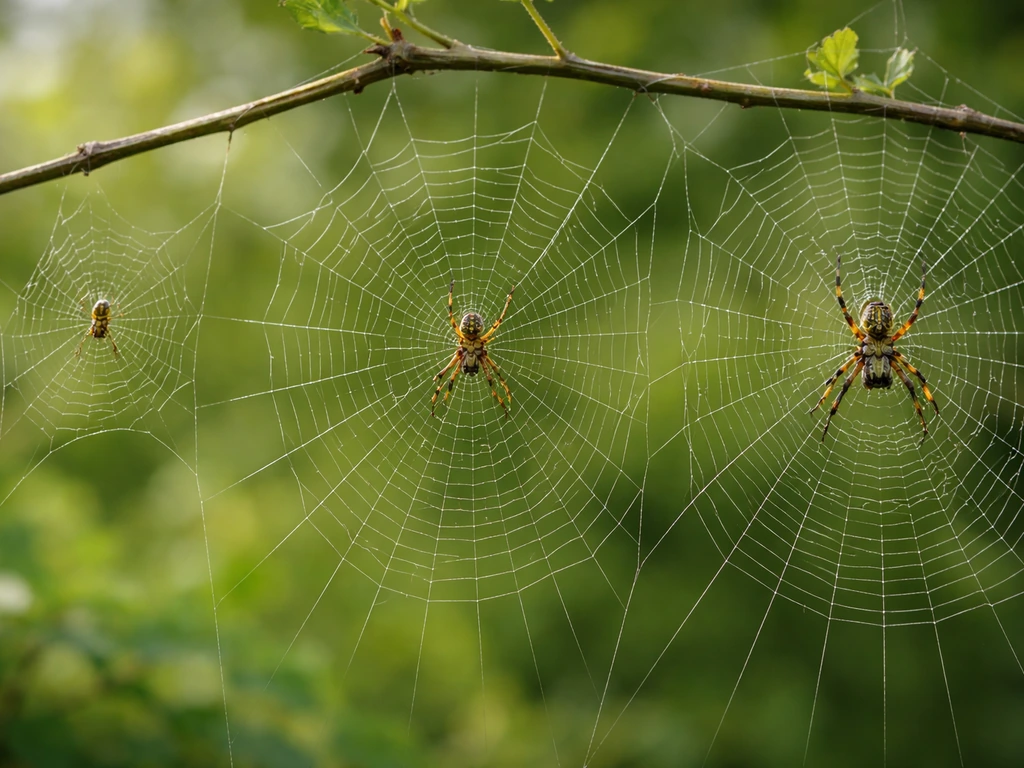
Spiders hatch as miniature versions of adults, but miniature in a functionally significant way. Spiderlings can spin silk immediately after hatching, but their early webs are small, loosely structured, and catch correspondingly small prey. The developmental journey from spiderling to adult involves a series of molts, with each molt producing a physically larger spider with more developed silk glands and spinnerets.
In a typical orb-weaver like Araneus diadematus, the number of juvenile instars (the stages between molts) varies with sex and conditions, but females commonly pass through five to eight molts before reaching adulthood. Each instar produces noticeably larger webs. The number of capture spiral turns, the radius of the web, the mesh spacing, and the total silk invested all increase as the spider grows. Those changes are exactly what you can use to predict how the coleoptile will grow.
You're not just looking at a scaled-up version of the same web. You're looking at a structurally more capable structure, because the spider that built it has more gland capacity, more body mass to anchor threads, and a more refined behavioral program.
One underappreciated detail: spiders don't always rebuild their entire web from scratch. Research on Araneus diadematus shows that spiders commonly reuse structural elements like framework threads from previous webs when constructing new ones. This is an energy-saving strategy that makes sense when you frame web-building as a costly investment. A juvenile spider with limited energy reserves recycles materials more than an adult with reliable prey access might.
| Life Stage | Web Complexity | Silk Gland Development | Web Size |
|---|---|---|---|
| Spiderling (instar 1-2) | Basic, irregular | Minimal, limited gland types | Very small, centimeters across |
| Juvenile (instar 3-5) | Orb structure emerging, fewer spirals | Glands enlarging, more silk types active | Small to medium, growing with each molt |
| Sub-adult (instar 6+) | Full orb architecture, more capture spirals | Near-adult gland profile | Medium to large |
| Adult | Maximum complexity, optimized geometry | Full gland suite, maximum output | Species-typical maximum size |
Feeding, nutrition, and energy: the fuel behind bigger webs
Silk is protein. That sounds simple, but the implication is significant: every web a spider builds is a direct metabolic expenditure of amino acids that had to come from prey. Research has shown that the caloric energy locked in dry silk is roughly constant across spider species, and it scales proportionally with how much silk is produced. A large, dense orb web represents a real energetic cost, not just a time cost. This is why nutrition so directly controls web size.
Starvation changes web geometry in measurable ways. Studies on orb-weavers show that food-deprived spiders build webs with altered proportions, often skewing toward structures that maximize prey-catching area per unit of silk invested. Think of it like a budget cut: the spider can't stop building (it has to eat), but it builds differently when protein reserves are low. Prey availability isn't just a background factor. It's a direct input into the web-building equation.
There's also a growth feedback loop worth understanding. More prey means more protein intake, which means faster growth between molts, which means earlier access to larger silk glands, which means the spider can build larger webs sooner. The reverse is equally true. A spider in a low-prey environment grows more slowly, stays in early instars longer, and builds smaller, simpler webs for longer. Feeding and growth are not parallel processes. They're the same process.
Interestingly, larger webs aren't just bigger, they're mechanically more capable. Finite-element analyses based on real silk properties show that larger orb webs can absorb significantly more kinetic energy from striking prey before breaking than smaller webs can. This isn't because the silk in a large web is mechanically different. It's because total web size, combined with web geometry, determines how much energy the system can dissipate. Growing into a larger web is a functional upgrade, not just a size upgrade.
Environmental conditions that shape web size and silk output
Temperature, humidity, wind, and light all influence web construction in ways that are directly tied to silk production and web geometry. These aren't soft background factors. They're hard constraints on what a spider can build on any given day.
Humidity
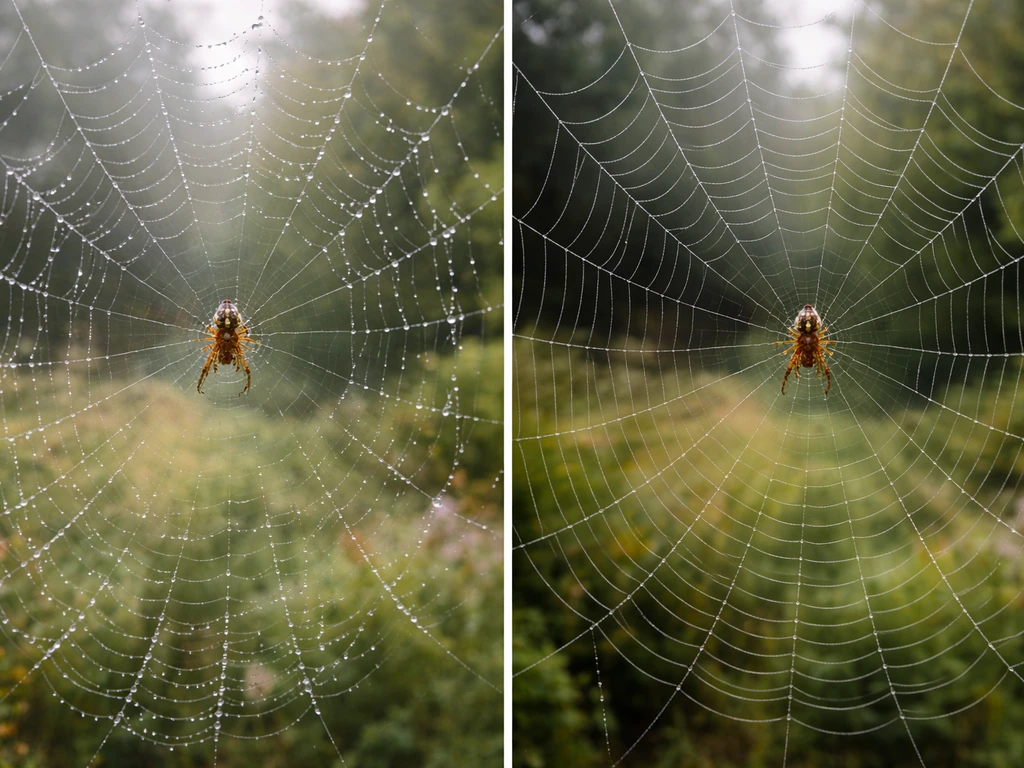
Humidity has a particularly strong effect on capture spiral characteristics. Lab experiments on Araneus diadematus found that dropping relative humidity from around 70% down to around 20% caused a reduction in capture spiral size, specifically through fewer spiral meshes rather than wider mesh spacing. The threads themselves weren't stretched out more. There were simply fewer of them. Low humidity appears to limit how much spiral silk the spider lays down, possibly because the sticky coating on capture spiral threads requires moisture to function properly, and producing excess dry thread is a waste of protein.
Wind
Wind is a structural threat. Field studies have shown that airflow velocities between roughly 0.8 and 1.9 meters per second can cause considerable web damage in as little as 20 seconds. Spiders respond to this by adjusting web features, particularly the area of the capture spiral, to reduce aerodynamic drag. A spider building in a windier location isn't just dealing with a harder job. It's actively building a structurally different web, one that trades maximum prey capture area for mechanical durability.
Temperature and light
Temperature affects metabolic rate, which affects how quickly a spider can produce silk and how active it is during web-building hours. Most orb-weavers build at night or in low light, which reduces UV degradation of silk and avoids visual predators. In colder conditions, silk production slows, and spiders may build smaller, less elaborate webs or skip rebuilding entirely. In warmer, optimal conditions, web construction is faster, more complete, and more likely to include full capture spiral coverage.
Why spiders can't just keep building bigger webs forever
There are real biological and physical ceilings on web size, and they map directly onto the broader question of why organisms can't grow without limit, which is a pattern you see across all of biology. In spiders, the limits come from several directions at once.
- Silk gland output capacity: Glands can only produce so much silk before they're depleted and need time to regenerate. A spider can't simply decide to build a web twice as large in the same session.
- Body size ceiling: Each species has a genetically determined adult size range. Silk gland size scales with body size, so the adult body sets the maximum production ceiling.
- Energy and protein budget: Because silk is protein, building a web is a direct metabolic investment. A spider can't build a web that costs more protein than it has available.
- Structural physics: Larger webs experience more aerodynamic force and gravitational load. Beyond a certain size, threads begin failing and the web becomes harder to maintain than it is worth.
- Attachment site limits: Web size is also constrained by the physical environment. A spider needs anchor points, and those anchor points determine the maximum possible frame dimensions.
This mirrors what you see in cellular biology: a cell can't keep growing indefinitely because surface area to volume ratios limit nutrient exchange, and eventually the cost of maintaining a larger cell outweighs the benefit. For a spider, the analogous constraint is that the cost of producing and maintaining a larger web eventually exceeds what prey capture from that web can support. There's a sweet spot, and natural selection has tuned each species toward it.
The microtubule-based cytoskeleton inside cells faces similar grow-or-shrink dynamics driven by available resources and physical conditions. The principle is the same whether you're looking at a polymer inside a cell or a silk web in a garden: growth is bounded by both energy supply and structural physics.
How to observe and support web-weavers in the real world
If you want to actually watch how web size tracks spider growth, the best approach is to find a single spider and follow it over weeks. Orb-weavers are ideal because their webs are flat, geometrically regular, and rebuilt frequently, making it easy to measure them.
- Find a resident orb-weaver in a sheltered spot, such as under an eave, between fence posts, or in dense shrubs. Mark the site with a small piece of tape nearby so you can return to the same spider.
- Photograph or measure the web every few days. Record the approximate diameter, the number of visible capture spiral loops, and any obvious changes in web geometry after weather events.
- Watch for molting signs: the spider will be inactive, often hanging near the web or hiding in a retreat, and you may find a shed exoskeleton (exuviae) nearby. The first web built after a molt is often slightly different in proportion from earlier webs.
- Note prey capture events. A spider that catches prey regularly will tend to rebuild a full, complex web the next night. A spider that has gone several days without prey often builds a reduced web.
- Check humidity and temperature on observation days and compare them to web dimensions. On dry or cold days, look for fewer capture spiral turns or smaller overall web radius.
- To support the spider, avoid disturbing its site, reduce pesticide use near the location (which kills prey insects), and consider leaving outdoor lights on nearby at night to attract moths and other flying insects into the web's vicinity.
If you're trying to identify what built a web you found, look at web architecture first. A geometric orb with radial spokes and a spiral is almost certainly a spider. A messy cobweb with no clear geometry is likely a cobweb spider. Tubular silk in grass tips is probably a funnel weaver. Sheet webs with a tangle above them belong to sheet-web spiders. None of these are caterpillar tents or insect structures. Once you know the web type, identifying the spider family is usually straightforward.
The bottom line is that spiders are living demonstrations of growth-constrained construction. Every web they build is a snapshot of where that animal sits in its development: how big its glands are, how well it has been feeding, what the environment is doing to silk production, and how close it is to its adult body plan. In the same way, developmental biology explains how a pollen tube elongates down the style toward the ovule how does the pollen tube grow down the style. Watch a spider's webs across its lifetime, and you're watching biology at work in one of its most visible forms.
FAQ
If I find a web, how can I tell whether the spider will rebuild it often or let it age?
Look for a fresh, geometrically clean orb (regular radial spokes and a complete capture spiral). Many orb-weavers rebuild nightly or on a tight schedule, while some other web types are maintained longer, so web freshness and symmetry are better clues than size alone.
Do all orb-weavers show the same “webs scale with growth” pattern as Araneus diadematus?
The overall scaling idea holds across many orb-weaver species, but details can differ (for example, number of molts, web radius, and how quickly capture spirals mature). Species and habitat strongly affect the pace of gland differentiation and how frequently full rebuilds occur.
Why do spiderling webs look simpler, even if the spider starts spinning immediately after hatching?
Early spiderlings can spin right away, but their silk gland profile is less differentiated and often produces fewer functional “roles” for different silk types. That limits how complex the capture spiral and attachment regions can be, even if the basic web geometry is present.
Can a well-fed spider make a big web in one night, or does it still need multiple molts?
Big webs usually require both sufficient gland capacity and adequate body size to anchor and tension threads. Feeding can speed growth between molts and shift the spider into a more capable stage sooner, but a single meal typically cannot replace the structural limit of an immature spinneret and gland system.
How does prey type affect web size and design, not just total food quantity?
Prey that is harder to catch can push a spider toward denser or more mechanically capable designs, but the key is protein and energy intake. If prey availability changes only energy and protein levels, the web may scale accordingly; if it changes capture success, spiders can also adjust geometry to improve per-session payoff.
What happens to web structure if humidity is low but the spider is otherwise healthy?
The common pattern is fewer spiral meshes rather than a wider mesh spacing, meaning the sticky capture spiral can be less developed in dry conditions. If humidity stays low for multiple nights, expect longer-term simplification because less capture silk is effectively profitable.
Can wind ever make webs “bigger” even though the article describes it as damaging?
Wind tends to reduce the functional safe design, so spiders often adjust by reducing exposed capture area or modifying layout to limit drag. A web might look larger in one dimension, but the usable capture spiral is usually reduced or altered to avoid repeated tearing.
How can temperature change whether a spider builds at all, not just how fast it builds?
At lower temperatures, metabolic rate drops, so silk output and active building time decrease. In that situation, spiders may build partial structures, delay rebuilds, or skip rebuilding rather than spending scarce energy on a full, high-cost web.
If spiders reuse framework threads, does that weaken the “growth tracks web size” idea?
Reuse typically applies to structural elements (like some framework threads), not to every component at full detail. The scaling relationship still shows up in features that depend on current gland capacity, such as capture spiral extent and mesh pattern.
What’s the fastest practical way to test “web size tracks growth” in your own backyard?
Pick an orb-weaver you can repeatedly observe, photograph the same web type from a consistent angle, and measure key geometry (web radius and capture spiral mesh count) across multiple nights. Avoid comparing different species or different web types, since architecture differs independently of growth.
Is web size always a direct indicator of a spider’s health?
Not always. Environment can temporarily cap web output, for example low humidity or disruptive wind can reduce capture spiral development even in a well-fed spider. Health is better inferred by combining web metrics with cues like molt timing and regularity of rebuilds.
How can I distinguish a spider orb from other “web-like” structures without relying only on appearance?
Orb webs are usually flat and geometric with consistent radial spokes and a spiral pattern. In contrast, many “tent” or “shelter” structures are bundled, irregular, or built once, so look for whether the structure is regularly rebuilt and whether it matches orb architecture rather than a stationary case.
Next Article
How Do Microtubules Grow and Shrink: Dynamic Instability
Learn dynamic instability: GTP cap controls microtubule growth, GDP triggers catastrophe, and rescue shifts plus-end beh