Populations don't grow indefinitely because the real world runs out of the things they need. Food, space, water, nesting sites, suitable hosts, all of these are finite. Once a population gets large enough to feel that scarcity, growth slows, plateaus, or crashes. That's the short answer. The longer answer is that several different mechanisms are responsible, they often act simultaneously, and understanding which one dominates in a given situation is what ecology is really about.
Why Populations of Organisms Don’t Grow Indefinitely

Marcus Whitmore
11 Apr 2026

Why exponential growth can't keep going

Start with the simple (Malthusian) exponential growth model. It assumes a constant per-capita growth rate, essentially unlimited resources, and a stable environment. Under those conditions, the model predicts that a population doubles, then doubles again, then doubles again, forever. A single bacterium becoming a colony the size of Earth in a matter of days is the classic (terrifying) illustration.
The problem is that every single one of those assumptions breaks down in the real world. Resources are not unlimited. Environments change. And as a population grows, individuals start competing with each other for the same finite pool of stuff. The moment any one of those assumptions fails, exponential growth stops being a reasonable description of reality and becomes just a useful baseline, a theoretical starting point before the constraints kick in.
Think of it like a sourdough starter on your counter. For the first few hours, yeast cells multiply fast, plenty of flour, plenty of warmth, no competition. But within a day, the sugars are depleted, waste products accumulate, and growth stalls. The starter doesn't keep doubling until it fills the kitchen. The same logic scales up from microbes to elephants.
Carrying capacity: the ceiling that populations hit
Ecologists capture this ceiling with the concept of carrying capacity, usually written as K. It's the maximum sustainable population size that a given environment can support over the long run. Once a population approaches K, resource scarcity and competition press back hard enough that births and deaths roughly balance out. The population doesn't collapse (usually), but it stops climbing.
The logistic growth equation makes this concrete: dN/dt = rN(1 − N/K). Here, r is the intrinsic growth rate (how fast the population would grow if resources were unlimited), N is current population size, and K is carrying capacity. The term (1 − N/K) is the key piece: when N is tiny compared to K, that term is close to 1 and you get near-exponential growth. As N climbs toward K, the term shrinks toward zero, and growth slows to a crawl. The result is a sigmoidal, S-shaped curve that flattens out at K instead of continuing to accelerate.
It's worth noting that K isn't a fixed law of physics, it depends on environmental conditions, resource availability, and even the population itself. A drought year drops K for a deer herd. A bumper acorn crop raises it. That variability is part of why real populations fluctuate rather than sitting perfectly at K.
Density-dependent limits: when crowding becomes its own problem
Density-dependent limiting factors are the ones that get stronger as population size increases. Competition for food is the most obvious example. But intraspecific competition (individuals of the same species competing with each other) shows up in some surprisingly specific ways.
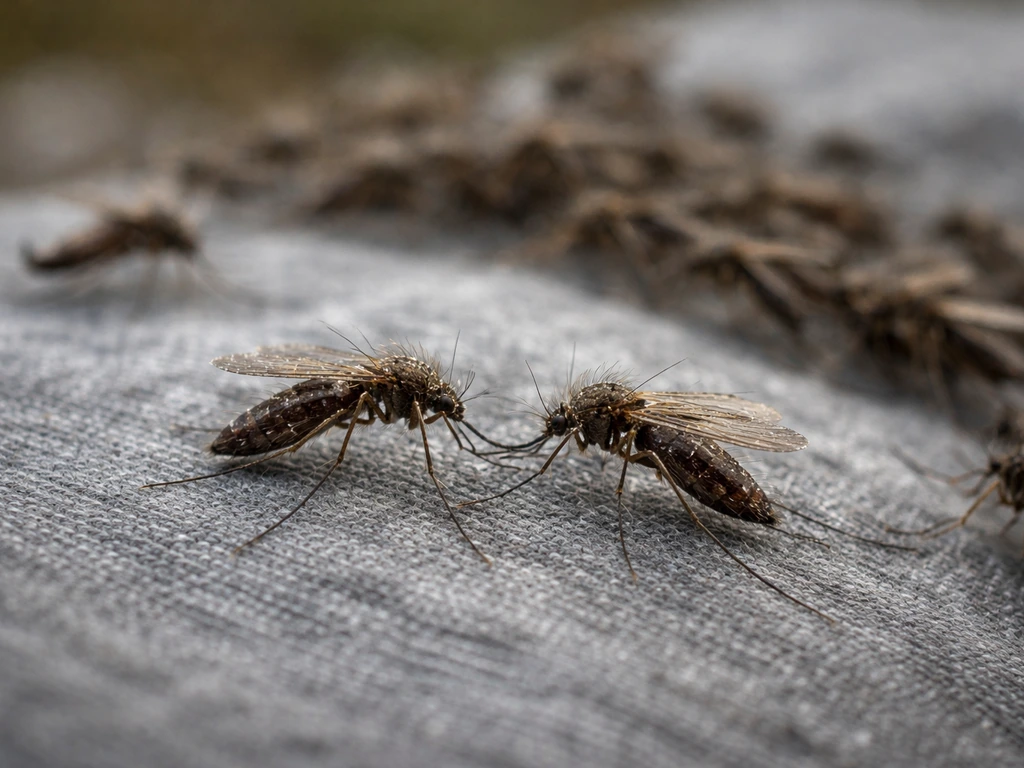
Studies on Arctic mosquitoes found that survivorship curves were best explained by density-dependent mortality models, with evidence of overcompensation at very high larval densities. Similarly, research on the emerald ash borer showed that larval density directly mediates intraspecific competition for limited within-host resources. And monarch butterfly experiments demonstrated that egg density per plant significantly affects survival from egg to eclosion. In each case, the more individuals are crammed into a limited resource patch, the worse the average individual does.
This is the feedback loop that keeps populations in check: more individuals means more competition, which means lower survival and reproduction per individual, which slows population growth. The reason organisms don't just continue to grow larger applies here too, at some point, scaling up hits diminishing returns, whether you're a single cell or a population of millions.
One nuance worth flagging is the Allee effect: at very low population densities, per-capita growth can actually decrease rather than increase. Individuals can't find mates easily, cooperative defense breaks down, or inbreeding increases. The crown-of-thorns starfish (Acanthaster planci) is a well-known example where reproductive success drops sharply at low densities, making recovery from population crashes especially difficult. The Allee effect is essentially density dependence running in the opposite direction from what you'd expect, and it raises extinction risk in small populations.
Predators, diseases, and parasites: the biotic limits
Resources aren't the only external pressure. Predation, disease, and parasitism are biotic factors that can independently cap population growth, and they often interact with each other in complex ways.
Tank experiments using a predator-prey-parasite system found that higher predation dramatically reduced prey population sizes while also reducing parasitism levels. Predators removed infected individuals faster, but the net effect was still a smaller prey population overall. A related modeling framework coupling Lotka-Volterra predator-prey dynamics with host-pathogen transmission showed that predator presence can shift disease prevalence and push the entire system toward a different equilibrium. In some models, parasites that manipulate host behavior can actually stabilize predator-prey dynamics and allow stable coexistence that neither species could maintain alone.
The practical takeaway is that disease can regulate populations in ways that look like resource limitation from the outside. A pathogen that spreads faster as a population gets denser is, in effect, a density-dependent check. Rinderpest in African ungulates, chytrid fungus in amphibians, and white-nose syndrome in bats are real-world examples where pathogens crashed populations that had otherwise been doing fine.
Parasites add another layer. Research on how predator and parasite size interact to determine consumption of infectious stages shows that predation on free-living parasite stages can follow the same predator-prey logic as predation on hosts. The food web, in other words, doesn't just involve who eats whom, it also involves who removes disease transmission stages from the environment.
Environmental variability and the role of chance
Even if you removed all competition, predators, and disease, populations still wouldn't grow indefinitely because the environment itself is unpredictable. This is where stochastic effects come in.
Ecologists distinguish two types. Demographic stochasticity refers to random variation in individual birth and death events, a coin-flip-level randomness in whether any given individual survives or reproduces. At small population sizes, this can matter enormously. Environmental stochasticity refers to random variation in external conditions: droughts, floods, disease outbreaks, unusually cold winters. Both types disrupt growth trajectories in ways that deterministic models don't predict.
Research on wildlife disease dynamics showed that demographic stochasticity alone can drive three very different outcomes from the same starting conditions: early infection fade-out, epidemic outbreaks with population collapse, or long-term endemic persistence. Which one you get depends partly on chance. Separately, models that combine environmental fluctuations with Allee effects found that stochastic downturns can push populations past a tipping point from which recovery is unlikely or impossible.
For longer-lived organisms, mean extinction time depends on the ratio of average growth rate to the variance introduced by environmental stochasticity. A population with a healthy r but high environmental variance is more vulnerable than one with a lower r in a stable environment. This is why conservation biologists care so much about habitat stability, it's not just about average conditions, it's about reducing the variance that random events introduce.
Life-history and physiological limits on how much a population can grow
Beyond external pressures, organisms carry internal constraints that limit population growth from the inside. Life-history traits like age at first reproduction, litter size, lifespan, and survival rates are not infinitely malleable. They represent evolved trade-offs that constrain how fast a population can replace itself.
The Leslie matrix is the mathematical tool for capturing this. It's an age-structured model where each age class has its own survival probability and fecundity rate. The dominant eigenvalue of the matrix (called λ, lambda) gives the asymptotic population growth rate. Crucially, finite lifespan and limited fecundity in older classes are baked right into the structure, the model literally cannot produce indefinite exponential growth because the older age classes eventually die out and reproductive rates are bounded.
This connects to a question that comes up at the cellular level too. What limits how large a cell can grow is fundamentally the same kind of question, surface area to volume ratios, diffusion constraints, and DNA copy limits are physiological walls, and populations have analogous walls built from physiology and life history. The reasons why cells can't grow too large also remind us that biological systems hit physical ceilings at every level of organization, not just the ecological one.
It's also worth noting that unregulated growth at the cellular level has its own catastrophic consequences. Why we don't want our cells to grow uncontrolled is a different question from population ecology, but the underlying principle echoes: unchecked growth in a finite system destroys the system that supports it.
Exponential vs logistic growth: what the models actually tell you
Here's a side-by-side comparison of the two core models, because the distinction matters practically when you're trying to interpret population data.
| Feature | Exponential Growth | Logistic Growth |
|---|---|---|
| Equation | dN/dt = rN | dN/dt = rN(1 − N/K) |
| Per-capita growth rate | Constant (= r) | Decreases as N increases toward K |
| Key parameters | r, N₀ | r, K, N₀ |
| Curve shape | J-shaped, no ceiling | S-shaped (sigmoidal), flattens at K |
| Assumes | Unlimited resources, stable environment | Density-dependent resource limitation |
| When it applies | Early colonization, small N far below K | Most real populations at moderate to high density |
| Limitation | Unrealistic over any long timeframe | K assumed constant; real K varies |
To tell which model fits your data, look at per-capita growth rate (dN/dt divided by N) plotted against N. In a purely exponential situation, that relationship is flat, per-capita growth doesn't change with density. In a logistic situation, per-capita growth declines as N increases, forming a negative slope. If you see that negative slope in your data, density dependence is operating. You can even estimate K from that slope by fitting a linear regression of per-capita growth on N.
One important caution: if you only have data from the early exponential phase of growth, you can't reliably estimate K. You need data points from across the curve, including where growth starts to slow. This is a common mistake in classroom exercises and real fieldwork alike.
For time-series data from real populations, the Ricker model is often more practical than the continuous logistic. It's a discrete-time model where N at time t+1 is a function of N at time t, with built-in density dependence and parameters interpretable as intrinsic growth rate and a carrying-capacity-like term. It handles the kind of annual census data most ecologists actually collect. Understanding why cells can't grow indefinitely is the micro-scale version of the same question, and the logic of resource limitation and feedback operates at both scales.
A quick checklist for diagnosing what's limiting your population
If you're working through a specific case (a homework problem, a field observation, or actual data), here's how to think about which limiting factor is most likely driving what you see:
- Is the population in an early colonization phase with abundant resources? Start with exponential growth as your baseline. Look for a J-shaped trajectory and a flat per-capita rate vs N plot.
- Does per-capita growth decline as N increases? That's density dependence. The logistic or Ricker model is your framework. Estimate r and K from the data.
- Is there evidence of competition for a specific resource (food, nesting sites, host plants)? Intraspecific competition is your mechanism. Density-dependent survival or fecundity data will confirm it.
- Are predators or diseases present and density-dependent in their impact? Add a biotic interaction layer. Look for inverse correlation between population size and predator/parasite pressure.
- Does the population fluctuate unpredictably even when resources seem stable? Environmental or demographic stochasticity may dominate. Check variance in growth rates across years.
- Is the population very small and struggling to recover despite available resources? Consider an Allee effect. Look for mate-finding failure, cooperative behavior breakdown, or inbreeding signals.
- Does the organism have slow life history (late maturity, few offspring, long lifespan)? Life-history constraints are capping λ. Use an age-structured model and calculate the dominant eigenvalue.
Where to go from here
The mechanisms above don't operate in isolation. A real population is usually pushed by two or three of them at once, and which one dominates can shift over time as conditions change. The most useful next step is to get comfortable moving between the exponential and logistic frameworks and recognizing which one is appropriate for the data in front of you.
If you're working at the cellular scale and wondering how these same principles apply one level down, exploring which living systems cannot grow indeterminately is a natural next read. And if you want to understand what happens when the normal controls on growth fail entirely, learning about cell cultures that can grow indefinitely shows what biology looks like when the usual limits are removed, and why that's both scientifically useful and biologically alarming.
The bottom line: populations don't grow indefinitely because growth itself creates the conditions that slow it down. More individuals means more competition, more disease transmission, more predator attraction, and more resource depletion. The math, whether it's the logistic equation, the Ricker model, or a Leslie matrix, is just a way of formalizing that feedback. Once you see it clearly, you see it everywhere.
FAQ
Can a population overshoot carrying capacity and then rebound instead of just crashing?
Yes. If growth is still strong while resources are already being depleted, populations can overshoot K, then decline as density-dependent pressures intensify, sometimes followed by a partial rebound or oscillations. Which pattern you get depends on how quickly limiting factors build up and how responsive the environment is (for example, seasonal food).
Why do some populations seem to stay near a constant size for a long time?
Because births and deaths may balance on average, even if the population is not at a fixed K. Short-term fluctuations from weather, disease waves, or demographic randomness can average out, and multiple limiting factors can trade off (for instance, predation up while food down).
Is carrying capacity always the same number for every population of the same species?
No. K changes with habitat quality and with the population’s own effects on the environment (for example, grazing intensity, nutrient depletion, or behavior that changes resource availability). Also, different life stages can experience different effective K, so the overall population can look stable even while a stage-structured bottleneck fluctuates.
How do I tell whether the limiting factor is density-dependent or just seasonality (density-independent)?
Check whether the per-capita growth rate changes with N. If the per-capita growth rate systematically declines as density rises (negative slope), that points to density dependence. If changes line up mainly with time-varying external conditions and not with N, that suggests density-independent drivers like drought or temperature swings.
What’s the practical difference between the logistic model and the Ricker model when fitting data?
The logistic model is continuous time and assumes smooth change, while the Ricker model is discrete time and naturally matches many census schedules (weekly, monthly, yearly). If your data are collected in distinct intervals and growth occurs in bursts between censuses, Ricker often fits better and gives more interpretable predictions for next time steps.
Why can’t I estimate carrying capacity K reliably from early growth data?
Because K mainly shapes behavior near the slowdown phase. If you only observe the initial exponential-looking segment, many different K values can produce nearly identical early trajectories. You need observations spanning from the near-exponential phase into the region where growth starts to decelerate.
What if my data show oscillations, does that mean the population isn’t limited?
Not necessarily. Oscillations can be a signature of feedback with delays, such as predator responses lagging behind prey or disease dynamics with an incubation period. A system can be strongly density-dependent and still cycle rather than settle exactly at K.
How does the Allee effect change long-term outcomes compared to ordinary density dependence?
With an Allee effect, per-capita growth is worse at low densities, which means small populations can fail to recover even if resources are otherwise available. This creates a greater risk of extinction and can introduce tipping points where the same average conditions yield different fates depending on starting size.
Is demographic stochasticity only important for small populations?
Mostly, yes. When numbers are large, random birth and death events average out. But demographic stochasticity can still matter when a population repeatedly passes through low-density conditions (for example, after harsh winters) because those vulnerable phases can determine whether recovery is possible.
How can disease appear to be ‘resource limitation’ from the outside?
If transmission increases with host density, infections rise as the population grows, which then reduces survival and reproduction in a way that looks like competition. The key is that density dependence is mediated biologically by transmission rather than by food or space alone.
Do internal physiological limits like life-history trade-offs always dominate over ecological factors?
Not always. Internal constraints (bounded fecundity, finite lifespan) set ceilings on how fast growth can proceed, but external pressures can still quickly cap populations below those ceilings. In many real systems, external factors determine the effective K while internal traits determine how quickly the population can respond.
What’s a common mistake when interpreting density dependence in field data?
Assuming causation from correlation without checking timing and scale. For instance, if density changes first and climate later, you might mistakenly attribute climate-driven changes to density dependence. Using per-capita growth versus N plots, and ensuring you have enough coverage across densities, helps reduce this error.
Next Article
Explain Why Cells Can’t Keep Growing Larger
Discover why cells stop enlarging: surface-area limits, diffusion and metabolism, genome scaling, and mechanics force di