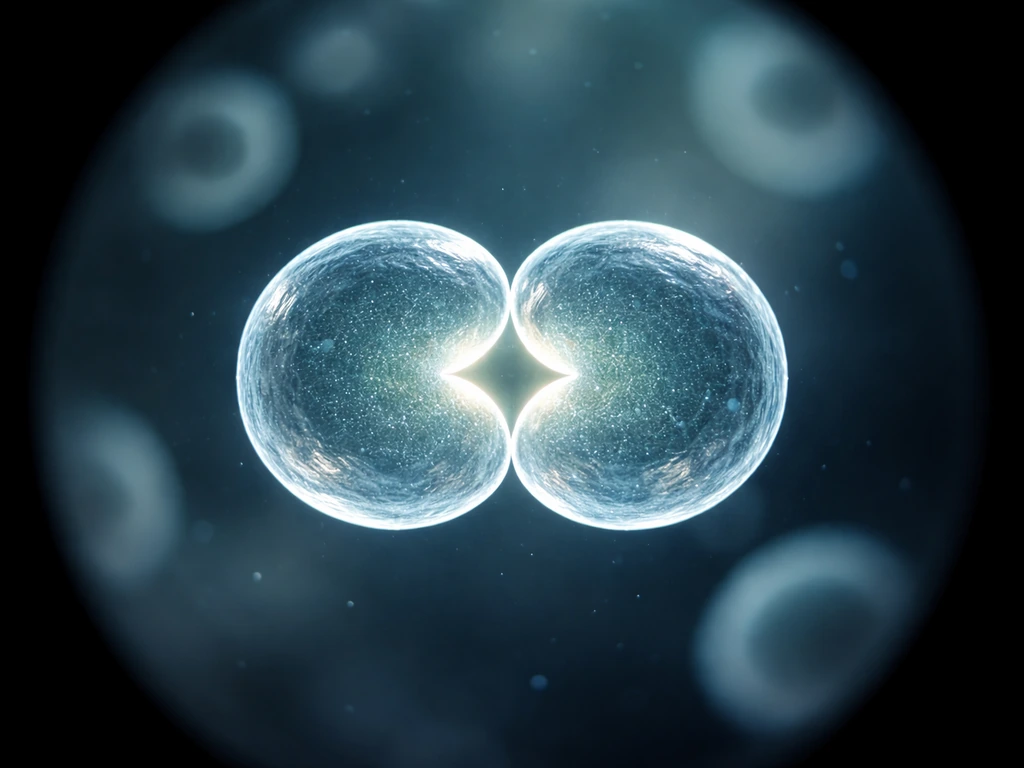
Most single-celled organisms are microscopic, but the largest known examples stretch the definition of "tiny" to the breaking point. Xenophyophores, a group of deep-sea protists, can reach up to 25 cm (roughly the length of a school ruler) in their longest dimension. Some foraminifera top out near 18 cm in diameter. These are genuine single cells, not colonies, not multicellular organisms. But they are extreme outliers, and the physics of why most cells stay microscopic is just as fascinating as the record-breakers themselves.
How Big Can Single-Celled Organisms Grow? Size Limits Explained

Marcus Whitmore
11 May 2026
What "single-celled" really means (and how size is measured)
A single-celled organism, or unicellular organism, is one whose entire body is one cell: one plasma membrane, one (or sometimes more) nucleus, and all life functions carried out within that single boundary. The tricky part is that "single-celled" gets blurry fast. Some organisms are multinucleated, meaning one continuous cell with many nuclei sharing the same cytoplasm. Others form colonies of cells that look like one big body but are actually many individual cells touching each other. Scientists draw the line at the plasma membrane: if everything is enclosed within a single continuous membrane, it counts as one cell, regardless of how many nuclei are inside.
Measuring cell size sounds simple, but it depends heavily on what you measure. For most microscopic cells, scientists use micrometers (µm), where 1 µm equals one millionth of a meter. A typical bacterium is 1–10 µm across. A human red blood cell is about 8 µm. For giant protists like xenophyophores, scientists measure the outer test (the shell-like structure the cell builds around itself) in centimeters. That test is not the cell itself, but it houses the cell's cytoplasm spread through it, so its dimensions reflect the cell's physical reach. This is part of why size comparisons can be misleading: you need to know whether you're measuring the cell body, the nucleus, or an outer structure the cell constructed.
The record-breakers: biggest single cells found in nature
Here are the most well-documented examples of genuinely large single-celled organisms, with their verified size ranges:
| Organism | Type | Typical Size | Maximum Recorded Size | Where Found |
|---|---|---|---|---|
| Xenophyophores (e.g., Syringammina) | Foraminifera (protist) | 1–5 cm diameter | ~25 cm longest dimension | Deep ocean floor |
| Foraminifera (giant species) | Protist (amoeboid) | 0.05–0.5 mm typical | ~18 cm diameter | Marine sediments |
| Valonia ventricosa (bubble algae) | Green algae | 1–4 cm diameter | ~5 cm diameter | Tropical shallow seas |
| Caulerpa taxifolia | Green algae | Runners up to several meters | Meters long (multinucleated) | Tropical/subtropical seas |
| Acetabularia (mermaid's wine glass) | Green algae | 3–10 cm tall | ~10 cm tall | Subtropical shallow water |
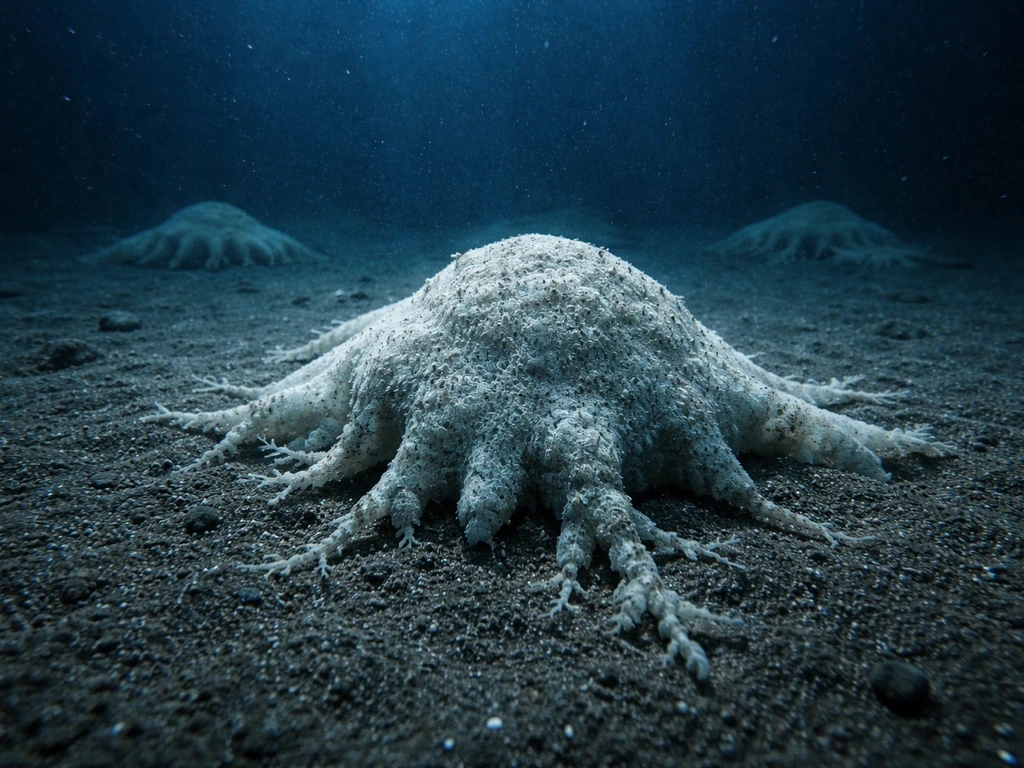
Xenophyophores deserve special mention. They were long classified as their own enigmatic group of giant amoeboid organisms, but modern genetic analyses have reclassified them as monothalamous (single-chambered) foraminifera. They build an external and internal test structure by cementing sediment particles together, and that test is what you see in deep-sea images. The living cytoplasm threads through the entire structure, making the whole thing one cell. At up to 25 cm, they are the largest confirmed single-celled organisms on Earth.
Caulerpa is a useful comparison case. A single Caulerpa plant can run blank" rel="noopener noreferrer">meters along the seafloor and is technically one cell with one continuous cytoplasm and no internal cell walls dividing it. Caulerpa taxifolia is described as a coenocytic or multinucleate siphonous green alga, consisting of a single cell with many nuclei one continuous cell with one continuous cytoplasm and no internal cell walls dividing it. But it is multinucleated, meaning it has thousands of nuclei distributed through that cytoplasm. Scientists still count it as a single cell because no membrane divides it into compartments. This is worth flagging because it shows how "single cell" can mean something genuinely surprising at the large end of the scale.
Why cells can't grow forever: the surface-area-to-volume problem
This is the core physical constraint on cell size, and it is worth really understanding. Think of a cell as a balloon filled with metabolically active fluid. The surface (the membrane) is where oxygen, nutrients, and waste products are exchanged with the outside world. The volume is where all the chemistry happens and where waste is produced.
The problem: as a cell doubles in diameter, its surface area increases by a factor of four, but its volume increases by a factor of eight. Volume scales with the cube of the radius, surface area with the square. This means a larger cell has proportionally less membrane surface per unit of internal volume to handle exchange. At some point, the membrane simply cannot move enough material in and out fast enough to keep the cell alive.
That need to keep exchanging materials is why many organisms grow in size primarily by cellular division rather than by simply making each cell larger cellular division rather than making each cell larger.
Diffusion makes this worse. Oxygen and nutrients don't get pumped into cells on demand. They diffuse passively down concentration gradients. Diffusion works fine over very short distances (a few micrometers) but slows dramatically over longer distances.
The time it takes a molecule to diffuse scales with the square of the distance: double the distance, and diffusion takes four times as long. Penn State course notes discuss that diffusion coefficients in water are typically on the order of about 10^-9 m²/s and that [diffusion terms scale with distance](https://courses. ems. psu.
edu/ce574/book/export/html/817). For a cell 1 mm across, diffusion of oxygen to the center takes on the order of seconds to minutes. For a cell 1 cm across, that same process could take hours, starving the cell's interior of oxygen long before it arrives.
The internal constraints holding cells back
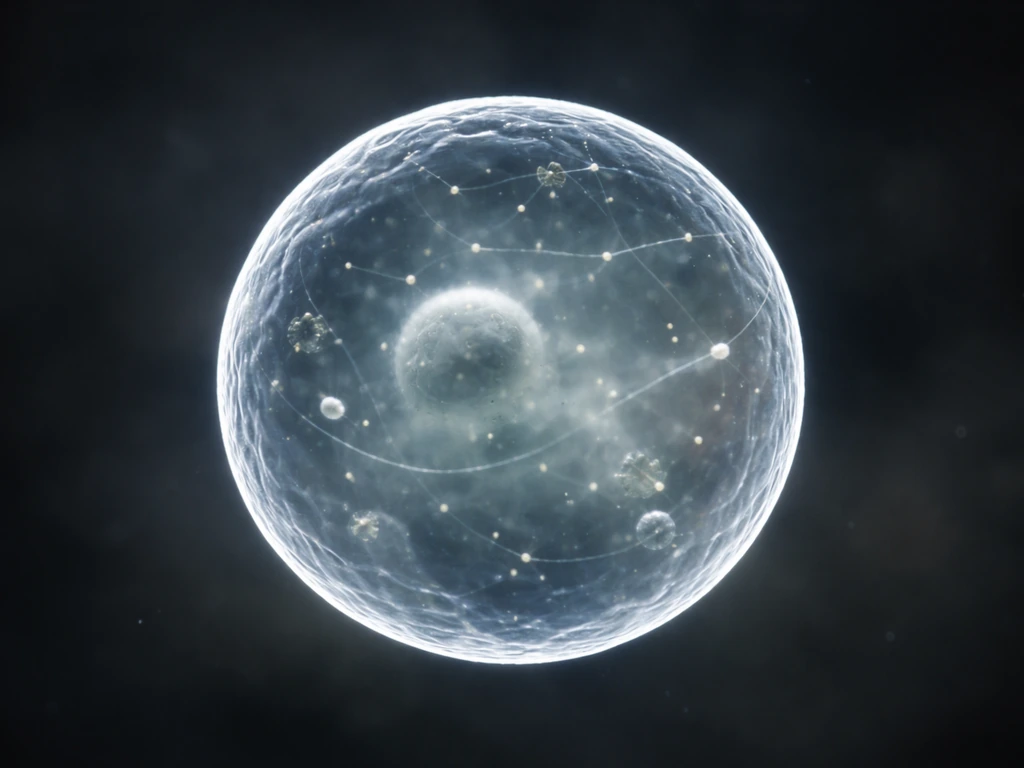
Surface-area-to-volume is the most famous limit, but it is not the only one. Inside a growing cell, several other systems run into trouble as size increases.
- Membrane integrity: Cell membranes are fluid lipid bilayers. Larger cells have more membrane surface under physical tension, and maintaining membrane integrity across a very large area requires more structural support. Without a rigid cell wall (as found in plant and fungal cells), animal-type cells face much stricter size limits from membrane mechanics alone.
- Cytoskeleton reach: The cytoskeleton (a network of protein filaments inside the cell) organizes internal movement, positions organelles, and directs transport. In very large cells, cytoskeletal filaments must span enormous distances. Motor proteins that drag cargo along those filaments slow down and become less reliable over large distances, which is why giant cells often need specialized solutions for internal transport.
- Energy supply and metabolic rate: A larger cell needs proportionally more ATP to run all its chemistry. Mitochondria (the energy-producing organelles) must be numerous and well-distributed. If the cell grows faster than it can replicate and position its mitochondria, energy deficits form in distant regions.
- Waste removal: Every metabolic reaction produces waste. CO2, ammonia, and other byproducts must exit the cell. In large cells, waste accumulates in the interior faster than diffusion can remove it, and concentrated waste products are toxic. This is a real ceiling on how large any actively metabolizing cell can be.
How giant cells survive anyway: adaptations and workarounds
The largest single-celled organisms have not beaten physics. They have worked around it in clever ways, and understanding those workarounds is actually the most interesting part of this topic.
Slow metabolism in cold, low-oxygen environments
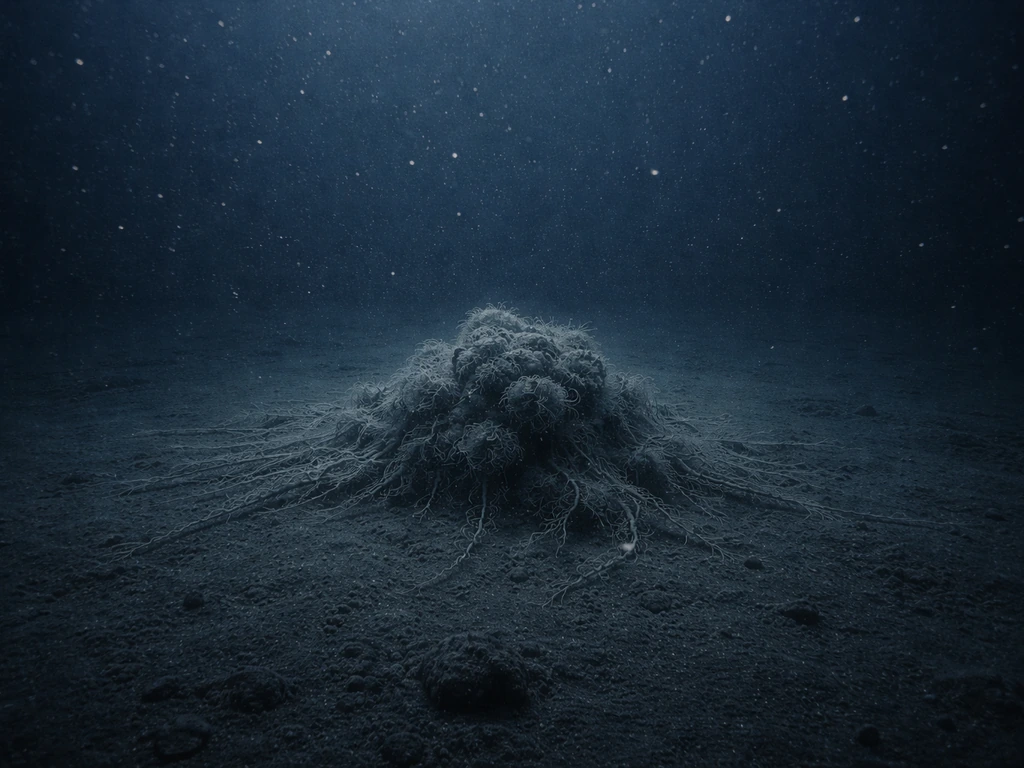
Xenophyophores live on the deep ocean floor, where temperatures hover near 0–4°C and food arrives as a slow drizzle of marine snow (dead organic particles sinking from above). Cold temperatures slow all chemical reactions, including metabolic rate. A cell that metabolizes slowly produces less waste and needs less oxygen delivered per unit time. The deep-sea environment essentially lowers the demand side of the exchange equation, letting the cell get away with a less favorable surface-area-to-volume ratio than a warm, fast-metabolizing cell could manage.
Buoyancy and thin, spread-out architecture
Rather than being a compact sphere (the worst shape for surface-area-to-volume), many giant cells are flat, branching, or irregularly shaped. Xenophyophore tests are often fan-shaped, branching, or plate-like. These geometries dramatically improve the surface-area-to-volume ratio compared to a sphere of the same mass. It is the same reason leaves are thin and flat rather than round and fat: maximizing surface area relative to volume is the universal solution to exchange problems in biology. Understanding these strategies helps answer how do organisms grow bigger while still overcoming the limits of diffusion and exchange.
Vacuoles and inert filler
Large algae like Valonia ventricosa (the bubble algae, up to ~5 cm) deal with the volume problem by filling most of their interior with a large central vacuole filled with water and dissolved ions. This vacuole is metabolically inert: it does not consume oxygen or produce much waste. The actual active cytoplasm is a thin layer pressed against the cell membrane. The cell looks huge, but the metabolically active volume is still relatively small and close to the membrane surface where exchange happens. Nature's version of hollow construction.
Symbiosis and outsourcing
Some large protists host symbiotic algae (zooxanthellae) or bacteria inside their cytoplasm. These symbionts provide photosynthetically produced oxygen and organic molecules directly inside the cell, reducing the dependence on surface-area-to-volume-limited diffusion from outside. Effectively, the cell imports a photosynthesis factory into its interior, bypassing one of the key diffusion constraints.
How to estimate a cell's size ceiling yourself

You do not need a lab to do useful back-of-the-envelope reasoning about cell size limits. Here are the key tools:
- The diffusion time rule: Diffusion time scales as t ≈ x² / (2D), where x is the distance and D is the diffusion coefficient of the molecule in question. For oxygen in water, D ≈ 2 × 10⁻⁹ m²/s. For a cell 100 µm (0.0001 m) in radius, t ≈ (0.0001)² / (2 × 2×10⁻⁹) ≈ 2.5 seconds. Fine. For a cell 1 cm (0.01 m) in radius, t ≈ (0.01)² / (2 × 2×10⁻⁹) ≈ 25,000 seconds, or about 7 hours. That is too slow for an aerobic cell to survive on diffusion alone.
- The surface-area-to-volume ratio check: For a sphere, SA/V = 3/r. A cell with radius 10 µm has SA/V = 0.3 µm⁻¹. A cell with radius 1 cm (10,000 µm) has SA/V = 0.0003 µm⁻¹, roughly 1,000 times worse. If you know the exchange rate needed per unit volume (from metabolic rate data), you can estimate the minimum SA/V required and therefore the maximum radius.
- The metabolic rate shortcut: A typical actively metabolizing eukaryotic cell consumes roughly 10⁻¹² to 10⁻¹¹ mol O₂ per second per cell. Scale that up by volume and compare to how much oxygen diffusion can deliver through the available membrane surface. When demand exceeds supply, the cell cannot grow larger.
- Shape correction: If the cell is a flat disc or branching shape rather than a sphere, recalculate SA/V for that geometry. A flat disc of radius r and thickness h has SA/V ≈ 2/h when h is small compared to r. This is why shape matters: a 1 cm flat disc 10 µm thick has SA/V ≈ 200,000 µm⁻¹, orders of magnitude better than a 1 cm sphere.
The practical takeaway: anything bigger than about 100–200 µm in diameter faces serious diffusion limitations under normal aerobic conditions. Cells that break that ceiling do so by reducing metabolic demand (cold, slow environments), improving geometry (flat shapes, vacuoles), or supplementing diffusion with active transport systems or internal symbionts.
Conditions that help or hurt large cell size
Understanding the environmental and biological factors that push cell size up or down is useful context, especially if you are thinking about why these giant cells exist in specific places and not others.
| Condition | Effect on Maximum Cell Size | Why |
|---|---|---|
| Cold temperature (deep sea, polar water) | Increases possible size | Slows metabolism, reducing O₂ demand and waste production |
| High nutrient availability | Can increase size up to limits | Supports larger cytoplasmic volume and more mitochondria |
| Buoyant environment (seawater) | Increases possible size | Reduces mechanical load on membrane and cytoskeleton, allows spread-out shapes |
| High viscosity medium | Slightly increases possible size | Slows sinking, allowing flat/branching architectures to persist |
| Symbiotic algae or bacteria inside cell | Increases possible size | Internal O₂ and nutrient production bypasses surface diffusion limits |
| Warm temperature, high metabolic rate | Decreases possible size | Faster metabolism demands faster exchange, which limits how large a cell can grow |
| Terrestrial or air environment | Strongly decreases possible size | No buoyancy support, desiccation risk, no buffering of temperature and nutrient gradients |
| Absence of cell wall (animal cells) | Decreases possible size | Membrane tension limits cell expansion; no rigid support for large volumes |
| Presence of cell wall (plants, fungi, algae) | Increases possible size | Rigid wall supports turgor pressure, allowing larger volumes without membrane failure |
What this tells us about growth and size more broadly
Single-celled organisms growing to visible, sometimes palm-sized dimensions are a great case study in how physical constraints shape biology. The same surface-area-to-volume logic that caps a cell at 100 µm under normal conditions also explains why multicellular organisms evolved: once you build a body out of many small cells instead of one big cell, each individual cell keeps a favorable SA/V ratio while the organism as a whole can scale to any size.
That is why multicellular organisms can grow far beyond the size limits that constrain single-celled bodies organisms with many cells grow. The jump to multicellularity (explored in more depth when looking at how organisms with many cells grow) is essentially nature's solution to the diffusion problem that limits single cells. In multicellular organisms, growth happens by adding new cells and differentiating them into specialized tissues multicellularity.
If you are curious about whether single-celled organisms grow at all before dividing, or how cell division contributes to an organism's overall size, those are genuinely related questions that connect the limits described here to the mechanics of mitosis and cellular reproduction. The constraints on single-cell size are not just trivia: they are the reason why life above a certain complexity level requires the coordinated machinery of multicellularity. Because mitosis produces new cells, it also increases the total number of cells in the organism, which is a main way an organism can grow in size.
Quick reference: size limits at a glance
- Typical bacteria: 1–10 µm
- Typical eukaryotic cells (yeast, algae, protozoa): 10–100 µm
- Practical diffusion limit for aerobic cells: roughly 100–200 µm radius under normal conditions
- Large protists with adaptations (vacuoles, slow metabolism): up to ~1–5 cm
- Giant xenophyophores: up to ~25 cm longest dimension
- Giant foraminifera: up to ~18 cm diameter
- Caulerpa algae (multinucleated single cell): meters in length, but with near-zero metabolic density per unit volume
FAQ
If most cells cannot get much bigger than ~100–200 µm, how do xenophyophores reach 25 cm without dying?
They largely escape the usual diffusion and exchange problem by turning the organism’s “big size” into a structure that is not uniformly metabolically active. Their cytoplasm is spread through a test (shell-like structure) that provides more exchange surface than a compact sphere, and the deep, cold habitat slows metabolism and waste production, reducing how much oxygen and nutrient delivery are required per unit time.
What counts as a “single-celled organism,” and how do scientists decide if something is truly one cell?
A key rule is whether the organism’s contents are enclosed by one continuous plasma membrane. Multiple nuclei can still be one cell, as with multinucleated forms, but colonies are not “one cell” because they are made of many separate cells with separate membranes.
Why is it misleading to compare lengths like “25 cm” between different single-celled organisms?
Because measurements often refer to different structures. For xenophyophores and similar protists, the visible size is commonly the test outer boundary, which can exceed the thickness of metabolically active cytoplasm layers. For other organisms, “size” might mean the diameter of the whole cell, while in yet others it reflects a thin active layer surrounding a large inert vacuole.
Does cell shape always matter, or does it only matter for very large cells?
Shape matters immediately, but its impact becomes critical at larger sizes. Thin, flat, branching, or hollow designs effectively increase membrane area relative to the volume that actually needs oxygen and nutrient exchange, keeping diffusion distances short for the metabolically active parts.
Are there ways cells “pump” substances to become larger, and why doesn’t that solve the limit by itself?
Cells can use transporters to move nutrients and waste, which helps, but transport still competes with diffusion and with the need for enough membrane area. At very large scales, even efficient transport cannot fully compensate for the fact that oxygen and nutrients must reach the farthest active regions quickly enough.
How do anaerobic or low-oxygen conditions change the size limit for single-celled organisms?
Lower oxygen availability can make aerobic growth harder, but it can also reduce oxygen-dependent constraints for some organisms by changing metabolism. In practical terms, the “normal aerobic” guideline can shift upward or downward depending on whether the organism’s energy system is still limited by oxygen delivery across the cell.
Can single-celled organisms grow bigger by simply enlarging one cell repeatedly instead of dividing?
Often they cannot, because exchange and diffusion constraints worsen faster than the cell’s internal chemistry demand can be satisfied. The article’s general takeaway is that beyond a certain scale, dividing into many smaller cells is the reliable growth strategy, since each daughter cell restores favorable surface-area-to-volume conditions.
What is the role of vacuoles in large single-celled organisms like bubble algae?
Vacuoles can reduce metabolic burden by filling most of the interior with material that is relatively inert. That keeps the metabolically active cytoplasm as a thin layer near the membrane, so diffusion distances remain short even if the organism’s overall size looks huge.
Do internal symbionts allow single-celled organisms to bypass diffusion limits completely?
They reduce one major dependency, for example by providing photosynthetically produced oxygen and organic molecules inside the cell. But they do not automatically remove all constraints, because the host still must transport nutrients to where they are needed and manage waste produced by the combined community.
If multicellular organisms avoid these limits, why can’t single-celled organisms just specialize into compartments?
Compartmentalization is exactly what multicellularity enables, because it creates many membrane-bounded units with favorable exchange geometry. A “single cell” can form internal structures, but if compartments are not separated by membrane and transport does not localize exchange effectively, diffusion and membrane-area limitations still scale with the overall cell size.
How should I estimate diffusion time or exchange feasibility for a hypothetical cell size?
A useful back-of-the-envelope approach is to consider diffusion time scaling with the square of distance. If you compare a cell whose relevant diffusion path is 10 times larger, the time to deliver oxygen or nutrients scales roughly by 100, which quickly becomes incompatible with maintaining active metabolism unless metabolism is slowed, geometry reduces path length, or internal sources/sinks are added.
Next Article
Do Single-Celled Organisms Grow? How They Increase in Size and Number
Learn how single-celled organisms grow in size and number, what limits growth, and simple yeast experiments to measure i