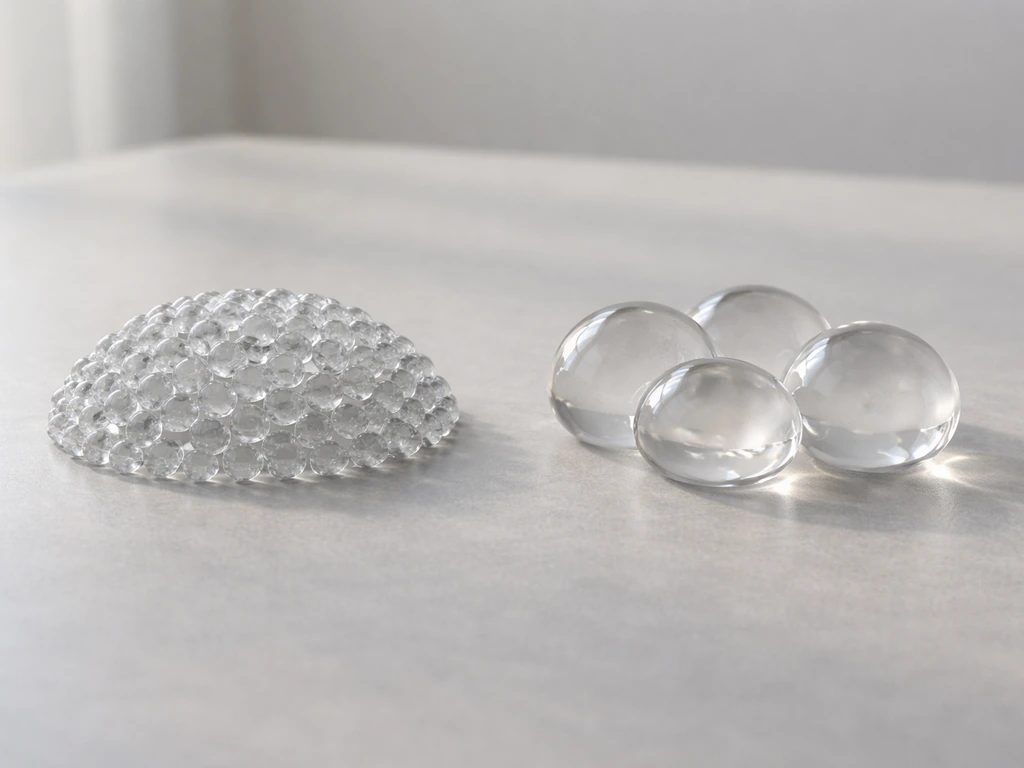
Yes, single-celled organisms absolutely grow. They increase in mass, build new proteins and membranes, copy their DNA, and expand in volume before dividing into new cells. Growth and reproduction are tightly linked in single cells, but they are not the same thing. Understanding that difference is the key to understanding how the whole process works. Understanding that difference is the key to understanding how the whole process works how do organisms grow bigger.
Do Single-Celled Organisms Grow? How They Increase in Size and Number
Marcus Whitmore
5 May 2026
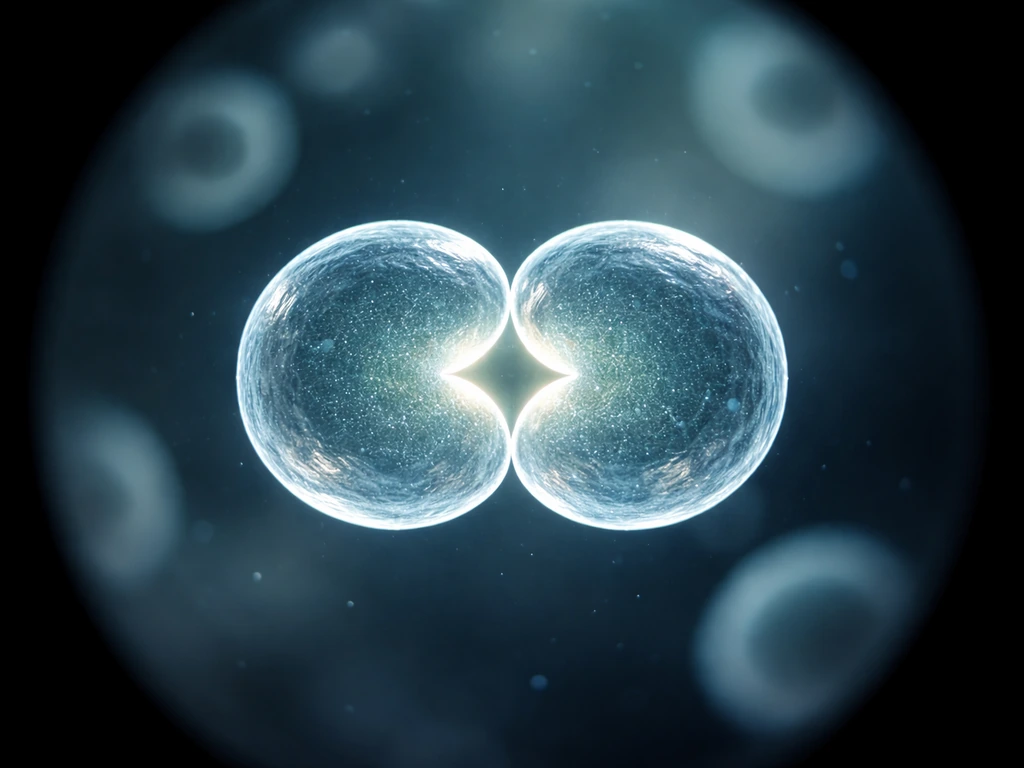
What 'growth' actually means for a single cell
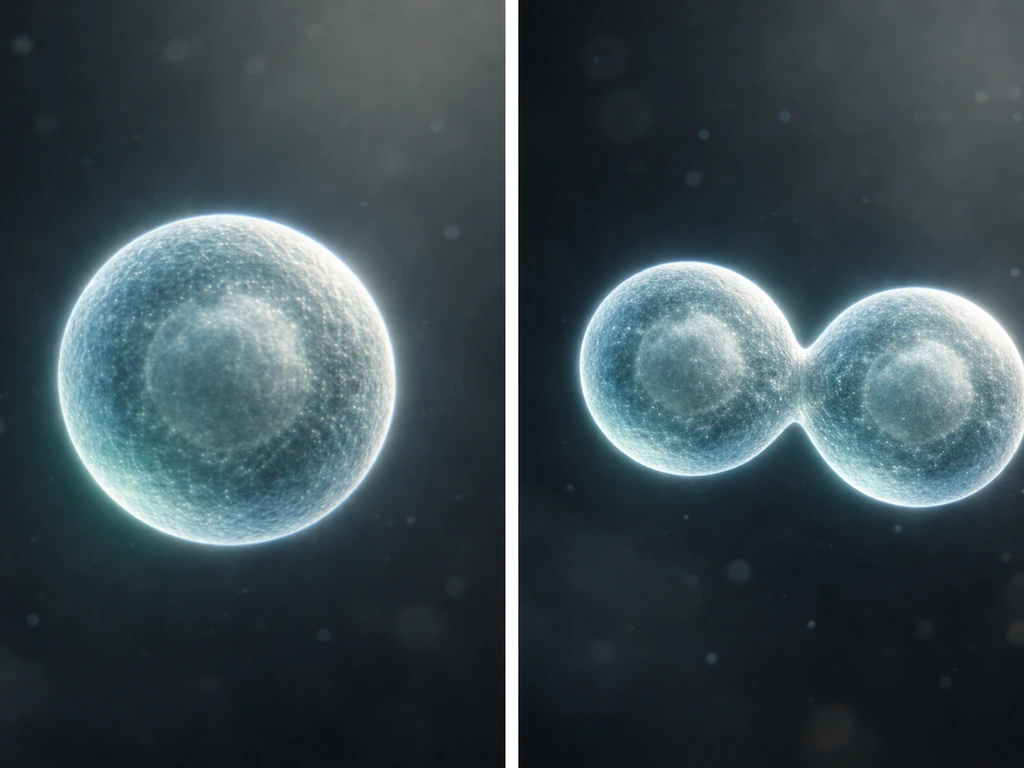
Biologists draw a clear line between two things that are easy to mix up: cell growth (one cell getting bigger and heavier) and cell proliferation (more cells appearing). A single-celled organism like a bacterium or a yeast cell genuinely grows in the first sense. It accumulates mass through biosynthesis, meaning it builds more proteins, lipids, nucleic acids, and carbohydrates than it breaks down. When anabolism (building) outpaces catabolism (breaking down), the cell gains biomass. That is growth by the strict definition.
This matters because it clears up a common misconception: a single bacterium does not just instantly split in two from a standing start. It first has to grow, doubling roughly its own mass before it is ready to divide. So when you see a bacterial population exploding in numbers, each individual cell in that population went through its own growth phase first.
What's actually happening inside the cell as it grows
Inside a growing cell, there is a coordinated construction project running at full speed. The cell is synthesizing new ribosomes, enzymes, structural proteins, and membrane lipids. It is copying its chromosome. In eukaryotes, mitosis is the division step that helps these growth processes translate into an organism increasing in size by producing new cells maturation, it is copying its chromosome. It is building up the raw materials needed to eventually split into two functional daughter cells. None of this happens passively; it all requires energy from nutrients in the environment.
In bacteria like E. coli, chromosome replication takes about 40 minutes (called the C period), and then there is an additional roughly 20 minutes between when replication finishes and when the cell actually divides (called the D period). The cell does not wait until division to start growing; it grows continuously throughout. Replication initiation is coordinated with the cell reaching a critical size or accumulated cellular state, not just a clock ticking down.
In eukaryotic single-celled organisms like yeast, the growth cycle follows recognizable cell-cycle phases. The G1 phase involves active growth, synthesis of mRNA, and production of proteins needed for DNA replication. The cell only moves forward into DNA synthesis (S phase) once it passes a checkpoint called Start, a G1/S restriction point that essentially asks: 'Are you big enough and do you have enough resources to commit to dividing?' If the answer is no, the cell waits. Fission yeast uses a similar checkpoint at G2/M, checking size before entering mitosis.
This checkpoint system is how single cells maintain a relatively consistent size at division. It is not perfect, but it prevents runaway variation. The machinery includes proteins like FtsZ in bacteria, which assembles into a ring at the cell's midpoint and drives the physical pinching-off that separates one cell into two.
Cell size vs. cell number: getting bigger versus making more
Here is a question worth pausing on: when a single-celled organism 'grows,' does it actually get much bigger, or does it mostly just make more copies of itself? Growth is described in two main ways: cells can increase their size, or populations can increase their number two ways that an organism can grow. The honest answer is both, but in different ways depending on what scale you are looking at.
An individual cell goes through growth phases where it genuinely increases in volume and mass. But it does not keep growing indefinitely at that scale. Once it hits its critical size and passes its checkpoints, it divides, and the two daughter cells start the cycle again at roughly half the parent's size. So a single cell's size stays within a fairly narrow range across generations, a property called cell size homeostasis.
Population-level growth is a different story. This is where you see the dramatic doubling curves in microbiology. A yeast or bacterial culture goes through four recognizable phases in a closed environment: a lag phase where cells adjust to conditions, an exponential (log) phase where numbers double rapidly, a deceleration phase as conditions worsen, and a stationary phase where growth and death rates balance out. When someone says 'bacteria grew overnight,' they usually mean the population exploded, not that individual cells became giants.
It is worth noting that some single-celled organisms do grow to genuinely impressive individual sizes. Xenophyophores, deep-sea protists, can reach 20 centimeters across. But these are extreme outliers with unusual structural adaptations. Most single-celled organisms are microscopic, and there are good physical reasons why, which brings us to the next point.
What conditions a single cell needs to grow
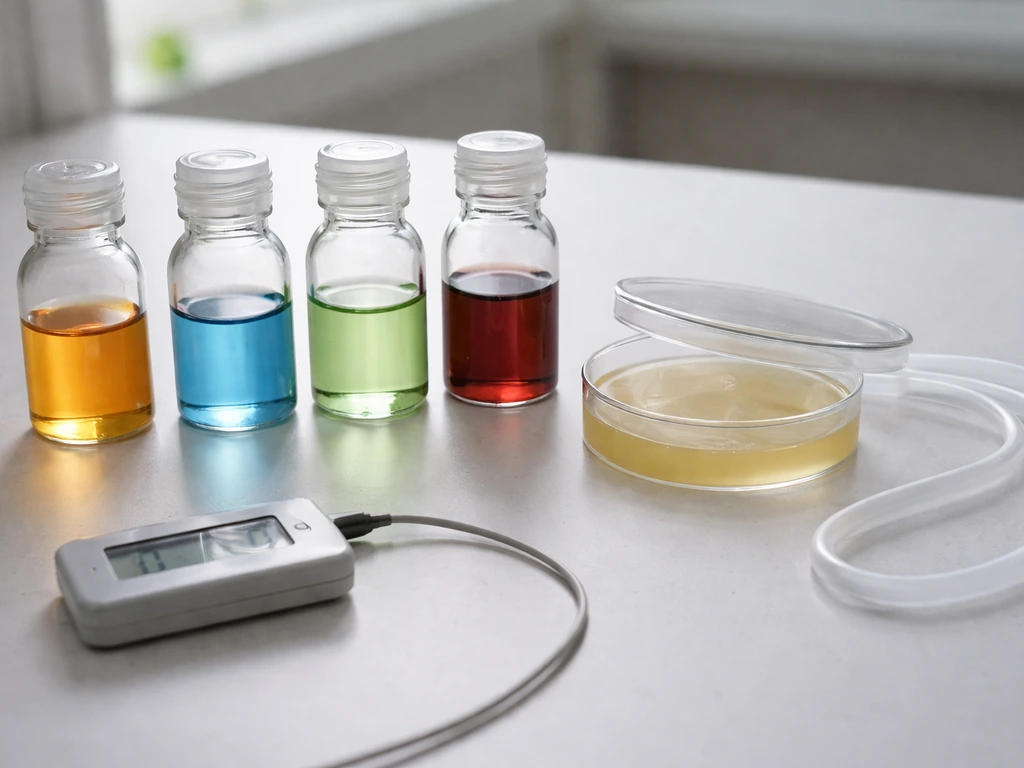
Growth does not happen in a vacuum. A single-celled organism needs the right combination of environmental inputs to grow at all, and even small changes in these conditions can slow, halt, or reverse growth entirely.
- Nutrients: carbon sources (sugars, etc.), nitrogen, phosphorus, and trace minerals are all raw materials for biosynthesis. Without them, there is nothing to build with.
- Water and osmotic balance: cells need water to run biochemical reactions, but too much or too little dissolved solute disrupts the osmotic pressure that keeps cells functional.
- Temperature: enzymes work within a specific temperature range. Too cold and reactions slow to a crawl; too hot and proteins denature. Most common bacteria thrive near human body temperature (~37°C), while yeast is more flexible but still has a sweet spot.
- pH: most bacteria grow best near neutral pH (~7.0). As they produce organic acids as metabolic byproducts, the environment acidifies, which can eventually inhibit their own growth.
- Oxygen availability: aerobic organisms need dissolved oxygen, and oxygen diffuses slowly through water. In a poorly aerated flask, oxygen can become the limiting factor even if nutrients are abundant.
- Waste removal: in a closed system, metabolic waste products accumulate and eventually become toxic. This is one of the primary reasons growth stops in batch cultures.
Think of it like baking bread with sourdough starter. The yeast grows happily when it has flour (nutrients), water, and warmth. But leave it too long without feeding, and its own acidic byproducts slow it down. Refresh it with new flour and water, and it bounces back. Single-celled organisms in nature follow the same logic.
Why cells can't just keep growing forever
This is where physics steps in to set limits on biology. As a cell gets bigger, its volume grows much faster than its surface area. A cell with twice the radius has eight times the volume but only four times the surface area. That shrinking surface-area-to-volume ratio is a serious problem, because blank" rel="noopener noreferrer">everything the cell needs (nutrients, oxygen) has to diffuse in through the membrane, and everything it produces as waste has to diffuse out. A cell that is too large simply cannot exchange materials fast enough to sustain its interior.
For aerobic organisms, oxygen is the tightest bottleneck. Oxygen has a very small diffusion coefficient in water, meaning it does not move quickly through aqueous environments. A larger cell has a greater distance from its surface to its center, and if that distance exceeds how far oxygen can diffuse before being consumed, the interior becomes hypoxic. This is a hard physical ceiling on how large a single aerobic cell can grow without special adaptations.
There are also cell-cycle constraints. As noted earlier, checkpoints control progression through the cycle. Multiple regulatory mechanisms (like sequestration of replication-initiating proteins) ensure DNA replication is initiated only once per division cycle. These are not just safeguards against runaway growth; they are fundamental to genomic stability.
At the population level, growth stops when nutrients run out, waste accumulates beyond tolerable levels, or both. This is the transition to stationary phase in a batch culture, and eventually, if nothing changes, cells start dying faster than they divide, entering the decline phase. There is no escaping this in a closed system.
How single-cell growth compares to multicellular growth
It is useful to briefly contrast this with how organisms with many cells grow. In multicellular organisms, growth at the organism level comes primarily from producing more cells through mitosis, not from individual cells getting much larger. The growth strategy shifts from 'one cell getting big and splitting' to 'organized division and specialization across billions of cells. In multicellular organisms, cellular division causes organisms to grow primarily by increasing the number of cells mitosis. ' The underlying cell-cycle machinery is similar, but the coordination is vastly more complex. Single-celled organisms are the stripped-down, most readable version of cell growth, which is exactly why they are such useful models for studying it.
How to actually observe single-cell growth yourself
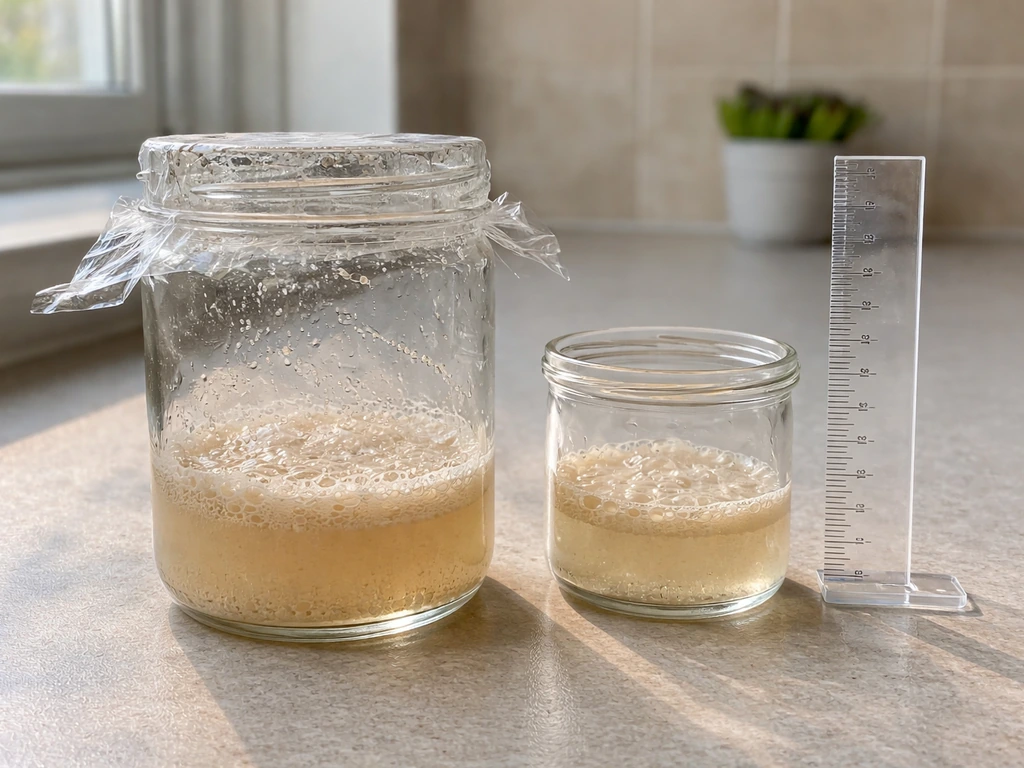
If you want to see these principles in action today, yeast is your best starting point. It is safe, cheap, available at any grocery store, and responds predictably to conditions you can control. Here is a straightforward approach:
- Dissolve a small amount of active dry yeast (about 1 gram) in 100 mL of warm water (~37°C) with a pinch of sugar (glucose or sucrose). This is your culture.
- Set up a control with yeast in plain water and no sugar to compare against.
- Observe CO2 production as a proxy for metabolic activity and growth: use a balloon over the opening of your flask or bottle, or track bubbling in a tube of limewater. Active yeast produces CO2 as it metabolizes sugar.
- If you have access to a spectrophotometer, measure optical density at 600 nm (OD600) every 30 minutes. A rising OD600 means increasing cell density. You will see the lag phase, then exponential growth, then a plateau as stationary phase kicks in.
- Without a spectrophotometer, use turbidity visually: a cloudy culture means dense cell growth; a clear culture means little growth.
- For bacteria (if you have classroom access to non-pathogenic strains like E. coli K-12), the same OD600 approach applies, or you can use serial dilution and plating to count colony-forming units (CFU/mL) at different time points.
- Note when growth slows and think about why: is it nutrient depletion, waste accumulation, or oxygen limitation? Try adding fresh sugar solution to a stationary-phase yeast culture and watch whether growth resumes.
What you are measuring with OD600 is total cell density, including non-viable cells. CFU counts from plating only capture cells that are still alive and able to divide. Comparing the two gives you a window into the growth-versus-death balance at different phases. This is exactly the kind of experiment that real microbiologists run to characterize growth conditions.
What to expect and what it tells you
| Growth Phase | What You See | What's Happening Biologically |
|---|---|---|
| Lag | Little change in turbidity or CO2 | Cells adjusting to environment, synthesizing enzymes, not yet dividing rapidly |
| Exponential (Log) | Turbidity rises fast, CO2 bubbles steadily | Cells growing, passing checkpoints, dividing at maximum rate for conditions |
| Deceleration | Growth rate slows noticeably | Nutrients depleting, waste building, oxygen limiting |
| Stationary | Turbidity plateaus, CO2 slows or stops | Growth rate equals death rate; cells stressed by environment |
| Decline/Death | Turbidity may drop as cells lyse | Death rate exceeds growth; population shrinking |
Every phase in that table connects back to a biological mechanism covered above. Lag phase is about biosynthetic preparation and checkpoint gating. Exponential phase is coordinated growth and division firing on all cylinders. Stationary phase is what happens when the physical and chemical constraints win. Watching a simple yeast flask go through these stages is watching the entire biology of single-cell growth play out in real time.
FAQ
If single-celled organisms grow, why do many cells divide into daughters that are about half the original size?
Because “growth” here is growth to a critical size, not unlimited enlargement. Most cells expand during the cell-cycle, then division splits the biomass roughly in two, so across generations the average cell size stays in a narrow range (size homeostasis).
Do single-celled organisms ever stop growing but still remain alive and not divide?
Yes. They can enter a non-dividing but viable state when checkpoints cannot be passed, such as when nutrients are insufficient or DNA replication is not favorable. In that situation, they may maintain themselves or slow biosynthesis rather than steadily increasing mass until division is possible.
What’s the difference between a cell getting larger and a culture “growing overnight”?
A culture’s overnight increase usually reflects cell proliferation, not each cell becoming much bigger. Individual cells typically grow to a threshold, then divide. Population curves rise fast in exponential phase because many cells repeatedly complete that growth and division cycle.
If nutrients are abundant, why can growth still slow down before the stationary phase?
Even in rich conditions, waste products build up and local chemistry can become unfavorable, plus cells can experience resource bottlenecks for specific biosynthetic steps. Those factors cause deceleration when the effective balance of anabolism versus catabolism shifts.
Can a single-celled organism become larger by changing shape or internal organization instead of increasing absolute size?
Sometimes. Some microbes grow by altering surface area through cell shape changes, or by reorganizing internal structures to improve uptake and biosynthesis efficiency. However, the fundamental diffusion limits still constrain how large a typical cell can become without special adaptations.
Why doesn’t increasing surface area alone always solve the size problem for diffusion?
More surface area helps, but the required transport distance to the center still grows with cell size. As cells get larger, the time and distance for nutrients to reach the interior (and for wastes to diffuse out) can still exceed what the cell can support, setting an upper limit in many organisms.
Is oxygen always the bottleneck for size, or does it depend on the organism?
It depends. Aerobic organisms often hit oxygen diffusion limits first, but organisms that rely less on oxygen or can use alternative metabolic pathways may face different constraints, like nutrient availability for biosynthesis or removal of specific metabolic wastes.
How do checkpoints actually prevent “runaway” division or uncontrolled growth?
They coordinate whether the cell has reached a sufficient size and proper internal state to safely start DNA replication and commit to division. If conditions are not right, cell-cycle progression pauses, which indirectly caps growth by preventing repeated division without appropriate mass and resources.
What’s the practical difference between OD600 and CFU when studying growth?
OD600 reflects total turbidity, including dead cells and non-dividing cells, so it can stay high even when viability drops. CFU only counts cells that can form colonies, so CFU reveals how much of the population is alive and capable of division at each phase.
In a closed batch culture, can growth ever reverse after it slows down?
Often it cannot fully reverse in a simple closed system, because key limitations like nutrient depletion and waste accumulation continue. Growth can’t run indefinitely, though a different outcome is possible if you supply fresh nutrients or remove waste by changing the environment (for example, in continuous cultures).
Are there single-celled organisms that break the “microscopic size” expectation?
Yes, extreme outliers exist, such as some large deep-sea protists with specialized adaptations. These cases typically involve unusual structural features that mitigate diffusion or transport constraints, so they do not represent the average for typical bacteria and yeast-like cells.
Next Article
Cellular Division: Growing Primarily by Increasing Cell Number
Explains how growth happens mainly by making more cells via cell division, contrasting it with bigger-cell size and grow