Organisms grow bigger through three linked processes: cells get larger, cells divide to make more cells, and cells die off in a controlled way. Which of those three dominates depends on the organism, the tissue, and the stage of life. A muscle fiber adds bulk by enlarging individual cells. A developing embryo adds bulk mostly by dividing cells rapidly. Skin renews itself by balancing division and death. Understanding how any organism grows means figuring out which of those levers is being pulled, what signals are driving it, and what physical or metabolic limits will eventually stop it.
How Do Organisms Grow Bigger: Cells to Whole Bodies
Marcus Whitmore
24 Apr 2026
What "growing bigger" actually means
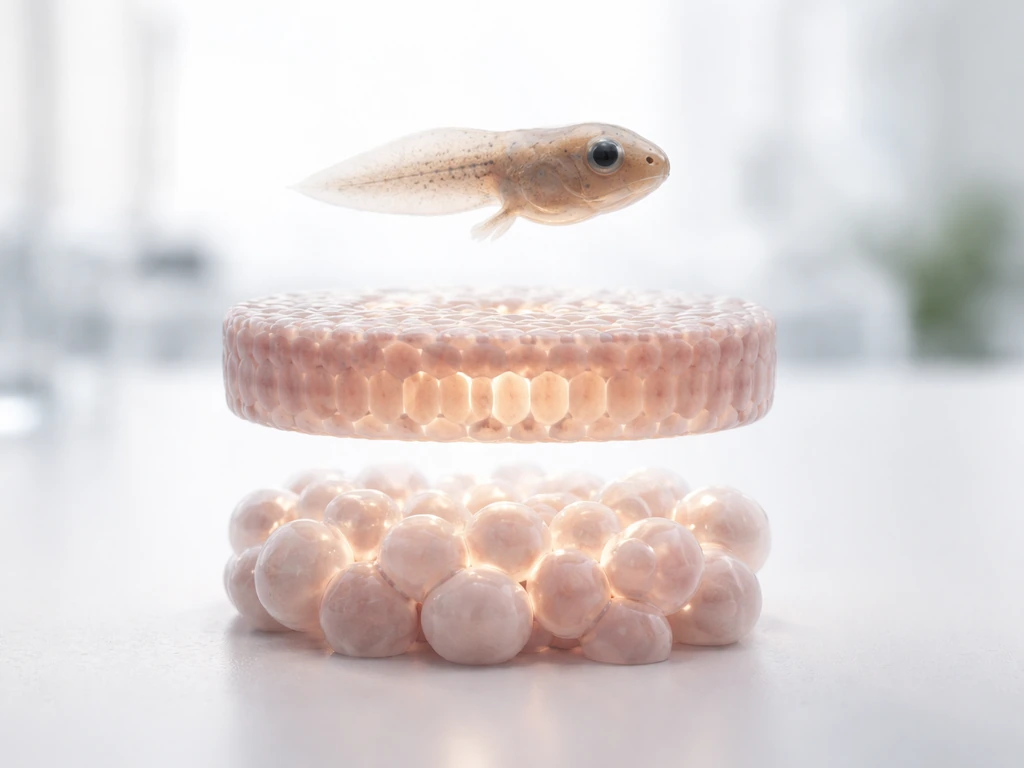
It helps to separate three different levels of organization, because the word "growth" gets used loosely across all of them.
- Cell-level growth: a single cell accumulates more mass, proteins, organelles, and water until it is physically larger.
- Tissue-level growth: a collection of cells increases in total volume, either by adding more cells, enlarging existing ones, or both.
- Organism-level growth: the whole body increases in size, which in multicellular organisms almost always reflects what is happening in multiple tissues at once.
A single-celled organism like a bacterium or yeast grows by enlarging its own cell body and then dividing. A multicellular animal or plant grows mainly by coordinating division and enlargement across billions of cells simultaneously. There are two main ways organisms can grow: by increasing cell size and by increasing cell number enlarging.
This is the core idea behind how organisms with many cells grow: their tissues expand by coordinating those two processes across huge numbers of cells multicellular animal or plant grows mainly by coordinating division and enlargement. When you ask why a puppy becomes a dog, you are really asking about organism-level growth. When you ask why a tumor keeps expanding, you are asking about tissue-level growth.
And when you ask why individual cells can only get so big before they must divide, that is a cell-level question. All three levels connect, but they have different rules.
The cell cycle: growth's engine room
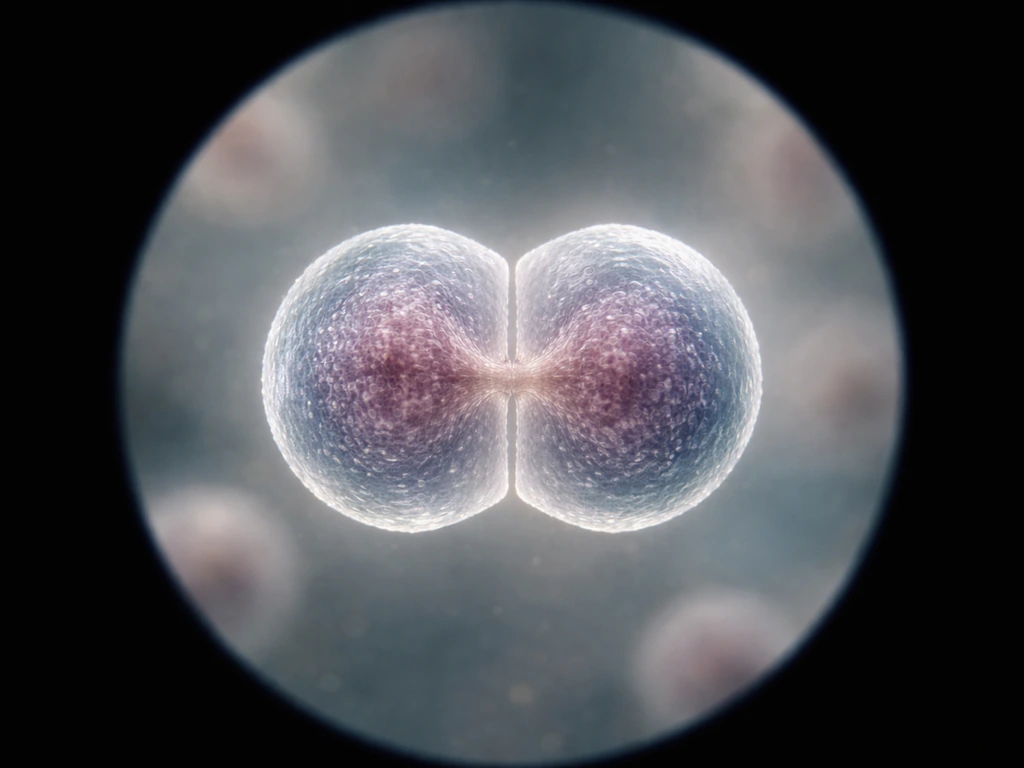
Cell division is the core mechanism behind most multicellular growth, and it runs on a tightly timed sequence of events called the cell cycle. Think of it like a project with four distinct phases that must happen in order.
- G1 (first gap): the cell grows, synthesizes proteins, and checks whether conditions are good enough to commit to division.
- S phase (synthesis): the entire genome is copied, producing two identical sets of chromosomes.
- G2 (second gap): the cell grows further and double-checks that DNA replication went cleanly.
- M phase (mitosis + cytokinesis): chromosomes are physically separated and the cell splits into two daughter cells.
The key point is that S phase duplicates the genome, while M phase physically divides the cell. Mitosis is the process in which cells enter M phase to separate their chromosomes and produce two daughter cells, which increases cell number and supports organism growth M phase physically divides the cell. One cycle produces two cells where there was one, increasing cell number without requiring each new daughter cell to be the same size as the parent. This is how a developing embryo can subdivide rapidly without getting bigger in total volume at first, and then later how a growing tissue expands by adding those smaller cells that each subsequently enlarge.
Phase transitions are controlled by proteins called cyclins and their partners, cyclin-dependent kinases (CDKs). G1/S-cyclins bind CDKs to commit the cell to DNA replication. Later, a protein complex called the APC tags M-phase cyclins for destruction so the cell can actually complete division and reset. Checkpoints at critical transitions confirm that conditions are safe before moving forward. If a checkpoint detects DNA damage, for example, the tumor suppressor p53 can activate p21, slamming the brakes on the cycle until the damage is repaired or the cell is eliminated.
What drives growth: nutrients, energy, hormones, and genes
Division cannot run without fuel and instructions. The growth-regulating machinery responds to four main categories of input.
Nutrients and energy status

The protein complex mTORC1 acts like a central switch for cell growth. It is activated by glucose, amino acids, and high ATP levels, and it pushes cells to build proteins, make ribosomes, and grow. Amino acids specifically signal through a pathway involving Rag GTPases on the lysosome surface, which physically recruit mTORC1 to its activating partners.
This lysosome-based recruitment is mediated by Rag GTPases acting with the Ragulator/LAMTOR tethering platform to regulate mTORC1 in response to amino acids [Amino acids specifically signal through a pathway involving Rag GTPases on the lysosome surface](https://pmc. ncbi. nlm. nih.
gov/articles/PMC10212514/). If nutrients drop, AMPK (the cell's energy sensor) detects falling ATP-to-AMP ratios and inhibits mTORC1 by phosphorylating its partners, effectively telling the cell: stop building, conserve energy. This is why cells stop growing during starvation and resume when nutrients return.
Growth factors and hormones
Extracellular signals like insulin-like growth factor 1 (IGF-1) bind receptors on the cell surface and activate AKT signaling, which feeds into mTORC1 and also promotes survival and division. Remove serum growth factors from cells in culture for about 18 hours and they park in a reversible resting state called G0. Restore the growth factors and they re-enter the cycle. This is a direct demonstration that growth signals, not just nutrients, gate progression. In whole animals, hormones like growth hormone, thyroid hormone, and sex steroids coordinate this signaling across tissues during development and puberty.
Gene expression and developmental programs
Beyond moment-to-moment nutrient signals, gene expression programs set the baseline growth capacity of a cell type. A liver cell and a neuron have the same DNA but read it very differently, and those differences determine whether the cell can divide at all, how fast it can grow, and when it stops. Development is largely a story of gene expression programs turning on and off in sequence, which is why growth is organized rather than chaotic.
From dividing cells to organized tissues: differentiation and patterning
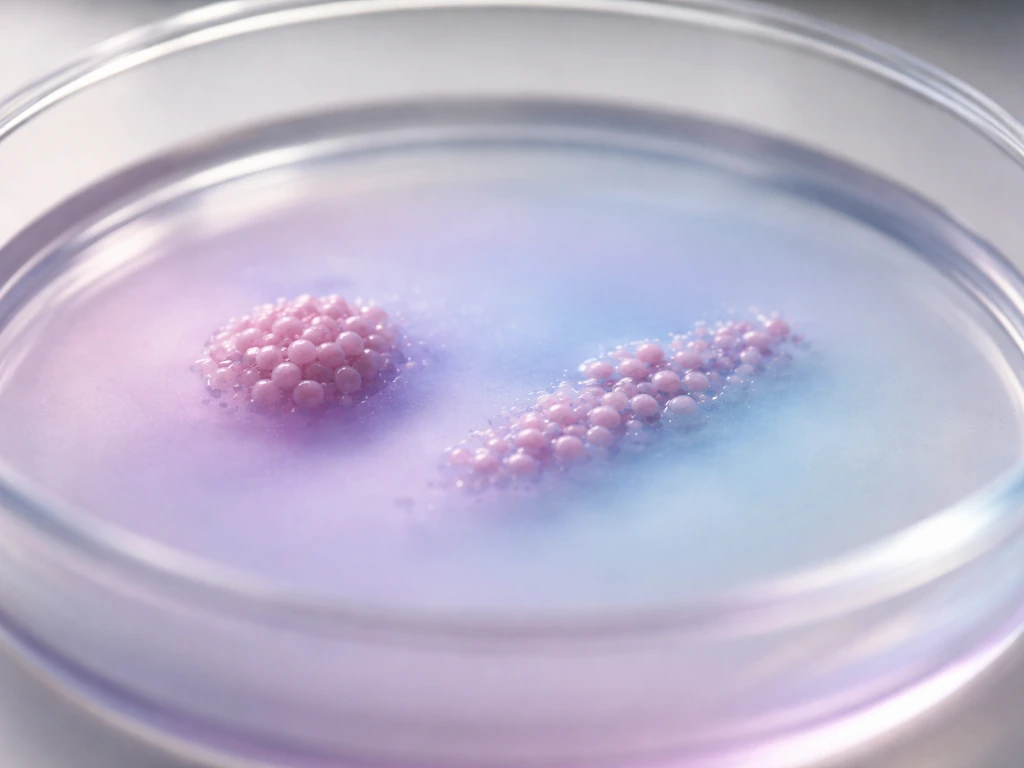
Adding more cells is only half the story. Those cells have to end up in the right place doing the right job, or you do not get a functional organism, you get a disorganized lump. The process that assigns cells their identities and positions is called differentiation and patterning, and it relies on chemical gradients called morphogens.
A morphogen is a signaling molecule that spreads through a tissue and tells cells where they are based on its concentration. High concentration near the source means you are close to a particular boundary; low concentration far away means something different should develop there. In a fruit fly wing, the morphogen Dpp (a BMP-family protein) spreads from a central stripe of cells and specifies the identity of cells across the whole wing disc. Crucially, the gradient scales as the tissue grows, so the proportional pattern is preserved even as the wing gets larger. Similar scaling has been observed in zebrafish. Think of it like a rubber sheet with a painted gradient: if you stretch the sheet, the colors stretch too.
Physical forces also shape tissue growth. The Hippo signaling pathway and its downstream effectors YAP and TAZ sense mechanical cues, including how crowded a tissue is. When cells reach a certain density and run out of room, contact inhibition kicks in: normal cells detect their neighbors, activate inhibitory signals through the Hippo pathway, and stop dividing. This is a fundamental tissue-level brake on growth, and it is one of the reasons cancers, which lose contact inhibition, can keep expanding.
Why growth cannot go on forever
Every organism hits a ceiling, and there are several independent reasons why.
Diffusion runs out of range
Oxygen and nutrients must reach every cell. Diffusion alone works well over distances below about 100 micrometers, but beyond that, delivery gets too slow relative to how fast cells consume resources. A rough model of oxygen diffusion into a spherical mass puts the critical radius at around 1 mm before cells in the interior become oxygen-starved.
You can see this play out in laboratory-grown tumor spheroids: once they exceed a few hundred micrometers, the [inner cells become quiescent, then hypoxic, and eventually form a necrotic core](https://pmc. ncbi. nlm. nih.
gov/articles/PMC13048877/). One model estimates necrosis sets in when oxygen drops below about 0. 02 mM, glucose below 0. 06 mM, and waste products like lactate exceed roughly 8 mM.
Real organisms solve this with circulatory systems, but even those have scaling limits.
Metabolic costs scale with size in a non-linear way
Across a huge range of species, whole-organism metabolic rate scales with body mass raised to roughly the 3/4 power (Kleiber's law: B is proportional to M to the 0.75). This means larger organisms are metabolically cheaper per unit mass but still face increasing total maintenance costs as they grow. Energy that goes into maintaining existing tissue cannot go into building new tissue. Add reproduction into the equation and growth slows further, because reproduction draws from the same energy budget. This is a core life-history trade-off: grow faster now or reproduce now, but you rarely get both at full capacity.
Cell-level checkpoints and death
Cells also carry internal brakes. DNA damage triggers p53-dependent arrest via p21, halting the cycle until the cell either repairs itself or is eliminated by apoptosis. Oxygen deprivation stabilizes HIF (hypoxia-inducible factor) through PHD enzyme inhibition, which can shift cells into a low-proliferation state. Contact inhibition, as described above, arrests division mechanically. These are not failures of the system: they are essential features that prevent damaged or misplaced cells from proliferating uncontrolled.
What speeds growth up or slows it down in practice
Knowing the mechanisms is useful, but it also helps to know which environmental variables you can actually change to predict or influence growth rates.
| Factor | Effect on growth | Why |
|---|---|---|
| Temperature (ectotherms) | Roughly 2-3x rate change per 10°C (Q10 rule) | Enzymatic reaction rates are temperature-dependent; too cold slows metabolism, too hot denatures proteins |
| Nutrient availability | Starving cells arrest in G0/G1; fed cells resume cycling | mTORC1 requires glucose and amino acids to activate the growth program |
| Water (plants especially) | Drought reduces stomatal conductance, cuts photosynthesis, stunts growth | Photosynthesis and nutrient transport both require water flow |
| Light (photosynthetic organisms) | Low light reduces carbon fixation and overall growth rate | Less photosynthesis means less ATP and building material for cell expansion |
| Oxygen availability | Hypoxia induces reversible cell cycle arrest via HIF signaling | Cells shift resources away from biosynthesis to survival mode |
| Growth signals (hormones, growth factors) | Removal causes G0 arrest; addition triggers re-entry to cell cycle | Growth factors gate the G1/S checkpoint through cyclin/CDK activation |
| Physical space and contact | Contact inhibition halts division at confluence | YAP/TAZ-Hippo pathway detects crowding and suppresses proliferation |
A practical framework for analyzing growth in any organism
When you encounter a growth question, whether it is about a plant, an animal, a developing embryo, or an abnormal growth like a tumor, run through these steps in order.
- Identify the level: Are you asking about a single cell, a tissue, or the whole organism? The mechanisms and limits differ at each level, so nail this down first.
- Ask which process is dominant: Is growth happening via cell enlargement, cell division, or both? In plants, post-division cell expansion driven by water uptake is huge. In animals, division usually dominates during development.
- Check the inputs: Is there enough energy (glucose/ATP), enough amino acids, water, and oxygen? If any of these are limited, mTORC1 is probably inhibited and growth will be arrested or slowed.
- Look for signals: Are growth hormones or growth factors present? Is the organism in a developmental stage where specific signals (like IGF-1 or plant auxin) are being produced? Signals gate the cell cycle checkpoint at G1/S.
- Estimate the transport limit: For any mass of tissue without a circulatory supply, oxygen diffusion becomes limiting at roughly 100 micrometers. Beyond that, growth will either slow, reorganize to stay thin/branched, or develop necrotic zones.
- Identify the stopping mechanisms: Contact inhibition, energy depletion, DNA damage checkpoints, or hormonal signals that switch the organism from growth to maintenance or reproduction will all cut growth off. Figure out which one applies.
- Consider temperature and environment: If the organism is an ectotherm or a plant, temperature is a direct rate multiplier. A 10°C drop can roughly halve metabolic and growth rates.
Apply this checklist to something concrete. A seedling not growing: check light (photosynthesis driving ATP?), water (turgor pressure for cell expansion?), nutrients (nitrogen for protein synthesis?), temperature (too cold for enzyme activity?). A developing animal tissue that stops expanding: check growth factor signaling, check whether contact inhibition has engaged, check oxygen delivery. A single-celled organism hitting a size ceiling: check the surface-area-to-volume ratio, because as a cell grows larger, the volume increases faster than the surface area, eventually making it impossible to import nutrients and export waste fast enough. For more on what sets that limit, see how big can single celled organisms grow single-celled organisms hitting a size ceiling.
How single-celled and multicellular growth connect
Single-celled organisms grow and divide as individuals, which is why there is an upper size limit for any individual cell regardless of species. Multicellular organisms essentially solved the size problem by keeping cells small and organizing them into teams. Each cell stays within the diffusion-efficient size range (under 100 micrometers in most dimensions), while the organism as a whole grows enormous by coordinating billions of those small units. The price of that strategy is complexity: you need patterning signals, tissue organization, checkpoints, and programmed cell death to keep the whole system functional. Lose any of those controls and you get unregulated, disorganized growth, which is exactly what cancer is.
Growth is not a passive process that just happens when conditions are favorable. It is an actively regulated program that integrates signals from nutrients, hormones, neighbors, and physical environment at every step. The mechanisms behind it, from cyclin/CDK checkpoints to morphogen gradients to metabolic scaling, are all doing the same fundamental job: making sure growth serves the organism's survival and reproductive success rather than running until it kills the organism. That balance is, in a real sense, what biology is about.
FAQ
If cell division is key to how organisms grow bigger, why does a tissue sometimes grow even when cells are not dividing much?
Tissue expansion can happen by cell enlargement, changes in extracellular matrix, and fluid accumulation. A common example is growth during which cells increase volume and the surrounding scaffold remodels, so overall size increases even if division slows. In experiments, you may see size or thickness increase alongside low proliferation markers, meaning the “bigger” is coming from expansion rather than new cell number.
Why do cancers grow faster than normal tissue if both involve cell cycles and nutrients?
Many cancers bypass or break multiple brakes at once. Tumor cells often lose checkpoint control over DNA damage, resist contact inhibition, and rewire signaling so growth pathways like mTOR remain active under stress. Even with limited oxygen, tumors can keep expanding at the rim by recruiting blood supply or by shifting metabolism, while the interior becomes hypoxic and quiescent, leading to the necrotic core pattern.
How do cells decide to grow in size versus divide, and what determines which one dominates?
The balance depends on whether the internal “growth machinery” is on and whether the cell has committed to a division program. Nutrient-rich conditions activate growth pathways, but division still requires passing checkpoints and having proper cell-cycle timing. If resources are available but DNA damage checkpoints or mechanical constraints are not cleared, cells may enlarge less and arrest, whereas if growth is low they may remain small or enter quiescence (G0).
What does it mean that morphogen gradients “scale” with tissue size, and how can that be preserved as organs get larger?
Scaling means the cells interpret relative concentration, not absolute distance. Mechanisms include how morphogen is produced, how it diffuses or is degraded, and how the tissue reorganizes so that the profile stretches as the tissue grows. This helps keep the same proportional body plan, like specifying positions across a wing disc even as its overall size changes.
Can an organism grow bigger without increasing cell number, and is that ever enough for normal development?
Yes, some growth can be mostly enlargement, particularly in tissues where cells remain limited in division. But for most organs, sustained function requires coordinated changes in both cell number and cell size, plus correct placement. If you only enlarge without generating the right population of specialized cells in the right locations, you may get an oversized but poorly organized structure.
Why can a single cell only grow to a limited size, even if nutrients are present in the environment?
Even with abundant external nutrients, the limiting factor becomes delivery and waste removal at the cell’s interior. As volume increases faster than surface area, transport across the boundary becomes insufficient, causing gradients in oxygen, glucose, and metabolites. This is why cells rely on division to reset the surface-area-to-volume ratio.
Is the diffusion limit of about 100 micrometers a hard rule for all organisms and tissues?
It is a useful ballpark, not a universal constant. Actual limits shift with tissue geometry, cell density, consumption rates, and how quickly blood or specialized transport brings oxygen and nutrients. Organisms extend the viable range by building circulatory systems and by using active transport and compartmentalization, which change effective delivery distances.
Why do cells stop dividing when they are crowded, and what goes wrong in cancer?
Crowding triggers signaling that converts mechanical contact into biochemical inhibition. Normal cells detect neighbors and activate pathways that enforce contact inhibition, reducing proliferation when space is limited. Cancer frequently disrupts these sensing and inhibitory routes, so cells continue dividing despite increased density, contributing to invasive and uncontrolled growth.
How does starvation change growth, and why is it sometimes reversible even if growth stops?
When nutrients drop, energy sensors reduce growth signaling by inhibiting anabolic programs. A key detail is that the inhibition can be reversible if the cell is not irreparably damaged, allowing re-entry into the cell cycle when growth factors and nutrients return. That is why cells can pause in a resting state rather than permanently stopping, assuming checkpoints are satisfied.
When an organism grows more during development, does it always mean it is accelerating cell cycle rate everywhere?
No. Different tissues can be at different stages, with some regions dividing rapidly while others enlarge or differentiate. Development often uses spatial patterns of gene expression and local signaling cues so that the “growth levers” are applied in the right place and time. Growth is therefore coordinated, not uniform acceleration across the whole organism.
Next Article
What Controls When and How Fast Cells Grow and Divide
Learn what controls cell division timing and speed: checkpoints, signals, resources, DNA damage, stress, and failure lea