An apple starts as a fertilized flower on a tree that spent months in cold-weather dormancy. Once temperatures warm, buds break open, flowers bloom, bees carry pollen between trees, and fertilized ovules trigger the fruit to swell. Over the next 100 to 180 days, the tree pumps water, sugars, and hormones into that developing apple until it ripens and falls. That's the short version. Here's exactly how each step works, what can go wrong, and what you can do about it. If you are also curious about fungal development, see how do hyphae grow for the related “how growth happens” perspective how each step works.
Apple How Does It Grow? From Bloom to Ripe Fruit
Marcus Whitmore
12 May 2026
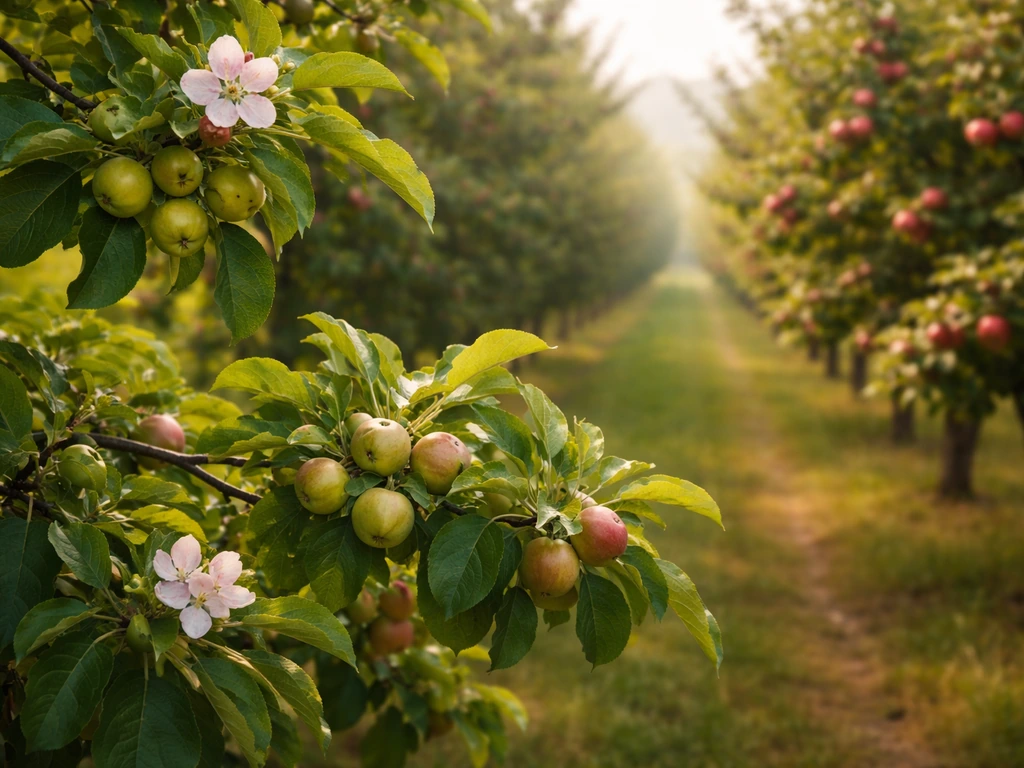
Apple tree basics and where apples actually come from
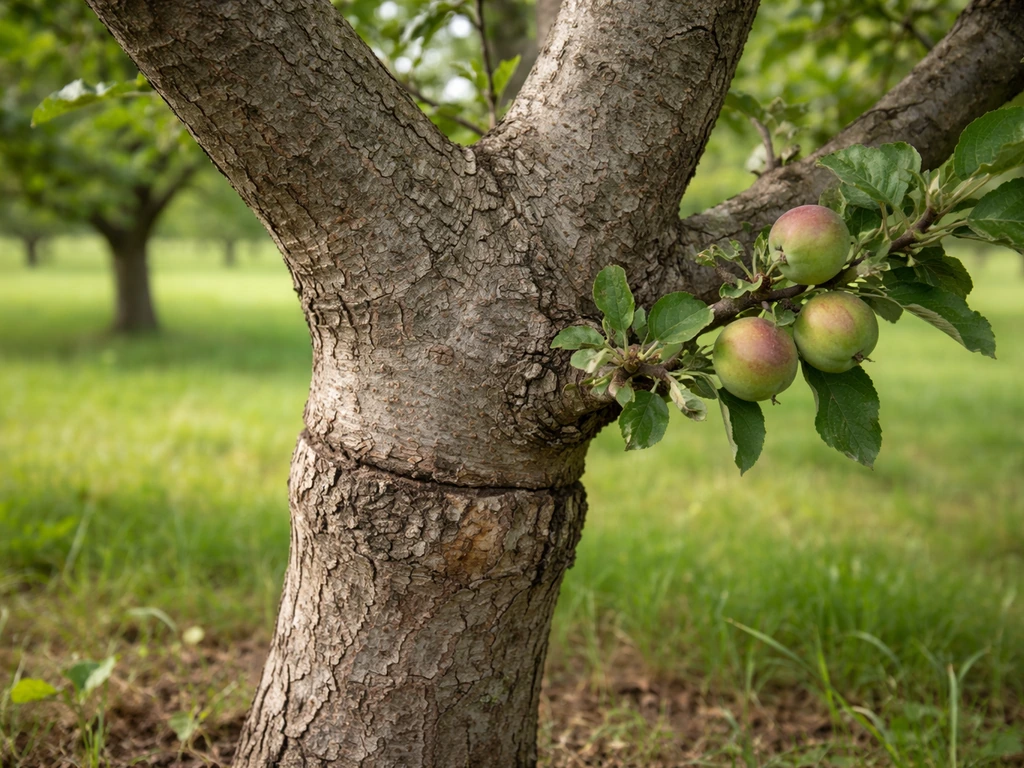
Apple trees (Malus x domestica) are woody perennials, meaning the same tree produces fruit year after year rather than starting over from seed each season. But here's something that surprises a lot of people: if you plant the seed from a Honeycrisp apple, you will not get a Honeycrisp tree. Apple seeds carry genetic material from two parents, and the resulting offspring is a genetic lottery ticket. The fruit might be edible, or it might be small, bitter, and basically useless. This is why every named cultivar you buy at the nursery is grafted, not seed-grown.
Grafting means a cutting (called a scion) from a known cultivar is attached to a separate rootstock. The scion determines what fruit you get. The rootstock controls tree size, rooting depth, and how quickly the tree starts fruiting. Dwarfing rootstocks like M.9 redirect carbohydrate allocation in a way that limits vegetative growth and pushes the tree toward earlier fruiting, though research shows this comes with real tradeoffs in cell metabolism and energy reserves. Standard rootstocks grow taller trees that take longer to fruit but store more energy. Rootstock choice also affects flowering precocity, which is how early in the tree's life it begins producing flowers at all.
Life cycle timeline: from dormancy to harvest
Apple trees don't grow year-round. They cycle through predictable phases, and understanding that rhythm is half the battle for anyone trying to grow apples successfully. If you are curious about that end-to-end timeline, see dates how do they grow for how fruit growth shifts from one stage to the next.
| Phase | Timing (Northern Hemisphere) | What's Happening Biologically |
|---|---|---|
| Endodormancy | Nov–Feb | Buds are locked down by internal signals; cold temperatures accumulate as chill units that will eventually release dormancy |
| Ecodormancy | Late Feb–Mar | Internal dormancy is broken but cold external temps still prevent growth; buds are ready but waiting |
| Bud break | Mar–Apr | Accumulated warmth (growth units) triggers cell expansion; green tissue emerges from buds |
| Flowering | Apr–May | King and lateral flowers open over 1–2 weeks; pollination window is active |
| Fruit set | May | Fertilized ovules produce hormones that keep the fruit attached; unfertilized flowers drop |
| June drop | Late May–June | Tree naturally aborts weaker fruitlets to balance crop load with available resources |
| Fruit development | June–Aug/Sept | Cell division then cell expansion; starch accumulates |
| Ripening | Aug–Oct (varies by cultivar) | Starch converts to sugars; ethylene triggers color and texture changes |
| Post-harvest dormancy | Oct–Nov | Leaves drop; tree enters paradormancy then endodormancy again |
Dormancy is not just the tree sleeping. [Researchers divide it into three distinct phases: paradormancy](https://www. frontiersin. org/journals/horticulture/articles/10.
3389/fhort. 2023. 1217689/full) (growth suppressed by signals from other parts of the plant), endodormancy (the bud itself is locked by internal biochemistry and needs cold to unlock), and ecodormancy (internal lock is released but external temperature is still too low). The endodormancy phase is the critical one for growers because it requires a specific amount of cold, measured as chill units or chill hours, to complete.
For 'Red Delicious,' that requirement is roughly 1,234 chill units under one commonly used model. Different models count chilling differently: the simplest approach counts all hours below 45°F, while the Utah model weights different temperature bands because temperatures around 43°F accumulate chill most efficiently and warmer temperatures can actually cancel out previously accumulated chill.
After chill requirements are met, the tree needs accumulated warmth to push bud break. That warmth accumulates as growing degree units, and for 'Red Delicious' one model puts the requirement at around 3,710 growth units. Warm spells during endodormancy can reduce how well dormancy is released, which is one reason climate warming is a real concern for apple production in historically reliable regions.
How apple flowers become fruit: pollination and fertilization
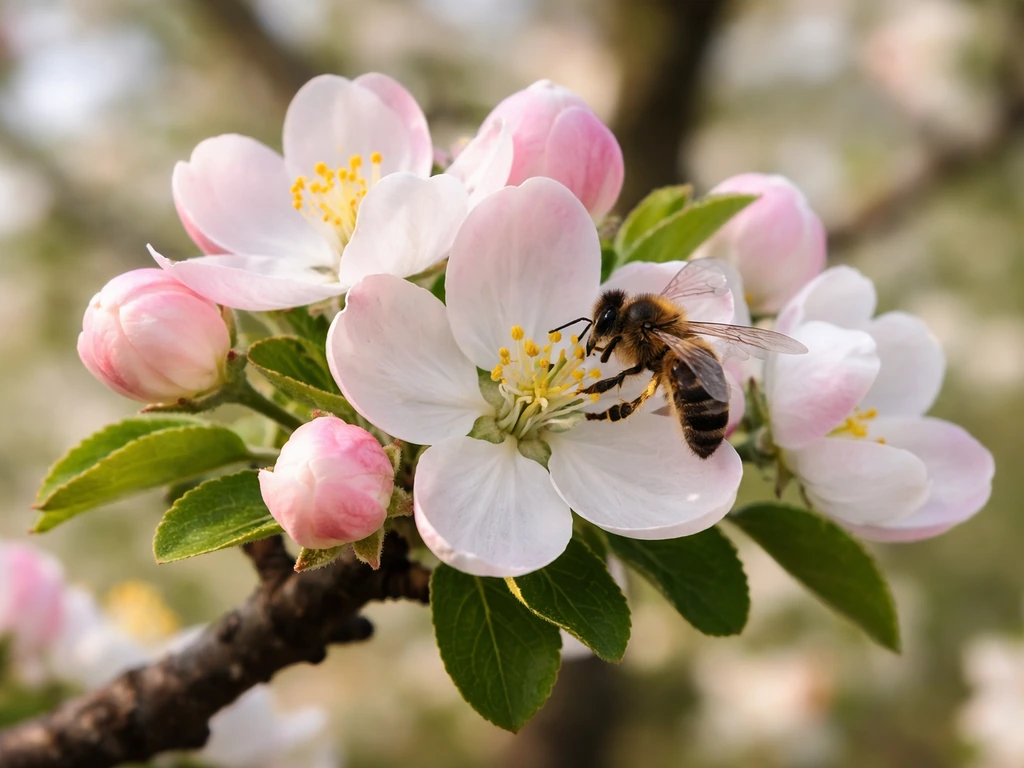
Most apple cultivars are self-incompatible, meaning a tree cannot reliably fertilize its own flowers. This is controlled at the genetic level by a system called gametophytic self-incompatibility, where the S-alleles in the pollen and pistil must differ for fertilization to succeed. When they match (self-pollen), a protein called S-RNase in the pistil destroys the pollen tube before it can reach the ovule. The practical upshot: you need at least two genetically different, bloom-compatible cultivars planted within pollinating distance (typically within 50 to 100 feet) to get a commercial-quality fruit set.
Each apple flower cluster (called a spur) contains one king flower in the center and several lateral flowers around it. The king flower opens first and has intense but short stigma receptivity. The lateral flowers open slightly later and stay receptive longer. Getting pollen to both types during their respective windows is what drives good fruit set. This window is called the Effective Pollination Period (EPP), and it's defined by the overlap between stigma receptivity, pollen tube growth speed, and how long the ovule stays viable. Cold, wet weather during bloom compresses or disrupts the EPP, which is one of the most common reasons for poor fruit set in a given year.
Fertilization itself is straightforward once pollen lands on a receptive stigma. Pollen germinates, grows a tube down through the style, and delivers sperm cells to the ovule. That fertilized ovule then starts producing auxin and gibberellins, hormones that signal the surrounding tissue to start developing into fruit rather than dropping off the tree. Without those hormones, the flower abscises. With them, fruit development begins.
Fuel and transport: how water, nutrients, and sugars build an apple
A ripe apple is about 85% water and packed with sugars. None of that material starts inside the fruit. It all arrives through the tree's vascular system, and understanding that transport is key to understanding what limits apple size.
The tree moves two things in parallel. Water and dissolved minerals travel upward through the xylem, pulled by transpiration from the leaves. Sugars produced by photosynthesis move through the phloem via the pressure-flow mechanism (sometimes called the Münch mechanism): leaves create high sugar concentration, which generates pressure that pushes phloem sap toward lower-concentration sink tissues like developing fruit. The fruit is a strong sink, meaning it actively draws in resources by maintaining low sugar concentrations internally during early development.
As fruit develop, hormones regulate how aggressively they pull from the phloem. Auxin, gibberellins, cytokinins, abscisic acid (ABA), and ethylene each play distinct roles across the stages: auxin and gibberellins dominate early fruit set and expansion, while ABA and ethylene take over during ripening, triggering starch-to-sugar conversion and the textural softening we associate with a ripe apple.
Fruit growth itself follows two stages. First, cells divide rapidly in the weeks after fruit set, multiplying the cell count in the developing fruitlet. Then cell division slows and cells begin expanding, filling with water and vacuoles. The final size of the apple depends heavily on how many cells form during that first division phase and how much each cell can expand. Both stages require a steady supply of carbohydrates and water from the rest of the tree.
What the apple tree actually needs to grow: environmental requirements
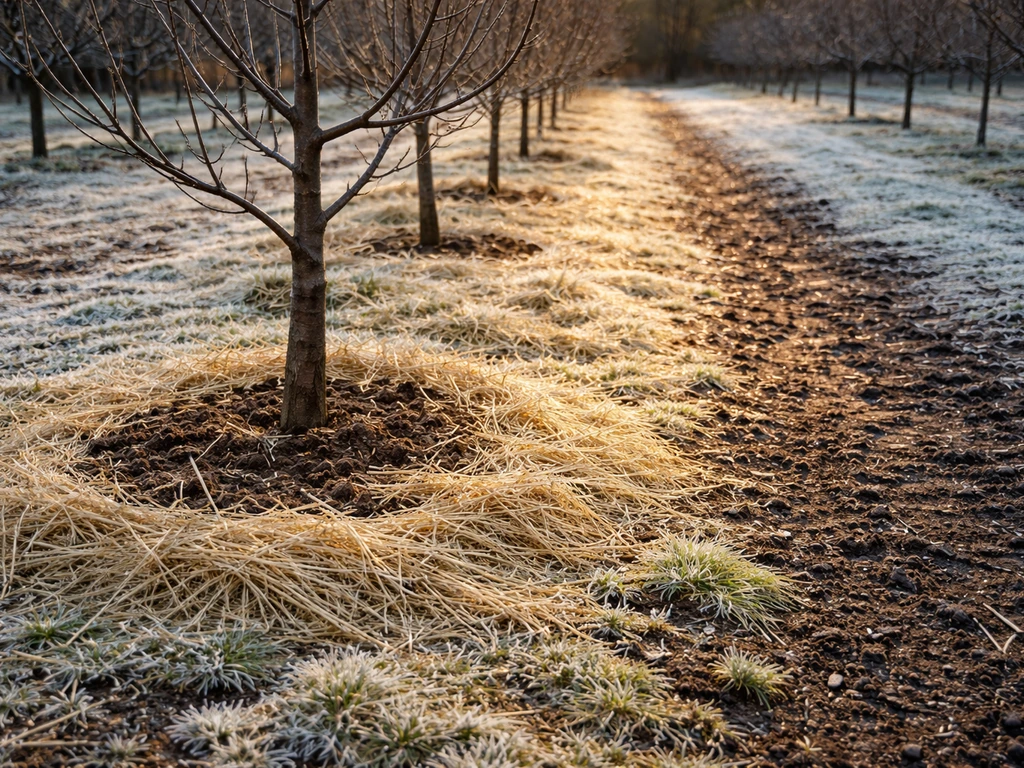
Apple trees are not particularly exotic in their requirements, but they are specific. Mycelium grow requires a different set of environmental conditions, such as moisture, oxygen, and suitable organic food sources, to form and expand a healthy mycelial network how does mycelium grow. Get any of these conditions wrong and you'll either see poor growth, no fruit, or significant pest and disease pressure.
- Cold dormancy: Most standard cultivars need 800 to 1,800+ chill hours below 45°F each winter. Low-chill cultivars exist for warmer climates but are limited in variety selection.
- Sunlight: Apple trees need at least 6 to 8 hours of direct sun daily during the growing season. Shaded leaves become net energy users rather than producers, reducing the carbohydrate supply available to fruit.
- Temperature during bloom: Ideal pollination temperatures are 55 to 75°F. Frost during bloom (below 28°F for open flowers) kills the pistil and prevents fruit set. High heat above 90°F can stress pollen viability.
- Water: Consistent moisture through the growing season is critical, especially during cell division (shortly after fruit set) and again during cell expansion. Drought stress during these windows directly reduces final fruit size.
- Soil: Well-drained loam with a pH of 6.0 to 7.0 is ideal. Waterlogged roots cut off oxygen and quickly collapse the tree's ability to take up water and nutrients.
- Nutrients: Nitrogen supports vegetative growth and flower bud formation. Calcium is critical for cell wall integrity in developing fruit; calcium deficiency causes bitter pit, a disorder visible as brown spots inside the apple. Potassium supports sugar loading into the phloem.
Common growth-limiting factors
Beyond the basics, several threats consistently limit apple growth in home and commercial orchards. Apple scab (caused by Venturia inaequalis) produces lesions on leaves and fruit, and the fungus overwinters in fallen leaves, making fall sanitation genuinely important. Fire blight (Erwinia amylovora) is bacterial and can destroy entire trees or orchard blocks in a single season when conditions are right. Powdery mildew attacks young shoots and leaves, reducing photosynthetic area. Codling moth larvae (the classic 'apple worm') tunnel into developing fruit, making them unmarketable and stressing the tree's resource allocation. Each of these problems either directly damages fruit or reduces the leaf area and vascular capacity the tree depends on to fuel fruit growth.
Practical care by season to support apple growth
Knowing the biology is useful only if it tells you what to do and when. Here's a season-by-season breakdown.
Winter (dormancy)
This is your pruning window. Prune while the tree is fully dormant to shape structure, open the canopy to light, and remove dead or diseased wood. Opening the canopy matters because shaded interior branches contribute little to photosynthesis but still draw on the tree's resources. Collect and dispose of fallen leaves to reduce overwintering scab inoculum. If you're planting a new tree, this is also the time to select rootstock and cultivar combinations appropriate for your region's chill hours.
Spring (bud break through bloom)
Watch the bloom timing carefully and protect against late frosts if you're in a frost-prone site. Apply dormant oil sprays before bud break to smother overwintering mites and scale insects. During bloom, don't apply any broad-spectrum pesticides that would kill pollinators. Confirm that a compatible pollinator cultivar is within range. Begin scouting for fire blight as soon as flowers open, since the bacteria infect through open blossoms during warm, wet weather. Preventive copper or streptomycin sprays should be timed to bloom if fire blight pressure is high in your area.
Early summer (fruit set and June drop)
This is the most critical window for influencing final fruit size. The tree will shed many fruitlets naturally (June drop), but it almost never thins itself enough for optimum fruit development. Thin the remaining fruitlets to one per spur, spacing fruits about 6 to 8 inches apart along branches. Do this before fruitlets reach dime size for maximum effect on final apple size. The biology here is direct: too many fruits competing for the same phloem supply means every fruit gets fewer resources, and each one ends up smaller. Thinning later in summer reduces this effect. Thinning also protects next year's crop by preventing biennial bearing, where an over-cropped tree exhausts its reserves and skips flowering the following year.
Mid to late summer (fruit development)
Keep irrigation consistent, particularly during cell expansion. Water stress now directly reduces fruit size. Monitor for codling moth and apply management strategies (traps, timed sprays, or approved biocontrols) around petal fall and through summer. Apply calcium sprays to developing fruit if bitter pit has been a historical problem on your site. Avoid excessive nitrogen fertilization late in the season, which encourages vegetative growth at the expense of fruit maturation.
Fall (harvest and preparation)
Harvest timing matters. Picking too early means starch hasn't fully converted to sugar; too late and the apple becomes mealy. A starch-iodine test is the most reliable field method: cut the apple and apply iodine solution, then compare the staining pattern to a reference chart for your cultivar. University of Maine Cooperative Extension describes this starch-iodine maturity approach, noting that the iodine solution is light-sensitive and should be handled and stored in appropriate containers starch-iodine test using iodine solution. After harvest, rake and remove fallen leaves and fruit to reduce disease and pest overwintering sites. This sets up the next cycle for success.
What sets the size and limits of an apple
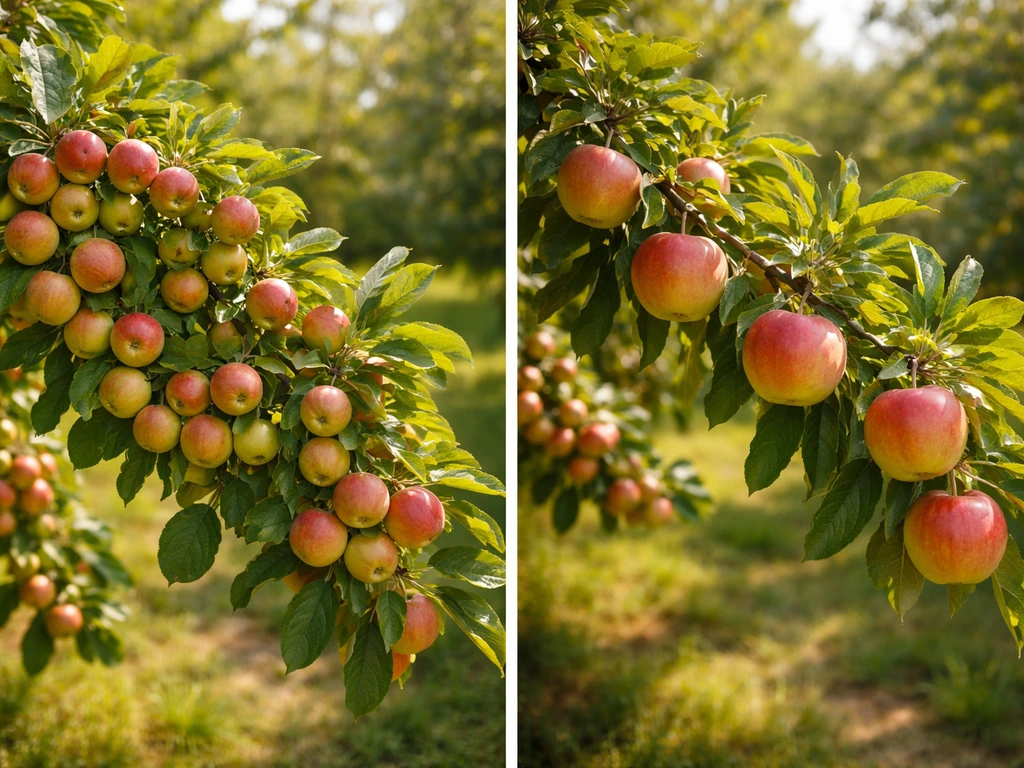
This is where the growth biology gets genuinely interesting, and it connects to a broader principle that applies across growing systems: growth is limited by the weakest link in the resource supply chain. Fig trees also have a specific growth pattern, starting from bud development and leaf expansion and then forming fruit structures that mature as the season progresses fig growth pattern. That same idea helps explain how an apple grows from fruit set to ripening: the limiting resource determines the final size and quality growth is limited by the weakest link.
The maximum size any individual apple can reach is set first by the number of cells that divide in the weeks after fruit set. More cells mean more potential volume. But that potential is only realized if the tree has enough photosynthetic capacity (leaf area) and enough phloem transport capacity to deliver sugars at the rate the growing fruit demands. If carbohydrate supply falls short of sink demand, the tree either slows growth or drops fruit entirely. Research on dwarfing rootstocks confirms this dynamic: they create an imbalance in carbohydrate allocation that limits cell growth and metabolism throughout the tree, not just in the fruit.
Crop load is the practical lever here. Each leaf on a healthy apple tree can support roughly 30 to 50 square centimeters of fruit surface area, depending on conditions. Pack too many fruits onto too few leaves, and every fruit in the tree is starved. Thin to one fruit per spur and the remaining fruits receive proportionally more of the tree's total photosynthate. This is why thinning isn't optional if you want full-size apples. It's directly managing source-sink dynamics, the same principle that governs growth constraints across biological systems, from individual cells up to whole organisms.
Temperature and light intensity also set a ceiling. Photosynthesis slows above about 95°F and below roughly 50°F. Extended cloudy periods during fruit development reduce sugar production and delivery. Water stress reduces both cell turgor (needed for expansion) and phloem transport. And nutrient limitations, especially calcium, directly affect whether cells can build structurally sound walls as they expand. Remove any one of these inputs and the apple responds predictably: it stops growing, or it grows but with defects. The biology is consistent, whether you're growing a Honeycrisp in Vermont or trying to understand why cells in any living system hit their limits.
FAQ
If I plant an apple seed from the apple I bought, will I get the same apple and how long until it fruits?
Apple trees only become “apple trees” after scion and rootstock are established. Seed-grown trees may produce fruit eventually, but they will not match the parent cultivar because the genetics are recombined. If you care about the specific apple you want (like Honeycrisp flavor and size), plan on purchasing a grafted cultivar and rootstock rather than saving seed.
What happens if my winters are warmer than usual, does the tree still grow and set fruit?
Cold-weather dormancy is species- and cultivar-specific, but the key risk for fruit production is not just “is it cold enough,” it is whether chill requirements are met without warm spells that partially release dormancy too early. If the tree breaks dormancy before reliable temperatures return, bud damage can reduce bloom and yield even if the season looks generally mild.
Can my apple tree grow well but still produce few or no apples, and why?
Yes, an apple tree can grow leaves and still fail to make usable fruit if pollen timing is off or pollen is incompatible. Even with compatible cultivars nearby, poor weather during bloom can shorten the effective pollination window, especially when cold, wet conditions reduce pollen viability and stigma receptivity overlap.
Do I always need two different apple cultivars, and how close do they need to bloom together?
Self-incompatibility means you usually need more than one cultivar, but “same cultivar” does not automatically count if bloom timing differs. Choose pollinizers that overlap bloom within the same week range for your site, and place them close enough (commonly 50 to 100 feet) so pollinators can move pollen efficiently.
If my apples are small, when should I thin, and why does timing matter?
Too many fruits can stunt size because each developing apple competes for shared photosynthate and water. Thinning is most effective when fruitlets are still very small, and thinning later often cannot fully recover final size because cell division has already largely passed.
Why do my apples stay small even after I thin them, could irrigation be the cause?
Yes, you can get fruit set but end up with poor growth or quality if water stress hits during cell expansion. Consistent irrigation is especially important in the weeks after fruit set, because expansion depends on both water uptake for cell turgor and steady phloem sugar delivery to the fruit sinks.
My apples sometimes split or crack near harvest, how does watering during growth cause that?
Fruit splitting is more common when dry conditions are followed by rapid water uptake. Fluctuating soil moisture during late development can cause stress and uneven expansion of the fruit skin. Aim for steady moisture rather than letting the ground swing from very dry to very wet.
Could fertilizer choices affect apple ripening and taste, especially if harvest comes later than expected?
Often, yes. High late-season nitrogen promotes vegetative growth and can delay or reduce fruit maturation, which can affect both flavor development and firmness at harvest. If you fertilize, keep nitrogen modest late in the season and let temperatures and crop load guide maturation.
What’s the safest way to protect pollinators while managing pests around bloom?
In many orchards, pollinator risk is managed by avoiding broad-spectrum sprays during bloom. Even if you are not trying to target pollinators, pesticide timing matters because bees actively forage when flowers are open, and you want those flowers to remain pollinator-friendly for the duration of the effective pollination period.
How do I know the right harvest date beyond just color, and what does the iodine test tell me?
A starch-iodine test is useful because “color” alone can mislead, cultivars vary, and weather can shift ripening speed. If your iodine staining shows insufficient starch conversion for your cultivar, picking early can lead to poor sweetness and a firmer, less mealy texture profile than you want.
Can calcium sprays really prevent bitter pit, and when do I apply them?
Bitter pit is closely linked to calcium availability in fruit tissue and is worsened by inconsistent uptake and stress. Calcium sprays can help when timed appropriately for the period when fruit is accumulating mass, but the underlying problem is still affected by site conditions and tree balance, so combine foliar calcium with consistent nutrition and irrigation.
Next Article
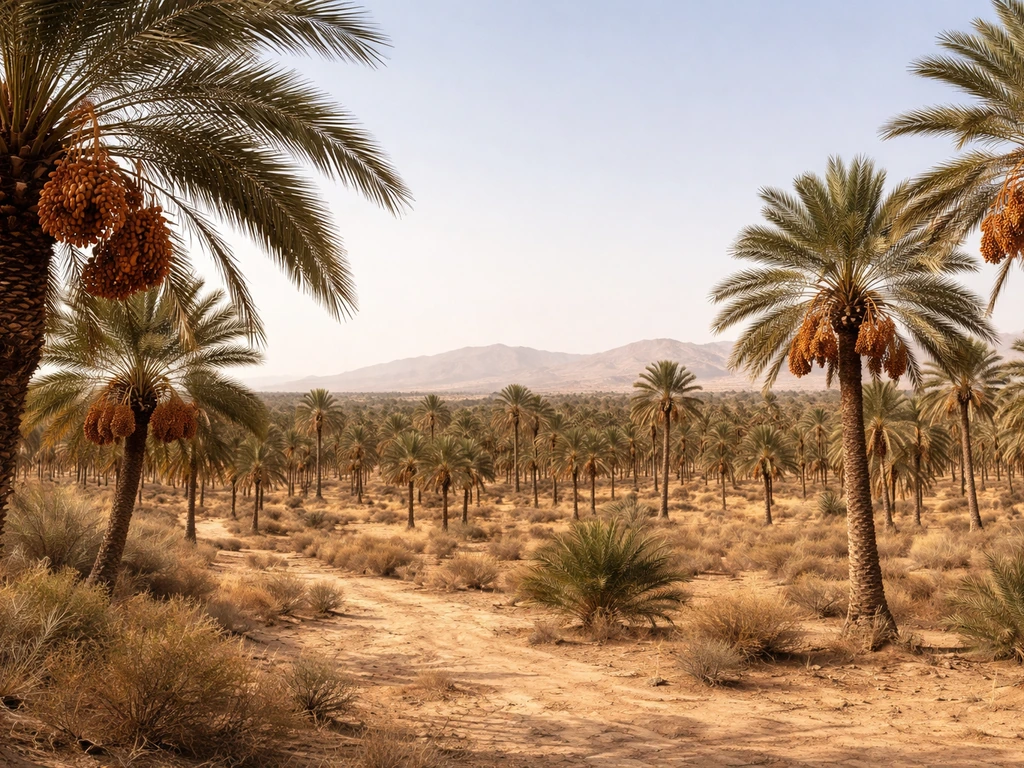
Dates: How Do They Grow From Seed to Fruit
Learn how date palms grow from seed to fruit, including stages, timing, key conditions, and troubleshooting for yield.