Dates are the fruit of the date palm (Phoenix dactylifera), and growing them is a long game. We're talking years, not months. A seed-grown palm can take up to a decade before you see your first fruit. An offshoot-grown palm gets you there faster and with far more predictability. Either way, understanding how date palms actually grow, from the first root emerging out of a seed to a cluster of ripe, sweet fruit hanging in the crown, gives you a huge advantage in getting the conditions right and avoiding the mistakes that stall growth or prevent fruiting altogether.
Dates: How Do They Grow From Seed to Fruit

Marcus Whitmore
22 Apr 2026
What date palms actually are (and why it takes so long)
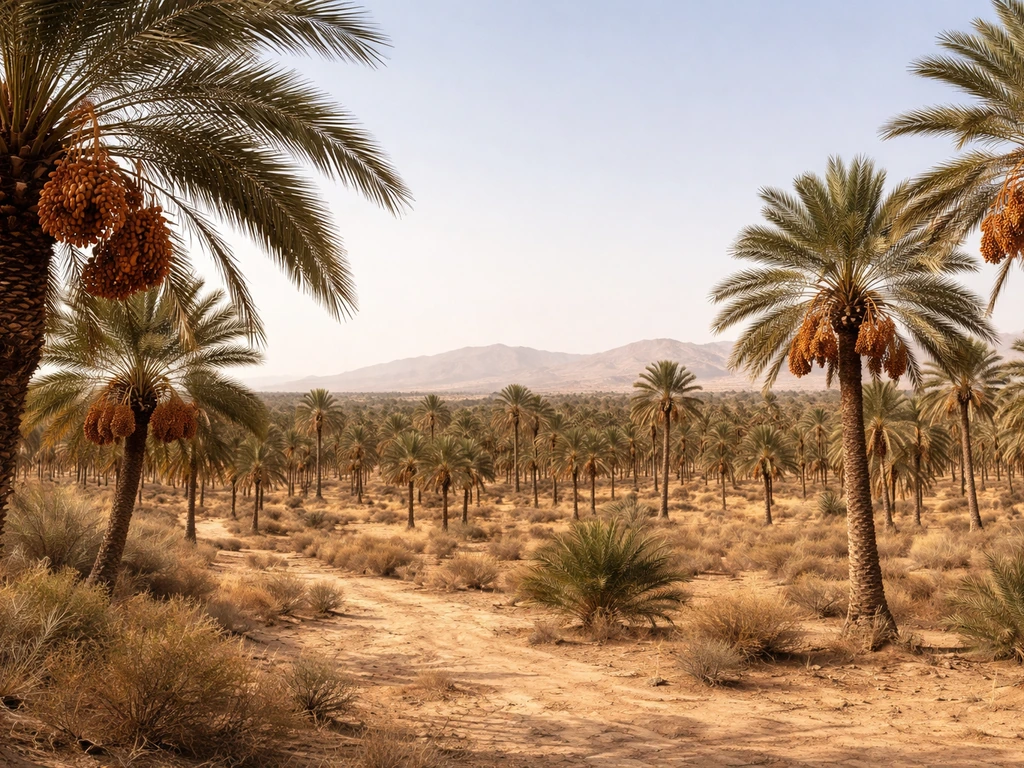
The date palm is a tall, single-stemmed monocot that's been cultivated for thousands of years across hot, arid regions. Each date fruit is technically a drupe, a fleshy fruit with a single hard seed (the pit or stone) inside. One of the most important things to understand from the start is that date palms are dioecious, meaning male and female flowers grow on completely separate plants. Only female palms produce fruit, and they need pollen from a male palm to do it. This single biological fact has huge practical implications: if you grow from seed, roughly half your trees will be male and produce no fruit at all.
Here's a rough look at the timeline you're working with, from propagation to harvest:
| Stage | Seed-grown | Offshoot-grown |
|---|---|---|
| Germination / establishment | 3–8 weeks | Several months to root after separation |
| Juvenile vegetative growth | Several years | Shorter (head start from mother plant) |
| First flowering | ~7–10 years | ~4–6 years |
| Full production | 10+ years | 6–8 years |
| Fruit quality predictability | Low (~10% satisfactory) | High (true-to-type) |
That 10% figure isn't a typo. FAO research shows that in seedling plantations, only around 10% of seed-grown palms produce fruit of satisfactory quality. The rest are either male, low-yielding, or producing poor-quality dates. That's why commercial growers almost exclusively use offshoots or tissue-cultured plants.
Starting from scratch: seed vs offshoot vs tissue culture
You have three ways to start a date palm, and each comes with a different tradeoff between cost, time, and reliability. FAO lists common date palm propagation methods, including seed, offshoots, and tissue culture techniques three ways to start a date palm.
Growing from seed
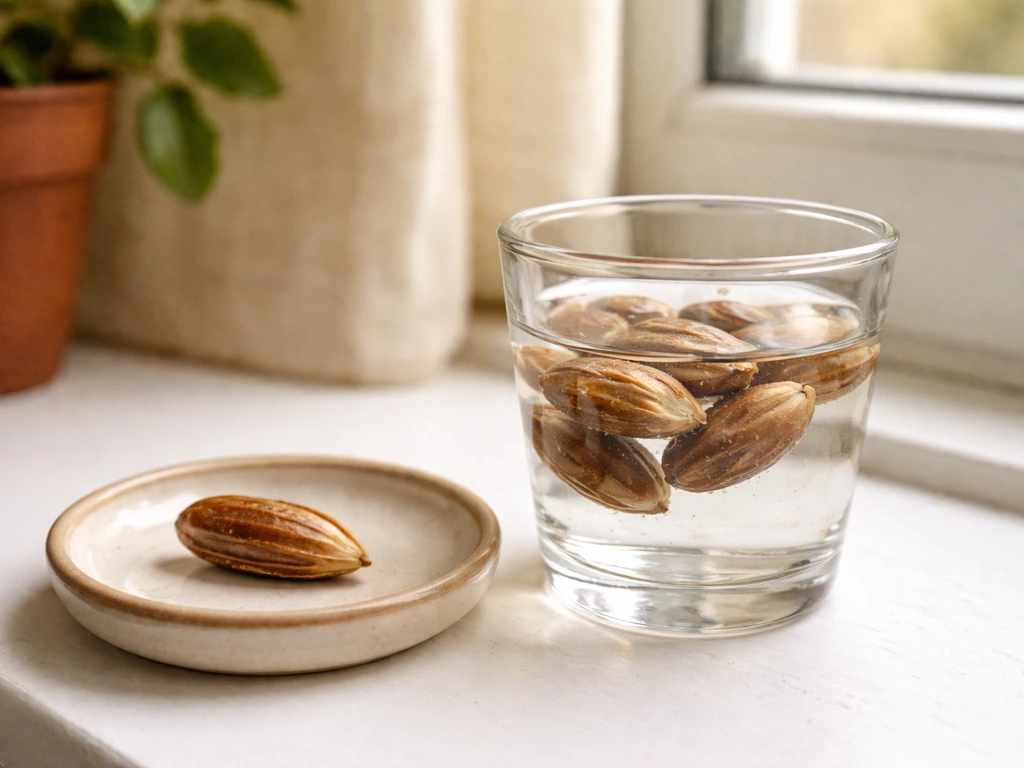
Date palm seeds exhibit natural dormancy, which means they won't just sprout immediately if you stick them in soil. Pre-sowing treatments make a real difference: soak the seed in warm water for 24–48 hours, and consider light scarification (gently nicking or filing the seed coat) to help water penetrate. Research on Phoenix dactylifera shows both soaking and scarification significantly improve germination rates compared to untreated controls. After treatment, plant the seed about 2–3 cm deep in a warm, well-draining mix and keep it consistently moist (not waterlogged). Germination happens fastest when temperatures stay in the mid-20s°C range, around 25–30°C. You'll typically see the first shoot emerge within 3–8 weeks under good conditions.
The big caveat with seeds: you have no idea what you're getting. The resulting palm could be male or female, and even a female palm may produce poor-quality fruit. Growing from seed makes sense if you're a curious learner, doing it for the biology of it, or working in a context where cultivar identity doesn't matter. For anyone who actually wants to eat the dates, it's a gamble.
Offshoot propagation
Offshoots (also called suckers) are lateral shoots that form from axillary buds in the leaf axils of a young date palm during its first decade of vegetative growth. These are genetically identical to the mother plant, so if you take an offshoot from a known female cultivar like Medjool or Deglet Noor, you know exactly what you're getting. The ideal offshoot is about 3–4 years old and weighs roughly 12–20 kg when it's separated from the mother. Younger or smaller offshoots have a harder time rooting and establishing. Poor root formation is actually one of the main challenges in offshoot propagation, and survival rates can be low if the offshoot isn't big enough or if rooting conditions aren't right.
Tissue culture
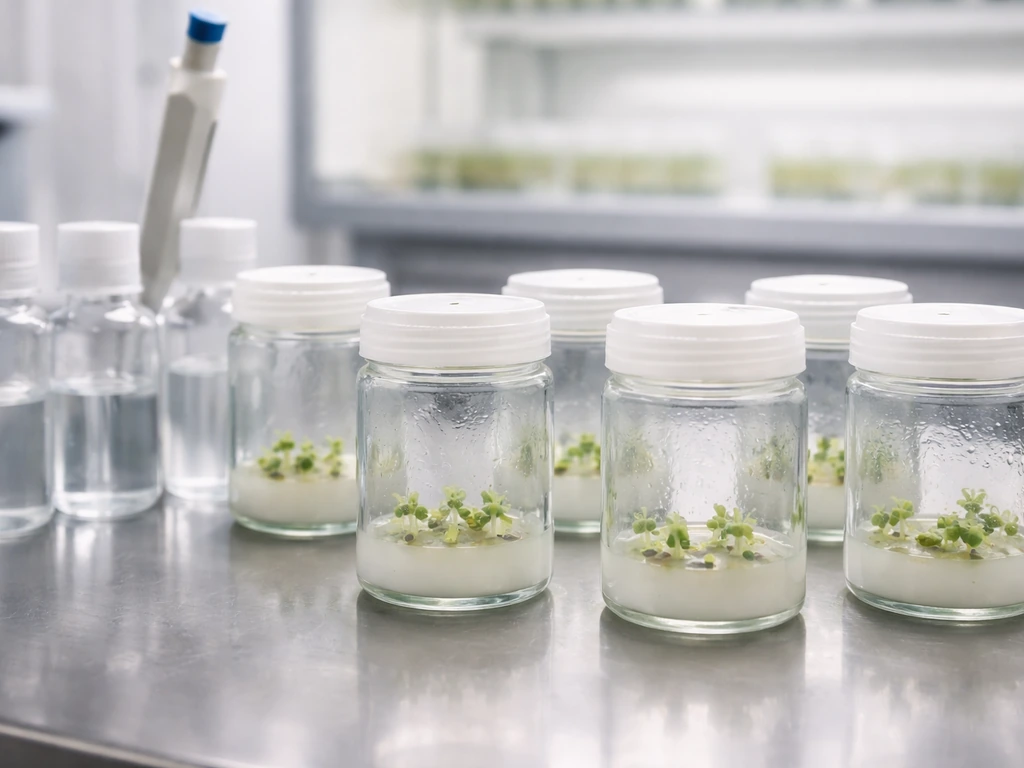
Tissue culture is the commercial solution to scaling up propagation without relying on the limited number of offshoots a palm produces. Plants are grown from small pieces of meristematic tissue in a sterile lab environment, at controlled temperatures (typically around the mid-20s°C) and high humidity. The resulting plants are true-to-type and can be produced in large numbers. For home growers, tissue-cultured plants are sometimes available from specialty nurseries, and they offer the same advantages as offshoots without the harvesting challenge.
How the palm actually grows: roots, leaves, and the machinery behind it
Date palm growth follows the same fundamental biological rules as any other plant, just tuned for extreme heat and drought. The palm has a single apical meristem (growing point) at the top of the stem. This is where cell division happens, producing new leaf primordia continuously throughout the palm's life. Because the entire stem grows from this one protected point, any serious damage to the crown is catastrophic. Unlike a tree that can regenerate from lateral buds along the trunk, a date palm that loses its growing tip is finished.
Root development is equally important and often underestimated. Date palms produce a dense fibrous root system rather than a taproot. These roots extend both horizontally and vertically, seeking water and anchoring the plant. In the early years of establishment, most of the palm's energy goes into root and leaf production rather than height. FAO data confirms that vegetative growth essentially stops below 10°C, and the 'zero vegetation point' (the temperature below which no growth occurs at all) sits around 7°C. Optimum growth happens at roughly 32°C. Between 38–40°C at the growing center, growth rate actually starts to decline, so extreme heat isn't just fine for date palms: it has a ceiling.
Each new leaf that unfolds increases the palm's photosynthetic capacity, generating the sugars and energy needed to push further growth. This is especially relevant when you think about the years-long juvenile phase: the palm is essentially building its own capacity before it can shift energy toward reproduction. Think of it like charging a battery before you can run anything off it. This energy-accumulation phase is what makes patience non-negotiable with date palms.
Water and nutrient transport through the palm happens via vascular tissue (xylem and phloem) running through the trunk and into every leaf. Because palms are monocots, they can't add secondary growth rings like a broadleaf tree does. The trunk diameter is essentially set early in development and doesn't expand much after the palm matures. What you see is what you get in terms of trunk size.
When growth shifts to reproduction: flowering and pollination
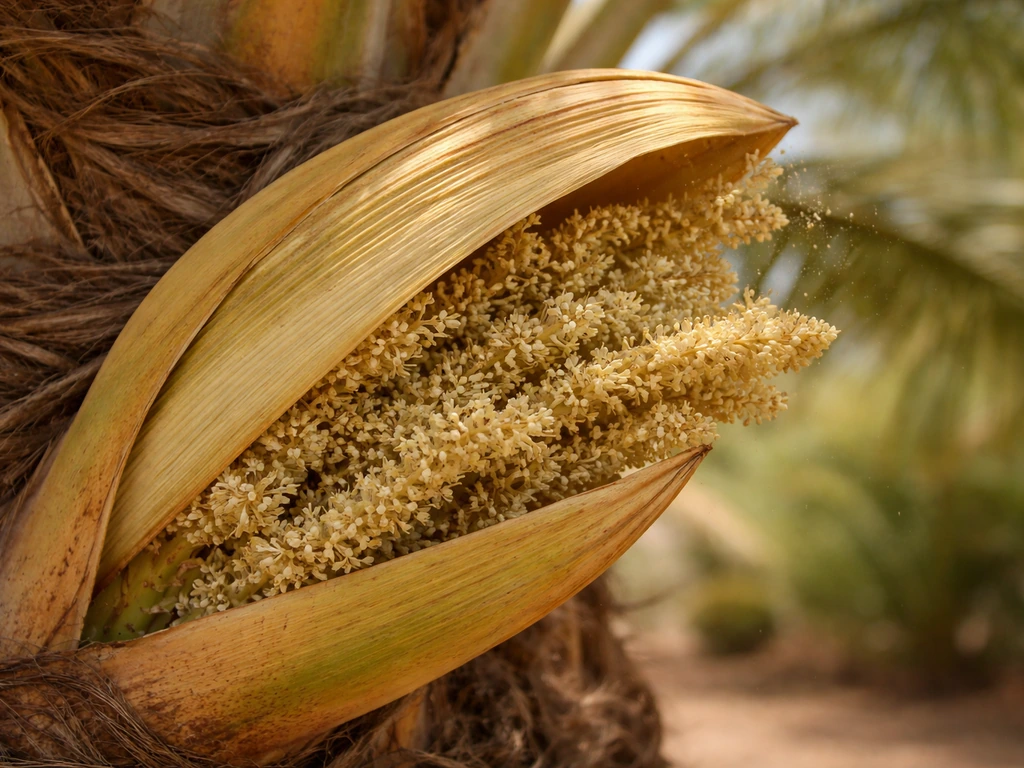
After years of vegetative growth, the palm undergoes a developmental transition and starts producing flower spathes instead of just leaves. This shift is tied to both internal developmental maturity and environmental cues, particularly temperature. FAO is clear on this: flowering only occurs when shade temperatures rise above 18°C. If you're trying to grow date palms in a cooler climate and wondering why your palm never flowers, that threshold is probably your answer.
The flowers emerge enclosed in a tough spathe (a leaf-like sheath). When the spathe splits open, you have a limited window to act. Because date palms are dioecious, natural pollination by wind or insects is unreliable and insufficient for consistent fruit set. Hand pollination is the standard in cultivation, whether commercial or home-scale. The technique is straightforward: collect fresh pollen from male flower clusters and apply it directly to open female flower clusters. Timing is critical. Delaying pollination by more than about a week after the female spathe opens can significantly reduce fruit set. One FAO method (placing male flower material in the crown of the female) achieved around 80% fruit set, while classical hand pollination methods achieved around 60%. Either way, manual pollination dramatically outperforms leaving it to chance.
If pollination fails or is skipped, female flowers either drop or develop into seedless, misshapen parthenocarpic fruits with little commercial or culinary value. One male palm can pollinate multiple females (commonly used in a ratio of roughly 1 male per 25–50 females in commercial settings). Mismatch in flowering timing between your male and female palms (a phenomenon called dichogamy) is a practical challenge worth planning around: collect and store pollen from males if your trees don't flower simultaneously.
From pollination to harvest: how dates ripen
Once pollination is successful, fruit development moves through five distinct stages. These stages have traditional Arabic names that are still widely used in date cultivation research and practice.
| Stage | Description | Approx. duration after pollination |
|---|---|---|
| Hababouk | Tiny fruit, rapid early cell division | Weeks 1–4 |
| Kimri | Green, hard, high moisture, bitter | Up to ~17 weeks total |
| Khalal | Full size, color change begins, crunchy | ~6 weeks after Kimri |
| Rutab | Softening, browning, sugar rising | ~4 weeks after Khalal |
| Tamar | Fully ripe, moisture drops to ~10–25%, sweet and shelf-stable | ~2 weeks after Rutab |
The entire journey from pollination to ripe Tamar-stage dates takes roughly 6–7 months, which means date palms need a long, hot, dry summer to complete the process. Temperatures above 25°C are required for proper fruit development and ripening. High humidity or rain during the ripening stages (especially Khalal and Rutab) can cause fruit to crack, ferment, or fail to reach the Tamar stage properly. This is one reason why classic date-growing regions like the Middle East, North Africa, and the Coachella Valley in California produce such good fruit: they have the heat and dryness to carry development all the way through.
Fruit quality is driven by this sugar-water balance. At the Tamar stage, moisture content drops well below 25% (and can reach 10% or less in dry climates), concentrating sugars and giving the fruit its characteristic sweetness and long shelf life. Early harvesting at the Khalal stage is practiced for some cultivars that are eaten crunchy, but most of the dates you find in stores have reached at least the Rutab or Tamar stage.
What limits growth and fruit quality
Date palms are famously tough, but 'tough' doesn't mean 'anything goes.' Several environmental and biological factors can seriously stall growth or prevent fruiting.
Temperature
As covered above, three temperature thresholds matter most: vegetative growth stops below 10°C, flowering requires shade temperatures above 18°C, and fruit development needs sustained heat above 25°C. Growing date palms in climates that don't reliably hit these numbers will result in slow growth, no flowers, or immature fruit. Frost can damage or kill palms, especially young ones. If you're in a marginal climate, container growing and overwintering indoors is an option, though fruiting becomes very difficult without sufficient seasonal heat.
Water and salinity
Date palms are drought-tolerant but not drought-immune. They need consistent deep watering, especially during the long fruit development season. Poor drainage is actually a bigger killer than drought in many home-growing situations: waterlogged roots lead to root rot. On the salinity side, date palms are more tolerant than most fruit crops, but there are still limits. Soil electrical conductivity (ECe) should stay below around 4 dS/m, and irrigation water EC should be under approximately 2.7 dS/m for optimal results. If you're using slightly saline water, applying extra water as a leaching fraction (allowing it to flush salts below the root zone) helps manage buildup. FAO data shows that with proper leaching, palms can tolerate water salinity up to about 3.5 mmhos/cm with no yield reduction.
Soil and nutrients
Well-draining sandy loam or loamy soils are ideal. Date palms don't tolerate heavy clay or waterlogged conditions. Nutritionally, the most common deficiencies seen in palms are nitrogen (which slows overall growth rate), potassium (which causes yellowing, marginal leaf burn, and frizzled fronds), and magnesium (which shows up as marginal chlorosis on older leaves). Slow-release fertilizer formulations for N, K, and Mg are recommended over soluble quick-release forms, which can leach through sandy soils before the plant can use them. Avoid high-phosphorus fertilizers unless a soil test confirms deficiency, as excess phosphorus can interfere with micronutrient uptake.
Pests and diseases
The most serious pest threat to date palms worldwide is the red palm weevil (Rhynchophorus ferrugineus). The larvae bore into the crown and trunk, destroying internal tissue before you even know there's a problem. By the time you see external symptoms, the damage is often severe. Early detection through monitoring (checking for holes, sawdust-like frass, or the distinctive fermenting smell) and preventive treatment where the pest is present in your region is critical. Other Rhynchophorus species cause similar damage in different parts of the world. Bayoud disease (caused by Fusarium oxysporum) is a devastating fungal wilt disease affecting palms in North Africa, but it's less of a concern in most home-growing regions.
Step-by-step guide to growing dates successfully
Here's how to put everything above into a practical sequence, whether you're starting today or troubleshooting a palm you already have.
- Choose your propagation method. If you want fruit reliably and sooner, get an offshoot or tissue-cultured plant from a known female cultivar. If you're growing for curiosity or education, seeds are fine, but manage your expectations. You may wait a decade and still get a male palm.
- Prepare the right soil. Use well-draining sandy loam. If planting in a pot, mix sand, perlite, and a small amount of compost (roughly 50/30/20). Avoid heavy soils or containers without drainage holes.
- Plant at the right time. In temperate climates, plant in late spring when soil temperatures are consistently above 18°C. In hot desert climates, early spring planting avoids the most intense summer heat during the vulnerable establishment phase.
- Water deeply and infrequently. Young palms need regular moisture, but the soil should dry slightly between waterings. Established palms prefer deep, infrequent irrigation that encourages deep rooting. During fruit development (Kimri through Tamar), consistent water is especially important for fruit size and quality.
- Fertilize with slow-release palm formulas. Apply a balanced slow-release palm fertilizer 2–3 times per year during the growing season. Look for formulations that include magnesium. If you see frizzled or spotted fronds, get a soil test before adding more nutrients.
- Plan for pollination before flowering starts. If growing multiple palms, keep at least one male. Learn to recognize spathes and check them regularly during spring. Have a plan for collecting and applying pollen within the first few days of female spathe opening. If your male and female palms don't flower simultaneously, collect male pollen and store it in a sealed container in the freezer.
- Monitor for pests continuously. Check the crown and base of the fronds monthly. If you're in a region where red palm weevil is present, consult your local agricultural extension for preventive treatments. Early action is the only effective strategy.
- Be patient and realistic. A seed-grown palm won't fruit for roughly 7–10 years. An offshoot-grown palm from a reputable cultivar may fruit in 4–6 years. Fruiting also requires sustained summer heat above 25°C for several months. If your climate doesn't provide this naturally, outdoor fruiting is unlikely.
Troubleshooting common problems
| Problem | Likely cause | What to do |
|---|---|---|
| Seed won't germinate | Dormancy, insufficient heat, waterlogged soil | Soak seed 24–48 hrs, scarify lightly, maintain 25–30°C, improve drainage |
| Slow vegetative growth | Temperature below 10°C, poor nutrition, waterlogging | Check soil drainage, add slow-release fertilizer, move to warmer location |
| Palm won't flower | Too young, temperatures not reaching 18°C consistently | Verify age and heat accumulation; in marginal climates, fruiting may not be realistic |
| Poor fruit set after pollination | Delayed pollination, poor pollen viability, water on flowers | Pollinate within the first week of spathe opening, protect flowers from rain |
| Fruit dropping early | Pollination failure, water stress, nutrient deficiency | Confirm pollination succeeded; check irrigation consistency; test soil nutrients |
| Yellow or frizzled fronds | Potassium or magnesium deficiency | Apply slow-release K/Mg fertilizer; get soil test to confirm |
| Holes or frass near crown | Red palm weevil | Contact local extension immediately; apply appropriate systemic treatment |
The big picture: growth as an energy investment
When you zoom out, everything about how date palms grow comes back to energy allocation. The palm spends years building leaf area and root systems, accumulating the photosynthetic capacity it needs to eventually shift into reproduction. That transition, from vegetative to reproductive growth, is a biological commitment: once the palm enters full generative phase, it stops producing offshoots and pours resources into flowering and fruiting instead. This is the same principle you see across many long-lived plants, and it's why rushing the process (through over-fertilizing, stressing the plant, or trying to shortcut the juvenile phase) rarely works.
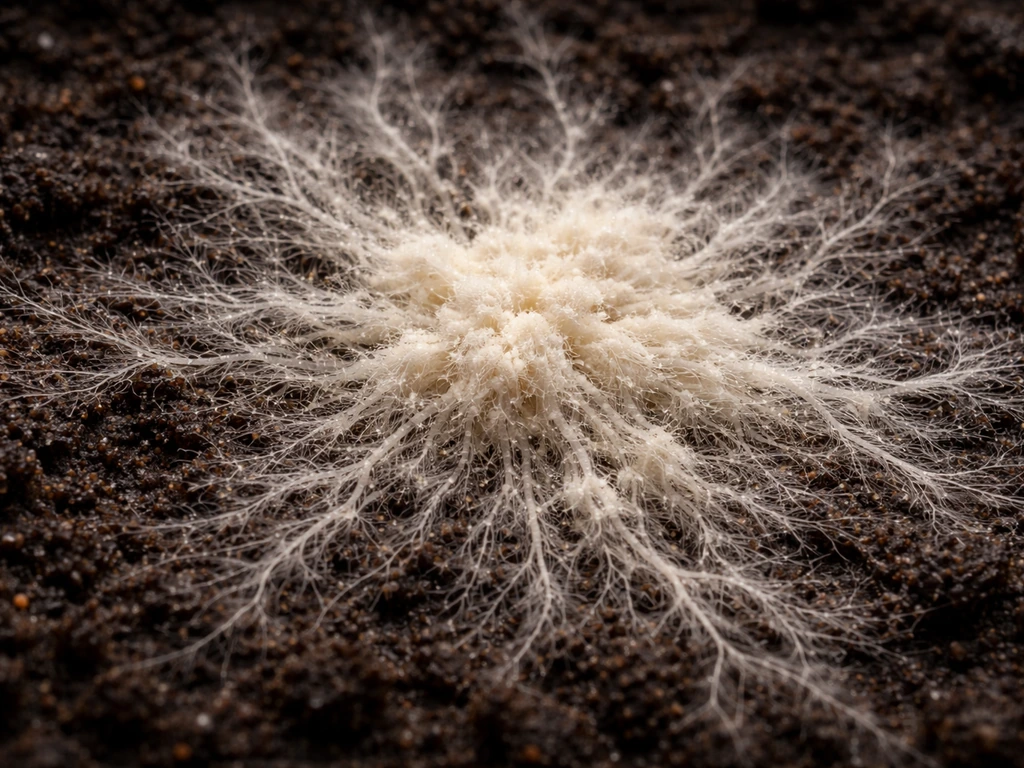
If you're interested in the deeper biology of how plants grow, how cell division and expansion drive shoot and root elongation, or how similar processes play out in other fruits like figs and apples, the mechanisms are surprisingly similar across species even when the timelines and forms look completely different. Understanding how hyphae grow is a useful comparison to how plant-like tissues expand and sustain growth in living systems. If you're curious about another fruit altogether, the same idea of growth stages and energy use applies to figs too, so exploring fig how does it grow can help you compare patterns. If you're wondering about apples too, the core growth biology behind how they grow can also make the timing and care feel more predictable apple how does it grow. If you're also curious about a different organism, mycelium growth follows its own biology for how fungal networks expand through a substrate how does mycelium grow. Date palms are just an extreme case: long-lived, heat-loving, and demanding in ways that reward growers who understand the biology rather than just following a calendar.
The bottom line: if you want to grow dates, start with an offshoot from a known female cultivar, give it well-drained soil, deep infrequent water, a hot dry summer, and a plan for hand pollination. Do those things consistently for several years and you'll get fruit. Skip any one of them and the biology of the plant will make sure you know about it.
FAQ
Can I grow date palms indoors and still get fruit?
You can grow a date palm indoors for foliage, but fruiting usually needs a full seasonal heat pattern and enough time for flowering to occur. Even if temperatures stay warm indoors, you also need a pollination plan (male and female plants, synchronized flowering, and a hand-pollination window). If your area cannot reliably reach the fruit-development heat, expect mostly vegetative growth and little to no harvest.
Why won’t my female date palm flower even though it’s healthy?
Flowering depends heavily on consistent warmth, not just “warm enough most days.” If shade temperatures do not stay above the flowering threshold, the palm can remain in the leaf-production stage for years. Also, if the growing tip or crown is damaged, the palm can fail to progress because it cannot regenerate the protected growing point.
What’s the fastest way to get fruit at home?
The most reliable approach is an offshoot from a known female cultivar, sized well for establishment (roughly 12 to 20 kg, or otherwise strong enough to root). Tissue-cultured plants can also be fast and true-to-type when available locally. Seed-grown palms are usually slow and unpredictable for fruit quality and sex, so they are a poor choice if speed is the goal.
How do I tell whether a date palm is male or female before flowering?
You generally cannot confirm sex until flowering or close to it. With seed-grown palms this is especially important because you may end up with half your trees male. If you want to avoid surprises, buy known-female offshoots or tissue-cultured plants when possible.
If I have only one male palm, how many females can it pollinate?
One male palm can commonly pollinate multiple females in commercial practice, often around one male per 25 to 50 females, but real results depend on how synchronized your flowering times are and whether you can effectively supply pollen to each female cluster. If your goal is smaller-scale fruit, many growers simply collect pollen and apply it directly to each open female spathe at the right time.
Do I have to pollinate every year, or can I rely on natural pollination?
For consistent fruit set, hand pollination is typically required because wind or insect delivery is unreliable in many cultivation settings. If you skip pollination during the short spathe-opening window, female flowers may drop or form low-quality parthenocarpic fruits. The “when” matters as much as the “whether” because fruit set can drop significantly if pollination is delayed more than about a week after opening.
How can I keep salt from building up in my soil or irrigation water?
Use a leaching strategy, meaning you periodically apply extra water to flush salts below the root zone. This is especially important with slightly saline irrigation water, because salts accumulate faster in poor-draining setups. Pair leaching with well-drained soil, since waterlogged conditions promote root rot even if salts are managed.
What are the most common mistakes that stall growth?
The biggest killers are cold stress (growth stops below the vegetative threshold), poor drainage, and nutrient imbalance. Over-fertilizing can also backfire because excessive stress or pushing the palm too hard can disrupt long-term energy allocation. Finally, avoid harming the crown, because loss of the apical growing point usually ends the palm’s future growth.
My fronds look yellow or ragged, is it always a watering issue?
Not always. Yellowing with frizzled or marginally burned fronds often points toward potassium-related issues, while marginal chlorosis on older leaves can indicate magnesium deficiency. Nitrogen deficiency usually shows up as generally slow growth. A soil or leaf analysis helps, but the practical takeaway is to correct the specific nutrient first rather than just changing water frequency.
How do I recognize red palm weevil problems early?
Look for early signs like holes in the crown or trunk, sawdust-like frass, or a distinct fermenting smell that suggests internal boring activity. Because larvae work inside before symptoms show externally, delaying inspection until the palm looks visibly damaged often means the infestation is already advanced.
If my date fruit cracks or ferments, what should I change?
Cracking and fermentation are commonly linked to high humidity or rainfall during the late fruit stages. The solution is mainly environmental or location-based, since you cannot fully control outdoor weather. If you are growing in a wetter or cooler region, plan for protection during the Khalal-to-Rutab window (for example, physical shelter) and prioritize a site that stays dry during ripening.
Next Article
How Does Mycelium Grow: Growth Steps, Needs, and Troubleshooting
Step by step how mycelium grows from hyphae to colony, where it spreads, needs, limits, and fixes for stalled growth.