Here is the short answer: unicellular organisms can grow larger, but only up to a point, and that point is set by physics, not biology. As a cell gets bigger, its volume balloons faster than its surface area can keep up. That imbalance makes it progressively harder to import nutrients, offload waste, and keep internal chemistry stable. Most single-celled organisms solve the problem not by getting bigger but by dividing, which resets the surface-area-to-volume ratio back to a workable range. A few remarkable exceptions exist, but even those cheated by evolving clever internal workarounds, not by breaking the rules.
Why Can Unicellular Organisms Grow Larger? Constraints Explained

Marcus Whitmore
24 Mar 2026
Why there is a practical ceiling on cell size

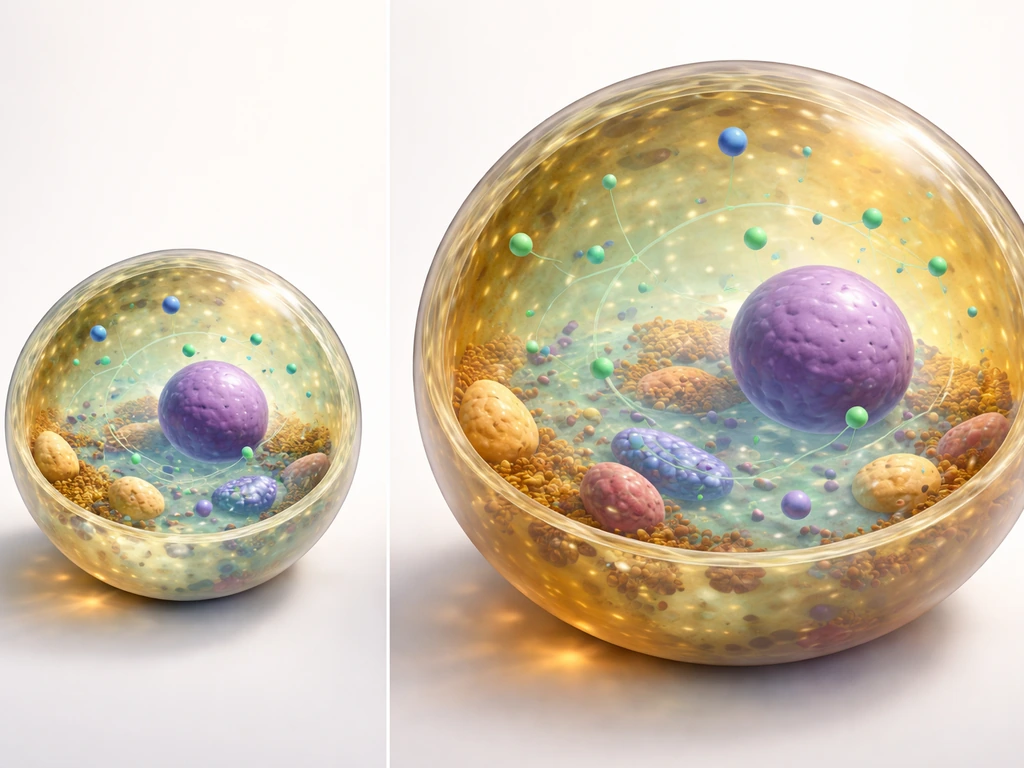
Think about a growing balloon. As you inflate it, the inside volume grows much faster than the rubber surface does. A cell faces the exact same geometry. When a cell doubles in diameter, its surface area increases by about 4 times (2 squared), but its volume increases by about 8 times (2 cubed). That 2:1 gap between surface and volume growth means the membrane available per unit of cytoplasm keeps shrinking with every increment in size.
Why does that matter? Because every resource the cell needs, oxygen, sugars, ions, signaling molecules, has to cross that surface to get inside. Every waste product has to cross it going out. A cell that doubles in volume but only gains 4/8 of the surface increase it needs is, by definition, working with less membrane real estate per unit of metabolic demand. At small sizes the gap is manageable. At large sizes it becomes a genuine bottleneck that no amount of metabolic cleverness can fully overcome.
The surface area vs. volume tradeoff, in real numbers
A sphere with radius r has surface area 4πr² and volume (4/3)πr³. The ratio of surface to volume is 3/r. Double the radius, and that ratio drops by half. That means a cell with a 10 μm radius has only half the surface area per unit volume of a cell with a 5 μm radius. Scale up to 100 μm and the ratio is 10 times worse than it was at 10 μm. The math is unforgiving, and it applies to every cell regardless of species.
This is not just an abstract ratio. It directly controls how efficiently the cell can feed itself and breathe. Smaller cells have more membrane relative to the cytoplasm they need to service. Larger cells have progressively less. At some point, no matter how many transport proteins you pack into the membrane, the geometry simply cannot deliver enough raw materials to keep up with the metabolic demand of all that extra cytoplasm.
Diffusion slows down dramatically with distance
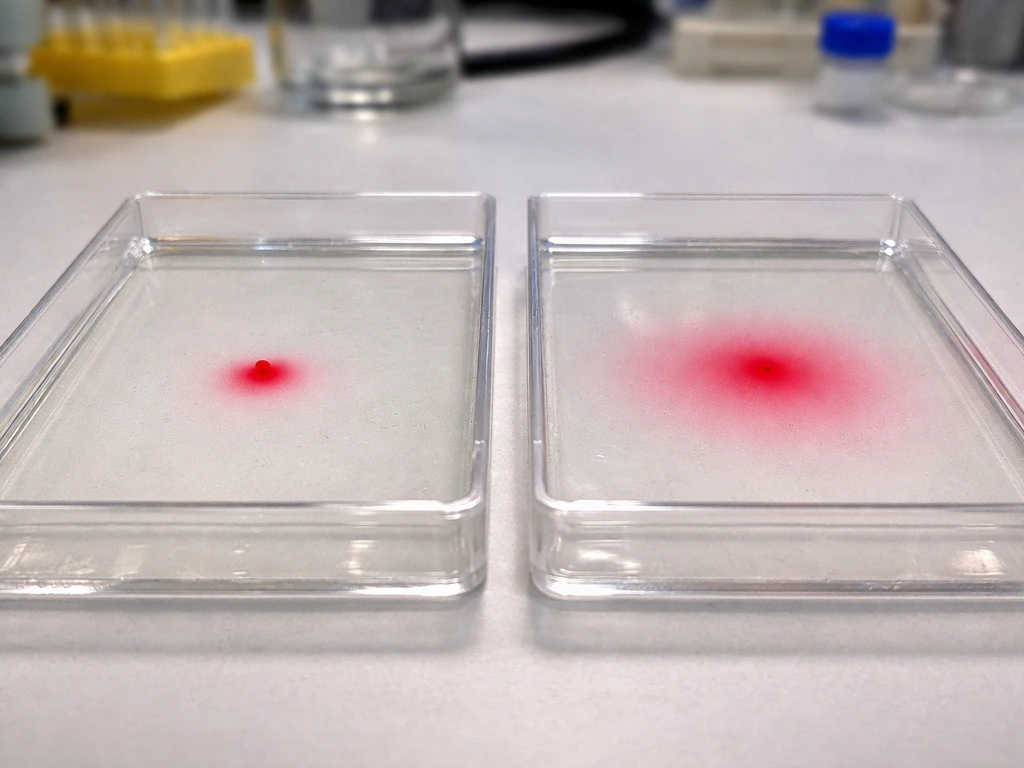
Once a molecule enters the cell, it still has to travel to wherever it is needed. That travel happens largely by diffusion, which is far slower than most people expect inside a cell. The characteristic time for a molecule to diffuse a distance x scales as roughly t ≈ x²/(2D), where D is the diffusion coefficient. That squared term is the killer. Double the distance a molecule has to travel and you quadruple the time it takes to get there.
Inside the cytoplasm, diffusion is already sluggish. Measured diffusion coefficients for small molecules in mammalian cytoplasm are around 3.3 × 10⁻⁶ cm²/s, which is considerably slower than diffusion in free water. The cytoplasm is crowded with proteins, organelles, and structural filaments. A small bacterium like E. coli, at about 1–2 μm in length, can rely on diffusion because distances are tiny and the math works out. A cell 100 times larger faces diffusion times roughly 10,000 times longer for molecules to traverse the same fraction of its interior. That is the difference between microseconds and tens of milliseconds, or even seconds, for a process that needs to happen continuously just to keep the cell alive.
There is also a transport bottleneck before the molecule even enters. Molecules approaching the cell surface must cross a thin region called the diffusive boundary layer, a zone where fluid mixing is limited and diffusion dominates. In some biological contexts this unstirred layer has an effective thickness of nearly 2 μm, and in larger marine environments boundary layers can be 0.5–0.7 mm thick. A larger cell creates a larger boundary layer around itself, adding yet another resistance step on top of the membrane crossing itself.
Oxygen and nutrient supply hit the wall first
Of all the resources a cell needs, oxygen is the most unforgiving. It cannot be stored in any meaningful quantity, it is consumed continuously by respiration, and the only way to get it inside is diffusion. Transport resistance for oxygen involves at least three serial bottlenecks: diffusion through the external boundary layer, crossing the cell membrane (where membrane permeability and thickness both matter), and then diffusing through the cytoplasm to mitochondria or reaction sites.
Classic experimental work on human erythrocytes evaluates how the red cell membrane and the external diffusion boundary layer, or unstirred layer, together limit oxygen uptake [diffusion through the external boundary layer](https://pmc. ncbi. nlm. nih.
gov/articles/PMC1248796/). Any one of those layers can become the rate-limiting step, and as cell size grows, all three get harder simultaneously.
Nutrients face a similar problem. Glucose, amino acids, and ions enter through membrane transporters that are spatially fixed on the surface. A larger cell needs more of them per unit time just to sustain its baseline metabolism, but the surface-area-to-volume math means it has proportionally fewer transporter slots available per unit of cytoplasm. You can pack more transporters in, but eventually you hit physical limits on how densely they can be arranged in a lipid bilayer.
Waste removal and internal chemistry
Every metabolic reaction produces byproducts. Carbon dioxide, ammonia, hydrogen ions, heat, metabolic intermediates that become toxic in high concentrations. In a small cell, these diffuse to the membrane and exit quickly. In a large cell, waste produced deep in the cytoplasm has a long diffusion path before it reaches the surface, which means it accumulates. Accumulating waste products shift the cell's internal pH, alter enzyme activity, and can inhibit the very reactions the cell depends on.
This is not a hypothetical concern. Maintaining homeostasis, keeping internal ion concentrations, pH, and redox state within tight operating ranges, requires continuous and rapid exchange with the outside environment. The larger the cell, the harder that continuous exchange becomes. At some size, the waste produced in the interior simply cannot get out fast enough to prevent toxic buildup, no matter how hard the cell works.
There is also an internal chemistry dimension. Cells rely on concentration gradients for signaling, gene regulation, and metabolic control. Many of these systems assume that molecules can diffuse from one side of the cell to another quickly enough to coordinate a response. In a large cell, those gradients take longer to establish and longer to dissipate. The cell's ability to sense and respond to its own internal state degrades with size. Messenger RNA transcripts, for example, would take too long to diffuse from gene to ribosome across a large cytoplasmic volume without special internal organization to shorten the effective distance.
Mechanical stability: when the cell's structure can't keep up
A cell is not just a bag of water. It has a membrane under tension, a cytoskeleton that provides internal scaffolding, and, in bacteria, a cell wall that bears mechanical load. All of these structures face scaling challenges as cell size increases.
Membrane tension increases with radius, following the same basic physics as a soap bubble: the pressure difference across the membrane scales roughly as 1/r for a cylinder or sphere. A larger cell therefore needs proportionally stronger membrane support or it risks rupture. The cytoskeleton must also span greater distances to maintain cell shape, and the force it needs to generate grows with cell size. Actin networks, microtubules, and intermediate filaments that work elegantly in a 10 μm cell face a much tougher mechanical engineering problem in a 100 μm cell.
Even internal processes like chromosome segregation hit physical ceilings. Research in 2025 showed that spindle size, the structure responsible for pulling chromosomes apart during division, scales linearly with cell size in small cells but then decouples and reaches an upper limit in large cells. That means cell division itself becomes mechanically problematic as cell size increases, adding another layer of constraint beyond just nutrient and waste logistics.
How unicellular growth actually works: division, not enlargement
So how do single-celled organisms grow at all? They do grow, just not by getting indefinitely larger. For a direct look at the process, see how does a one celled organism grow at all. A typical bacterium like E. coli absorbs nutrients, synthesizes proteins and lipids and DNA, and roughly doubles its mass and volume. Then it divides. Each daughter cell is back to the original size, with the original surface-area-to-volume ratio, and the whole process restarts. Growth for most unicellular organisms is fundamentally a cycle of enlargement followed by division, not a trajectory toward a larger steady-state size. do unicellular organisms grow
This is a crucial distinction if you are also thinking about how multicellular organisms grow. A multicellular body grows by adding new cells through division, not by making each cell larger. That strategy sidesteps the surface-area-to-volume problem entirely because each individual cell stays small. You can read more about how that works in a companion article on how multicellular organisms grow. For single-celled life, division is the only equivalent strategy, and it works remarkably well within its constraints.
The giant exceptions, and why they are not really exceptions
Two bacteria are often cited as proof that the rules can be broken: Epulopiscium fishelsoni and Thiomargarita magnifica. Reviews of bacterial size and diffusion considerations also discuss giant bacteria such as Epulopiscium on the large end of bacterial dimensions Epulopiscium fishelsoni. Epulopiscium can reach about 500 μm in length and 52 μm in diameter, with a volume estimated around 354,000 μm³, roughly a million times larger than a typical E. coli-sized cell. Thiomargarita magnifica can be up to 2 cm long, which means it is visible to the naked eye, an almost absurd size for a single bacterium.
But look closely at how they manage it. Thiomargarita magnifica keeps most of its cytoplasm in a thin peripheral layer around the cell edge, pushed there by a large central vacuole filled with fluid. That design keeps the diffusion distance from the membrane to the active cytoplasm relatively short, even though the overall cell is enormous. The cell is essentially cheating the surface-area-to-volume problem by making its interior mostly inert and concentrating its metabolic machinery close to the membrane. Similarly, giant sulfur bacteria in the Beggiatoa group use vacuolar structures specifically to address diffusion limitation when cell diameters exceed a few micrometers.
Epulopiscium uses a different trick: extreme internal organization, with DNA and related machinery distributed in a structured way rather than floating free in a large cytoplasmic volume, which reduces the effective distances that transcripts and signals must travel. Both organisms confirm rather than contradict the underlying constraints. They are large because they evolved special architecture to keep diffusion distances small. Remove those adaptations and they would face the same size ceiling as every other single-celled organism.
A quick comparison: what limits size at different scales
| Constraint | How it limits cell size | What happens as cell grows larger |
|---|---|---|
| Surface area vs. volume | Less membrane per unit of cytoplasm | Fewer transporter slots, less gas exchange capacity per cell volume |
| Diffusion distance | Scales as time ∝ distance² | Nutrient/O₂ delivery and waste removal slow dramatically |
| Boundary layer resistance | Unstirred layer adds external transport barrier | Layer grows with cell size, adding resistance before membrane crossing |
| Internal chemistry/homeostasis | pH, ions, redox must stay balanced | Waste accumulates in interior; gradients take longer to form and clear |
| Mechanical stability | Membrane tension and cytoskeletal force scale with size | Larger cells need stronger scaffolding; spindle size hits a physical ceiling |
| Gene/mRNA transport | Transcripts diffuse slowly across cytoplasm | Coordination of gene expression degrades; requires internal organization workarounds |
How to think about this going forward
If you want to build real intuition for these limits, start with the diffusion time formula: t ≈ x²/(2D). Pick a realistic D for cytoplasm (around 3 × 10⁻⁶ cm²/s for small molecules) and plug in different distances. At 1 μm the diffusion time is on the order of microseconds. At 100 μm it is on the order of seconds. At 1 mm it approaches minutes. A cell that needs to deliver oxygen to its core in microseconds but is 1 mm across is in serious trouble. Running those numbers yourself makes the constraint feel concrete rather than abstract.
It is also worth thinking about what distinguishes a unicellular organism that grows and divides from a multicellular organism that grows by adding cells. It is also worth thinking about what distinguishes a unicellular organism that grows and divides from a multicellular organism that grows by adding cells. The unicellular organism is always racing against the clock to divide before it outgrows its own logistics, which is why unicellular organisms cannot simply scale up.
The multicellular organism keeps each cell small and uses specialization, blood vessels, lungs, kidneys, to solve the supply and waste problems at the organismal level rather than the cellular level. That is a completely different growth strategy, and understanding why unicellular organisms cannot simply scale up helps explain why the multicellular body plan was such a significant evolutionary development.
If you are curious how that comparison plays out mechanistically, the article contrasting how unicellular and multicellular organisms grow goes deeper into those differences.
The bottom line is this: unicellular organisms are not small because they lack ambition. They are small because physics requires it. The surface-area-to-volume ratio, diffusion kinetics, waste accumulation, and mechanical stress all converge on the same answer: stay small, divide often, and reset the geometry back to something workable. The exceptions that got around those limits did so only by fundamentally reorganizing their interiors, which is really just another way of honoring the same physical rules.
FAQ
If the main problem is transport limits, how does a unicellular organism know when it is “too big” to keep growing?
Many single-celled organisms limit size by using a division timer plus feedback from the inside logistics. If nutrient uptake, ATP generation, or waste removal slows due to increasing transport distances, cells either stall growth or trigger division sooner rather than later. The key point is that division is not just a clock, it is coupled to whether the cell can still meet its metabolic demand at its current size.
Do the diffusion and surface-area constraints apply the same way to every kind of large single cell?
Not always. Large cells often reduce the effective diffusion distance by relocating active chemistry near the membrane (for example, peripheral layers) or by segregating inert storage in a central compartment. That strategy can preserve transport rates without shrinking the whole cell, so the bottleneck shifts from “cell is large” to “active region is close enough.”
Is oxygen always the main limiting factor for why single cells stay small?
They can differ in what is limiting first, but the scaling trend is the same. Oxygen is frequently the tightest constraint because it cannot be stored and must be supplied continuously, so it often becomes rate limiting. In other environments or life styles, a different molecule becomes limiting first, such as nitrate, hydrogen sulfide, or specific ions needed to maintain enzyme activity.
Can a cell compensate for low surface-area-to-volume ratio by just adding more transporters to the membrane?
Yes, and it is usually underestimated. Even if the membrane and boundary layers allow molecules to enter and exit, diffusion through the interior can still dominate delivery to reaction sites. The result is that a cell can have enough transporters to import material, but still be too large because the internal travel time is too slow to sustain reactions everywhere.
What happens if a unicellular organism tries to “buy” more performance by making its cytoplasm denser or more crowded?
Increasing cell density can worsen the problem if it increases the effective viscosity or crowding, which tends to reduce diffusion coefficients and can increase diffusion time nonlinearly with distance. Some organisms counter this by reorganizing the cytoplasm into compartments, creating near-membrane regions where active processes are concentrated.
Do some unicellular organisms ever exceed their usual size limits in the lab, and why doesn’t that become permanent growth?
In stable lab conditions, some unicellular organisms can become larger temporarily, but prolonged growth typically triggers division or cell cycle arrest. When conditions change, such as lower nutrient availability or altered viscosity, the maximum sustainable size can drop because both transport into the cell and transport within it become slower or less effective.
Could a unicellular organism reach larger sizes if it solved nutrient and waste transport, ignoring division mechanics?
Cell division itself is also geometrically constrained, because mechanically pulling and segregating internal contents must remain feasible as the cell enlarges. Beyond a certain size, the physical machinery for division, including spatial requirements for pulling structures and the cytoskeletal forces they generate, can become limiting even if nutrients and waste logistics are manageable.
What does it mean, in practice, to “cheat” the constraints, and what internal design features actually do the cheating?
Yes. One way is to effectively reduce “active volume” by storing most biomass in a vacuole or inert form and keeping metabolic reactions in a thin shell. Another is to reduce effective diffusion distances by internal organization, such as arranging DNA and regulatory systems so signaling molecules do not have to traverse the full cytoplasmic diameter each time.
Does cell shape change the surface-area-to-volume limitation enough to allow much larger unicellular organisms?
For a spherical cell, the scaling is unforgiving, but real cells are not perfect spheres. Elongated shapes, folds, and surface complexity can increase effective membrane area somewhat, which can raise the practical size ceiling. However, unless the geometry scales in a way that keeps surface-per-volume from dropping, the same fundamental limitation eventually dominates.
If multicellular organisms also have diffusion limits, how do they avoid the same “too large” problem at the organism level?
Multicellularity avoids the single-cell transport ceiling by keeping each cell small and distributing supply and waste handling across the organism. Even so, multicellular animals still face diffusion and transport constraints, they just shift them to specialized structures and pathways, like vessels and ventilation, rather than relying on diffusion across one large interior.
Next Article
What Controls When and How Fast Cells Grow and Divide
Learn what controls cell division timing and speed: checkpoints, signals, resources, DNA damage, stress, and failure lea