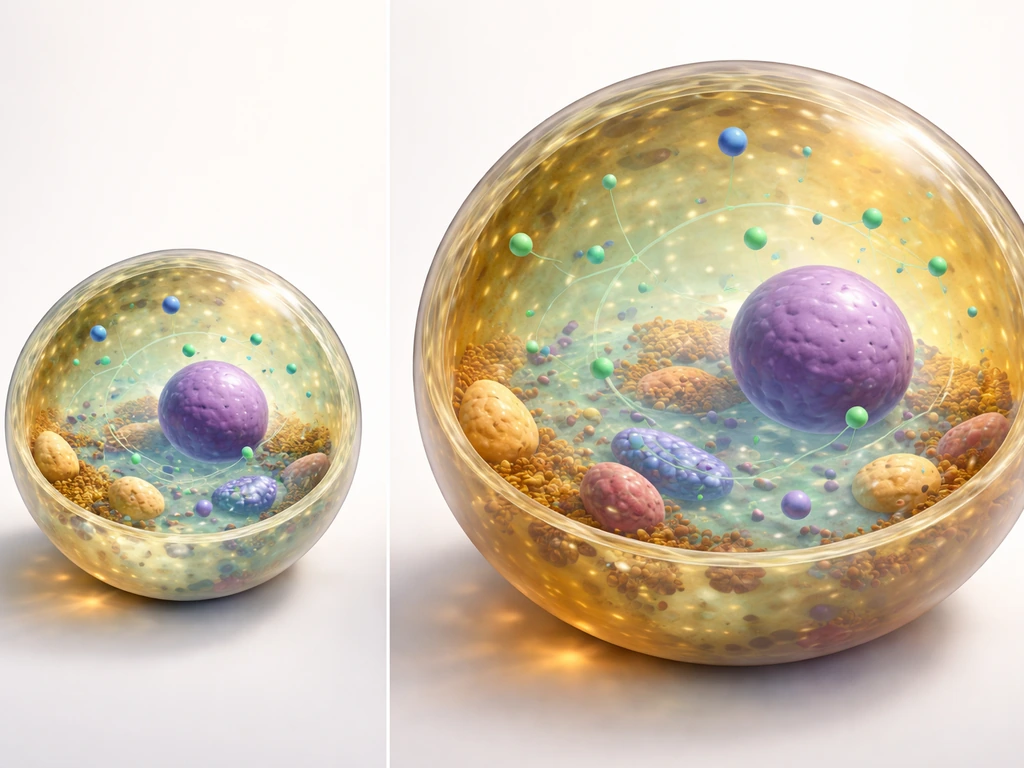
A multicellular organism grows by doing two things at once: making more cells through controlled division, and steering those cells toward specialized roles. Neither process alone is enough. You need both quantity (more cells) and quality (the right kinds of cells, in the right places). That coordination is what separates a growing human embryo from a blob of dividing yeast.
How Does a Multicellular Organism Grow and Develop?
Marcus Whitmore
24 Mar 2026
Growth vs development: they're not the same thing
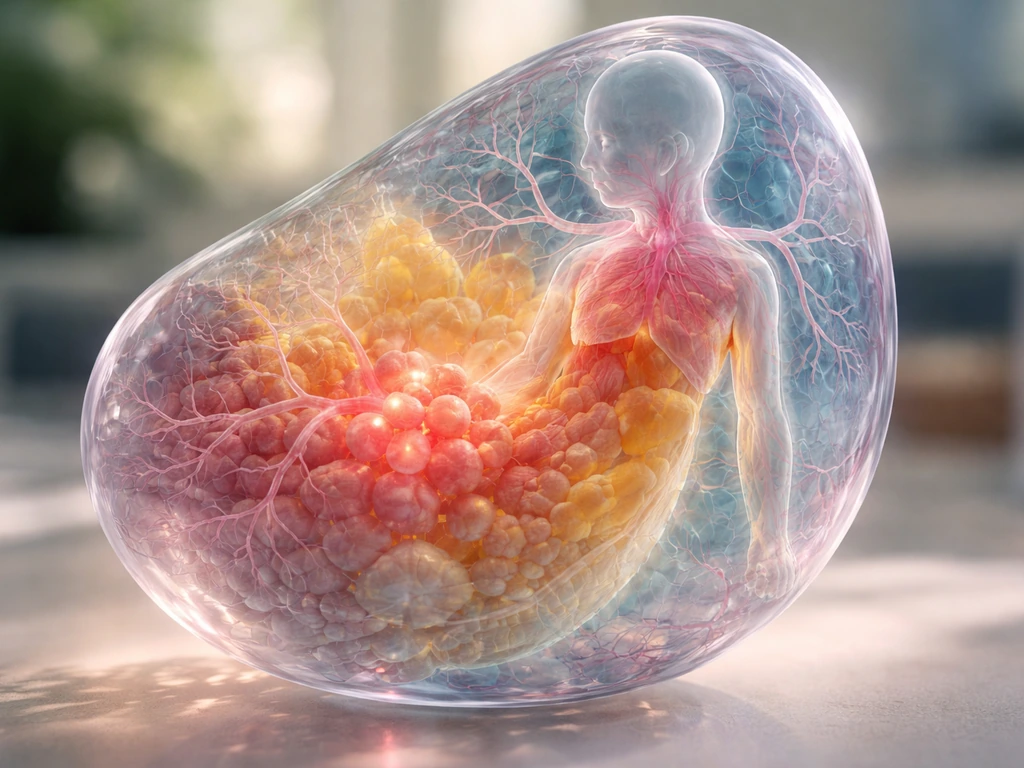
People use these words interchangeably, but biologists keep them separate for a good reason. Growth, strictly speaking, is the increase in body size through cell division and cell expansion. Development is the broader umbrella: it includes growth, but also differentiation (cells becoming specialized types), morphogenesis (cells arranging themselves into shapes and structures), and determination (cells committing to a particular fate before they visibly change). A textbook framing puts it this way: the four processes that govern development are determination, differentiation, morphogenesis, and growth. Growth is just one piece of the puzzle.
Why does the distinction matter? Because an organism can grow without developing properly, and it can develop structure without growing much at all. A tumor grows. An embryo that stops dividing can still pattern its existing cells into a partial body plan. Understanding multicellular growth means tracking both processes and how they talk to each other.
Cell division is the engine behind size increase
The main way a multicellular organism adds size is through mitosis: one parent cell divides into two genetically identical daughter cells. Do that billions of times in a coordinated way, and a single fertilized egg becomes a body with trillions of cells. But division isn't just a matter of a cell splitting whenever it feels like it. There's a tightly regulated sequence called the cell cycle, and it has built-in checkpoints.
The key molecular players are cyclin-dependent protein kinases, called CDKs, whose activity depends on pairing with proteins called cyclins. When cyclin levels rise and fall during the cycle, they switch CDKs on and off, driving the cell through each phase. Checkpoints at G1, G2, and M phase act like quality-control gates: they delay progression until the cell has verified that DNA is intact, conditions are favorable, and everything is ready for division. Cell-cycle progression is blocked by DNA damage checkpoints, which delay the cycle until DNA is intact Checkpoints at G1, G2, and M phase act like quality-control gates. If something is wrong, cyclin proteins get destroyed by proteolysis, and the cycle stalls.
It's also worth noting that cell division isn't perfectly synonymous with producing two daughter cells. A cell can replicate its DNA and grow in size but fail to complete cytokinesis, the final split. That edge case reminds you that growth at the organism level requires not just DNA replication, but the full cycle running to completion, repeatedly, across many cell populations.
Differentiation and patterning: how cells figure out what to become
Once cells start dividing, they face a critical question: what kind of cell should I become? The answer comes from chemical signals called morphogens, which form gradients across the developing embryo. A cell's position within that gradient tells it something about its identity. Morphogens help determine cell fate and trigger differentiation, so cells at the front of an embryo get different instructions than cells at the back, even though they carry the same DNA.
These signals don't work in isolation. The Sonic hedgehog (Shh) and Wnt/BMP pathways, for example, pattern the developing spinal cord together. Specific combinations of transcription factors, activated by overlapping signal gradients, generate distinct neural progenitor subtypes. It's not one signal for one cell type; it's a combinatorial code.
At the level of individual cells within a tissue, a mechanism called lateral inhibition refines who differentiates into what. The Notch signaling pathway is a classic example: when one cell begins to specialize, it signals its neighbors to hold back and stay in a less differentiated state. This keeps a balance between specialized cells and the progenitor pool that keeps producing new ones, something you can see in the intestinal epithelium, where stem cells and differentiated cells are tightly regulated.
Alongside chemical signals, physical interactions matter too. Differences in cell adhesion molecules help cells of the same type stick together and separate from other cell populations. That's how tissues sort themselves out and maintain boundaries during development.
From embryo to adult body: building tissues and organs step by step
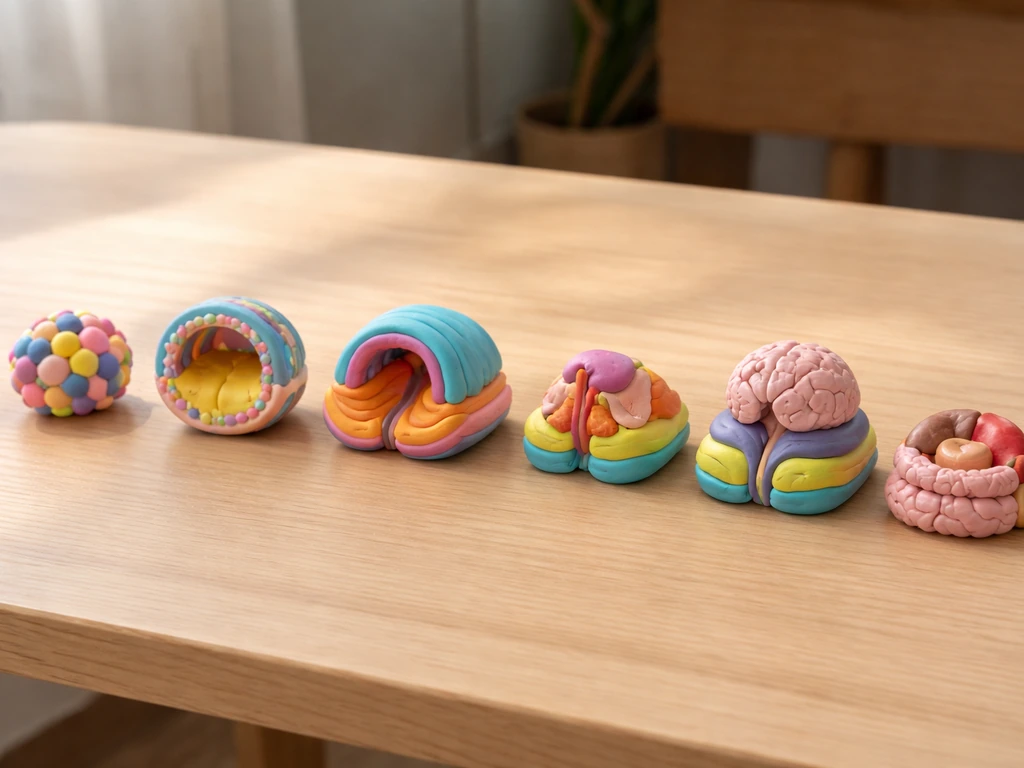
In animals, the pathway from a fertilized egg to an adult body follows a recognizable sequence. Here's how the key stages unfold:
- Cleavage: The fertilized egg divides rapidly, producing a ball of cells called a blastula. Cells are small and mostly equivalent at this stage.
- Gastrulation: The blastula folds inward on itself, generating three germ layers: endoderm (inner layer, gives rise to gut and lungs), mesoderm (middle layer, becomes muscle, bone, and circulatory tissue), and ectoderm (outer layer, forms skin and nervous system). These germ layers are the blueprint for every organ system.
- Organogenesis: Germ layer cells migrate and differentiate into the cell lineages that give rise to mature organs. Signals from neighboring tissues, combined with the cell's developmental history, tell each cell which organ it's helping to build.
- Growth to adult size: Organ systems continue to grow through coordinated cell division in specific zones. In bone, for example, chondrocyte divisions in growth plates produce one daughter cell that stays undifferentiated and another that progresses toward bone formation, a neat example of asymmetric division maintaining both the progenitor pool and the growing tissue.
The whole process is multilevel regulation in action: genes drive cell behavior, cells coordinate to form tissues, tissues organize into organs, and organs integrate into a functioning body. Remove any level of that control, and development goes off track.
What growth actually needs, and what stops it
Growth can't continue indefinitely, and the reasons are both physical and biological. This section gives you the specific mechanics and constraints, but if you zoom out, you'll want the big-picture answer to how do organisms grow. do unicellular organisms grow how do organisms grow. Let's be concrete about the constraints.
Oxygen and the diffusion problem
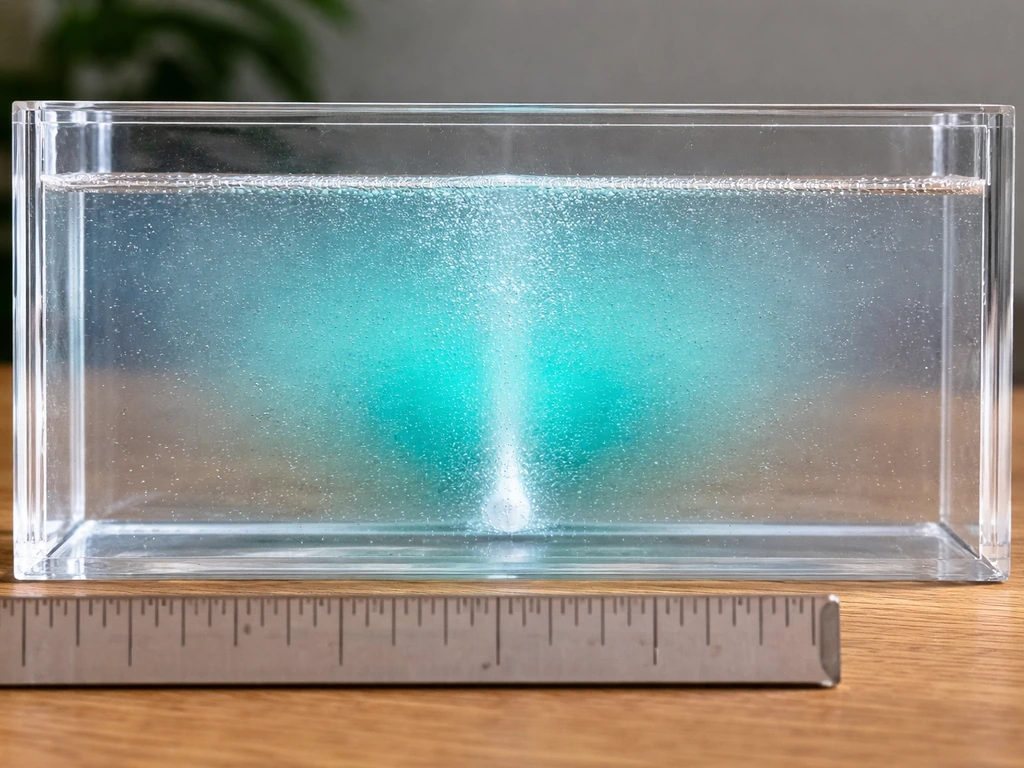
Oxygen diffusion through tissue becomes limiting at roughly 100 to 200 micrometers. Think about that scale: it's about the width of two to four human hairs. Any tissue thicker than that can't rely on simple diffusion to feed its interior cells. That's why large animals evolved circulatory systems with blood vessels that reach every corner of the body. Without a transport system, a multicellular organism hits a size ceiling almost immediately.
Surface area vs volume
As a body gets larger, volume increases faster than surface area. This scaling mismatch means that the surface available for gas exchange, nutrient absorption, and waste removal doesn't keep pace with the metabolic demands of the growing interior. It's a fundamental geometric constraint, not a biological one, and it applies whether you're talking about a cell, an organ, or an entire body.
Metabolic scaling and energy
Metabolic rate doesn't scale linearly with body mass. It scales as roughly the 3/4 power of body mass, a relationship known as Kleiber's law. That means a larger animal is actually more metabolically efficient per unit of mass than a smaller one, but the total energy demand still climbs. Growth requires energy for cell division, protein synthesis, and tissue maintenance, and that energy has to come from somewhere. Nutrient and energy limits set a practical ceiling on how fast and how large an organism can grow.
Waste removal
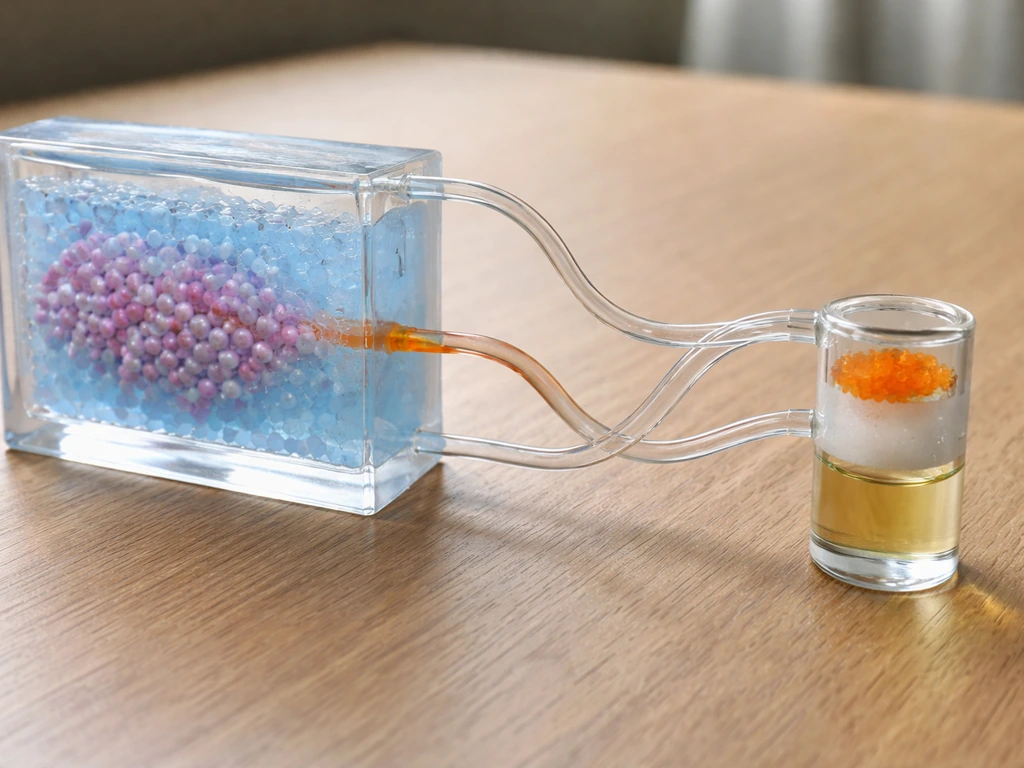
Every dividing cell produces metabolic waste. In a small cluster of cells, waste diffuses away easily. In a large organism, you need dedicated excretory and lymphatic systems to handle it. Growth creates its own logistical problem: the bigger you get, the more infrastructure you need to sustain the growth itself.
Genetic and hormonal signals that call a halt
Beyond the physical constraints, organisms have internal molecular timers and signals that stop growth when the adult form is reached. Hormones like growth hormone and IGF-1 in animals, and auxin and gibberellins in plants, regulate how long and how fast growth continues. Cell-cycle checkpoints and tumor-suppressor pathways make sure rogue cells don't keep dividing on their own schedule.
How multicellular growth compares to what happens in single-celled organisms
It's useful to contrast multicellular growth with what a unicellular organism does, because the comparison sharpens what's actually special about the multicellular strategy. It’s helpful to contrast how unicellular and multicellular organisms grow, because the multicellular strategy depends heavily on coordinated cell division and organization. (If you're curious about why can unicellular organisms grow larger on their own terms, that's a topic worth exploring separately.)
| Feature | Unicellular organism | Multicellular organism |
|---|---|---|
| How size increases | Individual cell grows in volume, then divides | Population of cells divides; organism adds cells over time |
| Division outcome | Two independent daughter organisms | Daughter cells stay together, cooperate, stay part of the body |
| Differentiation | Minimal or none; one cell does everything | Extensive; hundreds of specialized cell types |
| Communication between cells | Not needed for growth | Essential; morphogens, Notch, Wnt, and other pathways coordinate fate |
| Growth limit | Surface-area-to-volume ratio limits individual cell size | Transport, energy, waste, and genetic signals limit organism size |
| Development complexity | Growth and 'development' are nearly the same event | Growth and development are distinct, multilayered processes |
The core insight is that a unicellular organism's 'growth' is basically: get bigger, copy your DNA, split. A multicellular organism has to do all of that plus coordinate trillions of cells to stay in their assigned roles, maintain tissues, and stop dividing at the right time. That coordination is the whole ballgame.
Animals vs plants: two very different growth strategies
Not all multicellular organisms grow the same way. Animals and plants take fundamentally different approaches, and understanding the contrast helps you see how flexible the basic tools of cell division and differentiation really are.
Animal growth: front-loaded, determinate, system-wide
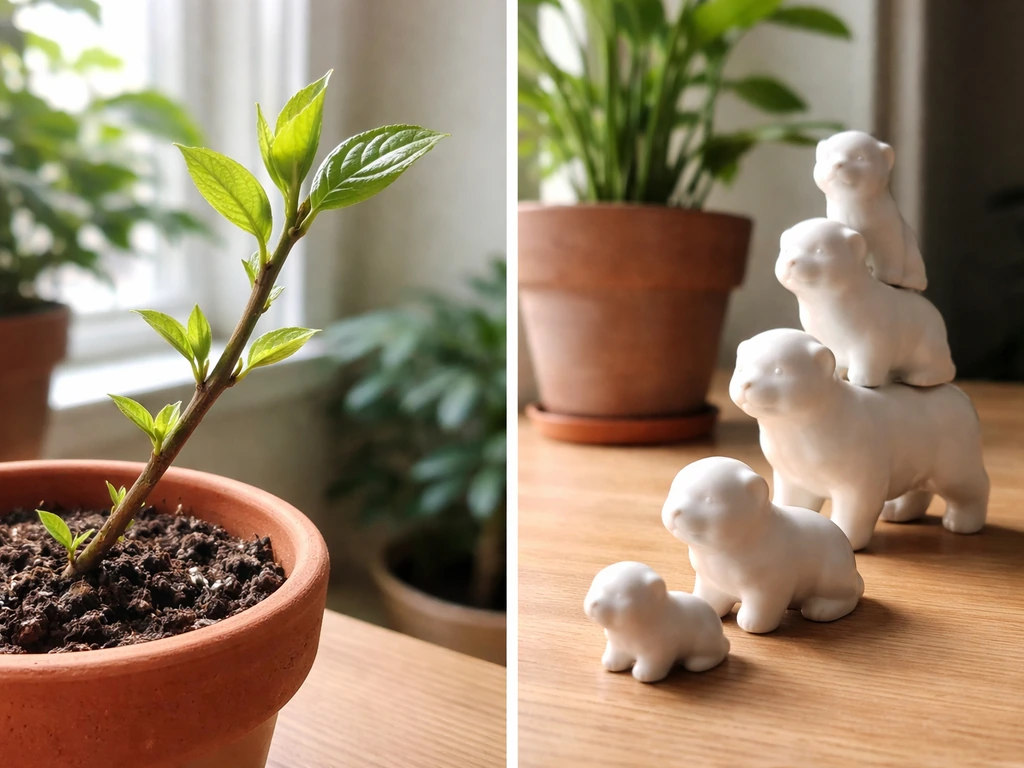
Animals do most of their major body patterning early. Gastrulation sets the body plan, germ layers establish the organ systems, and from there it's mostly a matter of scaling up what's already been specified. StatPearls describes gastrulation as converting a blastula into a gastrula, with morphogenetic gradients and differential gene expression helping organize germ layer formation Gastrulation sets the body plan, germ layers establish the organ systems. Most animals have determinate growth: they reach a genetically predetermined adult size and then stop growing, or shift to a maintenance-and-repair mode. Cell division doesn't stop entirely in adults (skin, gut lining, and bone marrow turn over constantly), but the large-scale size increase ends. Growth plates in long bones are a good concrete example: once they fuse, that bone is done lengthening.
Plant growth: modular, meristem-driven, often indeterminate
Plants work differently. Instead of patterning the whole body early and scaling it up, plants add new modules (leaves, stems, roots, flowers) throughout their lives from localized zones of dividing cells called meristems. The shoot apical meristem, tucked inside the apical bud at the tip of every growing stem, keeps churning out new cells that elongate and differentiate into stem tissue. The root tip meristem does the same thing downward. This is what makes plant growth indeterminate: some parts, like stems and roots, can keep growing for the entire life of the plant.
Woody plants also add girth, not just length, through lateral meristems. The cork cambium, for example, produces bark tissue and increases stem diameter year after year. But individual organs like leaves, flowers, and fruits do have determinate growth: they reach a set size and stop, controlled by genetic programming and hormonal signals.
| Growth feature | Animals | Plants |
|---|---|---|
| Primary growth zone | Whole-body during embryo/juvenile stages | Meristems at shoot and root tips throughout life |
| Growth pattern | Largely determinate (adult size fixed) | Stems/roots: indeterminate; organs like leaves: determinate |
| Body plan timing | Established early via gastrulation and germ layers | Added incrementally as new modules form |
| Secondary growth | Limited (bone remodeling, muscle hypertrophy) | Lateral meristems add girth in woody species |
| Cell division in adults | Restricted to specific stem cell niches | Meristems remain active throughout plant life |
| Key signals regulating growth | Growth hormone, IGF-1, sex hormones | Auxin, gibberellins, cytokinins |
Where to take your understanding next
If you've followed the logic so far, you now have a solid mental model: multicellular growth runs on cell division controlled by CDK-cyclin machinery, shaped by morphogen gradients and lateral inhibition, organized into tissues via germ layers and cell adhesion, and ultimately constrained by oxygen diffusion limits, surface-area-to-volume scaling, energy demands, and genetic stop signals. That's the full picture.
Here are the concepts worth consolidating before moving on:
- Be able to distinguish growth (size increase via division and expansion) from differentiation (cells becoming specialized) and morphogenesis (cells organizing into shapes). They overlap but are not the same.
- Understand why checkpoints matter: CDK-cyclin control is what keeps cell division from becoming cancerous runaway growth.
- Trace the animal body plan from fertilized egg to germ layers to organ systems. The gastrulation step is the pivot point.
- Know the two main plant meristem types (apical and lateral) and what indeterminate vs determinate growth means in practice.
- Be able to explain, in plain terms, why a large organism can't just rely on diffusion, and what systems it needs instead.
- Compare what a single-celled organism does when it 'grows' versus what a multicellular organism does. The contrast makes both clearer.
From here, it's worth exploring how unicellular and multicellular organisms compare side by side in more depth, particularly the question of what advantages multicellularity actually buys (and what costs it imposes). The topic of how organisms grow in general, including the constraints that apply across all life forms, ties these threads together in a broader context.
FAQ
How does a multicellular organism make sure cell division and differentiation happen at the right time, not just at the right place?
Timing comes from coupling cell-cycle control (like CDK-cyclin checkpointing) to developmental signals. If morphogens or Notch-mediated cues indicate a region should differentiate, cells typically exit the cycle or slow it, so the tissue both patterns correctly and avoids continued overgrowth.
Can an embryo develop body structure even if cells stop dividing?
Partial patterning can still occur because existing cells can respond to positional cues and rearrange into structures, but the overall body size and complete organ formation usually fail. In practice, reduced division limits the number of cells available for each tissue, causing thinner or incomplete structures.
Why is DNA replication not the same as successful growth in a multicellular organism?
A cell can replicate its DNA and enter a “ready to divide” state, but if cytokinesis fails, you may get abnormal cell numbers or multinucleated cells. Since organism growth relies on sustained cycles that finish properly, repeated incomplete divisions disrupt tissue organization and scaling.
What causes morphogen gradients to lead to different cell fates when all cells have the same genome?
Cells interpret gradients by expressing different combinations of threshold-sensitive receptors and transcription factors. Small differences in position change the signal concentration each cell experiences over time, which then drives distinct gene regulatory programs for differentiation.
How does lateral inhibition prevent the whole tissue from differentiating at once?
Notch-based lateral inhibition uses neighbor-to-neighbor feedback. When one cell commits, it sends signals that reduce differentiation signals in nearby cells, maintaining a reservoir of progenitors, which is especially important where continuous renewal is needed (for example, intestinal epithelium).
Do physical interactions between cells control identity, or are they only about sticking together?
They do more than adhesion. Cell adhesion molecules and tissue mechanics help establish boundaries, force cells into particular arrangements, and influence which signaling pathways can activate. As a result, mechanics can bias fate decisions by changing how signals are presented and how cells move.
What happens if a multicellular organism grows too much, for example if checkpoints or tumor-suppressor pathways fail?
Growth control fails in a way that can look like unchecked division, producing tumors. Beyond overproliferation, tumors often disrupt normal tissue architecture, alter local signaling gradients, and create additional constraints like abnormal blood supply, which can worsen development around them.
Why can’t diffusion alone support large multicellular bodies?
Because diffusion time and concentration gradients get worse as distance increases. Once tissues exceed the effective diffusion length (the article cites about 100 to 200 micrometers), interior cells experience insufficient oxygen and nutrients, and waste accumulates unless there are vessels or transport systems.
Is Kleiber’s law the main reason growth slows, or are there other limits too?
Kleiber’s law helps explain how energy demand scales overall, but growth also slows due to nutrient availability, waste removal capacity, and the need to build new transport and support infrastructure. Even if metabolism is efficient per unit mass, limited inputs and logistics still cap maximum size and growth rate.
How do plants achieve continuous growth when animals typically stop increasing body size at adulthood?
Plants rely on indeterminate growth, using meristems (shoot and root tips, plus lateral meristems for thickness) that keep producing new cells. Hormonal gradients and local gene regulation allow new organs and tissues to form repeatedly, so growth is not confined to early development.
Why do animals usually have determinate growth, even though many cells keep dividing in adults?
Most animals switch from large-scale body-size increase to maintenance and repair. Cell division persists in specific adult tissues, but systemic hormonal programs and developmental timers limit whole-body growth, and growth plates in long bones can fuse to stop lengthening.
What is a common misconception about “determination” versus “differentiation” during multicellular development?
A frequent mistake is assuming fate commitment means visible specialization happens instantly. Determination is often a commitment step that can occur before cells show the fully differentiated morphology, while differentiation involves the outward changes in gene expression and cell function you can actually observe.
If the article’s multilevel view is genes to cells to tissues to organs, what goes wrong when one level fails?
Failure at any level can cascade. For example, disrupted gene regulation can prevent correct cell identities, which then leads to incorrect tissue boundaries or mis-patterned organ structures, producing organs that may form but do not integrate into a functioning body.
Next Article
Why Can Unicellular Organisms Grow Larger? Constraints Explained
Explains scaling limits on cell size: diffusion and waste removal fail as volume outpaces surface area.