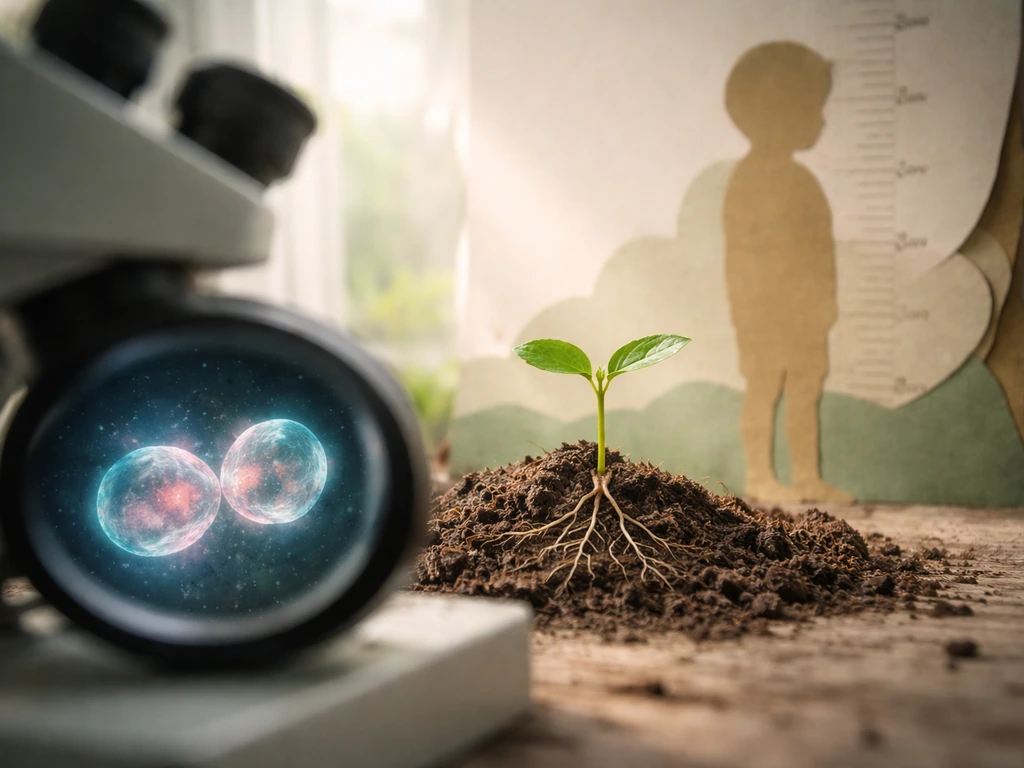
A one-celled organism grows by taking in nutrients, converting them into energy and raw materials, and using those materials to build more of itself: more proteins, more membrane, more DNA machinery. Once it reaches a critical size, a checkpoint in its internal clock fires, DNA replication kicks off, and the cell divides into two. That's the full loop. Growth and division are not the same thing, but they are tightly linked, and understanding how one drives the other is the key to answering this question properly. This is the same core problem behind how do organisms grow, just in the context of individual organisms and their size control.
How Does a One Celled Organism Grow and Divide?
Marcus Whitmore
24 Mar 2026
What 'growth' actually means for a single cell
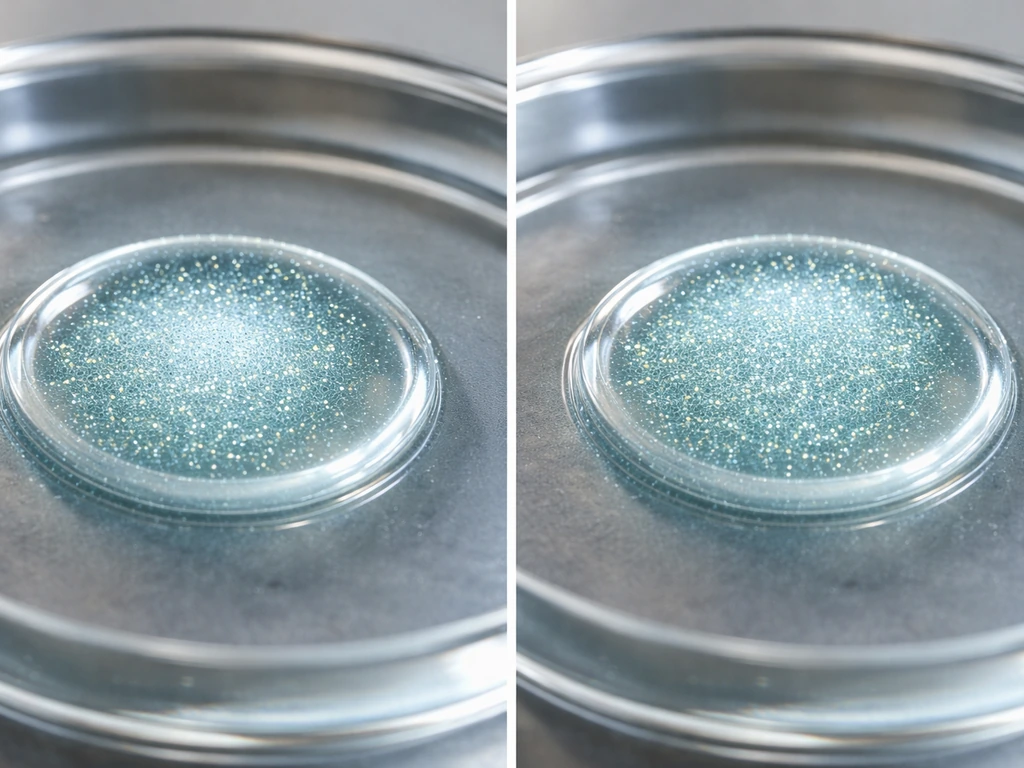
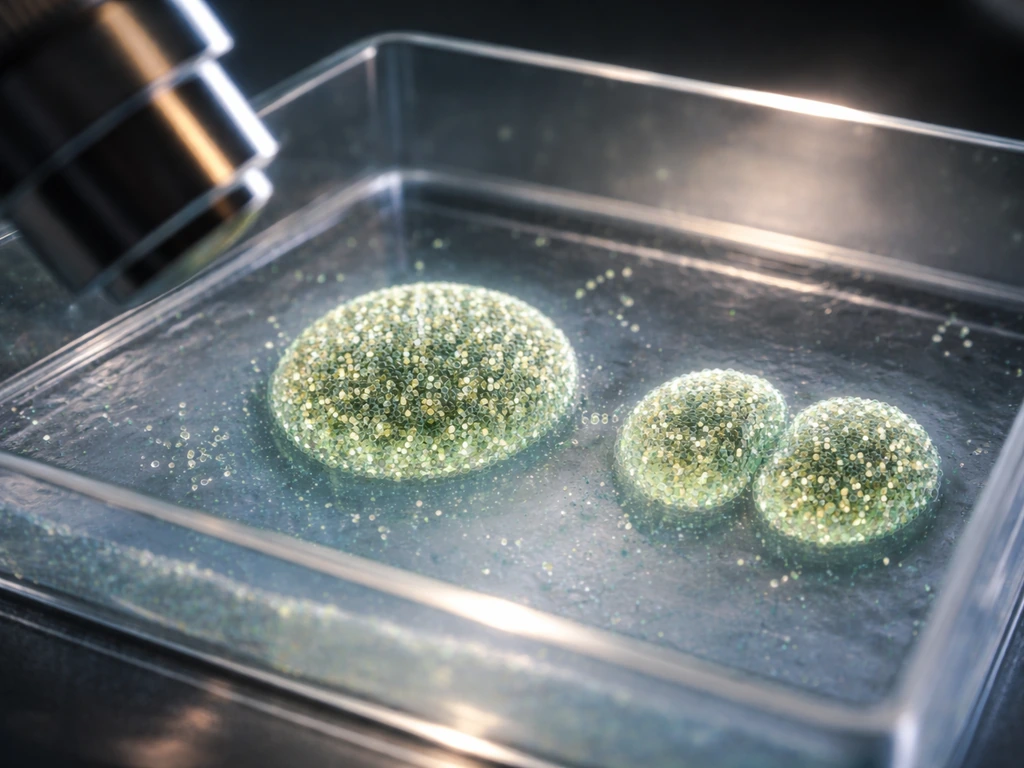
When biologists say a one-celled organism is 'growing,' they mean it is accumulating biomass. That means the cell is physically getting larger: more cytoplasm, more membrane surface, more ribosomes, more enzymes, and eventually a duplicated copy of its genome. Volume goes up. Dry mass goes up. This is different from population growth, where the number of cells increases. A single cell genuinely enlarges before it splits.
It helps to think of it the way you'd think about baking bread. The dough doesn't multiply into two loaves on its own; it rises first because gas and new material accumulate inside it. The single cell does the same: it inflates and fills out before any division happens. That rise in mass and volume is what 'growth' means at the cellular scale.
If you want to contrast this with <a data-article-id="26AC4BB4-5909-4D8D-9E9A-1DD7D4217110">how does a multicellular organism grow</a> (where most growth happens through adding new cells rather than enlarging existing ones), that's a related but distinct process worth exploring separately. For now, the focus is on the single cell.
From food to cell parts: how a single cell builds biomass
Every new molecule in a growing cell has to come from somewhere. The chain looks like this: the organism absorbs nutrients from its environment, runs those nutrients through metabolic pathways to generate energy (usually as ATP), and then uses that energy to synthesize the proteins, lipids, carbohydrates, and nucleic acids it needs to expand. Nothing in that process is passive. Each step requires enzymatic work.
Take a bacterium like E. coli as a concrete example. It pulls in glucose and amino acids through membrane transporters. Glucose gets broken down through glycolysis and the citric acid cycle, producing ATP and the carbon skeletons that feed biosynthetic reactions. Ribosomes use that energy to translate mRNA into new proteins. Lipid synthesis machinery adds new phospholipids to the inner and outer membranes, stretching the cell envelope as the cell enlarges. The chromosome is replicated by DNA polymerase. By the end of this buildup phase, the cell is roughly twice its starting mass.
For photosynthetic single-celled organisms like microalgae, the energy input is light rather than a chemical food source. Photosynthesis converts light into ATP and NADPH, which then drive CO2 fixation and the downstream synthesis of organic molecules. The biomass-building steps after that are chemically similar to what a heterotrophic bacterium does; only the energy source differs. This also means light availability is a hard growth requirement for photoautotrophs, not an optional bonus.
The cell cycle: grow, replicate, divide
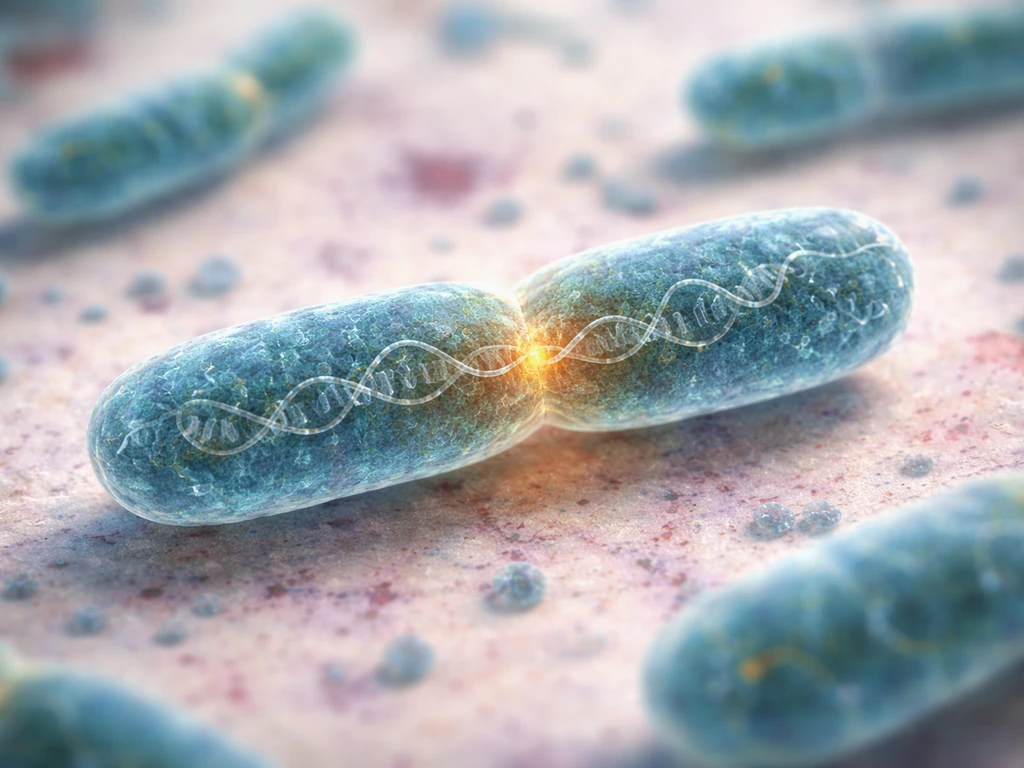
The cell cycle is the structured sequence a cell follows from birth to division. Think of it as a timed program with checkpoints. The cell doesn't just grow randomly until it happens to fall apart into two pieces; it monitors its own size and state, and specific molecular signals trigger each transition.
In bacteria: the Donachie model in plain language
Bacterial cell-cycle control is elegant in its simplicity. According to the classical model developed by Donachie, a bacterial cell grows until it reaches a critical size threshold, then initiates DNA replication, and divides after a fixed time delay following replication completion. The cell doesn't have a G1/S/G2/M system the way eukaryotes do; instead, the initiation of replication is the key regulated event.
In E. coli, the initiator protein DnaA accumulates as the cell grows. When enough DnaA has built up relative to the chromosome origin of replication (oriC), replication fires. The cell then continues growing while the chromosome is being copied. The FtsZ protein assembles into what's called the Z ring at the midpoint of the cell, forming the scaffold for the division machinery (the divisome). Placement of the Z ring at midcell, rather than over the chromosomes, is regulated by two systems: the Min system, which sweeps back and forth to mark midcell, and nucleoid occlusion, which physically blocks ring formation over the chromosome. Together they ensure the cut happens in the right place.
In eukaryotes: checkpoints and licensing
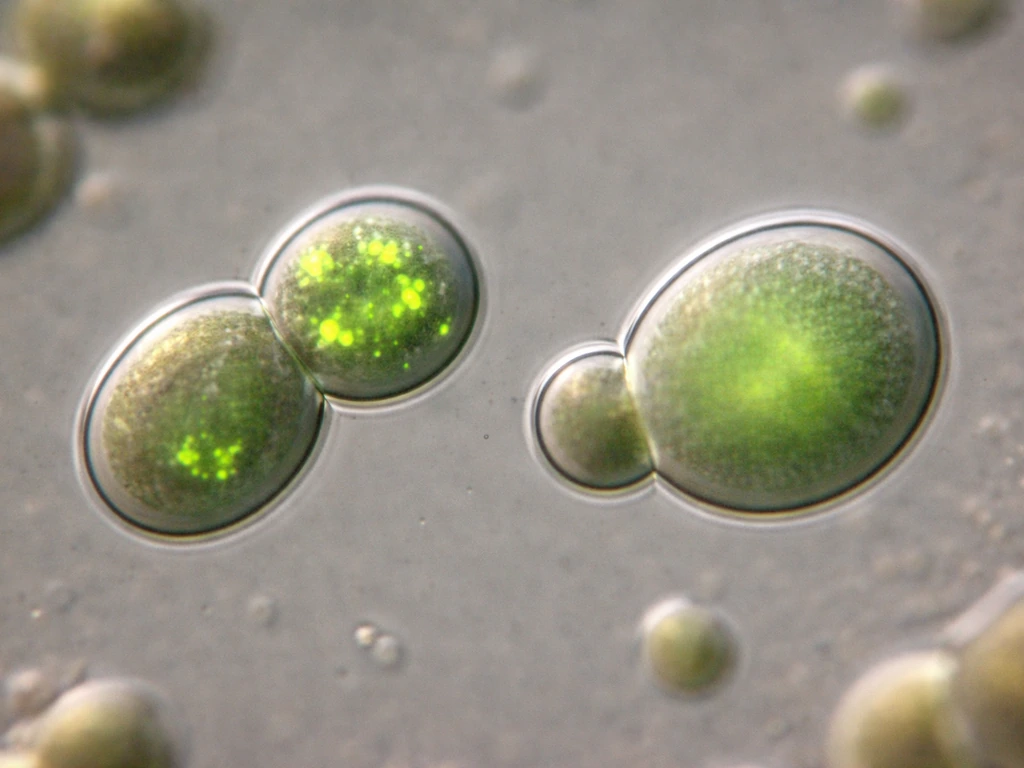
Unicellular eukaryotes like yeast have a more elaborate version of the cell cycle, with distinct phases: G1 (gap/growth), S (DNA synthesis), G2 (second gap), and M (mitosis and division). Growth happens mainly during G1 and G2. The critical transition from G1 to S, where DNA replication begins, is tightly controlled by a process called origin licensing.
Here's how licensing works: the ORC (origin recognition complex) sits on replication origins throughout the cell cycle. During late G1, two proteins called Cdc6 and Cdt1 load a ring-shaped helicase complex (MCM2-7) onto the origin. Once loaded, the origin is 'licensed' and ready to fire when S phase begins. After firing, Cdt1 is degraded and a protein called geminin holds it in check through G2 and M, preventing any origin from being licensed twice in the same cycle. CDK (cyclin-dependent kinase) activity enforces this timing by changing what's available and active at each phase. The result is that every piece of DNA gets copied exactly once per cycle.
When M phase arrives, the cell uses a bipolar mitotic spindle to pull the two chromosome copies to opposite sides, then an actin-myosin contractile ring tightens around the cell's equator like a drawstring, pinching the membrane inward until two separate cells form. This coordinated sequence of mitosis followed by cytokinesis is what distinguishes eukaryotic single-cell division from the simpler binary fission of bacteria.
Binary fission vs. mitosis: what actually differs
| Feature | Binary Fission (Bacteria/Archaea) | Mitosis + Cytokinesis (Unicellular Eukaryotes) |
|---|---|---|
| Who uses it | Bacteria, archaea | Yeast, microalgae, protozoa, and other single-celled eukaryotes |
| Membrane-bound nucleus | No | Yes |
| Chromosome segregation | Chromosomes attached to cell membrane; pulled apart as cell elongates | Bipolar mitotic spindle made of microtubules |
| Division ring | FtsZ protein ring (Z ring) | Actin-myosin contractile ring |
| Cell cycle phases | Continuous growth + replication initiation at size threshold | Distinct G1, S, G2, M phases with CDK checkpoints |
| Replication control | DnaA accumulation at oriC | Origin licensing via ORC, Cdc6, Cdt1, MCM2-7 |
| Speed (typical) | E. coli: ~20 minutes under ideal conditions | Yeast: ~90 minutes under ideal conditions |
| Outcome | Two genetically identical daughter cells | Two genetically identical daughter cells |
Both routes produce the same result: two cells where there was one. The machinery is different, but the logic is identical. Grow, replicate, divide. The eukaryotic version just has more layers of control built in.
What a cell needs to actually grow (and what stops it)
Growth doesn't happen by default just because a cell exists. A specific set of conditions needs to be in place. When any one of these is missing or wrong, growth slows, stalls, or the cell enters a stress response.
Conditions that support growth
- Nutrients: carbon sources (glucose, acetate, CO2 for photosynthesizers), nitrogen (for amino acids and nucleotides), phosphorus (for membranes and ATP), and trace minerals. Remove any essential nutrient and growth stops.
- Energy source: chemical energy from oxidizable substrates for heterotrophs, or light for photoautotrophs. Microalgae require adequate light intensity and spectrum for photosynthesis to drive biomass accumulation.
- Appropriate temperature: enzymes have optimal temperature ranges. Too cold and metabolic rates drop toward zero; too hot and proteins denature.
- pH and osmolarity within tolerable range: extreme pH inactivates enzymes; osmotic imbalance pulls water out of the cell or floods it, disrupting turgor and membrane integrity.
- Oxygen availability (for aerobes): aerobic respiration is far more efficient at generating ATP than fermentation alone. Strict anaerobes, conversely, are poisoned by oxygen.
- Absence of inhibitory compounds: antibiotics, toxins, and accumulated metabolic waste products can block specific biosynthetic steps or damage membranes.
What happens when conditions go wrong
When a key nutrient runs out, bacteria typically enter stationary phase. Growth rate drops to near zero, cells stop dividing, and a global stress response kicks in. In gram-negative bacteria like E. coli, this is orchestrated largely by a sigma factor called RpoS (also written as σS). RpoS rewires gene expression to prioritize survival over growth, activating enzymes that detoxify reactive oxygen species, reinforcing the cell wall, and slowing translation. The cell essentially switches from 'build' mode to 'endure' mode.
Unicellular eukaryotes have their own versions of this arrest. Some yeast species, for example, arrest at a specific cell-cycle checkpoint during stationary phase rather than just slowing down uniformly. The exact checkpoint depends on what's limited and the species involved. The key point is that growth arrest is an active, regulated response, not just the cell passively running out of fuel.
Combined stresses are often worse than single stresses in a simple additive way. High light plus high salinity in microalgae, for instance, can redirect metabolism toward lipid accumulation rather than biomass growth. The cell is allocating resources to stress tolerance at the expense of building more of itself.
Why a cell can't just keep growing forever
This is one of the most interesting questions in cell biology, and the answer involves a few interlocking physical and biological constraints. If you're curious about why unicellular organisms grow to particular sizes, this section connects directly to that question.
The surface area problem
As a cell doubles in linear dimension, its volume grows by a factor of eight, but its surface area only grows by a factor of four. That matters because everything the cell needs (nutrients in, waste out) has to cross the surface. A very large cell has too much interior volume relative to the membrane surface available to service it. Nutrients can't diffuse fast enough from the membrane to the cell's center, and waste builds up in regions far from any exit point. At some size, the interior simply starves even if the exterior environment is nutrient-rich.
Transport and crowding limits
Even before the surface area ratio becomes critical, internal transport becomes a problem. Bacteria don't have active cytoskeletal transport like eukaryotes do; they rely heavily on diffusion. Diffusion across a few micrometers is fast, but across tens or hundreds of micrometers it becomes impractically slow. Eukaryotes use motor proteins on microtubules to move cargo around, which buys them more volume, but there are still limits on how far even active transport can efficiently operate.
Internal crowding is another real constraint. The cytoplasm of a living cell is extremely dense with proteins, ribosomes, and organelles. As a cell tries to grow indefinitely, macromolecular crowding effects slow enzymatic reactions and diffusion rates, making metabolism progressively less efficient.
DNA replication and division timing
There are also hard limits imposed by the genome itself. DNA replication takes time, and the replication machinery can only move so fast. A cell that grows much faster than it can replicate its chromosome runs into a coordination problem: it would reach division size before the chromosome is fully copied, leading to incomplete segregation and non-viable daughters. The regulatory systems described earlier (DnaA accumulation thresholds, origin licensing) exist precisely to keep growth and replication in sync.
Mechanical constraints
Cell membranes and walls have mechanical limits. Turgor pressure inside a bacterial cell is substantial (roughly comparable to a car tire), and the peptidoglycan wall resists that pressure. As a cell grows, the wall must expand and be remodeled continuously. There are limits to how much tension the wall and membrane can sustain before the cell risks rupturing. Division partly solves this: splitting into two smaller cells reduces the surface tension load and resets the geometry.
How to observe and measure growth practically
If you want to study or demonstrate single-cell organism growth, you have a few practical tools available. They each measure something slightly different, and knowing which one to use for which question matters.
Growth curves
The growth curve is the most fundamental tool. You inoculate a culture with a known starting amount of cells, incubate it under controlled conditions, and take measurements at regular intervals. Plot the data and you'll see the characteristic S-shaped (sigmoidal) pattern: a lag phase where cells adapt, an exponential (log) phase where growth is fastest, a stationary phase when resources become limiting, and eventually a death phase. The shape of this curve tells you about both the organism's growth capacity and the limits of your growth conditions.
Optical density (OD600)
OD600 measures how much light at 600 nm is scattered by cells in suspension. It's fast, non-destructive, and easy to automate, which is why it's the standard proxy for bacterial culture density in most labs. The catch is that OD600 doesn't directly measure cell count or biomass; it measures turbidity. At higher cell densities, the relationship between OD and actual cell concentration becomes non-linear because of multiple scattering effects. Dead cells and debris also scatter light, which can inflate readings even when viable cell numbers are dropping. Always calibrate your OD measurements with your specific instrument and strain, and don't compare OD values across instruments without a calibration protocol.
Direct cell counts
A hemocytometer or counting chamber gives you a direct count under a microscope. It's more work than OD, but it gives you actual cell numbers rather than a light-scattering proxy. For higher throughput, flow cytometry is powerful: it counts cells individually and can measure forward scatter intensity, which correlates with cell volume and mass after appropriate calibration, giving you both count and size information from the same run.
Biomass measurements
If you need to know actual mass rather than cell number, dry-weight measurement is the gold standard. You filter a known volume of culture, dry it, and weigh the result. It's slow and requires enough cells to give a measurable signal, but it directly answers the 'how much stuff is here' question in a way OD and cell counts don't.
Metabolic activity assays
Resazurin (sold as alamarBlue and similar kits) is reduced to a fluorescent product by metabolically active cells. It's useful as an indicator that cells are alive and respiring, but be careful: it measures metabolic activity, not strict viability or cell number. A culture under stress can show reduced resazurin signal simply because cells have slowed their metabolism, not because they've died. ATP bioluminescence assays (which measure ATP levels directly using luciferin-luciferase chemistry) have similar strengths and caveats: high ATP means active, living cells, but the assay gives you a population-level signal rather than individual cell information.
| Method | What it measures | Best used for | Main limitation |
|---|---|---|---|
| OD600 | Light scattering (turbidity) | Rapid monitoring of culture density over time | Non-linear at high density; doesn't distinguish live from dead cells |
| Direct cell count (hemocytometer) | Actual cell number per volume | Confirming cell density; checking morphology | Labor-intensive; no size or viability info without staining |
| Flow cytometry (FSC) | Cell volume/size distribution and count | Detailed growth and size data at high throughput | Requires equipment; calibration needed for biomass conversion |
| Dry weight | Actual cell biomass (mass) | Validating biomass production; algae or yeast cultures | Slow; needs large sample volume |
| Resazurin / ATP assay | Metabolic activity or ATP level | Checking whether cells are actively growing/respiring | Activity ≠ viability; results change with metabolic state, not just cell death |
Putting it all together: the growth story in one loop
A do unicellular organisms grow by doing several things simultaneously: absorbing nutrients, running metabolism to generate ATP, using that energy to synthesize proteins, membranes, and nucleic acids, and physically expanding its volume. do unicellular organisms grow by doing several things simultaneously: absorbing nutrients, running metabolism to generate ATP, using that energy to synthesize proteins, membranes, and nucleic acids, and physically expanding its volume. When it reaches a critical mass threshold, molecular signals trigger DNA replication. Once the chromosome (or chromosomes) are fully copied and segregated, a division ring assembles at midcell and constricts, producing two daughter cells that each begin the loop again how does a multicellular organism grow. Once the chromosome (or chromosomes) are fully copied and segregated, a division ring assembles at midcell and constricts, producing two daughter cells that each begin the loop again.
This loop only runs when conditions are right. Remove nutrients, shift temperature, change pH, or add a toxin, and the loop stalls at the point where the missing ingredient would have been needed. The cell doesn't simply stop; it actively shifts into a stress-survival mode, waiting for conditions to improve.
And the loop can't run indefinitely in a single cell without dividing, because physics imposes hard limits: surface area can't keep up with volume, diffusion across large distances is too slow, and DNA replication timing has to stay synchronized with cell growth. Division is not just reproduction; it is also a physical reset that keeps each daughter cell in a size range where the growth machinery can actually function. That's why 'how does a one-celled organism grow' and 'why does it divide' are really the same question asked from two different directions.
FAQ
How does a one-celled organism grow if it is not dividing yet, what exactly is increasing?
Growth is mostly accumulation, the cell increases biomass by producing more proteins and enzymes, adding new phospholipids to membranes, expanding cytoplasm, and duplicating parts of its DNA replication machinery. You can think of it as building the components that will be needed for the next replication and division step, not just getting bigger at random.
Does “growth” mean the cell number increases, or is it only size increase?
In the cell biology sense of this question, growth means the single cell increases in size and biomass, population growth means cell number increases. A culture can grow in both ways at different times, for example, a brief size increase before division accelerates, then cell number rises after division catches up.
What happens if growth is fast but DNA replication is slow, can a cell divide anyway?
Usually it cannot complete safe division, because division requires the genome to be copied and properly segregated. Cells have built-in coordination, such as controlling replication initiation in bacteria or origin licensing and cell-cycle checkpoints in eukaryotes. If replication lags, the cell typically delays division or enters a stress state rather than producing genetically unbalanced daughters.
Why can a single cell not grow forever even if nutrients are still available?
Several constraints accumulate with size. Surface area becomes limiting for nutrient uptake and waste removal, diffusion distances increase so transport into the interior slows, macromolecular crowding reduces metabolic efficiency, and DNA replication and division timing must remain synchronized. Division resets geometry and transport distances, keeping the process viable.
How do bacteria decide when to start DNA replication during growth?
In the classical view, growth drives the increase of replication initiator levels until a threshold relative to the chromosome origin is reached, then replication begins. This couples “build up” to replication timing, so the cell does not start copying too early or too late for correct subsequent division.
What is the difference between growth stopping and a true cell death phase?
Growth arrest is often an active program, cells reduce translation, switch gene expression, and wait for conditions to improve. Death phase means viability has dropped substantially, so even if nutrients return, many cells will not recover. Assays that report metabolism can confuse these states, because slowed metabolism can mimic decline without actual death.
If a microalga gets more light, does growth always speed up?
Not necessarily. More light can increase ATP production, but if other nutrients like nitrogen or phosphorus are limiting, the cell may redirect resources toward storage lipids or stress protection instead of new biomass. The “best” conditions depend on the limiting substrate, not only on light intensity.
What conditions can stall the growth-and-division loop besides missing nutrients?
Many stresses do it, including temperature shifts, pH changes, oxidative stress, DNA damage, and membrane-damaging toxins. Cells often respond by shifting from build mode to endure mode, activating stress regulators and slowing processes like protein synthesis and replication to prevent lethal outcomes.
How can I tell whether my cells are growing by size or just increasing in number?
Use size-capable measurements. A hemocytometer or flow cytometry can distinguish cell counts versus cell volume distributions. If you only measure turbidity or OD, you may mostly be tracking density and number, not whether individual cells are getting larger.
Is OD600 a reliable way to compare growth between different experiments or instruments?
Only if you calibrate for your setup. OD600 measures scattered light, and scattering becomes non-linear at higher densities, plus dead cells and debris can increase readings. Always build an OD-to-cell-count or OD-to-biomass calibration curve for your specific strain and instrument.
Why do cultures sometimes show lag phase, does that mean the cells are not growing at all?
Lag phase often reflects adaptation. Cells are adjusting to new media composition, rebuilding enzyme sets for metabolism, repairing damage from transfer, and preparing for replication. During this time, there can be internal molecular growth without immediate increases in cell number.
Do yeast and other unicellular eukaryotes grow and divide the same way as bacteria?
They share the general logic, build biomass, replicate DNA, then divide, but the controls differ. Eukaryotes use distinct cell-cycle phases and licensing rules to ensure DNA is copied exactly once per cycle, and division uses coordinated mitosis plus cytokinesis rather than simple constriction.
What measurement best answers “how much biomass is there,” not just how many cells?
Dry-weight or equivalent biomass quantification. OD and cell counts correlate indirectly with biomass, but dry-weight measures total material after removing water. It is slower and needs enough biomass to weigh accurately, but it directly targets the mass aspect of growth.
Can a culture resume growth after it enters stationary phase?
Often yes, if the cells remained viable and the limiting factor is removed or replaced. Many bacteria can re-enter growth after nutrient recovery, but the recovery efficiency depends on the duration of stationary phase and the severity of stress. For eukaryotic unicellular organisms, recovery also depends on which checkpoint arrest and damage pathways were triggered.
Next Article
How Do Organisms Grow: Cell Growth, Development, and Limits
Explains how organisms grow via cell division, differentiation, and life stages, and why growth is limited by energy and