Most cells do grow before they divide, but it is not a universal rule. In the standard eukaryotic cell cycle, a cell spends the majority of its time in interphase adding mass, copying DNA, and building the machinery it needs before it ever attempts to split. But some cells, especially in early embryos, skip the growth phases almost entirely and just divide, getting smaller with each round. So the honest answer is: usually yes, but the more important question is what threshold or state a cell must reach before division is allowed, and that depends on checkpoints, nutrients, and the cell's context.
Do Cells Always Grow Before They Divide? The Cell Cycle Answer
Marcus Whitmore
30 Apr 2026
What "grow" actually means here, and what division demands
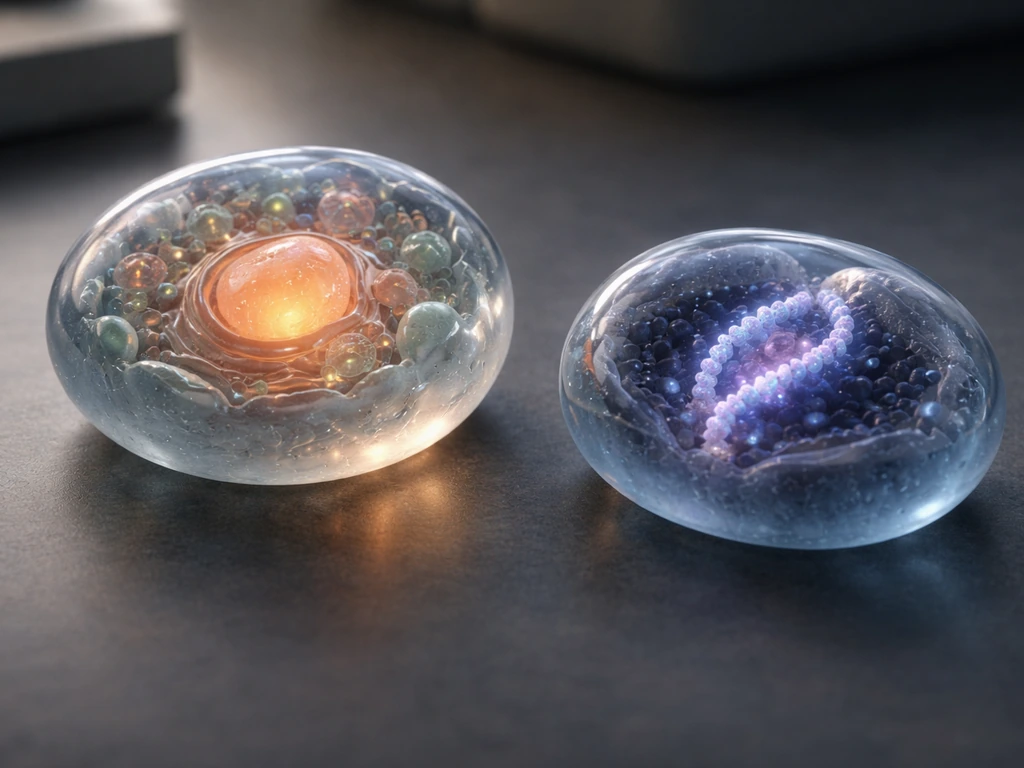
When biologists say a cell "grows," they mean it is accumulating mass: making more proteins, lipids, ribosomes, organelles, and the rest of the cellular toolkit. This is biosynthesis, not just getting physically bigger, though size often increases too. A cell that doubles its contents before splitting produces two daughters that are each roughly the same size as the original. That is the tidy, sustainable version of the story.
Division, on the other hand, demands something more specific: the DNA must be fully replicated, the chromosomes must be properly attached to the spindle, and the cell must have enough structural and energetic resources to pull itself apart cleanly. Growth supports all of this, but growth itself is not the same as division readiness. A cell could be large and still not divide if its DNA is damaged or its checkpoints are not satisfied. Size and division readiness are related but not identical.
How the cell cycle explains growth-before-division
The cell cycle is organized into four main phases. Think of it as a checklist a cell works through before it splits.
- G1 (Gap 1): After the previous division, the cell grows, synthesizes proteins, and responds to growth signals from the environment. This is where most of the size increase happens in typical cells. The cell is essentially asking: do I have enough nutrients, am I the right size, is the environment safe to proceed?
- S phase (Synthesis): The cell replicates its entire genome. DNA content doubles. The cell is not necessarily getting much bigger here, but it is building the genetic foundation for two daughter cells.
- G2 (Gap 2): Another growth and preparation interval. The cell continues to add mass, checks that DNA replication was accurate, and assembles the proteins needed for mitosis.
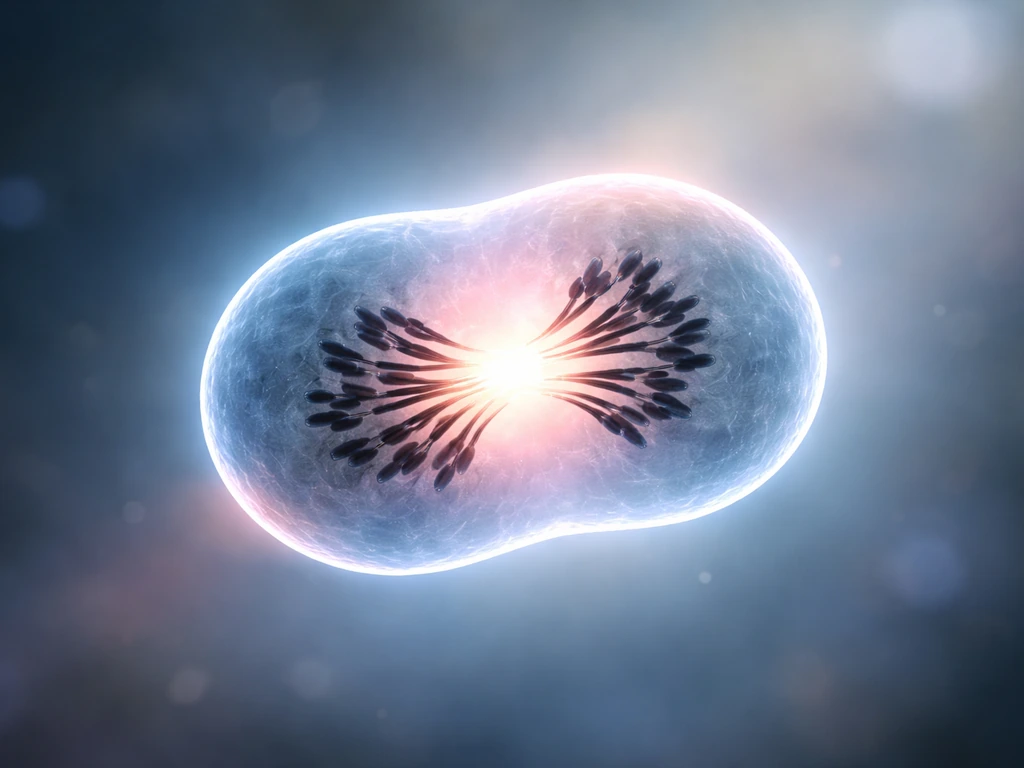
- M phase (Mitosis + Cytokinesis): The cell actually divides. Chromosomes are separated, and the cell pinches into two. This phase is relatively short compared to the rest of the cycle.
Interphase (G1 + S + G2 combined) is where the real growing happens, and it takes up the vast majority of cycle time. M phase is the brief finale. So in a typical mammalian cell or yeast cell cycling normally, yes, significant growth precedes division by design.
Why G1 gets the most attention
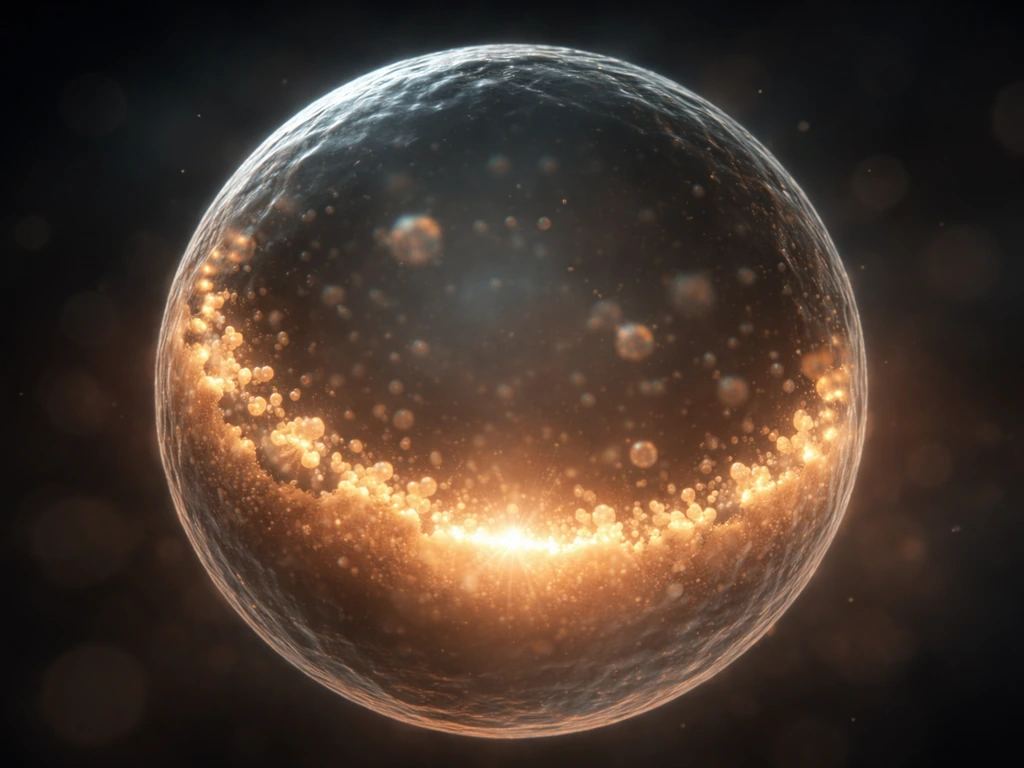
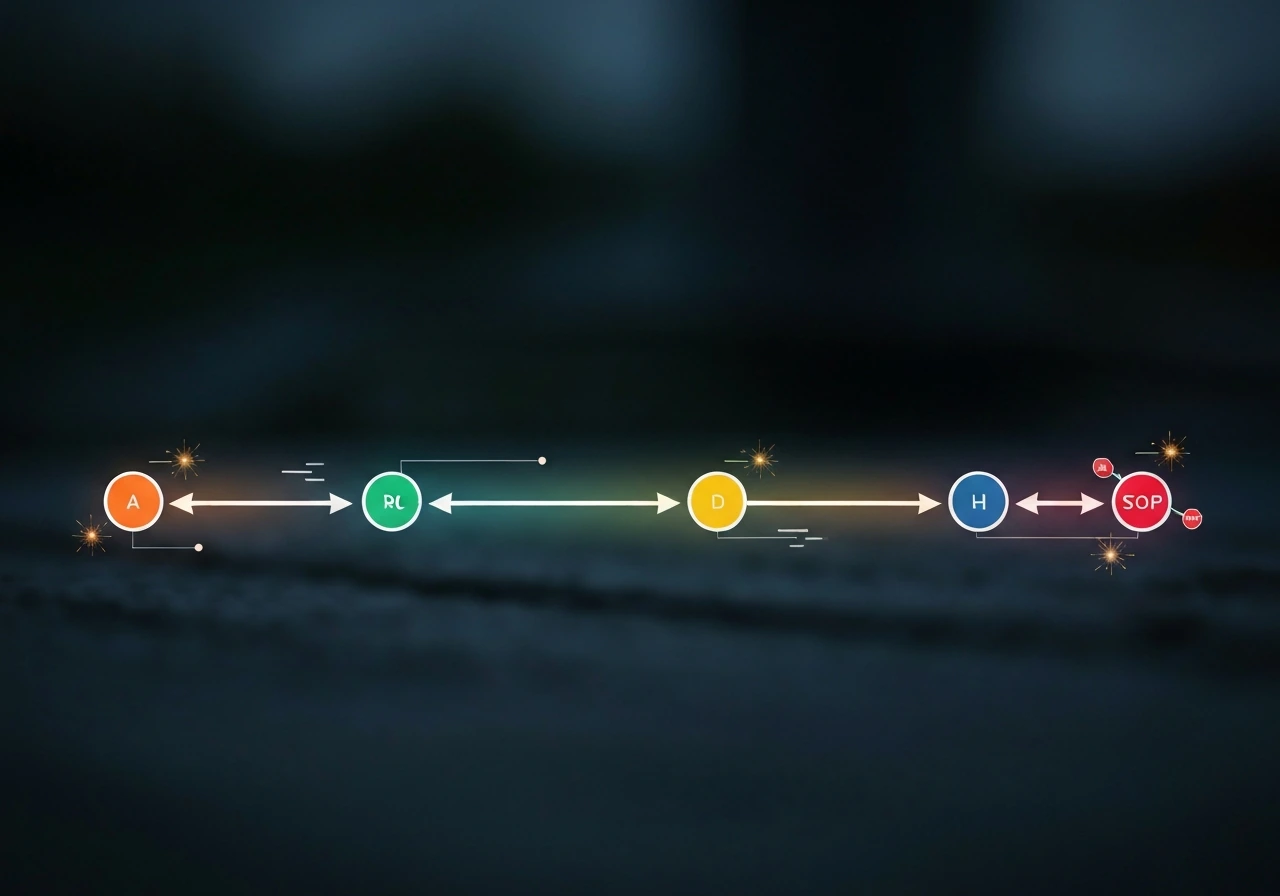
G1 is the phase most tightly coupled to growth signals. Cyclin D accumulates in response to growth factors, eventually driving the cell past the restriction point (also called the R point), after which it no longer needs external growth signals to finish the cycle. Think of the R point as the point of no return: once the cell commits, it is going to divide. Cyclin E and CDK2 activity peaks at the G1/S boundary, pushing the cell into DNA replication. Before that boundary, the cell is essentially weighing up whether conditions are good enough to justify making a copy of itself.
When cells divide with little or no net growth (the exceptions)
Early embryonic development is the clearest counterexample to the "always grow first" idea. In the early embryo of C. elegans (a tiny roundworm studied extensively in cell biology), the first several divisions happen through rapid S-M cycles with no G1 or G2 phases at all. S phase in the first cell cycle lasts roughly 8.5 minutes. The cells are not adding mass between divisions, so the daughter cells get progressively smaller with each round. The fertilized egg starts large, and the embryo subdivides that existing mass rather than growing before splitting.
Frog and sea urchin embryos follow similar logic. The point is that early embryonic cells are using up a stockpile of maternal resources. There is no need to grow because the cell is already stocked with everything required. This is a developmentally specific shortcut, not the default program.
In fission yeast, nutrient downshifts such as glucose starvation can drive several rounds of division without the normal growth phases, producing cells that end up much smaller than usual. The cell does not wait to reach a typical size threshold when nutrients are scarce; instead, it adjusts its division size downward. This is a stress-driven exception that shows the cell cycle is flexible, not rigid.
Checkpoints and size-control: what actually triggers mitosis
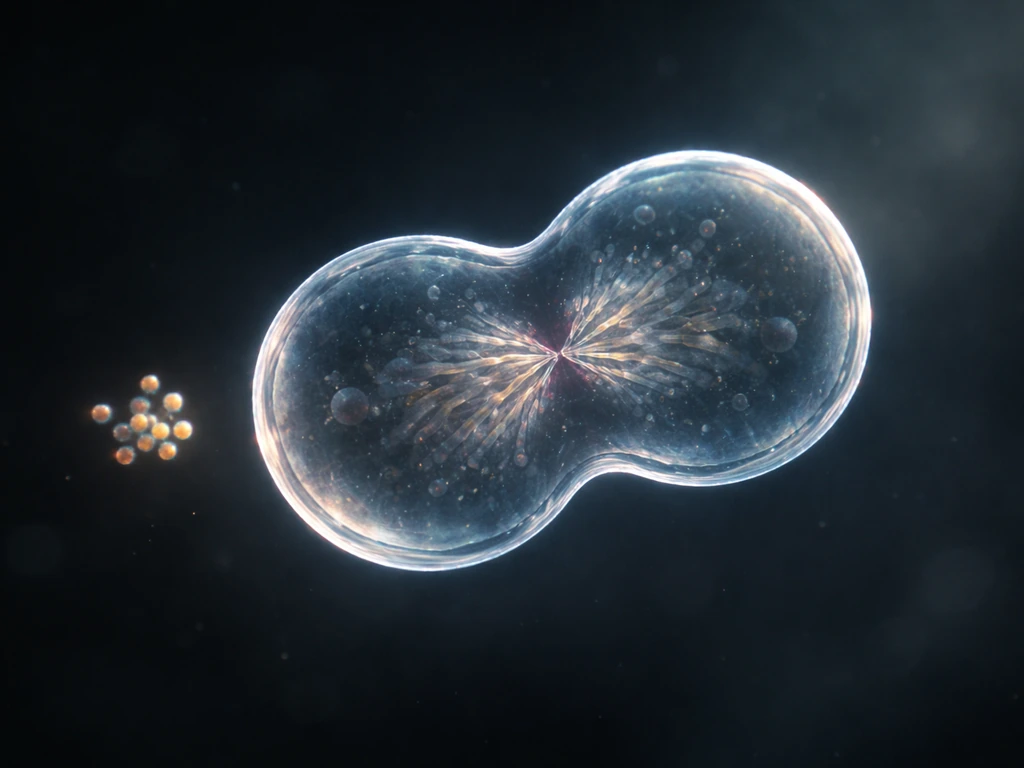
Checkpoints are the cell's internal quality-control gates. They do not just monitor whether enough time has passed. They monitor whether specific conditions have been met. There are three major checkpoints worth knowing.
- G1/S checkpoint (restriction point): Checks cell size, nutrient status, and growth factor availability. In yeast, cells that are too small simply wait in G1 until they grow enough. In budding yeast, cells below a critical size grow but do not divide until they hit the threshold. Growth signals converge on the CDK/cyclin system, and only when those signals are sufficient does the cell cross into S phase.
- G2/M checkpoint: Checks whether DNA replication completed correctly and, in fission yeast especially, whether the cell has reached a critical size. The balance between Cdc25 (which activates the mitotic CDK) and Wee1 (which inhibits it) responds to both cell size and nutritional status. Disrupting the cytoskeleton in fission yeast causes a G2/M delay, but only in cells that have not yet reached the critical size, which shows just how explicitly size is wired into this checkpoint.
- Spindle assembly checkpoint (SAC): Checks that every chromosome is properly attached to the spindle before anaphase begins. Proteins like Mad2 and BubR1 inhibit the APC/C complex, which prevents chromosome segregation until all kinetochore attachments are correct. This checkpoint is about division accuracy, not growth per se, but it illustrates that the cell must satisfy multiple independent conditions before division is allowed.
If DNA is damaged, p53 is activated and induces p21, a CDK inhibitor that blocks both G1/S-Cdk and S-Cdk activity. The cell arrests. It does not grow its way past that block, it has to repair first. So checkpoints can override growth readiness entirely.
Size homeostasis across the cycle is surprisingly tight. Research shows that cells use something close to an "adder" model: rather than dividing at a fixed size (pure sizer) or after a fixed time (pure timer), many cell types add a roughly constant amount of mass between birth and division, regardless of how large they were at birth. This means a smaller-than-average newborn cell will grow a bit more before dividing, and a larger one will grow a bit less, keeping population size distributions stable over generations.
Physical limits on cell growth that feed into division timing
There is a physical reason cells cannot just keep growing indefinitely before dividing. As a cell gets larger, its volume grows as the cube of its radius, but its surface area only grows as the square. This means that a doubling of cell diameter gives you eight times the volume but only four times the surface area. The membrane surface, which handles nutrient import, waste export, and signaling, becomes increasingly stretched relative to the demands of the interior. At some point, a very large cell simply cannot supply its core with enough nutrients or remove waste fast enough.
This is not just a textbook abstraction. It is part of why cells divide in the first place. Division restores a favorable surface-area-to-volume ratio. Two smaller daughters each have better access to their environment than one bloated parent cell would. So the drive to divide is partly a physical imperative, not just a genetic program.
There is also the matter of biosynthetic scaling. As a cell grows, it must produce more mRNA and protein just to maintain appropriate concentrations of everything. Research shows that transcriptional output scales with cell size through regulation of RNA polymerase II activity and mRNA stability. This is energetically expensive, and cells that grow too large before dividing are essentially working harder and harder to maintain homeostasis. Division is the reset.
Tissue-level constraints matter too. In multicellular organisms, cells are packed into tissue architecture, and very large cells can disrupt the geometry of surrounding cells. In algal colonies under physical confinement, division can actually be postponed until sufficient growth is achieved, showing that mechanical pressure from neighbors can reshape the growth-division relationship in both directions.
Predicting what happens under different conditions
| Condition | What happens to growth before division | Key mechanism |
|---|---|---|
| Rich nutrients, normal growth factors | Cell grows substantially in G1 and G2 before dividing; daughters are near-normal size | CDK/cyclin activation, R point crossed, checkpoints satisfied |
| Nutrient limitation (e.g., glucose starvation in yeast) | Cells may divide at smaller size after fewer growth phases; division size adjusts downward | TORC1/TORC2 signaling, altered checkpoint thresholds, Cdc25/Wee1 balance shifts |
| Early embryonic rapid cycles (C. elegans, frog) | Little or no net growth between divisions; daughters shrink progressively | Absent G1/G2, S-M cycles only, maternal resource drawdown |
| DNA damage present | Cell arrests (often in G1 or G2) and does not proceed to division despite potential growth | p53 induces p21, CDK inhibition blocks S-phase or G2/M entry |
| Spindle attachment error in M phase | Division is delayed mid-mitosis regardless of growth state | SAC via Mad2/BubR1 inhibiting APC/C-Cdc20 |
| Physical crowding or confinement | Division may be postponed until growth target is met; external geometry matters | Mechanical sensing, cell-cycle commitment delay |
Stress accelerates some shortcuts and blocks others. Under heat stress or oxidative damage, cells can arrest in multiple phases simultaneously. Under growth-factor withdrawal, cells exit the cycle entirely into G0, a quiescent state where they neither grow much nor divide. Growth and division can be uncoupled in both directions: a cell can grow without dividing (like most neurons, which are stuck in G0), or divide without net growth (like early embryonic blastomeres).
Practical takeaway: how to figure out the answer for any specific cell type
Here is how to think about any specific cell or context you are trying to understand. Start with these questions.
- Does this cell type have a full G1 phase? If it is an early embryonic cell, a bacterium in log-phase growth with very rapid doubling, or a stem cell in a specific developmental window, the answer may be no. If it is a typical somatic cell (liver, skin, immune cell), the answer is almost certainly yes.
- Is the cell responding to normal growth signals? Growth factors drive cyclin D accumulation and G1 progression. Without them, cells arrest before the R point. Check whether the environment is nutrient-rich and mitogen-present.
- What is the cell's size at division compared to its size at birth? If daughters are consistently smaller than the mother, growth is not keeping up with division. This is what happens in the C. elegans embryo and in yeast dividing under starvation.
- Are checkpoints engaged? DNA damage, spindle errors, or insufficient size all block division. A cell that looks like it should divide but is not probably has an active checkpoint. Look for p21 expression, CDK2 low states, or evidence of p53 activation.
- What does the nutrient environment look like? TORC1 and TORC2 are key integrators of nutrient status and division size in yeast. In mammals, mTOR signaling plays a similar role. Poor nutrients shift the whole program toward smaller, faster cycles or arrest.
If you are a student trying to test these ideas yourself, a few approachable experiments or observations work well. Compare cell size in yeast grown on rich media versus minimal media: cells in poor conditions divide at smaller sizes. Look at fixed slides of rapidly dividing cells (like onion root tips) and notice how mitotic cells look similar in size to their neighbors, confirming that most growth happens in interphase, not during division itself. Alternatively, look up published time-lapse data on C. elegans embryos where you can literally watch cells divide without growing and see the daughters shrink in real time.
The deeper principle here connects to topics like what controls when and how fast cells grow and divide, and why cells divide rather than simply growing larger without limit. The cell cycle is not a simple timer. It is a regulatory circuit that integrates growth state, DNA integrity, environmental signals, and physical constraints to decide: is now the right moment to split? Growth is one major input into that decision, but it is not the only one, and in some contexts it is bypassed almost entirely.
So the final answer: cells usually add mass before dividing, and in most normal cycling cells that growth happens in G1 and G2. But "always" is too strong a word. What cells actually require is reaching an appropriate state, which is a combination of sufficient mass, completed DNA replication, satisfied checkpoints, and a permissive environment. When any of those conditions are met through shortcuts or pre-existing stockpiles rather than fresh growth, division can happen without much growth at all.
FAQ
Do all eukaryotic cells grow in G1 and G2 before they divide?
No. The classic G1 and G2 growth-heavy pattern applies to many cycling somatic cells, but some cell types use short cycles or skip those phases (for example early embryos) and can divide with little to no net mass increase between mitoses.
If a cell is bigger, does that automatically mean it can divide?
Not necessarily. A cell can reach a large size while still being blocked if DNA damage checkpoints are active, replication is incomplete, or the cell lacks enough spindle-ready structural resources to segregate chromosomes correctly.
What does “growth” mean in practice, mass increase versus size increase?
Growth usually refers to biosynthesis, accumulation of proteins, lipids, ribosomes, and organelles. Physical size can track with it, but size alone is not a reliable indicator because checkpoint status and replication completion matter as much as total mass.
Can cells divide with DNA already replicated?
Yes, within the cycle logic. Once replication has completed and checkpoints are satisfied, a cell can commit to mitosis even if conditions change afterward, but if replication licensing or damage checkpoints are not cleared, the cell will not proceed.
Why do some cells keep dividing smaller during starvation or nutrient stress?
Under nutrient downshifts, cells may reduce the target division size rather than waiting to reach a normal size. The division machinery is still triggered when internal requirements are met, but those requirements are satisfied at a smaller mass because growth is limited.
How can a cell divide without net growth, like neurons or quiescent cells?
Neurons typically do not divide at all, they exit into a quiescent state where the cycle halts. Cells that divide without net growth are usually doing so by using pre-existing maternal or stored resources and by rapidly cycling, not by maintaining division in a continuously non-growing state.
Is there a single “size threshold” that all cells use to decide division?
No. Many cell types follow a mass-addition strategy, sometimes called an adder-like behavior, where the cell adds a roughly constant amount before dividing. That can produce different division sizes for small versus large newborn cells.
What happens if a cell’s surface-area-to-volume ratio becomes too low?
Nutrient import, waste removal, and signaling can become inefficient because transport scales closer to membrane area while metabolic needs scale closer to volume. This physical limitation contributes to why cells cannot keep enlarging indefinitely before dividing.
Do checkpoints only respond to DNA damage, or can they sense other problems too?
They can sense more than DNA damage. Beyond DNA integrity, checkpoints integrate replication progress, proper spindle attachment, and broader stress signals. Any of these can arrest the cycle even if growth has occurred.
If a cell is forced into division early, what are the typical consequences?
Dividing before replication is complete or before chromosomes are properly attached increases the risk of chromosome mis-segregation and genomic instability. Many systems respond by delaying or arresting instead of allowing defective division.
How should I interpret experiments that report cell size at division?
Be careful about what “time zero” means. In time-lapse or fixed-sample studies, differences in growth phase timing, stress history, and how “birth” size is defined can shift apparent division size even when the underlying control logic is similar.
Next Article
Which Type of Genes Help Cells Grow and Divide
Learn which gene types drive cell growth and cell-cycle division, plus brakes like checkpoints, tumor suppressors, and e