The genes that help cells grow and divide fall into a few well-defined categories: proto-oncogenes and cyclin/CDK genes that push the cell cycle forward, DNA replication machinery genes that copy the genome, and survival genes that keep the cell alive long enough to divide. But you cannot understand those "accelerator" genes without understanding the equally important "brake" genes, including tumor suppressors, checkpoint kinases, and apoptosis regulators, that make sure division only happens when conditions are right. Here is how all of them fit together.
Which Type of Genes Help Cells Grow and Divide
Marcus Whitmore
15 Apr 2026
Big picture: the cell cycle is a tightly managed program
Think of the cell cycle as a relay race with strict rules about when each runner can go. A cell does not simply decide to divide and then do it. Instead, it moves through four phases: G1 (growth and decision), S (DNA synthesis), G2 (quality check), and M (mitosis). Specific genes are switched on and off at each handoff point, and a whole separate set of regulatory genes acts like referees who can freeze the race if something goes wrong. What controls when and how fast cells grow and divide comes down to the balance between these accelerators and brakes operating simultaneously inside every cycling cell.
The central engine of the cell cycle is a family of proteins called cyclin-dependent kinases, or CDKs. CDKs are enzymes that switch other proteins on or off by attaching a phosphate group to them. The catch is that CDKs only become active when they partner with a second protein called a cyclin. Because cyclin levels rise and fall at specific points in the cycle, CDK activity is automatically timed. This cyclin-CDK partnership is the core mechanism that nearly every other growth-related gene feeds into, either by boosting it or suppressing it.
Gene types that push the cell cycle forward
The first broad category is proto-oncogenes. These are normal, healthy genes whose protein products promote cell growth and division. They include growth factor genes (like those encoding EGF or PDGF), growth factor receptor genes, intracellular signaling genes (RAS, MYC, PI3K), and the cyclin and CDK genes themselves. When proto-oncogenes are mutated or overexpressed, they become oncogenes, meaning they drive uncontrolled growth, which is a hallmark of cancer.
Within the cyclin-CDK system, the most important actors at the G1/S boundary are Cyclin D paired with CDK4 or CDK6, and Cyclin E paired with CDK2. Cyclin D1 is a direct convergence point for mitogenic signals: Wnt/beta-catenin signaling and NF-kB-related pathways both induce cyclin D1 expression, which then assembles with CDK4 to drive the cell past a critical commitment point called the restriction point. Once past this point, the cell is essentially committed to dividing regardless of whether growth signals continue.
The key target of Cyclin D/CDK4 is the retinoblastoma protein, RB. In a resting cell, RB sits on the E2F family of transcription factors and keeps them switched off. When CDK4 phosphorylates RB, RB releases E2F, and E2F then turns on a whole suite of genes needed for S-phase entry, including genes for DNA synthesis, nucleotide production, and origin licensing. Cyclin E/CDK2 then completes the phosphorylation of RB, locking in E2F release and fully committing the cell to DNA replication. This RB-E2F axis is arguably the most studied switch in all of cell biology.
Genes for DNA replication and the machinery of mitosis
Once E2F is free, it activates the second category: DNA replication machinery genes. These include CDC6, CDT1, and the MCM2-7 helicase complex. Together with the Origin Recognition Complex (ORC), these proteins assemble a pre-replicative complex (pre-RC) at replication origins all along the chromosomes during late G1.
This pre-replicative complex assembly at replication origins in late mitosis or early G1 requires ORC plus recruitment of Cdc6, Cdt1, and the Mcm2-7 helicase complex [pre-RC assembly on replication origins in late mitosis or early G1 requires ORC plus recruitment of Cdc6, Cdt1, and the Mcm2-7 helicase complex](https://pmc. ncbi. nlm. nih.
gov/articles/PMC8155957/). Think of the pre-RC as loading a row of starter pistols along the DNA; when S phase begins, those pistols fire and replication forks open up and start copying the genome. Cyclin E/CDK2 activity is directly upstream of this step: it induces expression of CDC6, CDT1, and MCM components, directly linking the RB/E2F switch to replication licensing.
Interestingly, CDK4/6 activity also promotes origin licensing through the RB pocket-protein axis, meaning the same kinase that frees E2F is also helping to set up the replication machinery.
For mitosis itself, a separate set of genes takes over. Cyclin B/CDK1 drives entry into M phase and triggers chromosome condensation, spindle assembly, and nuclear envelope breakdown. Completing mitosis requires the Anaphase-Promoting Complex (APC/C), a large ubiquitin ligase that destroys specific proteins at the right moment. APC/C with its coactivator CDC20 triggers the metaphase-to-anaphase transition by targeting securin for degradation.
Once securin is gone, the enzyme separase is freed and cleaves the cohesin proteins holding sister chromatids together, allowing chromosomes to segregate. Research shows that only about one minute of separase activity is needed to cleave enough cohesin for separation to proceed. APC/C then switches coactivators, using CDH1/FZR1 to degrade Cyclin B and finalize mitotic exit. These APC/C target genes are just as essential to successful division as any growth-promoting gene.
A natural question at this point is whether cells always need to grow in size before they go through this replication and division program. The answer is more nuanced than it first appears, and it connects to a broader question about whether cells always grow before they divide, which depends heavily on cell type, developmental stage, and the signals being received.
Genes that act as brakes: checkpoints, tumor suppressors, and apoptosis
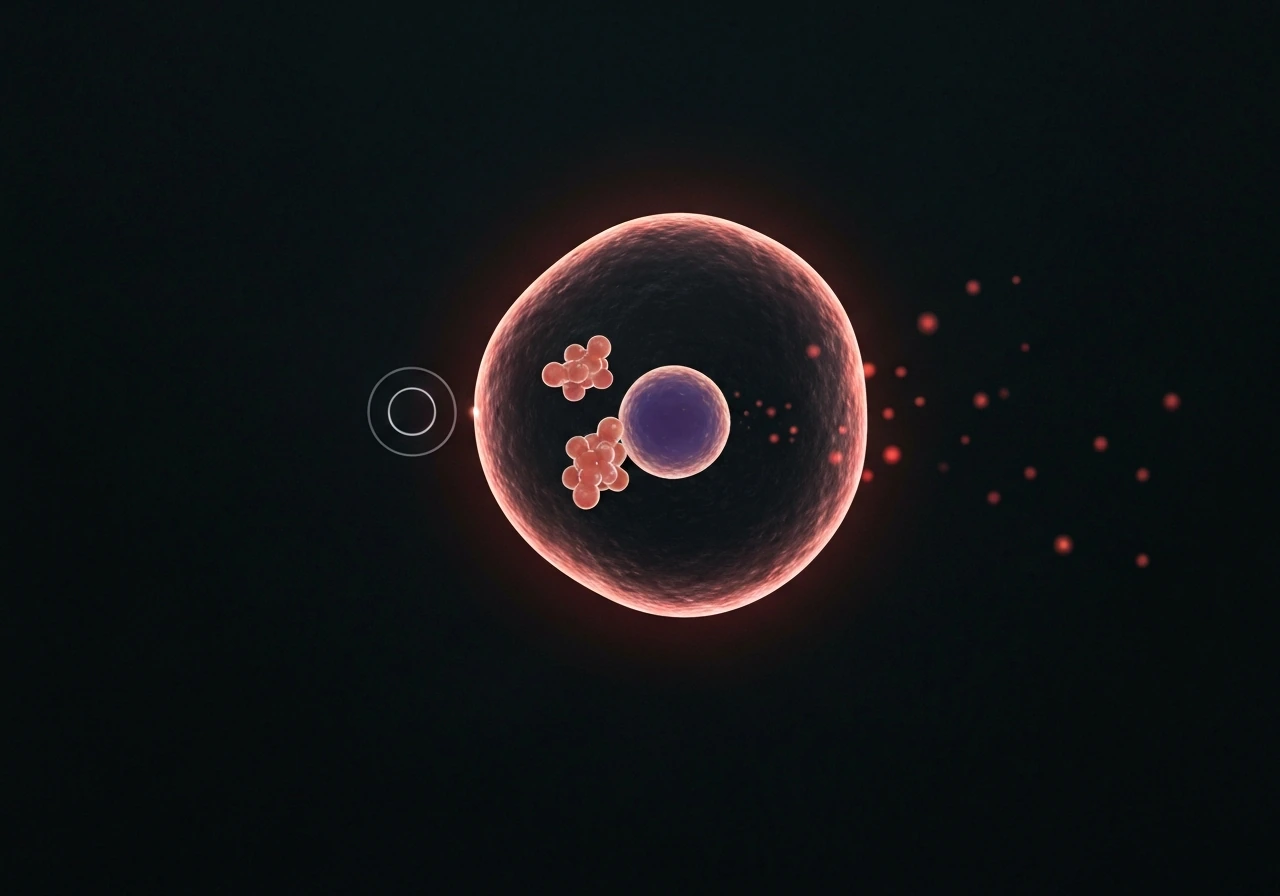
Understanding which genes help cells grow and divide is only half the story. The brake genes are equally important, and disrupting them is what turns normal growth into cancer. The major categories here are CDK inhibitors (CKIs), tumor suppressor genes, checkpoint kinase genes, and apoptosis genes.
CDK inhibitors are proteins that directly block CDK activity. The INK4 family (including p16INK4a and p15INK4b) specifically inhibits CDK4 and CDK6, preventing them from phosphorylating RB. The CIP/KIP family (including p21Cip1 and p27Kip1) has broader inhibitory activity against multiple CDK complexes. When these proteins accumulate, the cell cycle stalls. This is not a failure; it is the system working correctly.
The tumor suppressor genes RB and TP53 (encoding p53) are the two most famous brakes. RB, as described above, physically restrains E2F until growth conditions are genuinely favorable. p53 is a transcription factor that, when activated, turns on p21 to halt CDK activity and buy time for DNA repair. If the damage is too severe, p53 can also trigger apoptosis, essentially instructing the cell to self-destruct rather than risk passing on corrupted DNA. Mutations in TP53 are found in roughly half of all human cancers, which tells you how central it is.
The checkpoint kinase genes form another layer: ATM and ATR sense DNA damage or replication problems, then activate CHK2 and CHK1 respectively. The ATM-CHK2-p53 axis responds mainly to double-strand DNA breaks, while the ATR-CHK1 axis responds to replication stress and single-stranded DNA. Both axes converge on inhibiting CDK activity and halting the cycle. Even in unperturbed cells, low-level ATR-CHK1 signaling is active during S phase, quietly limiting how many replication origins fire at once to avoid overloading the replication machinery.
Apoptosis genes like BCL-2, BAX, and the caspase family determine whether a cell lives or dies when damage signals build up. Survival genes (anti-apoptotic ones like BCL-2) help cells stay alive long enough to complete division, while pro-apoptotic genes (BAX, PUMA, NOXA) execute the death program when the checkpoint system decides repair is impossible.
How signals on the outside become gene expression on the inside
A cell does not randomly decide to grow. It waits for external signals, most commonly growth factors, and then converts those signals into changes in gene expression through signaling pathways. Understanding this chain is what connects the "outside world" to the genes discussed above.
- A growth factor (for example, EGF or a Wnt ligand) binds to a receptor on the cell surface.
- The receptor activates intracellular signaling cascades: RAS/MAPK, PI3K/AKT, or Wnt/beta-catenin.
- These cascades activate transcription factors like MYC, AP-1, or beta-catenin/TCF.
- Those transcription factors turn on cyclin D1 and other early cell-cycle genes.
- Cyclin D1 pairs with CDK4/6, phosphorylates RB, frees E2F, and the cell cycle engine starts.
Inhibitory signals work in reverse. TGF-beta, for example, activates Smad transcription factors that switch off MYC and switch on p15INK4b and p21, directly suppressing CDK activity and halting G1 progression. Hypoxia (low oxygen) activates HIF-1alpha, which can suppress cyclin D1 expression and, via p53 upregulation, contribute to G2/M arrest. This means a cell's environment, not just its internal state, continuously shapes which growth genes are active. The gene expression program for division is essentially a read-out of all the competing signals a cell is receiving at any given moment.
Comparing major gene categories at a glance
| Gene Category | Key Examples | Primary Function | Effect on Division |
|---|---|---|---|
| Cyclins | Cyclin D1, Cyclin E, Cyclin B | Partner with CDKs to drive phase transitions | Promotes division |
| CDKs | CDK4, CDK6, CDK2, CDK1 | Phosphorylate target proteins at phase transitions | Promotes division |
| E2F transcription factors | E2F1, E2F2, E2F3 | Activate S-phase and replication genes when RB releases them | Promotes division |
| Replication licensing genes | ORC, CDC6, CDT1, MCM2-7 | Assemble pre-RC complexes at origins before S phase | Required for DNA copying |
| APC/C and coactivators | APC/C, CDC20, CDH1 | Destroy mitotic proteins to allow mitotic exit | Required for completing division |
| CDK inhibitors (CKIs) | p16INK4a, p15INK4b, p21Cip1, p27Kip1 | Block CDK activity, stall the cycle | Inhibits division |
| Tumor suppressors | RB, TP53 | Restrain E2F; trigger repair or apoptosis | Inhibits division |
| Checkpoint kinases | ATM, ATR, CHK1, CHK2 | Sense DNA damage/replication stress, halt CDKs | Inhibits division when damage present |
| Apoptosis genes | BCL-2 (survival), BAX, caspases (death) | Determine cell survival or death after damage | Survival genes promote division; pro-apoptotic genes block it |
Why cells cannot just keep growing and dividing forever
Even with all the right growth signals and no DNA damage, physical and biological constraints set an upper limit on division. Telomeres, the protective caps at chromosome ends, shorten with each replication cycle. Once they get short enough, p53 and p16INK4a drive the cell into permanent arrest called senescence. Research on keratinocyte aging shows that senescence involves both a p16INK4a-dependent component and a p53-dependent component, and that the restriction can operate even when telomere length is not the primary trigger.
Contact inhibition is another hard physical brake. When normal epithelial cells form a complete monolayer and touch their neighbors on all sides, density-dependent signals actively suppress CDK activity and halt proliferation. Cancer cells lose this restraint, which is part of why tumors grow into masses rather than stopping at a monolayer. There are also resource and space constraints: a cell needs enough ribosomes, ATP, and building materials to actually double its mass before it can successfully complete division, and nutrient-sensing pathways like mTOR integrate those availability signals directly into the cyclin-CDK machinery.
It is also worth noting that not all cells divide the same way or at the same rate. Neurons in the adult brain have essentially exited the cell cycle permanently, while intestinal stem cells divide every day. Do all cells grow and divide in the same way is a question worth sitting with, because the gene programs described here are modified substantially across different cell types, tissues, and developmental stages.
There is also a more philosophical angle here that students often find clarifying: why do cells divide and not simply grow larger instead? The answer ties back to the surface-area-to-volume ratio problem and the efficiency limits of diffusion, which means the gene programs for division are actually solving a physical engineering problem, not just executing a replication routine.
Quick guide: how to find and connect gene examples to the cell cycle
If you are a student or researcher trying to go deeper quickly, here is a practical workflow for connecting specific gene names to the cell-cycle phases and pathways described above.
- Start with KEGG Pathway map04110 (Cell cycle - Homo sapiens). This diagram shows every major player organized by cell-cycle phase, with links to individual gene pages. It is the single most efficient visual map for beginners.
- Pick a gene from the diagram and look it up in the NCBI Gene database or UniProt for its molecular function, which diseases it is linked to, and which experiments have validated its role.
- Use the KEGG ortholog map (ko04110) to find which of these genes are conserved across species, which is useful if your course or textbook uses yeast or Drosophila examples alongside human ones.
- For checkpoint genes specifically, search PubMed for 'ATM CHK2 p53 cell cycle arrest' or 'ATR CHK1 replication stress' to pull recent mechanistic reviews.
- For growth factor to gene expression connections, search for 'Wnt cyclin D1 G1 phase' or 'TGF-beta p15 CDK inhibitor' to find papers that trace the exact signaling chain from receptor to CDK activity change.
- To connect gene categories to specific cancer mutations, the COSMIC database and cBioPortal let you look up mutation frequency for any cell-cycle gene across tumor types, showing which brakes are most commonly broken in each cancer.
For beginners, the most useful mental model is the accelerator-brake framework: cyclin-CDK complexes are the accelerator, RB-E2F is the gear shift, CKIs and tumor suppressors are the brakes, and checkpoint kinases are the automatic emergency system. Every gene you encounter in a cell biology course can be placed somewhere in that framework. Once you have that scaffold in place, the specific names and phosphorylation events are much easier to remember because they all have a logical role to play.
One last thing worth keeping in mind: the genes described here do not act in isolation. A single growth factor signal can simultaneously activate cyclin D1 transcription, suppress p27 stability, and dampen apoptotic sensitivity, all at once. The cell integrates all of those outputs and makes a probabilistic decision. That integration is what makes the cell cycle robust under normal conditions and also what makes cancer, when the integration breaks down, so difficult to treat. If you want a deeper look at the regulatory logic sitting above all these individual genes, exploring how the timing and speed of cell growth and division are controlled at the systems level is a natural next step.
FAQ
Do cells always need to increase in size before they divide, or can they divide soon after receiving growth signals?
Usually, yes, but it depends on the cell state and context. Many cycling cells coordinate mass increase and DNA replication through the same cyclin-CDK regulators. However, quiescent or specialized cells can enter the cycle with minimal size growth, then rely on nutrient, stress, and checkpoint signaling to prevent catastrophic replication.
If a cell has strong growth signals, what prevents it from dividing when DNA replication conditions are poor?
Some genes make division possible even if growth is limited. For example, replication licensing and the S-phase entry switch (RB-E2F controlling expression of CDC6, CDT1, and MCM genes) can be activated by cyclin-CDK signaling, but checkpoint kinases (ATM/ATR and CHK1/CHK2) will stall the program if DNA damage or replication stress appears.
Is it enough to activate proto-oncogenes to cause uncontrolled division, or do brake genes also have to be disrupted?
Mutations are often context dependent. A proto-oncogene can drive growth when overexpressed or hyperactivated, but brakes like tumor suppressors and CDK inhibitors can still block division unless those brakes are weakened. This is why many cancers require both accelerator gain-of-function and brake loss-of-function to sustain uncontrolled proliferation.
Is Cyclin D the only key “G1 switch,” or can cells cross the restriction point through other routes?
Cyclin D1 is not the only way to control the G1/S boundary. While Cyclin D/CDK4 often acts early by priming RB phosphorylation, Cyclin E/CDK2 completes RB phosphorylation to lock E2F release and commitment. In some settings, pathways that mainly affect Cyclin E or RB regulation can still force S-phase entry even if Cyclin D signaling is altered.
Do DNA damage checkpoints only stop the cell cycle after damage, or do they also control replication in healthy cells?
Some checkpoints regulate how many replication origins fire and how stress is handled, not just whether replication starts. Even in normal S phase, ATR-CHK1 signaling limits origin firing to prevent overloading, so a cell can begin replication but still be throttled to maintain fork stability.
If a checkpoint halts the cell cycle, does the cell always recover, or can it be forced to die instead?
Yes, because the brakes include both “stop” and “die” outcomes. p53 can induce p21 to halt and allow repair, but if damage is too severe it can also promote apoptosis. Similarly, BCL-2 family proteins influence whether checkpoint-stalled cells survive long enough to recover or proceed to cell death.
What common mistake do students make when listing genes that promote growth and division?
A major mistake is treating cyclins and CDKs as the only growth-related genes. The same cyclin-CDK engine is wired into replication licensing factors and mitotic machinery, and it is opposed by CKIs and tumor suppressors. So the “genes that help cells grow and divide” should be mapped to phase transitions, not just one pathway.
How does APC/C fit into the overall idea of genes that promote cell division beyond simply triggering mitosis?
APC/C does not just end mitosis, it ensures correct timing and order. By degrading securin, APC/C activates separase for sister chromatid separation, and then it uses a different coactivator to degrade Cyclin B and finalize mitotic exit. Mis-timing here leads to segregation errors even if earlier cell cycle switches were active.
If telomeres are long, can cells still enter senescence, and what genes would mediate that?
Telomere shortening is one trigger, but senescence can also be driven by stress pathways that converge on p16INK4a and p53. The result is a permanent arrest program, so cells may stop dividing even when telomeres are not the only limiting factor.
If you experimentally force CDK activity, what “brake” failures most strongly increase the risk of abnormal division?
Checkpoint signaling integrates multiple risks, so overriding growth gene activity without proper checkpoint control is dangerous. For example, forcing cyclin-CDK activity while damaging DNA accumulates can convert a reversible arrest into genomic instability, which often changes which “growth and division” genes dominate the phenotype.
Next Article
Cell Cultures That Can Grow Indefinitely: Immortalized Cell Lines
Immortalized cell lines grow indefinitely by bypassing senescence and crisis, often via telomere maintenance like telome