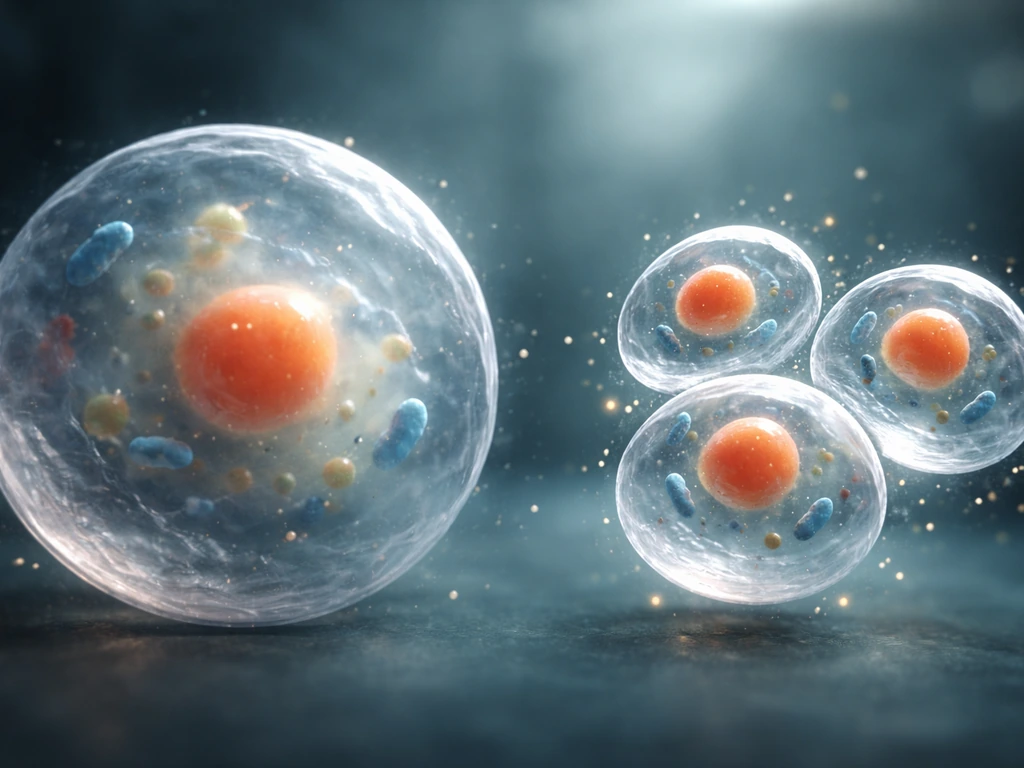
No, not all cells grow and divide in the same way. Bacteria split in two through a rapid process called binary fission, while your own cells run a tightly choreographed multi-stage cycle involving mitosis. Reproductive cells use an entirely different process called meiosis. Some cells stop dividing altogether once they mature, and a few organisms skip conventional division entirely in favor of budding or even duplicating their DNA without splitting at all. The mechanisms, timing, and outcomes differ widely depending on the organism, the cell type, and what the cell is being asked to do.
Do All Cells Grow and Divide in the Same Way?
Marcus Whitmore
16 May 2026
Why cell division patterns differ in the first place
The core job of any dividing cell is the same: copy the genetic information accurately, then split it between two new cells. But how a cell pulls that off depends heavily on how its genetic material is organized and what signals it receives from its environment. Bacterial chromosomes are usually single, circular loops of DNA sitting loose in the cell, which makes copying and splitting them relatively straightforward. Eukaryotic cells, including yours, pack their DNA into multiple linear chromosomes wrapped in a nucleus, which demands a much more elaborate division machine. On top of that, a multicellular organism needs individual cell types to behave differently: some must divide constantly to replenish tissue, others must stop dividing permanently, and a few specialized cells must generate offspring with half the usual chromosome number. Evolution has produced distinct solutions for each of these situations.
Prokaryotes vs eukaryotes: binary fission vs mitosis
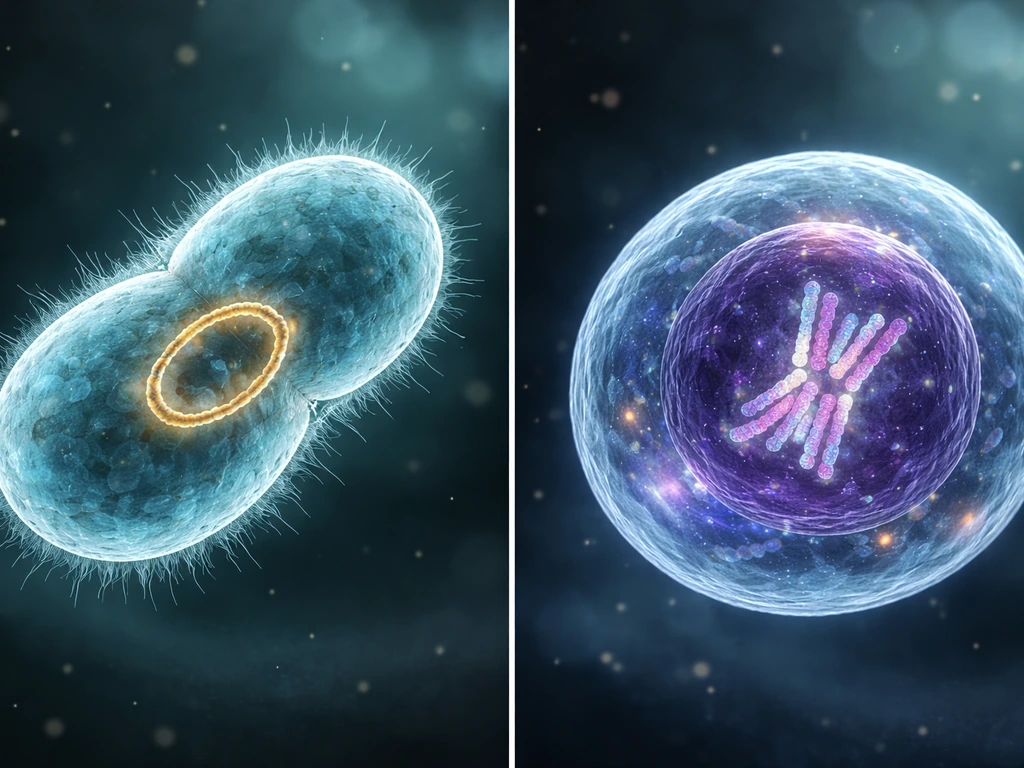
Bacteria and archaea are prokaryotes, meaning they have no membrane-bound nucleus. Their usual division method is binary fission: the single circular chromosome attaches to the inner membrane, replicates, and the two copies are pulled apart as the cell elongates. A ring of the protein FtsZ assembles at the middle of the cell and pinches inward to complete the split. In fast-growing E. coli, this whole process can be over in as little as 20 minutes. Because the genome is compact and there are no chromosomes to sort with a spindle, binary fission is genuinely simpler and faster than anything a eukaryotic cell does.
Eukaryotic mitosis is a different animal entirely. Before a cell even thinks about dividing, it spends time in interphase: a G1 phase where it grows and ramps up protein and RNA production, an S phase where it copies all of its DNA, and a G2 phase where it checks its work. Then comes mitosis itself, where a microtubule-based machine called the mitotic spindle physically grabs each chromosome pair at structures called kinetochores and lines them up at the cell's equator. A checkpoint called the spindle assembly checkpoint will halt everything if even one chromosome is not properly attached, preventing catastrophically unequal chromosome distribution. After chromosomes are pulled to opposite poles, the cell pinches in two through cytokinesis. The whole cycle takes anywhere from hours to days depending on cell type.
| Feature | Binary Fission (Prokaryotes) | Mitosis (Eukaryotes) |
|---|---|---|
| Chromosome structure | Single circular chromosome | Multiple linear chromosomes in a nucleus |
| Division machine | FtsZ ring | Microtubule spindle apparatus |
| Checkpoints | Replication initiation control | G1/S, G2/M, spindle assembly checkpoints |
| Speed | Can be ~20 minutes | Hours to days |
| Outcome | Two genetically identical cells | Two genetically identical diploid cells |
| Complexity | Relatively simple | Highly regulated, multi-phase process |
Meiosis: why sex cells divide differently
When a multicellular organism needs to produce gametes (sperm and eggs), mitosis will not do the job. Mitosis produces copies with the full chromosome set. If sperm and egg both carried the full set, fertilization would double the chromosome number with every generation. Meiosis solves this by running two rounds of division after one round of DNA replication, cutting the chromosome number in half. The first meiotic division separates homologous chromosome pairs, and the second separates sister chromatids, producing four cells each with half the original chromosome count.
Meiosis also does something mitosis never does: it shuffles the genetic deck. During the first meiotic division, homologous chromosomes physically exchange segments in a process called crossing over, generating new combinations of genetic information. The result is four genetically distinct cells rather than identical copies. This is why siblings who share the same parents are still genetically unique from one another.
How cell type and differentiation change the division game
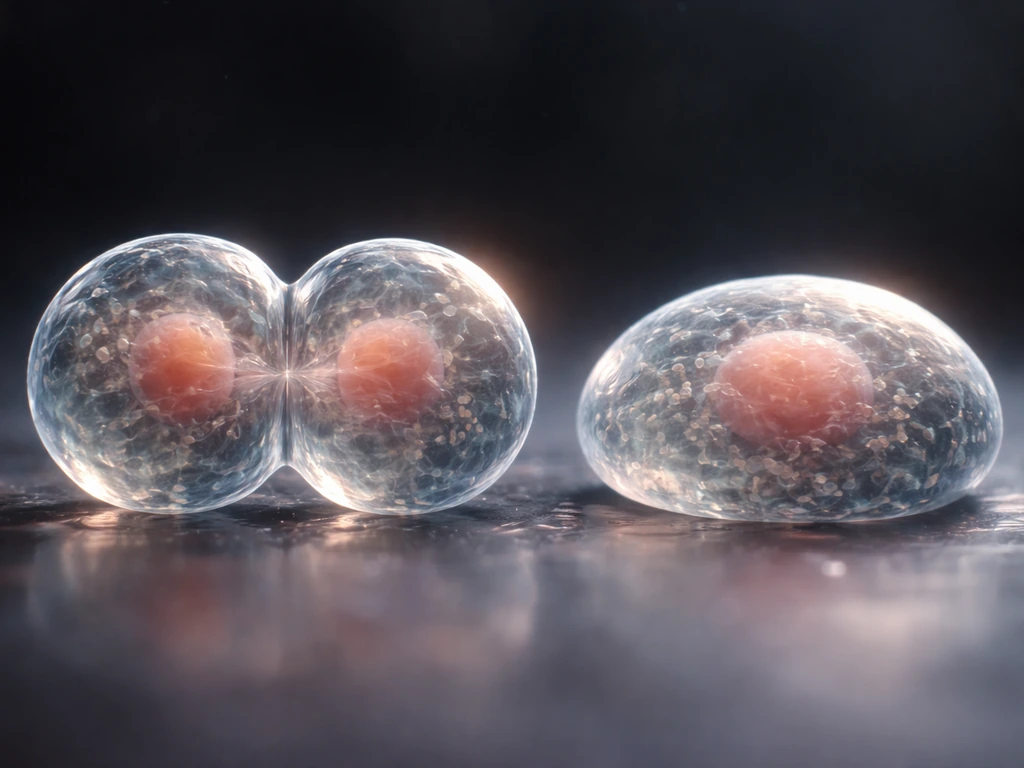
Not every cell in your body divides at the same rate, and some do not divide at all. Stem cells sit at the top of this hierarchy. They can divide repeatedly and produce daughter cells that either remain stem cells or commit to becoming a specific cell type. This flexibility is what allows your bone marrow to churn out billions of new blood cells every day while keeping a pool of stem cells in reserve.
Once a cell differentiates fully, it typically exits the cell cycle and enters a state called G0, a kind of holding pattern. Mature neurons and cardiac muscle cells are classic examples: they reach G0 early in development and stay there, which is why brain or heart injuries are so difficult to recover from. Other differentiated cells, like liver hepatocytes, sit quietly in G0 but can re-enter the cycle when tissue damage signals them to. The question of what controls when cells grow and when they stop is covered in more depth separately, but the short version is that differentiation fundamentally changes a cell's responsiveness to growth signals. This timing question is part of the broader idea behind the cell cycle, where growth and DNA replication are coordinated with division.
Stem cells vs mature cells represent two ends of a spectrum. Understanding which genes flip cells into or out of active division is one of the most active areas in cell biology, and those genes are worth exploring on their own.
Special cases: budding, syncytial division, and endoreduplication
Some organisms use division strategies that do not fit the standard binary fission or mitosis template at all.
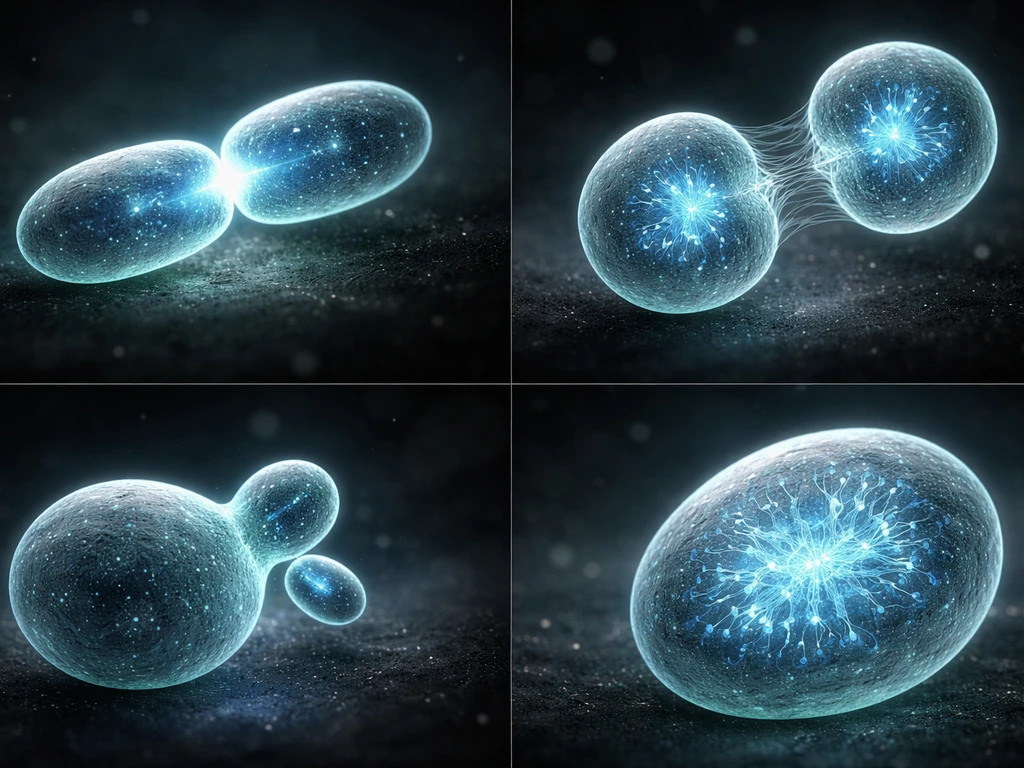
- Budding: Yeast like Saccharomyces cerevisiae divide asymmetrically, producing a small bud that grows and eventually pinches off as a smaller daughter cell. The mother cell retains most of its original volume. This is not just a curiosity: budding yeast is one of the most studied model organisms in cell biology precisely because its division cycle is relatively easy to observe and manipulate.
- Syncytial division: Some embryos, including those of Drosophila fruit flies, go through rapid rounds of nuclear division without the cell itself splitting. The result is a single giant cell containing thousands of nuclei sharing the same cytoplasm. Eventually membranes grow in to compartmentalize individual cells, but for a window of development the nuclei are dividing in a communal space.
- Endoreduplication: Certain specialized cells, like the giant nurse cells in insect ovaries or some plant cells, replicate their DNA multiple times without dividing at all. The cell ends up with many copies of its genome (polyploidy), which ramps up its capacity to produce proteins. This is a strategy for growth without division, which directly connects to the broader question of why cells do not simply keep growing instead of dividing.
What controls when cells grow and when they stop
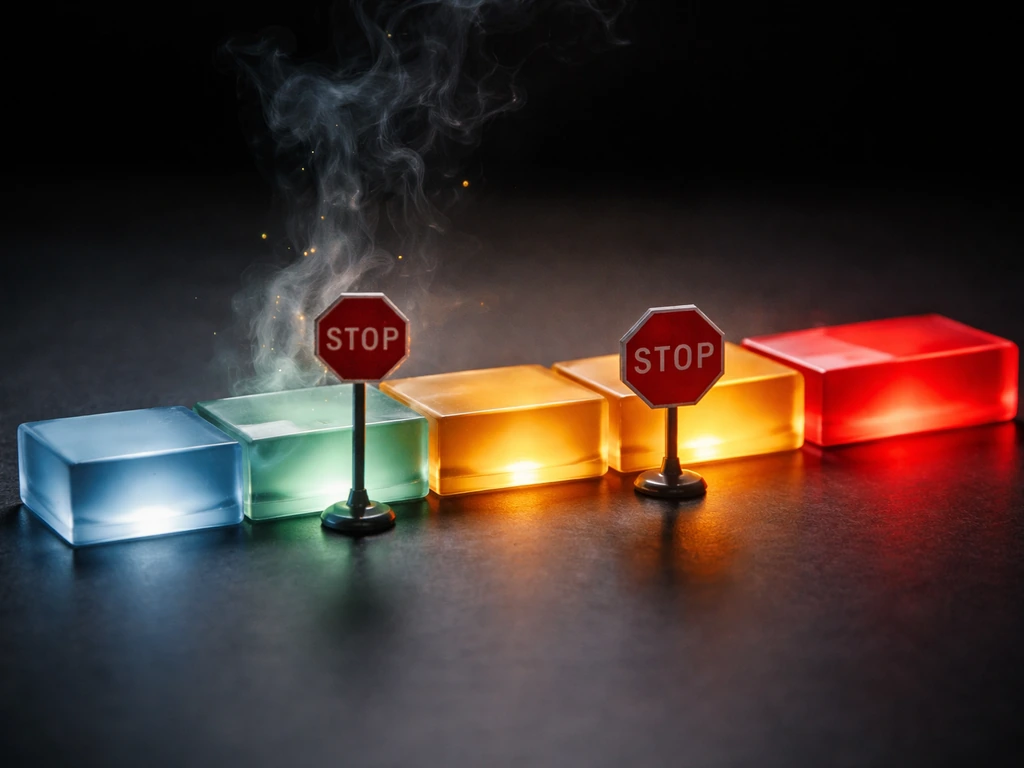
The eukaryotic cell cycle is not a runaway train. It has multiple built-in stops called checkpoints, each of which asks a version of the question: is it safe to continue? The G1 checkpoint (sometimes called the restriction point) is the most important gate for most cells. In animal cells, getting through it requires growth factor signals that activate cyclin-dependent kinases (Cdks). These kinases phosphorylate the retinoblastoma protein (Rb), releasing a transcription factor called E2F. Animal-cell G1-Cdk activity is mediated by blank" rel="noopener noreferrer">E2F, and E2F-dependent transcription of G1/S- and S-cyclin genes increases G1/S-Cdk and S-Cdk activities through a feed-forward loop that promotes release of E2F via phosphorylation events. Once E2F is free, it drives the expression of genes needed for DNA synthesis, committing the cell to another round of division. Without that growth factor signal, the cell stays in G1 or exits to G0.
A G2/M checkpoint checks whether DNA replication is complete and whether any damage has occurred. And the spindle assembly checkpoint, mentioned earlier, stalls mitosis itself until chromosomes are properly attached. These are not optional quality controls: losing checkpoint function is a hallmark of cancer, where cells divide without responding to the usual stop signals.
Bacteria regulate division differently. Rather than a multi-checkpoint cycle, E. coli controls division primarily at the point of replication initiation: once the replication forks assemble at the origin, they run at a roughly constant speed until the chromosome is fully copied. The FtsZ ring forms in parallel, often before replication is even finished, and the timing of ring assembly is coupled to cell length and growth rate rather than a checkpoint system in the eukaryotic sense.
How these cell rules set limits on how big organisms can get
Every organism's size ultimately comes down to how many cells it can produce, how large those cells can grow before dividing, and when cells get the signal to stop doing both. Single-celled organisms like bacteria are constrained by surface area to volume ratios: as a cell gets bigger, its volume grows faster than its surface area, eventually making it impossible to import nutrients and export waste fast enough. That physical constraint is a big reason cells divide instead of just growing indefinitely.
In multicellular organisms, the constraints are more social than physical. Cells in a tissue respond to signals from neighbors, the extracellular matrix, and circulating hormones. When tissue density increases, cells receive contact inhibition signals that shut down division. When nutrients are scarce, growth factor signaling drops off. When DNA damage accumulates, checkpoints trigger either arrest or programmed cell death (apoptosis). Remove those controls and you get cancer: unlimited division, invasion of neighboring tissue, and loss of the cooperative behavior that makes multicellular life possible.
Understanding why cells divide and not simply grow larger, and what happens when division gets out of balance, is central to understanding both normal development and disease. The cell-level rules described here, from checkpoint proteins to spindle assembly to binary fission timing, scale directly up to explain why organisms reach the sizes they do and why unlimited growth is never biologically sustainable.
A practical framework for predicting what kind of division you're looking at
If you are trying to identify or understand a division event, start with these questions:
- Is this a prokaryote or a eukaryote? If it is bacterial or archaeal, you are almost certainly looking at binary fission. If it is a plant, animal, fungus, or protist, you are in mitosis or meiosis territory.
- Is the cell producing gametes or spores for sexual reproduction? If yes, look for meiosis: two division rounds, half the chromosome number, genetic recombination.
- Is the cell a stem cell or a differentiated cell? Stem cells divide regularly; many differentiated cells sit in G0 or have exited the cycle permanently.
- Does the organism show any unusual growth patterns, like extreme cell size, multinucleation, or polyploidy? These are clues to syncytial division or endoreduplication.
- What signals is the cell receiving? Growth factors, nutrient availability, and contact with neighbors all influence whether a eukaryotic cell advances through its cycle or holds at a checkpoint.
With those five questions, you can usually narrow down what kind of division you are observing and why. From there, terms like cell cycle, mitosis, meiosis, binary fission, and endoreduplication become concrete labels for things you can actually predict and look for, rather than abstract vocabulary to memorize.
FAQ
Do all cells in one organism divide at the same rate?
Not necessarily. A single cell type can use different division behaviors depending on context, for example stem cells may divide often during regeneration but slow or enter a G0-like resting state when signals change. Tissue type and stress conditions can shift the rate even if the underlying mechanism (like mitosis) stays the same.
If a mature cell can divide, does it always do so after it differentiates?
No. If a cell is already differentiated and has exited the active cell cycle into G0, division usually does not resume unless it receives the right growth and repair signals. Some cells can re-enter (like liver cells after damage), while others stay locked out for long periods (like many mature neurons).
For bacteria, is binary fission synchronized strictly to DNA replication completion? (What if replication is slow)
Bacteria can be very fast, but division timing is not just “when DNA replication ends.” In many bacteria, division machinery (like the FtsZ ring) assembles based on cell growth and length, often coordinated with replication progress so that the timing matches the cell’s size and genome copy status.
If checkpoints prevent unequal chromosome distribution, why do checkpoint failures lead to cancer instead of just messy chromosome segregation?
The spindle assembly checkpoint is specific to properly attached chromosomes during mitosis, but cells also face earlier commitment control in G1 (often described via the restriction point). If cells cannot pass that earlier gate, they may not even start mitosis, so the overall risk of uncontrolled division depends on which checkpoint fails.
Does endoreduplication count as cell division? What happens to the chromosome number?
Usually, but the key constraint is coordination between DNA replication and chromosome duplication programs. When a cell duplicates DNA without completing an actual mitotic split, you can get multiple genome copies in one nucleus or enlarged ploidy, which changes how chromosomes are later organized and segregated during future divisions.
Is genetic shuffling in meiosis guaranteed in every organism and every meiosis event?
Crossing over happens only during the first meiotic division and only for properly paired homologous chromosomes. In some cases, recombination can be reduced or altered, which changes how genetically similar gametes become even though meiosis still reduces chromosome number.
Why does the duration of the cell cycle vary so much across different cell types and organisms? (Does timing matter for all dividing cells)
Even with identical “rules,” outcomes differ because cell size, chromosome number, and checkpoints scale with cell type and organism. For example, eukaryotic cycles range from hours to days, while bacterial division can be on the order of tens of minutes, and both systems reflect different constraints on genome organization and cell architecture.
If I’m trying to identify a division event, what’s the fastest way to distinguish mitosis from meiosis and binary fission in practice?
You can often tell the process apart by what you observe: mitosis produces two cells with the full chromosome set after chromosome alignment and segregation, meiosis produces four cells with half the chromosome number after two rounds of division, and binary fission yields two daughters without a spindle or nucleus.
Next Article
Why Do Cells Divide Rather Than Grow Indefinitely
Learn why cells stop growing and start dividing: limits on transport, DNA, gradients, and cell-cycle checkpoints.