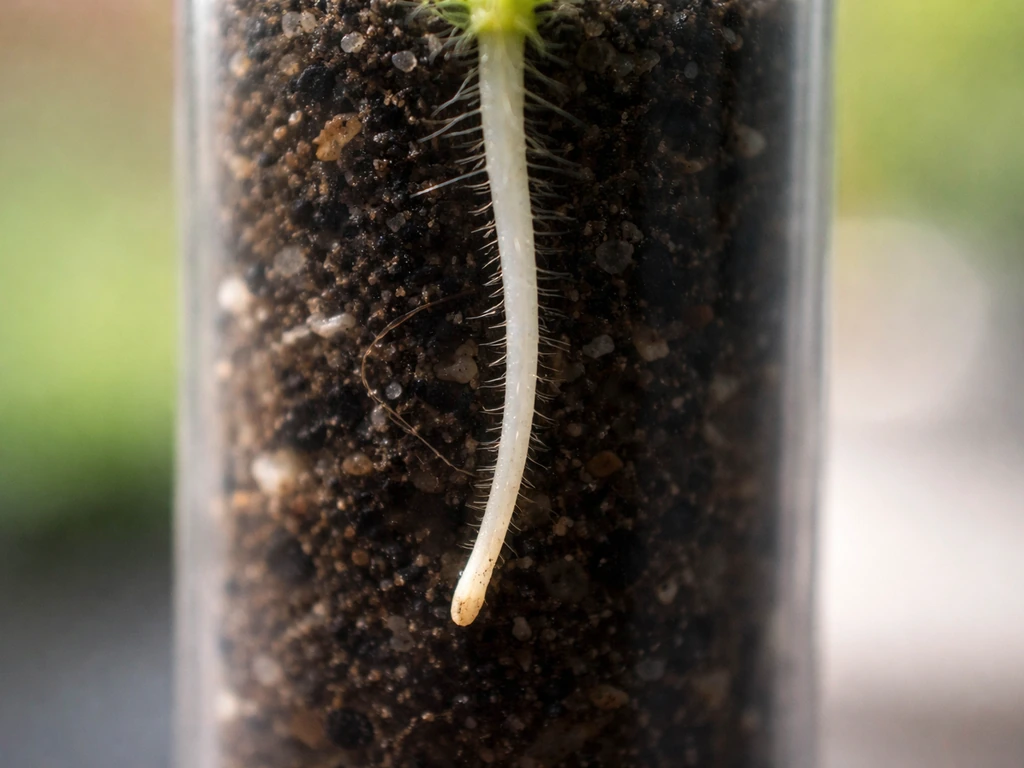
The root grows first because the plant needs water before it needs light. That single priority drives almost everything that happens during germination. The embryonic root, called the radicle, is pre-formed inside the seed and is the first structure to push through the seed coat, typically within 24 to 72 hours of a seed taking up water. It grows downward, anchors the seedling, and starts pulling in water and dissolved minerals so the shoot has the fuel it needs to push upward into the light. Without an established root, a shoot emerging into dry soil would simply die.
Why Does the Root Grow First? Germination Science and Fixes
Marcus Whitmore
26 Apr 2026
What "root first" actually means during germination
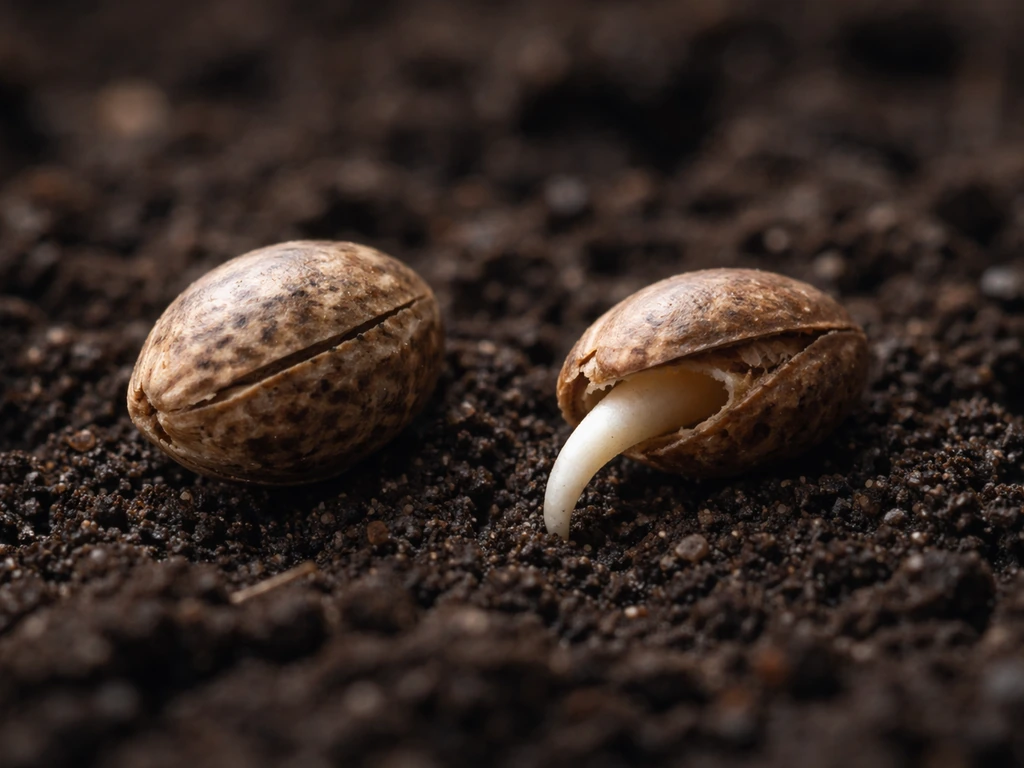
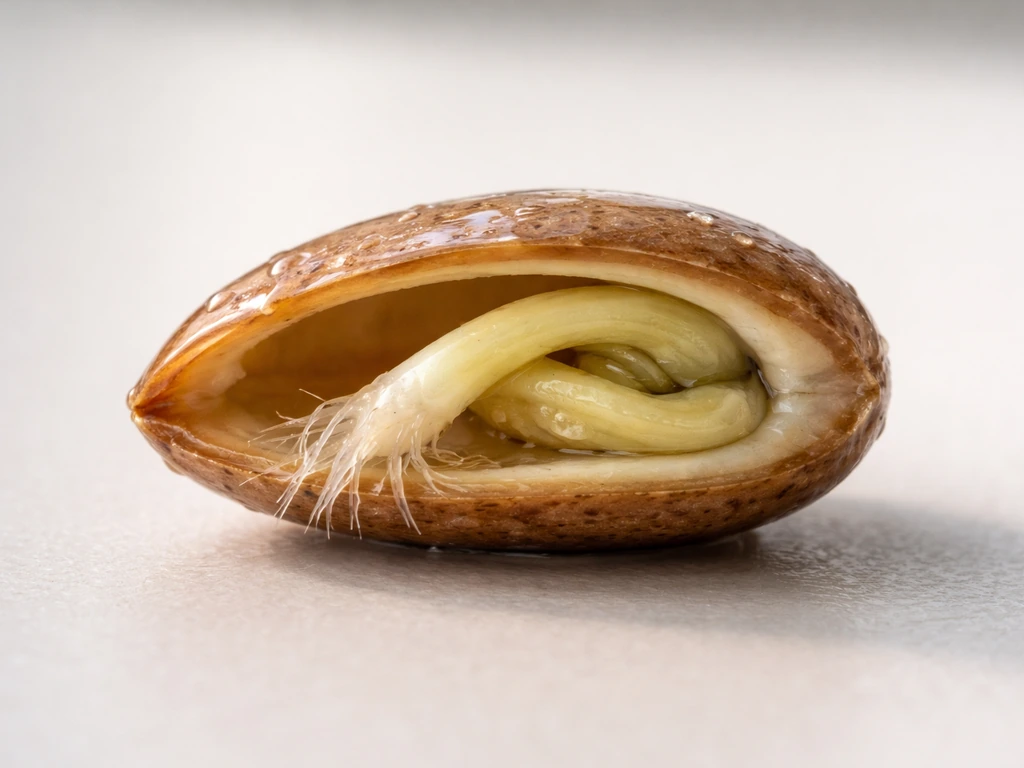
Scientists define germination as the entire process from the moment a dry seed absorbs water (imbibition) to the moment the radicle pokes through the seed coat. That radicle protrusion is literally the finish line. Until it happens, the seed is technically still germinating. Once the root tip breaks through, germination is complete and seedling growth begins.
The radicle is the embryonic root. It is already present inside the seed, compressed and waiting. When water enters the seed, metabolic activity switches back on, cells start dividing and expanding, and the radicle is the first structure physically positioned to break through the seed coat. In most seeds this happens at the micropylar end, a small gap in the seed coat near the embryo. The surrounding endosperm tissue at that point has to soften and weaken first, and the plant actually coordinates enzymes and proteins (including expansins) to loosen that tissue just enough for the radicle to push through.
Once it exits the seed, the radicle follows gravity downward, a behavior called positive geotropism. This directional growth is not random. The root is responding to physical cues that tell it which way is down, so it heads toward water and anchors the seedling in the process. The shoot will follow later, growing in the opposite direction toward light. Think of it as the plant establishing a foundation before building the walls.
The main reasons roots lead: water, minerals, and anchoring
Roots go first because the plant faces an immediate survival problem: it has a finite energy store packed into the seed (starch, oils, proteins) and no way to make more until it gets leaves in sunlight. Using that stored energy to push a shoot upward before a root is in place is like building the top floor of a house before laying the foundation. If the shoot can't access water fast enough, it wilts and the seedling dies.
Roots serve three functions that are all critical before the shoot can do anything useful. They anchor the seedling so it doesn't topple over as it pushes upward. They absorb water, which is needed for cell expansion in every part of the growing plant. And they pull in dissolved minerals, especially nitrogen, phosphorus, and potassium, which the plant will need almost immediately once leaves start photosynthesizing. Leaf size depends heavily on the plant having enough resources for cell growth, which starts with strong early roots. A shoot that appears before roots are functional has no reliable supply of any of these things.
There is also a physical logic to root-first growth. Seeds are usually buried in soil. The radicle pushes downward into a stable, moist environment while the shoot pushes upward through what can be dry, variable conditions near the soil surface. Having the root reach moisture first is essentially a biological safety net. It is no coincidence that seeds with hard coats or those planted too deeply tend to have slower radicle emergence because the barriers to water entry and root extension slow down that critical first step.
Hormones and signals that trigger root development
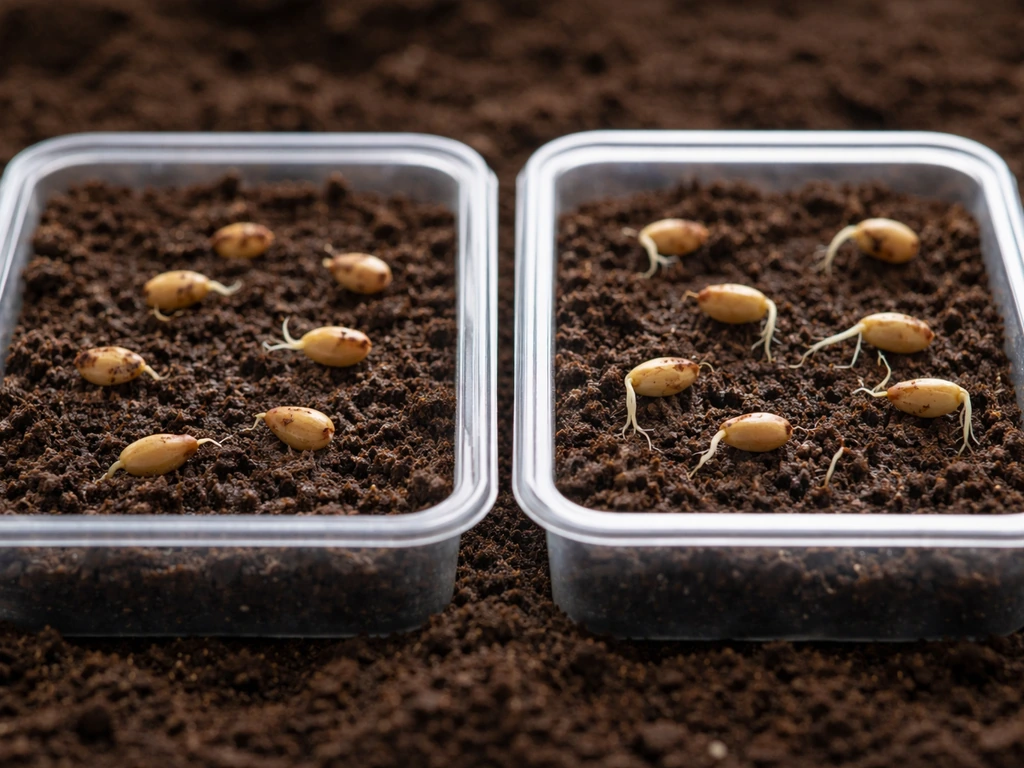
The root does not grow first by accident. A coordinated hormonal system essentially tells the radicle to go while keeping the shoot on hold. Two hormones dominate this conversation early on: abscisic acid (ABA) and gibberellin (GA). While the seed is dry and dormant, ABA is in charge, keeping the seed from germinating prematurely. When the seed absorbs water, GA levels rise and begin overriding ABA, releasing the brake on germination.
ABA has a very specific target: it inhibits radicle emergence. Research shows ABA can block that final germination step, the root pushing through the seed coat, without equally suppressing seedling growth afterward. This is actually useful information when something goes wrong. If your seeds are absorbing water but the root tip is stubbornly not emerging, excess ABA activity (often triggered by stress, chilling injury, or poor seed quality) is a likely culprit.
Auxin is the hormone most associated with root behavior once the radicle emerges. It moves directionally through the plant using a system of protein transporters (PIN efflux carriers and AUX1/LAX influx carriers), creating concentration gradients that guide where cells divide and elongate. Auxin accumulates at the root tip and on the lower side of the root, which drives the downward growth pattern. It also crosstalk with ABA signaling during the radicle emergence step itself, so the hormonal picture is genuinely interconnected.
Ethylene and reactive oxygen species (ROS, molecules like hydrogen peroxide) also play supporting roles. ROS levels rise in parallel with germination percentage in rice, and they appear to actively promote radicle protrusion and early root elongation rather than simply being byproducts of metabolism. Ethylene signaling, through components like EIN2, has been shown to promote germination in Arabidopsis. These are not the main actors, but they are part of a finely tuned system where timing matters a lot.
Physical conditions that either help or block root-first germination
Even with perfect hormonal signaling, the radicle still has physical barriers to overcome and environmental conditions to navigate. Getting those conditions right is the difference between a seed that sprouts in three days and one that just sits there rotting.
Water
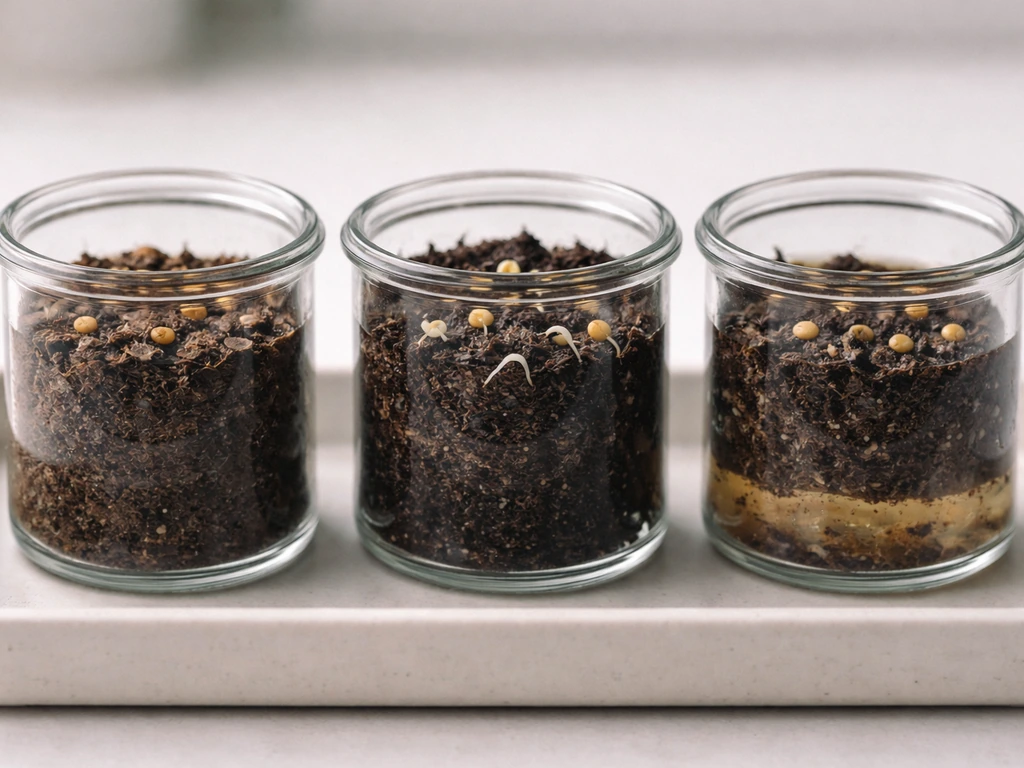
Imbibition, the initial uptake of water, is what kicks everything off. Without consistent moisture, the seed cannot complete germination. blank" rel="noopener noreferrer">But too much water is equally dangerous because it starves the seed of oxygen. Seeds need to breathe. In Brassica seeds, germination proceeds normally at oxygen levels above about 10%. Below that threshold, radicle protrusion is delayed and germination rates drop. A paper towel that is dripping wet is not a good germination environment; it should be moist but not soggy.
Temperature
Temperature affects both the speed and the success of germination. Rapeseed germinates across 5 to 30 degrees Celsius but does it fastest around 20 degrees Celsius. At 35 degrees Celsius, germination is significantly impaired. Lettuce is particularly temperature-sensitive, with an upper optimum between 20 and 25 degrees Celsius depending on the variety. Going above that can induce thermo-dormancy, where the seed refuses to germinate despite being otherwise healthy. Most common vegetables have a sweet spot between 18 and 24 degrees Celsius for reliable germination.
Seed depth and seed coat issues
Planting depth matters more than most people realize. Small seeds like lettuce and brassicas need to be very close to the surface, sometimes barely covered at all, because they lack the stored energy to push a radicle through a lot of soil before running out of fuel. Larger seeds like beans and corn can handle more depth. A hard, water-impermeable seed coat is another physical barrier that can completely prevent germination. Scarification, either soaking seeds in warm water for several hours or lightly abrading the coat, allows water entry and is especially useful for legumes and other hard-seeded species.
Light (or the lack of it)
Germination itself, specifically radicle emergence, does not require light and in most species happens better in darkness. Some seeds like lettuce are photosensitive and respond to red light, but this effect is temperature-dependent and mainly relevant to whether the seed breaks dormancy, not to which structure emerges first. For practical home germination, darkness or low light is fine and often preferred during the first phase.
How to support strong root-first germination at home
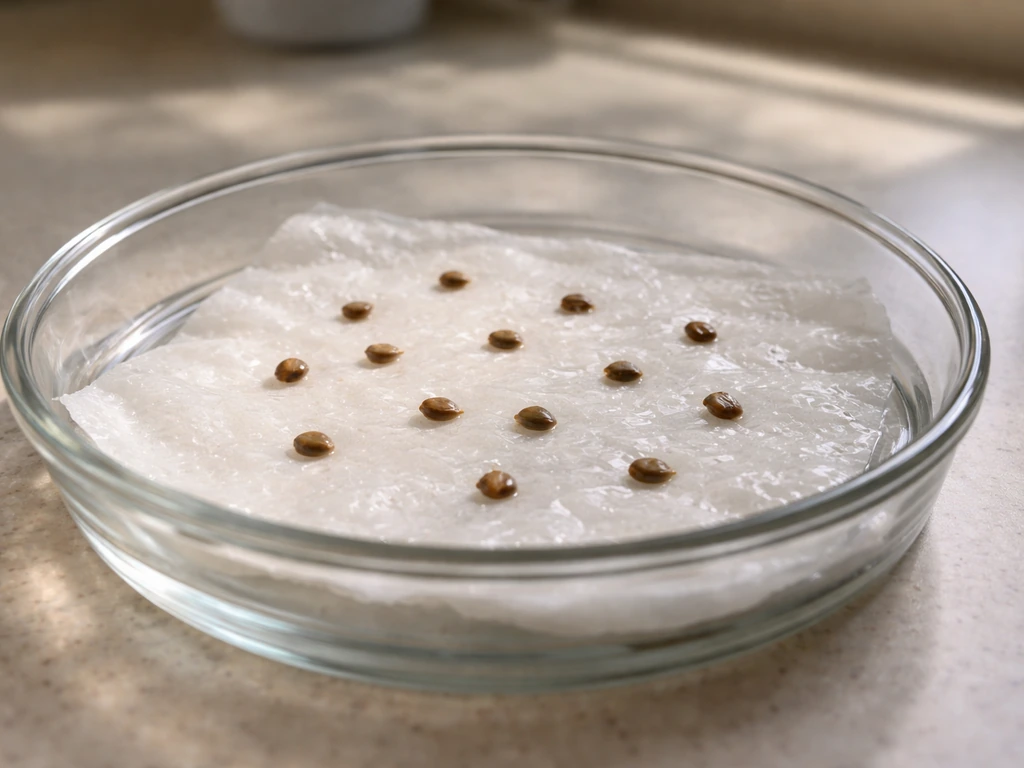
If you want to watch the process or troubleshoot a batch of seeds, a paper towel germination test is the most practical approach. It lets you see the radicle emerge without digging around in soil.
- Dampen a paper towel until it is moist but not dripping. Wring out any excess water if needed.
- Place at least 10 seeds (25 is better for a statistically useful result) spaced apart on one half of the towel.
- Fold the towel over the seeds and place it inside a zip-lock bag or a sealed container. Leave the bag partially open to allow some air exchange.
- Keep the container at a stable room temperature, ideally 18 to 24 degrees Celsius. Avoid windowsills with temperature swings.
- Check every 24 hours without disturbing the seeds. You are looking for the radicle tip to emerge from the seed coat.
- Count the seeds that have a visible radicle at the first count point (usually day 3 to 5 for most vegetables) and again at the full count point (day 7 to 10). Your germination percentage is the number of sprouted seeds divided by total seeds, multiplied by 100.
- A rate above 80 percent is good for most crops. Below 50 percent means your seed lot has a problem worth investigating before planting a full bed.
For soil germination, keep the growing medium consistently moist but not waterlogged. Use a spray bottle rather than pouring water to avoid compacting the surface. Cover the tray with a plastic dome or cling wrap to retain humidity until the radicle has established and the shoot starts emerging. Remove the cover once you see the first shoots to avoid fungal problems.
In hydroponics, the same oxygen logic applies. Net pots sitting in a reservoir should have air gaps so the top of the growing medium is not permanently submerged. Radicles that stay waterlogged without oxygen access will rot rather than elongate.
When root growth stalls or things happen out of order
Sometimes seeds absorb water, swell up, and then just stop. Other times the radicle emerges but never elongates. And occasionally the shoot seems to appear at the same time as or even before a recognizable root. Here is what is usually going on and what to do about it.
| Problem | Likely cause | Fix |
|---|---|---|
| Seed swells but no radicle appears after 7+ days | Temperature too low or too high, hard seed coat blocking water entry, or high ABA activity from poor seed quality/chilling injury | Adjust temperature to 18 to 24 degrees Celsius; try soaking hard-seeded species for 12 to 24 hours before retesting; discard seed lots older than 2 to 3 years |
| Radicle emerges but stops elongating | Insufficient oxygen (soggy medium), low temperature limiting cell division, or root tip damage from handling | Reduce moisture, improve air exchange, and handle seedlings by the seed not the root tip |
| Mold appears before radicle emerges | Too much water, not enough air circulation, or fungal contamination on seed surface | Rinse seeds briefly in a dilute hydrogen peroxide solution before germinating; reduce moisture; increase air gaps in germination setup |
| Radicle appears but shoot fails to emerge | ABA still elevated relative to GA, low energy reserves in old seeds, or the shoot is blocked by compacted soil | Move to 20 to 22 degrees Celsius; reduce planting depth for small seeds; check if seed cotyledons look shriveled (sign of low stored energy) |
| Shoot appears without a visible root | Seeds placed upside down on a surface, or rapid shoot elongation in very high light/heat conditions | Reposition seeds; check that the pointed end of the seed is not forced upward; reduce heat stress |
One pattern worth knowing: ABA specifically targets radicle emergence, not seedling growth afterward. So a seed that is stressed by salinity, drought, or temperature extremes can get stuck right at that final germination step, the root just refuses to push through, even though everything else looks fine. Reducing the stressor is the fix. Sugars in the growing environment can also partially counteract ABA's inhibitory effect on radicle emergence, which is one reason some growers add a tiny amount of sugar or coconut water to their germination solution.
If you are consistently seeing slow or failed root emergence across multiple seed types, the environment is usually the culprit rather than the seeds. Temperature instability is the most common hidden problem, especially in homes where the room cools significantly at night. A heat mat designed for seed starting, set to 21 to 23 degrees Celsius, solves this problem for most crops and dramatically improves consistency.
The bigger picture: root growth as the template for everything after
The root does not just grow first and then hand off to the shoot. It sets up the entire growth architecture of the plant. The patterns of cell division established in the root meristem during those first days, guided by auxin gradients and hormonal signals, become the template for how the plant grows in length and thickness over its entire life. As the radicle grows, it elongates by adding new cells behind the root tip. Once germination starts, the root meristem and elongation zone drive how a root grows longer and thicker over time. For a parallel with shoots, you can also describe the process by which stems grow in length in terms of how cell division and elongation zones drive growth over time. How the root grows in length follows the same meristem and elongation zone logic that governs stem elongation later. Understanding root-first germination is really understanding the starting point of all plant growth mechanics.
The practical takeaway is simple: if you get the root establishment phase right, the shoot almost always follows. Focus your energy on temperature stability, consistent but not excessive moisture, adequate oxygen, correct planting depth, and healthy seeds. Focus your energy on temperature stability, consistent but not excessive moisture, adequate oxygen, correct planting depth, and healthy seeds, because these are key to what makes roots grow. The plant already knows what to do. Your job is just to remove the obstacles.
FAQ
Why is my seed swelling but the root never comes out? (What should I troubleshoot first)?
Check whether the seed has reached radicle protrusion, not just swelling. If the radicle emerges but then stops, look for oxygen issues (too-wet medium or heavy compaction) and temperature stress. If it never emerges, the usual culprits are incorrect planting depth, insufficient water entry (hard seed coat), or excess ABA activity from stressors like cold or poor seed quality.
If darkness helps, does it mean light will stop the root from growing first?
Light is not required for radicle emergence, so if you see “root first then shoot,” low light is fine. If you use light during germination and also mist too aggressively, you can still create problems indirectly (drying cycles, temperature swings, or oxygen-poor conditions). A reliable setup is steady warmth and moist-but-not-soggy media, regardless of whether the tray is in darkness.
Could temperature swings explain why the shoot sometimes appears without a strong root?
Yes. Very cold nights can slow germination even if daytime temperatures look acceptable, and that can make it seem like the root is not “starting.” Use a heat mat or otherwise stabilize the seed-zone temperature (for many crops around 21 to 23°C). Re-check depth and moisture too, because cold plus waterlogging is a common recipe for stalled radicles and rot.
What does “too much water” look like for germination, and how does it affect root-first growth?
Oxygen limits radicle extension when moisture is excessive. If your towel or soil stays saturated, the seed can imbibe water but the radicle tip cannot grow effectively, or it rots. Aim for evenly moist (not dripping) conditions, and for soil, avoid packing the surface, use fine misting, and keep any humidity cover from trapping condensation that drips.
Can seed orientation or the micropyle location cause the root to emerge later or from the wrong spot?
If a root does not emerge from the usual end, it can be because the seed coat is not softening at the micropylar region, or the seed is physically oriented in a way that increases the barrier to water entry. If you are testing many seeds, rotate occasionally is not recommended for soil germination, but for paper towel tests you can start with the micropyle facing downward and ensure the towel is moist but not wet.
Do I need to scarify seeds for “root first” germination, and how do I avoid harming them?
Hard-coated seeds often need a water-entry shortcut. Soaking in warm water for several hours, followed by prompt germination setup, can speed radicle protrusion. For very tough coats, light abrasion (scarification) helps water reach the embryo, but over-scarifying can damage the embryo and reduce viability.
Is adding sugar or coconut water a good fix if the root is stuck at emergence?
Supplementing with small amounts of soluble sugars can sometimes reduce ABA’s inhibitory effect on radicle protrusion, especially in stressed setups. However, it can also increase microbial growth and can worsen oxygen shortage if your medium is already soggy. If you try it, keep moisture controlled, improve aeration, and use a very small dose, then watch for mold or slime.
How can I tell whether my problem is delayed radicle protrusion versus stalled root elongation?
For home germination, the best “next step” is separating three stages: imbibition (swelling), radicle protrusion (root tip breaks through), and root elongation (growth after emergence). If swelling happens but protrusion does not, focus on temperature, depth, and seed coat barriers. If protrusion happens but elongation stalls, focus on oxygen, moisture uniformity, and avoiding temperature stress after the radicle starts.
Why does planting depth change whether the root grows first or fails?
Planting too deep is a major risk for small, energy-limited seeds because the radicle may run out of stored reserves before reaching oxygen and moisture gradients in deeper soil. If you see consistent delays across small seeds, place them just barely covered (sometimes essentially at the surface) and keep the medium uniformly moist near that zone.
My plants seem to produce shoots before visible roots, is that normal or a sign of a problem?
“Shoot appears first” usually means the root is too small to notice, or it is emerging but being disrupted during handling, or the environment is causing an abnormal sequence due to stress and uneven moisture. Try a paper towel test to confirm natural order, then transfer carefully without disturbing the developing radicle. Also ensure oxygen access and stable warmth right after you first see any sprout.
What changes in hydroponics can make the radicle rot instead of elongating?
In hydroponic or net-pot systems, roots often rot when the root zone stays submerged with low oxygen. Add or maintain aeration, ensure the top of the medium has air contact, and confirm that excess water is draining back between cycles (if using recirculation). The root-first advantage only holds if oxygen is available right at the radicle tip.
If the root emerges but seedlings stay weak, is it still a root-first germination issue?
If the radicle is emerging but you get poor growth later, verify mineral availability and moisture stability for early root function. Roots need dissolved minerals quickly once leaves and photosynthesis begin, so if you transplant into very low-nutrient media, the shoot can look weak even though the “root-first” step succeeded. Consider a gentle early nutrition approach appropriate for seedlings.
Next Article
Describe How Roots Grow in Length: Step by Step
Step by step root length growth: zones, cell division then expansion, auxin control, and how water oxygen soil limit elo