
Roots grow longer through two sequential processes happening just behind the root tip: first, cells divide rapidly in a zone called the meristem, then those newly made cells expand dramatically in the elongation zone, pushing the root tip forward through the soil. That's the core mechanism. Everything else, hormones, water, soil conditions, nutrients, either supports or limits those two steps.
Describe How Roots Grow in Length: Step by Step

Marcus Whitmore
26 Apr 2026
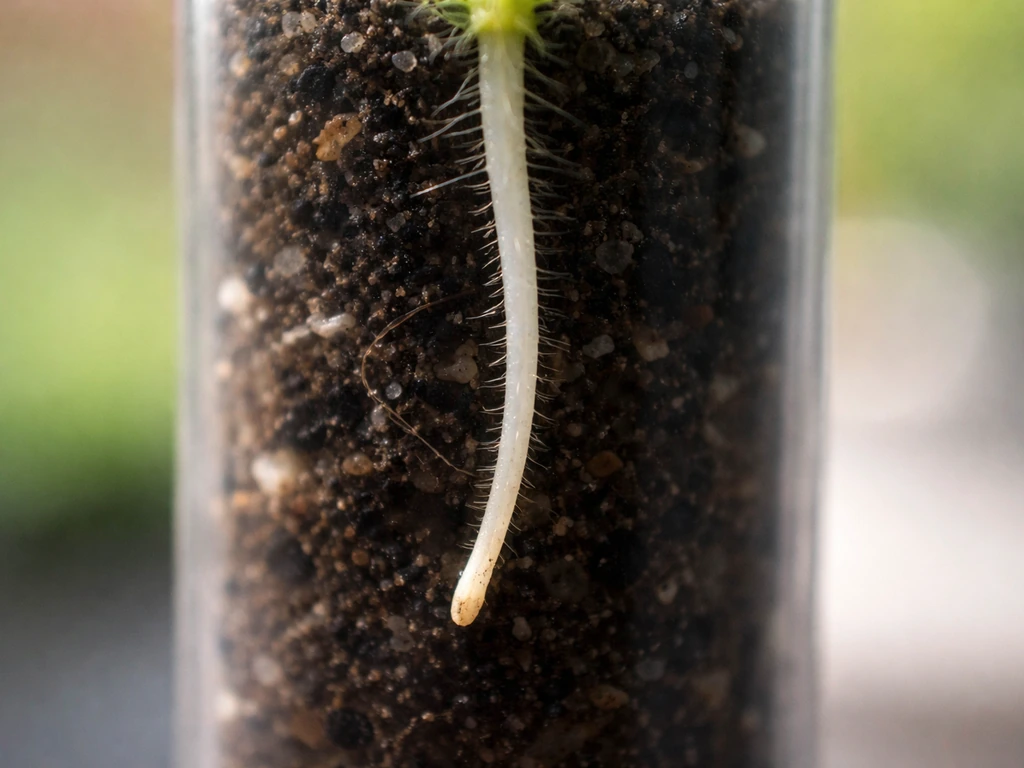
The four zones of a growing root tip
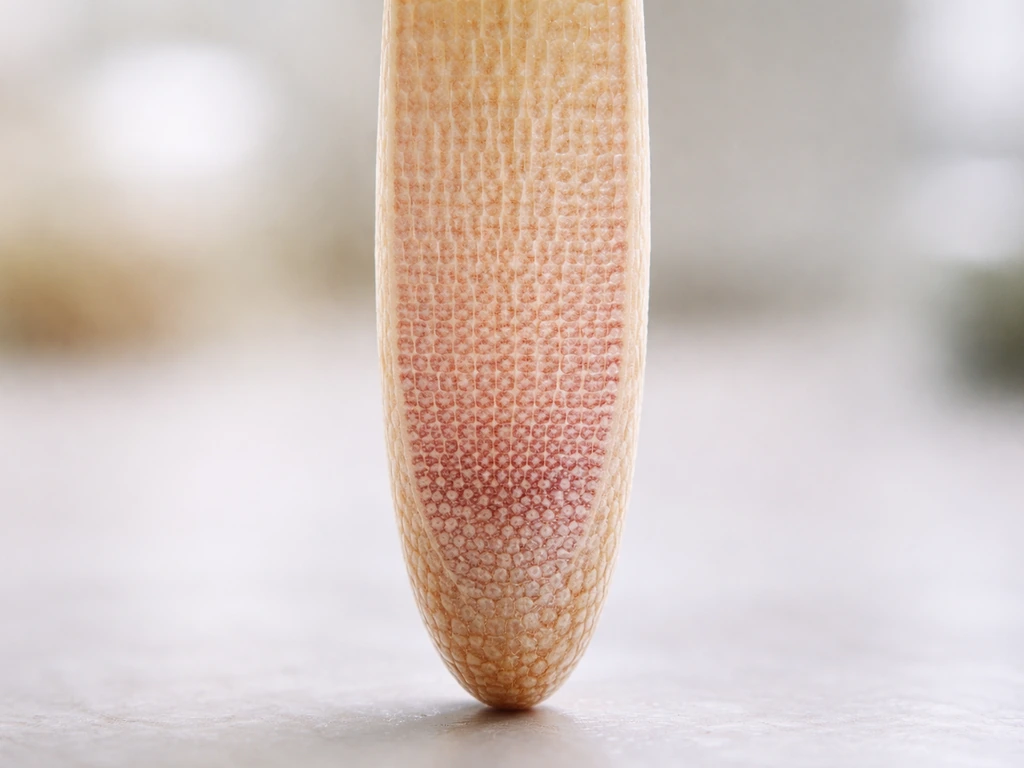
If you sliced a root tip lengthwise and looked at it under a microscope, you'd see four distinct regions stacked from the very tip upward, each doing a different job. Understanding them makes the whole growth process click into place.
- Root cap: The tough, expendable outer layer at the very tip. It protects the delicate meristem as the root pushes through soil, and houses the columella cells that sense gravity to steer growth direction.
- Meristematic zone (zone of cell division): Just behind the root cap, this is where cells divide rapidly and continuously. These cells are small, densely packed, and full of activity. They are the source of all new root cells.
- Transition zone: A short region between the meristem and the elongation zone where cells finish their last division cycle, reach the G2 phase, and prepare for elongation. It also acts as a key hormonal signaling hub.
- Elongation zone: Cells here stop dividing and instead expand enormously, sometimes increasing their length tenfold. This expansion is what physically pushes the root tip deeper into the soil.
- Maturation zone (differentiation zone): Cells reach their final size here and take on specialized roles. This is where root hairs emerge, dramatically increasing the root's surface area for water and nutrient absorption.
Each zone flows into the next. New cells are constantly born at the meristem, pushed upward (relative to the tip) into the elongation zone, and then into the maturation zone. The root tip itself stays at the growing front because the expansion happening behind it propels it forward.
How roots actually get longer: division then expansion
Length increase in a root is a two-engine process. Neither engine works alone, and if either stalls, root elongation slows or stops.
Engine one: cell division in the meristem
Cells in the meristematic zone divide by mitosis, producing a steady stream of new daughter cells. These cells are tiny at first, roughly the same size as the parent cell they came from. Cell division alone adds very little to root length because the new cells are so small and tightly packed. Think of it less as stretching a rubber band and more as stamping out new pieces of clay. The division process generates the raw material for growth.
Engine two: cell expansion in the elongation zone

This is where most of the actual length comes from. Once a cell leaves the meristem and enters the elongation zone, it exits the cell cycle and switches to a mode called endoreduplication (it copies its DNA without dividing). The cell wall loosens, water rushes in through osmosis, turgor pressure builds up inside the cell, and the cell expands, primarily along the root's long axis. A cell that was just a few micrometers long can become many times longer within hours. Multiply that by thousands of cells expanding in the same direction at once, and you have a root tip being physically driven through the soil like a slow, biological drill.
The transition zone between the meristem and elongation zone is not just a passive corridor. Research in maize has shown that cells actually reach the G2 phase of the cell cycle before they initiate elongation, meaning there is a deliberate checkpoint before the switch to expansion mode. The transition zone also functions as a key signaling hub where hormone interactions determine exactly when and where rapid elongation begins.
Hormones steering the show
Cell division and expansion don't just happen randomly. A sophisticated network of plant hormones coordinates the rate, direction, and extent of root elongation. Auxin is the central player, but it does not act alone.
Auxin: the main coordinator
Auxin (primarily indole-3-acetic acid) flows down through the root tip, accumulates in the elongation zone, and at low concentrations it promotes cell elongation. At higher concentrations, it actually inhibits elongation, which is important for direction control. When a root senses gravity and needs to bend downward, auxin redistributes asymmetrically across the root tip, with more accumulating on the lower side. That higher concentration on one side suppresses elongation there while the other side elongates more freely, bending the tip toward the gravity vector. This gravity-sensing happens in the columella cells of the root cap, which contain starch-filled plastids (statoliths) that fall toward the lowest point, triggering the auxin redistribution.
Cytokinin: gatekeeper of the meristem-elongation boundary
Cytokinin counterbalances auxin at the boundary between the meristem and the elongation zone. It promotes cell differentiation and represses auxin transport and auxin responses at that boundary, essentially controlling where meristem activity ends and elongation begins. Experiments in maize have shown that cytokinin can directly inhibit primary root elongation, and that elongation recovers when cytokinin is withdrawn. Auxin in turn dampens cytokinin signaling by inducing negative regulators (called ARRs), creating a feedback loop that fine-tunes meristem size and the transition point. The interaction even extends to vascular cells in the transition zone, where cytokinin acts through a protein called SHY2 to regulate cell fate across multiple tissue types.
Ethylene: the brake pedal
Ethylene is primarily a growth inhibitor in roots. Research shows it slows root elongation mainly by affecting the elongation of cells leaving the meristem, not by reducing meristem activity itself. Ethylene works partly by boosting auxin biosynthesis and altering auxin distribution, so its inhibitory effect on cell elongation actually requires functional auxin signaling downstream. There's also an interesting nuance: while ethylene inhibits primary root elongation, it promotes root hair elongation through a completely different molecular pathway (involving EIN3/EIL1 and RHD6/RSL1 transcription factors), so ethylene is not simply a brake on all root growth.
Gibberellins: supporting expansion
Gibberellins contribute to cell elongation in the elongation zone and interact with both auxin and cytokinin pathways. They generally promote elongation and are part of the broader hormonal network, though auxin and cytokinin tend to dominate the conversation in most root growth research.
What the environment provides (or withholds)
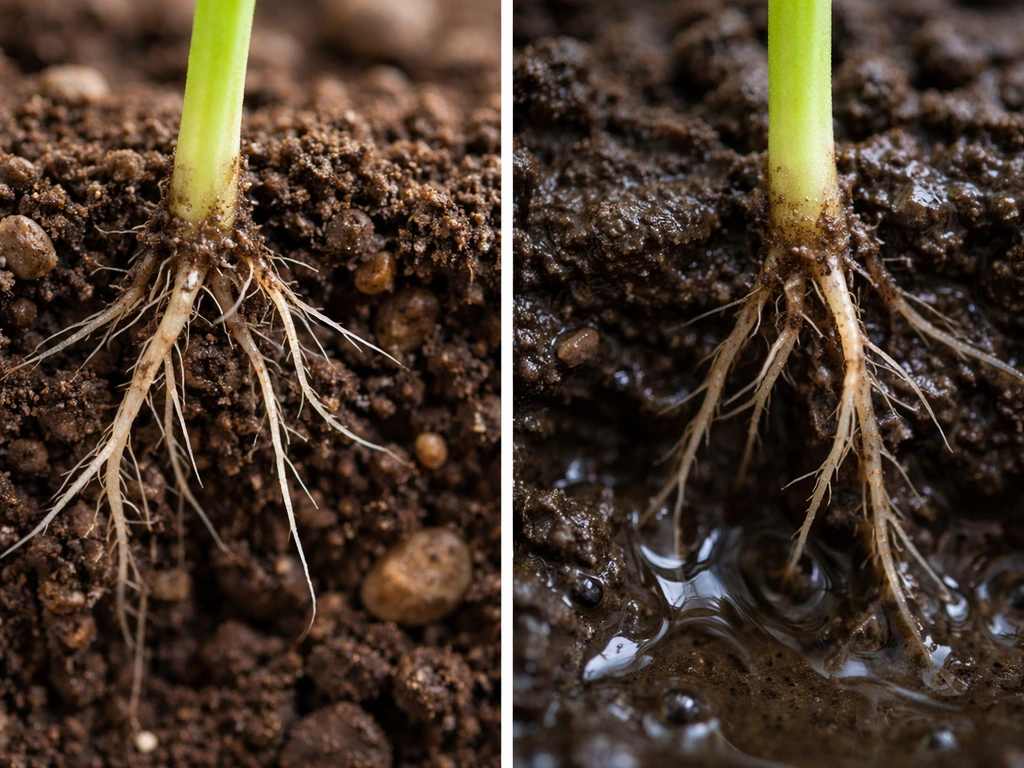
Even perfect hormone signaling cannot produce root elongation if the environmental conditions are wrong. Water, oxygen, nutrients, and soil physical properties each play a direct role.
Water and turgor
Cell expansion in the elongation zone is driven by turgor pressure, and turgor requires water. When water is scarce, cells cannot build sufficient turgor to expand fully, and root elongation slows. Plants can partially compensate through osmotic adjustment (accumulating solutes inside cells to pull in what little water is available), but this only goes so far. Under significant drought stress, root elongation zones shrink and growth rates drop measurably.
Oxygen
Root cells are actively respiring, and the meristem especially needs a steady oxygen supply to fuel the energy demands of rapid cell division. In waterlogged or compacted soils, oxygen levels drop around the root tip. Ethylene, whose diffusion is also restricted when soil pores are flooded or compressed, builds up around the root tip and inhibits elongation. Research in maize has shown that hypoxia directly triggers ethylene biosynthesis in the division and elongation zones, compounding the growth slowdown.
Mineral nutrients
Phosphorus, in particular, has a well-documented effect on root elongation. Phosphorus stress causes measurable changes in the size and position of growth zones. Nitrogen availability also regulates root architecture. Mineral deficiencies generally reduce cell division rates and the supply of new cells entering the elongation zone, compressing the growth pipeline from the start.
Soil physical properties
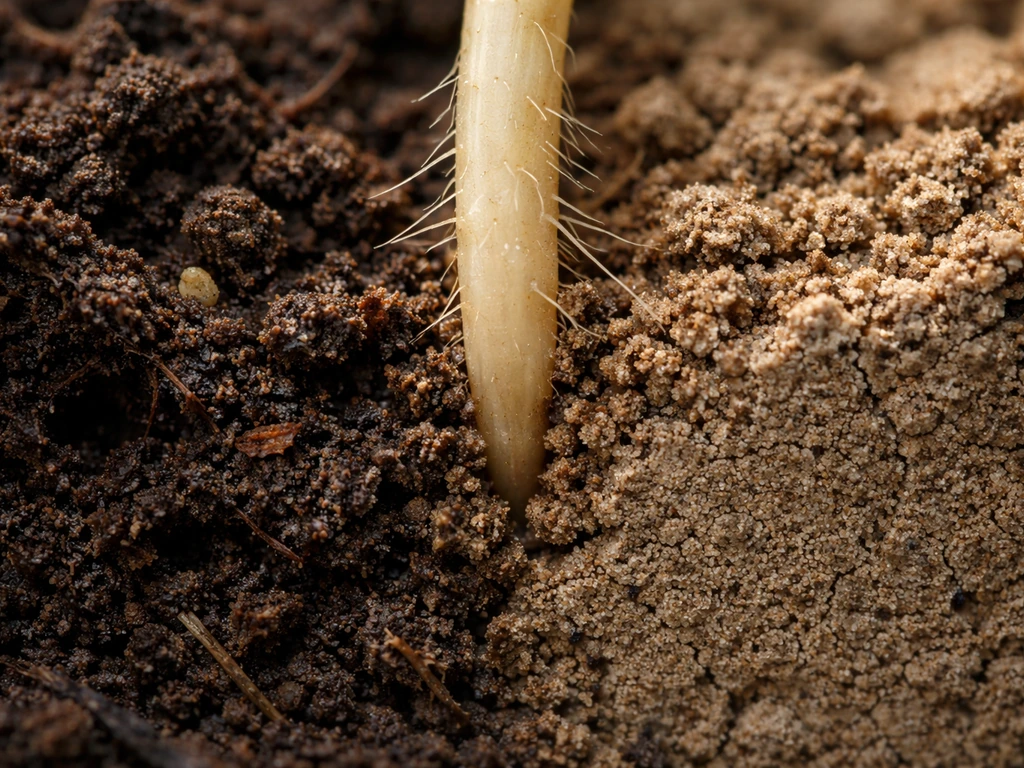
The root tip has to physically displace soil particles as it advances. Compacted soils increase mechanical resistance, reduce pore size and connectivity, and lower the air-filled pore space that delivers oxygen. The combined effect is a significant brake on elongation, often accompanied by root swelling (the root gets thicker rather than longer) as mechanical feedback signals alter growth patterns. Well-structured, loose soils with good pore connectivity allow the elongation zone to work unimpeded.
What stops roots from growing forever
Root length is not unlimited, even in ideal conditions. Several intersecting constraints set the ceiling.
- Mechanical resistance: As roots extend deeper or laterally, they encounter increasingly compacted or rocky layers that slow the root tip's ability to displace material. Reactive oxygen species (ROS) and ethylene signaling both respond to mechanical impedance and reduce elongation rates.
- Resource depletion: The elongation zone depends on a supply of photosynthate (sugars) transported from the shoot. The longer the root, the more costly it becomes to supply the growing tip. Eventually, the metabolic cost of extending further outweighs the benefit.
- Oxygen and water gradients: Deeper soils often have less available oxygen and, depending on conditions, less accessible water, both of which limit the turgor-driven expansion process.
- Hormonal thresholds: Accumulation of ethylene or high auxin concentrations at the tip can shift the balance from promoting to inhibiting elongation, acting as a built-in physiological brake.
- Temperature: Cell division and expansion both have temperature optima. Too cold and enzyme activity in the meristem slows; too hot and protein stability becomes an issue, plus water loss through the shoot increases stress signals sent to the root.
These constraints are also why root architecture matters so much. Rather than extending one primary root indefinitely, plants branch repeatedly with lateral roots, distributing the exploration effort across many shorter growing tips, each operating within manageable resource and mechanical limits. The question of why the root grows first rather than the shoot is a fascinating companion topic that ties into how seedlings prioritize resource capture from day one. That is largely because roots have to establish early water and mineral uptake before shoots can expand effectively why the root grows first.
Measuring root growth and fixing slow elongation
If you are trying to observe, measure, or troubleshoot root growth in a practical setting, the good news is that there are simple and sophisticated options depending on your resources.
Simple observation methods
For classroom or home use, germinating seeds on moist filter paper inside a clear plastic bag taped to a window lets you watch primary root elongation in real time. Mark the root tip position with a fine marker on the bag daily and measure the distance between marks. Fast-growing species like radish or corn can show measurable elongation within 12 to 24 hours. This is also how you can directly observe gravitropism: tilt the bag 90 degrees and watch the root curve back toward vertical over the next day or two.
Research and semi-automated tools
For more rigorous measurement, several image analysis tools are available. MyROOT provides semiautomatic primary root length quantification from photographs of seedlings, reflecting the balance between division and elongation across zones. RootTrace can analyze large time series of root images automatically, tracking root tips through sequential frames to estimate growth rates over time. For lab work with soil samples, WinRhizo software paired with a flatbed scanner lets you scan washed root systems and calculate total root length, surface area, and branching patterns. Confocal time-lapse imaging can even capture cellular dynamics at the root tip on an hourly timescale, letting researchers watch individual cells divide and expand.
Troubleshooting slow or stunted root growth
If roots are growing poorly, work through this checklist systematically before reaching for a fertilizer or growth stimulant:
- Check water availability: Is the growing medium consistently moist but not waterlogged? Both extremes inhibit elongation. Waterlogging also starves the root tip of oxygen.
- Check soil compaction: Can you easily push a pencil into the medium to several centimeters depth? High resistance signals compaction that will mechanically impede the root tip.
- Check aeration: For container plants or hydroponic setups, is there adequate oxygen at the root zone? Brown, slimy, or foul-smelling roots suggest anaerobic conditions where ethylene is accumulating.
- Check nutrient supply: Phosphorus deficiency in particular alters root elongation zone geometry. A basic soil or solution test can rule out severe mineral deficiencies.
- Check temperature: Root meristems are sensitive to cold. Many common crop plants show dramatically reduced root elongation below 10°C, and some tropical species slow noticeably below 15°C.
- Check light (for seedlings): Indirect effects of light on photosynthate production affect sugar supply to the growing root tip. Leggy, weak seedlings are often sugar-limited at the root as much as the shoot.
- Observe the tip directly: Under a 10x hand lens or low-power microscope, a healthy root tip has a firm, white, slightly translucent cap. A brown, blunt, or mushy tip means physical damage, pathogen attack, or severe oxygen deprivation has destroyed the meristem. No meristem means no new cell production and no elongation.
Root growth and stem growth share more mechanistic similarities than most people expect. Both rely on meristematic zones, cell expansion, and auxin-dominated hormone networks. This helps explain why stem growth has a similar logic, even though the process is adapted to a different environment. If you are comparing the two, the key difference is that root elongation is also fighting physical resistance from the soil, which adds a whole extra layer of mechanical biology that stem elongation in open air does not have to contend with.
The bottom line is that healthy root elongation needs meristematic cells dividing reliably, a functional elongation zone with access to water and turgor, a well-balanced hormone environment where auxin is present but not excessive, and a physical medium that does not mechanically resist the root tip beyond what it can push through. Get those four things right and roots will extend on their own. Diagnose which one is missing and you will solve slow root growth far faster than any generic fix. If you are trying to improve overall leaf size, the same idea applies: leaf growth depends on steady inputs like water, nutrients, and the hormones that drive cell expansion. That same step-by-step logic is <a data-article-id="91F7FB63-43CA-4480-A55C-BB1D913888C1">what makes roots grow</a> longer, too. If you are trying to improve overall leaf size, the same idea applies: leaf growth depends on steady inputs like water, nutrients, and the hormones that drive cell expansion what makes roots grow.
FAQ
Does a root get longer mainly because cells divide, or because they expand?
Most of the length increase comes from cell expansion in the elongation zone. Cell division in the meristem mainly supplies many new cells, but the newborn cells add little length because they are small and tightly packed. A good check is to compare conditions that mainly affect water and turgor, those usually change elongation much more dramatically than division.
Why can a root keep its tip at the “front” while cells behind it mature?
Because expansion occurs behind the tip, the growing region pushes the tip forward. Meanwhile, cells in the maturation zone stop elongating and take on other roles, such as forming tissues needed for protection and uptake. If expansion is disrupted, the tip may not advance even though meristem division may still be occurring.
What happens if the meristem is active but elongation is blocked?
You can see continued production of cells near the tip without much increase in root length, often causing a shorter root tip region and a more “crowded” look. Over time the plant may compensate by changing zone size and hormone balance, but growth will still slow because the length engine (expansion) is stalled.
Can auxin ever make roots longer instead of shorter?
Yes, auxin promotes elongation at low concentrations in the elongation zone. The same hormone becomes inhibitory at higher concentrations, so root responses are highly dose dependent. This is why auxin redistribution for gravity bending can both suppress elongation on one side and maintain it on the other, producing curvature rather than global inhibition.
Why does ethylene inhibit primary root elongation but still allow other root traits like root hairs?
Ethylene’s effect on primary root elongation primarily targets cell elongation behavior in the transition and elongation zones, while root hair elongation uses a different gene regulatory pathway. So you can sometimes observe shorter primary roots alongside longer or more abundant root hairs when ethylene levels are high, especially under low-oxygen conditions.
How does low oxygen slow root elongation, is it just because cells need energy?
Energy demand is part of it, but oxygen limitation also triggers ethylene biosynthesis specifically around the root tip, which then interferes with elongation. This can create a compounding effect, where direct respiration stress and hormone-driven elongation inhibition occur at the same time.
What is the fastest environmental factor that most strongly affects root length over a day?
Water availability is often the most immediate limiter because elongation depends on turgor pressure. If water drops, elongation rate commonly falls quickly due to insufficient cell expansion. Nutrient problems like phosphorus stress also matter, but their effects often show up more gradually because they alter zone size and pipeline flow rather than instant turgor.
In drought, do roots stop elongating everywhere or do growth zones change location?
Growth zones commonly shrink under significant drought, which reduces the region actively expanding. Plants may also adjust overall architecture, changing where new growth happens so some parts of the system keep elongating longer than others. This means root length can slow without necessarily shutting down every growing site at once.
Why do roots in compacted soil sometimes get thicker instead of longer?
Mechanical resistance reduces how effectively the root tip can displace soil particles and sustain cell expansion. The plant can shift growth toward radial thickening as a mechanical feedback response, so you may observe increased root diameter with reduced elongation. Improving pore connectivity usually restores air-filled space and supports elongation again.
How can I tell whether slow root growth is due to division problems or elongation problems?
A practical clue is where the delay appears along the root. If the root tip area looks “active” but the tip advances slowly, elongation is likely limited. If there is little new tissue produced near the tip, division may be impaired. For more certainty, time-lapse imaging plus zone inspection (even at low magnification) can separate pipeline failure from expansion failure.
Is root length the same as total growth, or can branching change the interpretation?
Root length is only one metric. Plants may respond to constraints by shifting resources toward lateral root branching, increasing total root surface area and total absorptive capacity even if primary root length advances slowly. So a treatment that shortens the primary root might still improve overall uptake if branching and hair formation increase.
When measuring root elongation with a marker on a bag, what can go wrong?
Common mistakes include marking the same point on a moving, curved tip, not accounting for thickness or slight tip drift, and measuring from inconsistent reference edges. Use a consistent reference like the seed or baseline, photograph at the same time of day, and consider measuring along the root curve rather than only straight-line distance if the root is bending.
Next Article
Which Type of Genes Help Cells Grow and Divide
Learn which gene types drive cell growth and cell-cycle division, plus brakes like checkpoints, tumor suppressors, and e